
REVIEW · KATHMANDU
Everest Base Camp Trek with Helicopter Return to Lukla – 10 Days
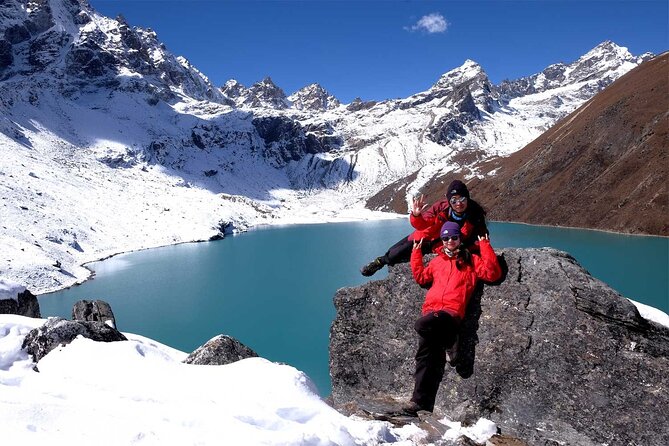
The clever part of this 10-day Everest Base Camp trek comes at the end: after walking to Gorakshep and Kala Patthar, you return by helicopter to Lukla instead of retracing the same trail. That saves several hard walking days and gives you a bird’s-eye view of the route.
I like the mix of Sherpa villages and high mountain scenery, especially Namche Bazaar and Tengboche. I also like the practical package: permits, standard guesthouses, a licensed guide, sleeping bag, duffel bag, domestic flights, and Kathmandu transfers are covered. The catch is that this remains a serious high-altitude trek, and meals during the trek, porter service, insurance, and personal costs are extra.
Key points at a glance
- Helicopter from Gorakshep to Lukla: Finish the high route with an exciting flight instead of walking back down the same valley.
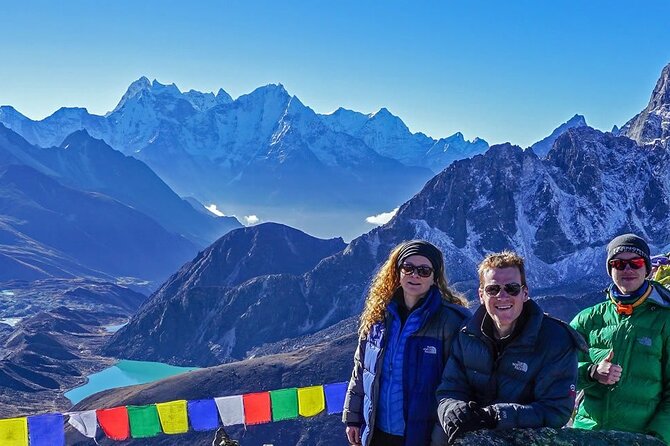
- Kala Patthar sunrise: The viewpoint provides one of the strongest chances for close views of Everest and nearby peaks.
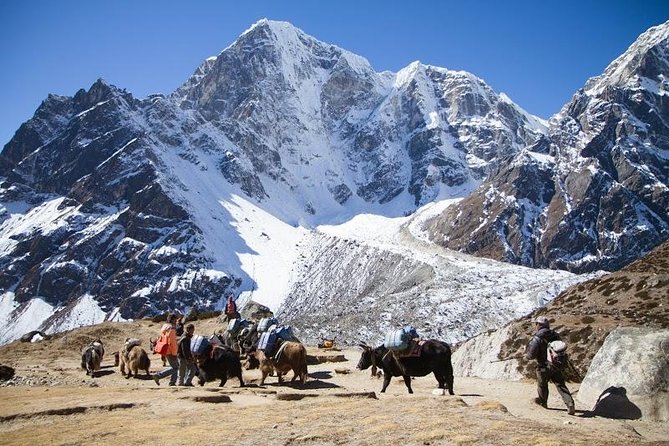
- Classic Sherpa route: Walk through Namche Bazaar, Tengboche, Dingboche, and other mountain settlements.
- Acclimatization in Dingboche: A planned pause helps you adjust before the highest part of the trek.
- Small maximum group: The advertised group limit is 15 people, useful on a demanding route.
- Strong guide focus: Guides such as Ram, Rupak, and Dambar have received praise for patience, organization, and care on comparable trips with this operator.
Why the helicopter return changes the Everest Base Camp trek
The standard Everest Base Camp route is not difficult only because of distance. It is difficult because you keep climbing, sleeping at higher elevations, and walking on rough mountain paths. The return journey can feel especially repetitive after you have reached Base Camp.
This version removes much of that return effort. You still walk the classic route toward Everest Base Camp, but after the night around Gorakshep and the early trip to Kala Patthar, a helicopter carries you to Lukla. From there, the included domestic flight returns you toward Kathmandu, or to Manthali when flight operations require it.
That makes the tour appealing if you want the main Everest experience but have only 10 days. You get the mountain villages, monasteries, river valleys, Base Camp, and a high viewpoint, without spending several more days retracing your steps.
The helicopter is not just transport. From above, you can see the route as a whole, from the narrow valleys to the high, snow-covered peaks. Still, weather matters. Mountain flights can be delayed or changed, and the activity requires good conditions. Keep some patience in reserve.
More Everest Base Camp Treks in Kathmandu
- Everest Base Camp Trek – 14 Days
★ 5.0 · 1,499 reviews - Everest Base Camp Trek
★ 5.0 · 842 reviews - Everest Base Camp Trekking
★ 5.0 · 485 reviews
Kathmandu arrival and the first practical steps
Your trip begins with pickup at Tribhuvan International Airport in Kathmandu at the stated 9:00 am meeting time. A private vehicle takes you to a three-star hotel, with breakfast included.
Kathmandu is more than a staging point. It gives you a first look at Nepal’s religious and urban life before you head into the Khumbu region. The final evening includes a farewell dinner with Nepali food and traditional dance, which gives the trip a clear cultural finish rather than ending with an airport transfer.
The Kathmandu hotel is practical rather than luxurious. The package calls it three-star accommodation, so you should think of it as a comfortable base for arrival and departure, not a resort stay.
Your international airfare is not included. You also need to arrange a Nepal visa on arrival, so allow time and local currency or accepted payment for that process.
Lukla and the first walk through the Khumbu
The route begins with a domestic flight from Kathmandu or Manthali to Lukla. The flight itself is part of the mountain experience, but it is also subject to weather and operating conditions. The included transport covers the scheduled Kathmandu or Manthali to Lukla round trip, while the helicopter covers the special return from Gorakshep to Lukla.
From Lukla, you begin walking through the Khumbu region. The trail follows the Dudh Koshi River and passes through forests, bridges, and Sherpa settlements. At this point, the surroundings feel greener and lower than the high country ahead.
The first days are important because you are building a walking rhythm. You will likely notice that the guide controls the pace carefully. That matters more than speed. A trek like this rewards slowly, slowly, take a rest, especially before the air becomes thin.
Standard guesthouses provide your overnight lodging. These are part of the appeal of the route because you sleep in local mountain settlements rather than moving from one isolated camp to another. They are basic, and you should not expect hotel-style facilities at altitude.
Namche Bazaar, the social center of the route
Namche Bazaar is one of the most memorable stops on the trek. The settlement sits in a mountain bowl and serves as a major hub for people moving through the Everest region. It is also where the route begins to feel properly high and remote.
The itinerary includes time to pause in Namche, which is valuable for acclimatization. You may find the stop physically easier than the days ahead, but do not treat it as a wasted day. Rest and gradual adjustment are essential parts of reaching Base Camp safely.
This is also one of the best places to appreciate the human side of the journey. Porters, guides, local families, and trekkers all pass through the same narrow streets and paths. The route is famous, but it still connects real communities rather than leading only from viewpoint to viewpoint.
Guide quality matters here. The operator’s guides have included people such as Ram, Rupak, and Dambar, with particular praise for patience, organization, encouragement, and attention to each person’s condition. Your assigned guide may differ, so confirm the name and guide-to-group arrangement before departure.
More helicopter flights in Kathmandu
- Everest Base Camp Trek with Helicopter Return from Gorakshep to Lukla
★ 5.0 · 161 reviews - Everest Base Camp Trek with Helicopter Return -11 Days
★ 5.0 · 12 reviews - Helicopter Return Everest Base Camp Trek, KTM-LUKLA & Gorakshep-KTM by Heli
★ 5.0 · 9 reviews - Everest Base Camp Trek with Helicopter Return – 10 Days
★ 5.0 · 9 reviews
Tengboche and the route’s spiritual character
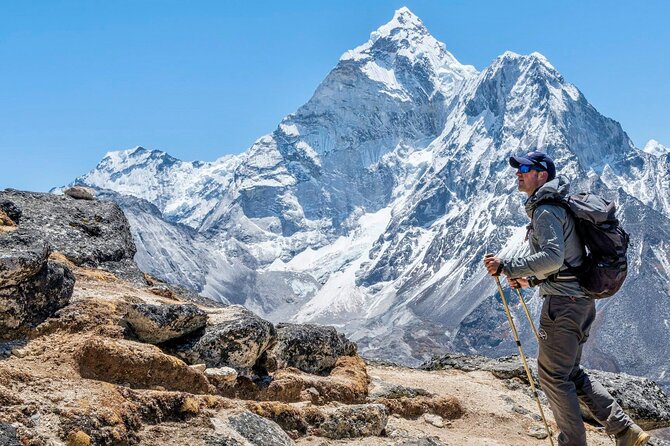
The trail continues toward Tengboche, known for its monastery and its setting among the Himalayan peaks. The monastery adds a welcome pause from the physical effort. It also reminds you that the Khumbu is a lived-in cultural region, not simply a backdrop for an athletic challenge.
Tengboche is one of the places where the journey’s cultural side becomes especially clear. Buddhist traditions, prayer flags, monasteries, and Sherpa villages are woven into the route. Your English-speaking guide can help explain what you are seeing, although the depth of that explanation will depend on the individual guide.
The walk through forests gradually gives way to more open, colder country. You are gaining altitude, and ordinary tasks begin to take longer. Keep your daypack light and keep water, warm layers, and personal essentials close at hand.
Dingboche and the serious altitude adjustment
Dingboche is the key acclimatization stop before the trek heads higher. The itinerary specifically includes time here, and that is one of its strongest practical features.
At Dingboche, you are no longer simply taking a scenic hike. You are preparing your body for the high-altitude section toward Lobuche, Gorakshep, and Base Camp. You may feel fine one hour and tired the next. A moderate fitness level is required, but fitness alone does not remove the risk of altitude sickness.
Listen to your guide and report symptoms early. The included medical kit is useful, but it does not replace travel insurance. Your policy must cover medical treatment and high-altitude evacuation. That requirement is not decorative fine print. It is one of the most important costs to arrange before you leave home.
The short schedule makes this trek more demanding than a longer Everest Base Camp itinerary. The helicopter return helps by cutting out the return walk, but it does not make the climb to Base Camp easy.
Gorakshep, Everest Base Camp, and Kala Patthar
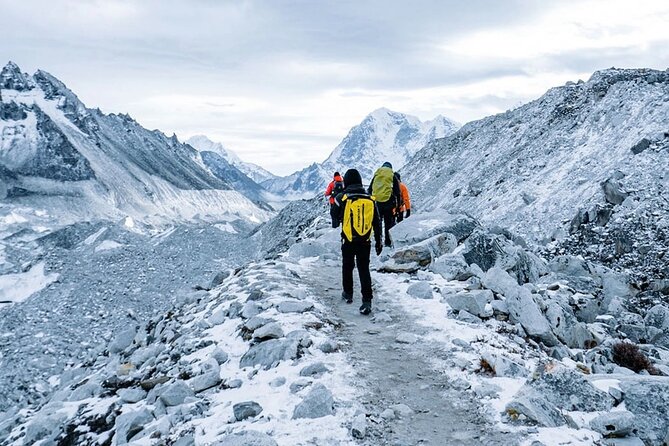
The final approach leads into the high Khumbu, where the trails are rougher, the air is thinner, and the scenery becomes more severe. Gorakshep serves as the base for the walk to Everest Base Camp and the early outing to Kala Patthar.
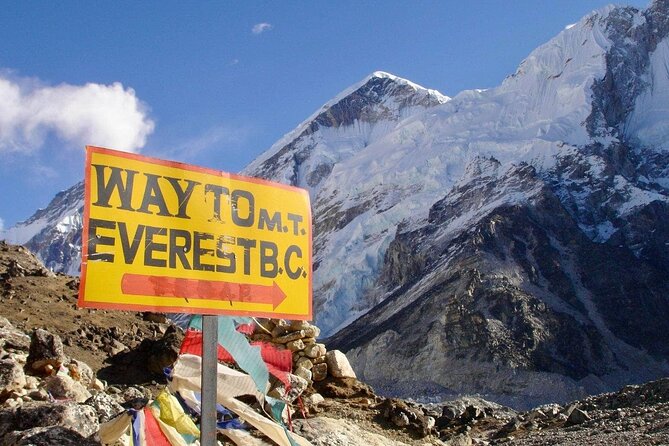
Everest Base Camp is a major emotional marker, but it is worth setting expectations. You do not climb Mount Everest, and the famous summit pyramid may not look exactly as you expect from the Base Camp area. The experience is about reaching the staging ground beneath the world’s highest mountain and seeing the peaks, glaciers, and surrounding terrain up close.
Kala Patthar is often the stronger viewpoint. The itinerary includes an early visit for sunrise, when the mountains can catch the first light. The walk is short compared with the full trek, but the altitude makes it demanding. Give yourself time, stay with the guide, and do not rush for a photograph.
This is also the point where the weather can shape the day. Clouds may block views, wind may make the viewpoint uncomfortable, and flight conditions can affect the next stage. The itinerary is ambitious, so flexibility matters.
The helicopter flight from Gorakshep to Lukla
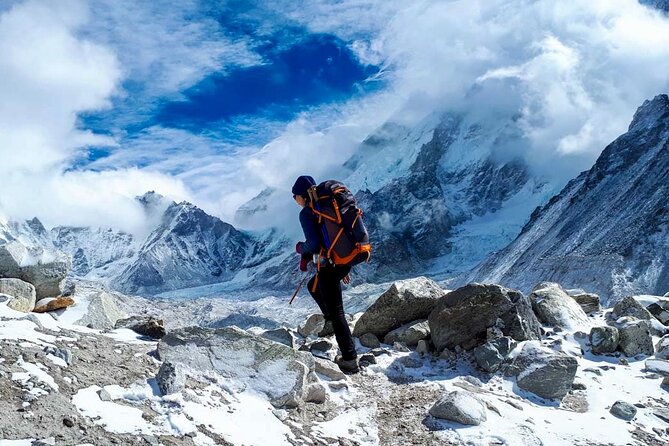
After the high point of the trek, the helicopter return is the package’s defining feature. Instead of walking back through the same settlements, you fly from Gorakshep to Lukla.
You will see the route from a different angle: the valleys you walked through, the changing vegetation, the mountain villages, and the huge scale of the Himalayas. It is a fine contrast to the slow, close-up rhythm of trekking.
The flight also gives you back time. A traditional return can add several walking days, while this plan keeps the whole trip to about 10 days. That is the main reason the $799 price can make sense for someone with limited holiday time.
There are tradeoffs. Helicopter operations depend on weather, visibility, and local flight conditions. A delay can affect your onward flight, so do not schedule an international departure immediately after the planned return without checking the operator’s advice. The included domestic flight and helicopter ride are valuable, but they do not guarantee a fixed timetable in the mountains.
What the $799 price really covers
At $799 per person, the package offers a substantial amount of organization for a high-altitude trip. Included items cover:
- Private airport transfers
- Kathmandu hotel accommodation with breakfast
- Sagarmatha National Park, TIMS, and Pasang Lhamu entry permits
- Domestic flights involving Kathmandu, Manthali, and Lukla
- Helicopter travel from Gorakshep to Lukla
- Standard guesthouse lodging during the trek
- A licensed English-speaking guide
- Duffel bag, sleeping bag, T-shirt, and map
- First-aid kit
- Government taxes and official fees
- Kathmandu farewell dinner with Nepali food and cultural dance
The omissions matter just as much. Lunch and dinner in Kathmandu are not included, and all meals during the trek are also extra. Snacks, drinks, laundry, tips, and other personal purchases come from your own budget.
Porter service is optional, with one porter for two trekkers recommended. If you are not used to carrying gear at altitude, I would strongly consider adding this cost. The included duffel bag does not mean your luggage will be carried unless porter service is arranged.
Insurance is also extra. Buy a policy that specifically covers high-altitude medical evacuation. Ordinary travel insurance may not be enough.
Who will get the most from this itinerary
This trek suits you if you want the classic Everest route but cannot spare the roughly two extra weeks often needed for a full walk in and out. It also suits people who like a local guide, basic guesthouses, and a clear support structure without paying for high-end accommodation.
The group limit of 15 is sensible. It is large enough to share the experience, but not so large that the group automatically becomes unwieldy. Ask how many people are booked for your date and how many guides will accompany the group.
You should have moderate physical fitness and be comfortable walking for several days in mountain conditions. You do not need to be an elite athlete, but you do need patience, stamina, and a willingness to adapt to altitude.
This is a poor fit if you want a relaxed holiday, guaranteed flight times, private rooms, or a fully inclusive price. It is also not ideal if you dislike basic lodging, changing weather, or carrying at least a daypack over rough trails.
Small details that make the trip easier
Pack layers rather than one bulky jacket. Temperatures can change sharply between the lower forested route and the high valleys.
Bring personal snacks and drinks, since food and beverages are not included during the trek. Keep some cash available for purchases, tips, laundry, and other expenses along the way.
Use the provided sleeping bag and duffel bag, but confirm their specifications before departure if you are particular about warmth or size. A map is included, though your guide remains the main source of route information.
The operator provides a first-aid kit, but you should still carry any personal medication and discuss altitude concerns with a medical professional before leaving home.
Free cancellation is available up to 24 hours before the local start time. Changes or cancellations inside that window are not accepted for a refund. If poor weather cancels the experience, you are offered another date or a full refund.
Should you book the Everest Base Camp helicopter return?
I would choose this trip if your priority is reaching Everest Base Camp and Kala Patthar while keeping the total schedule to 10 days. The helicopter return is a real benefit, not a gimmick, because it removes the tiring walk back and adds a memorable aerial view.
The best value comes from the included permits, flights, guide, lodging, gear, transfers, and farewell dinner. Before booking, budget separately for meals, porter service, insurance, tips, and personal spending.
Book it if you accept basic guesthouses, high-altitude effort, and weather-related changes. Skip it if you want a slow, leisurely trek with generous acclimatization time. For a compact Everest experience with strong logistical support and a dramatic finish, this is a sensible choice.
FAQ
How long is the Everest Base Camp trek with helicopter return?
The experience lasts approximately 10 days.
Where does the experience begin?
It begins at Tribhuvan International Airport in Kathmandu, Nepal, with a stated start time of 9:00 am.
Is the helicopter ride included?
Yes. The package includes a helicopter ride from Gorakshep to Lukla.
Are meals included during the trek?
No. All meals during the trek are excluded. Lunch and dinner in Kathmandu are also not included, while Kathmandu hotel breakfast is included.
Is porter service included?
No. Porter service is optional. The package recommends one porter for two trekkers.
What kind of insurance do I need?
You must arrange insurance that covers medical treatment and high-altitude evacuation.
What happens if bad weather cancels the experience?
If poor weather causes cancellation, you are offered a different date or a full refund.
Latest treks added in Kathmandu
- Private Manaslu Circuit Trek at Himalayas★ 5.0 · 3 reviews
- Ghorepani Poonhill Trek★ 5.0 · 5 reviews
- Ghorepani Poon Hill Trek★ 5.0 · 16 reviews
- Upper Mustang Trekking★ 3.0 · 2 reviews
- Amazing 1 Day Trekking Experience in Kathmandu Nepal★ 5.0 · 24 reviews
- Upper Mustang Trekking★ 5.0 · 2 reviews
- Upper Mustang Trek★ 5.0 · 5 reviews
- Upper Mustang Trekking★ 5.0 · 4 reviews
Everest Base Camp Treks, compared.






Browse the lists this tour appears in