
REVIEW · KATHMANDU
Helicopter Return Everest Base Camp Trek, KTM-LUKLA & Gorakshep-KTM by Heli
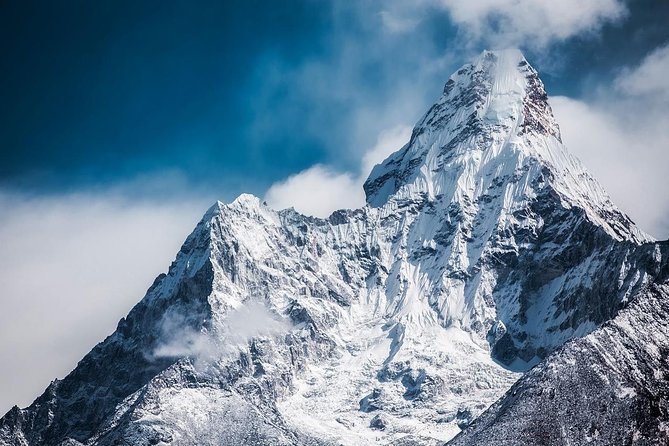
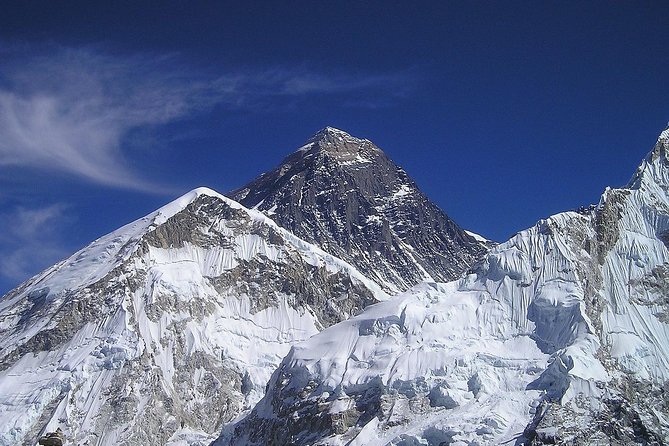
Everest Base Camp is the headline, but Kala Patthar at 5,545 meters may be the visual prize. From this high ridge, you can see Everest, Nuptse, Pumori, Lhotse, Changtse, the Khumbu Glacier, and the Khumbu Icefall. The trek also brings you through prayer-flagged bridges, Sherpa villages, monasteries, and Namche Bazaar, the region’s lively trading center.
I like the careful acclimatization stops in Namche and Dingboche, and I like having guides such as Dipak handle the route and day-to-day decisions. The main caution is the price and itinerary confusion: the advertised title suggests a nine-day helicopter return, while the detailed schedule runs 14 days and lists helicopter charges separately.
Key points to know before booking
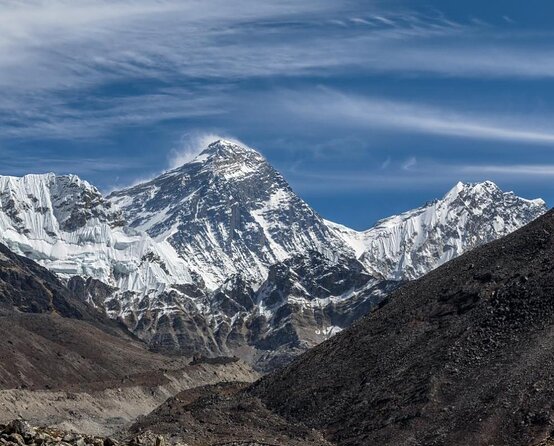
- Kala Patthar at 5,545 meters: The best stated viewpoint for Everest, Nuptse, Pumori, Lhotse, Changtse, and the Khumbu Glacier.
- A real high-altitude trek: You walk from Lukla through Phakding, Namche, Tengboche, Dingboche, Lobuche, and Gorakshep.
- Built-in acclimatization: Rest days are planned at both Namche Bazaar and Dingboche.
- Helicopter return from Gorakshep: The listed shared flight to Kathmandu costs an additional USD 999 per person in the main trekking months.
- Small group size: The maximum is 15 people, with a trekking guide and optional porters.
- Strong local support: Buddhi organizes the trip, while Dipak and other guides have been praised for practical care and clear communication.
What this Everest trek actually includes
This is not a quick helicopter sightseeing flight. The core experience is a serious trek through the Khumbu region, with a helicopter used for the return from Gorakshep to Kathmandu.
The published schedule begins with arrival in Kathmandu and then lists 12 days of walking and flying before final departure. It includes the flight from Kathmandu to Lukla, the trek to Everest Base Camp, the morning walk to Kala Patthar, and a helicopter flight back from Gorakshep. That makes the trip attractive if you want the full approach to Base Camp but do not want to repeat the long descent to Lukla.
You should clarify the exact length before paying. The tour title says nine days, while the detailed program lists Day 1 through Day 14. The same program also lists the helicopter flights as extra costs, so the advertised price of $9,999 per person needs careful checking. Ask exactly what is included in that price, especially the Kathmandu to Lukla flight and Gorakshep to Kathmandu helicopter.
More Everest Base Camp Treks in Kathmandu
- Everest Base Camp Trek – 14 Days
★ 5.0 · 1,499 reviews - Everest Base Camp Trek
★ 5.0 · 842 reviews - Everest Base Camp Trekking
★ 5.0 · 485 reviews
Kathmandu to Lukla, then the Dudh Koshi Valley
Your trip begins in Kathmandu at about 1,350 meters. The city is the practical launch point for the trek, and the tour provides pickup, though private transportation is listed as an extra. The meeting time is 5:45 in the morning, so plan for an early start.
The flight to Lukla takes about 35 minutes. Lukla sits at 2,828 meters and is the gateway to the Everest region. From there, you walk for three to four hours to Phakding, at 2,780 meters. This first day is useful because it lets your body begin adjusting without immediately forcing you into the highest part of the route.
The trail passes through places such as Nurning, Phakding, Benkar, and Monjo. You follow the Dudh Koshi River, called the Milky River, and cross suspension bridges covered with prayer flags. Prayer wheels, chortens, monasteries, and mountain scenery begin appearing almost at once.
The accommodation is in mountain teahouses. Breakfast is included for nine days, but lunch and dinner are paid locally. That arrangement gives you some choice, but you need to budget for meals and drinks as you go.
Namche Bazaar gives you time to adjust
The walk from Phakding to Namche Bazaar takes about five to six hours. Namche sits at 3,440 meters and is one of the most important stops on the route.
I like that the itinerary gives you a rest day here. Namche is not just a place to sleep. It is a traditional trading hub with shops, food, mountain views, and a strong Sherpa identity. It is also the last major town on the route, so this is the sensible place to check your clothing, batteries, snacks, and personal gear.
Altitude is the main issue here. You may feel fine in Lukla and Phakding, then notice headaches, poor sleep, or shortness of breath in Namche. A rest day does not guarantee that you will avoid altitude sickness, but it gives your body a better chance to adjust before the trail climbs higher.
The company has received repeated praise for organization and communication, especially from people guided by Dipak and supported by Buddhi. That matters here. A good guide watches the pace, explains the next stage, and helps you make sensible decisions if you feel unwell.
Tengboche brings monasteries and open mountain views
After Namche, the trail leads to Tengboche at 3,850 meters. This walk takes around four to five hours. The route continues through Sagarmatha National Park, with mountain scenery, wildlife possibilities, prayer flags, and traditional religious features along the path.
Tengboche is known for its monastery and its setting among the high peaks. The itinerary describes the monasteries and chortens as important parts of the route, not side attractions. Take time to notice how the religious symbols fit into daily life here. Prayer wheels are not decorative props. They are part of the cultural fabric of the villages and trails.
At this point, the walk becomes more demanding. The air is thinner, the nights colder, and the trail may feel slower than the distance suggests. You should not judge the trek by lowland walking times. At altitude, a short uphill stretch can take real effort.
More helicopter flights in Kathmandu
- Everest Base Camp Trek with Helicopter Return from Gorakshep to Lukla
★ 5.0 · 161 reviews - Everest Base Camp Trek with Helicopter Return to Lukla – 10 Days
★ 5.0 · 34 reviews - Everest Base Camp Trek with Helicopter Return -11 Days
★ 5.0 · 12 reviews - Everest Base Camp Trek with Helicopter Return – 10 Days
★ 5.0 · 9 reviews
Dingboche is the second important rest stop
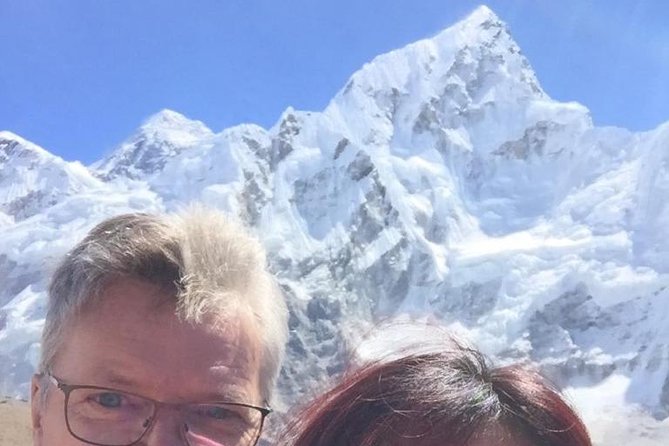
The route continues to Dingboche at 4,350 meters, usually in four to five hours from Tengboche. The village is an important staging point before the trail rises toward Lobuche and Gorakshep.
Another rest day is scheduled here, and that is one of the best features of the plan. The next stages take you close to 5,000 meters and beyond, so rushing through Dingboche would make little sense.
You can use this pause to check your socks, gloves, water bottle, warm layers, and sleeping bag. The packing list is serious for a reason. A down jacket is described as essential for teahouse nights below freezing, and a four-season sleeping bag is recommended, though one may be provided if needed.
The itinerary does not promise a particular acclimatization activity or viewpoint on the rest day, so avoid assuming that a specific excursion is included. The safe expectation is a recovery and adjustment day before continuing higher.
Lobuche and Gorakshep test your legs
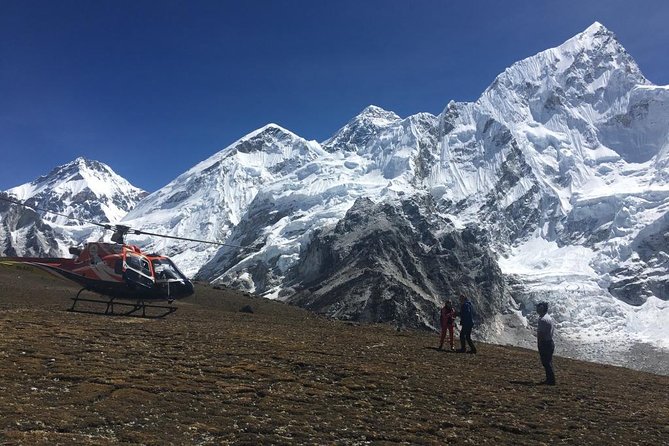
From Dingboche, the route climbs to Lobuche at 4,910 meters. The walk takes about four to five hours. At this altitude, the scenery becomes increasingly stark and dramatic, but your walking pace may slow sharply.
The next stage takes you to Gorakshep at 5,180 meters in three to four hours. From there, the walk to Everest Base Camp takes another two to three hours. This is the point where the trip earns its name.
Everest Base Camp is famous, but the view from camp is not always the sweeping mountain panorama many people imagine. The value of reaching it is the setting, the route, and the knowledge that you have walked into the base area used for Everest expeditions. The approach includes the Khumbu Glacier and the Khumbu Icefall, along with glacial rivers and avalanche paths.
You should expect a long day at high altitude. The listed walking times are estimates, and weather, energy, and trail conditions can affect the schedule. Your guide’s judgment becomes especially important here.
Kala Patthar is the visual high point
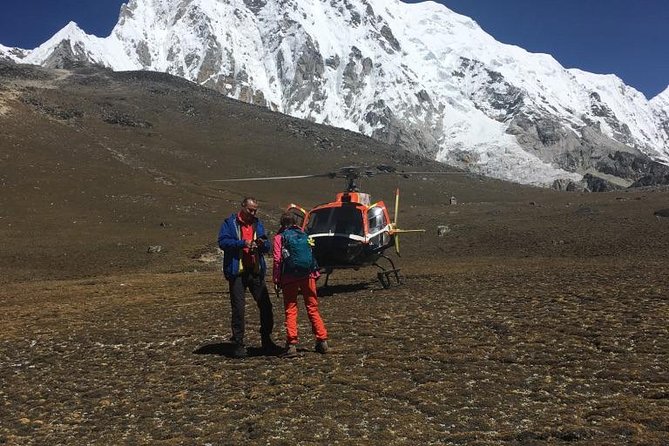
The morning walk to Kala Patthar takes about two to three hours. At 5,545 meters, this is the highest point listed in the itinerary and one of the hardest parts of the trip.
The reward is the stated view of Everest, Nuptse, Pumori, Lhotse, Changtse, the Khumbu Glacier, the Khumbu Icefall, glacial rivers, and avalanche paths. If the weather is clear, this is likely to be your strongest mountain-view moment.
The descent continues to Pheriche at 4,280 meters and takes five to six hours. That is a demanding day, even though you are losing altitude. Downhill walking still puts strain on knees and legs, and the early start can make the day feel long.
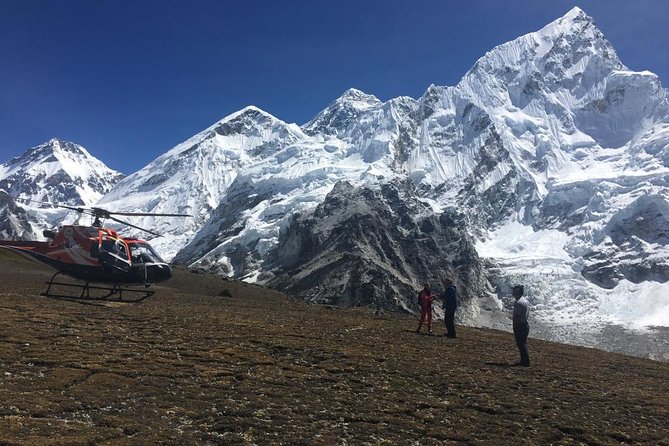
This is also where the helicopter plan matters. Instead of continuing on foot from Pheriche through Namche and back to Lukla, the advertised experience uses a helicopter from Gorakshep to Kathmandu. However, the detailed route also lists the walk to Pheriche, then the return trek to Namche and Lukla. Confirm which version you are purchasing.
The return route shows a different side of the region
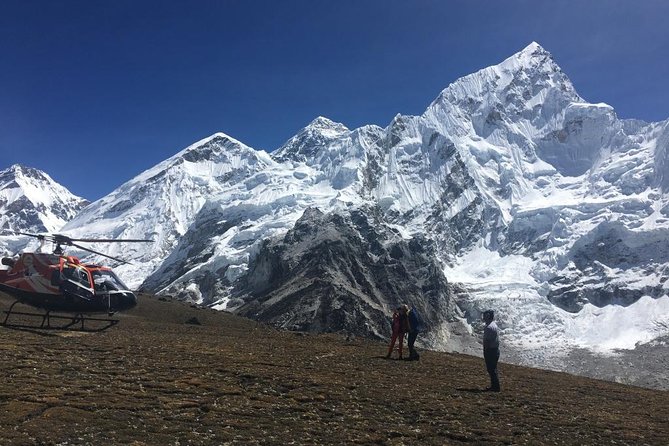
The walking schedule continues from Pheriche to Namche Bazaar in four to five hours, then from Namche to Lukla in five to six hours. This return route gives you more time in the villages and lets you see familiar ground from a different direction.
The trek officially ends in Lukla before the return to Kathmandu. If you walk this section, you spend more time with the Sherpa communities and gain a fuller sense of the route. If you take the helicopter from Gorakshep, you save several trekking days and avoid retracing the trail, but you also lose some of the slower, more grounded experience of the return.
The helicopter is also weather-dependent. The tour notes that poor weather can cause cancellation, with a different date or full refund offered. Mountain aviation is never something to treat as a fixed city transfer, so keep flexibility in your schedule.
Guides, porters, and the human side of the trip
Buddhi is identified as the main organizer, and Dipak is named as a trekking guide. Other direct support has included porters such as Carmen and Desantis. Specific praise has focused on prompt communication, attention to detail, local help, and the ability to keep plans moving when flights change.
One useful example is the Lukla flight problem. When a scheduled flight was canceled by weather and later flights were full, Buddhi arranged a helicopter and helped split the cost with another couple. That does not mean the same solution is guaranteed for your trip, but it shows why local support matters on this route.
A porter costs USD 30 per day, paid directly in Lukla. If you use one, keep your day pack light but retain your personal essentials, warm layers, water, medications, camera, and documents with you.
The maximum group size is 15. That is small enough for a guide to keep track of the group, but it is not a private trek. If you want a private helicopter, the listed price is USD 3,600 from Gorakshep to Kathmandu. A private helicopter from Kathmandu to Lukla is listed at USD 2,000.
What the $9,999 price means
At $9,999 per person, this is a costly trip. The value depends almost entirely on what the price includes.
The package lists mountain teahouse accommodation, a trekking guide, entry and trekking permits, and breakfast for nine days. It also lists shared helicopter prices separately: USD 400 per person from Kathmandu to Lukla and USD 999 per person from Gorakshep to Kathmandu during October, November, March, April, and May.
Lunch and dinner are not included. Private transportation is not included. Porter service is extra. These costs can add up, and the itinerary may require more than nine days depending on the version being sold.
Before booking, ask for a written cost breakdown. You need to know if the $9,999 includes both helicopter flights, accommodation in Kathmandu, airport transfers, guide and porter tips, and the complete permit package. The price could make sense for a well-supported private arrangement, but the supplied details do not make that clear.
Packing for cold nights and long walking days
The provided equipment list is sensible for a high-altitude trek. Bring trekking shoes, sports shoes or sandals, four or five pairs of good socks, trekking trousers, trekking shirts, gloves, sunglasses, a sun hat, and a warm woolen cap.
You also need layers. A fleece or puffy jacket, waterproof Gore-Tex layer, pullover, raincoat, and down jacket are all listed. A water bottle, flashlight, camera batteries, and a day pack are practical basics.
The company provides one complimentary trekking planner duffel bag, which must be returned after the trip. A sleeping bag may also be provided if needed, but it must be returned. Pack a suitcase or personal duffel as well as your day pack, and confirm the luggage arrangement before departure.
Most people can participate according to the supplied information, but this is still a demanding high-altitude trek. The itinerary does not provide a medical screening standard, so anyone with health concerns should seek medical advice before booking.
Should you book this Everest Base Camp trek?
Book it if you want the classic walk to Everest Base Camp, two planned acclimatization days, Sherpa villages and monasteries, and the option to replace the long return with a helicopter. It is a good fit for someone who values local support and wants an organized route rather than handling permits, teahouses, and Lukla problems alone.
Be cautious if you need a fixed nine-day schedule or a clearly all-inclusive price. The listed 14-day itinerary and separate helicopter charges must be resolved first.
Ask for the final day-by-day schedule, exact inclusions, helicopter arrangements, meal costs, and cancellation terms. The stated cancellation policy allows a full refund if you cancel at least 24 hours before the start, while weather cancellation brings a different date or full refund. Once those details are clear, the trip offers a strong way to reach Everest Base Camp without walking all the way back to Lukla.
FAQ
How long is the tour?
The tour is described as approximately nine days in the summary, but the detailed itinerary runs from Day 1 through Day 14. Confirm the exact duration before booking.
Where does the trek begin?
The trek begins with a flight from Kathmandu to Lukla. The flight is listed as taking about 35 minutes.
How high is Everest Base Camp?
Everest Base Camp is listed at 5,364 meters, or 17,600 feet.
How high is Kala Patthar?
Kala Patthar reaches 5,545 meters, or 18,193 feet.
Are meals included?
Breakfast is included for nine days. Lunch and dinner are paid locally.
Is accommodation included?
Mountain teahouse accommodation is included.
Is a guide included?
Yes. A trekking guide is included. Dipak is named as one of the guides associated with the trek.
Are porters included?
No. A porter costs USD 30 per day and is paid directly in Lukla.
How much is the shared helicopter from Gorakshep to Kathmandu?
The shared helicopter is listed at USD 999 per person during October, November, March, April, and May.
What happens if bad weather cancels the experience?
If poor weather causes cancellation, you are offered a different date or a full refund.
Latest treks added in Kathmandu
- Private Manaslu Circuit Trek at Himalayas★ 5.0 · 3 reviews
- Ghorepani Poonhill Trek★ 5.0 · 5 reviews
- Ghorepani Poon Hill Trek★ 5.0 · 16 reviews
- Upper Mustang Trekking★ 3.0 · 2 reviews
- Amazing 1 Day Trekking Experience in Kathmandu Nepal★ 5.0 · 24 reviews
- Upper Mustang Trekking★ 5.0 · 2 reviews
- Upper Mustang Trek★ 5.0 · 5 reviews
- Upper Mustang Trekking★ 5.0 · 4 reviews
Everest Base Camp Treks, compared.






Browse the lists this tour appears in