
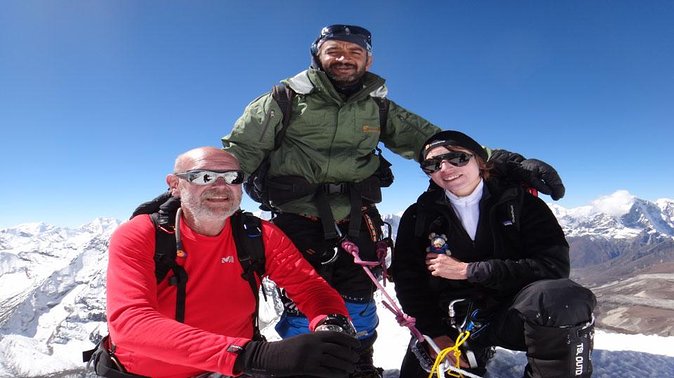
REVIEW · KATHMANDU
Everest Base Camp Trek
The real drama begins before the walking: a short flight to Lukla, where the runway and mountain setting make arrival part of the adventure. From there, you follow the classic Khumbu route through Sherpa villages, pine forests, suspension bridges, glaciers, and high viewpoints toward Everest Base Camp.
I like two practical things here. Porters carry your main gear, while the guide handles permits, lodging, meals, and the route. I also like the two acclimatization days, including a hike toward roughly 5,000-meter Nagarkhang Peak. The catch is simple: this is a demanding high-altitude trek, and weather can delay the Lukla flights.
Key points to know before booking
- Lukla flights are part of the adventure: The 30-minute flight connects Kathmandu with the trailhead and can be affected by weather.
- The route includes two acclimatization days: You hike near Namche and later toward Nagarkhang Peak rather than climbing higher every day.
- Your main load is carried for you: Porters handle the gear, and the package includes a duffel bag, down jacket, and four-season sleeping bag.
- The private format gives your group flexibility: Only your party participates, with an assistant guide added for groups larger than six.
- The high point is more than Base Camp: Kalapatthar provides the famous early-morning viewpoint over the Khumbu peaks.
- The $1,408 price covers many major costs: Flights, permits, guide, porters, meals, airport transfers, and basic cold-weather gear are included.
Kathmandu to Lukla: the trek starts in the air
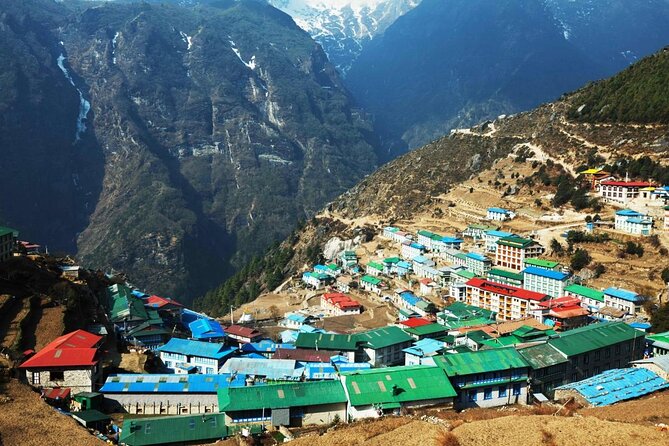
Your first day is a gentle landing in Nepal. An airport representative meets you with a name card and transfers you to your hotel in Kathmandu. The scheduled airport transfer takes about 30 minutes, and the rest of the day gives you time to settle in before the mountain section begins.
The next morning, you fly to Lukla, a trip of about 30 minutes. The flight is short, but it carries real weight: Lukla is the gateway to the Everest region, and the mountain air makes the change from city travel to trekking feel immediate.
The tour includes the Kathmandu to Lukla flight and the return flight, including the guide’s ticket. That matters because these flights can be delayed or canceled by poor weather. A free day in Kathmandu near the end is held for this reason, so you have some protection against a disrupted return.
From Lukla, you walk to Phakding. This first stage is useful as a warm-up. You get your first feel for the trail without being pushed straight into the biggest elevation gains. The walking schedule is listed as about four hours on this opening section, although mountain routes depend on pace, rest stops, and conditions.
More Everest Base Camp Treks in Kathmandu
- Everest Base Camp Trek – 14 Days
★ 5.0 · 1,499 reviews - Everest Base Camp Trek
★ 5.0 · 842 reviews - Everest Base Camp Trekking
★ 5.0 · 485 reviews
Phakding to Namche: bridges, forests, and the first hard climb
The trail from Phakding continues through pine forest toward Monjo and Jorsalle. You stop in Jorsalle for lunch, then cross the Hillary Bridge before a steep ascent toward Namche Bazaar.
This is where the trek begins to feel serious. The route is not just a long walk. You are gaining height, crossing suspension bridges, and adjusting to thinner air while carrying only a day pack. Having porters handle the main bags lets you focus on breathing, footing, and a steady pace.
Namche is a key overnight base for the route. The next day is set aside for acclimatization rather than another long push uphill. Your leader can offer different options, including a hike toward Khumjung and Khunde, the Everest View Hotel, Thame, or Sagarmatha National Park headquarters.
That choice is valuable in a private small group. You are not locked into one fixed outing for everyone. The right plan depends on how your body is responding, and the guide can organize a shorter or higher walk.
Namche to Pangboche: Sherpa villages and the Dudh Koshi
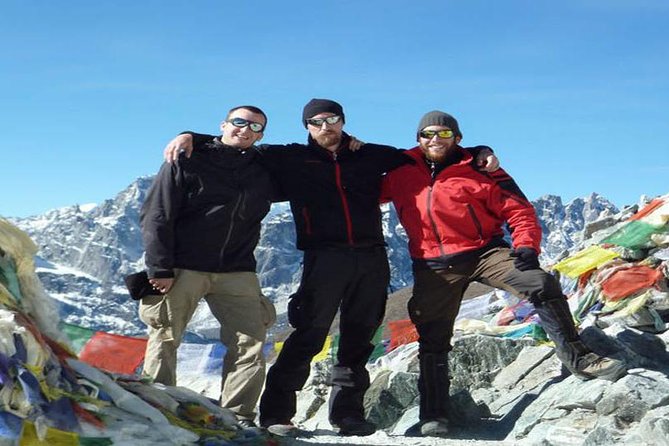
After acclimatization, you follow the national park route toward Kyanjuma. The trail includes a tea break, a descent to Phungi Thanga for lunch, and a crossing of the Dudh Koshi River before the route climbs again.
The rhythm matters. You often lose height before gaining it back, which can feel frustrating when you are watching your altitude. That pattern is part of the route, and the guide’s job is to keep the day manageable rather than rush you toward a number on the map.
The next section follows the Imja Khola toward Pangboche, at about 3,930 meters. Pangboche is known as the home of many Sherpa climbers, and the village gives you a closer look at the people and culture tied to Everest expeditions.
This cultural side is one of the strongest reasons to choose the trek. The route is not only about standing at Base Camp. You pass through working villages, stay in the Everest region, and see the Sherpa connection to mountaineering in a place where high-altitude travel is part of daily life.
The second acclimatization day near 5,000 meters
A second rest and acclimatization day comes after Pangboche. The planned day hike heads toward Nagarkhang Peak, at approximately 5,000 meters, with broad views of the Himalayan peaks.
Do not read rest day as a day off. You still climb, but you return to the same accommodation instead of moving your sleeping altitude every night. That helps you adapt before the route gets higher and tougher.
The description gives the leader several options on the earlier acclimatization day, while this later day focuses on Nagarkhang Peak. In both cases, the value is pacing. A fast schedule might look efficient on paper, but high altitude rewards patience.
You should have a moderate level of physical fitness before booking. The tour does not present this as a casual sightseeing walk. The route becomes more difficult as oxygen levels drop, especially once you reach glacier terrain.
More Trekking Tours in Kathmandu
- Annapurna Circuit Trek with Tilicho Lake
★ 5.0 · 368 reviews - Everest Base Camp Trekking – 13 Day
★ 5.0 · 365 reviews - Everest Base Camp Trek
★ 5.0 · 350 reviews - Everest Base Camp Trek -14 Days
★ 5.0 · 321 reviews
Dughla, Lobuche, and the approach to Base Camp
From Pangboche, you move toward Dughla, following the ridge above Pheriche. Dughla is a lunch stop before a steep climb to Dughla Pass, where the route begins to feel stark and exposed.
The day brings you closer to the main goal, but it is not a quick finish. You still need to manage effort, hydration, and the cold. The guide and porters stay with you throughout the trek, and the package includes a first-aid kit carried by the guide.
The next stage crosses glacier terrain. The opening part is easier, but the trail becomes harder once you begin ascending across the glaciers. The combination of uneven ground and low oxygen can turn a short distance into a tiring one.
This is where good preparation pays off. The included down jacket and four-season sleeping bag reduce the amount of specialized gear you need to arrange before leaving home. You still need personal clothing and trekking supplies, but the operator provides several bulky essentials and a duffel bag to use during the trip.
Everest Base Camp and the Kalapatthar sunrise climb
The trek reaches Everest Base Camp on the high-altitude section of the route. The camp itself is the symbolic prize, but the approach across the glacier and rough trail is a major part of the achievement.
The following morning starts early, before sunrise, for the climb to Kalapatthar. The ascent is difficult, but this viewpoint is the visual high point of the trek. From the summit area, you can look across the Khumbu peaks and toward the mountain scenery that makes this route famous.
The early start is not a small detail. You need to be ready to walk in the cold and darkness, then climb while your body is already working in thin air. The payoff is the changing light on the Himalayan peaks, and the viewpoint is often more satisfying for scenery than Base Camp itself.
After Kalapatthar, the route turns back toward the lower villages. This is not an entirely easy downhill stroll. Descending can be hard on tired legs, and the trail still includes steep sections and river crossings.
The return to Lukla takes several days
The return route passes through Debuche and Tengboche before descending to Phungi Thanga for lunch. You then climb again toward Kyanjuma, a reminder that the Khumbu route has plenty of uphill walking even after the main objective is behind you.
The following day takes you down to Jorsalle and onward to Phakding, before the final walk to Lukla. The schedule identifies this as the end of the 11-night, 12-day walking portion, while the full trip lasts about 15 days with arrival, flights, the Kathmandu buffer day, and departure.
That extra Kathmandu day is one of the smarter features of the plan. Lukla weather can affect flight schedules, so leaving room before your international flight is important. You also get time for shopping and a final city break rather than flying straight from the trail to your long-haul departure.
What the $1,408 price really covers
At $1,408 per person, the price includes more than a guide and a route map. It covers private airport transfers before and after the trek, domestic flights, Everest National Park entry, TIMS registration, an English-speaking government-licensed guide, porters, and the required staff costs.
Meals included are 14 breakfasts, 11 lunches, and 12 dinners. Accommodation is described as included, though the specific hotels and lodges are not named in the supplied information. Personal drinks, hot showers, phone use, laundry, snacks, and bar bills are extra.
The package also supplies a down jacket, four-season sleeping bag, and duffel bag, all returned after the trip. That can make the price good value if you would otherwise need to rent or buy cold-weather equipment.
You still need to budget for international airfare, a Nepal visa, travel and medical insurance, and emergency evacuation coverage. Natural disasters, mishaps, and other events outside the operator’s control are not included. I would treat insurance and evacuation cover as essential for a trek at this altitude, even though they are not part of the advertised price.
The guide and porter setup
The experience is built around staff support. Your English-speaking guide organizes the walking days and carries a first-aid medical kit. Porters carry the main gear and receive meals, accommodation, salary, and insurance through the package.
For groups larger than six, an assistant guide is added. The activity is private, so only your own group participates. That can make a real difference when people in the group walk at different speeds or need a different acclimatization plan.
The company has used guides named Lok, Khila, Lal, Hari, Ossman, and Namraj on past departures. Khila and Lok received especially strong personal praise for pacing, care, and attention to safety, while Lal was repeatedly associated with calm organization from airport pickup through the trek. Your assigned guide may be different, so treat these names as examples of the staff experience rather than a guarantee.
Who should book this Everest trek?
I would recommend it to a fit hiker who wants the classic Everest route but prefers help with logistics. You do not have to arrange flights, permits, porters, sleeping gear, or every meal on your own.
It is also a good match if you value a private group. Couples, friends, and families with suitable fitness can move at their own pace within the planned route. The guide can help choose acclimatization walks and manage the day-to-day details.
I would not choose it if you want a relaxed mountain holiday or dislike uncertain transport. The Lukla flights depend on weather, the glacier section is hard, and the altitude can affect even strong hikers. You should also be comfortable with a 15-day commitment and a route that includes steep climbs, steep descents, and basic mountain accommodation.
Booking confirmation is provided at the time of reservation. The cancellation terms allow a full refund if you cancel at least six full days before the start, with reduced refunds closer to departure. Poor weather cancellation offers a different date or a full refund, but personal costs outside the tour price are not covered.
Should you book this trek?
Book it if you want the famous Everest Base Camp route with the major moving parts handled for you. The strongest value comes from the combination of domestic flights, permits, porters, staff support, meals, airport transfers, and loaned cold-weather gear.
Before paying, confirm the likely guide assignment, accommodation details, current flight arrangements, and what personal equipment you must bring. If you can handle moderate-to-demanding mountain walking and accept possible Lukla delays, this is a well-supported way to reach Base Camp and Kalapatthar without organizing every detail yourself.
FAQ
How long does the Everest Base Camp trek take?
The full experience lasts approximately 15 days. The walking section is described as an 11-night, 12-day trek, followed by the return flight, a buffer day in Kathmandu, and airport departure.
What is included in the price?
The price includes airport transfers, Kathmandu to Lukla and Lukla to Kathmandu flights, national park entry, TIMS registration, guide services, porters, an assistant guide for groups over six, meals listed in the package, a down jacket, a four-season sleeping bag, and a duffel bag.
Are meals included?
Yes. The package includes 14 breakfasts, 11 lunches, and 12 dinners. Personal drinks, snacks, bar bills, hot showers, phone use, and laundry are not included.
Do porters carry my gear?
Yes. Porters carry the main gear, while the guide organizes the trek. The package includes porter meals, accommodation, salary, and insurance.
Is the tour private?
Yes. Only your group participates. Groups larger than six receive an assistant trekking guide.
What fitness level is required?
A moderate level of physical fitness is required. The trek includes steep climbs, high-altitude walking, glacier terrain, and an early climb to Kalapatthar.
Can bad weather affect the flights?
Yes. Lukla flights can be delayed or canceled because of weather. The free day in Kathmandu provides time for possible flight problems before your international departure.
What is the cancellation policy?
You can receive a full refund by canceling at least six full days before the start time. Cancellations two to six full days before departure receive a 50 percent refund, while cancellations less than two full days before departure are not refunded.
Latest treks added in Kathmandu
- Ghorepani Poon Hill Trek★ 5.0 · 16 reviews
- Private Manaslu Circuit Trek at Himalayas★ 5.0 · 3 reviews
- Ghorepani Poonhill Trek★ 5.0 · 5 reviews
- Upper Mustang Trekking★ 3.0 · 2 reviews
- Amazing 1 Day Trekking Experience in Kathmandu Nepal★ 5.0 · 24 reviews
- Upper Mustang Trekking★ 5.0 · 2 reviews
- Upper Mustang Trek★ 5.0 · 5 reviews
- Upper Mustang Trekking★ 5.0 · 4 reviews
Everest Base Camp Treks, compared.






Browse the lists this tour appears in