
REVIEW · KATHMANDU
Everest Base Camp Trek
Reaching Everest Base Camp means walking for days through changing Himalayan scenery, from the rough trail beyond Lukla to the high, stark country around Gorakshep. I like that round-trip Lukla flights, permits, meals, and trekking lodgings are included, so much of the costly planning is handled before you arrive. I also like the built-in acclimatization days, especially the walks around Namche Bazaar and Dingboche.
The main concern is the pace. Some days run to eight hours, and the route reaches serious altitude quickly. Porters, travel insurance, tips, and personal expenses cost extra, and Lukla flights can be affected by weather. This is a demanding mountain trek, not a sightseeing holiday with a few walks added.
Key points to know before booking
- Lukla flights are included: The trek begins with a short flight from Kathmandu to Lukla and ends with the return flight.
- Two acclimatization days matter: You spend extra time around Namche Bazaar and Dingboche rather than climbing every day.
- Meals and permits are covered: Breakfast, lunch, dinner, and trekking permits are included for the organized trek period.
- Guides are a major part of the experience: Mosaic Adventure has assigned guides including Nima, Ramesh, Madan, Manoj, Pralhad, and others.
- The group is limited to 12 people: That is small enough for personal attention without requiring a private trek.
- The price is $1,445 per person: It offers useful inclusions, but you still need to budget for insurance, tips, porter service, and personal spending.
Why this 12-day Everest route works
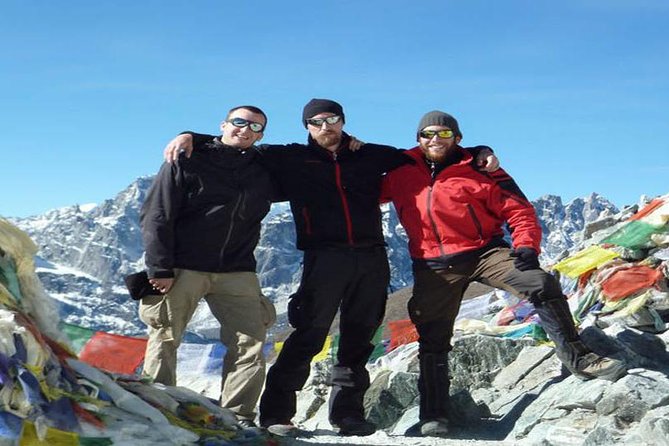
The appeal is simple: you walk to the foot of Mount Everest instead of merely viewing it from a road or aircraft. The journey gives you time to adjust to the height, sleep in mountain villages, and experience the steady rhythm of a Himalayan trek.
Mosaic Adventure keeps the group to a maximum of 12 people. That size is practical on a narrow trail. You are not part of a huge procession, but you also have the company and support of a small group if the day feels long.
The arrangement is guided from start to finish. Airport pickup is offered, the Kathmandu to Lukla flights are included, and the return transfer to your Kathmandu hotel is part of the final day. That support matters in Nepal, where a simple transport connection can take more patience than expected.
The itinerary is designed for people with a strong level of fitness. You will walk on dirty, rocky, and mostly uphill trails, with some days lasting about eight hours. The high point is not only the view. It is the accumulated effort of walking day after day at altitude.
More Everest Base Camp Treks in Kathmandu
- Everest Base Camp Trek – 14 Days
★ 5.0 · 1,499 reviews - Everest Base Camp Trek
★ 5.0 · 842 reviews - Everest Base Camp Trekking
★ 5.0 · 485 reviews
Day 1: Lukla to Phakding begins the foot journey
Your first trekking day starts after the flight to Lukla, one of the best-known gateways to the Everest region. From there, you walk for about three and a half hours to Phakding.
This is a useful opening day because it gets you moving without immediately demanding the longest stage of the route. You are already in the mountain setting, but the schedule gives you time to settle into your boots, daypack, and walking rhythm.
The short flight is also one of the practical variables to keep in mind. The trek operates in all weather conditions, but mountain flights can still affect the day’s timing. Keep your first day flexible rather than planning a tight connection after landing in Kathmandu.
Day 2: The long climb to Namche Bazaar
The route to Namche Bazaar is listed as an eight-hour walk, with rocky ground and plenty of uphill sections. This is the first day that makes the physical demands clear.
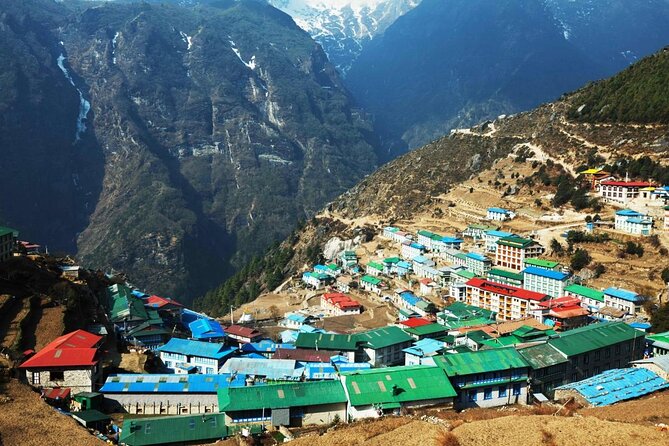
Namche is more than a place to sleep. It is the main town of the Khumbu area and an important stopping point before the route climbs higher. The colorful setting gives you a welcome change after the rough trail, and the pause here is essential for adjusting to altitude.
You should expect this day to feel harder than the distance alone suggests. The surface is uneven, and the repeated climbing can test your legs. Walk at a steady pace and do not treat the first long day as a race. Your guide’s role is especially useful here, as the pace can be adjusted to suit the group.
The route also has an authentic quality that a faster schedule would lose. You are not simply being delivered to Everest Base Camp. You are moving through the villages and trails that connect the region.
Day 3: Acclimatization around Namche Bazaar
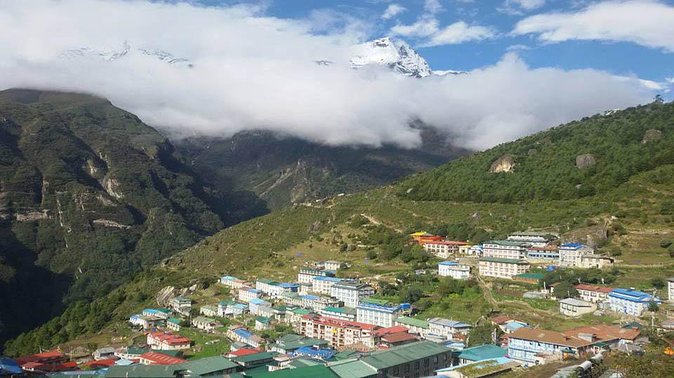
The extra day near Namche is one of the best features of this itinerary. You take a day trip around the town, including the Everest View Hotel, before continuing higher.
An acclimatization day does not mean a day spent doing nothing. You still walk, but the schedule gives your body more time to adjust before the next stages. That is a sensible approach for a trek that continues toward Lobuche, Gorakshep, and Base Camp.
The Everest View Hotel is also a memorable viewpoint on the route. The exact visibility depends on conditions, but the stop gives the day a clear purpose and adds a scenic reward without forcing you to advance to a higher overnight stay.
I would use this day to check your boots, clothing, water, and personal pace. If you are feeling unwell, say so early. The staff’s support is frequently praised, and several guides, including Nima, Manoj, Madan, and Pralhad, are specifically associated with careful assistance and itinerary adjustments.
More Trekking Tours in Kathmandu
- Annapurna Circuit Trek with Tilicho Lake
★ 5.0 · 368 reviews - Everest Base Camp Trekking – 13 Day
★ 5.0 · 365 reviews - Everest Base Camp Trek -14 Days
★ 5.0 · 321 reviews - Manaslu Circuit Trek
★ 5.0 · 292 reviews
Day 4: A monastery visit adds cultural depth
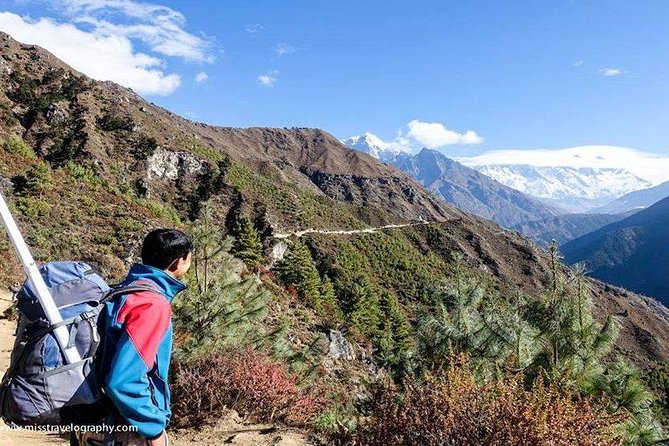
The fourth day is described as a trip to a monastery. The schedule does not specify the monastery’s name or the exact walking distance, so you should ask Mosaic Adventure for those details before departure.
Still, this is an important change of focus. The Everest route is not only about mountain views. Monasteries connect the trek to the Buddhist traditions of the Sherpa communities, and a visit gives you a chance to pay attention to the cultural side of the region.
This day also appears to provide another break from the hardest forward progress. That can make the later stages easier to manage, especially if you are still finding your rhythm at altitude.
Day 5: Trekking onward to Dingboche
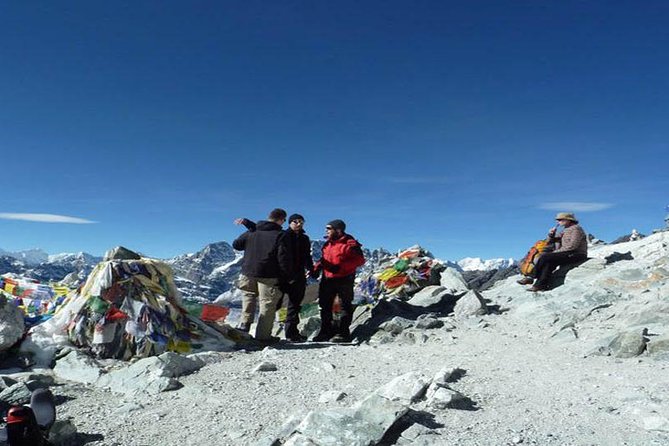
The route continues to Dingboche, with another listed walking day of about eight hours. By now, the trail feels more serious. You are moving farther into the high country, and the scenery becomes a larger part of the experience.
Dingboche is an important base for the next acclimatization stop. The value of this stage is not just reaching another village. It places you in position to spend extra time adjusting before the route heads to Lobuche and Base Camp.
This is also where sensible packing pays off. You need warm layers, suitable walking clothing, and protection from changing weather. The operator asks you to dress appropriately because the trek runs in all weather conditions. You should be prepared for conditions to change during the day rather than relying on a single outfit.
Day 6: Another acclimatization day in Dingboche
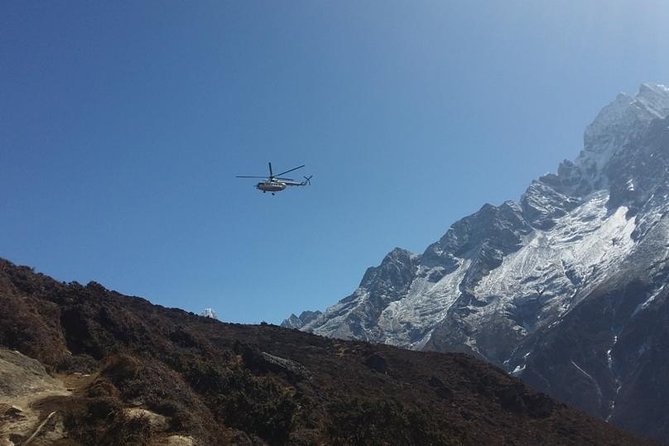
The day trip around Dingboche is the second planned acclimatization pause. It is a strong feature of the schedule because the trek does not simply keep climbing without a break.
You will still walk, but the purpose is to spend more time at increasing altitude before tackling the route to Lobuche and Gorakshep. That gradual approach is more sensible than cramming the trek into a shorter number of walking days.
Dingboche is also a natural place to judge how you are responding. A good guide will pay attention to the group, and the staff’s past handling of altitude problems is a reason to value the guided format. One account describes a guide changing the itinerary when two people developed altitude complications. That does not make the trek risk-free, but it shows why you should choose a company that treats health concerns seriously.
Day 7: The trail to Lobuche
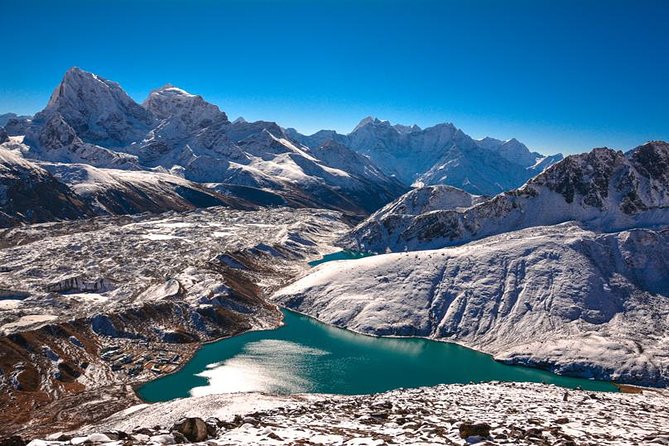
The next stage takes you to Lobuche. The supplied schedule does not give a walking time for this day, but you should expect the route to feel increasingly demanding as the altitude rises.
The character of the scenery changes here. You are moving away from the lower villages and toward a more exposed, rugged setting. The reward is not comfort. It is the feeling that you are nearing the main goal.
Lobuche is an important overnight stop because it breaks the approach to Base Camp into manageable sections. You do not have to attempt the entire route from Dingboche in one push, and that helps preserve energy for the next day.
This is a day to follow your guide’s pace closely. It is also a good point to remember that reaching Base Camp is not the same as reaching the summit of Everest. You are making a demanding trek to the base of the mountain, not climbing Everest itself.
Day 8: Everest Base Camp and Gorakshep
This is the central day of the trip. You trek to Everest Base Camp and return to Gorakshep for the night.
The experience is valuable because the approach gives the destination context. You have already walked from Lukla through Phakding, Namche Bazaar, Dingboche, and Lobuche. Base Camp is the physical goal, but the achievement comes from the full chain of walking days that leads there.
You should expect this to be a demanding day. The route includes the journey to Base Camp and the return to Gorakshep, so reaching the destination is not the end of the day’s effort. Save energy, carry only what you need, and listen carefully to the guide’s instructions.
Guides such as Ramesh, Nima, Madan, Manoj, and Pralhad have been singled out for encouragement, safety, and steady support. That personal guidance can make a real difference when tiredness and altitude begin to compete with excitement.
Day 9: Kalapatthar, then down to Pheriche
The morning hike to Kalapatthar is followed by a trek to Pheriche. This is one of the route’s most rewarding combinations because you get a high viewpoint and then begin descending.
Kalapatthar is included as a viewpoint stop, while Base Camp itself is the destination reached the previous day. The two experiences are different. Base Camp gives you the satisfaction of arriving at the foot of Everest, while the hike to Kalapatthar is aimed at mountain views from a higher position.
After the viewpoint, the descent to Pheriche gives your body a chance to move toward lower altitude. Do not assume the downhill section will feel easy. Descending on rocky trails can be tiring in a different way, especially after the previous day’s effort.
Days 10 and 11: Retracing the trail to Lukla
The return begins with a trek back to Namche Bazaar, retracing the same trail. Some people find the return less exciting because the route is familiar. I see a benefit in it: you notice how much higher and harder the earlier stages felt when you first walked them.
The final trekking day takes you back to Lukla. This is a satisfying finish, but it is not a casual stroll. You are still covering mountain trails after many days of exertion.
The return to Lukla also prepares you for the flight back to Kathmandu. Keep your plans after the trek flexible. The experience includes the flight, but mountain weather can influence flight operations, and the exact timing may shift.
Day 12: Flight back to Kathmandu
The final day includes the flight to Kathmandu and a transfer to your hotel. It is a useful door-to-door ending, especially after a long trek when arranging a taxi or finding your hotel can feel like unnecessary work.
The return flight closes the route neatly, from Kathmandu to Lukla and back again. You finish with the practical advantage of having the main transport arranged rather than solving it independently.
What the $1,445 price really covers
At $1,445 per person, the cost is reasonable for a guided 12-day trek with several major items already arranged. You receive accommodation and meals during the trek, permits, round-trip flights between Kathmandu and Lukla, a local guide, and the return hotel transfer.
Breakfast, lunch, and dinner are included for 11 days. That takes care of the main daily food costs and reduces the need to carry a large food budget. Specific meal choices are not listed, so tell the operator about dietary requirements when booking.
The price does not cover everything. You need to add:
- Travel insurance
- Personal expenses
- Porter service
- Tips
The porter exclusion is especially important. If you do not want to carry your own full load, ask Mosaic Adventure exactly what porter arrangements and costs are available. Also confirm what accommodation is included, since the information supplied does not give room types or a detailed lodging list.
Guides, group size, and the human side of the trek
The strongest part of this experience is the level of personal support described by the guide team. Names connected with the trek include Nima, Ramesh, Madan, Manoj, Pralhad, Purna, Laxman, Sonam, Raj, and others.
The practical value is clear. Guides have helped people walk at different speeds, arranged extra support when one person felt stronger than a companion, and changed plans when altitude symptoms appeared. That is the kind of help you want on a remote trek.
A group of up to 12 is a good compromise. You have company, but the group is not so large that every decision becomes slow. The minimum booking requirement is two people, so this is not designed as a solo booking.
Who should book, and who should think twice
I would recommend this trek to fit hikers who want a structured Everest Base Camp experience without arranging every permit, flight, meal, and guide independently. It suits people who value local support and are comfortable with basic mountain travel.
You should prepare seriously before arriving. The itinerary includes rocky, uphill trails and several long walking days. Strong physical fitness is required, and a positive attitude helps when the weather, altitude, or tiredness makes the day harder than expected.
I would think twice if you want a relaxed holiday, dislike early starts, or need a highly detailed luxury schedule. The meeting time is 5:15 am, and the route can be physically and mentally demanding. You also need to accept that the itinerary may require changes for safety or weather.
Booking confirmation is provided at the time of reservation. You must provide each person’s passport name, number, expiry date, and country. Cancellation terms are strict close to departure: cancel two to six full days before the start for a 50 percent refund, while cancellation less than two full days before the start receives no refund. Check the exact local-time cutoffs before paying.
Should you book Mosaic Adventure’s Everest Base Camp trek?
Book it if you want the main logistics handled, value a small guided group, and are ready to work for the scenery. The included Lukla flights, permits, meals, and acclimatization days give the $1,445 price real practical value.
Before booking, ask for the monastery details, accommodation standards, porter pricing, and the plan for flight delays. If the answers suit your expectations, this is a well-organized way to take on a serious Himalayan trek with a guide team known for encouragement and careful support.
FAQ
How long is the Everest Base Camp trek?
The experience lasts approximately 12 days, including the flight from Kathmandu to Lukla, the trek to Everest Base Camp, the return to Lukla, and the flight back to Kathmandu.
What is included in the $1,445 price?
The price includes accommodation and meals during the trek, trekking permits, round-trip flights between Kathmandu and Lukla, a local guide, and the transfer back to your hotel in Kathmandu.
Are meals included?
Yes. Breakfast, lunch, and dinner are included for 11 days. You should provide any dietary requirements when booking.
Is porter service included?
No. Porter service is not included in the listed price. You need to arrange and pay for it separately if required.
How large is the group?
The maximum group size is 12 people. At least two people are required per booking.
What fitness level is needed?
A strong physical fitness level is required. The route includes rocky and uphill terrain, with some walking days lasting about eight hours.
What information is required at booking?
You must provide the passport name, passport number, expiry date, and country for every participant. Booking confirmation is provided at the time of reservation.
Latest treks added in Kathmandu
- Private Manaslu Circuit Trek at Himalayas★ 5.0 · 3 reviews
- Ghorepani Poonhill Trek★ 5.0 · 5 reviews
- Ghorepani Poon Hill Trek★ 5.0 · 16 reviews
- Amazing 1 Day Trekking Experience in Kathmandu Nepal★ 5.0 · 24 reviews
- Upper Mustang Trekking★ 5.0 · 2 reviews
- Upper Mustang Trekking★ 3.0 · 2 reviews
- Upper Mustang Trek★ 5.0 · 5 reviews
- Upper Mustang Trekking★ 5.0 · 4 reviews
Everest Base Camp Treks, compared.






Browse the lists this tour appears in