
REVIEW · KATHMANDU
Everest Base Camp Trek – 14 Days
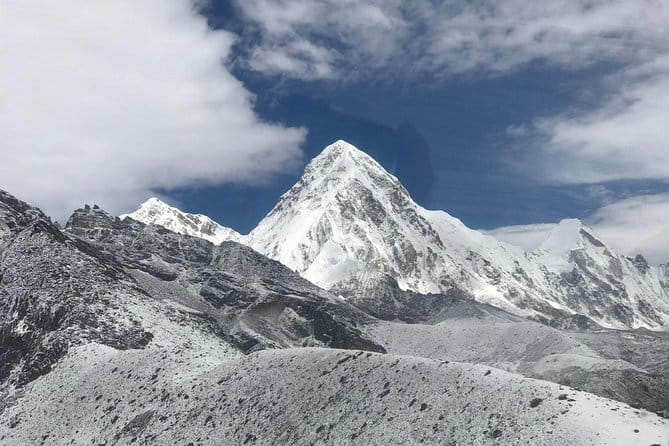
Everest Base Camp is not a quick scenic walk. It is a serious high-altitude trek with suspension bridges, glacial valleys, thin air, and a hard-earned arrival at 5,365 meters. I like that this 14-day route builds in acclimatization days at Namche Bazaar and Dingboche instead of rushing straight uphill.
I also like the practical setup: porters carry the main bags, while your guide handles the route, permits, meals, and emergency planning. The main catch is altitude and uncertainty. Lukla flights can shift to Manthali Airport during busy seasons, and the 15-kilogram luggage limit means you must pack with care.
- Two acclimatization days give your body time to adjust at Namche Bazaar and Dingboche.
- Kala Patthar reaches 5,555 meters, offering one of the finest Everest viewpoints on the route.
- Porter service is included for 11 days, with one porter assigned for two people.
- Guides such as Maddy, Kishor, Chris, and Rajendra have led different departures.
- The $1,800 price includes flights, permits, meals, staff, lodging, and transfers, but not insurance or personal gear.
- Groups are capped at 14 people, though many departures may be smaller.
Why This 14-Day Trek Works
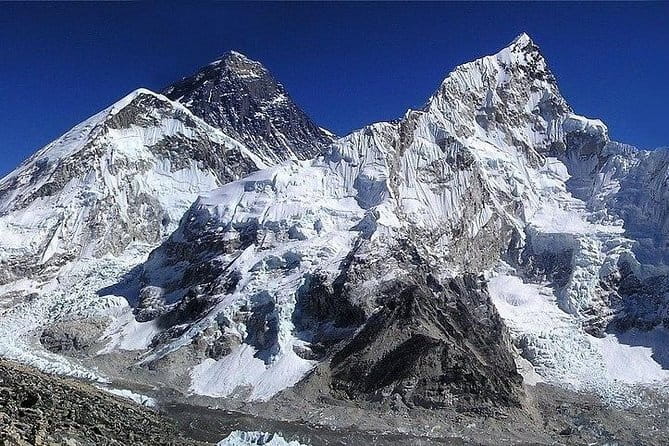
The appeal here is simple: you walk into the heart of the Everest region without having to organize every moving part yourself. Ace the Himalaya arranges the Kathmandu transfer, domestic flights, guide, porter team, guesthouses, permits, meals, and filtered trail water.
That matters in Nepal. A trek to Everest Base Camp involves more than following a path. You need the right permits, a safe plan for altitude, a way to move bags, and someone who knows what to do if a flight is delayed or a trekker becomes ill.
You still do the hard work. The route gains altitude steadily, the air gets thin, and several days involve long walks over uneven mountain trails. This is guided trekking, not a soft adventure with a vehicle waiting at each stop.
The group limit is 14 people, which is small enough for personal attention without requiring the cost of a private trek. Different departures feature different guides. Names connected with this program include Maddy, Kishor, Chris, and Rajendra Khatry, with porters such as Saman and Sher also working on some departures.
Day 1: A Gentle Start in Kathmandu
Your trip begins at Tribhuvan International Airport, where an Ace the Himalaya representative meets you and transfers you to your Kathmandu hotel. The first day is mainly about arrival, settling in, and getting ready.
Two nights of three-star, twin-share accommodation in Kathmandu are included, with breakfast. Lunch and dinner in the capital are not included, so you have freedom to choose your own meals and spend at your own pace.
The Kathmandu stay is useful because the mountain portion starts quickly. Use this time to check your clothing, confirm your luggage, and make sure your insurance includes high-altitude emergency rescue and evacuation. That insurance is not included in the tour price.
More Everest Base Camp Treks in Kathmandu
- Everest Base Camp Trek
★ 5.0 · 842 reviews - Everest Base Camp Trekking
★ 5.0 · 485 reviews - Everest Base Camp Trekking – 13 Day
★ 5.0 · 365 reviews
Day 2: Flying to Lukla and Walking to Phakding
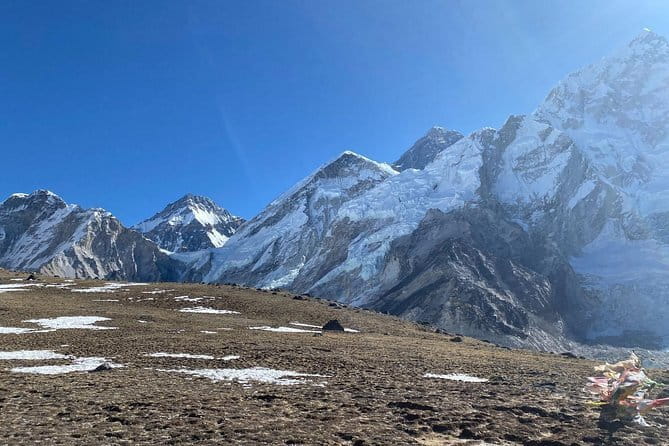
The mountain section begins with the flight to Tenzing-Hillary Airport in Lukla. The flight itself is short, but it is one of the key logistical pieces of the trek.
During peak trekking months, flights may operate from Manthali Airport in the Ramechhap district instead of Kathmandu because of air traffic congestion. That can mean an early road transfer from Kathmandu, so check your departure details carefully.
From Lukla, you begin walking toward Phakding. This first trail day lets you ease into the rhythm of the trek before the bigger climbs begin. Your bags are handled by porters, while you carry only what you need for the day.
Guesthouse accommodation with attached toilets is included in Lukla, Phakding, and Namche. At higher villages, facilities can be simpler, so it is wise to value the attached bathroom nights when they appear.
Days 3 and 4: Crossing Bridges into Namche Bazaar
The route follows the Dudh Koshi River toward Namche Bazaar. You cross suspension bridges decorated with prayer flags, pass through Sagarmatha National Park, and gain altitude along a trail that grows more demanding as you go.
Namche is the commercial and social center of the Khumbu region. It is also where the itinerary makes an important choice: you stay for an acclimatization day rather than pushing higher immediately.
The extra day includes a shorter hike to the Sherpa Museum and nearby viewpoints. The museum offers useful context about Sherpa customs and mountaineering, while the walk helps your body adjust without adding another overnight gain in altitude.
I like this pause because it gives the trek a human scale. You are not simply collecting altitude numbers. You get time to see how a high mountain town functions and to learn more about the people who live and work in this region.
Namche can still feel demanding. Even a short walk may leave you breathing harder than expected. Move slowly, drink the filtered water supplied on the trail, and tell your guide if you feel unwell.
Day 5: Tengboche and Its Monastery
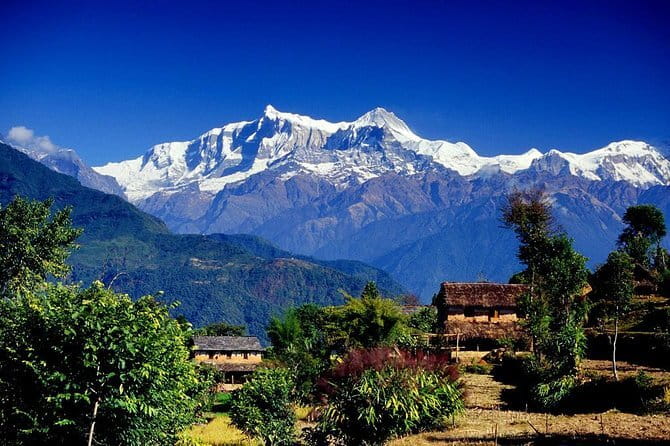
From Namche, the trail continues beside the Dudh Koshi with broad mountain views. You eventually reach Tengboche at about 3,860 meters, where the monastery is the main cultural stop.
The path drops toward Debuche, crosses the Imja Khola, and climbs again. That pattern is typical of Himalayan trekking: you may lose elevation only to regain it later, so the day can feel tougher than the distance suggests.
Tengboche Gompa gives the route a strong Buddhist character. Inside the monastery, you can see religious images and objects connected with local practice. The setting also matters. This is not a museum placed beside a road, but a working mountain monastery reached on foot.
The day is physically serious, and the altitude begins to affect most people in some way. Keep your pace steady. Your guide’s job is not to race you to the lodge, but to help the group reach each stop safely.
More Trekking Tours in Kathmandu
- Annapurna Circuit Trek with Tilicho Lake
★ 5.0 · 368 reviews - Everest Base Camp Trek
★ 5.0 · 350 reviews - Everest Base Camp Trek -14 Days
★ 5.0 · 321 reviews - Manaslu Circuit Trek
★ 5.0 · 292 reviews
Days 6 and 7: Dingboche and a High Acclimatization Hike
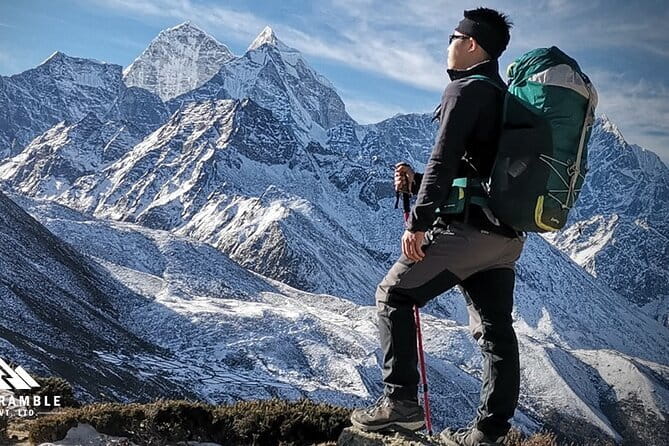
The trail passes Pangboche, where mani stones line parts of the route, before continuing to Dingboche. From here, the valley opens toward high peaks and the air becomes noticeably thinner.
Day 7 is another rest day, but rest does not mean staying in bed all morning. The planned hike goes toward Nangkartshang Peak above Dingboche. It is a useful acclimatization walk and a strong viewpoint, though the climb can be tiring at this altitude.
This is one of the most valuable parts of the itinerary. Two nights at Dingboche, combined with a gradual ascent, give you a better chance of handling the higher section ahead. No acclimatization plan can remove the risk of altitude sickness, but rushing would be a poor choice.
You should judge the trek by how your body responds, not by pride or group pressure. A good guide, including the guides assigned to this program, should pay attention to symptoms and adjust the plan when needed.
Day 8: Memorial Stones and Lobuche
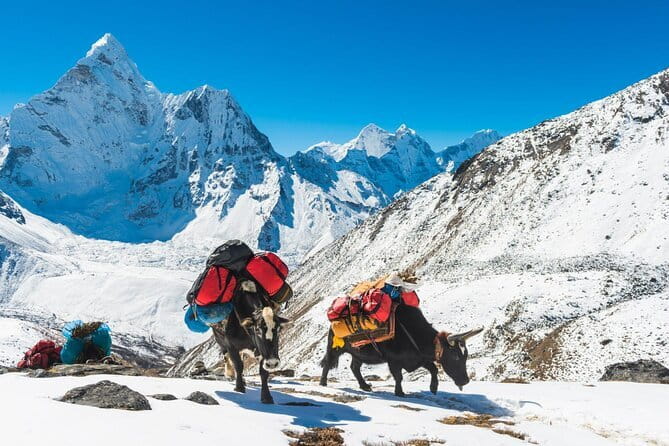
Above Dingboche, the trail follows the lateral moraine of the Khumbu Glacier toward Lobuche. The terrain becomes more rugged, and the air feels increasingly spare.
Along the way, you pass stone memorials honoring climbers who died on nearby peaks. This is a quiet and sobering section of the trek. Everest is often presented as a dream destination, but these memorials show the risk behind the photographs and summit stories.
Lobuche is not a day to spend energy carelessly. The route is high, the nights are cold, and the following day is the push to Base Camp. Keep your day bag light, protect yourself from the sun, and save some strength for the glacier trail.
Day 9: The Long Walk to Everest Base Camp
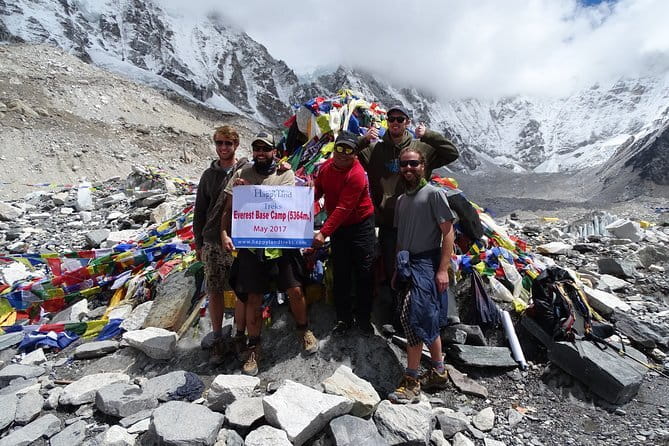
This is the day most people picture before booking the trek. From Lobuche, you walk along the Khumbu Glacier toward Everest Base Camp at 5,365 meters.
The route is difficult because of the altitude and uneven ground. It is not a smooth path to a single viewpoint. The glacier area can feel rough and slow, and the final approach demands patience.
In spring, Base Camp may include climbing activity, though conditions vary by season. Even without an expedition in progress, reaching the camp is a major achievement. You are at the closest point to Everest available without mountaineering equipment.
The stay at Base Camp is brief, listed at about 30 minutes, so do not expect a long camp visit. The reward is the setting, the scale of the Khumbu Glacier, and the knowledge that you walked there from Lukla.
Day 10: Kala Patthar at 5,555 Meters
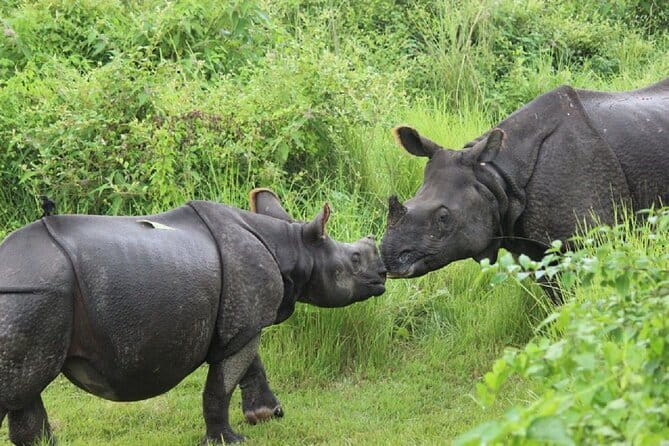
The climb of Kala Patthar is often the most demanding day, but it can also provide the clearest mountain views of the entire route. At 5,555 meters, this small peak is higher than Everest Base Camp.
The early morning ascent is steep and tiring. At this height, every step can feel deliberate. The payoff is a wide view toward Mount Everest and the surrounding peaks, with the light changing across the rock and ice.
I would treat this as a day for patience rather than speed. The ascent is not long in the usual lowland sense, but altitude changes the rules. Your guide can help set a pace that keeps the group together and watches for signs of trouble.
After Kala Patthar, the trek turns downhill. That sounds easier, but descending on tired legs over rocky trails still takes care.
Days 11 and 12: Back Through Namche to Lukla
The return route passes through Pangboche and Tengboche before reaching Namche Bazaar again. You will recognize parts of the trail, but the downhill direction changes the experience.
Day 12 continues to Lukla, where the mountain walking ends. The final trail day is long, and it can be surprisingly emotional. After so many high-altitude villages, bridges, and mountain views, Lukla feels like a transition back to the outside world.
Porter service is included for 11 days, with one porter for two people. Pack thoughtfully and respect the luggage limit of 15 kilograms for the domestic flights. You should also bring a small daypack for water, layers, sun protection, and personal items.
Tips for guides and porters are not included, and tipping is expected. Plan for this before you leave home so the final day does not catch you off guard.
Days 13 and 14: Returning to Kathmandu
The flight from Lukla to Kathmandu takes about 35 minutes when conditions allow. It is a scenic final look at the mountains, but flights in this region can be affected by weather and air traffic.
On arrival, an airport representative transfers you back to Kathmandu. The final night gives you time to rest before your departure from Nepal the next day.
Day 14 ends with a transfer to Tribhuvan International Airport. The activity begins and ends with airport transfers, which is useful if you want one company handling the main transport points.
What the $1,800 Includes
At $1,800 per person, the price is reasonable for a guided Everest Base Camp trek because it covers several costs that quickly add up when arranged separately.
You receive:
- Kathmandu airport and hotel transfers in a private tourist vehicle
- Two nights of three-star, twin-share Kathmandu lodging
- Trek lodging, with attached toilets in Lukla, Phakding, and Namche
- Kathmandu to Lukla return airfare and airport departure tax
- A licensed English-speaking guide trained in first aid
- Porter support for 11 days
- Staff wages, food, lodging, insurance, equipment, and medicine
- Sagarmatha National Park and local trekking fees
- Breakfast, lunch, and dinner during the trek
- Filtered trail water using a Katadyn Pocket Water Filter
- Seasonal fruit
- A duffel bag, trekking map, sun hat, and completion certificate
- A first-aid kit and emergency evacuation arrangements
The value comes from the structure. You are paying for an organized mountain operation, not just a walking route. Meals, permits, staff support, and domestic flights are already handled.
You still need to budget for Kathmandu lunches and dinners, alcoholic and other drinks, personal trekking equipment, tips, international airfare, travel insurance, and a Nepal visa. The visa is available on arrival, according to the supplied information.
The price is based on two people booking together, but it can also apply to a single booking if you join an existing group. If no group is available, or if you request a private solo departure, a $250 single surcharge applies.
Who Should Book This Trek?
I would recommend it to you if you want the classic Everest Base Camp route but do not want to manage permits, flights, porters, meals, and mountain lodging yourself.
It suits people with moderate physical fitness who can handle repeated long walking days at high altitude. You should be comfortable with basic guesthouse accommodation and changing conditions. The route is not designed for someone seeking luxury or a relaxed sightseeing holiday.
It is also a good fit if you value a guide who can respond to practical problems. Past departures have included strong personal support from guides such as Maddy, Kishor, Chris, and Rajendra Khatry, with porters including Saman and Sher. The repeated praise for guide care, porter support, clear organization, and safety attention points to the operation’s strongest features.
I would think twice if you dislike fixed schedules, shared rooms, or physical uncertainty. The trek has a clear plan, but flights and mountain conditions can still disrupt the timetable. You also need your own high-altitude rescue insurance and proper equipment.
Cancellation terms are fairly useful if your plans change early: cancel at least six full days before the start for a full refund. A cancellation two to six days ahead receives 50 percent, while cancellation less than two full days before the start is nonrefundable.
FAQ
How long is the Everest Base Camp trek?
The experience lasts approximately 14 days, including arrival and departure transfers, domestic flights, two acclimatization days, the trek to Base Camp, and the return to Kathmandu.
What is the maximum group size?
The group can have up to 14 people. The price is based on two people booking together, and a $250 single surcharge may apply if no group is available or you request a solo departure.
Are flights to Lukla included?
Yes. Return airfare between Kathmandu and Lukla, including airport departure tax, is included. During peak trekking periods, flights may operate from Manthali Airport in Ramechhap instead of Kathmandu because of congestion.
Is porter service included?
Yes. Porter service is included for 11 days, with one porter assigned to two people. The domestic flight luggage allowance is 15 kilograms.
Are meals included?
Breakfast, lunch, and dinner are included during the trek. Breakfast is included during the Kathmandu hotel stay, but lunch and dinner in Kathmandu are not included. Drinks are also excluded.
Do I need travel insurance?
Yes. You must arrange your own travel insurance covering emergency high-altitude rescue and evacuation. This is not included in the tour price.
Should You Book It?
Book this trek if you want a well-supported route to Everest Base Camp with the key costs bundled into one price. The two acclimatization days, porter support, first-aid-trained guide, emergency arrangements, and small-group limit make the plan more practical than trying to organize the route alone.
Go in with clear expectations. You will face long days, thin air, simple mountain lodging, uncertain flight conditions, and a demanding climb to Kala Patthar. If you are prepared for that, this 14-day itinerary gives you a sensible way to reach Base Camp and experience Sherpa villages, Buddhist sites, glacier valleys, and the high mountain world around Everest.
Latest treks added in Kathmandu
- Private Manaslu Circuit Trek at Himalayas★ 5.0 · 3 reviews
- Ghorepani Poonhill Trek★ 5.0 · 5 reviews
- Ghorepani Poon Hill Trek★ 5.0 · 16 reviews
- Upper Mustang Trekking★ 3.0 · 2 reviews
- Amazing 1 Day Trekking Experience in Kathmandu Nepal★ 5.0 · 24 reviews
- Upper Mustang Trekking★ 5.0 · 2 reviews
- Upper Mustang Trek★ 5.0 · 5 reviews
- Upper Mustang Trekking★ 5.0 · 4 reviews
Everest Base Camp Treks, compared.






Browse the lists this tour appears in