
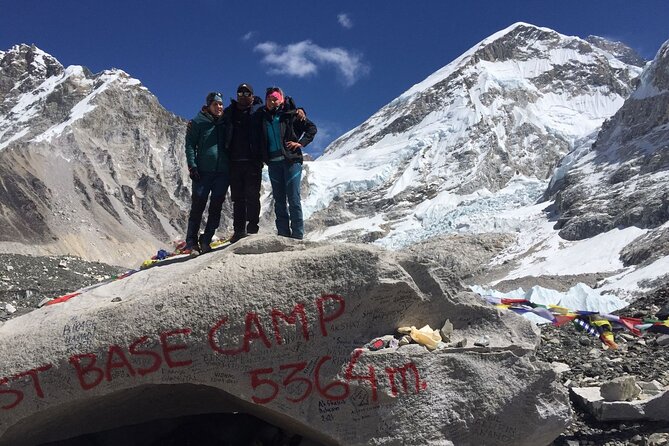
REVIEW · KATHMANDU
Everest Base Camp Trek with Helicopter Return – 10 Days
The clever part of this 10-day Everest Base Camp trek comes at the end: after walking to Base Camp and climbing Kala Patthar, you skip the long return route and fly back toward Kathmandu by shared helicopter. That saves several hard walking days and gives you a thrilling final look at the Khumbu peaks.
I like the sensible acclimatization stops at Namche Bazaar and Dingboche, and I like that meals, tea-house lodging, permits, flights, porters, and trekking gear are bundled into the price. The main concern is the pace. Ten days is short for this altitude, so you need good fitness, a steady attitude, and some flexibility if mountain weather delays a flight.
Key points to know before booking
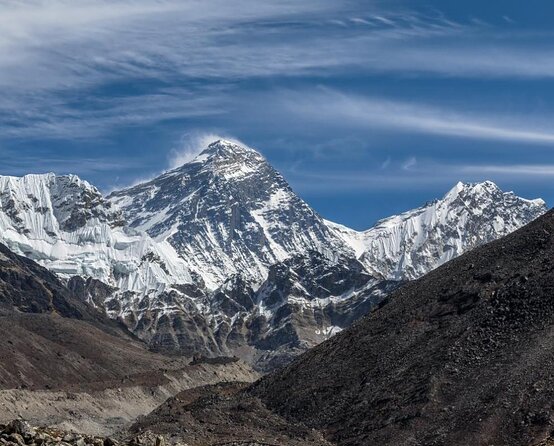
- Kala Patthar is the grand finale: Climb to Nepal’s famous Himalayan viewpoint before the helicopter return.
- Four major peaks frame the route: You travel through the Everest region with views toward Everest, Lhotse, Makalu, and Cho Oyu.
- Acclimatization is built in: Rest days at Namche and Dingboche help your body adjust before the highest walking days.
- The package covers the costly basics: Tea-house rooms, trekking meals, permits, domestic flights, porters, guide service, sleeping bag, down jacket, and walking pole are included.
- The group is limited to 15: That is small enough for a more personal feel, while the shared helicopter keeps the price below a private flight.
- Weather still rules the mountains: Lukla flights and the helicopter return depend on safe flying conditions.
Why the helicopter return changes the trek
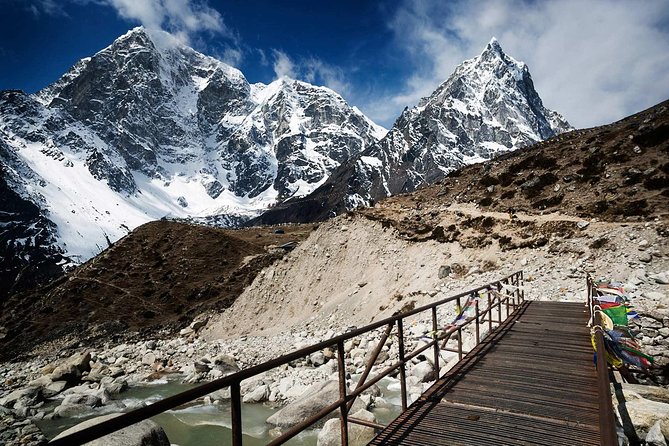
A normal Everest Base Camp route takes you back down much of the same trail. That return is not simply a gentle stroll. After reaching Base Camp, your legs are tired, and you still face the long walk to Lukla before flying back to Kathmandu.
This trip removes that repeat section. On Day 9, you climb Kala Patthar, then return by group-sharing helicopter from the Everest region toward Kathmandu. The supplied details refer to both Kala Patthar and Gorakshep as the helicopter area, so I would confirm the exact pickup point and flight plan before departure.
The helicopter is more than a shortcut. From above, you may see the valleys, glaciers, ridges, and villages that took you days to cross on foot. It also gives you a strong ending to a demanding trek. The tradeoff is price. At $3,400 per person, this is not a budget Everest Base Camp walk, but the return flight accounts for a major part of the cost.
More Everest Base Camp Treks in Kathmandu
- Everest Base Camp Trek – 14 Days
★ 5.0 · 1,499 reviews - Everest Base Camp Trek
★ 5.0 · 842 reviews - Everest Base Camp Trekking
★ 5.0 · 485 reviews
What the $3,400 price includes
The price covers airport pickup and drop-off, Kathmandu accommodation with breakfast, the flight from Kathmandu to Lukla, tea-house or lodge accommodation during the trek, and breakfast, lunch, and dinner while you are on the trail.
It also includes an English-speaking trekking guide, necessary porters, trekking permits, a TIMS card, government taxes, landing and facility fees, and office service charges. One porter is assigned for every two trekkers. The porter team’s transportation, food, accommodation, salary, equipment, and insurance are included.
You also receive a duffle bag, down jacket, sleeping bag, walking pole, trekking map, and trip achievement certificate. That package can offer solid value if you would otherwise need to rent cold-weather gear, arrange permits, hire porters, and book each lodge and meal yourself.
The exclusions matter. Lunch and dinner in Kathmandu are not included, nor are drinks such as tea, coffee, hot chocolate, boiled water, bottled water, cola, or beer. Phone calls, internet, laundry, hot showers, battery charging, bar bills, visa fees, and tips are also your responsibility.
Bring accurate US dollar cash and two passport photographs for the Nepal entry visa process. Tips for guides and porters are not mandatory, but they are expected in the local trekking culture, so include them in your budget.
Day 1: Kathmandu arrival and a soft landing
Your first day begins with an airport meeting and private transfer to your Kathmandu hotel. The rest of the day is free for sleep, rest, or a little exploring.
That open time is useful. You are about to start early and walk at altitude, so do not feel obliged to turn arrival day into a sightseeing marathon. The tour provides Kathmandu accommodation and breakfast, but you pay for lunch and dinner in the city.
Day 2: Lukla flight and the walk to Phakding
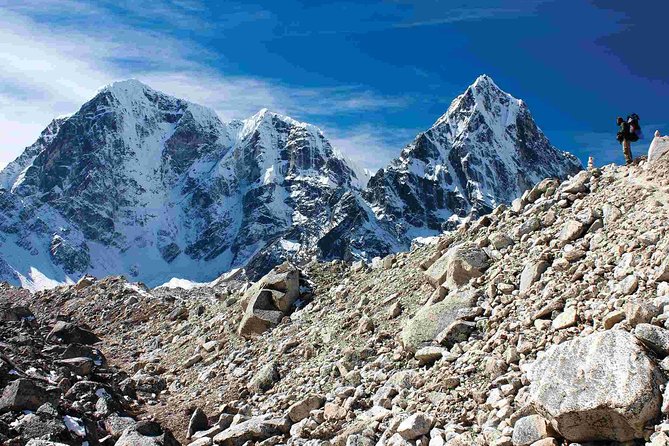
The morning starts early with a drive to the domestic airport for the flight to Lukla. After meeting the trekking crew, you begin walking toward Phakding.
The flight is short, listed at about 30 minutes, but it places you directly at the gateway to the Everest region. From Lukla, the route follows green hills and offers views toward Kusum Kanguru. The first walking day is a useful introduction to the trail without sending you straight into the highest elevations.
The schedule lists a long overall day, so be ready for an early start and limited downtime. Lukla flights are also weather-sensitive. The tour states that poor weather can cause cancellation or a date change, so keep some flexibility in your wider Nepal plans if possible.
More helicopter flights in Kathmandu
- Everest Base Camp Trek with Helicopter Return from Gorakshep to Lukla
★ 5.0 · 161 reviews - Everest Base Camp Trek with Helicopter Return to Lukla – 10 Days
★ 5.0 · 34 reviews - Everest Base Camp Trek with Helicopter Return -11 Days
★ 5.0 · 12 reviews - Helicopter Return Everest Base Camp Trek, KTM-LUKLA & Gorakshep-KTM by Heli
★ 5.0 · 9 reviews
Day 3: Namche Bazaar and the Hillary suspension bridge
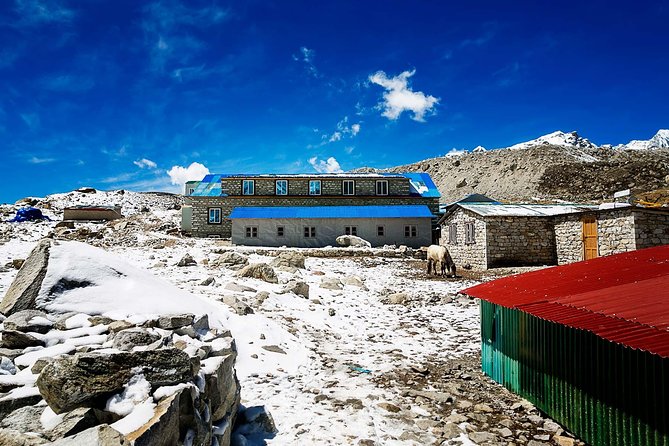
After breakfast, the trail becomes more demanding as it follows the Dudh Koshi River through pine forest. You cross the Hillary suspension bridge, pass the Sagarmatha National Park entrance and check-post, and climb toward Namche Bazaar.
Namche is the Sherpa capital and the main gateway to the Everest region. It is one of the most important stops on the trek because it marks the shift from lower valleys to serious high-altitude walking.
You also have time for the Sherpa Museum, though its admission is not included. I like this stop because it gives the mountain journey a human context. The route is not only about big peaks. It passes through Sherpa communities with their own traditions, trade routes, and mountain skills.
The day is listed as roughly 12 hours, which signals a long and strenuous walk. The schedule may feel ambitious, especially for anyone still adjusting to the altitude and the uneven trail.
Day 4: Acclimatization above Namche
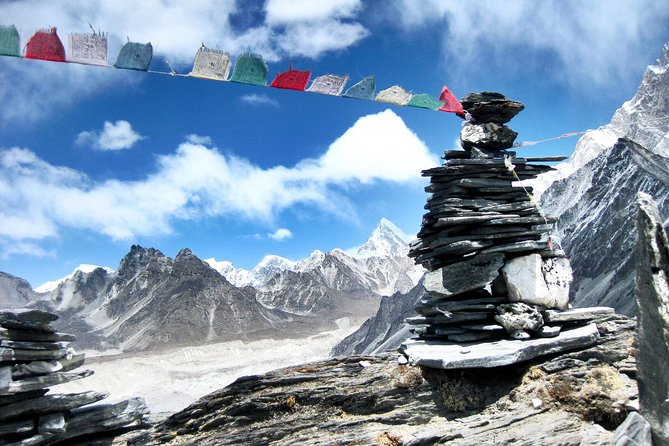
Day 4 is set aside for acclimatization. You hike toward the Everest View Hotel and the Syangboche area for broad views of Everest and the surrounding peaks, then return to Namche.
This is an important design choice. At altitude, walking higher during the day and sleeping lower at night gives your body time to adjust. You still get an active day rather than simply sitting in the lodge.
Do not treat this as an easy sightseeing outing. You are already at elevation, and the climb can feel harder than the distance suggests. Keep your pace slow, drink what you need, and listen closely to the guide if you feel unwell.
Day 5: Tengboche and its great monastery
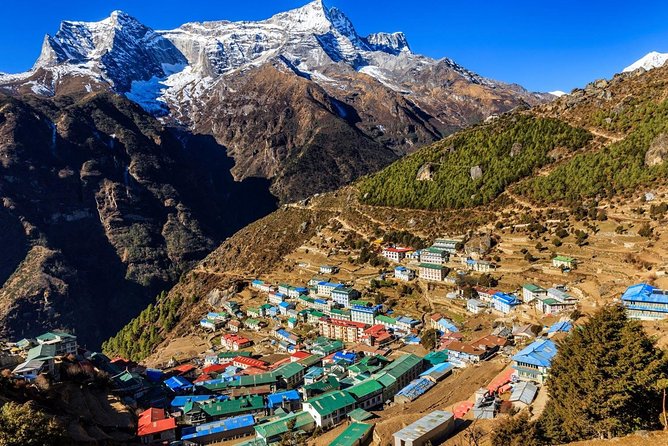
The trail leaves Namche with a mixture of smoother sections and short climbs and descents. You pass Kayangjuma and Sanasa, cross the Dudh Koshi near Punki Tenga, and then face a tougher ascent to Tengboche.
Tengboche is one of the most memorable stops on the route. It is home to the largest monastery in the Khumbu region and sits on the approach to Everest Base Camp. The monastery gives the walk a strong cultural dimension, while the surrounding high peaks keep the setting firmly Himalayan.
This is another long day, listed at about 12 hours. Your legs may notice the change from the lower trail, especially after the climb from Punki Tenga. The reward is the setting and the sense that you are now well inside the Everest region.
Day 6: Pangboche and the Imja Valley to Dingboche
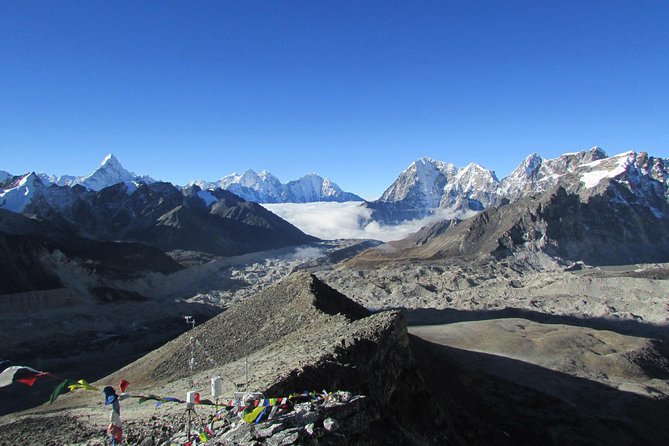
The trail continues through chortens, mani walls, and small villages. You cross the Imja Khola and pass Pangboche, a village at about 3,900 meters, before entering the Imja Valley and continuing toward Dingboche.
The religious markers along the route are worth noticing. Chortens and mani walls are not decoration placed for trekkers. They are part of the living Buddhist culture of the region. Walk respectfully and follow local guidance around them.
Dingboche is another acclimatization point. Its location makes it a practical base before the highest part of the trek. By this stage, you are walking at serious elevation, so the guide’s role becomes especially important. Past participants praised guides including Dipak, Ramesh, Ram, and assistant Rabi for staying attentive to safety, health, and pace. Your exact guide depends on the departure.
Day 7: High valleys, Duglha, and the approach to Lobuche
The route climbs through the Khumbu Khola Valley toward Duglha. You pass Dusa and Phulung Karpo, then continue near Chola Lake and cross a small bridge before the climb to Duglha.
The trail has repeated ups and downs, and altitude makes every section feel longer. Lobuche Peak is nearby, with its east and west summits, and the mountain scenery becomes increasingly stark as you move higher.
This is the kind of day when the trek’s moderate fitness requirement deserves serious attention. You do not need to be an elite climber, but you do need to manage a long walking day, cold conditions, uneven ground, and reduced oxygen.
Day 8: Everest Base Camp and the night at Gorakshep
The trail to Everest Base Camp includes more ups and downs and takes about three hours for the final approach, according to the schedule. You reach Base Camp, where you can see the Khumbu Glacier and the icefall, then return to Gorakshep.
This is the emotional center of the trek. Everest Base Camp is the starting point for climbers attempting Mount Everest, but reaching it on foot is an achievement in its own right. You get time at the site, then return to Gorakshep for the night.
Gorakshep is described as the last stop on the walking route. Accommodation here is functional rather than luxurious, and high-altitude lodges can feel basic. That is part of the deal with this itinerary. The value is in being close to the route’s high point, not in comfort.
Day 9: Kala Patthar and the helicopter to Kathmandu
The final trekking morning takes you to Kala Patthar, the celebrated viewpoint for panoramic views of the Khumbu mountains, including Everest. The climb is short in the schedule, but altitude makes it feel substantial.
Kala Patthar is arguably the best place on this route for a close visual connection with Everest. Base Camp lets you stand in the expedition area, while Kala Patthar gives you the broader mountain view. If the sky is clear, this is the moment to have your camera ready.
Afterward, you fly by shared helicopter toward Kathmandu. The exact flight may depend on weather, landing permissions, passenger arrangements, and safe conditions. The helicopter is one of the trip’s biggest attractions, but it is also the element most exposed to mountain weather.
The group-sharing setup matters. You get the special flight without paying for a fully private helicopter, but you may have less control over timing and seating than on a private charter. Confirm how the operator handles delays and what happens if the flight cannot operate that day.
Day 10: Airport transfer and departure
After breakfast, a private vehicle takes you to the international airport for your flight home or onward journey.
The final morning is straightforward, but do not schedule an extremely tight connection unless you have allowed for possible changes earlier in the trip. The tour includes airport transfer, while your onward flight is not part of the package.
Guides, group size, and the human side of the trek
The maximum group size is 15 people. That is large enough to bring different walking speeds and personalities, but still small compared with a mass-market tour. The guide and porters are the part of the package that can make or break a high-altitude trip.
The company assigns an English-speaking guide and porters, with one porter for every two trekkers. Previous departures have included guides named Dipak, Ramesh, and Ram, with Rabi assisting on one trip. Direct communication before arrival has also been a strength, with the company helping people prepare and responding quickly to messages.
I would ask before departure who your guide will be, how bags are divided, what the daily walking pace will be, and how altitude symptoms are handled. Those are practical questions, not fussing. On a 10-day high-altitude trek, clear answers help you make a sensible decision.
Who should book this route?
This trip suits you if you want the major Everest Base Camp experience but do not want to walk back to Lukla. It is also a good fit if you value having permits, transport, meals, lodges, porters, and basic gear arranged in one package.
You should have a moderate fitness level and be comfortable with long walking days. The itinerary includes two acclimatization periods, but it remains faster than a longer classic route. If you prefer a slower schedule or want more spare days for weather, compare it with a longer itinerary.
The route is not ideal if you want complete independence, luxury lodging, or a guaranteed helicopter departure at a fixed hour. The mountain decides much of the timing.
Should you book it?
Book this trek if the helicopter return is central to your plan and you value convenience over the lowest price. The combination of Base Camp, Kala Patthar, a small group, full trail support, and a flight back makes the $3,400 cost easier to justify.
Before paying, confirm the helicopter pickup point, weather-delay plan, guide assignment, porter baggage limits, and exactly what happens if the return flight cannot operate. If you are fit, flexible, and ready for basic tea-house conditions, this is a focused way to reach Everest Base Camp without retracing the entire route.
FAQ
How long is the Everest Base Camp trek with helicopter return?
The experience lasts approximately 10 days, including arrival and departure days in Kathmandu.
What time does the experience start?
The listed start time is 6:15 am.
Is airport pickup included?
Yes. Airport pickup and drop-off by private vehicle are included according to the schedule.
Is the flight to Lukla included?
Yes. The package includes the flight from Kathmandu to Lukla by plane.
Is the helicopter flight back to Kathmandu included?
Yes. The return from the Everest region to Kathmandu is included by group-sharing helicopter. The supplied details refer to the flight from Gorakshep, with the final trekking stop at Kala Patthar, so confirm the exact pickup arrangements before departure.
What meals are included?
Breakfast, lunch, and dinner are included during the trek. Breakfast is included with the Kathmandu accommodation. Lunch and dinner in Kathmandu are not included.
What trekking equipment is provided?
The package includes a duffle bag, down jacket, sleeping bag, walking pole, and trekking map.
Can I cancel for a full refund?
You can cancel for a full refund if you do so at least 24 hours before the experience starts. If poor weather or insufficient numbers cancel the experience, you are offered another date or experience, or a full refund.
Latest treks added in Kathmandu
- Private Manaslu Circuit Trek at Himalayas★ 5.0 · 3 reviews
- Ghorepani Poonhill Trek★ 5.0 · 5 reviews
- Ghorepani Poon Hill Trek★ 5.0 · 16 reviews
- Upper Mustang Trekking★ 3.0 · 2 reviews
- Amazing 1 Day Trekking Experience in Kathmandu Nepal★ 5.0 · 24 reviews
- Upper Mustang Trekking★ 5.0 · 2 reviews
- Upper Mustang Trekking★ 5.0 · 4 reviews
- Upper Mustang Trek★ 5.0 · 5 reviews
Everest Base Camp Treks, compared.






Browse the lists this tour appears in