
REVIEW · KATHMANDU
Everest Base Camp Trek with Helicopter Return from Gorakshep to Lukla
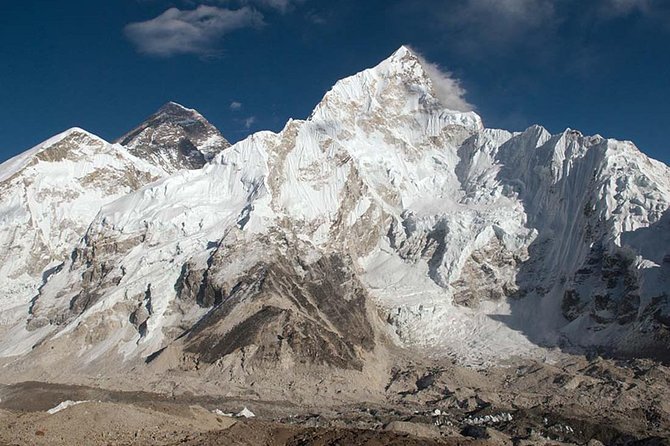
The best part of this Everest Base Camp trek comes after the hardest walking. From Gorakshep, you take a 20-minute helicopter flight back to Lukla instead of retracing the full trail. That saves several days and gives you a spectacular aerial look at the Khumbu region.
I like the careful altitude plan, with rest days at Namche Bazaar and Dingboche, and I like that the price includes permits, meals, porters, staff insurance, a guide, and the helicopter ride. The catch is the altitude and the price: at $3,000 per person, this is a serious physical and financial commitment, not a casual mountain holiday.
Key points to know before you book
- The helicopter return starts at Gorakshep: You still walk to Everest Base Camp and climb Kala Patthar, but you avoid the long descent to Lukla.
- Acclimatization is built into the route: Rest days at Namche Bazaar and Dingboche help you adjust before the highest sections.
- Kala Patthar reaches 5,555 meters: It is a hard climb, but it provides one of the finest high viewpoints on the trek.
- The group is limited to 14 people: A minimum of two people is required, and the guide-to-porter setup is clearly arranged.
- The price covers much of the difficult planning: Flights, permits, meals, lodging, porters, staff costs, filtered water, and the shared helicopter are included.
- The strongest praise centers on the team: Guides named Raj, Ram, Madan, and Rajendra are singled out for motivation, care, and steady support.
Why the helicopter return changes the Everest Base Camp trek
A standard Everest Base Camp route usually requires walking both ways between Lukla and Base Camp. This version keeps the classic approach but replaces much of the return journey with a flight from Gorakshep to Lukla.
That matters because the return is not simply an easier repeat of the approach. By the time you reach Gorakshep, you have already climbed to 5,364 meters, walked over rough ground near the Khumbu Glacier, and pushed through the demanding Kala Patthar day. The helicopter gives your legs a break and compresses the trip into about 12 days.
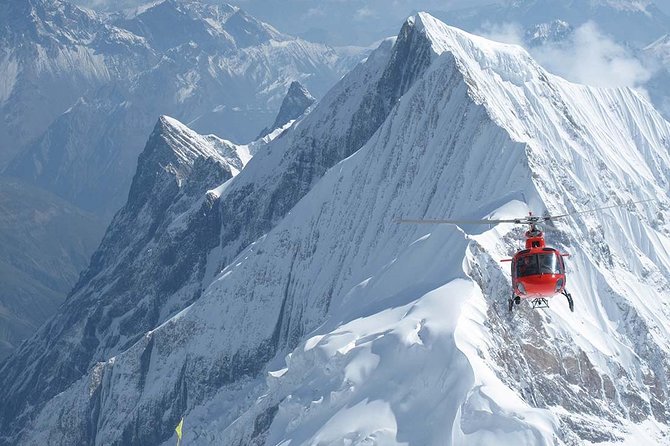
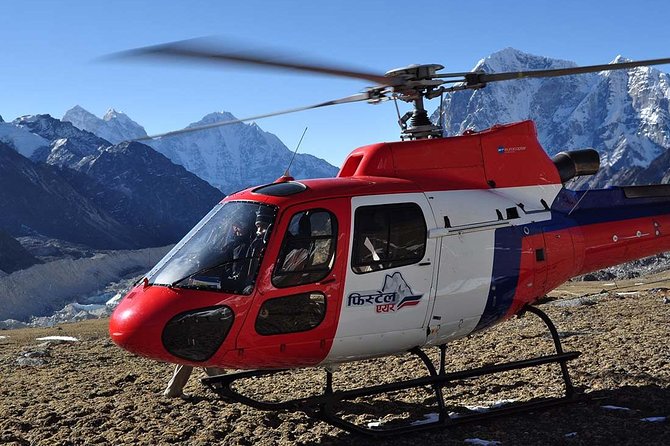
The flight is shared, so you should not expect a private scenic charter just for yourself. Still, a 20-minute flight over the Khumbu is a memorable way to see the route from above. Weather matters, and the flight may be moved or canceled if conditions are poor. A full refund or a new date is offered if the activity is canceled for that reason.
More Everest Base Camp Treks in Kathmandu
- Everest Base Camp Trek – 14 Days
★ 5.0 · 1,499 reviews - Everest Base Camp Trek
★ 5.0 · 842 reviews - Everest Base Camp Trekking
★ 5.0 · 485 reviews
What your $3,000 covers
At first glance, $3,000 is a lot for a 12-day trek. I think the value becomes clearer when you separate the price into its moving parts.
You receive two nights in a three-star Kathmandu hotel with breakfast, domestic airfare between Kathmandu and Lukla, trekking accommodation, all standard meals on the trail, national park and TIMS permits, a licensed English-speaking guide, porters, staff insurance, staff wages, equipment and medicine for the crew, and a shared helicopter flight from Gorakshep to Lukla.
The company assigns one porter for every two people. That is useful because you carry a daypack rather than your full luggage, but you still need to pack responsibly. The included duffel bag, trekking map, and sun hat are practical extras rather than costly souvenirs.
Filtered drinking water is provided along the route using a Katadyn Pocket Water Filter, and seasonal fruit is included. You still pay separately for drinks, personal trekking gear, tips, travel insurance, emergency evacuation coverage, Nepal’s entry visa, international flights, and meals in Kathmandu.
The important missing item is rescue insurance. At this altitude, you should not treat ordinary travel insurance as enough. Your policy must cover trekking at the relevant elevation and emergency rescue or evacuation.
Kathmandu arrival and the flight to Lukla
Day one is simple and useful. An airport representative meets you at Tribhuvan International Airport, takes you to the hotel by private tourist vehicle, and organizes a pre-trip meeting with your guide.
That meeting is your chance to check equipment, clarify the walking schedule, and ask about the helicopter plan. The local team includes first-aid training and carries an oximeter to measure oxygen saturation. This does not remove the risks of altitude, but it gives the guide a practical tool for monitoring how you are doing.
The next morning begins early with a scenic flight from Kathmandu to Lukla. The flight takes about 35 minutes and lands at Tenzing and Hillary Airport at 2,804 meters. From Lukla, the walk begins toward Phakding.
Phakding is not the dramatic high point of the route, but it eases you into the trek. You will already notice that the trip depends on small mountain lodges, porters, changing weather, and steady walking rather than fast sightseeing.
Phakding to Namche Bazaar, about six hours
The route follows the Dudh Koshi and crosses suspension bridges decorated with prayer flags. The river crossings and forest sections make this an enjoyable introduction to the Khumbu, but the climb toward Namche is a real step up.
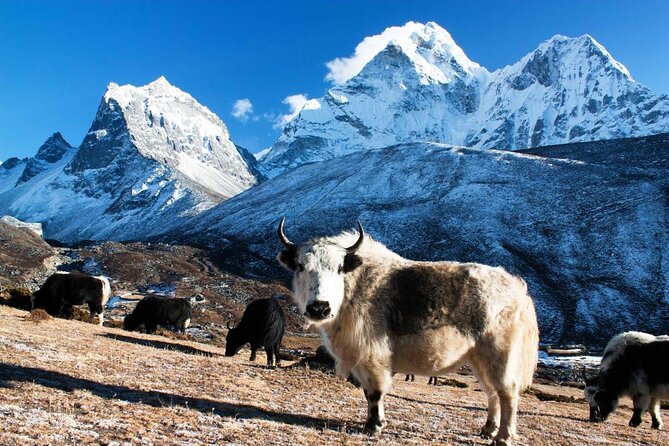
The walk from Phakding to Namche takes about six hours. Namche Bazaar sits at roughly 3,440 meters and is the main trading center on the route. It is also where the effects of altitude begin to feel more serious.
The stay here is valuable because the schedule gives you an acclimatization day rather than rushing upward. A short hike around Namche includes an Everest View Point, with mountain views and a sunrise that can make the early start worthwhile.
Do not confuse this rest day with a day off. You still walk uphill to help your body adjust, then return to Namche to sleep lower than the highest point reached during the day. That pattern is one of the sensible features of the program.
More helicopter flights in Kathmandu
- Everest Base Camp Trek with Helicopter Return to Lukla – 10 Days
★ 5.0 · 34 reviews - Everest Base Camp Trek with Helicopter Return -11 Days
★ 5.0 · 12 reviews - Helicopter Return Everest Base Camp Trek, KTM-LUKLA & Gorakshep-KTM by Heli
★ 5.0 · 9 reviews - Everest Base Camp Trek with Helicopter Return – 10 Days
★ 5.0 · 9 reviews
Tengboche and its monastery at 3,860 meters
From Namche, the trail follows the Dudh Koshi through mountain scenery toward Tengboche. The route continues to gain height, and the descent toward the river is followed by more uphill walking.
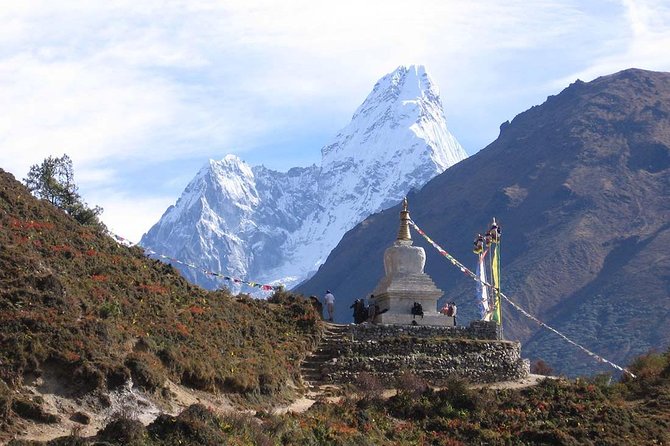
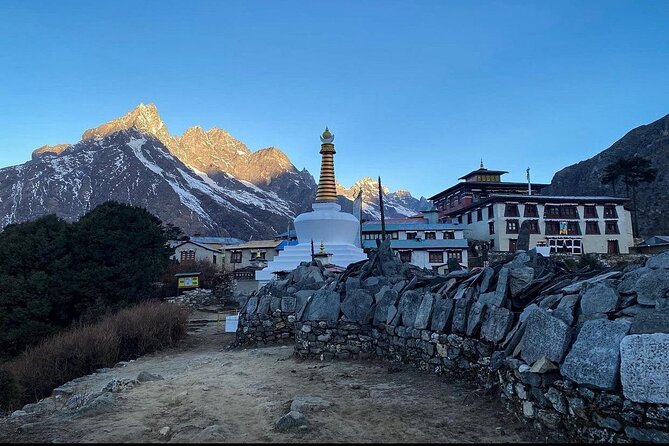
Tengboche is best known for its monastery. You can visit the interior and see religious artwork, while the surrounding mountains provide a powerful setting for a quiet stop. The village sits at about 3,860 meters, so this is also where you should pay close attention to your breathing, sleep, appetite, and energy.
The schedule lists this section as a long trekking day. The times shown in the program are approximate and reflect a full day in the mountains, not a short guided walk. Your guide’s pacing matters here. Past feedback places strong emphasis on guides such as Raj, Ram, Madan, and Rajendra, particularly for encouragement and close attention during difficult sections.
Dingboche and the Nangkartshang acclimatization climb
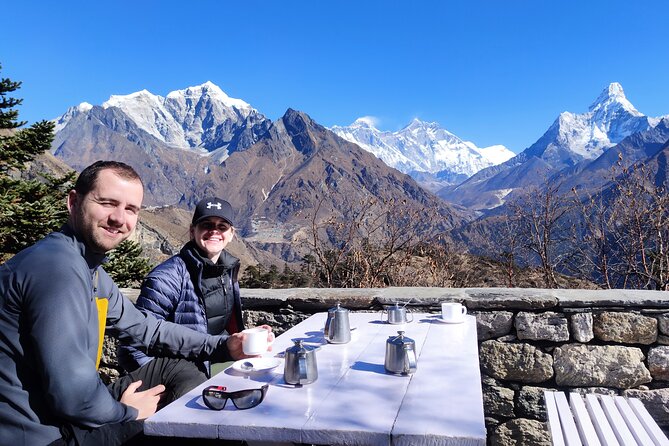
The trail drops from Tengboche to Debuche, crosses the Imja Khola, and continues toward Pangboche. Along the way, you pass mani stones and climb toward Dingboche, which sits higher and feels more exposed than the earlier villages.
Dingboche is the second major acclimatization stop. The following day, instead of pushing toward Base Camp, you climb Nangkartshang Peak above the village.
This is exactly the kind of rest day you want on a high-altitude itinerary. You gain height during the day, see more of the surrounding peaks, then return to Dingboche to sleep. The Nangkartshang climb is optional in spirit only if your guide decides your condition calls for a shorter outing. The supplied plan specifically schedules it as the day’s activity, so be ready for another uphill effort.
The highest point of the trip is still ahead. A strong feeling of excitement can tempt you to rush, but the better approach is slow steps, regular water, and honest communication with the guide.
Lobuche and the memorials near the Khumbu Glacier
After Dingboche, the route heads toward Lobuche. The trail follows the lateral moraine of the Khumbu Glacier and passes stone memorials dedicated to climbers who died on nearby peaks.
This section gives the trek more emotional weight. Everest is not only a famous summit seen in photographs. It is also a demanding and dangerous climbing region, and the memorials make that clear without needing much explanation.
Lobuche is high, cold, and basic. The program includes guesthouse accommodation throughout the trek, with attached toilets specifically noted in Lukla, Phakding, and Namche. You should not assume the same comfort in every settlement farther up. At this altitude, simple lodging is part of the deal.
Everest Base Camp at 5,365 meters
The walk to Everest Base Camp is one of the longest and hardest days. You follow the Khumbu Glacier, negotiate uneven ground, and climb to 5,365 meters.
Base Camp itself changes with the season. During spring, there may be expedition activity, but the exact conditions vary. The point of the stop is not luxury or a long rest. It is reaching the place that climbers use as their starting point for Everest and nearby peaks.
The route can feel slower than the distance suggests. High altitude affects pace, and rocky glacier terrain demands attention. Your guide and porters are especially important here because they know how to keep the group moving without turning the day into a race.
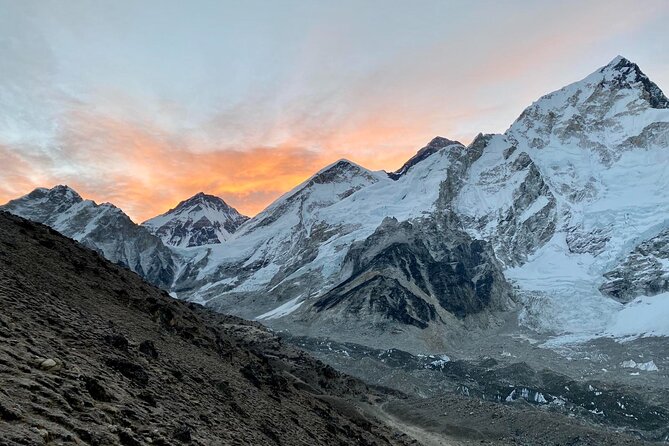
You should also understand what Base Camp does not provide. It is not the best viewpoint of Mount Everest itself. That is why the next morning’s Kala Patthar climb is such a central part of the itinerary.
Kala Patthar at 5,555 meters
The climb to Kala Patthar is described as one of the toughest but most rewarding days of the trek. At 5,555 meters, this small peak is higher than Everest Base Camp and offers the grand mountain view many people picture when they imagine this route.
The program gives about 30 minutes for the stop, but the total day involves more than standing at the top. The climb itself takes effort, especially after the Base Camp outing. Your reward is a broad view toward Everest and the surrounding Himalayan peaks.
This is a place where patience pays. You may need frequent pauses, and the thin air makes even a modest slope feel steep. I would consider Kala Patthar a must-do part of this package unless your guide advises against it for safety reasons.
Afterward, you return toward Gorakshep for the helicopter flight. The exact flight timing depends on weather and operating conditions, so keep some flexibility in your final day.
The helicopter from Gorakshep to Lukla
The helicopter is the trip’s defining feature, but it is not a shortcut around the hard work. You still complete the full ascent to Base Camp, the Kala Patthar climb, and the high-altitude walking before boarding.
From Gorakshep, the shared helicopter takes about 20 minutes to reach Lukla. That flight replaces the long return trek through Lobuche, Dingboche, Tengboche, Namche, and Phakding.
The itinerary information describes the next stage as a scenic flight back toward Kathmandu, while the tour description identifies the helicopter route as Gorakshep to Lukla. In practical terms, you should confirm the exact same-day connection and overnight plan with the operator before departure. Weather can affect both helicopter and fixed-wing flights.
This arrangement suits you if you want the classic Base Camp approach but have limited time, dislike repeating the same trail, or want to reduce the strain of the descent. It suits you less if the return walk is part of your dream or if you want the lowest possible trip price.
Food, lodging, staff, and group size
All standard trekking meals are included: breakfast, lunch, and dinner during the trek, with a farewell dinner on the last night. Alcoholic drinks and hot and cold drinks cost extra.
Food at high altitude is about fuel and reliability. You should use the included meals to keep eating even when your appetite drops. Carrying personal snacks may still be useful, though the provided details do not specify which snacks are supplied.
The group can have up to 14 people, with a minimum booking of two. A smaller group may feel more personal, while a full group can move at a pace set by the slowest member. The porter ratio of one porter for every two people is clear and fair, but pack lightly so the staff are not overloaded.
The strongest praise for this operator focuses on personal care from the trekking team. Specific guides and porters, including Bishal, Krishna, Probin, Saman, Jit, Sher, Girija, and Pesal, are named for support, motivation, and hard work. That matters more than polished hotel service on a trek where weather, fatigue, and altitude can change the day quickly.
Who should book this trek?
You should consider it if you have moderate physical fitness, can handle repeated full days of uphill and downhill walking, and want a guided route with logistics arranged in advance.
It is a good fit for someone who wants Everest Base Camp without spending as many days walking back to Lukla. It also works well if you value a trained local guide, porter support, included meals, and a clear altitude plan.
You should think twice if you dislike basic mountain accommodation, need a relaxed holiday pace, or are not prepared to purchase rescue insurance. The word moderate in the fitness requirement should not fool you. Kala Patthar reaches 5,555 meters, and the Base Camp section is physically demanding.
Cancellation is generous if you cancel at least six full days before the start time. A cancellation two to six days ahead brings a 50 percent refund, while cancellation less than two days ahead is nonrefundable. Weather-related cancellation offers a new date or full refund.
Should you book it?
I would book this trek if the helicopter return is important to you and you want a managed, all-in-one Everest Base Camp plan. The included permits, flights, porters, meals, guide, filtered water, staff costs, and helicopter make the $3,000 price easier to justify.
I would not book it simply because the flight sounds exciting. The real trip is the eight days of mountain walking before you reach Gorakshep. If you can prepare for the altitude, accept simple lodging, buy the right insurance, and keep your schedule flexible for weather, this is a strong way to reach Everest Base Camp without walking the entire route back.
FAQ
How long does the Everest Base Camp trek with helicopter return take?
The experience lasts approximately 12 days, including arrival in Kathmandu, the trek to Everest Base Camp, the Kala Patthar climb, and the return by helicopter and domestic flight arrangements.
What altitude does Kala Patthar reach?
Kala Patthar reaches 5,555 meters. It is one of the most demanding parts of the trek and provides major Himalayan views.
Is the helicopter flight private?
No. The included flight from Gorakshep to Lukla is a shared helicopter ride.
Are meals included?
Yes. Breakfast, lunch, and dinner are included during the trek, along with a farewell dinner. Lunch and dinner in Kathmandu, alcoholic drinks, and hot and cold drinks are not included.
Is travel insurance included?
No. You must arrange your own travel insurance, including coverage for emergency rescue and evacuation.
What happens if bad weather cancels the experience?
If poor weather causes cancellation, you are offered a different date or a full refund.
Latest treks added in Kathmandu
- Private Manaslu Circuit Trek at Himalayas★ 5.0 · 3 reviews
- Ghorepani Poonhill Trek★ 5.0 · 5 reviews
- Ghorepani Poon Hill Trek★ 5.0 · 16 reviews
- Upper Mustang Trekking★ 3.0 · 2 reviews
- Amazing 1 Day Trekking Experience in Kathmandu Nepal★ 5.0 · 24 reviews
- Upper Mustang Trekking★ 5.0 · 2 reviews
- Upper Mustang Trek★ 5.0 · 5 reviews
- Upper Mustang Trekking★ 5.0 · 4 reviews
Everest Base Camp Treks, compared.






Browse the lists this tour appears in