
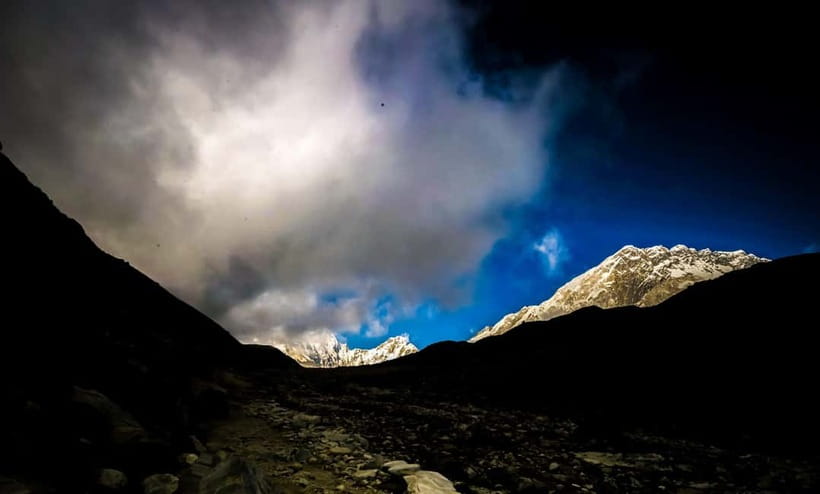
REVIEW · KATHMANDU
Kathmandu: 15-Day Everest Base Camp Trek with Guide
Everest Base Camp is the headline, but the real reward comes from the steady change in place and pace: Kathmandu’s temples, Lukla’s mountain air, Sherpa villages, Buddhist monasteries, and the high trail toward Gorakshep and Kala Patthar. You get a 15-day route with time to adjust to altitude instead of racing uphill.
I like the small-group approach, which should make it easier to ask questions and walk at a manageable pace. I also like the practical support: airport transfers, a Kathmandu city tour, permits, a sleeping bag and down jacket if needed, and staff insurance are included. The main catch is cost clarity: the $675 price does not include meals, Kathmandu to Lukla flights, porter service, drinks, travel insurance, or city entrance fees.
Key points at a glance
- Kathmandu sightseeing comes before the trail: Visit Kathmandu Durbar Square, Swayambhunath, Boudhanath, and Pashupatinath with a private car and guide.
- Two useful acclimatization days are built in: You rest in Namche Bazaar and take a climb to the Everest View Point near Syangboche, then spend another day trip in the Chhukung Valley from Dingboche.
- The route reaches the high Khumbu: Sleep in Namche Bazaar, Tengboche, Dingboche, Lobuche, and Gorakshep before the Kala Patthar sunrise hike.
- Sherpa-led support is central: An English-speaking, licensed Sherpa guide handles the trek, while the company arranges staff, permits, medicine, and equipment support.
- The $675 price covers a useful base package: Hotels, guesthouses, guide services, permits, transfers, and some equipment are included, but several major trekking costs remain separate.
- The trek demands real fitness: This is a long high-altitude walk, and wheelchair users cannot take part.
Starting in Kathmandu with temples, permits, and preparation
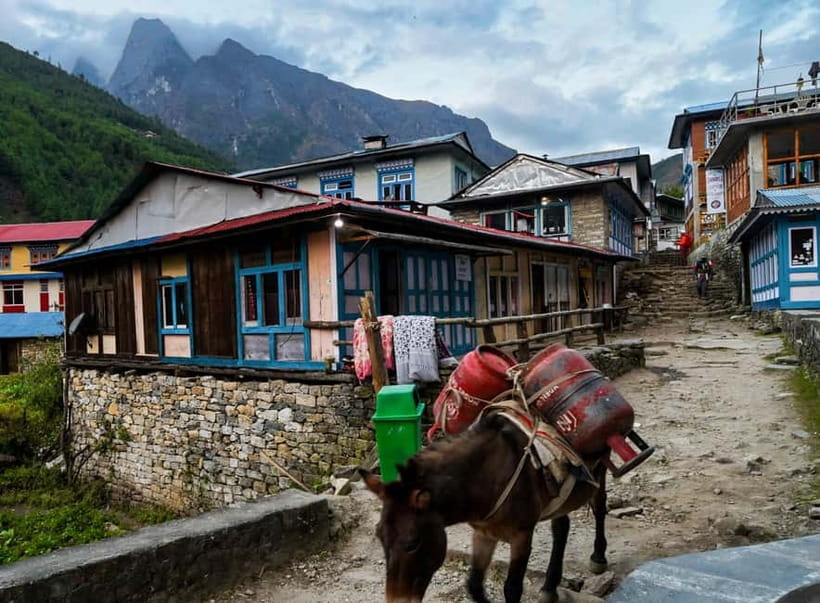
Your first day is simple by design. A private car collects you at Kathmandu International Airport and takes you to your hotel, where the guide provides trek information. Three nights of standard Kathmandu hotel accommodation are included, covering the arrival night, the sightseeing night, and the night after returning from the mountains.
Day two gives you a useful introduction to the city before the trail begins. You visit Kathmandu Durbar Square, Swayambhunath, Boudhanath, and Pashupatinath. These sites show very different sides of the Kathmandu Valley, from royal architecture and hilltop Buddhist worship to the large stupa at Boudhanath and the cremation temple at Pashupatinath.
The private car matters here. Kathmandu traffic can be slow and confusing, so having transport arranged lets you see the main sights without spending the day sorting out taxis. City entrance fees are not included, so keep extra money available.
This is also a good time to check your clothing and gear. One useful detail from the operation of the trip is that the team helped a December trekker get the equipment needed in Kathmandu. A down-filled jacket and sleeping bag are available if required, but you should still arrive with comfortable shoes and sunglasses, the two items specifically listed as essentials.
More Everest Base Camp Treks in Kathmandu
- Everest Base Camp Trek – 14 Days
★ 5.0 · 1,499 reviews - Everest Base Camp Trek
★ 5.0 · 842 reviews - Everest Base Camp Trekking
★ 5.0 · 485 reviews
Flying to Lukla and following the Dudh Koshi
The mountain section begins with a flight from Kathmandu to Lukla. The package price does not include this airfare. Flights may be arranged on request, and the information also refers to departures from Ramechhap, so confirm the airport and flight plan before you pay.
From Lukla, the first walk is relatively gentle, heading toward the upper part of Phakding. This is a sensible opening stage. You are already walking in the Khumbu, but the route gives your body time to settle before the bigger climbs begin.
The next day follows the Dudh Koshi valley toward Namche Bazaar. This is one of the route’s important changes in character. The path rises through rhododendron woodland and mountain scenery, and Namche becomes your first major stop in the Everest region.
Namche is more than a place to sleep. It is a trading center and a meeting point for local Sherpas and people heading farther into the mountains. You can expect a lively settlement by high-altitude trekking standards, though the walk to reach it is demanding. This is where the itinerary starts taking altitude seriously.
Namche Bazaar at 3,850 meters
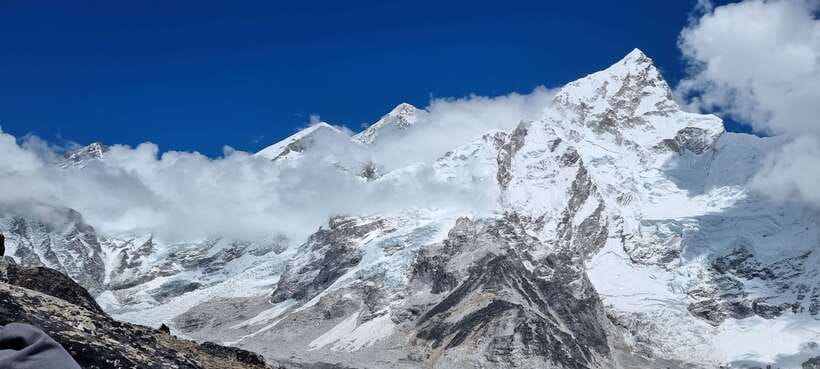
Day five is set aside for acclimatization rather than distance. You hike to the Everest View Point Hotel near Syangboche at about 3,850 meters, then return to Namche Bazaar.
This kind of day is valuable because you gain height without sleeping at the higher elevation. The itinerary does not treat rest as wasted time. It uses the day to give you a better chance of coping with the route ahead, while also offering one of the first clear views toward the Everest region.
Listen closely to your guide here. One previous trekker specifically praised Kale Prakash for taking good care of him after he became sick. That is the sort of support you want at altitude: not just a person who knows the path, but someone who watches your condition and responds when the plan needs to change.
You should still be realistic. Acclimatization reduces risk but does not remove it. Headaches, tiredness, and altitude sickness can affect anyone. The guide’s judgment matters, but your willingness to report symptoms matters just as much.
Tengboche and the Sherpa villages of Khumbu
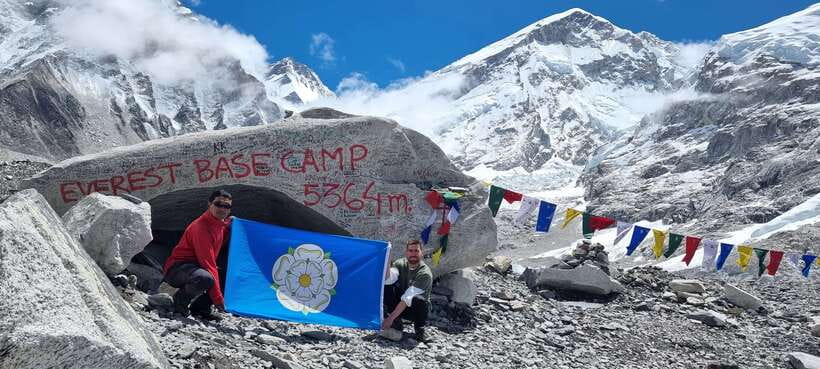
From Namche, the trail continues toward Tengboche through colder, higher country. After roughly two hours of climbing, you reach Thyangboche Monastery, set on a ridge at about 3,867 meters.
The monastery gives this part of the trek a strong cultural focus. You are not simply walking from one mountain lodge to another. You pass through Sherpa villages and see how Buddhist practice is part of daily life in the Khumbu. The ridge setting also gives you wide views of Sagarmatha and the surrounding peaks.
Day seven continues through Imja Khola, Pangboche, and Pheriche before reaching the area of the Khumbu Glacier. The route becomes more severe here, with chilly weather and thinner air. The villages are important stops because they break up the long walk and give you a closer look at local homes, customs, and mountain life.
Tengboche and the villages beyond it are also where the pace begins to feel more serious. You should expect shorter walking speed, basic guesthouse accommodation, and fewer comforts than in Kathmandu. The package promises the best available guesthouses, but it does not promise luxury.
More guided trips in Kathmandu
- 12 Day Everest Base Camp Guided Trek
★ 5.0 · 40 reviews - Everest Base Camp Trek 15 days | Local Guide | Flexible Itinerary
★ 5.0 · 27 reviews - From Kathmandu: 12-Day Everest Base Camp Guided Trekking
★ 5.0 · 26 reviews - 5 Day Private Guided Trekking in Annapurna Base Camp
★ 5.0 · 25 reviews
Dingboche and a second acclimatization day
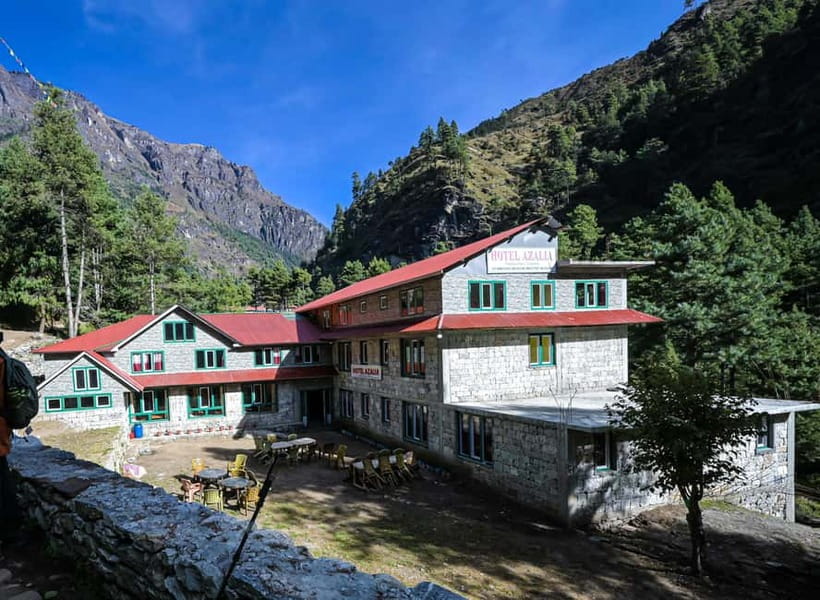
Dingboche is the base for the day trip to Chhukung Valley. You walk out and back rather than moving higher with your luggage, which gives you another active acclimatization day.
The Chhukung route is described as one of the world’s best hikes, but the useful point for you is its role in the schedule. It adds a high mountain outing without requiring another overnight move. You can see more of the upper Khumbu while keeping Dingboche as your base.
This day will still feel demanding. The itinerary allows different fitness levels, but that should not be confused with an easy walk. The full trek includes several hours on foot at high altitude, and the Chhukung outing adds distance during a period when your body is working harder than usual.
If you prefer a measured approach, this is one of the strongest parts of the plan. The schedule gives you time to adjust instead of treating every day as a race toward Base Camp.
Lobuche, Gorakshep, and the high point of the trek
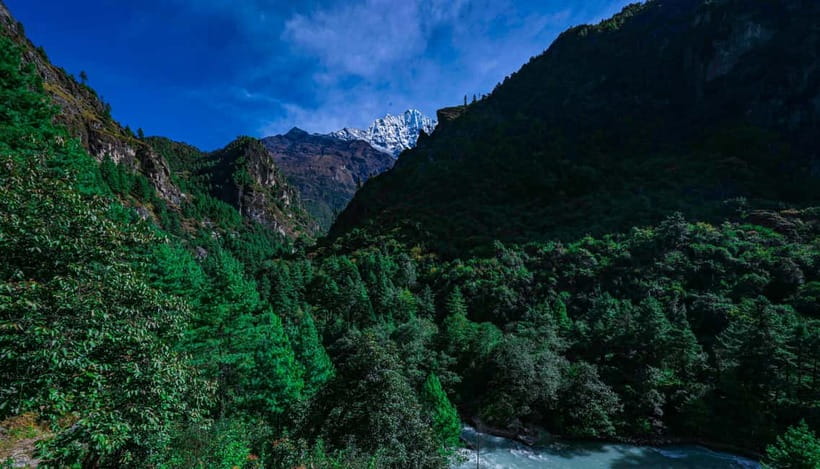
After Dingboche, you walk toward Lobuche. This is a quieter, more exposed section of the route, and the altitude becomes a constant factor. Lobuche is mainly a resting point, but that is exactly its value. You need a place to eat, sleep, and prepare for the next stage.
Day ten takes you from Lobuche to Gorakshep. Gorakshep is a small settlement beside a frozen lake and serves as the launch point for the Everest Base Camp walk. Accommodation here is basic, and the high elevation can make even simple tasks feel tiring.
The schedule then places the early morning Kala Patthar hike on day eleven before the descent to Pheriche. This timing is important. Kala Patthar is known for its broad views of the Everest area, and an early start gives you the best chance of seeing the mountains in clear morning light.
The itinerary describes the high point as an Everest hike with Kala Patthar as the main viewpoint. It also identifies Gorakshep as the departure point for Everest Base Camp. Confirm with the operator how much time is allocated at Base Camp itself, since the day-by-day wording focuses especially on the Kala Patthar climb.
You should prepare for a tough morning. The walk is early, the air is thin, and the route is high. The reward is not comfort. It is the scale of the peaks around you and the knowledge that you have reached the upper Khumbu on foot.
The long return through Namche and Lukla
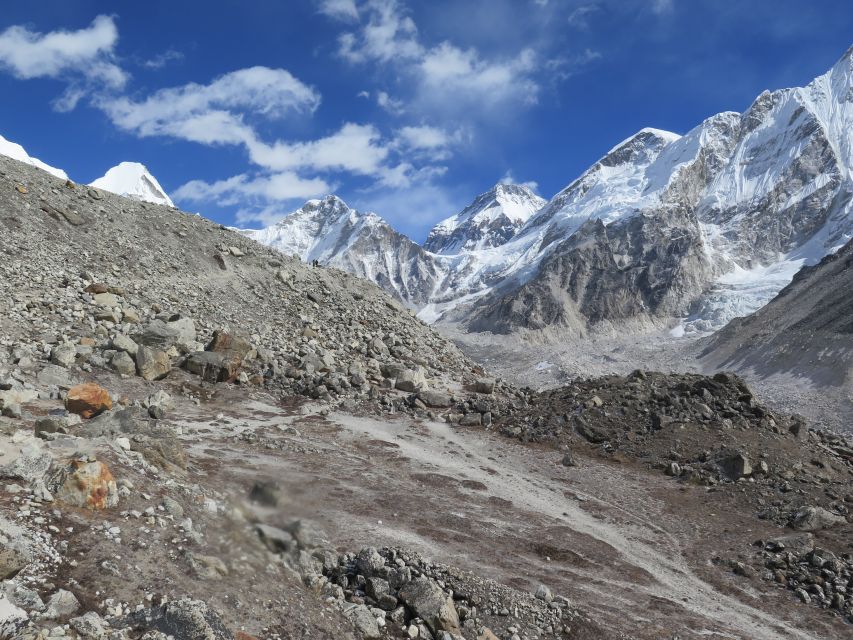
After Kala Patthar, the route descends to Pheriche and then continues back toward Namche Bazaar. The downhill direction helps, but it does not make the walk effortless. Your legs will already be tired, and long descents can be hard on knees.
The return to Namche gives you a familiar stop after the most demanding part of the trip. Day thirteen continues to Lukla, described as a long walk that completes the mountain journey.
This is where a porter can make a real difference. Porter service is not included, though it can be added, with luggage shared between two people. If you are carrying a heavy pack, ask about this option before departure. The guide carries responsibility for the group, but that does not mean your personal luggage is automatically handled.
The final mountain night is followed by a flight back to Kathmandu on day fourteen. The plan includes a Kathmandu hotel night so you can recover before your international departure the next day. That buffer is useful because the return flight is part of a high-altitude trip, not just a routine city transfer.
What the $675 package really covers
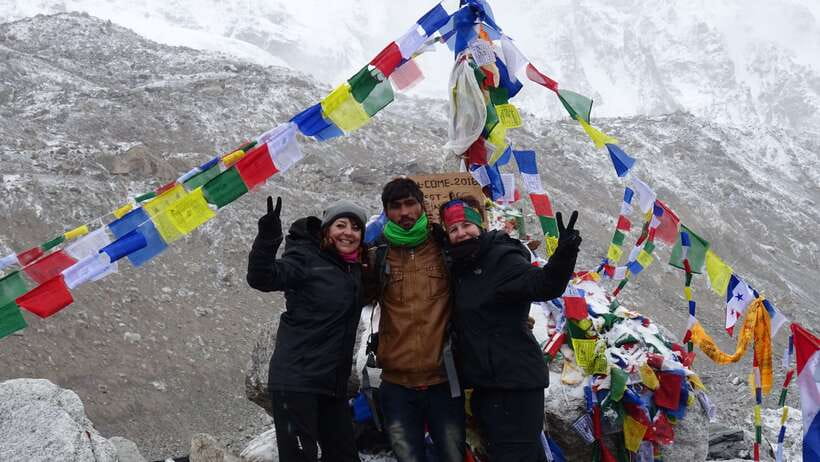
At $675 per person, the package has a useful range of included services. You receive:
- Private airport pickup and drop-off
- Three nights of standard Kathmandu hotel accommodation
- A private-car Kathmandu sightseeing tour
- Guesthouse accommodation during the trek
- An English-speaking licensed Sherpa guide
- Everest National Park permits and TIMS permits
- Staff food, lodging, salaries, insurance, equipment, and medicine
- A down jacket and sleeping bag if needed
- Government taxes
That is a solid foundation, especially for someone who wants a guide and does not want to arrange permits, transfers, and city transport alone.
But the advertised price is not the final trip budget. You must add the Kathmandu or Ramechhap to Lukla flights, meals during the trek, travel insurance, city entrance fees, drinks, porter service if wanted, and personal expenses. Breakfast, lunch, and dinner on the trail are specifically excluded.
This makes the package best for a person who understands what a base price covers. Ask for a current total that includes flights and any porter arrangement. Also confirm exactly which Kathmandu hotel and guesthouses will be used, since the description promises the best available accommodation rather than naming properties.
Guide support and organization
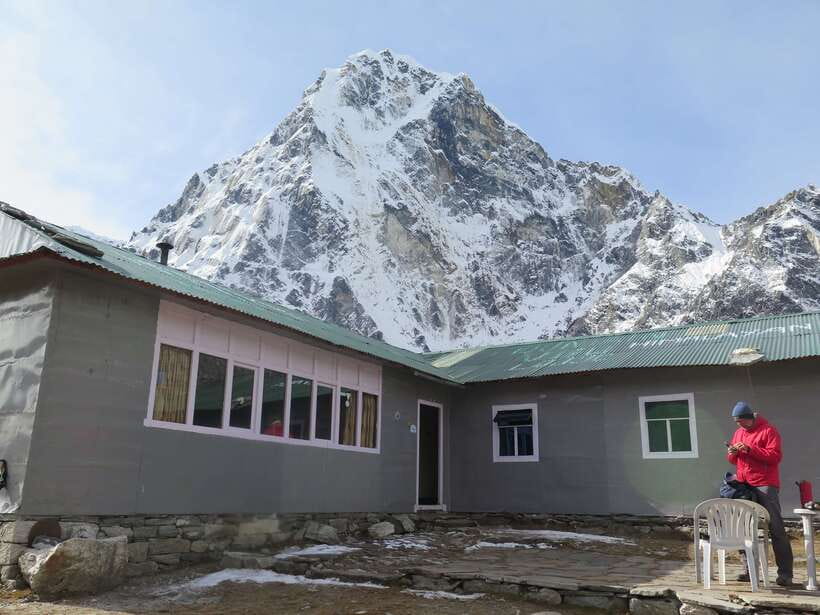
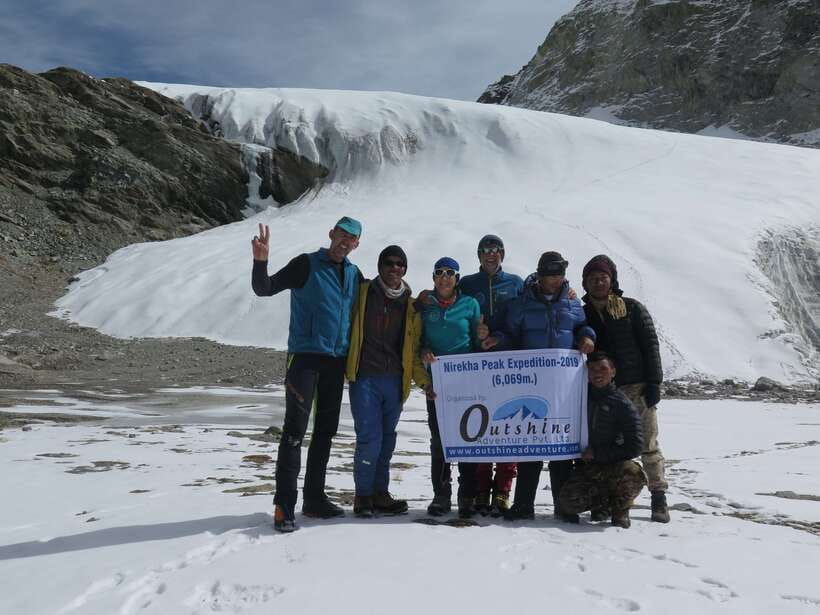
The company is Outshine Adventure Pvt Ltd. The guide is described as an English-speaking, licensed Sherpa guide, and the operation includes staff support from food and accommodation to insurance, equipment, and medicine.
Several names are connected with the trip’s organization and guiding: Kale Prakash, Kumar, Santos, Gokul, and Kali. Kale Prakash received particular praise for helping a sick trekker, while Kumar and Santos were described as kind and helpful on the trail. Gokul handled the organization, including the return to Kathmandu, and Kali was also praised as a guide.
You should not assume one named person will lead every departure. Confirm who your guide will be before booking. Still, these details suggest that the company has a team rather than relying on one individual.
The small-group format is another practical plus. A smaller party can make communication easier and allow the walking pace to be adjusted. The exact maximum group size is not provided, so ask for that number if it is important to you.
Who should book this Everest trek?
I would consider this trip a good fit if you want a guided Everest route with Kathmandu sightseeing already arranged, and if you value cultural stops as much as mountain views. The two acclimatization days, private city tour, permits, and equipment support make it easier to handle the planning.
You should be comfortable with long walks, cold conditions, basic mountain accommodation, and the possibility of feeling unwell at altitude. This is not suitable for wheelchair users, and comfortable walking shoes are essential.
The trek may also suit first-time high-altitude trekkers who want local guidance, provided they take the fitness and altitude demands seriously. It is less suitable if you want a fully inclusive price, private luxury lodging, or a trip with no extra planning after booking.
Cancellation is flexible up to seven days before departure for a full refund. That is useful, but it does not replace travel insurance, which you must arrange yourself.
Should you book it?
Book this trek if you want a guided 15-day route with Sherpa support, two acclimatization stops, Kathmandu sightseeing, and a clear path through the Everest region. The strongest points are the care built into the schedule and the company’s reported attention when someone became sick or needed help returning to Kathmandu.
Before paying, get three things in writing: the Lukla flight cost and departure airport, the full meal and porter budget, and the exact plan for the Everest Base Camp section from Gorakshep. If those extras fit your budget, the $675 starting price offers a sensible way into one of Nepal’s great mountain journeys.
FAQ
How long is the Everest Base Camp trek?
The activity lasts 15 days, including arrival and departure transfers, Kathmandu sightseeing, the mountain trek, and the return to Kathmandu.
Is airport pickup included?
Yes. Private pickup and drop-off at Kathmandu International Airport are included.
Are flights to Lukla included?
No. Airfare between Kathmandu or Ramechhap and Lukla is not included. The operator can reserve or book the flights on request.
Is accommodation included?
Yes. Three nights of standard hotel accommodation in Kathmandu and the best available guesthouse accommodation during the trek are included.
Are meals included during the trek?
No. Breakfast, lunch, and dinner during the trek are not included. Alcoholic, hot, and cold drinks are also separate.
Is a guide provided?
Yes. The trip includes an English-speaking, licensed Sherpa guide.
Are trekking permits included?
Yes. Everest National Park permits and TIMS trekking permits are included.
What should I bring?
Bring comfortable shoes and sunglasses. A down-filled jacket and sleeping bag are available if needed, but travel insurance is not included.
Latest treks added in Kathmandu
- Private Manaslu Circuit Trek at Himalayas★ 5.0 · 3 reviews
- Ghorepani Poonhill Trek★ 5.0 · 5 reviews
- Ghorepani Poon Hill Trek★ 5.0 · 16 reviews
- Upper Mustang Trekking★ 3.0 · 2 reviews
- Amazing 1 Day Trekking Experience in Kathmandu Nepal★ 5.0 · 24 reviews
- Upper Mustang Trekking★ 5.0 · 2 reviews
- Upper Mustang Trek★ 5.0 · 5 reviews
- Upper Mustang Trekking★ 5.0 · 4 reviews
Everest Base Camp Treks, compared.






Browse the lists this tour appears in