
REVIEW · KATHMANDU
12 Day Everest Base Camp Guided Trek
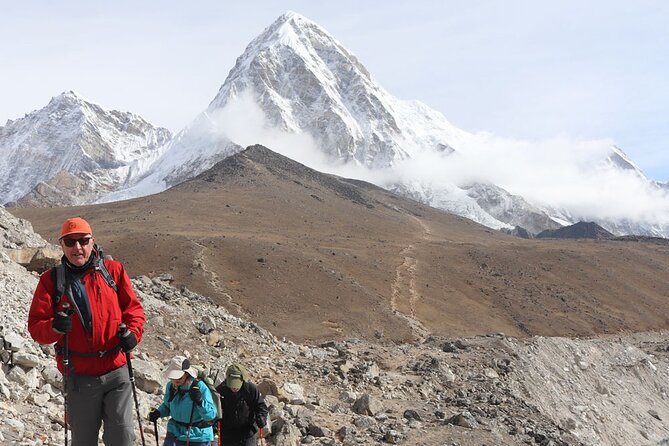
The big draw here is simple: you walk into the Khumbu Valley and reach Everest Base Camp, then climb Kala Patthar for sunrise views of Everest, Lhotse, Nuptse, Pumori, and Ama Dablam. I like the sensible acclimatization stops in Namche Bazaar and Dingboche, and I like that the $1,300 price includes flights, permits, 11 nights of lodge accommodation, meals, a guide, and airport transfers.
The catch is the pace. This is a serious high-altitude trek, not a casual mountain holiday. Porters cost extra, personal drinks and showers are not included, flights can be delayed by weather, and the highest walking days after Dingboche will test your legs and lungs.
Key points before you book
- Lukla flights begin and end the trek: The 35-minute mountain flight saves days of road travel and puts you directly on the trail.
- Two acclimatization days matter: You spend a rest day in Namche Bazaar and another in Dingboche before heading higher.
- The hardest section comes late: Lobuche, Gorakshep, Everest Base Camp, and Kala Patthar are the most demanding days.
- The package covers the main costs: Flights, permits, guide, teahouse lodging, breakfast, lunch, dinner, and airport transfers are included.
- Groups are capped at 14 people: That gives you a shared experience while keeping the group small enough for practical support.
- The experience has strong customer approval: It is listed at 4.9 out of 5, with 100 percent recommending it.
What the $1,300 price really covers
At first glance, $1,300 may seem modest for a 12-day Everest Base Camp trek. The value becomes clearer once you separate included costs from the extras.
Your package covers the Kathmandu to Lukla and Lukla to Kathmandu flights, airport tax, domestic airport transfers, a guide, required paperwork, Sagarmatha National Park entry, and a TIMS permit. It also includes 11 nights in trekking lodges, usually called teahouses, plus 11 breakfasts, 11 lunches, and 11 dinners.
You also get a sleeping bag, down jacket, and duffel bag if needed. These are returned after the trek. An emergency helicopter arrangement is included, but the helicopter bill is expected to go through your travel insurance, not the tour price.
The price does not include a Nepal entry visa, Kathmandu hotels or meals, personal drinks, bottled or hot water, bar bills, laundry, phone and internet charges, hot showers, tips, or a porter. That last point matters. If you do not want to carry your own bag, budget separately for porter service.
I see this as good value for a guided trek, especially because the Lukla flights and permits are already handled. Still, you should not treat $1,300 as your full trip budget. Add travel insurance, Kathmandu expenses, tips, personal purchases, and a porter if you want one.
More Everest Base Camp Treks in Kathmandu
- Everest Base Camp Trek – 14 Days
★ 5.0 · 1,499 reviews - Everest Base Camp Trek
★ 5.0 · 842 reviews - Everest Base Camp Trekking
★ 5.0 · 485 reviews
Day 1: Lukla to Phakding starts the Himalayan walk
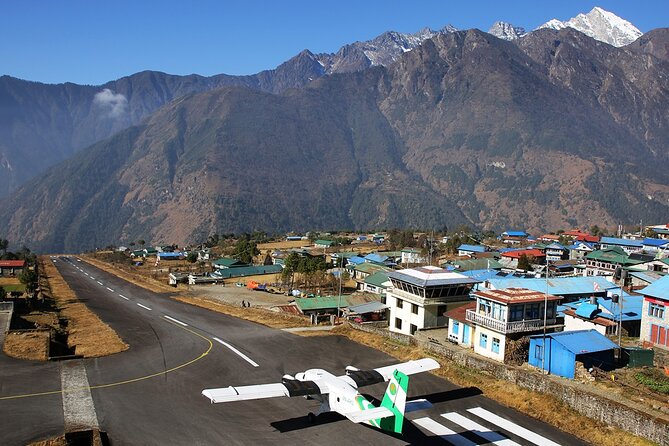
The trek begins with an early morning flight from Kathmandu to Lukla, taking about 35 minutes. The flight itself is part of the experience, with mountain scenery appearing quickly as the aircraft approaches the small Lukla airport.
At Lukla, your guide introduces you to the porter team before you begin walking along the Dudh Koshi River. The first section takes roughly three to four hours and ends at Phakding.
This is a useful opening day. You are already in the mountains, but the walking distance is moderate. The trail gives you time to settle into the rhythm of carrying a daypack, walking on uneven ground, and moving at a steady pace.
The practical warning is that Lukla flights depend on weather. The operator requires good conditions, and a delay can affect the schedule. Keep some flexibility in your wider Nepal plans.
Day 2: The climb to Namche Bazaar
From Phakding, the trail follows the Dudh Koshi and crosses the river several times. You enter the national park at Jorsale, where the group stops for lunch before continuing toward Namche Bazaar.
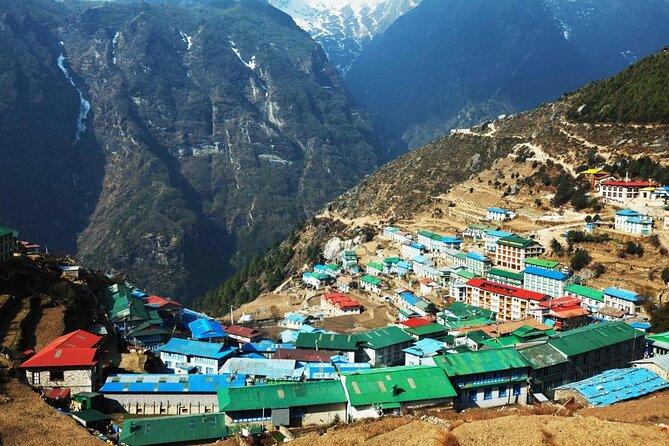
Namche sits at about 3,440 meters and is surrounded by mountain ridges. The approach includes forested paths, a plateau used for the Saturday market, and a final climb into the village.
This is the first day when altitude becomes a real concern. The walk is not just about distance. The climb to Namche can feel demanding because your body has not yet adjusted to the thinner air.
Namche has more services than the smaller villages along the route, including lodges, tea shops, and souvenir shops. It is also one of the more social stops on the trek, with people from many countries sharing the same route.
Day 3: Namche gives your body time to adjust
The third day is reserved for acclimatization in Namche Bazaar. That is not a wasted day. It is one of the most important parts of the schedule.
You stay at the same altitude instead of gaining more height, giving your body time to adjust before the trail climbs toward Tengboche and Dingboche. The itinerary describes Namche as an ideal rest point, and I agree with that planning choice.
You have time to rest, visit the village, browse its shops, or take a short local walk. The exact side activity is not specified, so ask your guide what is suitable for your group and current condition.
Several people associated with recent departures include guides named Raj, Bir, Arjun, Suraj, Dhana, and Rajan. Guide assignments can vary, but the repeated emphasis on guide care, daily updates, and help when someone felt unwell is worth noting. On a high-altitude route, attentive pacing matters more than grand speeches.
More guided trips in Kathmandu
- Everest Base Camp Trek 15 days | Local Guide | Flexible Itinerary
★ 5.0 · 27 reviews - From Kathmandu: 12-Day Everest Base Camp Guided Trekking
★ 5.0 · 26 reviews - 5 Day Private Guided Trekking in Annapurna Base Camp
★ 5.0 · 25 reviews - Upper Mustang Classic Trek with Local guide
★ 5.0 · 15 reviews
Day 4: Tengboche brings the monastery and mountain views
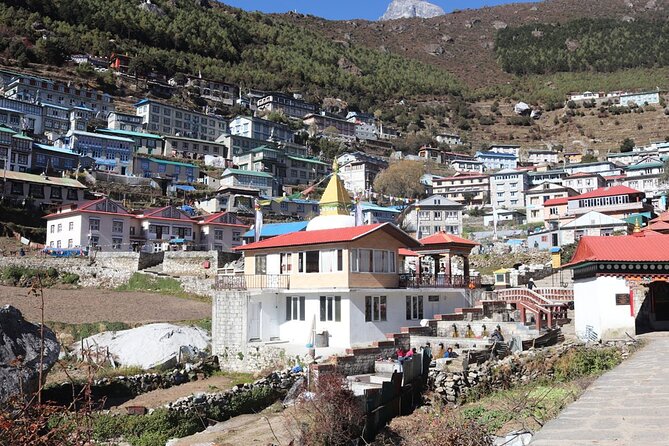
After Namche, the trail follows a ridge and relatively level mountain paths with views toward Thamserku, Kantega, and Kusum Kanguru. You then descend to the river at Phunki Tenga before climbing through rhododendron forest to Tengboche.
Tengboche is one of the memorable stops on the route because of its monastery and its setting. The village offers views toward Ama Dablam, green lower hills, and the river valley.
The day has a familiar Himalayan pattern: an easy-feeling ridge walk followed by a descent and then a climb. Do not judge the day only by the distance. The uphill section to Tengboche can feel harder after the earlier descent.
Day 5: Pangboche and the road to Dingboche
The route drops through rhododendron forest to the Imja Khola. You cross a suspension bridge, pass a long Mani stone wall, and enter Pangboche.
These details give the walk a strong sense of place. Prayer stones and walls are part of daily life in the Khumbu, not decorative stops added for tourists. The trail then continues through summer pastures toward Dingboche.
Dingboche sits higher and feels more exposed than the lower villages. Reaching it is a key step because the following day is set aside for acclimatization.
Day 6: Dingboche is the second important rest day
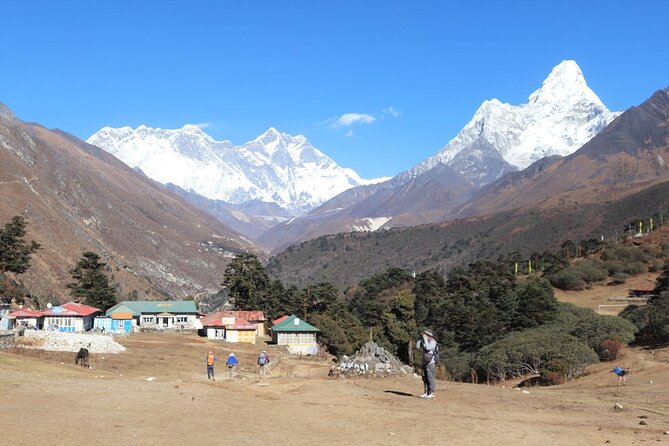
Dingboche provides another acclimatization day before the route rises toward Lobuche and Gorakshep. The itinerary allows a short walk and time to rest in the afternoon, with possible side trips around the valley.
From here, you can expect strong views of Ama Dablam’s north face and the Lhotse-Nuptse ridge. The valley also leads toward Island Peak, one of the well-known climbing peaks in the region.
This is where the trek begins to feel substantially harder. You are walking at high altitude, and a short outing may be more useful than trying to cover a large distance. Listen to your guide and to your body. Headaches, unusual fatigue, or feeling sick should be taken seriously.
Day 7: From Dingboche to Lobuche
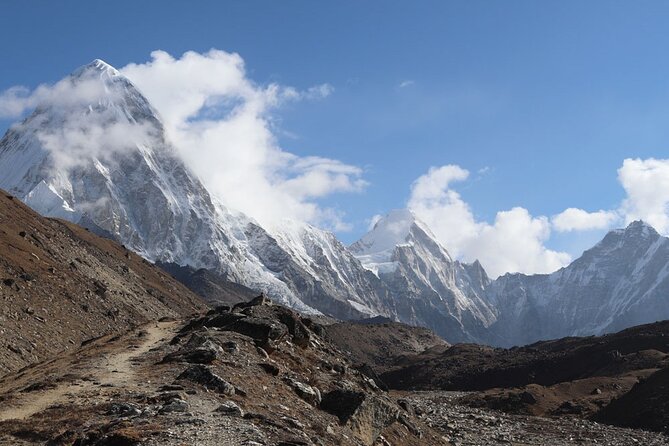
The trail heads north for about 50 minutes to a Mani prayer stupa, then continues on a gentle section with views down toward Pheriche. You can see Tawache, Ama Dablam, Pokalde, Kongma Tse, and the great wall of Nuptse.
After roughly two hours, the Pheriche trail joins the route near Dugla, at about 4,595 meters. A small bridge crosses the Khumbu Glacier river, followed by a steep climb for around an hour.
At the top, views toward Pumori and the western side of Everest open up. After a break, you continue to Lobuche.
This is one of the days where the phrase slowly, slowly becomes practical advice rather than a slogan. Several people who completed the route found the trek much tougher after Dingboche. The best approach is a measured pace, regular water breaks, and no race to reach the lodge.
Day 8: Gorakshep and Everest Base Camp
The trail from Lobuche follows a rocky moraine beside the Khumbu Glacier. You see icy pools and chunks of glacial ice below as the route crosses the final rocky sections toward Gorakshep.
Gorakshep is the last place on this itinerary with lodge accommodation. You stop for lunch, leave your larger belongings at the lodge, and continue with a lighter pack to Everest Base Camp.
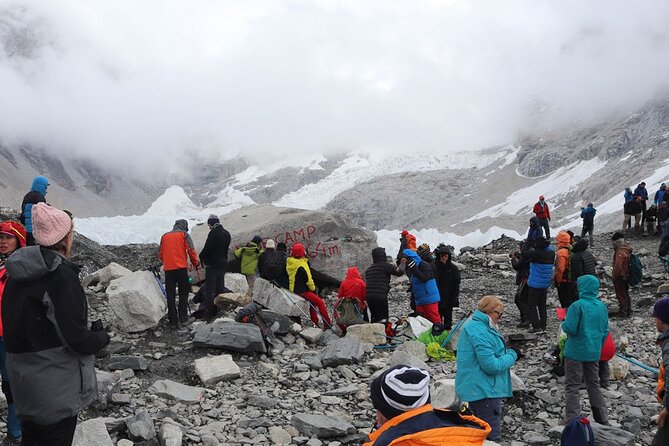
The walk to Base Camp is not a smooth path. Moraine terrain can be uneven, and the altitude makes every rise feel longer. The reward is not a broad summit view of Everest from the camp itself. Base Camp is a working mountaineering area, and the famous mountain may be partly hidden from this angle.
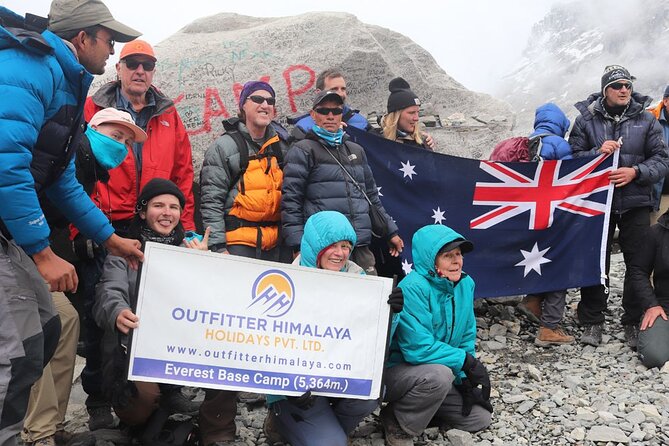
Still, reaching the camp is a major milestone. You are at the starting point for expeditions to the world’s highest mountain, surrounded by the Khumbu Glacier and peaks including Nuptse, Pumori, and Everest.
After spending time at Base Camp and nearby areas, you return to Gorakshep for the night. This is a long and demanding day, so keep your expectations realistic. The goal is to arrive safely, not to spend hours posing for photographs while exhausted.
Day 9: Kala Patthar sunrise and the descent to Pheriche
The day starts early with a climb to Kala Patthar, listed at 5,545 meters. The effort is rewarded with sunrise views toward Everest and a wide group of peaks, including Pumori, Lingtren, Khumbutse, Nuptse, Lhotse, Ama Dablam, and Thamserku.
For many people, Kala Patthar provides the clearest and most impressive view of Everest on the trek. The climb is short compared with the full route, but the altitude makes it strenuous. Cold, darkness, and early-morning fatigue add to the challenge.
You return to Gorakshep for breakfast, then descend to Pheriche. Downhill walking is usually easier on breathing, but it can be tough on knees and ankles. Trekking poles can be useful, though they are not listed among the included equipment.
Day 10: Back through Tengboche to Namche
The route retraces the trail toward Namche Bazaar. You pass through Tengboche, where the monastery, Ama Dablam views, green hills, and river valley provide a welcome change after the stark high-altitude terrain.
The descent is generally easier than the climb, though there are still short uphill sections. You stop for lunch in Tengboche before continuing to Namche.
By this point, you will likely feel more comfortable at lower elevations, but fatigue can build over several days. Keep your pace steady and use the longer descent to recover before the final walk to Lukla.
Day 11: The final trail to Lukla
The last walking day follows the route toward the Bhote Koshi River, crossing it several times. Most of the day is pleasant, but a final uphill section of about 45 minutes leads into Lukla.
This is an emotional finish to the walking portion. You have crossed suspension bridges, climbed through forests, passed Buddhist prayer walls, and spent time beside the Khumbu Glacier. Lukla is not simply a transport point by now. It marks the end of the trail.
You stay overnight in the Lukla area before the flight back to Kathmandu. That overnight buffer is useful because flight schedules can change with weather.
Day 12: Return to Kathmandu
After an early breakfast, you walk to Lukla airport and fly back to Kathmandu. The flight takes about 35 minutes when conditions cooperate.
The tour ends at the original meeting point, Outfitter Himalaya Holidays on Thamel Marg in Kathmandu. The listed start time is 6:15 a.m., so plan for an early beginning and confirm the exact pickup details before departure.
Lodges, meals, gear, and group size
The 11 included nights are in trekking lodges rather than conventional hotels. At higher elevations, the value is having a bed, meals, and a place to gather at the end of the day. Do not expect city-hotel facilities.
Breakfast, lunch, and dinner are included for each trekking day. Drinks, hot and cold beverages, bottled water, bar bills, showers, internet, and laundry cost extra. These charges can add up, especially if you use hot showers or buy drinks often.
The operator supplies a sleeping bag, down jacket, and duffel bag if necessary. You return these after the trek. A guide is included, while porter service is optional and paid separately.
The maximum group size is 14. That is large enough to meet other people but small enough for a guide to keep an eye on the group. The strongest praise connected to this experience focuses on care, coordination, airport transfers, and guides checking on people during difficult sections.
You must also carry travel insurance. It is compulsory, and it should cover high-altitude trekking and emergency helicopter evacuation. The tour arranges the helicopter service, but your insurer is expected to pay the claim.
Who should choose this Everest Base Camp trek?
I would choose this trip if you want a structured route with the big costs handled in advance. It suits people who want a guide, shared group support, teahouse lodging, and a clear 12-day plan rather than organizing every permit, flight, and lodge independently.
You should have a strong level of physical fitness. The itinerary includes long walking days, steep climbs, uneven moraine, suspension bridges, and high-altitude nights. The schedule has good acclimatization points, but no itinerary can remove the risks of altitude or guarantee that you will feel well every day.
This is less suitable if you want private rooms, generous free time, luxury facilities, or a leisurely pace. It is also not ideal if you need a fixed flight schedule, since the Lukla route depends on weather.
The cancellation terms are strict close to departure. Cancel at least six full days before the start for a full refund. Cancellation two to six days ahead allows a 50 percent refund, while cancellation less than two days ahead receives no refund. Poor weather cancellation offers a different date or a full refund.
Should you book it?
Book this trek if reaching Everest Base Camp is a serious goal and you want practical support without paying for a high-end expedition. The package includes the essentials, the route uses two sensible acclimatization days, and the group limit is reasonable.
Before paying, confirm the current Lukla flight arrangements, ask if a porter can be added, check exactly what your insurance covers, and plan money for personal expenses. If you can handle the altitude, accept basic lodge conditions, and move at a steady pace, this is a well-priced way to experience the Khumbu and see Everest from Kala Patthar.
FAQ
How long is the Everest Base Camp guided trek?
The trek lasts approximately 12 days, including flights between Kathmandu and Lukla. The walking route begins at Lukla and ends there before the return flight.
What is included in the $1,300 price?
The price includes domestic airport transfers, 11 nights in trekking lodges, a guide, required paperwork, National Park entry and TIMS permits, Kathmandu to Lukla and Lukla to Kathmandu flights with airport tax, and breakfast, lunch, and dinner for 11 days.
Is a porter included?
No. Porter service is not included in the listed price. You can request a porter and pay the additional cost separately.
Are hotels and meals in Kathmandu included?
No. Kathmandu hotels, tours, and meals are not included.
What fitness level is required?
The tour states that you should have a strong physical fitness level. The route includes high-altitude walking, steep sections, rocky moraine, and long trekking days.
How large is the group?
The maximum group size is 14 people. Group discounts are available.
What happens if bad weather cancels the trip?
The experience requires good weather. If it is canceled because of poor weather, you are offered a different date or a full refund.
Latest treks added in Kathmandu
- Ghorepani Poon Hill Trek★ 5.0 · 16 reviews
- Private Manaslu Circuit Trek at Himalayas★ 5.0 · 3 reviews
- Ghorepani Poonhill Trek★ 5.0 · 5 reviews
- Upper Mustang Trekking★ 3.0 · 2 reviews
- Amazing 1 Day Trekking Experience in Kathmandu Nepal★ 5.0 · 24 reviews
- Upper Mustang Trekking★ 5.0 · 2 reviews
- Upper Mustang Trek★ 5.0 · 5 reviews
- Upper Mustang Trekking★ 5.0 · 4 reviews
Everest Base Camp Treks, compared.






Browse the lists this tour appears in