
REVIEW · KATHMANDU
Everest Base Camp trek with Helicopter return 9 days
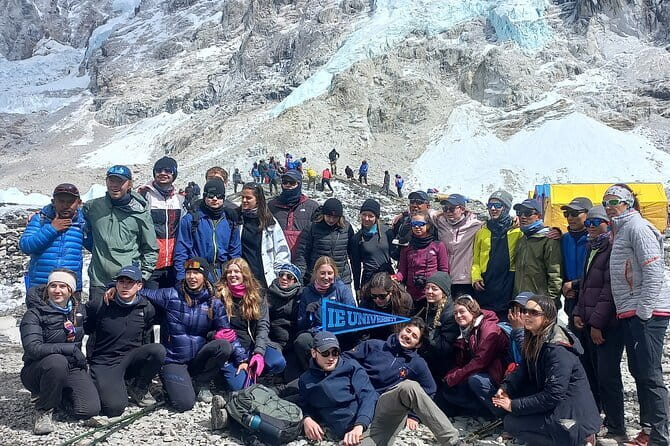
The clever part of this nine-day Everest Base Camp trek is the one-way plan. You walk into the Khumbu Valley at a steady pace, reach Everest Base Camp and Kala Patthar, then avoid the long return trek with a helicopter flight from Gorak Shep to Lukla. That saves several hard days without turning the whole trip into a rushed mountain flight.
I like the built-in acclimatization day in Namche Bazaar, and I like that the guide carries an oximeter and checks your pulse, oxygen level, and heart rate twice daily. The trade-off is simple: this remains a serious high-altitude trek, with long days above 4,000 meters and a price of $3,888 per person.
Key points
- Nine days with seven mountain days: A compact route for people who cannot spare the usual longer return trek.
- Kala Patthar is the high point: The trail reaches 5,644 meters, or 18,519 feet, for the classic Everest-area view.
- Helicopter return from Gorak Shep: You walk in and fly out, with the flight continuing to Lukla.
- Private group format: Only your own group takes part, with private ground transport in Kathmandu.
- Safety support is built in: An experienced guide, first-aid kit, and twice-daily oximeter checks are included.
- Meals and porter support are covered: One porter serves two people, and breakfast, lunch, and dinner are included during the trek.
Why the Helicopter Return Makes Sense
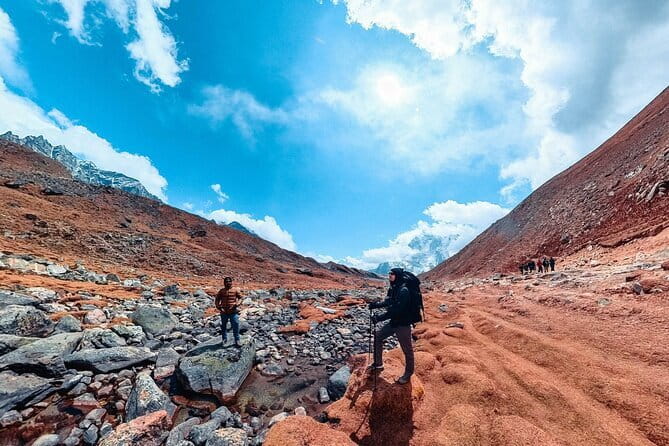
The classic Everest Base Camp route is not difficult because of technical climbing. It is difficult because you walk for days at high altitude, sleep in basic teahouses, and must give your body time to adjust. This trip removes the return leg, which is useful if your holiday in Nepal is short or you would rather spend your energy reaching the main goal.
You still get the gradual approach that makes the trek rewarding. From Lukla, the path follows villages, suspension bridges, forests, river valleys, and high mountain settlements. You do not simply arrive above Everest by air, snap a photo, and leave. You earn the view on foot.
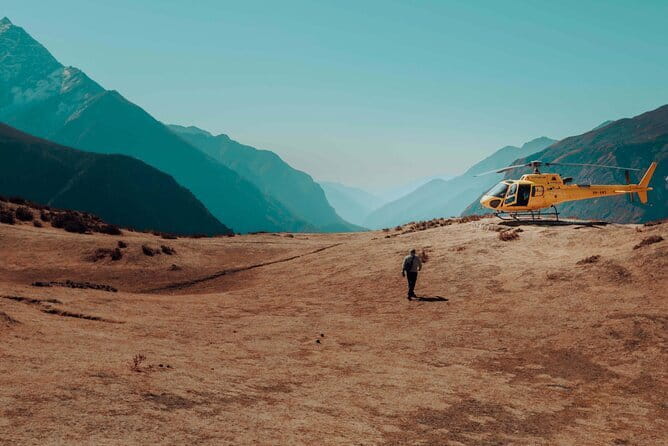
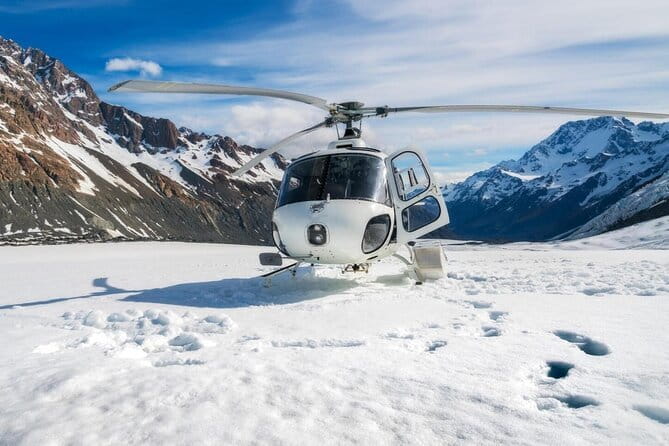
The helicopter flight is also more than a transport trick. From Gorak Shep, you get a broad aerial look at the Khumbu region before returning to Lukla. The flight is weather dependent, so you should keep a flexible attitude. Mountain weather can change quickly, and the listed timing should be treated as an outline rather than a railway timetable.
More Everest Base Camp Treks in Kathmandu
- Everest Base Camp Trek – 14 Days
★ 5.0 · 1,499 reviews - Everest Base Camp Trek
★ 5.0 · 842 reviews - Everest Base Camp Trekking
★ 5.0 · 485 reviews
Day 1: Kathmandu Pickup and Trek Briefing
Your airport team meets you at the international terminal, takes you to the hotel, helps with check-in, and carries your bags. After some rest, you meet the core team and prepare for the trek.
This is a practical first day rather than a sightseeing day. You have time to recover from an international flight, ask questions, and sort your trekking gear. Since the next morning begins early, use this evening to check that your daypack, water, warm layers, medication, and documents are ready.
The private airport transfer is a useful inclusion. Kathmandu traffic can be confusing after a long flight, and having someone handle the transfer removes one small problem before the major ones begin. Visa costs, international airfare, and personal expenses are not included, so budget for those separately.
Day 2: Lukla Flight and the Walk to Phakding
The morning flight from Kathmandu to Lukla is short and scenic. Lukla’s Tenzing Hillary Airport is the starting point for many Everest-area treks, and the change from city streets to mountain trail happens almost at once.
After landing, porters join the group and you begin walking toward Phakding. The day takes about four hours, making it a sensible first walking day. The route gives your legs a chance to settle in before the longer climbs ahead.
Lukla is also where the trek begins to feel real. You are no longer preparing for the mountains. You are walking through them. Keep your pace comfortable here. The aim is not to win the first day, but to arrive in Phakding with enough energy for Namche.
The Kathmandu to Lukla flight is included, as is the helicopter flight later in the trip. The package information also lists a Kathmandu return flight, but the detailed plan describes the helicopter returning you from Gorak Shep to Lukla. Ask the operator to confirm the final Lukla to Kathmandu arrangement before departure.
Day 3: Phakding to Namche Bazaar
This is a longer walking day of about six hours. The path passes through rhododendron and magnolia forests before reaching Toktok at 2,760 meters. From Bengkar Village, at 2,630 meters, the route crosses two bridges on the way to Monjo.
Namche Bazaar is the main settlement of the Khumbu region and a natural place to pause. The trail becomes more demanding as you approach town, but the arrival has a clear reward: Namche sits in a curved mountain bowl and feels like a busy high-altitude meeting point.
You should expect a proper climb today, not just a gentle walk between villages. Drink regularly and keep your pace even. Your guide manages the route, but you still need to speak up if you feel unwell. Headache, unusual tiredness, nausea, or breathlessness deserve attention at altitude.
More helicopter flights in Kathmandu
- Everest Base Camp Trek with Helicopter Return from Gorakshep to Lukla
★ 5.0 · 161 reviews - Everest Base Camp Trek with Helicopter Return to Lukla – 10 Days
★ 5.0 · 34 reviews - Everest Base Camp Trek with Helicopter Return -11 Days
★ 5.0 · 12 reviews - Helicopter Return Everest Base Camp Trek, KTM-LUKLA & Gorakshep-KTM by Heli
★ 5.0 · 9 reviews
Day 4: Namche Acclimatization and Khumjung
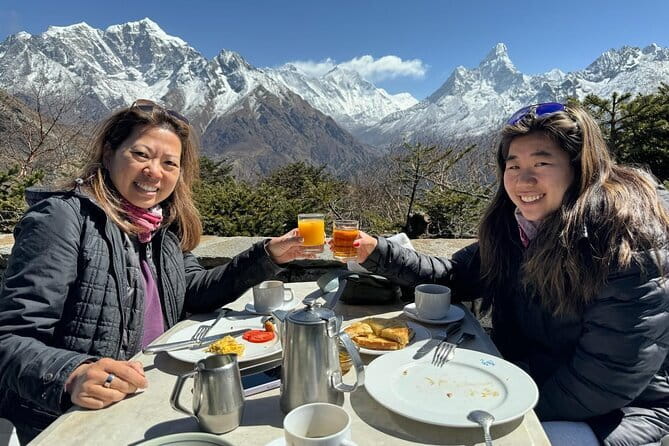
The rest day in Namche is one of the most important parts of the itinerary. You do not spend it lying in bed. The plan includes a walk toward Khumjung and the Syangboche Airstrip, above Namche, followed by a visit to the Everest View Hotel area.
The day lasts about five hours. That may sound like a full trek, but the point is to walk high and sleep lower. This helps your body begin adjusting before the route climbs toward Dingboche and beyond.
Khumjung gives you another view of Sherpa village life, while the Everest View Hotel area provides a wide mountain outlook. The stop is especially valuable because it breaks up the rapid rise from Lukla to the higher settlements.
Do not treat this as a spare day you can skip. The itinerary is short, and cutting the acclimatization walk would make the later stages harder. A nine-day schedule already leaves little room for altitude problems or poor weather.
Day 5: Namche to Kyangjuma
The trail climbs from Namche toward Kyangjuma, at about 3,550 meters. This five-hour section follows green foothills and offers strong mountain views along the way. The path rises, then drops toward the next settlement, creating the kind of up-and-down walking that can tire you more than a steady climb.
Kyangjuma is a useful overnight stop because it keeps the next stage manageable. You are now moving beyond the lower valley, and the air feels thinner. The route is still accessible, but the easy forest walking of the early days is beginning to give way to more open, exposed ground.
I would keep your expectations realistic here. The views may be excellent, but you will not walk at your normal low-altitude pace. You are gaining height, and every climb costs more effort. Let the guide set a steady rhythm rather than pushing to finish early.
Day 6: Tengboche and the Monastery Area
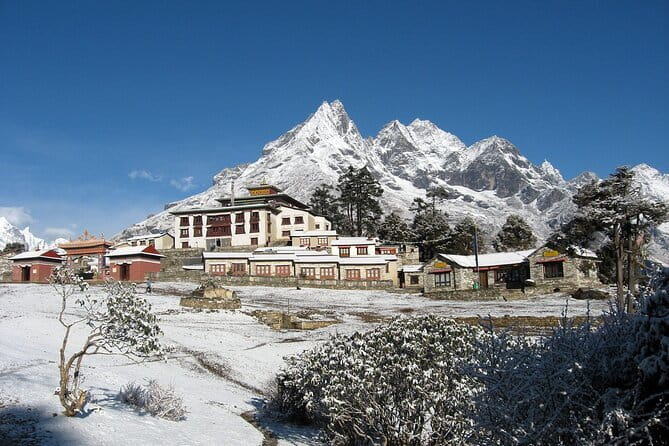
This five-hour day brings you to Tengboche. The itinerary includes an early start to catch sunrise, then a descent through rhododendron forest toward Deboche at 3,320 meters. You may see musk deer, blue sheep, or Himalayan monal along the route, though wildlife sightings are never guaranteed.
Tengboche is one of the most memorable stops on the route because of its mountain setting and Buddhist monastery. The stop gives the trek a cultural layer that a simple point-to-point hike would miss. You are not only walking toward a famous mountain. You are passing through a living Himalayan region with its own villages, religious sites, and daily routines.
The day includes both descent and ascent, so it is not a free pass after the morning sunrise. You will need to regain height after Deboche. The changing rhythm is good for the scenery, but it can be hard on tired legs.
Day 7: Dingboche Toward the Khumbu Glacier
The route above Dingboche becomes more remote and steep. At 4,410 meters, Dingboche marks a clear change in the trek. The trees thin out, the path feels more exposed, and the high mountains begin to dominate every view.
The day is listed at about six hours and includes a climb through a ridge after leaving Dingboche. From the trail, you can see Cholatse and Tawache. The route then continues toward the Khumbu Glacier area, with the walking surface becoming rockier and less forgiving.
This is where the phrase moderate difficulty needs some explanation. The trek does not require technical climbing, but altitude makes ordinary walking hard. The challenge is staying patient, warm, hydrated, and alert. Your guide’s twice-daily oxygen saturation and heart-rate checks are useful here, but they do not replace telling the guide how you feel.
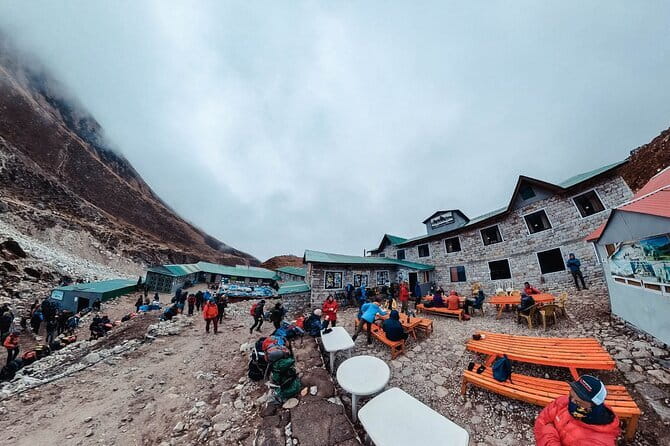
The teahouses become more basic as you go higher. Hot showers and phone charging are available at extra cost, generally about $2 to $5. Those small comforts can matter after a cold day, so carry some cash for them.
Day 8: Lobuche to Gorak Shep and Everest Base Camp
This is the longest and most demanding day, listed at about eight hours. From Lobuche, you follow a wide valley toward Gorak Shep, with the trail becoming steeper and rockier as you gain height.
Gorak Shep is the final settlement before the main viewpoints and Everest Base Camp. From there, the route includes walking up and down toward Base Camp. The terrain is rough, and the altitude makes the distance feel longer than it looks on a map.
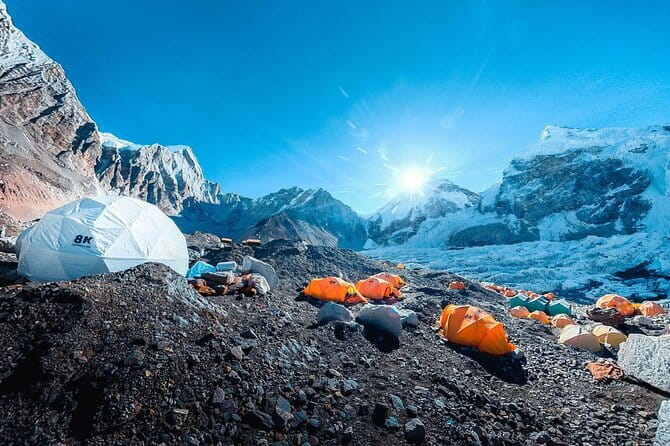
Everest Base Camp itself is the emotional target of the trek. The famous camp may look different depending on the climbing season, and Everest is not always visible from the base camp area. The approach still gives you a close look at the Khumbu Glacier and the high mountain route used by expeditions.
You should pace this day carefully. It is tempting to rush because Base Camp is the headline goal, but the following morning includes Kala Patthar, the highest point of the trip. Save something for that climb.
Day 9: Kala Patthar and the Helicopter to Lukla
The final day begins with the climb to Kala Patthar. The trail starts above Gorak Shep and is well used and easy to follow, but the altitude makes the ascent difficult. The listed walking time is about six hours.
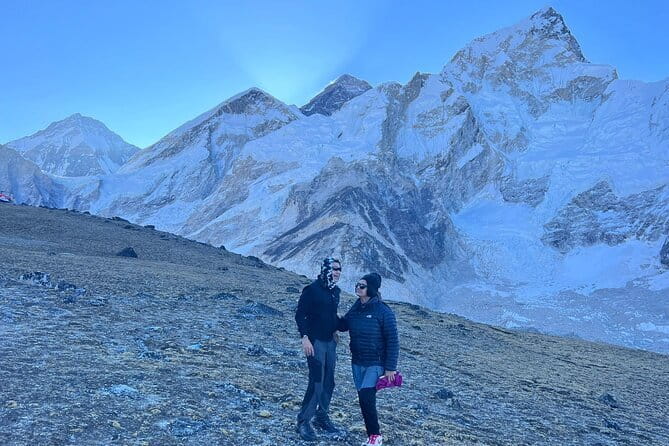
Kala Patthar reaches 5,644 meters, or 18,519 feet. It is the trip’s high point and the place for the classic Everest-area panorama. The early sun gives the mountains a golden look, which is why the group starts early.
After returning toward Gorak Shep, you take the helicopter to Lukla. This is the key time-saving feature of the trip. Instead of walking back through Lobuche, Tengboche, Namche, and Lukla, you see the route from above and cut several days of descent.
The helicopter flight is weather dependent and may involve changes to the schedule. That is not a flaw unique to this trip. It is simply part of mountain travel. Keep your final plans flexible, especially if you have an international flight immediately afterward.
What the $3,888 Price Covers
At $3,888 per person, this is not a budget trek. The value comes from the private structure and the services bundled into the price.
Included items cover private ground transport to and from the airport, the Kathmandu to Lukla flight, the helicopter from Gorak Shep to Lukla, an experienced guide, one porter for every two people, permits, government fees, taxes, meals during the trek, and a completion certificate.
The guide’s salary, food, lodging, transportation, and insurance are also included. The first-aid kit and oximeter checks add practical support, especially on the higher sections.
The helicopter is the biggest value question. If you have enough time and want to reduce the cost, walking back is the obvious alternative. If your holiday is limited to nine days, the helicopter saves time and reduces the physical demand of descending the same trail.
You still need money for Kathmandu lunches and dinners, your visa, travel and medical insurance, personal expenses, drinks, desserts, showers, charging, and tips. Tipping the guide, porter, and driver is expected, so include it in your budget rather than treating it as an afterthought.
Guides, Porters, and the Private Format
This is a private activity, so only your group takes part. That gives you more control over pace and questions than a large shared departure. It also means the experience depends heavily on the guide assigned to you.
The company has used guides named Raj, Ramesh, Sital, and Ganesh on different Nepal trips. Raj has been praised for making the process efficient, while Ramesh has been singled out for practical help on the Everest route. Sital and Ganesh have also led other Himalayan trips. Confirm your assigned guide’s name and experience before you go, since the information does not guarantee which person will lead this exact departure.
One porter for two people is a normal practical arrangement, but you should pack thoughtfully. Keep your essential layers, water, documents, medication, and valuables in your daypack. Your porter should not become a reason to bring everything you own.
Who Should Book This Trek?
This trip suits you if you have moderate physical fitness, limited time, and a strong wish to reach Everest Base Camp on foot. It also suits people who like the idea of returning by air rather than repeating the long descent.
It is not a soft adventure. The trek reaches 5,644 meters, includes an eight-hour day, and moves through steep terrain above Dingboche. You should be comfortable walking for several hours at a time and prepared for basic teahouse conditions.
The trip is also a good fit for a family or private group that wants a dedicated guide. The positive feedback connected with this operator repeatedly highlights airport support, guide assistance, and careful organization. Those details matter when flights, permits, porters, altitude, and weather all have to work together.
Practical Details Before You Commit
Confirmation is provided at booking. The experience offers pickup, a mobile ticket, and private transport in Kathmandu. Service animals are allowed, and the activity is near public transportation, though the remote mountain sections naturally have limited access.
Free cancellation is available up to 24 hours before the start time for a full refund. Changes or cancellations within 24 hours are not accepted for a refund, using local time as the cut-off.
You should also confirm the exact flight sequence. The package includes the Kathmandu to Lukla flight and the helicopter from Gorak Shep to Lukla, while the inclusions also refer to a Kathmandu return flight. The detailed day-by-day plan ends with the helicopter reaching Lukla, so ask how the final leg to Kathmandu is handled.
Should You Book It?
Book this trek if you want the real walking approach to Everest Base Camp but cannot spare the time for the full return route. The Namche acclimatization day, guide support, porter arrangement, included meals, and helicopter exit make the high price easier to understand.
Think twice if you dislike long walking days, basic mountain lodges, weather-related uncertainty, or altitude. You are paying for time saved and logistics handled, not for an easy holiday.
For the right person, this is a well-focused way to experience the Khumbu Valley. You walk through the important villages, reach Base Camp, climb Kala Patthar, and leave by air before the return trek becomes repetitive. Just arrive fit, insure yourself properly, keep your schedule flexible, and confirm the final Lukla to Kathmandu flight before booking.
FAQ
How long is the Everest Base Camp trek with helicopter return?
The trip lasts approximately nine days. It includes seven full days in the mountains, with the final mountain day ending in a helicopter flight from Gorak Shep to Lukla.
What is the highest point of the trek?
The highest point is Kala Patthar, at 5,644 meters or 18,519 feet.
Is the helicopter flight included?
Yes. The helicopter flight from Gorak Shep to Lukla is included. The package also lists a Kathmandu to Lukla flight and refers to a Kathmandu return flight, so confirm the final Lukla to Kathmandu arrangement before departure.
What meals are included?
Eight breakfasts, eight lunches, and eight dinners are included. Food in Kathmandu, drinks, desserts, and alcoholic beverages are not included.
Is a porter included?
Yes. One porter is included for every two people. The guide’s salary, food, lodging, transport, and insurance are also covered.
Is this a private tour?
Yes. Only your own group participates in the activity.
What level of fitness do I need?
The trip requires a moderate level of physical fitness. It includes walking days of about four to eight hours, steep sections above Dingboche, and a climb to Kala Patthar at 5,644 meters.
Latest treks added in Kathmandu
- Private Manaslu Circuit Trek at Himalayas★ 5.0 · 3 reviews
- Ghorepani Poonhill Trek★ 5.0 · 5 reviews
- Ghorepani Poon Hill Trek★ 5.0 · 16 reviews
- Upper Mustang Trekking★ 3.0 · 2 reviews
- Amazing 1 Day Trekking Experience in Kathmandu Nepal★ 5.0 · 24 reviews
- Upper Mustang Trekking★ 5.0 · 2 reviews
- Upper Mustang Trek★ 5.0 · 5 reviews
- Upper Mustang Trekking★ 5.0 · 4 reviews
Everest Base Camp Treks, compared.






Browse the lists this tour appears in