
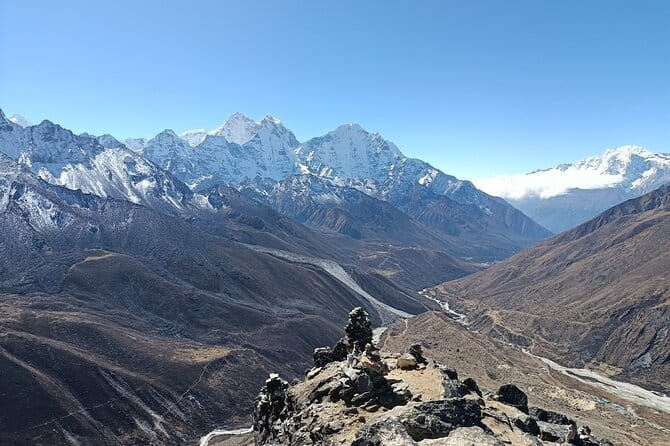
REVIEW · KATHMANDU
Everest Base Camp Trek | Deluxe Lodges | Both Way Helicopter Ride
The big appeal here is simple: you walk the classic route to Everest Base Camp, then save your tired knees with a helicopter flight from Gorakshep. You still get Sherpa villages, suspension bridges, Buddhist monasteries, and high mountain views, but without walking all the way back to Lukla.
I like the short 10-day format for anyone with limited holiday time. I also like that the price covers the pieces that often add up fast, including permits, meals, lodge accommodation, porters, warm gear, airport transfers, and helicopter flights. The catch is the altitude: this is not a gentle sightseeing walk, and the schedule leaves little room for delays or illness.
Key points at a glance
- Shared helicopter flights: Fly Kathmandu to Lukla and return from the Everest region, with a flight listed from Gorakshep to Lukla.
- Two acclimatization days: Spend time in Namche Bazaar and Dingboche, with hikes designed to help your body adjust.
- Classic Everest villages: Walk through Phakding, Namche, Tengboche, Pangboche, Lobuche, and Gorakshep.
- Kala Patthar sunrise: The final morning includes an early climb for views of Everest and nearby peaks.
- Practical equipment included: A sleeping bag rated to minus 20 degrees Celsius, down jacket, duffel bag, map, and first-aid supplies are provided.
- Strong staff support: One porter serves two people, and past guests have singled out guides named Tika, Pramod, and Rabin for care and flexibility.
Why the helicopter return changes the Everest Base Camp trek
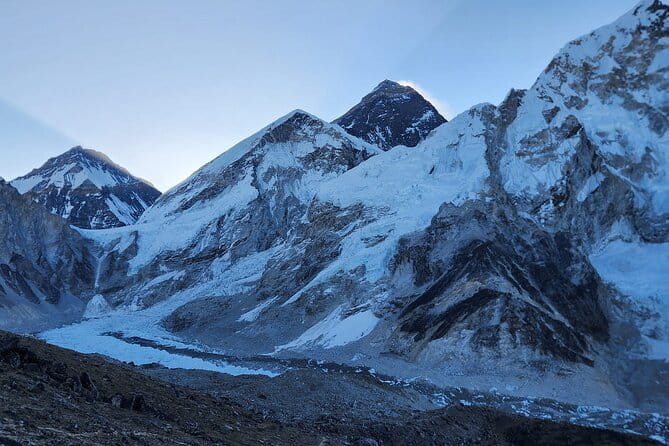
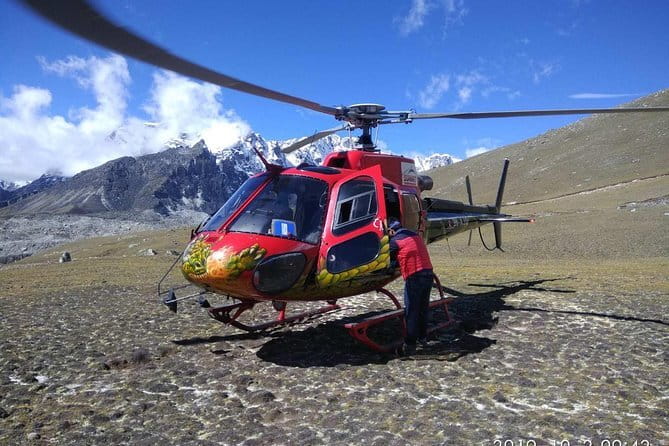
A standard Everest Base Camp route usually requires several walking days back to Lukla. This version cuts out that return trek. After reaching Gorakshep and Kala Patthar, you fly by shared helicopter toward Lukla, then continue by helicopter to Kathmandu according to the included transport plan.
That makes the trip useful for people who want the full approach to Base Camp but have only about 10 days. You still walk uphill through the Khumbu Valley instead of simply flying over it. You see the pace of mountain life, cross high suspension bridges, and spend nights in local lodges.
The helicopter is shared, so you should not picture a private flight waiting only for your group. It is a practical time-saving feature, not a luxury charter. Weather can affect mountain flights, so keep some flexibility in your plans, especially if you have an international flight soon after returning to Kathmandu.
The price is $3,332 per person. That is a serious sum, but it includes more than just a guide and a bed. You receive two Kathmandu hotel nights, helicopter transport, trek permits, meals during the trek, a guide, porters, lodge accommodation, staff insurance, warm clothing, a sleeping bag, and emergency coordination.
You still pay for international airfare, a Nepal visa, travel insurance, drinks, snacks, and Kathmandu lunches and dinners. Most important, your insurance must cover trekking and rescue up to 5,500 meters. Standard holiday insurance may not be enough.
More Everest Base Camp Treks in Kathmandu
- Everest Base Camp Trek – 14 Days
★ 5.0 · 1,499 reviews - Everest Base Camp Trek
★ 5.0 · 842 reviews - Everest Base Camp Trekking
★ 5.0 · 485 reviews
Day 1: A soft landing in Thamel
Your arrival begins with a private airport pickup from Tribhuvan International Airport. The team takes you to your Kathmandu hotel, where you can rest after your flight.
The hotel is listed as a three-star property, with breakfast included before and after the trek. This first night matters. The following morning begins early, and you will appreciate having a bed, a shower, and a chance to organize your duffel before heading into the mountains.
The meeting point is Life Himalaya Trekking in Narsingh Chowk Marg, Kathmandu. Airport pickup and drop-off are included, which removes one common source of confusion in a busy city.
Day 2: Helicopter to Lukla and the walk to Phakding
The morning starts with a shared helicopter flight from Kathmandu to Tenzing-Hillary Airport in Lukla. The flight takes about 45 minutes and offers views toward Everest and Kanchenjunga.
Lukla is the practical gateway to the Khumbu. After landing, you begin walking rather than spending the day in transit. The first section leads toward Phakding beside the Dudh Koshi River.
The hike is intended to be gentle, giving you a first taste of the route without immediately forcing you into a long climb. That sounds easy, but remember that you are already at mountain altitude. Walk slowly, drink regularly, and let your guide set the pace.
The supplied timing for this day appears unusually long, so it is sensible to ask the operator for the exact walking schedule before departure. Mountain conditions and flight operations can change the plan.
Day 3: Suspension bridges, Monjo, and first views of Everest
From Phakding, the trail follows the Dudh Koshi through pine forest. Benkar village appears along the route, followed by Monjo, where you enter Sagarmatha National Park.
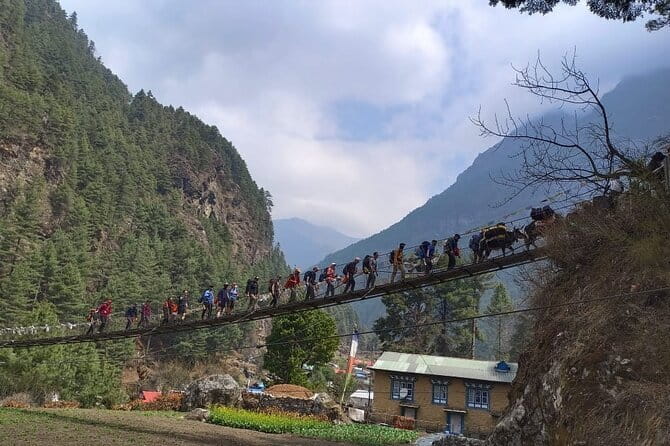
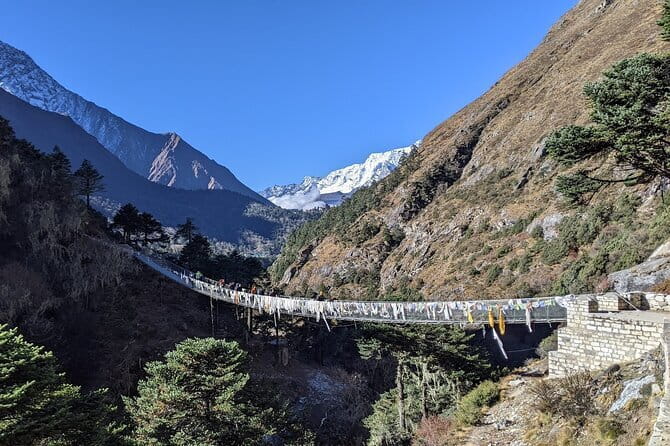
The day includes a crossing of the famous Hillary Bridge. The bridge is a memorable piece of the route, suspended above the river and often decorated with prayer flags. It is also a reminder that this trek is a real mountain journey, not a paved walk between hotels.
After the river confluence, the trail climbs steeply toward Namche Bazaar. This is one of the first demanding sections. Your reward is the first glimpse of Everest, rising behind the Lhotse and Nuptse range.
Namche is the main trading center of the Khumbu and your base for acclimatization. It has shops, restaurants, massage centers, and spa facilities. Do not expect city comforts, but you will have more choice here than in the smaller villages ahead.
More helicopter flights in Kathmandu
- Everest Base Camp Trek with Helicopter Return from Gorakshep to Lukla
★ 5.0 · 161 reviews - Everest Base Camp Trek with Helicopter Return to Lukla – 10 Days
★ 5.0 · 34 reviews - Everest Base Camp Trek with Helicopter Return -11 Days
★ 5.0 · 12 reviews - Helicopter Return Everest Base Camp Trek, KTM-LUKLA & Gorakshep-KTM by Heli
★ 5.0 · 9 reviews
Day 4: Acclimatization above Namche
The first planned acclimatization day is well placed. Instead of sitting indoors all day, you hike toward Syangboche and the Hotel Everest View, located at about 3,880 meters.
The useful rule here is climb high and sleep lower. You gain altitude during the day, then return to Namche for the night. This gives your body a better chance to adjust before the trail rises much higher.
The Hotel Everest View stop offers broad views of Everest, Ama Dablam, Lhotse, and nearby peaks. The listed admission fee is not included, so budget for that separately if you want to enter.
Namche is also a good place to check your equipment. Your package includes a warm down jacket and a sleeping bag rated to minus 20 degrees Celsius, both returned after the trip. You receive a duffel bag, T-shirt, trail map, and first-aid support as well.
Day 5: Tengboche and its mountain monastery
The route leaves Namche and follows the Dudh Koshi before crossing a long suspension bridge. From there, the trail enters the Imja Khola Valley and continues toward Tengboche.
Tengboche is one of the most memorable stops on the approach to Base Camp. Its gompa, or Buddhist monastery, sits amid views of the surrounding peaks. The setting gives the trek a strong cultural side, not just a scenic one.
The day is listed at about five hours of walking. That figure is manageable for a fit hiker, but altitude makes every uphill section slower. You should focus less on speed and more on steady breathing.
Accommodation throughout the trek is twin-share in the best available lodges. The phrase deluxe lodges should not lead you to expect resort rooms. Lodge quality varies with altitude, and basic mountain facilities are normal.
Day 6: Pangboche and the upper Khumbu Valley
The walk continues toward Pangboche, with views of Ama Dablam and Lhotse. Pangboche is known for its Buddhist heritage, and the route includes a stop at the Pangboche Buddhist monastery.
The day is listed at about five hours. This is a useful stage because it moves you higher without the most punishing altitude gain of the trek. The scenery becomes more open as you leave the lower forests behind.
At this point, your guide’s judgment matters. Past arrangements have included guides named Tika, Pramod, and Rabin, with particular praise for encouragement, communication, and attention to safety. Your assigned guide may be different, so confirm the name and experience of your actual guide before setting out.
Day 7: Dingboche and the second acclimatization day
Dingboche is the second major acclimatization stop. The day follows the climb high, sleep low approach, with an ascent toward the surrounding high ground before returning to Dingboche.
This is not wasted time. Above 4,000 meters, altitude can affect even strong hikers. A short acclimatization hike can help you prepare for Lobuche, Gorakshep, and Base Camp.
The supplied schedule gives about five hours for this day. You should expect the altitude to matter more than the mileage. Eat the meals provided, keep a comfortable pace, and tell your guide quickly if you feel unwell.
The package includes breakfast for all 10 days, plus eight lunches and eight dinners. Kathmandu meals are not covered, and drinks and snacks are extra. Carrying some spending money for these small purchases is sensible.
Day 8: Lobuche and the memorials at Thukla
The route to Lobuche is described as a lighter trekking day, though you continue to gain altitude. The trail reaches the broad valley of Dughla before climbing toward the memorial area at Thukla.
The memorials honor climbers and Sherpa workers who died on Everest and other Himalayan peaks. This is a quiet, serious stop. It gives the trek emotional weight and reminds you that the mountain has never been just a backdrop for holiday photographs.
The listed timing for this day is unusually long, so ask for clarification about the expected walking hours. At this altitude, conditions can change quickly, and the difference between a short afternoon and a very long day matters.
Lobuche is one of the final overnight stops before Base Camp. Your guide and porter team become especially important here because cold, altitude, and fatigue all arrive together.
Day 9: Gorakshep and Everest Base Camp
This is the main goal. From Lobuche, you walk over rocky, glacial terrain toward Gorakshep, the last lodging stop on the route.
After reaching Gorakshep, you continue for roughly four hours toward Everest Base Camp. The route is not a smooth trail. Expect uneven ground and a slower pace as you approach the glacier area.
Base Camp itself is the emotional high point of the trek. The famous climbing camp is seasonal, so the exact appearance will depend on the time of year. Even without a busy camp, standing at the foot of the route used by Everest expeditions is a powerful moment.
The package includes the Base Camp permit or activity entry shown in the schedule, along with national park and local municipality permits. Your guide handles the practical side, letting you focus on the walk.
After returning to Gorakshep, the helicopter plan becomes important. A shared helicopter flight from Gorakshep to Lukla is included, followed by helicopter transport between Lukla and Kathmandu in the package details. Confirm the exact flight sequence, since high-altitude aviation depends on weather and operating conditions.
Day 10: Kala Patthar at sunrise and the return
The final morning begins before sunrise with a climb to Kala Patthar. This is often the best viewpoint of the entire trip because Everest appears with Nuptse, Lhotse, Ama Dablam, and the surrounding peaks.
The ascent is short compared with the full trek, but it is hard at this elevation and in the cold morning air. You should be ready with the provided down jacket and sleeping bag, along with a headlamp if your guide recommends one. The supplied information does not specify the exact departure time or flight timing, so ask how the Kala Patthar climb connects with the helicopter departure.
The day marks the end of the walking route. Depending on the flight plan and conditions, you return by helicopter toward Lukla and then Kathmandu. The experience ends back at the Kathmandu meeting point.
What the $3,332 price really covers
The strongest value comes from the bundled support. You are not arranging each permit, lodge, meal, porter, airport transfer, and mountain flight separately.
Included services cover:
- Shared helicopter flights from Kathmandu to Lukla and back toward Kathmandu
- A shared helicopter from Gorakshep to Lukla
- Private airport transfers
- Two nights in a three-star Kathmandu hotel
- Twin-share lodge accommodation during the trek
- A licensed trekking guide
- One porter for every two people
- Breakfast for 10 days, plus eight lunches and eight dinners
- National park and local municipality permits
- Down jacket and minus 20 degree sleeping bag
- Duffel bag, map, T-shirt, first-aid kit, and staff oxygen meter
- Staff salary, equipment, food, transportation, and accidental insurance
- Emergency and rescue coordination
- Farewell dinner in a traditional Nepali restaurant
- Achievement certificate
The price is less attractive if you already have a guide, porter, equipment, and independent transport arranged. It becomes more reasonable if you value a short schedule and want the helicopter return built into one booking.
Who should choose this trek
This trip suits you if you have strong physical fitness, limited time, and a clear goal of reaching Everest Base Camp. It also fits people who want support with permits, food, staff, equipment, and transport rather than handling each detail alone.
It is not the right choice if you want a slow, relaxed Himalayan holiday. The route gains altitude quickly, and the 10-day schedule leaves limited spare time. You should also be comfortable sharing helicopter space and lodge rooms.
The private group format is useful. Only your own group participates, so the guide can adjust the walking rhythm to your needs. Past arrangements also show some flexibility, with the company adjusting plans to suit personal travel styles.
Free cancellation is available up to 24 hours before the start time for a full refund. Changes or cancellations inside that window are not accepted, and the local Nepal time cutoff applies.
Should you book it?
Book this trek if the helicopter return matters to you and you want to reach Base Camp without spending extra days retracing the trail. The included equipment, porter support, meals, permits, and airport transfers make the package easier to manage than a piecemeal plan.
Before paying, confirm the exact helicopter routing, the name and experience of your assigned guide, lodge standards, and the daily schedule shown for the unusually long days. Also buy insurance that covers rescue to 5,500 meters.
For a fit hiker with limited time, this is a focused way to experience the Khumbu. For anyone unsure about altitude or hoping for a leisurely walk, choose a longer schedule with more spare days.
FAQ
How long is the Everest Base Camp trek?
The planned duration is 10 days, including arrival in Kathmandu, the trek, Kala Patthar, and the return by helicopter.
Are helicopter flights included?
Yes. The package includes shared helicopter transport from Kathmandu to Lukla, a shared flight from Gorakshep to Lukla, and helicopter transport between Lukla and Kathmandu as specified in the inclusions.
Is accommodation included?
Yes. You receive two nights in a three-star Kathmandu hotel with breakfast and twin-share accommodation in the best available lodges during the trek.
Are meals included?
Breakfast is included for all 10 days. The package also includes eight lunches and eight dinners during the trek. Kathmandu lunches and dinners, drinks, and snacks are not included.
What equipment is supplied?
The operator provides a warm down jacket, a sleeping bag rated to minus 20 degrees Celsius, a trekking duffel bag, a T-shirt, a trail map, and first-aid supplies. The jacket and sleeping bag must be returned after the trip.
Do I need travel insurance?
Yes. Travel insurance covering trekking, rescue, and evacuation up to 5,500 meters is not included in the price and must be arranged separately.
Latest treks added in Kathmandu
- Private Manaslu Circuit Trek at Himalayas★ 5.0 · 3 reviews
- Ghorepani Poonhill Trek★ 5.0 · 5 reviews
- Ghorepani Poon Hill Trek★ 5.0 · 16 reviews
- Upper Mustang Trekking★ 3.0 · 2 reviews
- Amazing 1 Day Trekking Experience in Kathmandu Nepal★ 5.0 · 24 reviews
- Upper Mustang Trekking★ 5.0 · 2 reviews
- Upper Mustang Trek★ 5.0 · 5 reviews
- Upper Mustang Trekking★ 5.0 · 4 reviews
Everest Base Camp Treks, compared.






Browse the lists this tour appears in