
REVIEW · NEPAL
Pokhara: Amazing 7-Day ABC Trek with Natural Hot Spring
The best part of this seven-day Annapurna Base Camp trek is the way it builds toward a single dramatic setting: a high mountain bowl ringed by Annapurna peaks and glaciers. You begin among green fields and villages near Pokhara, pass through bamboo and rhododendron forests, and finish with a soak in Jhinu Dada’s natural hot spring.
I like the sensible route and the strong guide support. You get time at Annapurna Base Camp, then descend to Sinuwa and Jhinu rather than rushing straight back to Pokhara. I also like the private-group format, which lets the guide adjust the pace, as Ghanshyam Silwal did for one group. The main consideration is the altitude: reaching 4,130 meters involves several long walking days, and the price and inclusions differ between the full package and the non-full package.
Key points at a glance
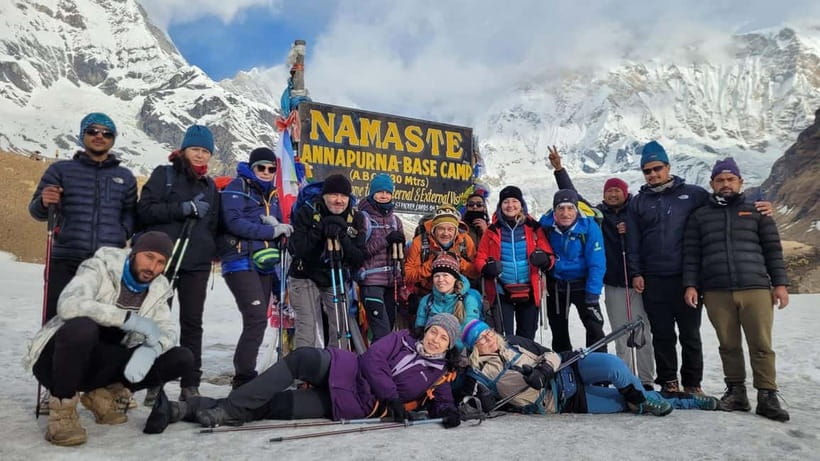
- Annapurna Base Camp at 4,130 meters: Reach the famous mountain amphitheater after walking from Deurali through high Himalayan scenery.
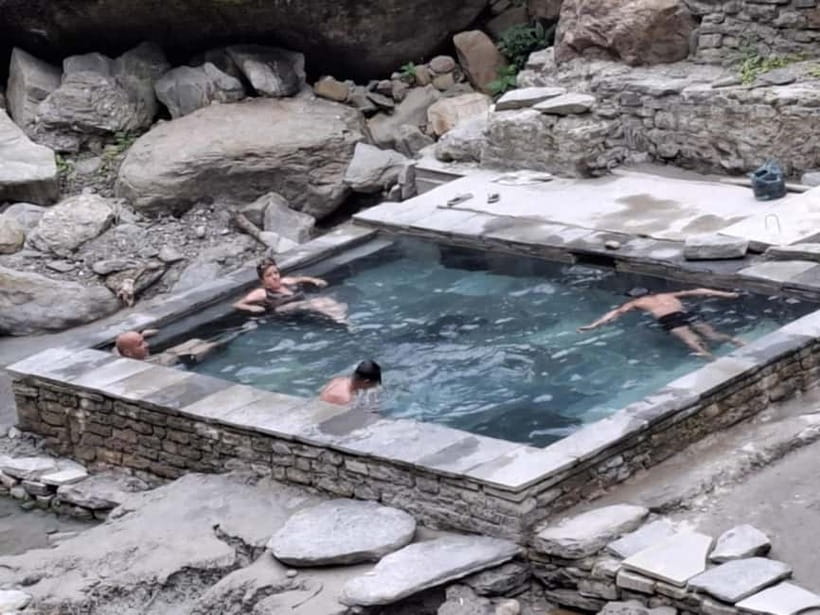
- A real hot-spring finish: Spend day six at Jhinu Dada, soaking tired legs in natural hot water.
- A private seven-day trek: Your guide can focus on your group rather than a large mixed crowd.
- Pokhara to the trailhead by road: The first day combines about four hours in a jeep with three hours on foot.
- Strong guide support: English, Hindi, and Nepali-speaking guides are available, with names including Niraj, Jeet, Prakash, and Ghanshyam Silwal.
- Good package value at $200: Permits, accommodation, guide costs, and meals are included on the full package, but personal expenses and some transport arrangements are separate on the non-full option.
Why this ABC route works so well in seven days
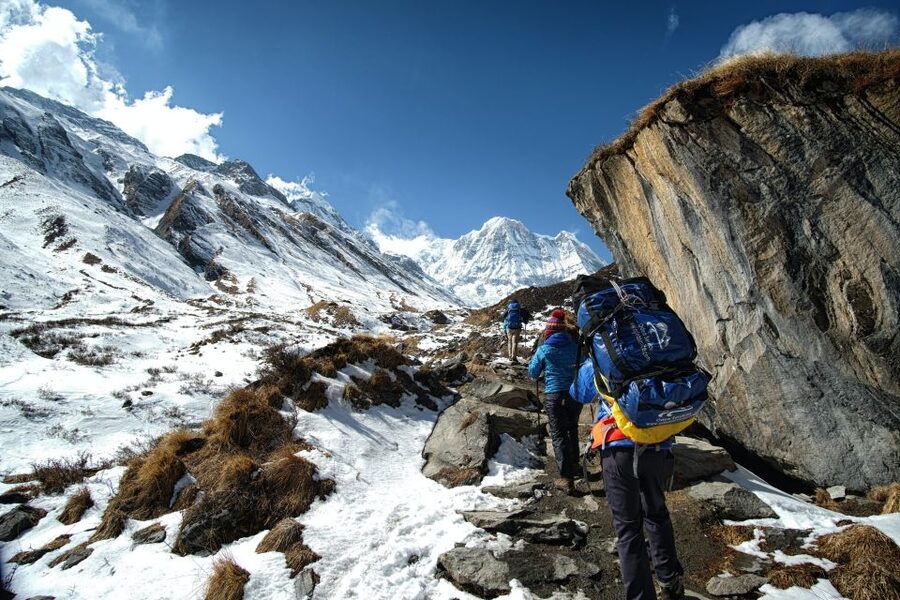
Annapurna Base Camp is one of Nepal’s most appealing shorter high-mountain treks. You do not spend weeks crossing remote passes. Instead, the route takes you from Pokhara’s lakeside streets into villages, forest, river valleys, and finally a tight circle of high peaks.
The route is demanding but neatly organized. The biggest walking days are day four, from Deurali to Base Camp, and day five, the long descent to Sinuwa. The schedule lists six hours for the climb to ABC and seven hours for the return day. That gives you a clear idea of the effort involved.
I also like the finish. Many mountain trips end with a tired walk back to a road. Here, day six leads to Jhinu Dada, where you can rest in a natural hot spring before the final trip to Pokhara. It is a small but important touch, especially after several days on stone steps and mountain paths.
The route is offered as a private group, so you are not tied to the pace of a large public departure. That matters on a trek. A guide can slow the day if someone needs a break, or keep things moving when the group is feeling strong.
More Hot Spring Treks in Nepal
- Pokhara: 5 Day Annapurna Base Camp Trek & Natural Hot Spring
★ 4.9 · 44 reviews - From Pokhara: 5-Day Annapurna Basecamp Trek with Hot Springs
★ 4.9 · 26 reviews - Pokhara: 7-Day Annapurna Base Camp Trek & Natural Hot Spring
★ 5.0 · 11 reviews
Day 1: Pokhara to Chhomrong, with a jeep and a first mountain walk
The day begins with pickup from Lakeside Pokhara after breakfast. Pickup is also available from Pokhara Airport and elsewhere in the Pokhara Valley, so you do not need to arrange your own way to the starting point.
The road journey lasts about four hours and follows a scenic route with views of the Seti River, mountains, and green rice fields. You travel by jeep to Matqui, about half an hour beyond Ghandruk. From there, you walk for roughly three hours toward Chhomrong at 2,200 meters.
This opening day gives you a useful taste of Nepal’s mixed transport and walking style. You are not walking from the city, but you are also not being driven deep into the mountains. The jeep removes a long approach section, leaving you with enough time on foot to feel that the trek has begun.
Chhomrong is a major village on the route and a practical overnight stop. The climb from Matqui brings the first real sense of mountain effort. You will see local homes, farmland, and changing views as the path rises.
The road can be tiring, and four hours in a jeep is not the same as four hours of easy sightseeing. Keep water and a small snack close by. Your passport or identification, cash, sunscreen, camera, and jacket should also be easy to reach.
Day 2: Chhomrong to Dovan through forest and river country
Day two covers the route from Chhomrong to Dovan at 2,400 meters in about five to six hours. The path passes through thick forest, crosses suspension bridges, and follows the Modi River.
This is a particularly attractive part of the trek because the surroundings change often. The forest gives shade, the river adds movement and sound, and openings in the trees reveal Annapurna and Machhapuchhre. You are walking through a living mountain valley rather than simply climbing a road toward a viewpoint.
The day also introduces the physical pattern of the ABC trek: frequent ups and downs rather than one steady climb. A suspension bridge can be fun, but the stone steps and repeated changes in grade require steady footing. Hiking shoes with a good grip are a sensible part of your packing list.
Dovan is higher and cooler than Chhomrong. Accommodation is described as available during the trek, but the exact lodge can vary. That is normal on this route. You should expect simple mountain accommodation rather than city-hotel comfort, and you should bring a sleeping bag.
Day 3: Dovan to Deurali, with waterfalls and higher forest
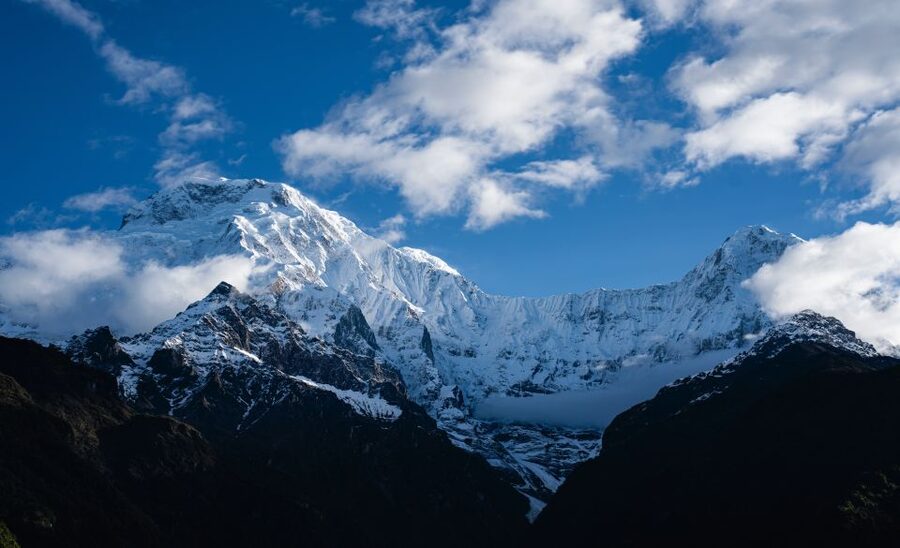
From Dovan, you continue to Deurali at 3,200 meters. The walking time is about six hours, with the trail passing through rhododendron and bamboo forest.
The forest remains a major part of the experience, but the feeling changes as you gain height. Waterfalls and mountain scenery appear along the way, and the air becomes more distinctly alpine. Deurali is not the final goal, but arriving there is a useful milestone because the next day takes you to Base Camp.
You should treat this as an important preparation day. The altitude is now high enough that you need to keep your pace comfortable and pay attention to how you feel. The listed schedule gives you time to walk steadily, but it does not make the ascent effortless.
A guide is especially useful here. The route involves forests, bridges, changing weather, and a steady rise in elevation. Recent departures have been led by guides including Jeet, Prakash, Niraj, and Ghanshyam Silwal. One group specifically praised Ghanshyam’s ability to adjust daily pacing, provide encouragement, and help when a participant felt unwell.
That is the kind of support you want in the mountains. A guide is not simply there to point at the path. The guide handles permits and practical arrangements, watches the group, and helps manage the day when conditions or energy levels change.
Another trail to compare in Nepal:
- Everest Base Camp Trek – 14 Days
★ 5.0 · 1,499 reviews - Everest Base Camp Trek
★ 5.0 · 842 reviews - Everest Base Camp Trekking
★ 5.0 · 485 reviews - Annapurna Circuit Trek with Tilicho Lake
★ 5.0 · 368 reviews
Day 4: Deurali to Annapurna Base Camp at 4,130 meters
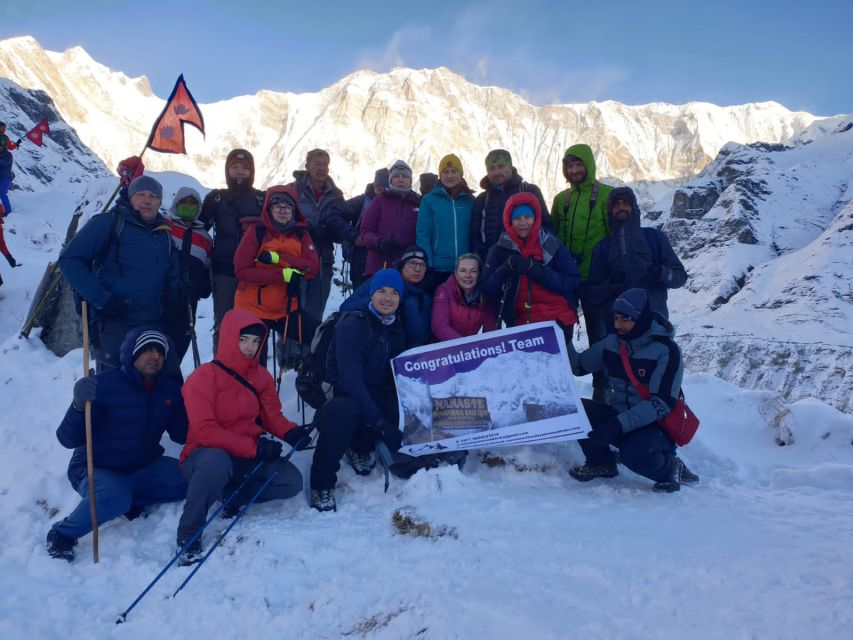
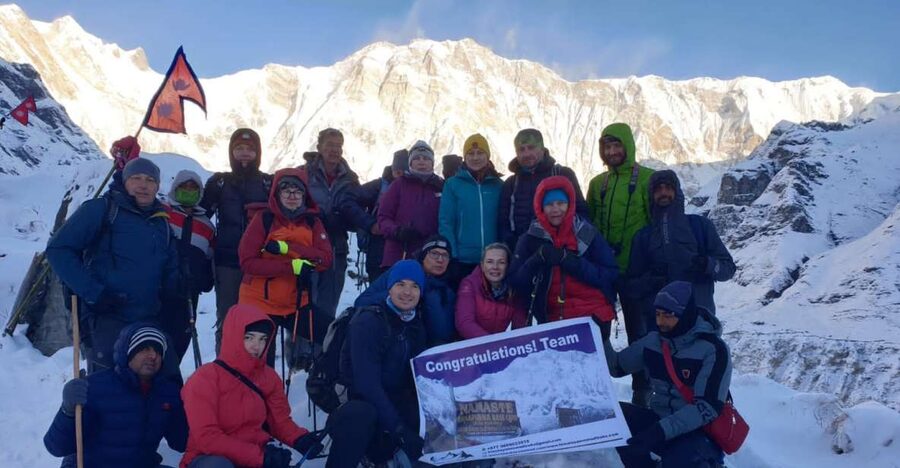
Day four is the central event of the trek. You walk from Deurali to Annapurna Base Camp, with about six hours on the trail.
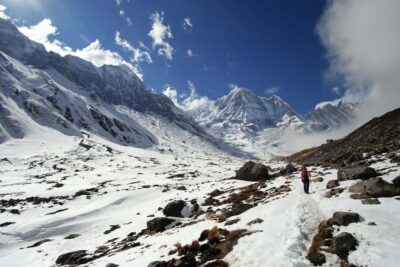
The scenery becomes more open as the forest gives way to the high mountain setting. The route leads toward the famous natural bowl of Annapurna Base Camp, surrounded by steep peaks, snow, and glaciers. This is the moment when the earlier village and forest sections make sense. You have moved gradually from a green river valley into a high mountain world.
At 4,130 meters, ABC is not a casual viewpoint. The altitude can make a six-hour walk feel harder than the distance suggests. Keep your pace measured, listen to your guide, and carry enough water for the day. The provided packing advice includes a jacket, long pants, sunscreen, sunglasses, and trekking gear, all useful in this exposed section.
The reward is the setting itself. You are not looking at a distant range from a city overlook. You are standing inside a dramatic mountain amphitheater, with peaks rising around the base camp. Weather can shape the experience, so do not judge the day only by the clearest possible photographs. The high-altitude setting remains the main attraction.
This is also the point where the trek becomes personally satisfying. You have walked through villages, forest, bridges, and waterfalls to reach one of Nepal’s best-known mountain destinations. The achievement is built into the route, not added by a vehicle or cable car.
Day 5: The long descent from ABC to Sinuwa
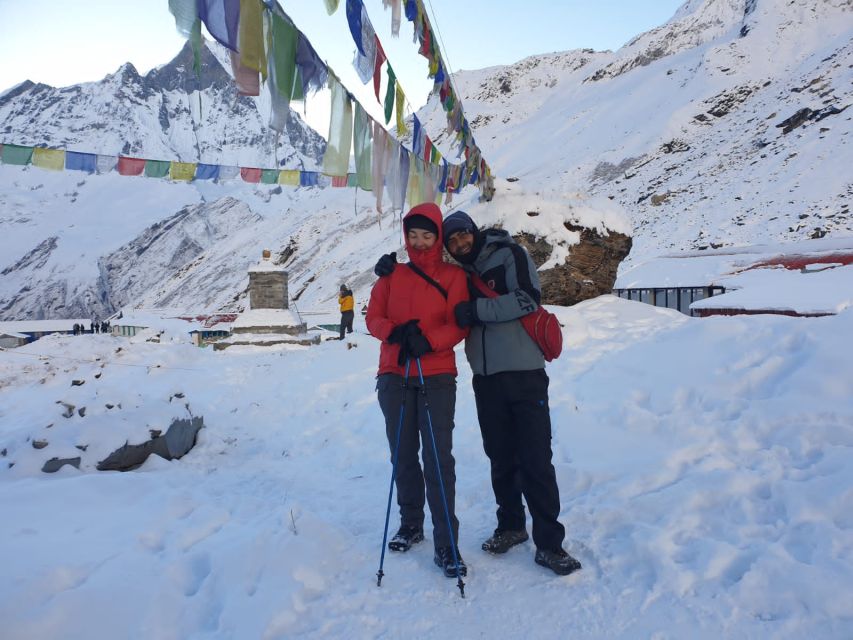
After time at Annapurna Base Camp, you retrace the route toward Sinuwa at 2,200 meters. The day is listed at about seven hours.
The descent gives you a second look at the same route, but it will not feel identical. The trail is easier to recognize, and the lower altitude may help your breathing, yet long downhill walking can be hard on knees and thighs. Trekking poles may be useful if you already use them, though they are not specifically included.
Sinuwa is a good stopping point because it breaks up the return journey. Trying to descend all the way toward the road in one day would make the trip less comfortable and leave little time to enjoy the route.
This day also shows the value of having a private guide. Your group can take breaks when needed instead of matching the pace of a large party. The guide is responsible for accommodation, meals, equipment, insurance, and transport costs related to the guiding role.
Day 6: Sinuwa to Jhinu Dada and the natural hot spring
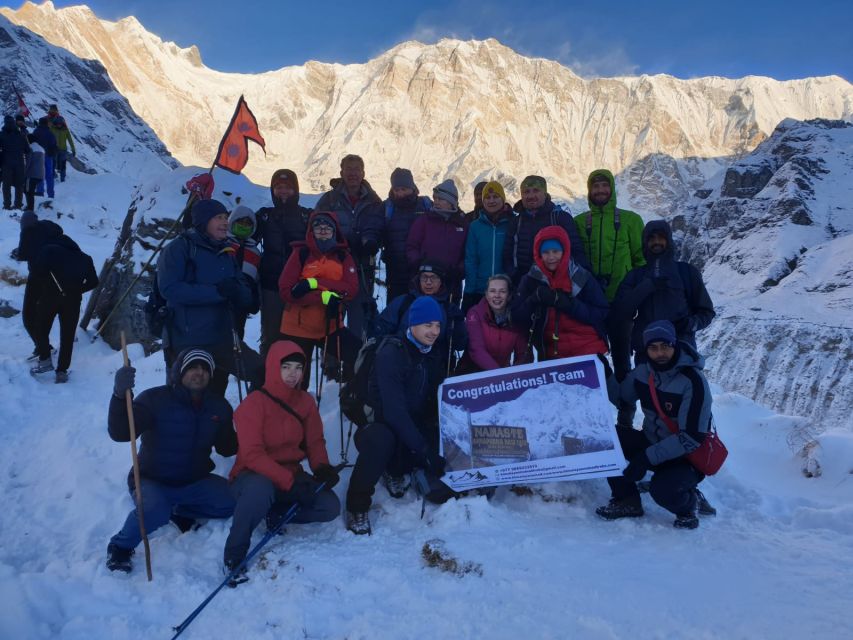
The walk from Sinuwa to Jhinu Dada takes about five hours and ends at 1,600 meters. This is the recovery day, though you still have a proper descent before the soaking begins.
Jhinu Dada is known here for its natural hot spring. After the long climb to ABC and the return to Sinuwa, the chance to sit in warm water gives the trek a welcome change of rhythm. You can relax your legs, enjoy the quiet setting, and take stock of how far you have come.
The hot spring is not a substitute for rest during the trek, but it is a fine reward at the right point in the schedule. You still need to carry cash for personal expenses, and items such as towels, showers, bottled or boiled water, and other extras are not included. A towel is listed among the things to bring.
I consider this one of the strongest features of the route. The hot spring is tied to the walking itinerary, not added as an unrelated attraction. You earn the rest after several days of climbing and descending.
Day 7: A short walk, then back to Pokhara
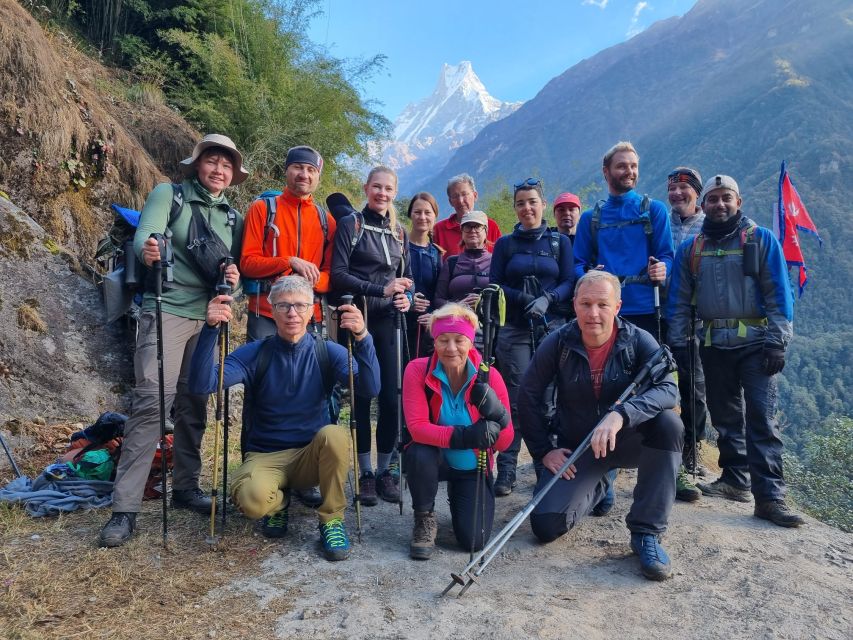
After breakfast at Jhinu Dada, you walk for about two hours before taking a jeep back to Lakeside Pokhara. The drive gives you time to shift from mountain pace to city pace.
The return is not just a transfer. You have moved through several distinct parts of the Annapurna region, from Seti River views and rice fields to forest, the Modi River, high peaks, and a hot spring. By the time you reach Pokhara, the route feels like a complete journey rather than a single out-and-back walk.
The package does not cover extra nights in Pokhara caused by an early arrival, late departure, or an early return outside the planned schedule. If your international or domestic plans are tight, leave some flexibility.
What the $200 price really covers
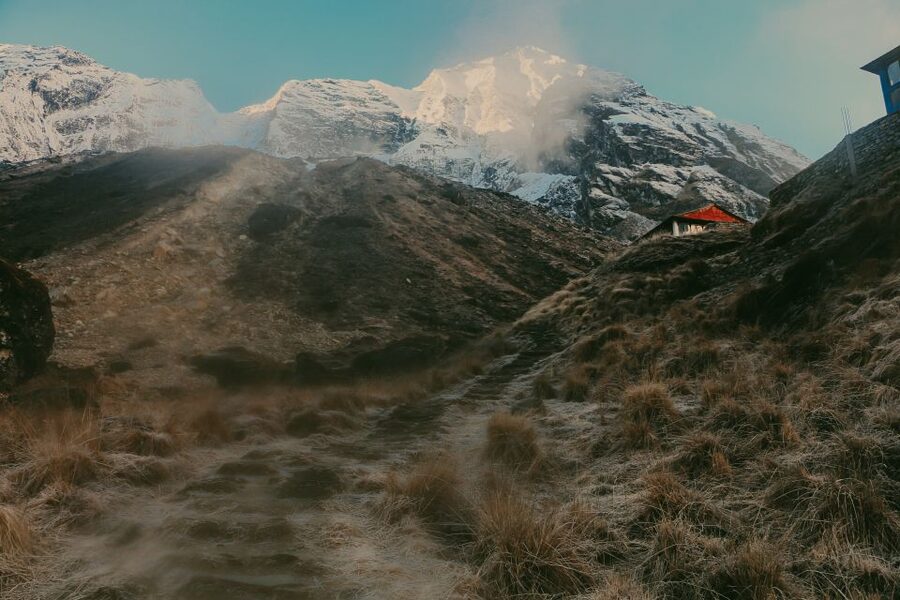
At $200 per person, this trek can offer good value, but you need to confirm which package you are booking. The full package includes accommodation during the trek, breakfast, lunch, and dinner throughout the trekking days, deluxe transport according to the itinerary, permits, paperwork, the Trekkers’ Information Management System fee, a guide, guide insurance, and applicable government tax.
The full package also covers the guide’s meals, accommodation, salary, equipment, insurance, and transport. That matters because guide costs can otherwise become an unexpected addition.
The non-full package uses shared bus transport, and meals in the mountains are not listed in the same way. Personal costs remain separate, including drinks, phone calls, laundry, bar bills, battery charging, showers, bottled or boiled water, and extra porters.
A porter is available for an additional charge. I would seriously consider one if you are not used to carrying a pack for five to seven hours a day. One group found its porter especially helpful during difficult moments. The guide is included, but a guide and porter perform different jobs.
The price does not include travel insurance or rescue insurance. It also does not include international flights, the Nepalese visa fee, sightseeing entrance fees, or lunch and evening meals in Pokhara. These are normal exclusions, but they should be part of your budget.
Guides, pacing, and the private-group advantage
The available guiding languages are English, Hindi, and Nepali. The company is Himalayan Nomad Treks Pvt. Ltd., and recent departures have used guides named Niraj, Ghanshyam Silwal, Jeet, and Prakash.
The most useful quality to look for is not a rehearsed speech about the mountains. It is practical care on long days. Ghanshyam was able to adjust the pace, keep the group motivated, and respond when one participant felt unwell. Prakash was also able to explain the history, geography, and setting of Annapurna while keeping the group focused on safety.
You can request a private group, which is valuable for couples, families, or friends with a shared pace. It also means the trip can feel more personal. At the same time, a private group does not remove the physical demands of the trek. You still have a six-hour climb to ABC and a seven-hour descent the next day.
Packing and practical preparation
Bring a passport or identification document, cash, sunscreen, a camera, sunglasses, hiking shoes, long pants, shorts, T-shirts, a jacket, a towel, a sleeping bag, and suitable trekking gear.
The list is broad, but the key point is to pack for changing conditions. Lower sections can feel mild, while the high route to ABC is colder and more exposed. Keep your jacket and warm layers accessible rather than buried at the bottom of your bag.
Cash is important because personal expenses are excluded. Plan for drinks, water, charging, showers, and other small purchases. A porter can be purchased separately if you want to carry less.
Free cancellation is available up to 24 hours before departure, and you can reserve now and pay later. Pickup is included from Lakeside, Pokhara Airport, and the wider Pokhara Valley. Pickup from Kathmandu is possible on request for an added cost.
Who should book this trek?
I would recommend it to you if you want a classic Himalayan trek but have about one week, want a private guide, and like the idea of ending with a hot spring. It suits people who are comfortable walking for several hours on consecutive days and who understand that ABC at 4,130 meters is a serious mountain destination.
It is also a good fit if you value logistics handled for you. Permits, guide costs, accommodation, and meals are covered in the full package, so you can focus on walking rather than arranging each overnight stop.
I would pause before booking if you want a soft adventure with little elevation change. The route includes long days, a high point above 4,000 meters, and a seven-hour descent. You should also check the exact package before paying, especially for meals and transport.
Should you book the Pokhara ABC trek?
Book it if the combination of Annapurna Base Camp, a private guide, and Jhinu Dada’s hot spring matches what you want from Nepal. The route offers strong variety in seven days, with mountain views, forests, villages, bridges, rivers, and a clear sense of progress.
The $200 price is attractive when the full package applies, but ask for the exact inclusions first. Add travel insurance, personal spending, and possibly a porter to your real budget.
For the best experience, arrive prepared for long walking days, carry cash, bring warm layers and a sleeping bag, and tell the guide early if your pace needs adjusting. With those points handled, this is a focused and rewarding way to reach Annapurna Base Camp from Pokhara.
FAQ
How long is the Annapurna Base Camp trek?
The experience lasts seven days, beginning and ending in Lakeside Pokhara.
What is the highest point of the trek?
Annapurna Base Camp is at 4,130 meters.
Is transportation from Pokhara included?
Hotel pickup and drop-off are included. The itinerary uses a jeep on the first and final days. Deluxe transportation is included for the full package, while the non-full package uses shared bus transport.
Are meals included during the trek?
Breakfast, lunch, and dinner are included during the trek with the full package. Lunch and evening meals in Pokhara are not included.
Is accommodation included?
Available accommodation during the trek is included. Extra nights in Pokhara caused by early arrival, late departure, or an early return outside the scheduled itinerary are not included.
Can I hire a porter?
Yes. Porter service is available for an additional cost.
What languages can the guide speak?
Guides are available in English, Hindi, and Nepali.
More week-long treks in Nepal
- Pokhara: 7 Day Annapurna Base Camp Trek
★ 4.9 · 38 reviews - Short Annapurna Base Camp Trek – 7 Days
★ 5.0 · 22 reviews - Kathmandu to Langtang Valley 7-Day Trek
★ 5.0 · 11 reviews - 7 Days Langtang Valley Private Trek From Kathmandu
★ 5.0 · 10 reviews
Latest treks added in Nepal
- Private Manaslu Circuit Trek at Himalayas★ 5.0 · 3 reviews
- Ghorepani Poonhill Trek★ 5.0 · 5 reviews
- Ghorepani Poon Hill Trek★ 5.0 · 16 reviews
- Upper Mustang Trekking★ 3.0 · 2 reviews
- Amazing 1 Day Trekking Experience in Kathmandu Nepal★ 5.0 · 24 reviews
- Upper Mustang Trekking★ 5.0 · 2 reviews
- Upper Mustang Trekking★ 5.0 · 4 reviews
- Upper Mustang Trek★ 5.0 · 5 reviews
Hot Spring Treks, compared.
Private Tour Mount Batur Sunrise Trekking and Natural Hot Spring
Read our review →
Mount Batur Sunrise Trek & Natural Hot Spring Experience
Read our review →
3D/2N Rinjani trekking summit,lake and hot springs.
Read our review →
Mount Batur Sunrise Trekking & Natural Hot Spring – All Inclusive
Read our review →
5 Day Annapurna Base Camp Trek & Natural Hot Spring
Read our review →Browse the lists this tour appears in