
REVIEW · NEPAL
Pokhara: 7 Day Annapurna Base Camp Trek
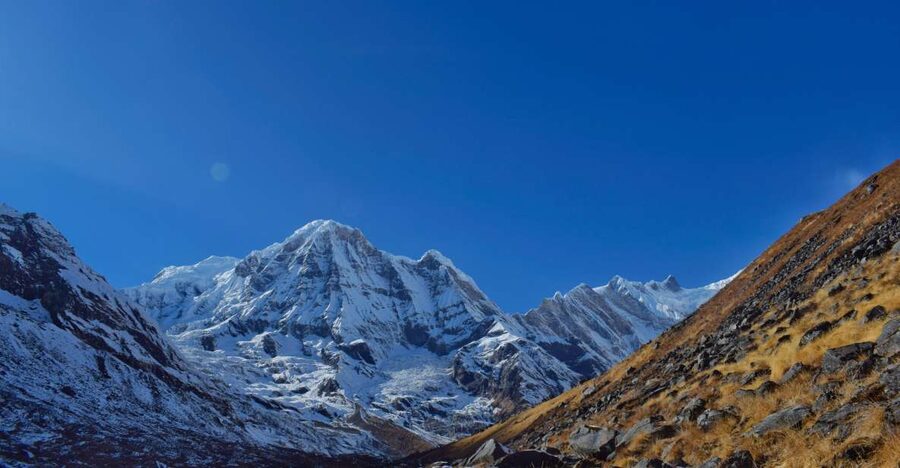
Annapurna Base Camp gives you something few Himalayan walks can: a high mountain finish without a long expedition. In seven days, you move from rice terraces and Gurung villages to a stone-walled bowl ringed by Annapurna, Machhapuchhre, and Hiunchuli. The change in scenery is the real star.
I like the private format, since your guide can slow down when the trail gets steep or adjust the day when you are tired. I also like the human scale of the route: Ghandruk’s village paths, suspension bridges, tea houses, and the hot springs at Jhinu Danda keep this from becoming a march between mountain viewpoints.
The main caution is the pace. Reaching 4,130 meters in seven days means several hard uphill days, and food and drinks are extra. One person became ill with altitude sickness at Deurali and had to change plans, so you should treat this as a serious mountain trek, not a casual walk from Pokhara.
Key points at a glance
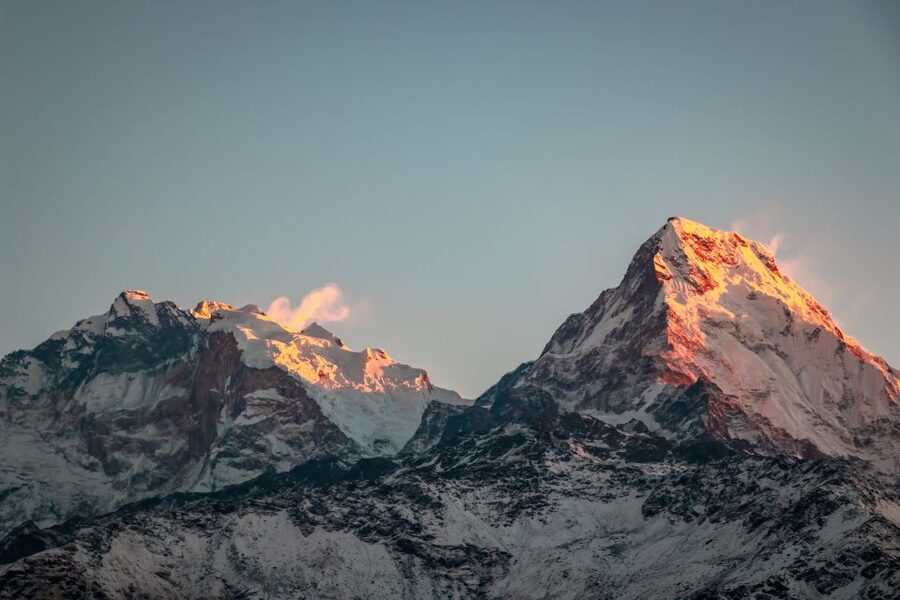
- Reach Annapurna Base Camp at 4,130 meters: The reward is a close view into the dramatic Annapurna mountain bowl.
- Walk from rice terraces to alpine country: The route changes quickly from farms and villages to rhododendron, bamboo, oak, cliffs, and high meadows.
- Stay in traditional Gurung villages: Ghandruk gives you an early look at local life and fine views of Annapurna South and Machhapuchhre.
- Use a private guide at your own pace: Guides including Pratiksha, Hari, Krishna, Sandesh, and Paras have been praised for patience, route knowledge, and flexibility.
- Finish with Jhinu Danda hot springs: Day six gives tired legs a welcome soak beside the river.
- Expect a low headline price, with extras: The $215 fee covers transport, permits, guide, lodges, equipment support, and luggage storage, but not meals, drinks, or a porter.
What the $215 price really covers
At $215 per person, this is a strong-value way to reach Annapurna Base Camp from Pokhara, especially if you want a private group rather than a large departure. The fee includes pickup from any hotel in Pokhara’s Lakeside area, private round-trip transport, government permits, the Annapurna Conservation Area permit, standard tourist lodge accommodation, and a government-certified guide.
You also get a first aid kit, luggage storage in Pokhara, and a duffel bag and trekking poles if needed. Those details matter. You can leave non-trekking luggage behind and avoid buying or renting every piece of equipment for a single week.
The price does not include meals or drinks. You will buy these along the route, so your final cost will be higher than the advertised amount. A porter is available for $15 per day, which is worth considering if you are not used to carrying a pack uphill for several hours.
This is a private group experience, so you have more control than on a fixed large-group departure. The trade-off is that the daily walking remains demanding. A private guide can adjust the rhythm, but cannot remove the altitude gain between Deurali and Base Camp.
More Annapurna Treks in Nepal
- Annapurna Circuit Trek with Tilicho Lake
★ 5.0 · 368 reviews - Annapurna base camp trek 5 Days
★ 5.0 · 252 reviews - 14-Day Private Annapurna Base Camp Trek
★ 5.0 · 180 reviews
Day 1: Pokhara to Nayapool and Ghandruk
Your first day begins with a drive from Pokhara to Nayapool, followed by the trail toward Ghandruk at 1,939 meters. The walking starts among villages and terraced fields, so you get a gentle introduction to the rural side of the Annapurna region before the higher forest sections arrive.
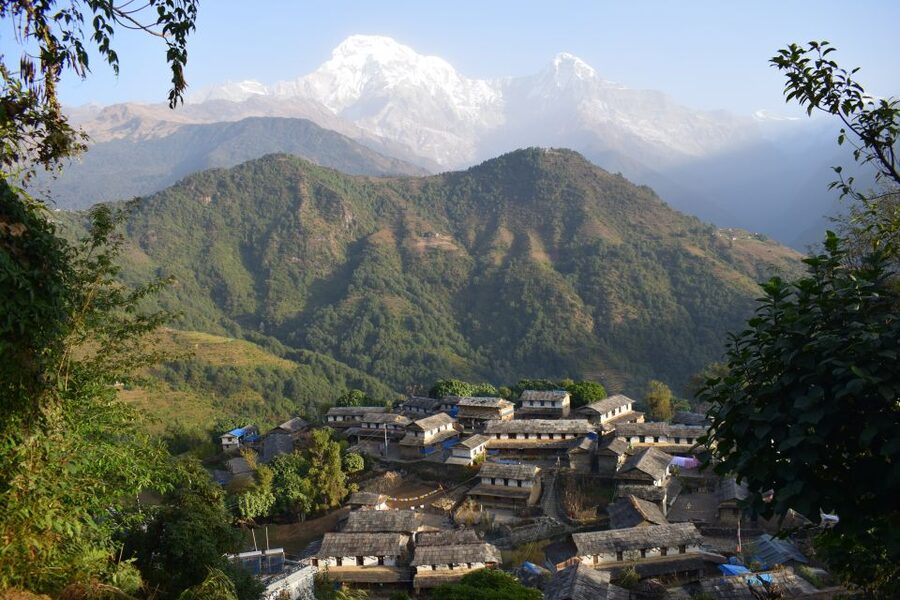
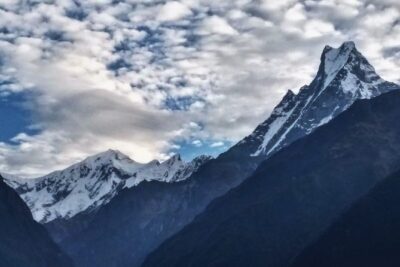
Ghandruk is a traditional Gurung village and one of the most appealing stops on the route. The village setting gives you a chance to see how mountain communities live, while the views open toward Annapurna South and Machhapuchhre, also called Fishtail.
This first day is not simply a transfer into the mountains. It sets up the cultural side of the trek, and the terraces make a clear contrast with the rugged peaks above. You should still conserve energy. The first days include repeated uphill and downhill sections, and the real altitude gain is still ahead.
Day 2: Ghandruk to Lower Sinuwa
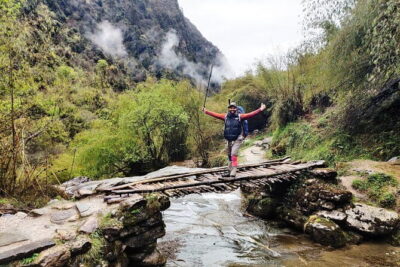
From Ghandruk, the trail climbs and drops through rhododendron forest and small settlements before reaching Lower Sinuwa at 2,249 meters. The route crosses suspension bridges over the Modi Khola, adding a little drama to what is otherwise a steady mountain walking day.
This is a good example of why the trek feels varied. You are not simply walking toward one distant peak. You move through forest, farmland, villages, and river corridors, with the sound of the Modi Khola helping mark the route.
The up-and-down profile can catch you off guard. Your total distance may not sound extreme, but uneven ground and repeated climbs use more energy than a flat walk. I would keep your pack light and let your guide set a measured rhythm. Guides such as Pratiksha and Deepakchandra have been praised for adjusting their pace to individual ability, which is especially useful here.
Day 3: Sinuwa to Deurali
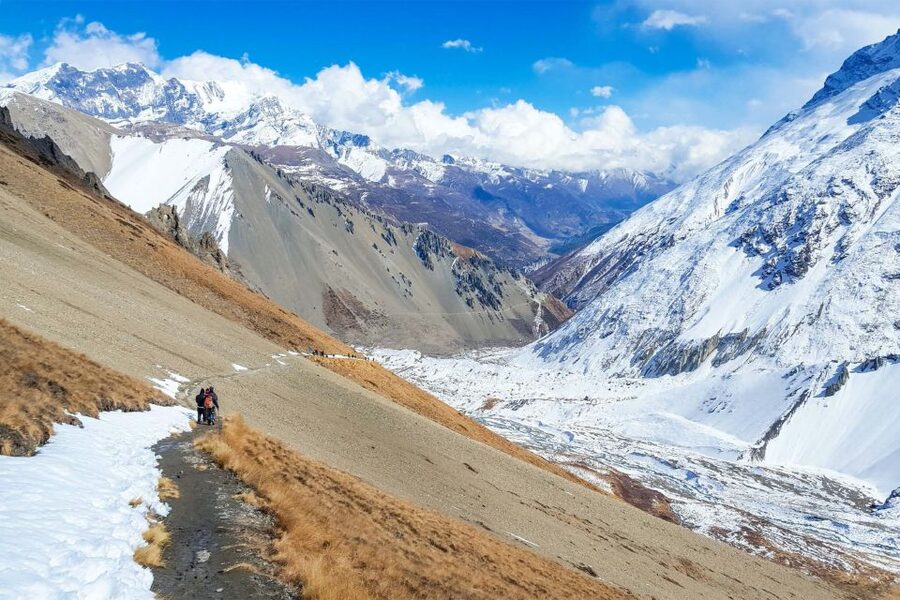
The route from Sinuwa to Deurali is one of the more demanding days. You pass through dense bamboo and oak forest, then continue through Dovan and Himalaya as the Modi Khola gorge becomes narrower and more dramatic.
At 3,230 meters, Deurali marks a major change. The forest gives way to cliffs, waterfalls, and a more exposed mountain setting. You are now high enough for altitude to become a real concern, not just a line on the route description.
Walk slowly, drink regularly, and tell your guide if you develop symptoms that concern you. The trek has a planned response if conditions change. One participant who became ill at Deurali could not continue to Base Camp, and the guide arranged jeep transport and a revised plan that included Poon Hill instead. That is a useful reminder that reaching the highest point is not worth ignoring your health.
More week-long treks in Nepal
- Short Annapurna Base Camp Trek – 7 Days
★ 5.0 · 22 reviews - Kathmandu to Langtang Valley 7-Day Trek
★ 5.0 · 11 reviews - Pokhara: 7-Day Annapurna Base Camp Trek & Natural Hot Spring
★ 5.0 · 11 reviews - 7 Days Langtang Valley Private Trek From Kathmandu
★ 5.0 · 10 reviews
Day 4: Deurali to Annapurna Base Camp
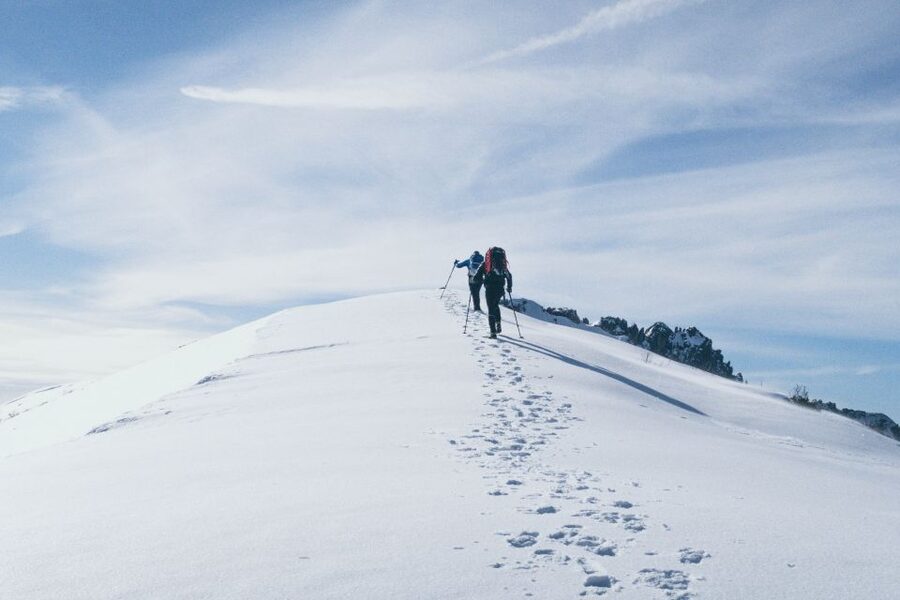
This is the big day. You climb from Deurali through alpine meadows toward Machhapuchhre Base Camp, then continue to Annapurna Base Camp at 4,130 meters.
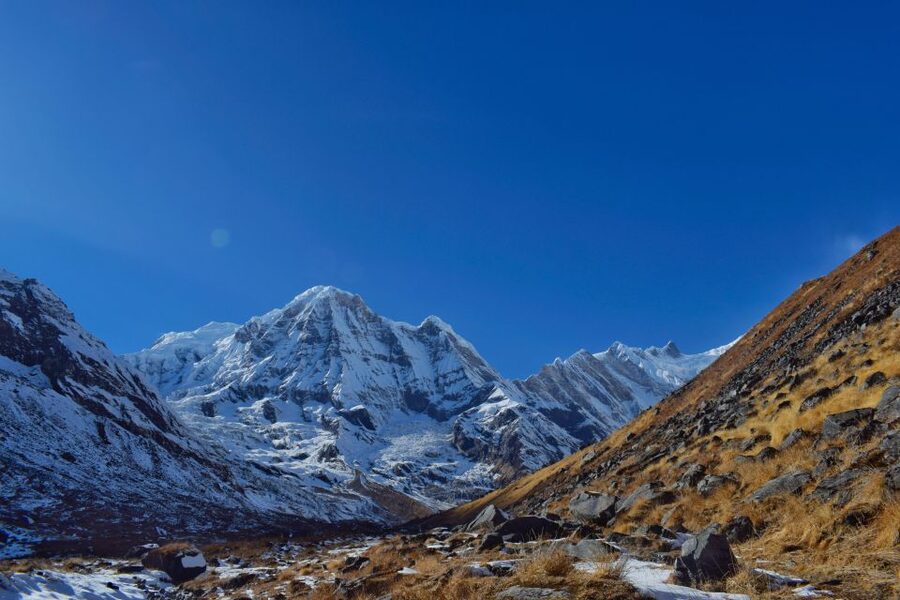
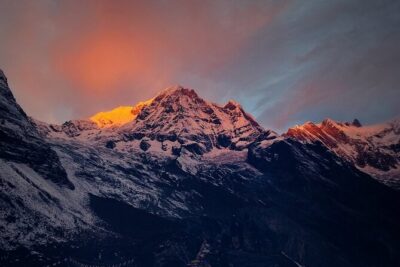
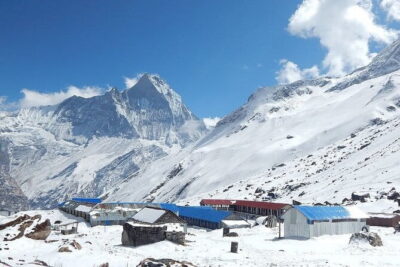
Machhapuchhre, or Fishtail, dominates the approach with its sharply shaped summit. From there, the trail moves into the great mountain bowl. Annapurna I, Annapurna South, Hiunchuli, and other peaks rise around you, creating a close, enclosed view of the Himalayas rather than a distant panorama.
The scale here is hard to grasp until you are inside it. The final climb is exciting, but it can also feel slow because of the altitude. Give yourself time. Your guide’s job is not only to point out peaks but also to help you arrive safely and make sensible decisions.
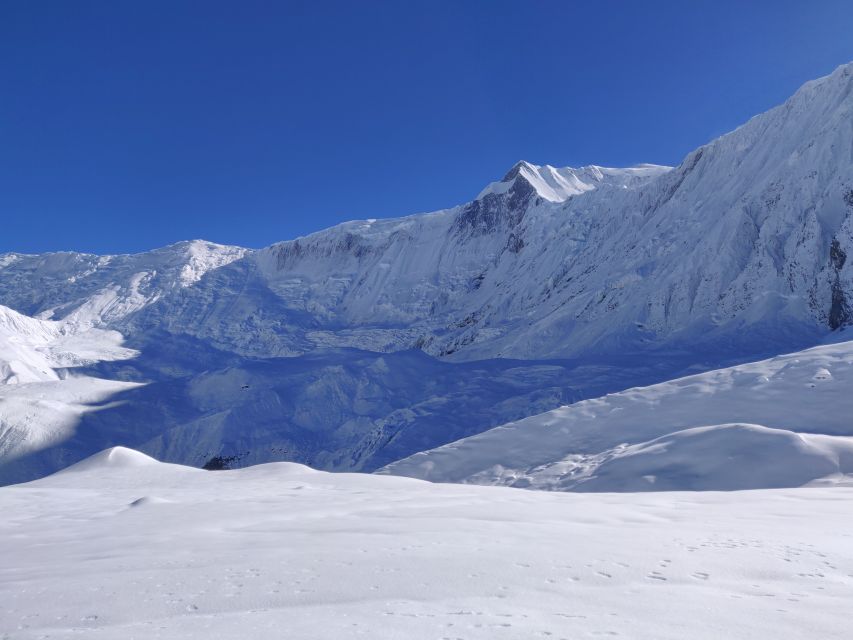
Snow is possible near Base Camp, depending on the season. A February trek included snow on the approach and departure, while an August trek brought rain but fewer people on the trail. Conditions can change the feel of the walk, so pack for the season rather than relying only on the advertised route.
At Base Camp, the surrounding peaks are the reward. You will have time to take in the amphitheater, photograph the mountains, and rest before the descent begins. The accommodation is in a standard tourist lodge, so expect a practical mountain stay rather than resort comfort.
Day 5: Sunrise and the long return to Sinuwa
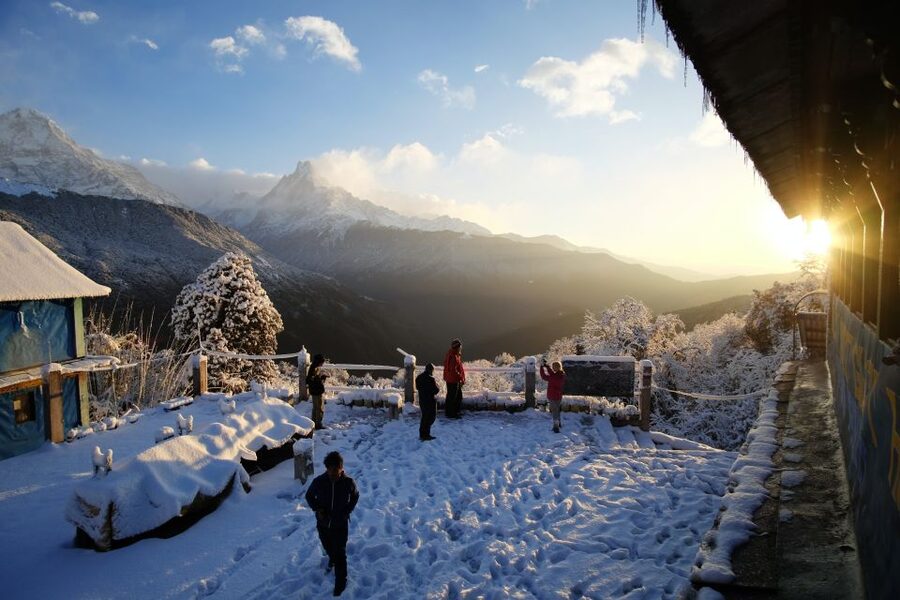
Try to be ready for the morning view at Annapurna Base Camp. Sunrise over Annapurna I is one of the strongest moments of the trek, with the changing light bringing out the ridges and faces around the bowl.
After breakfast, you retrace the trail downhill through bamboo and rhododendron forest to Sinuwa. Descending is usually easier on the lungs than climbing, but it can be hard on knees and thighs. Trekking poles, supplied if needed, are useful here.
This day also shows why the seven-day plan is efficient. You reach Base Camp, enjoy the high point, and then cover substantial ground on the way down. If you prefer shorter walking days, you should ask about a slower version before booking. The private format helps, but the published seven-day plan is still fairly brisk.
Day 6: Sinuwa to Jhinu Danda
From Sinuwa, the path drops toward Jhinu Danda at 1,760 meters. The lower altitude and warmer setting feel welcome after the cold, high country around Base Camp.
The main treat is the natural hot springs beside the river. Bring swimwear. This stop is not an afterthought. After several days of stairs, steep paths, and a high-altitude push, soaking tired muscles gives the trek a satisfying change of pace.
Jhinu is also a sensible place to end the walking portion if you have limited energy. One useful point from the route is that the final section after Jhinu includes more road. If you care most about walking, ask if your return can finish at Jhinu rather than continuing all the way by foot toward Nayapool. The supplied seven-day plan continues to Nayapool, but the private arrangement may allow discussion of the exact finish.
Day 7: Jhinu Danda to Nayapool and Pokhara
The final walking section passes through farmland and villages as you descend toward Nayapool. From there, private transport takes you back to Pokhara, where the trip ends around the Lakeside area.
This is a practical finish rather than a grand mountain finale. The dramatic views have already come at Base Camp, and the hot springs have provided the emotional high point of the descent. Day seven is about getting back comfortably and celebrating with a lakeside meal or a quiet rest.
The road section is worth keeping in mind. Some people enjoy the gradual return through settled country, while others find it less rewarding than the high trail. If you want the most scenic version of the walking, discuss transport options with the operator before departure.
The guides are a major part of the experience
The guide can make or break a Himalayan trek. Here, the most consistent strengths are patience, safety, route familiarity, and the ability to adapt the pace.
Pratiksha has been singled out for letting less-fit walkers move at their own speed while still keeping the trip well organized. Deepak adjusted the walking rhythm to match his client’s needs. Hari was appreciated for explaining the mountains and Nepal while keeping the mood light. Sandesh has been praised for being patient, helpful, and attentive, as well as for taking photos and videos during the walk.
Paras has handled changes in pace and preferences well, while Bidur has been valued for care and clear communication, including during a quieter monsoon-season trek. Krishna has also guided several successful trips and is described as friendly and encouraging.
Guide quality can vary from person to person, so you should confirm the assigned guide before setting out if that matters to you. English, Hindi, and Nepali are available. A porter is optional, not included, and costs $15 per day.
How hard is this seven-day trek?
You do not need expedition experience, but you do need reasonable fitness and a willingness to walk uphill for several days. The route includes steep sections, stairs, suspension bridges, uneven ground, and major altitude gain.
The biggest challenge is the jump from forest trails to the high section above Deurali. At 4,130 meters, even a fit person may walk more slowly. The route is manageable for many people, but the word manageable should not be confused with easy.
I would choose this trip if you want a direct route to Base Camp and can handle a brisk schedule. If you are new to trekking, use the private guide to your advantage. Ask for slower pacing, take breaks before you are exhausted, and say something early if you feel unwell.
The first-aid kit is included, but that does not replace sensible preparation. Bring your passport or ID card, suitable clothing for changing conditions, and swimwear for Jhinu’s hot springs. A season-specific packing list would be useful, so ask for one before you leave.
The seasons change the character of the walk
October through April generally offers a different feel from the summer monsoon period, but the supplied experience includes examples from both. February brought snow near Base Camp. December and spring departures offered clear mountain-focused conditions in the accounts provided.
August can mean rain, but it can also mean fewer people on the trail and a quieter experience. You should accept that trade-off only if you are comfortable with wet conditions and changing mountain views.
The route’s variety helps in less settled weather. Even if clouds hide the peaks for part of a day, you still have villages, forests, bridges, waterfalls, and the hot springs. Still, the main reason to pay for this trek is the mountain bowl at Base Camp, so clear-weather prospects matter.
Who should book it?
This trek suits you if you want a private, guided Himalayan route from Pokhara with a fixed seven-day structure. It is a good match for someone who values local villages, changing scenery, and guide support as much as the final mountain viewpoint.
It also suits first-time high-altitude trekkers who want a guide close at hand. The route is not effortless, but the private arrangement allows more personal attention than a large group. Hiring a porter can make a big difference if you prefer to walk with a daypack.
You might choose a different plan if you want very short walking days, dislike basic lodge accommodation, or want to avoid the high point at 4,130 meters. The seven-day schedule is efficient, not leisurely.
Should you book this Annapurna Base Camp trek?
I would book this trip if the combination of price, private guiding, and a direct seven-day route fits your priorities. The strongest reasons are the excellent guide support, the wide range of scenery, the Gurung village experience, and the chance to finish with Jhinu’s hot springs.
Before paying, confirm the guide’s name, the expected daily walking times, the seasonal packing list, and the likely extra cost of meals, drinks, and a porter. If you are in good enough shape for several demanding uphill days and accept that altitude may change your plans, this is a practical and rewarding way to reach Annapurna Base Camp.
FAQ
How long is the Annapurna Base Camp trek?
The trek lasts seven days, beginning and ending with transport from Pokhara. The route includes six nights in standard tourist lodges.
What is the highest point of the trek?
Annapurna Base Camp is at 4,130 meters, or 13,550 feet.
What is included in the $215 price?
The price includes hotel pickup and drop-off, private round-trip transportation, government permits, the Annapurna Conservation Area permit, standard tourist lodge accommodation, a certified guide, a first aid kit, luggage storage in Pokhara, and a duffel bag and trekking poles if needed.
Are food and drinks included?
No. Food and drinks are available to purchase during the trek but are not included in the price.
Can I hire a porter?
Yes. A porter is available for $15 per day, but the porter fee is not included.
Where does pickup take place?
Pickup is available from any hotel in the Lakeside area of Pokhara.
Is this a private group trek?
Yes. The activity is arranged as a private group experience.
Which languages can the guide speak?
Guiding is available in English, Hindi, and Nepali.
What should I bring?
You must bring a passport or ID card. You should also bring suitable trekking clothing and swimwear if you want to use the hot springs at Jhinu Danda.
What happens if I cannot continue because of altitude sickness?
The route can be adjusted with guide support. In one case, jeep transport was arranged from Deurali and the plan changed to include Poon Hill instead of Annapurna Base Camp.
Can I cancel the booking?
You can cancel up to 24 hours in advance for a full refund. The reserve-now-and-pay-later option lets you hold a place without paying immediately.
Latest treks added in Nepal
- Private Manaslu Circuit Trek at Himalayas★ 5.0 · 3 reviews
- Ghorepani Poonhill Trek★ 5.0 · 5 reviews
- Ghorepani Poon Hill Trek★ 5.0 · 16 reviews
- Upper Mustang Trekking★ 3.0 · 2 reviews
- Amazing 1 Day Trekking Experience in Kathmandu Nepal★ 5.0 · 24 reviews
- Upper Mustang Trekking★ 5.0 · 2 reviews
- Upper Mustang Trek★ 5.0 · 5 reviews
- Upper Mustang Trekking★ 5.0 · 4 reviews
Annapurna Base Camp Treks, compared.
Trekking in Annapurna/Langtang/Everest/Upper Mustang regions
Read our review →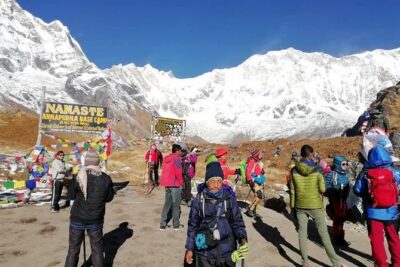
Kathmandu to Annapurna Base Camp (ABC) 5-Day Trek
Read our review →Browse the lists this tour appears in