
REVIEW · KATHMANDU
14-Day Private Annapurna Base Camp Trek
Annapurna Base Camp gives you a big Himalayan finish without the length of a full circuit. Over 14 days, you walk from Pokhara through stone villages and forest trails to 4,230 meters, then return by way of the relaxing Jhinu Danda hot spring.
I like the practical setup: airport transfers, permits, meals on trek, a guide, shared porter service, and key cold-weather gear are already arranged. I also like the private format, which lets your group set a more sensible pace. The main drawback is that private does not mean luxurious. During the trek, four or five people share a lodge room, and the 18-kilometer descent from Base Camp to Bamboo is a long, tiring day.
Key points at a glance
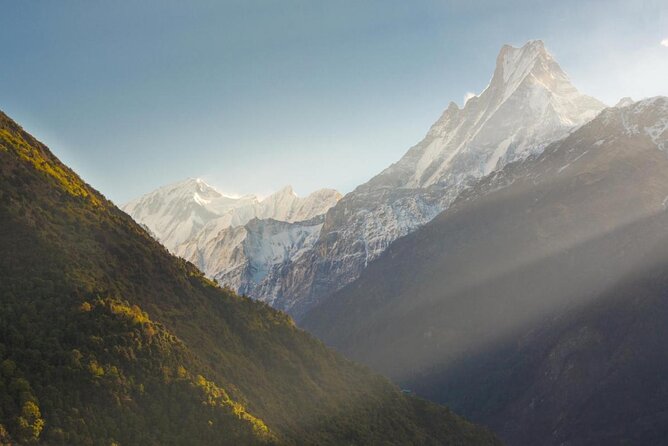
- Poon Hill adds an excellent early viewpoint: You reach Ghorepani before walking to Poon Hill and then continuing toward Tadapani.
- The route reaches 4,230 meters: Machhapuchhre Base Camp and Annapurna Base Camp bring real altitude, so fitness and gradual pacing matter.
- Jhinu Danda is a welcome finish: The hot spring gives your legs a soothing break after several days on foot.
- The private format is genuinely useful: Only your group takes part, so you can discuss rest breaks and daily pace with your guide.
- A lot is included for $1,090: Trek meals, teahouse lodging, permits, guide service, porter support, equipment use, and transport between Kathmandu and Pokhara are covered.
- The hardest day comes after the summit: The return from Annapurna Base Camp to Bamboo covers 18 kilometers and takes about seven hours.
What the $1,090 price really covers
At $1,090 per person, this trek offers solid value if you need a package that handles the moving parts. You get airport pickup and drop-off by private car, three-star twin-room accommodation in Kathmandu and Pokhara, tourist-bus transport between those cities, permits, a guide, one porter for every two trekkers, and meals during the mountain portion.
The food arrangement is more useful than a fixed menu. Breakfast, lunch, and dinner are included during the trek, and you choose from the available lodge menu. Drinks are extra, including bottled water, tea, soft drinks, and alcoholic beverages. You should budget separately for those costs.
The package also supplies a duffle bag, trek map, down jacket, and sleeping bag for use during the route. Personal trekking clothing and equipment are not included, so you still need suitable walking shoes, layers, rain protection, and basic personal items.
The price does not include your Nepal visa, travel insurance, or meals in Kathmandu and Pokhara. Travel insurance is compulsory for outdoor activities in Nepal, so this is not an optional extra to ignore. Also note the transport wording carefully: tourist-bus transport between Kathmandu and Pokhara is included, while private vehicle arrangements and airfare to or from Pokhara are not.
For a private 14-day program, the price is attractive because many expenses are bundled. You are paying for convenience and support rather than an upscale mountain holiday. Teahouse rooms are shared by four or five people, and the route uses a tourist bus for the longer city transfer.
More Annapurna Treks in Kathmandu
- Annapurna Circuit Trek with Tilicho Lake
★ 5.0 · 368 reviews - Annapurna base camp trek 5 Days
★ 5.0 · 252 reviews - Annapurna Base Camp Trekking
★ 5.0 · 116 reviews
Arrival in Kathmandu and the road to Pokhara
Day one is deliberately simple. You arrive at Tribhuwan International Airport, where a private car transfer takes you to your Kathmandu accommodation. That matters after an international flight, especially if this is your first visit to Nepal and you do not want to negotiate transport immediately.
The next day is mostly a road journey from Kathmandu to Pokhara. The listed duration is six to seven hours, and the transfer is by tourist bus. This is not the fast part of the trip, but it moves you into the Annapurna region without the added cost of a domestic flight.
Pokhara sits at about 910 meters, far below Base Camp. That lower elevation gives you a useful starting point before the walking begins. Your hotel stay in Pokhara is in a three-star property with a twin room, while lunches and dinners there are your responsibility.
Days 3 and 4: Tikhe Dhunga and the climb to Ghorepani
The walking begins with the route from Pokhara to Tikhe Dhunga, at 1,495 meters. The day covers about nine kilometers and takes around four hours. It is a sensible introduction to the trail, giving you time to settle into your boots, meet the walking rhythm, and learn how your guide manages breaks.
Day four is tougher. From Tikhe Dhunga, you climb to Ghorepani at 2,850 meters, covering about 13 kilometers in roughly seven hours. This is where the route begins to feel like a serious mountain trek rather than a scenic walk.
Ghorepani is important because it sets up the early walk to Poon Hill. The gain in height is substantial, and the long day may test your legs. I would treat this as a pace-setting day, not a race. Your private group can ask the guide to keep the climb steady, which is one of the better reasons to avoid joining a large fixed group.
Day 5: Poon Hill, Tadapani, and a full mountain day
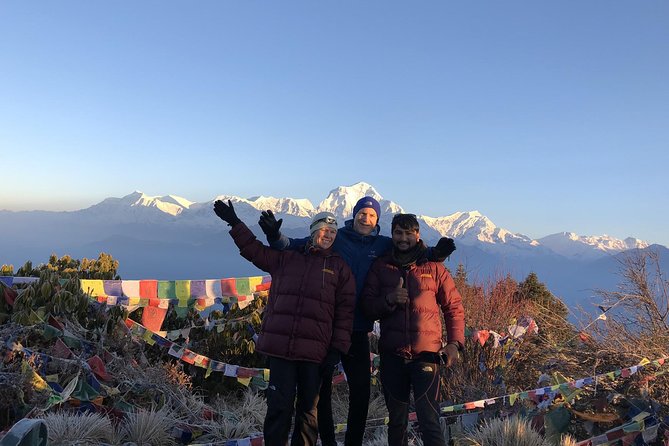
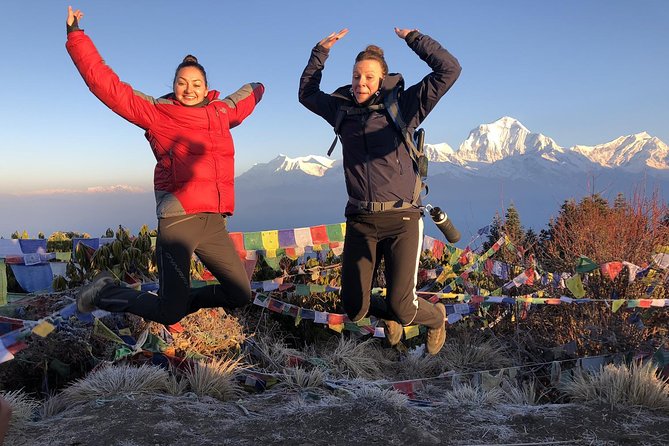
The day starts with a hike to Poon Hill before continuing to Tadapani. The total distance is about nine kilometers, with six to seven hours of walking. Poon Hill is the route’s early reward, giving you a major viewpoint before the trail heads deeper toward Base Camp.
Tadapani sits at 2,500 meters, so you lose some height after Ghorepani. That change helps break up the ascent, but the day still includes an early start and a second walking section. You should not expect Poon Hill to be a quick stop followed by an easy afternoon.
This is one of the most varied days in the plan. You get a famous viewpoint, then continue through the route toward the Sanctuary. The mix of mountain views, woodland, and village walking helps keep the first half from feeling like a simple climb.
Another trail to compare in Kathmandu:
- Everest Base Camp Trek – 14 Days
★ 5.0 · 1,499 reviews - Everest Base Camp Trek
★ 5.0 · 842 reviews - Everest Base Camp Trekking
★ 5.0 · 485 reviews - Everest Base Camp Trekking – 13 Day
★ 5.0 · 365 reviews
Days 6 and 7: Tadapani, Chhomrong, and Dovan
From Tadapani, you walk about 8.5 kilometers to Chhomrong village. The route takes around five hours and ends at about 2,020 meters. Chhomrong is a key settlement on the way to Annapurna Base Camp, and its position makes it a natural place to pause before heading farther into the valley.
The following day takes you from Chhomrong to Dovan, at 2,600 meters. The distance is about nine kilometers, with five hours of walking. You are now moving into a more enclosed mountain corridor, and the increase in altitude begins to matter more.
The route is not a straight uphill line. You will gain and lose height along the way, which can make the total effort feel greater than the numbers suggest. Keep your daypack light, drink regularly, and let your guide know early if you feel unwell. The included first-aid kit and oximeter give the staff tools to monitor oxygen levels and heartbeat, but they do not replace travel insurance or sensible pacing.
Days 8 and 9: Deurali, Machhapuchhre Base Camp, and ABC
Day eight takes you from Dovan to Deurali, at 3,200 meters. The walk is about 7.8 kilometers and takes around four hours. The shorter distance gives you time to adjust before the biggest altitude day.
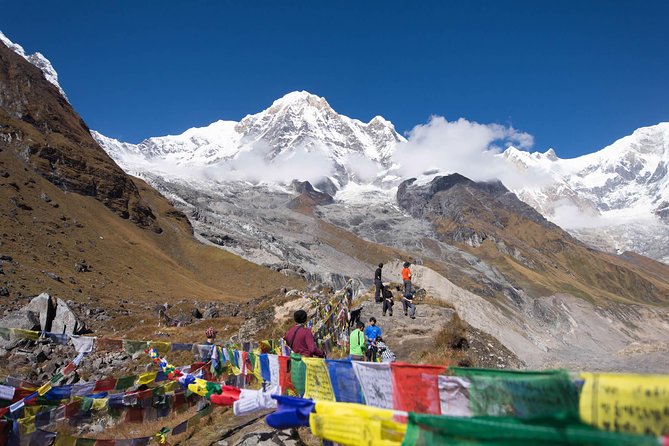
On day nine, you walk from Deurali to Annapurna Base Camp through Machhapuchhre Base Camp. The distance is about eight kilometers, and the walk takes five to six hours. The final destination sits at 4,230 meters, or nearly 14,000 feet.
This is the central achievement of the trek. The route brings you to a high mountain basin surrounded by major peaks, but the altitude should not be treated lightly. You may find the last section slower than expected, even though the distance is not long. The guide’s role matters here: a good guide watches your pace, encourages steady movement, and reacts to signs that you need more time.
Machhapuchhre Base Camp is an important stage rather than just a name on the schedule. It marks the transition into the high section before Annapurna Base Camp. Reaching ABC is satisfying, but the weather and your physical condition can affect how much time you get outside enjoying it.
Day 10: The 18-kilometer return to Bamboo
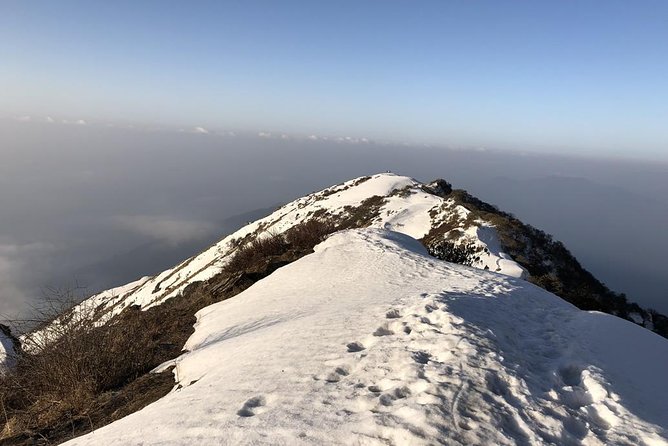
The return from Annapurna Base Camp to Bamboo covers 18 kilometers and takes about seven hours. This is the most demanding entry on the schedule, even though you are descending.
Downhill walking can be hard on knees and feet, especially after the high-altitude day. You should use trekking poles if you have them, keep your laces secure, and protect hot spots on your feet before they become blisters. The route’s distance deserves respect. If your group is tired, ask about the day’s pacing before setting off.
This is also where the private setup helps. You are not trying to keep up with a large group or wait for a fixed pace. Your guide can manage breaks around the condition of your group, though the route still has fixed lodges and a planned overnight stop.
Day 11: Bamboo to Jhinu Danda hot spring
From Bamboo, the trek continues to Jhinu Danda, at 1,780 meters. The distance is about 12 kilometers, with roughly six hours of walking. By this point, you have spent several days gaining height, reaching Base Camp, and descending again, so Jhinu feels like a well-timed change of mood.
The hot spring is the special feature here. It gives you a chance to relax your legs in a natural setting instead of simply arriving at another lodge and going to bed. Do not expect it to erase the effort of the previous days, but it is a pleasant reward near the end of the walking portion.
Jhinu also gives the program a better finish than a simple retracing of the route. You get one final cultural and physical stop before returning to Pokhara.
Days 12 to 14: Back to Pokhara, Kathmandu, and departure
Day 12 takes you from Jhinu Danda back to Pokhara. The schedule does not specify the exact transport method or travel time, so you should confirm those details with the operator before departure. Your Pokhara accommodation is included, but lunch and dinner are not.
Day 13 is the return from Pokhara to Kathmandu by tourist bus. Again, allow room in your expectations for a long road day. The program is designed as a full transport loop, so you do not need to arrange a separate return to the capital.
Day 14 is the farewell and end of the tour. The airport drop-off is included, which is useful if your flight leaves Kathmandu after the trek. If you plan to add extra nights or change your flight, ask about the transfer arrangement in advance.
What private really means on this trek
Private means only your own group participates. It does not mean a private room at every lodge or a personal porter for every person. During the trek, four or five people share a teahouse room, and one porter is assigned between two trekkers.
That distinction is important. You gain flexibility and direct communication with the guide, but you still use the same basic mountain accommodation as other trekking groups. The Kathmandu and Pokhara stays are twin rooms at three-star hotels, while the mountain nights are more basic shared lodge rooms.
The operation has used guides and porters such as Yubraj, Ram, Bhisma, Rupesh, Pabin, Sabin, Deepak, Bibek, Suraj, and Krishnan on different Nepal trips. Your assigned team may be different, so do not book on the assumption that a particular person is guaranteed. The strongest praise connected with the company consistently centers on careful organization, friendly guide service, good communication, and porters who pay close attention to comfort and safety.
Fitness, gear, and altitude advice
The tour asks for a moderate level of physical fitness. That description is fair, but the distance and altitude make this more than a casual holiday. You should be comfortable walking for four to seven hours on consecutive days, with one 18-kilometer return day.
The supplied down jacket and sleeping bag reduce the amount of bulky gear you need to bring. The duffle bag is also useful because porters carry the main luggage while you walk with a smaller daypack. Personal trekking equipment remains your responsibility, including walking footwear and suitable clothing.
At 4,230 meters, altitude is the main physical issue. The route gains height over several days, but you still need to watch for headaches, unusual fatigue, nausea, or other symptoms. Tell your guide promptly if you feel ill. The oximeter and first-aid kit are helpful support, not a guarantee against altitude problems.
Who should book this trek
I would recommend it to someone who wants the Annapurna Base Camp route with a full support system and a private group, but who does not need high-end accommodation. It works especially well for friends, couples, or families who want to share the same guide and move at their own pace.
It also suits a solo person who prefers organized support, though the one-person price and shared porter setup should be confirmed before booking. The private format can make a solo departure feel more personal, but you should ask exactly how the group arrangement will work.
I would hesitate if you want a short, easy Nepal trip, private hotel rooms in the mountains, or flexible transport by private car and aircraft. I would also hesitate if you are not ready for long walking days and a high-altitude overnight route.
The cancellation terms are straightforward: you can receive a full refund if you cancel at least 24 hours before the start time. Poor weather or failure to meet the minimum number of participants can lead to a new date, a different experience, or a full refund.
Should you book the 14-day Annapurna Base Camp trek?
Book it if you want a well-organized route to Annapurna Base Camp and value having the major details handled for you. The combination of airport transfers, permits, meals on trek, guide service, porter support, equipment use, and return transport makes $1,090 a strong package price.
Go in with clear expectations. You will share lodge rooms, pay for drinks and city meals, arrange your own insurance, and face a demanding 18-kilometer descent after reaching Base Camp. If you can accept those conditions, this trek offers a sensible path into the Annapurna ranges, with Poon Hill early on, the high point at ABC, and Jhinu’s hot spring as a welcome finish.
FAQ
How long does the Annapurna Base Camp trek take?
The experience lasts approximately 14 days, including arrival and departure days, transport between Kathmandu and Pokhara, the trek itself, and the return to Kathmandu.
What is the highest point on the route?
Annapurna Base Camp is the highest listed point, at 4,230 meters. Machhapuchhre Base Camp is also visited on the way.
Is the trek private?
Yes. Only your group participates in the activity. The private format does not mean every lodge room is private, since four or five people share a room during the trek.
Are meals included?
Breakfast, lunch, and dinner are included during the trek. Lunches and dinners in Kathmandu and Pokhara are not included, and drinks are extra throughout the experience.
What accommodation is provided?
You receive twin-room accommodation at three-star hotels in Kathmandu and Pokhara. During the trek, you stay in lodges or teahouses, with four or five people sharing a room.
Is trekking equipment supplied?
The operator supplies a duffle bag, trek map, down jacket, and sleeping bag for use during the trek. Personal trekking equipment is not included.
Is travel insurance included?
No. Travel insurance is not included, and it is compulsory for outdoor activities in Nepal. Visa fees, drinks, tips, and personal expenses are also separate.
Latest treks added in Kathmandu
- Private Manaslu Circuit Trek at Himalayas★ 5.0 · 3 reviews
- Ghorepani Poonhill Trek★ 5.0 · 5 reviews
- Ghorepani Poon Hill Trek★ 5.0 · 16 reviews
- Upper Mustang Trekking★ 3.0 · 2 reviews
- Amazing 1 Day Trekking Experience in Kathmandu Nepal★ 5.0 · 24 reviews
- Upper Mustang Trekking★ 5.0 · 2 reviews
- Upper Mustang Trek★ 5.0 · 5 reviews
- Upper Mustang Trekking★ 5.0 · 4 reviews
Annapurna Base Camp Treks, compared.



Trekking in Annapurna/Langtang/Everest/Upper Mustang regions
Read our review →


Kathmandu to Annapurna Base Camp (ABC) 5-Day Trek
Read our review →
Browse the lists this tour appears in