
REVIEW · KATHMANDU
Annapurna Base Camp Trekking
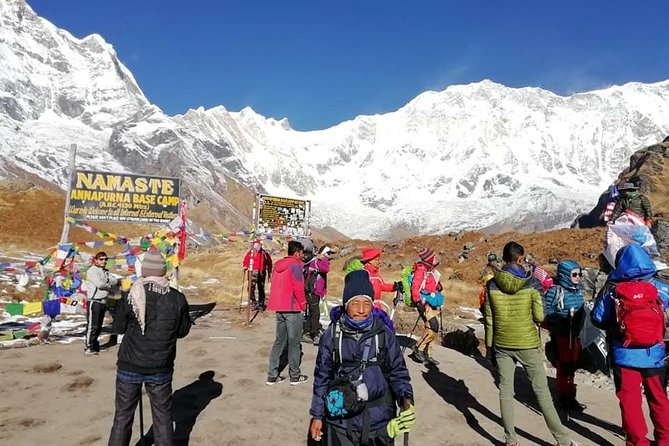
The real prize here is the walk into the Annapurna Sanctuary, a high mountain bowl ringed by Annapurna South, Annapurna III, Hiunchuli, Fang, Gangapurna, Machhapuchhare, and other snow peaks. You begin among village terraces and rhododendron woods, then trade warm foothills for cold stone lodges and glacier views.
I like the blend of cultural contact and mountain scenery, especially the chance to pass through Gurung, Magar, and Thakali communities rather than simply marching toward a viewpoint. I also like the practical setup: a private group, guide, porter, meals, lodging, and transport are bundled together. The main drawback is the physical demand. This is called moderate, but long uphill days, stone steps, cold nights, and an altitude of 4,130 meters require proper preparation.
Key points before you book
- Annapurna Base Camp at 4,130 meters: The route ends inside a dramatic mountain amphitheater surrounded by major Himalayan peaks.
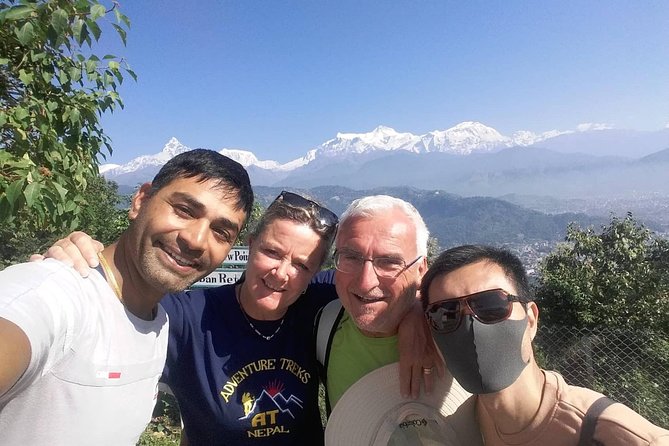
- Poon Hill sunrise: A short morning visit adds one of the trek’s best wide views before the route turns toward the sanctuary.
- Tea-house trekking: You sleep in simple mountain lodges and eat breakfast, lunch, and dinner along the trail.
- Private two-person minimum: The trip needs at least two people to operate, and only your own group participates.
- Guide and porter support: One porter is provided for every two people, with insurance for both porter and guide.
- Jhinu Danda hot springs: The return route includes a welcome chance to rest in natural hot springs.
Why this Annapurna route is so appealing
This trek gives you several versions of Nepal in one trip. Kathmandu provides the arrival point and a free day at the end. Pokhara supplies lakeside rest and a gentler start. The trail then moves through villages, forests, high valleys, and the enclosed mountain bowl of Annapurna Base Camp.
The route begins at Nayapul, about an hour from Pokhara. That matters because you do not spend the first trekking day dealing with a long road journey from Kathmandu. Once walking begins, the route follows a classic tea-house pattern, with nights in local lodges and meals arranged along the way.
You also get a closer look at mountain life. The Gurung, Magar, and Thakali communities are part of the route, and the itinerary specifically encourages stopping for conversation. You should not treat these villages as scenery alone. A friendly greeting, a cup of tea, or a few minutes listening to local life can make the route feel less like a mountain checklist.
The tour is private, but it is not luxury travel. Tea houses are practical places to eat and sleep. Hot showers, heaters, mineral water, drinks, desserts, and juice cost extra. Carry some Nepalese rupees for these small charges, as well as tips for the guide, porter, and driver.
More Annapurna Treks in Kathmandu
- Annapurna Circuit Trek with Tilicho Lake
★ 5.0 · 368 reviews - Annapurna base camp trek 5 Days
★ 5.0 · 252 reviews - 14-Day Private Annapurna Base Camp Trek
★ 5.0 · 180 reviews
Days 1 and 2: Kathmandu arrival and Pokhara by road
Day one is devoted to arriving in Kathmandu. Airport pickup and departure transport are included, which takes away one common source of stress after an international flight. Accommodation in Kathmandu includes breakfast, though meals in the city are not part of the trekking meal package.
The next day brings a drive to Pokhara. The schedule allows time to walk around Phewa Lake, a pleasant change from Kathmandu’s streets and traffic. Pokhara also serves as the practical base for the trek, so this pause gives you time to get organized before the mountain walking begins.
The Kathmandu to Pokhara drive is included, while the return to Kathmandu is by flight. That split is useful: you experience the overland route at the start, then save time after the trek when your legs may be tired.
Days 3 and 4: Nayapul, Ulleri, and Ghorepani
On day three, you drive from Pokhara to Nayapul and start walking. The first overnight stop is Ulleri, where you sleep in a tea house or lodge. The itinerary lists a full 12-hour activity window, but it does not state exact walking hours, distance, or elevation gain. Ask the operator for the day-by-day walking schedule before departure.
This section is a serious introduction to the trek. Ulleri is known in the itinerary as an early mountain stop, and reaching it means you are already working through the route’s uphill rhythm. Take the first day slowly. You do not gain anything by racing ahead and arriving exhausted.
Day four continues to Ghorepani. Here the scenery changes as the route enters dense rhododendron forest, with high peaks appearing behind the trees when conditions are clear. Rhododendrons are one of Nepal’s familiar mountain plants, and the forest gives this trek a softer, greener feel before the colder upper stages.
Ghorepani is also important because it positions you for Poon Hill. Tea-house accommodation keeps the evening simple: eat, prepare your day pack, protect your sleeping bag or warm clothing from dampness, and get ready for an early start.
Day 5: Poon Hill sunrise
The Poon Hill visit takes about 45 minutes according to the schedule. That short entry is slightly misleading in practical terms, since sunrise outings often require an early start from the lodge and time spent waiting for the light to improve.
The reward is a broad Himalayan view. Poon Hill is a lookout rather than the trek’s final goal, but it gives you a strong first look at the Annapurna region before the trail turns deeper into the valleys.
Bring warm layers for this morning. Sunrise viewpoints can feel cold, and you may be standing still rather than walking continuously. After Poon Hill, the route continues toward Chhomrong.
Another trail to compare in Kathmandu:
- Everest Base Camp Trek – 14 Days
★ 5.0 · 1,499 reviews - Everest Base Camp Trek
★ 5.0 · 842 reviews - Everest Base Camp Trekking
★ 5.0 · 485 reviews - Everest Base Camp Trekking – 13 Day
★ 5.0 · 365 reviews
Days 6 and 7: Chhomrong and Deurali
Day six takes you to Chhomrong, another key settlement on the way to base camp. This is where the route begins to feel more focused on the Annapurna Sanctuary. You spend the night in a lodge or tea house, with meals included as part of the trekking package.
Day seven leads to Deurali. The vegetation and temperature shift as you gain height. The lower forest gives way to a cooler middle and upper mountain setting, and the snowy peaks begin to feel much closer.
Altitude is the issue to watch here. The itinerary calls for moderate fitness, but you should still tell your guide about headaches, unusual fatigue, nausea, or breathing trouble. Do not hide symptoms to keep the schedule. A good trekking plan is one that protects the group, not one that refuses to adjust.
Days 8 and 9: The high mountain bowl and Bamboo
Day eight is described as a 360-degree view of the Annapurna Mountain Range. This is the visual high point of the trip, with the surrounding peaks arranged around the glacier-covered sanctuary. Annapurna South, Annapurna III, Hiunchuli, Fang, Gangapurna, and Machhapuchhare are among the mountains connected with this section.
The itinerary identifies Annapurna Base Camp at 4,130 meters as the destination. It does not clearly assign every overnight location to a specific day, so confirm whether the base camp night is included in the day eight plan and where you will sleep that evening. This is a useful question to ask before paying, especially if you want the exact timing of the sunrise and return.
Day nine is listed as the trek to Bamboo, with an overnight stay at a lodge or tea house. That signals the start of the descent. Bamboo is lower, warmer, and easier for many people after the high point, though downhill walking can be hard on knees and ankles.
The return is not merely a repeat of the approach. Descending through the same valley lets you notice details you may have missed while climbing, including waterfalls, streams, forest changes, and village activity. Keep your walking poles handy if you use them.
Day 10: Jhinu Danda and the hot springs
Jhinu Danda is one of the route’s best practical touches. The schedule includes a hot spring visit, giving you a chance to soak after several demanding days on stone paths.
Do not expect the hot spring stop to erase every ache. It is a pleasant break, not a substitute for rest, hydration, and sensible pacing. You should also confirm whether towels or changing facilities are supplied, since the listed inclusions do not mention them.
The day still includes trekking and a lodge stay, so plan to carry only what you need for the stop and keep the rest of your belongings with the porter.
Days 11 and 12: Pothana and the return to Pokhara
Day eleven takes you to Pothana, with another tea-house night. By this stage, the high peaks may feel farther away, but the lower hills provide a different kind of reward. You return to villages, forest, and more comfortable temperatures.
Day twelve brings you back to Pokhara from the trekking route. You have time to visit the city and Phewa Tal, which gives you a calm ending after the mountain section. Pokhara is a good place to eat a proper city meal, wash clothes, and sleep in a more comfortable room.
Accommodation in Pokhara with breakfast is included. Main meals in the cities are not, so budget separately for lunch and dinner.
Days 13 and 14: Kathmandu and departure
Day thirteen includes the flight from Pokhara to Kathmandu, with airport tax included. The day also allows free time in Kathmandu. The flight is a practical choice after the trek, cutting out the long return drive.
The final day is departure from Kathmandu. Airport transport is included, but you should confirm the pickup time with the operator, especially if your international flight is early.
What the $1,779 price really covers
At $1,779 per person, the price is not simply paying for a guide and a room. It covers a connected 14-day arrangement with airport transport, Kathmandu and Pokhara accommodation, the Kathmandu to Pokhara drive, the Pokhara to Nayapul and Phedi to Pokhara drives, the Pokhara to Kathmandu flight, trekking meals, tea-house lodging, a duffel bag, a trekking map, guide and porter insurance, taxes, and office service charges.
That is strong value if you want a managed trip rather than arranging each part yourself. The porter arrangement is one porter for two people, so pack responsibly and do not assume unlimited luggage support.
The price does not include international airfare, travel insurance, the Nepal entry visa, city meals, drinks, hot showers, heater charges, mineral water, desserts, or tips. The stated visa costs are $50 for 30 days and $30 for 15 days, payable on arrival according to the supplied information.
I would add a buffer for personal spending. Mountain lodges charge for extras, and the simple comforts become more tempting as the air gets colder.
Guides, porters, and the feel of the service
The company has received especially strong praise for guide and porter care. Names connected with past trips include Anuj, Hari, Expansion, Ramesh, Gyanendra, Gyan, Dev, Bishnu, Dharma, and Bishal. You are not promised a particular guide by this description, so ask who will lead your departure.
The most useful pattern in the feedback is not a single sightseeing comment. It is the repeated emphasis on preparation, friendly communication, safety, and staff who helped first-time trekkers feel looked after. Families with teenagers have completed the route, and first-time multi-day hikers have also used the service.
That does not make the trek easy. It means support is built into the trip. Your guide handles route decisions and local coordination, while the porter carries shared luggage within the stated arrangement. You remain responsible for your own fitness, insurance, clothing, and personal expenses.
Who should book this trek
I would recommend it to you if you want a first major Himalayan trek with a clear support system and a strong mix of scenery and local culture. It suits people who can manage repeated uphill and downhill walking and who are comfortable sleeping in basic tea houses.
It also works well for a private family or friend group. The minimum is two people, and only your group participates, so you are not folded into a large mixed party.
I would hesitate if you want a soft adventure with reliable hot showers, private rooms, or flexible city meals included. I would also hesitate if you have no experience with sustained walking and are unwilling to train before arrival.
Before booking, ask for the exact daily distances, walking hours, sleeping location for the base camp night, room arrangements, and likely guide assignment. The itinerary is clear about the main stops but less precise about those daily details.
FAQ
How long is the Annapurna Base Camp Trek?
The trip lasts approximately 14 days, including arrival in Kathmandu, time in Pokhara, the trek, the return to Kathmandu, and departure.
What is the highest point of the trek?
Annapurna Base Camp is listed at 4,130 meters.
Where does the trek begin?
The walking section begins at Nayapul, reached by road from Pokhara.
Is this a private trip?
Yes. Only your own group participates, and at least two people are needed for the trip to operate.
Is a guide included?
Yes. A trekking guide with insurance is included.
Is a porter included?
Yes. One porter is provided for every two people, with porter insurance included.
Are meals included?
Breakfast, lunch, and dinner are included during the trek. Breakfast is included with accommodation in Kathmandu and Pokhara. Main meals in the cities are not included.
Are hotels and tea houses included?
Yes. Kathmandu and Pokhara accommodation with breakfast is included, along with tea-house accommodation during the trek.
Is transportation included?
Arrival and departure transport, the Kathmandu to Pokhara drive, the Pokhara to Nayapul and Phedi to Pokhara drives, and the Pokhara to Kathmandu flight with airport tax are included.
What is not included in the price?
International airfare, travel insurance, the Nepal entry visa, drinks, desserts, juice, mineral water, heater charges, hot showers during the trek, city meals, and tips are not included.
Should you book it?
Book this trek if you want the full Annapurna experience without arranging each transfer, lodge, meal, guide, and porter yourself. The combination of Poon Hill, traditional villages, rhododendron forest, Annapurna Base Camp, and Jhinu Danda gives the 14 days a satisfying shape.
Do not book it casually. Train first, buy proper travel insurance, budget for mountain extras, and confirm the daily walking plan before you commit. The non-refundable policy makes that check especially important. If you are ready for basic lodging and demanding days, this is a well-supported way to reach one of Nepal’s great mountain settings.
Latest treks added in Kathmandu
- Private Manaslu Circuit Trek at Himalayas★ 5.0 · 3 reviews
- Ghorepani Poonhill Trek★ 5.0 · 5 reviews
- Ghorepani Poon Hill Trek★ 5.0 · 16 reviews
- Upper Mustang Trekking★ 3.0 · 2 reviews
- Amazing 1 Day Trekking Experience in Kathmandu Nepal★ 5.0 · 24 reviews
- Upper Mustang Trekking★ 5.0 · 2 reviews
- Upper Mustang Trekking★ 5.0 · 4 reviews
- Upper Mustang Trek★ 5.0 · 5 reviews
Annapurna Base Camp Treks, compared.




Trekking in Annapurna/Langtang/Everest/Upper Mustang regions
Read our review →

Kathmandu to Annapurna Base Camp (ABC) 5-Day Trek
Read our review →
Browse the lists this tour appears in