
REVIEW · KATHMANDU
Annapurna Circuit Trek
The Annapurna Circuit gives you Nepal in big, dramatic chapters: green foothills, icy peaks, dry Tibetan-style valleys, hot springs, and a sunrise from Poon Hill. I like that the route includes the famous Thorong La crossing and that meals, permits, teahouse lodging, and transport are handled for you. I also like the private format, since your guide can set the pace around your group.
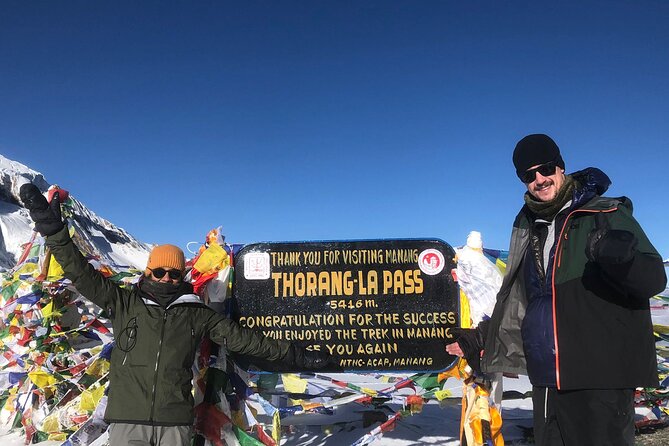
The catch is the altitude. You reach 5,416 meters, sleep above 4,000 meters, and spend a long day crossing the pass. Add an eight to nine-hour drive at the start and another full road journey back to Kathmandu, and this is a serious trek, not a casual mountain holiday.
Key points to know before booking
- Thorong La is the big test: The pass reaches 5,416 meters and comes on a seven to eight-hour day from Thorong Phedi to Muktinath.
- The route changes character often: You move from forest and waterfalls to dry, high valleys, then down toward hot springs and Poon Hill.
- Your guide matters: Past departures have been led by guides such as Rabin, Santosh, Ganesh, Sandip, and Chakra, with praise for patience, encouragement, planning, and local insight.
- Teahouse travel keeps things simple: Accommodation and three daily meals are included, but personal extras such as showers, charging, bottled water, laundry, and bar bills cost more.
- The private setup offers flexibility: Only your group participates, with a licensed guide assigned to handle safety and route logistics.
- The price covers the essentials: At $1,175, the package includes transport, permits, TIMS, lodging, meals, a first-aid kit, and a trekking map, but not insurance, tips, or a porter.
Why this 14-day route works
I like the shape of this trek because it does not simply march toward a single mountain viewpoint. The route gives you a gradual change in scenery and culture, from the lower valleys near Jagat to Manang’s high mountain setting, then over Thorong La and down toward Mustang and Pokhara.
You also get an acclimatization day in Manang. That day is not wasted time. At altitude, slowing down is part of the plan, and it gives you a better chance of reaching the pass safely.
The schedule is demanding but fairly clear. Most trekking days run four to eight hours, with the longest and hardest section concentrated around Thorong La. You need a moderate level of fitness, and you should be comfortable walking uphill and downhill for several consecutive days.
More Annapurna Treks in Kathmandu
- Annapurna Circuit Trek with Tilicho Lake
★ 5.0 · 368 reviews - Annapurna base camp trek 5 Days
★ 5.0 · 252 reviews - 14-Day Private Annapurna Base Camp Trek
★ 5.0 · 180 reviews
Day 1: The long road from Kathmandu to Jagat
Your first day is spent on the road, driving from Kathmandu to Jagat via Besisahar. The stated duration is eight to nine hours, so set your expectations early: this is a transport day, not a gentle introduction to hiking.
That long drive gets you to the trailhead efficiently, but it can be tiring after an international flight or a night in Kathmandu. The included bus transport saves you from arranging the route yourself, and the guide is there to help with the moving parts.
Jagat, at about 1,100 meters, is a sensible starting point for the walk. You are low enough to begin acclimatizing before the route climbs sharply.
Days 2 and 3: From river valleys to Chame
The trek begins with a six to seven-hour walk from Jagat to Dharapani. This section introduces the lower Annapurna region, with forest, waterfalls, rushing water, and village life.
You then walk from Dharapani to Chame, reaching about 2,710 meters after five to six hours. Chame is the administrative center of Manang District, and the scenery begins to feel more alpine here. The route is still surrounded by mountain drama, but you are now moving into a colder, higher part of the circuit.
These early days are useful because they build your walking rhythm. You can test your boots, daypack, and clothing before the altitude becomes the main concern. Do not treat the first two days as easy simply because the elevation is lower. The hours on your feet add up.
Days 4 and 5: Pisang and the approach to Manang
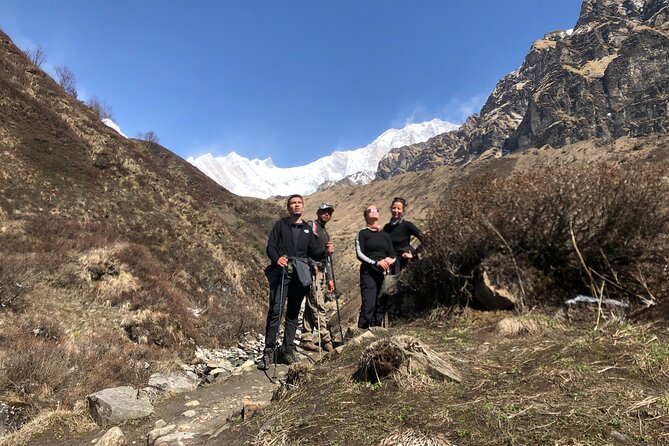
From Chame, the path climbs to Pisang, around 3,300 meters, in five to six hours. This is where the route begins to feel more remote and more exposed. Forest gives way to high mountain scenery, and the surrounding peaks become a constant part of your view.
The next day takes you from Pisang to Manang in six to seven hours. Manang sits at about 3,540 meters and is one of the key settlements on the circuit. It is an important stopping point because the route now enters the high-altitude section.
I would pay close attention to how you feel here. A guide can help with pacing and daily decisions, but you still need to speak up about headaches, nausea, unusual fatigue, or other symptoms. This is one reason the private format can be valuable: you are not forced to match the speed of a large group.
Another trail to compare in Kathmandu:
- Everest Base Camp Trek – 14 Days
★ 5.0 · 1,499 reviews - Everest Base Camp Trek
★ 5.0 · 842 reviews - Everest Base Camp Trekking
★ 5.0 · 485 reviews - Everest Base Camp Trekking – 13 Day
★ 5.0 · 365 reviews
Day 6: A useful rest day in Manang
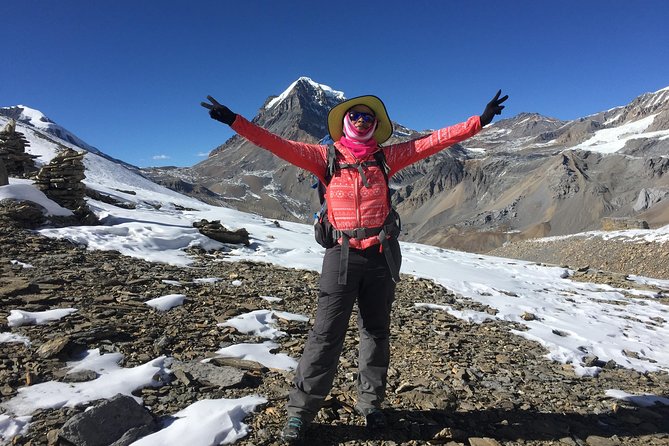
The itinerary includes an acclimatization day in Manang. The supplied schedule does not specify a particular excursion, so think of this day as protected time to rest and adjust rather than a guaranteed sightseeing program.
It is also a good point to check your equipment. Refill what you need, sort your layers, and make sure your sleeping clothes are dry. The high route ahead includes Yak Kharka, Thorong Phedi, and the pass itself, where temperatures can drop sharply.
One past trekker described nighttime temperatures falling to minus 20 degrees Celsius, with water freezing in a bottle. That should not be treated as a forecast for every departure, but it is a useful warning about the cold. Pack for serious winter conditions, even if lower valleys feel mild.
Days 7 and 8: Yak Kharka and Thorong Phedi
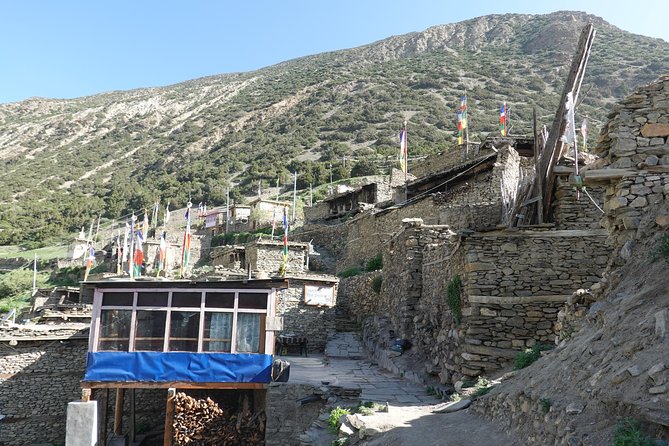
The walk from Manang to Yak Kharka takes four to five hours and reaches about 4,120 meters. At this height, the mileage is not the whole story. A short climb can feel slow, and the thin air makes a steady pace more useful than a fast one.
From Yak Kharka, you continue to Thorong Phedi, around 4,450 meters, in another four to five hours. Phedi means the foot of the pass, and this is the staging point for the hardest day.
The accommodation is teahouse based. That means you get a practical place to sleep and eat, but you should not expect hotel comforts. Showers, battery charging, bottled or boiled water, and other extras are not included. Keep cash available for these costs, along with tips and personal purchases.
Day 9: Crossing Thorong La to Muktinath
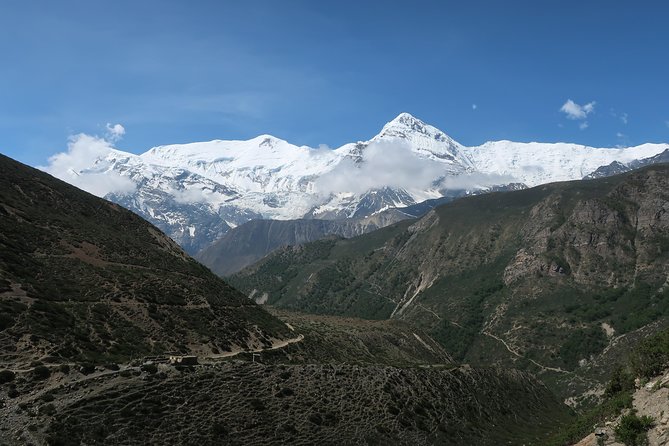
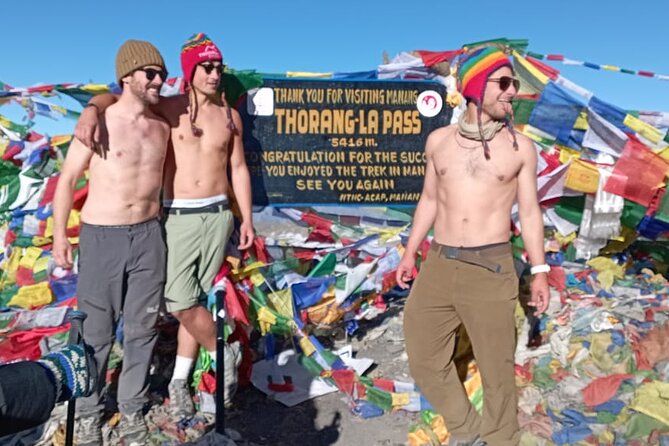
This is the defining day of the circuit. You leave Thorong Phedi and climb to Thorong La at 5,416 meters before descending to Muktinath at 3,802 meters. The full day takes seven to eight hours.
The pass is physically demanding because you gain height quickly and then spend hours descending. The route also requires an early, steady effort, though the exact departure time is not stated. Your guide should explain the day’s timing and help you judge your pace.
This is where the guide service earns its keep. Ganesh has been praised for encouraging a trekker through the pass, while other guides, including Santosh and Rabin, have been appreciated for staying attentive and explaining what comes next. Names are not guaranteed for your trip, but the company assigns a government-licensed guide rather than leaving you to manage the crossing alone.
Muktinath is a major spiritual stop in the region, visited by both Hindu and Buddhist pilgrims. The itinerary includes the settlement, but it does not promise a specific temple tour or religious program. You will have the setting and the chance to experience a place where mountain travel and faith meet.
Day 10: The descent to Jomsom
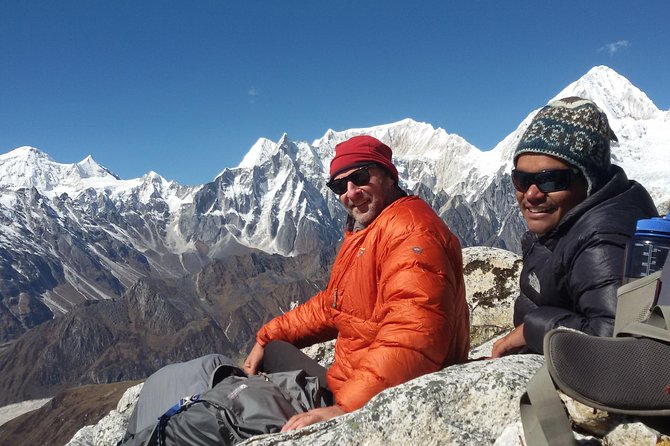
The walk from Muktinath to Jomsom takes five to six hours and drops to about 2,743 meters. After the pass, this descent brings welcome relief from the altitude.
Jomsom is a natural transition point. You are leaving the highest part of the trek, but the route is not finished. The next days shift back toward lower valleys, roads, hot springs, and the final mountain viewpoints.
The changing altitude is one of the route’s great strengths, but it can also make the schedule feel packed. You still need to walk carefully on tired legs, especially after Thorong La.
Days 11 and 12: Roads, hot springs, and the climb to Ghorepani
On Day 11, a four to five-hour drive takes you from Jomsom to Tatopani. Bus transportation is included for this section. Road conditions and the exact ride experience are not specified, so expect a practical transfer rather than a sightseeing coach journey.
Tatopani is known for its natural hot spring. This is a welcome change after several cold nights and long mountain walks. The stop gives the itinerary a physical reset before the next climb.
Day 12 brings a seven to eight-hour trek from Tatopani to Ghorepani, at about 2,750 meters. It is a substantial climb, even though you have already crossed the pass. You may find the return to lower altitude easier on your breathing, but your legs will still be carrying the memory of the previous days.
Ghorepani is the base for the final early morning outing. The teahouse stay and included meals make the logistics straightforward, but bring patience. Mountain lodging is functional, and comfort varies.
Day 13: Poon Hill and the road to Pokhara
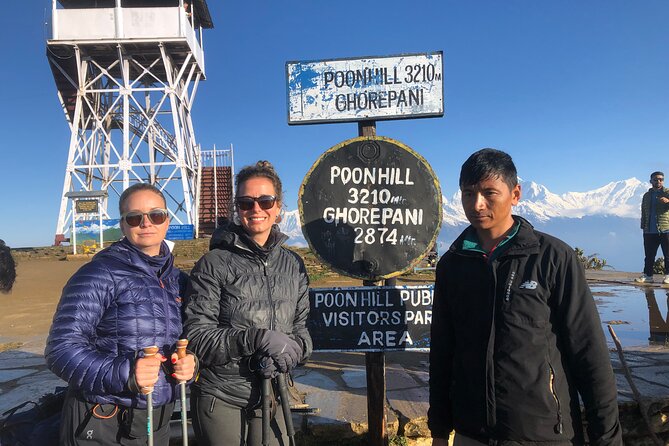
You start early for the hike to Poon Hill, reaching about 3,210 meters. The point of the early start is the mountain view around sunrise, though the schedule does not guarantee weather conditions.
After Poon Hill, you trek down to Nayapul, a seven to eight-hour day including the hike and descent. From Nayapul, private transport takes you to Pokhara.
This is a full day, not just a quick viewpoint visit. You should expect tired legs by the time you reach Pokhara, but the city provides a welcome change from teahouse life. The route ends its walking section with one of Nepal’s best-known mountain outlooks, then gives you an easier urban base before the final drive.
Day 14: Returning to Kathmandu
The final day is a drive from Pokhara, at about 822 meters, to Kathmandu, at about 1,400 meters. The itinerary does not state the drive time, so leave your schedule open rather than planning a tight onward connection.
The return journey means the package ends where it began, with transport arranged instead of requiring you to book a separate ticket. It is convenient, but it also makes the final day another road day.
What the $1,175 price really covers
At $1,175, the value depends on how much planning you want to avoid. The price includes bus transport from Kathmandu to Jagat, bus transport from Jomsom to Tatopani, private transport from Nayapul to Pokhara, teahouse accommodation, a licensed guide, conservation permits, the TIMS fee, three standard meals each trekking day, a first-aid kit, a trekking map, and government tax.
That is a useful bundle for a private 14-day route. You are paying not only for a bed and meals, but also for route organization, permit handling, and support in a setting where a missed connection or poor altitude decision can cause real trouble.
The exclusions matter. Travel and rescue insurance are not included. Personal spending, phone calls, laundry, bar bills, battery charging, showers, bottled or boiled water, extra porters, and tips are also outside the package. A porter is not included, though you can request one at an additional cost.
The most important financial advice is simple: do not treat $1,175 as your entire trip budget. Add insurance, tips, personal expenses, drinks, charging, water, and any porter service you want.
The guide can shape the whole experience
A good guide is especially valuable on the Annapurna Circuit because the route combines transport, permits, altitude, changing conditions, and long walking days.
The guides associated with past departures include Rabin, Laxman, Santosh, Amrit, Ganesh, Ramesh, Sandip, and Chakra, also called CK. Specific praise has focused on patience, encouragement, clear explanations, local customs, mountain knowledge, and help with decisions. One solo trekker joined with little advance planning and found the organization much easier after connecting with the company in Kathmandu.
Your guide may be someone else, so do not book solely around a particular name unless the provider confirms that person. Still, the pattern is encouraging: the human side of the trip appears to be one of its strongest features.
The private setup also matters. Only your own group participates, so you avoid being tied to a large party’s pace. That does not remove the physical challenge, but it can make the days feel less rigid.
Who should book this trek?
I would recommend this route to you if you want a classic Nepal trek with a clear support system and a wide range of scenery. It suits people who can manage repeated six to eight-hour walking days and who are prepared for high altitude, cold nights, simple lodging, and a major pass crossing.
It is less suited to someone seeking a relaxed holiday, private hotel rooms, short walks, or a fixed luxury standard. The road transfers can be tiring, and the Thorong La day is not a minor excursion.
You should also arrive with realistic expectations about food and facilities. Three standard meals are included during the trek, but the package does not promise a particular menu, private bathrooms, reliable charging, or warm showers.
Final verdict: a strong choice for a serious first circuit
I would book this trek if I wanted the classic Annapurna route but did not want to handle permits, accommodation, transport, and altitude planning alone. The route delivers the major moments: Manang, Thorong La, Muktinath, Tatopani, Ghorepani, Poon Hill, and Pokhara.
The main reasons to hesitate are the strenuous schedule, basic teahouses, cold conditions, long road journeys, and extra costs outside the advertised price. Get suitable rescue insurance, budget for personal expenses and tips, and pack seriously for freezing nights.
For a fit walker who values local guidance and wants a private, well-organized route, $1,175 is a fair package price. For anyone hoping for an easy mountain escape, it is better to choose a gentler trip.
FAQ
Where does the Annapurna Circuit Trek begin and end?
The trek begins with transport from Kathmandu to Jagat and finishes with transport from Pokhara back to Kathmandu.
How long is the experience?
The stated duration is approximately 14 days.
What is the highest point on the route?
The highest point is Thorong La, at 5,416 meters or about 17,769 feet.
Is the trek private?
Yes. This is a private activity, and only your group participates.
Is transportation included?
Yes. Bus transport from Kathmandu to Jagat and from Jomsom to Tatopani is included. Private transport from Nayapul to Pokhara is also included.
Are meals included?
Yes. Three standard meals, breakfast, lunch, and dinner, are included during the trekking portion.
Is accommodation included?
Yes. Teahouse accommodation during the trek is included.
Is travel insurance included?
No. Travel and rescue insurance are not included in the price.
Latest treks added in Kathmandu
- Private Manaslu Circuit Trek at Himalayas★ 5.0 · 3 reviews
- Ghorepani Poonhill Trek★ 5.0 · 5 reviews
- Ghorepani Poon Hill Trek★ 5.0 · 16 reviews
- Upper Mustang Trekking★ 5.0 · 2 reviews
- Upper Mustang Trekking★ 3.0 · 2 reviews
- Amazing 1 Day Trekking Experience in Kathmandu Nepal★ 5.0 · 24 reviews
- Upper Mustang Trek★ 5.0 · 5 reviews
- Upper Mustang Trekking★ 5.0 · 4 reviews
Annapurna Base Camp Treks, compared.
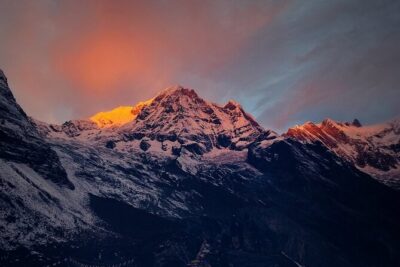
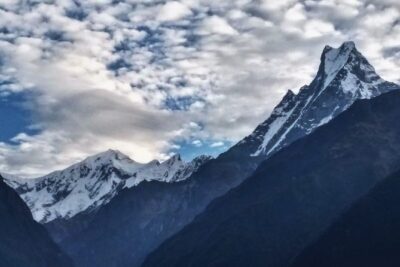
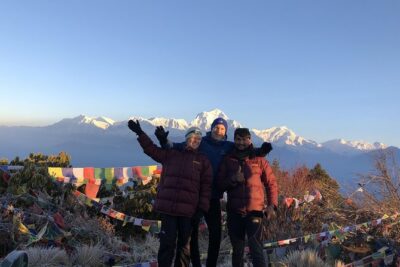
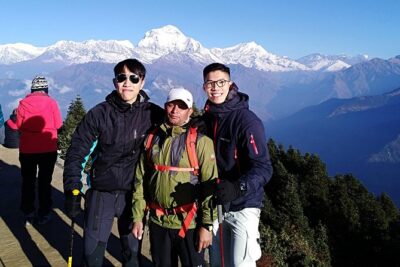
Trekking in Annapurna/Langtang/Everest/Upper Mustang regions
Read our review →
Kathmandu to Annapurna Base Camp (ABC) 5-Day Trek
Read our review →Browse the lists this tour appears in