
REVIEW · NEPAL
Pokhara: 7-Day Annapurna Base Camp Trek & Natural Hot Spring
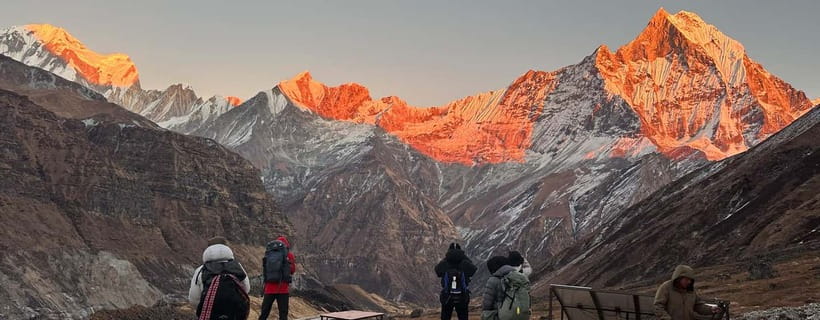
Annapurna Base Camp is the prize here, but the real pleasure is the changing trail: Gurung villages, stone steps, forests, and high mountain valleys packed into one week. You walk into the Annapurna Sanctuary, where Annapurna I and Machhapuchhre rise around the route, then finish with a hot spring soak at Jhinu Danda.
I like the small private-group format and the practical inclusions. Permits, TIMS fees, tea house lodging, guide costs, basic gear, Pokhara luggage storage, and transportation are covered, which makes the $181 price unusually strong for a guided Himalayan trek. I also like the guides’ personal approach. Chandra, Bishnu Giri, Anil, Jeet Bahadur, Sun, and Laxman are all named by past participants as helpful and attentive.
The main caution is the pace. You reach 4,130 meters on Day 4, after only three nights of rising altitude. The trek is manageable for a fit hiker, but it is not a gentle walk, and the long stair sections, cold at base camp, and quick climb deserve respect. Day 1 and Day 7 may also include dusty road walking, so ask about a jeep option if you prefer to save your legs.
Key points to know before booking
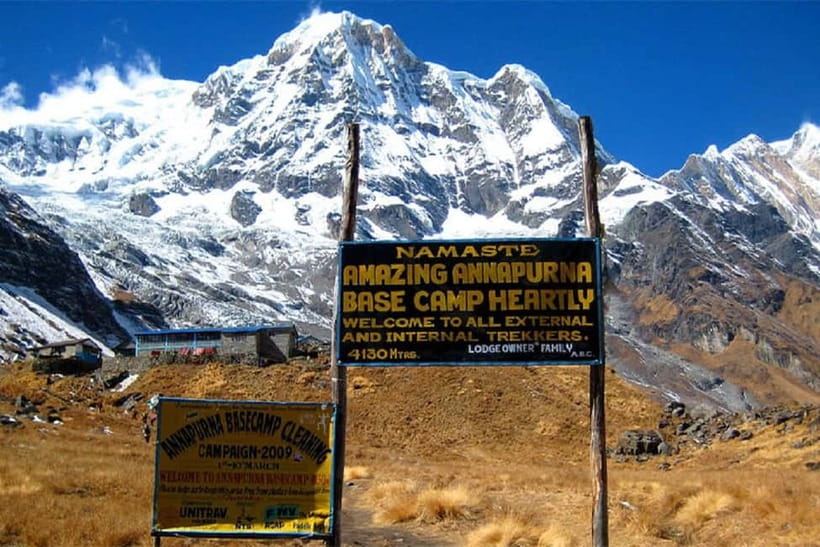
- Annapurna Base Camp at 4,130 meters: Reach the famous mountain bowl on Day 4, surrounded by enormous peaks and a glacier valley.
- A useful seven-day route: The trek combines village life, forest trails, high-altitude scenery, and a hot spring without requiring a two-week schedule.
- Strong guide support: Chandra, Bishnu Giri, Anil, Jeet Bahadur, Sun, and Laxman are among the guides praised for care, encouragement, and cultural insight.
- Simple tea house nights: Expect basic lodges, shared mountain hospitality, and practical comfort rather than resort service.
- Jhinu Danda hot springs: After the hardest high-altitude section, you descend to a natural hot spring near the river.
- Good value at $181: Permits, guide expenses, transport, lodging, luggage storage, and some meals are included, but check the selected option for meal details.
Why this seven-day trek works
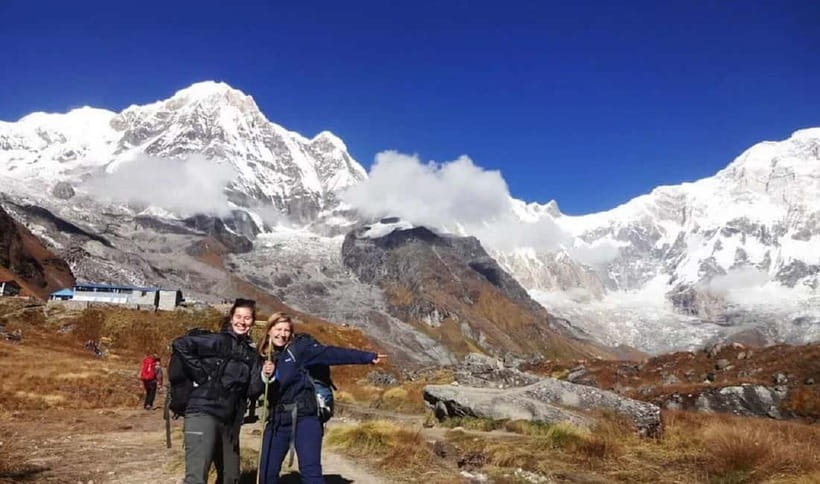
This route gives you a real Himalayan trek without asking you to spend two or three weeks on the trail. You begin near Pokhara, pass through traditional mountain villages, climb through forest, reach the high point at Annapurna Base Camp, and return by a different rhythm: downhill walking, riverside scenery, and a hot bath.
The route is also varied in a way that keeps each day distinct. Ghandruk feels like a village trek. Chomrong brings long stone stairways and wide mountain views. The walk toward Himalaya grows darker and more wooded. Then the trees thin out, the air gets colder, and the sanctuary opens around you.
At $181 per person, the value is easy to see. The price covers a government-certified guide, permits and TIMS fees, accommodation, guide insurance and expenses, local and government taxes, a first aid kit, luggage storage in Pokhara, and round-trip transport. Meals are included depending on the option you select, so check that detail before paying.
You still need to budget for snacks, drinks, personal purchases, travel insurance, and a porter if you want one. A porter costs $20 per day. Emergency rescue is available if needed, but it is not included, and travel insurance is mandatory.
More Annapurna Treks in Pokhara
- Trekking in Annapurna/Langtang/Everest/Upper Mustang regions
★ 5.0 · 161 reviews - Kathmandu/Pokhara: 5-Day Annapurna Base Camp (ABC) Trek
★ 4.9 · 72 reviews - Annapurna Panorama trek
★ 5.0 · 71 reviews
Day 1: Pokhara to Ghandruk through village country
The first day combines about one hour of driving with five to six hours on foot. From the Pokhara area, you travel toward Nayapool, then begin walking through villages and forest along the Modi Khola area before reaching Ghandruk at 1,940 meters.
Ghandruk is one of the most appealing stops on this route because it gives you an early taste of mountain life before the trail becomes more remote. The village setting, traditional culture, and mountain views make it more than a place to sleep. It is your first proper introduction to the rhythm of a tea house trek.
The road and trail conditions can vary. One participant specifically wished for a car or jeep on the road sections because of dust on Day 1 and Day 7. If road walking is a concern, ask the operator in advance what transport is planned for your dates. That small question may make the start and finish more comfortable.
Day 2: Ghandruk to Chomrong and the first serious stairs
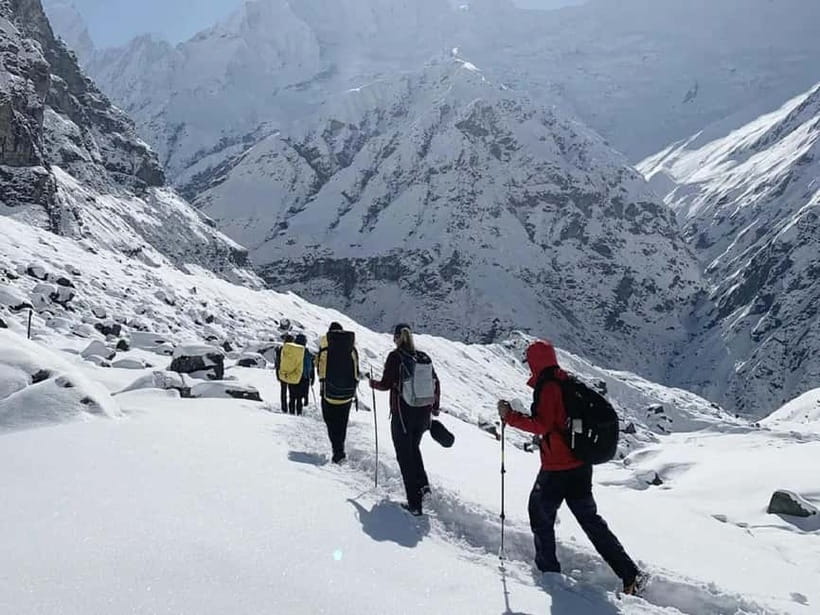
From Ghandruk, expect five to six hours of walking to Chomrong at 2,170 meters. The day includes stone steps, forest trails, and broad views toward Annapurna and Machhapuchhre.
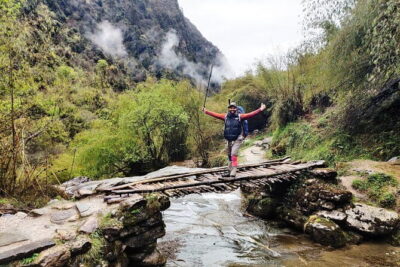
This is where you discover that the Annapurna Base Camp route is not simply a steady uphill path. You gain and lose height on mountain trails, and the steps can make the distance feel longer than the numbers suggest. Walk at a calm pace and let your guide set a rhythm that leaves energy for the days ahead.
Chomrong is an important stop because it sits at the gateway to the upper valley. It is also a good place to check your clothing, water, and headlamp before the route becomes colder and more enclosed. Tea house accommodation is simple, but it provides a warm base after a demanding day.
Day 3: Chomrong to Himalaya through bamboo and rhododendron
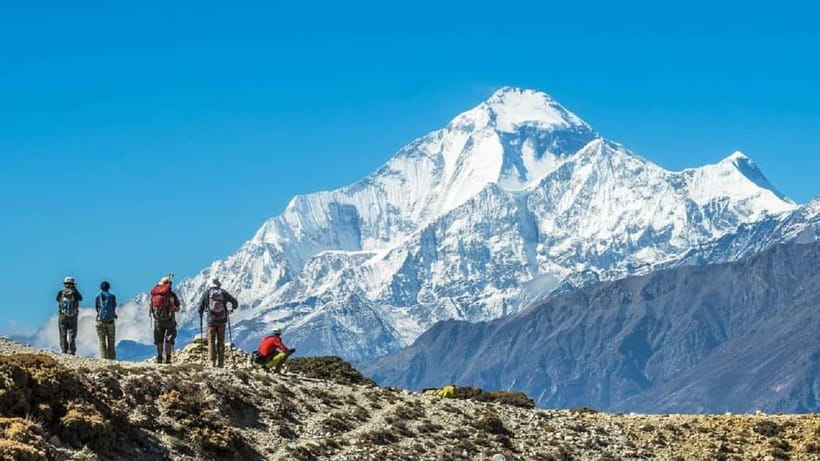
Day 3 takes six to seven hours and ends at Himalaya, at 2,920 meters. You first descend toward the river, then climb through bamboo and rhododendron forest.
The forest section gives the trek a different mood. Instead of constant open views, you walk through shaded trails with vegetation close around you. Depending on conditions and season, rhododendrons can add color to the route, while waterfalls and river sounds help mark the change in altitude.
This is a day to pay attention to how your body feels. The schedule moves from 2,170 meters to nearly 3,000 meters, and the following day climbs much higher. The guide’s role matters here. Bishnu Giri, Chandra, and the other guides named by past participants are especially valued for checking on health, offering encouragement, and helping with practical problems.
You should not treat the six to seven hours as a race. The strongest part of this trek is the steady change from village trail to high mountain route, not arriving early at the lodge.
More Hot Spring Treks in Nepal
- Pokhara: 5 Day Annapurna Base Camp Trek & Natural Hot Spring
★ 4.9 · 44 reviews - From Pokhara: 5-Day Annapurna Basecamp Trek with Hot Springs
★ 4.9 · 26 reviews - Pokhara: 5-Day Trek to Annapurna Base Camp and Hot Springs
★ 5.0 · 4 reviews - Pokhara: 7-Day Annapurna Base Camp Trek & Hot Spring
★ 4.0 · 3 reviews
Day 4: Himalaya to Machhapuchhre Base Camp and Annapurna Base Camp
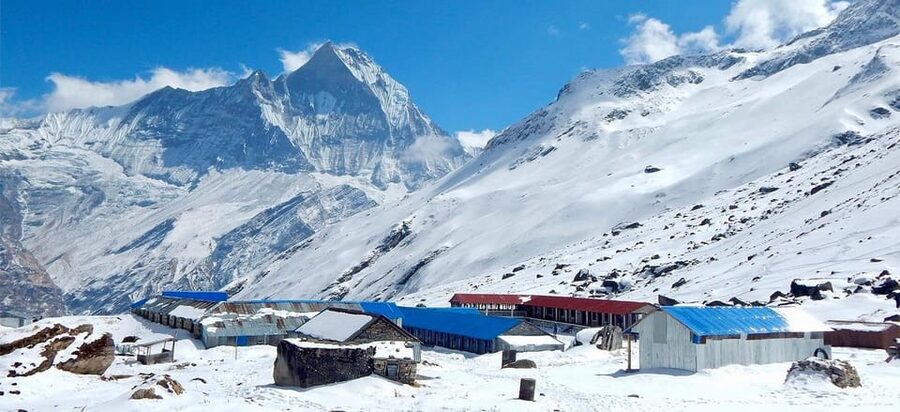
This is the big day. You walk six to seven hours from Himalaya through the alpine zone, passing Machhapuchhre Base Camp before reaching Annapurna Base Camp at 4,130 meters.
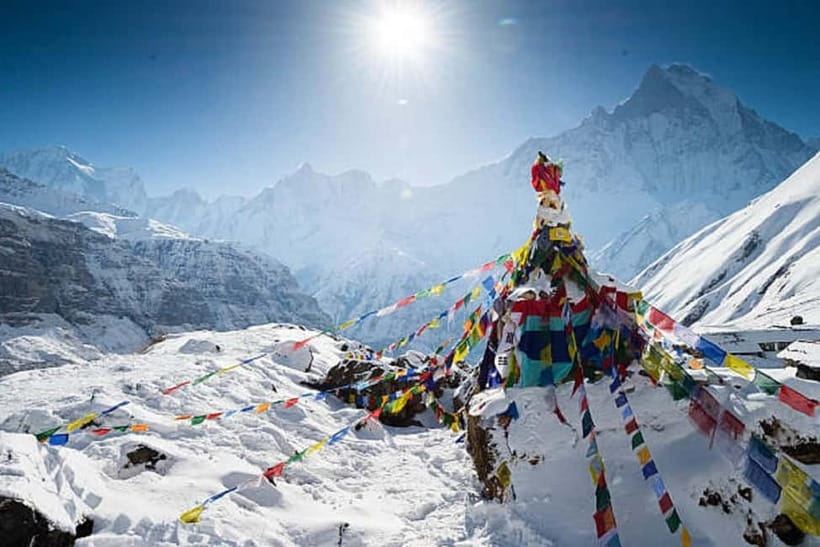
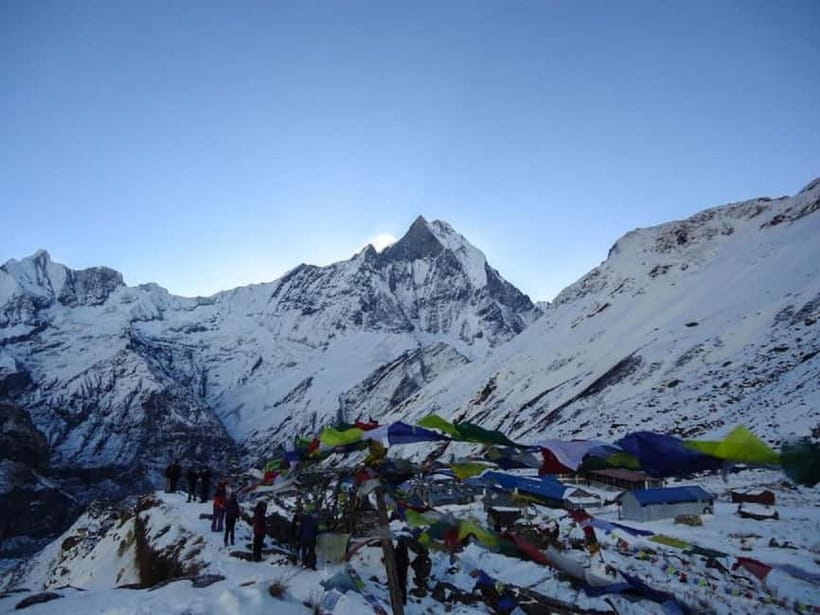
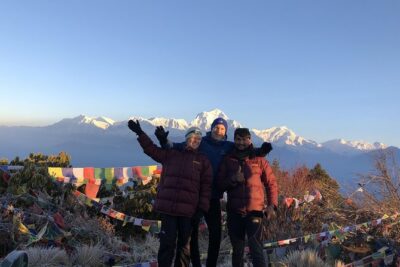
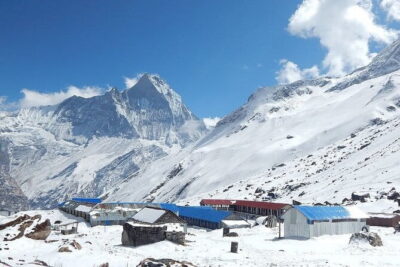
The scenery becomes more open and severe as the forest gives way to the glacier valley. At Annapurna Base Camp, the mountains surround you in a broad natural amphitheater. Annapurna I and Machhapuchhre are the names that draw most people here, but the power of the place comes from the full circle of high peaks around the sanctuary.
You should expect a cold night and basic lodging. Warm clothing, gloves, a jacket, a sleeping bag, and good rain gear are not optional extras on this day. A trekking stick can also help on the stone sections, and the operator says trekking sticks and sleeping bags may be available as needed.
The altitude makes this the hardest and most important day. The route reaches 4,130 meters quite quickly over the first four days, so you need reasonable fitness and good health. Your guide can help you monitor your pace and condition, but no itinerary can remove the effects of altitude. Travel insurance with appropriate mountain coverage is essential.
If the weather is clear, sunrise and sunset at base camp can be the emotional high point of the trek. If clouds move in, the setting can feel more subdued. That is one reason to value the journey itself rather than treating the trip as a guarantee of perfect photographs.
Day 5: The long descent from base camp to Bamboo
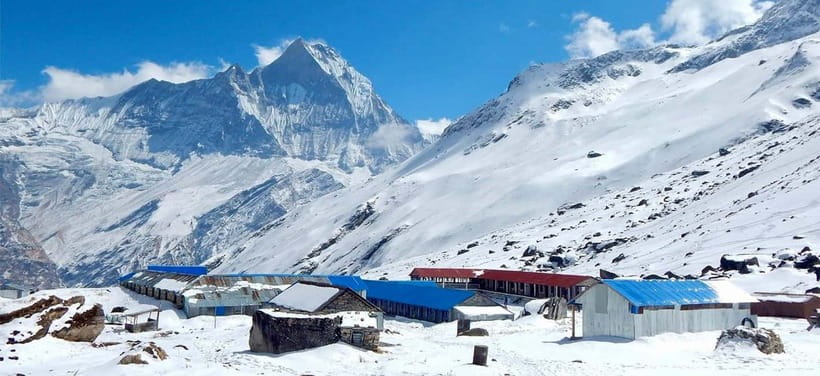
After the high point, you walk six to seven hours downhill to Bamboo at 2,335 meters. This is a demanding day in a different way. Descending saves your lungs some work, but it can be hard on knees and thighs, especially after the climb to base camp.
The reward is the changing view behind you. As you lose altitude, you see the Annapurna range from new angles, pass waterfalls, and return to sections of forest. Keep looking back. Some of the best mountain views come when you turn around rather than stare only at the trail ahead.
Bamboo is a practical overnight stop. The accommodation remains basic tea house lodging, and facilities in the mountains are not designed for luxury. Still, the simple rooms and shared dining areas are part of the experience. You get a place to rest, eat, and prepare for the final two walking days.
Day 6: Bamboo to Jhinu Danda and the hot spring reward
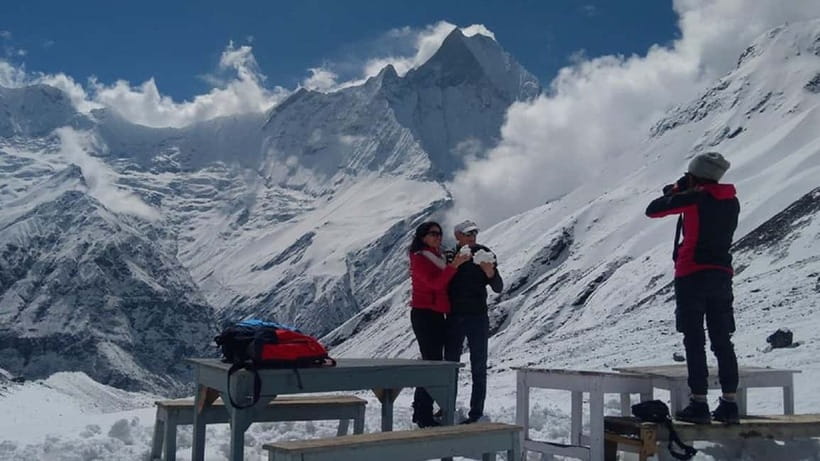
Day 6 takes five to six hours from Bamboo to Jhinu Danda, at 1,610 meters. You continue downhill toward the river, then have time to enjoy the natural hot springs.
This is a clever ending to the difficult part of the route. Your body has handled steep stairs, high altitude, cold air, and long walking days. A soak at Jhinu Danda gives you a simple, memorable reward without adding another major mountain challenge.
Bring a towel and a change of clothes. The packing list specifically calls for both, along with comfortable shoes, sunscreen, a hat, sunglasses, rain gear, gloves, cash, and a power bank. You will want your camera too, but protect electronics from rain and keep the power bank charged because charging access can be limited along mountain routes.
Jhinu Danda also changes the feel of the trek. The route is lower, warmer, and closer to the river than Annapurna Base Camp. It is a satisfying reminder of how much the scenery and climate can change in less than a week.
Day 7: Return to Nayapool and Pokhara
The final day includes four to five hours of walking followed by roughly one hour of driving back toward Pokhara. The walk takes you to Nayapool, where transport continues to selected drop-off points, including Lakeside hotels, Hotel Temple Tree, Hotel Barahi, Sarangkot, and Pokhara International Airport.
As with Day 1, clarify the exact transport plan. Road walking can be dusty, and replacing some of it with a car or jeep may be worthwhile after six days on foot. Pickup and drop-off are available from Pokhara International Airport or hotels in the Lakeside area, but the exact option depends on what you select.
The operator also provides luggage storage in Pokhara. That is a small but useful benefit. You can leave larger bags behind and carry only what you need for the mountain route.
Tea houses, meals, and guide support
Tea houses are simple lodges along the trekking route. You should expect practical accommodation rather than private hotel standards. The appeal is the shared mountain setting and the chance to stay close to villages and trail communities.
Meals are included only with certain booking options, so read the selected package carefully. Snacks and drinks are not included. Carry some cash for personal spending, especially because the information provided does not promise card payment along the route.
The guide is one of the strongest parts of this trip. Chandra is praised for clear English, mountain information, flexibility, and careful attention. Bishnu Giri is noted for more than 20 years of experience, cultural stories, health checks, and steady encouragement. Anil is praised for helping with food as well as walking, while Jeet Bahadur is remembered for his energy and good humor. Sun and Laxman are also described as kind, attentive, and experienced.
You can request a particular guide, but availability is not guaranteed. The important point is that the guide is not simply there to lead the line. The package includes the guide’s food, lodging, insurance, salary, transportation, and equipment, allowing you to focus on walking.
Who should book this Annapurna trek?
You should consider this trek if you want a short, private Himalayan adventure with a clear goal and strong guide support. It suits fit hikers who can manage five to seven hours of walking per day, steep stone steps, changing weather, and a rapid climb to 4,130 meters.
It is also a good match if you value local contact over polished accommodation. You will see traditional villages, stay in tea houses, and walk through areas where the mountain route is part of daily life rather than just a scenic backdrop.
This may not suit you if you want a relaxed schedule, hotel rooms, or a slow altitude gain. The seven-day format is efficient, but it leaves little spare time if you need to stop or adjust the plan. Ask about pacing and road transport before booking if you have knee issues, limited hiking experience, or concerns about dust.
The trek runs with guides speaking English, Hindi, or Nepali, and the group type is private. That gives you more room to discuss pace and daily progress than a large mixed group would.
What to pack and prepare
Send a passport copy at least one day before the trek so the required Nepal permits can be arranged. Bring your passport or an accepted copy, and do not leave travel insurance until the last minute.
Your core kit should include:
- Comfortable hiking or waterproof shoes
- Warm layers, jacket, gloves, and rain gear
- Sleeping bag if you have one, or request one as needed
- Sun hat, sunglasses, sunscreen, and hiking pants
- Towel and change of clothes for the Jhinu Danda hot springs
- Flashlight and power bank
- Cash for personal expenses
- Water and snacks for the trail
- Trekking stick if useful for stairs and descents
January can be a particularly appealing month if you prefer quieter trails and tea houses. Clear weather is never guaranteed, but winter conditions can bring cold temperatures. Spring, summer, and autumn have their own weather patterns, so ask the operator what conditions to expect for your dates.
Should you book it?
Book this Annapurna Base Camp trek if you want the highest mountain scenery in a compact seven-day plan and you are ready for genuine physical effort. The $181 cost offers strong value because it bundles permits, guide expenses, transport, lodging, luggage storage, and selected meals into one guided package.
I would book it for the combination of Annapurna Sanctuary views, village stays, and Jhinu Danda hot springs, especially if you can arrange a private pace with a guide such as Chandra or Bishnu. I would not book it casually if you are unprepared for the altitude or expect a soft adventure.
Ask two questions before confirming: which meals are included in your chosen option, and whether road sections on Day 1 and Day 7 can be covered by jeep. Get those details clear, pack for cold and rain, and this can be a remarkably full Himalayan experience for one week.
FAQ
How long is the Annapurna Base Camp trek?
The trek lasts seven days, including transportation from Pokhara at the start and the return drive to Pokhara at the end.
How high is Annapurna Base Camp?
Annapurna Base Camp is at 4,130 meters, or 13,550 feet.
Is the trek difficult?
The route can be challenging because it includes five to seven hours of walking on most days, steep stone steps, changing altitude, and a high point of 4,130 meters. Good health and reasonable fitness are required.
Is a guide included?
Yes. The package includes a professional English-speaking guide certified by the Nepal Government. Guides may also speak Hindi and Nepali.
Are permits and TIMS fees included?
Yes. Required trekking permits, paperwork, and TIMS fees are included.
What accommodation is provided?
You stay in simple tea houses or lodges along the route. The overnight stops are Ghandruk, Chomrong, Himalaya, Annapurna Base Camp, Bamboo, and Jhinu Danda.
Are meals included?
Meals are included depending on the option selected. Snacks and beverages for personal use are not included.
Is travel insurance required?
Yes. Travel insurance is mandatory. Emergency rescue services are available if needed, but rescue costs are not included.
More week-long treks in Pokhara
- Best Kilimanjaro Adventure 7 days Machame route Trekking
★ 5.0 · 42 reviews - Kilimanjaro 7 Day Private Trekking Experience
★ 5.0 · 40 reviews - 7-Day: Inca Trail Trek to Machu Picchu Group Tour
★ 5.0 · 40 reviews - Pokhara: 7 Day Annapurna Base Camp Trek
★ 4.9 · 38 reviews
More Hot Spring Treks in Pokhara
- Private Tour Mount Batur Sunrise Trekking and Natural Hot Spring
★ 5.0 · 431 reviews - Mount Batur Sunrise Trek & Natural Hot Spring Experience
★ 5.0 · 95 reviews - 3D/2N Rinjani trekking summit,lake and hot springs.
★ 5.0 · 85 reviews - Mount Batur Sunrise Trekking & Natural Hot Spring – All Inclusive
★ 5.0 · 58 reviews
Latest treks added in Pokhara
- Pokhara: Majestic Mardi Base Camp Guided Trek with HotSpring★ 5.0 · 6 reviews
- Pokhara: 9-Day Annapurna Base Camp Trek with Poon Hill★ 5.0 · 6 reviews
- Pokhara: 5-Day Ghorepani and Poon Hill Private Trek★ 5.0 · 4 reviews
- Pokhara: 5-Day Trek to Annapurna Base Camp and Hot Springs★ 5.0 · 4 reviews
- Pokhara: 7-Day Annapurna Base Camp Trek & Hot Spring★ 4.0 · 3 reviews
- Pokhara:4-Day Ghorepani Poon Hill Guided Trek via Ghandruk★ 5.0 · 3 reviews
- Pokhara: 4-Day Poon Hill and Ghandruk Guided Trek★ 5.0 · 14 reviews
- Pokhara: 4-Day Beautiful Ghorepani Poon Hill & Ghandruk Trek★ 4.8 · 21 reviews
Annapurna Base Camp Treks, compared.

Trekking in Annapurna/Langtang/Everest/Upper Mustang regions
Read our review →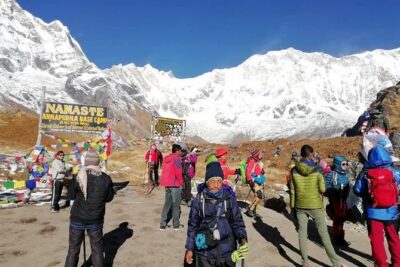
Kathmandu to Annapurna Base Camp (ABC) 5-Day Trek
Read our review →Browse the lists this tour appears in