
REVIEW · CUSCO
7-Day: Inca Trail Trek to Machu Picchu Group Tour
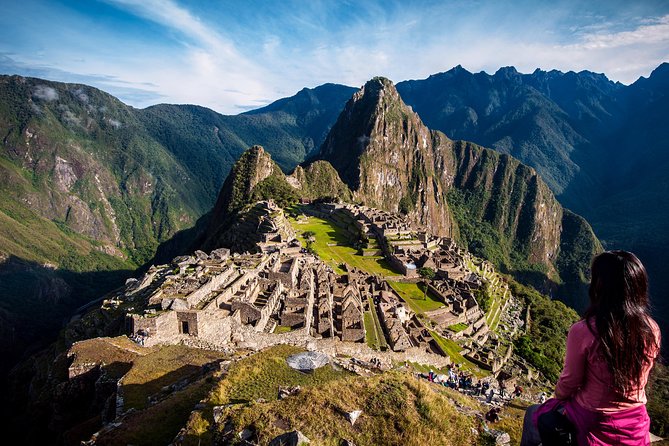
The finest part of this seven-day Inca Trail trek is the arrival at Intipunku, the Sun Gate, after four days of walking through high Andes and cloud forest. You approach Machu Picchu on foot, rather than simply arriving by train, with Phuyupatamarca, Wiñay Wayna, and several old stone paths along the way.
I like that the price bundles the hard-to-arrange pieces: trail permits, camping gear, meals, porters, trains, buses, and airport transfers. I also like the generous second day in Cusco, which gives you time to see the old Inca capital before the serious walking begins. The main caution is physical: Dead Woman’s Pass reaches 4,200 meters, and the early starts, steep climbs, and cold nights demand strong fitness.
Key points to know before booking
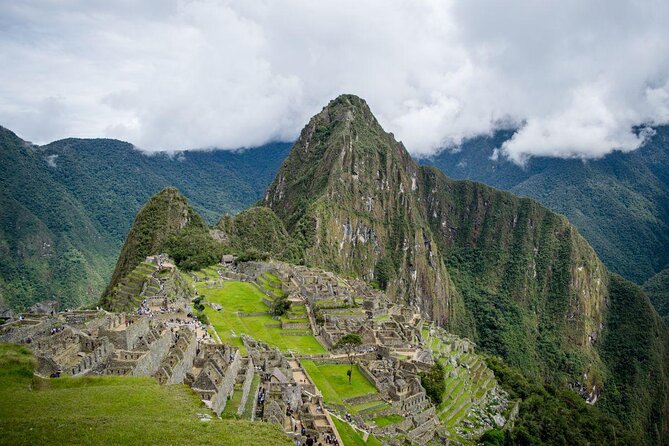
- Sunrise at the Sun Gate: You start early on the final trekking morning to reach Intipunku before sunrise.
- Three nights camping: Camps are set near Wayllabamba, Runkurakay, and Wiñay Wayna, with four-person tents shared by two people.
- High-altitude challenge: The trail climbs to 4,200 meters at Dead Woman’s Pass, with steep ascents and descents.
- Small group size: The maximum is 16 people, with an assistant guide added for groups of nine or more.
- Strong practical value: The $1,145 price includes permits, transport, meals, tents, mattresses, porters for company equipment, and airport transfers.
- Good Cusco buffer: You arrive on day one and have day two free before setting out on the trail.
Why this Inca Trail trip works well
The classic Inca Trail is not a casual walk to Machu Picchu. It is a regulated route with limited entry, fixed camps, permits, transport links, and strict timing. Organizing those pieces yourself can be a nuisance, especially when you are also dealing with altitude and unfamiliar train connections.
This tour packages the main practical work into one trip. Airport pickup brings you to your Cusco hotel, a guide gives you a briefing, and the next day is free. Then you leave before dawn for the trailhead near kilometer 82, known as Piscacucho.
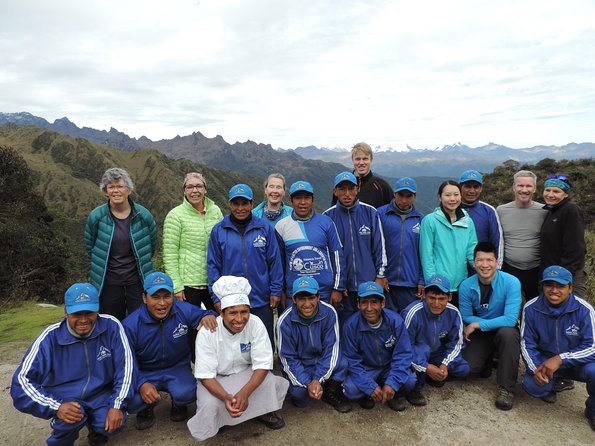
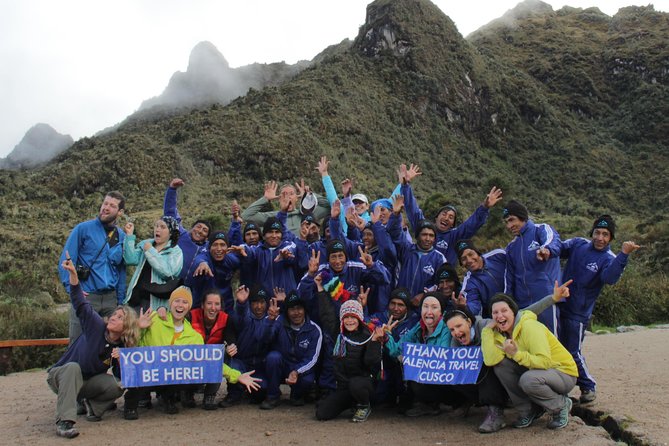
The group limit of 16 is useful. You are not signing up for a giant procession, though the pace can still vary when people handle altitude differently. Groups of nine or more receive an assistant guide, which should make it easier to split up briefly without leaving anyone unsupported.
The company also carries its own equipment and supplies oxygen bottles and a first aid kit. That does not make the trail easy, but it is a sensible safety measure on a route where altitude can change the day quickly.
More Inca Trail Treks in Cusco
- Salkantay Trek Challenge – 3 Days / 2 Nights
★ 5.0 · 101 reviews - Choquequirao Trek 4 days and 3 nights
★ 5.0 · 81 reviews - Machu Picchu: 5-Day Salkantay Trek with Panoramic Train
★ 5.0 · 79 reviews
Days 1 and 2: Cusco gives you time to adjust
Your trip begins at Alejandro Velasco Astete International Airport. The included airport transfer takes you to your hotel, and your guide organizes a welcome meeting for a short briefing.
Cusco sits high in the Andes, and the free second day is one of the smartest parts of the plan. You can walk around the former Inca capital at an easier pace, visit Spanish churches and colonial mansions, and see Inca stonework built into the city. You also have time to sort personal gear, buy anything forgotten, and rest before the 4:30 am meeting on day three.
Do not treat this day as empty time. It is your chance to let your body begin adjusting to the altitude. The tour does not promise a detailed Cusco sightseeing program, so you choose how to use the day. You might find that a slower schedule serves you better than trying to cram in every historic site.
The welcome briefing matters because the following morning begins very early. Confirm what you must carry yourself, what the porters carry, and whether you need to rent a sleeping bag or walking sticks. Personal belongings, sleeping bags, and extra rentals are your responsibility.
Day 3: Piscacucho, Huillca Raccay, and Wayllabamba
The day starts at 4:30 am at the hotel. From there, you travel by bus to the kilometer 82 trailhead, where you show your passport and permits at the control point.
This is also the practical last stop for restrooms, sunscreen, and insect repellent. Access to the Inca Trail is limited, so keep your passport and required documents easy to reach. The trail begins at about 2,720 meters beside the Vilcanota River.
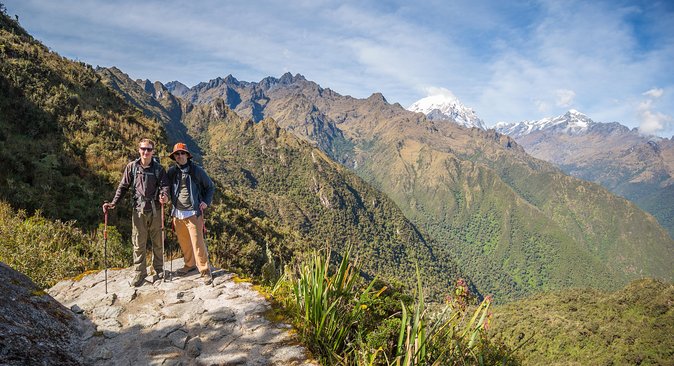
The first section leads toward Huillca Raccay and through the Inca Valley. It is a good opening day because the route introduces the scale of the Andes without immediately throwing you into the highest climb. You will see the Urubamba range and, if conditions allow, the snow-covered peak of Veronica, also called W’ak ay Willca, rising to 5,860 meters.
After roughly five to six hours of walking, you reach Wayllabamba at about 3,000 meters. This is your first campsite, in a temperate valley. Night temperatures are listed around 5 C, though the actual feel will depend on the month and weather.
A professional chef prepares the camp meals, and the dining tent includes tables and chairs. That setup is more than a small comfort. After a long day on uneven stone paths, having a place to sit and eat makes camp life much easier.
The included food covers three dinners, five breakfasts, and three lunches. Your first breakfast and last lunch along the trail are not included, so plan for those separately.
Day 4: Dead Woman’s Pass is the hard test
Day four is the toughest part for many people. You begin around 5:30 am after breakfast and climb toward Abra de Warrmihuañusca, better known as Dead Woman’s Pass.
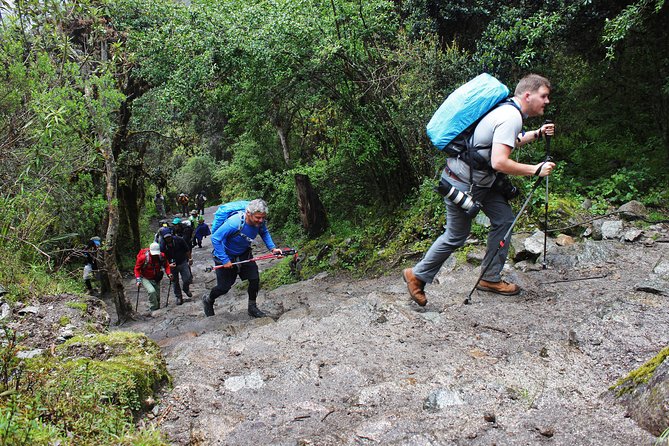
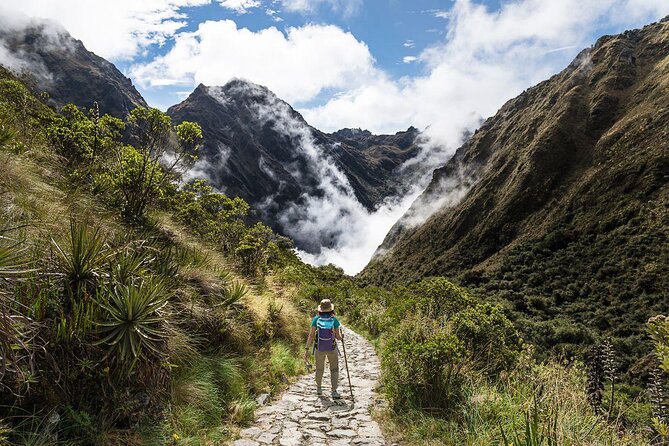
The pass reaches 4,200 meters, or 13,779 feet. The climb is steep and takes several hours. The name is memorable for a reason, but the real challenge is the altitude combined with the steady ascent. You should expect to work slowly, stop when needed, and keep water within reach.
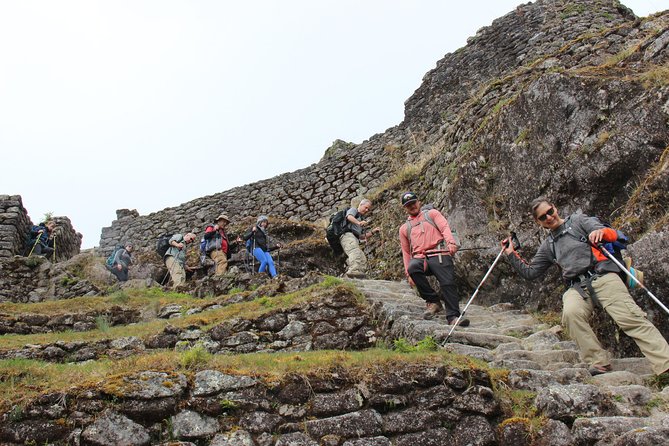
Reaching the pass is a major moment. From there, the route descends toward Pacaymayu at about 3,550 meters. This is not a gentle victory lap. Descending on stone steps can be hard on knees, particularly after the morning climb.
The route passes through high cloud forest, where you might see hummingbirds and other bird species. You also pass polylepis trees, which grow in the high cloud forest. These details give the day more than a single mountain challenge. You are moving through several plant zones as the elevation changes.
After lunch, another steep climb takes you toward Runkurakay Pass, nearly 4,000 meters. Camp is set up by about 5 pm, with nighttime temperatures around 4 C. Pack warm layers where you can reach them quickly. A sleeping bag is not included, and the supplied foam mattress is basic.
Another trail to compare in Cusco:
- From Cusco: 7 Lakes Ausangate Trek with Breakfast and Lunch
★ 4.8 · 360 reviews - Cusco: Full-Day Rainbow Mountain & Red Valley Trekking Tour
★ 4.5 · 121 reviews - From Cusco: Rainbow Mountain Trek
★ 4.5 · 98 reviews - Ancascocha Trek To Machu Picchu 4 Days And 3 Nights
★ 5.0 · 77 reviews
Day 5: Phuyupatamarca and Wiñay Wayna
After the strain of Dead Woman’s Pass, day five shifts toward ruins, cloud forest, and long stone stairways. A gradual climb takes you to Phuyupatamarca, meaning Town in the Clouds, at about 3,680 meters.
The site is one of the memorable stops on the route because of its position among mountains and canyons. The path then continues through cloud forest and past Intipata, an impressive agricultural Inca site.
The day covers about 10 kilometers and takes roughly five hours, though the exact pace depends on the group. The route includes around 3,000 steps, so distance alone does not tell the full story. Strong legs help, but careful footing matters just as much.
You arrive at Wiñay Wayna around lunchtime, at about 2,680 meters. The campsite sits close to the archaeological site of the same name, which means you can visit it without adding a long detour.
Wiñay Wayna, or Forever Young, is one of the trip’s major rewards. Its terraces and stonework make a strong final stop before Machu Picchu. The lower elevation also brings a welcome change after the cold high camps.
This is a good evening to organize your daypack for the morning. The final approach begins early, and you will want your headlamp, water, warm layer, camera, and passport ready before sleeping.
Day 6: Intipunku and Machu Picchu
The final trekking morning begins before sunrise. You walk about five kilometers, taking roughly two hours, to reach Intipunku at 2,730 meters.
The goal is to arrive before sunrise. Weather can affect what you see, so do not treat the early start as a guarantee of a clear golden view. Still, entering from the Sun Gate gives you a far more gradual approach to Machu Picchu than arriving by bus from Aguas Calientes.
From Intipunku, you get your first broad view of Machu Picchu at about 2,400 meters. The path then continues to a classic photo spot before your guided visit to the archaeological site.
The tour allows about two more hours to explore on your own after the guided portion. The program says you may use this time for the citadel or for Machu Picchu Mountain or Huayna Picchu Mountain. Check the exact ticket arrangements before assuming either mountain hike is included, since the stated inclusions cover the main site and transport but do not list a mountain permit.
After visiting Machu Picchu, you meet your guide in Aguas Calientes. You can get there by bus or on foot, then have lunch and receive your return tickets. The transport details state a train to Ollantaytambo followed by a bus to Cusco, while another part of the program refers to a train to Poroy. Ask the operator to confirm the exact rail endpoint and arrival plan before departure.
That small clarification is worth making. Train routes and station names affect your final arrival time, especially if you have plans in Cusco that evening.
Day 7: A simple finish at the airport
The last morning is free after breakfast. You then transfer to the airport for your return flight, traveling via Lima.
There is no planned sightseeing on this day, which is sensible after the trek. If your flight leaves early, confirm the pickup time with the operator. If you have a later departure, you have a little breathing room for one final meal or a quiet morning.
Airport pickup and drop-off are included, making the trip easier to book as a complete package. The experience begins and ends around Cusco airport rather than leaving you to arrange those transfers separately.
What the $1,145 price really covers
At $1,145 per person, this is not a bare-bones guided walk. The price includes the trail entry arrangements, bus to kilometer 82, guide services, three nights of camping, a dining tent, a cook, water, foam sleeping mattresses, company porters, meals, the bus from Machu Picchu to Aguas Calientes, the return train, the onward bus, and airport transfers.
That bundle has real value because the Inca Trail is regulated and transport must connect at the right times. You are also paying for the labor behind camp setup, cooking, and equipment movement.
The price does not include a sleeping bag, inflatable mattress, walking sticks, personal porter, first breakfast, last trail lunch, or unspecified meals. A single supplement costs $180 for accommodation and tent arrangements.
The four-person tents are shared by two people. If you book alone, clarify how the standard arrangement works and decide if the single supplement is worth it. The included foam mattress is functional, but you may prefer to bring or rent an inflatable mattress for extra comfort.
The meal plan includes a vegetarian option if you request it when booking. The information does not specify other dietary options, so explain any needs in advance rather than hoping the camp kitchen can improvise.
Who should choose this trek
I would recommend this tour to you if you want the full classic route and prefer one booking to handle permits, guides, camps, meals, and transport. It also suits people who value a free Cusco day and a small maximum group more than a faster or more luxurious Machu Picchu visit.
You need a strong fitness level. The combination of steep climbs, high altitude, cold camps, early starts, and stone steps is serious. The minimum age is 10, but age alone says little about readiness. A young person must still be able to handle the physical demands and carry personal belongings.
This is not the best fit if you want hotel comfort every night, a relaxed walking schedule, or a short visit focused only on Machu Picchu. It is also a poor choice if you dislike fixed schedules. Limited trail access and prearranged train connections leave little room for last-minute changes.
The company requires a minimum number of people for the departure. If that minimum is not met, you are offered another date or experience, or a full refund. Otherwise, the booking is non-refundable and cannot be changed, so make sure your dates and fitness plans are firm.
Should you book it?
Book this trek if you want to earn your arrival at Machu Picchu and appreciate having the complicated pieces handled together. The best features are the sunrise approach through Intipunku, the strong camp support, the free Cusco adjustment day, and the small group cap.
Take a pass if you need flexible cancellation, private comfort, or an easy walk. Before paying, confirm the return rail station, your sleeping bag plan, any mountain tickets you want at Machu Picchu, and what you must carry each day.
For the right person, the $1,145 cost is sensible. You are buying four demanding days on one of South America’s great historic routes, plus the permits, meals, guides, camps, and transport needed to make it work.
FAQ
How long does the tour last?
The experience lasts approximately seven days, beginning with airport pickup in Cusco and ending with an airport transfer for your return flight via Lima.
What time does the trek begin?
The meeting time on the first trekking day is 4:30 am at the hotel.
How many people can join the group?
The maximum group size is 16 people. An assistant guide is included for groups of nine or more.
What is the highest point on the trail?
Dead Woman’s Pass reaches about 4,200 meters, or 13,779 feet.
Is accommodation included?
Yes. The package includes accommodation arrangements in Cusco and three nights of camping along the trail. A four-person tent is shared by two people.
Is a sleeping bag included?
No. Sleeping bags are not included. You are responsible for carrying your own sleeping bag or arranging an extra rental.
Are meals included?
Breakfast is included five times, lunch three times, and dinner three times. Your first breakfast and last lunch along the Inca Trail are not included.
Can I request vegetarian food?
Yes. A vegetarian option is available, but you must request it when booking.
Is Machu Picchu admission included?
The program includes admission to the Inca Trail sites and a guided visit to Machu Picchu. It does not specifically state that separate tickets for Machu Picchu Mountain or Huayna Picchu Mountain are included.
What happens if I cancel?
This experience is non-refundable and cannot be changed after booking. If the minimum number of people is not reached and the operator cancels the departure, you are offered another date or experience, or a full refund.
More week-long treks in Cusco
- Best Kilimanjaro Adventure 7 days Machame route Trekking
★ 5.0 · 42 reviews - Kilimanjaro 7 Day Private Trekking Experience
★ 5.0 · 40 reviews - Pokhara: 7 Day Annapurna Base Camp Trek
★ 4.9 · 38 reviews - Kilimanjaro Trekking 7Days 6Night Lemosho Route
★ 5.0 · 23 reviews
Latest treks added in Cusco
- Small Group: 4-Day Inca Trail Trek to Machu Picchu★ 5.0 · 33 reviews
- Salkantay Trek: 5 Days to Machu Picchu★ 5.0 · 33 reviews
- 5 Day – Salkantay trek to Machu Picchu – Group Service★ 4.5 · 27 reviews
- Inca Trail Trek to Machu Picchu – 2 Days (Small Group or Private)★ 5.0 · 31 reviews
- Salkantay 5-Day Trek To Machu Picchu★ 5.0 · 39 reviews
- Humantay Lake Full-Day Adventure: Scenic Trek and Stunning Views★ 4.5 · 39 reviews
- Ausangate and Rainbow Mountain Trek – 3 Days / 2 Nights★ 5.0 · 35 reviews
- 6 day Rainbow Mountain x Ausangate Trek – FlashpackerConnect★ 5.0 · 30 reviews
Machu Picchu & Inca Trail Treks, compared.
Machu Picchu: 5-Day Salkantay Trek with Panoramic Train
Read our review →
Ancascocha Trek To Machu Picchu 4 Days And 3 Nights
Read our review →
4 Day Inca Trail Trek to Machu Picchu Multi day tour
Read our review →
Salkantay Trek 4 Days to Machu Picchu by Glamping Sky Lodge Dome
Read our review →
Browse the lists this tour appears in