
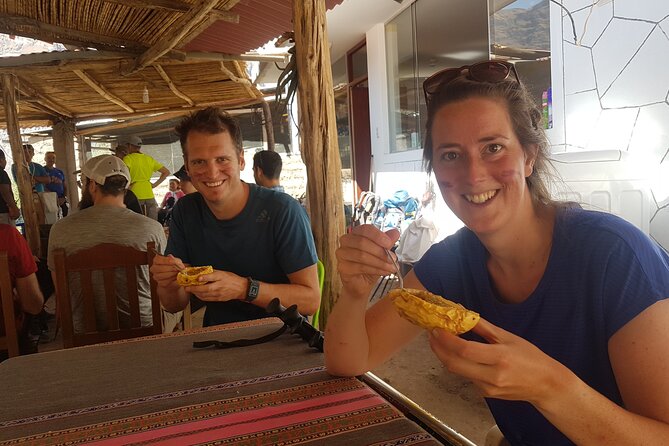
REVIEW · AREQUIPA
Private 3 Day Colca Canyon Trekking tour (superior Service)
Colca Canyon is best seen on foot, and this three-day route gives you time to move beyond the roadside viewpoints. You descend roughly 1,200 meters into the canyon, sleep in small local accommodations, reach the palm-filled Sangalle Oasis, then climb out before sunrise. Along the way, you meet farming communities, walk past ancient terraces, and watch for Andean condors at Cruz del Condor.
I like two things here: the slower pace compared with a rushed two-day trek, and the strong local focus. Meals come from local families, guides explain plants and farming, and the overnight stays are simple rather than resort-like. The main drawback is the physical demand. A 5-hour descent, a second 5-hour walking day, and a 3-hour uphill climb beginning at 4 a.m. are not small walks.
Key points to know before booking
- Cruz del Condor at about 8 a.m.: You have a good chance to see condors riding the morning air, though wildlife is never guaranteed.
- A real canyon descent: The first day drops about 1,200 meters over roughly five hours to Pallca and the Colca River.
- Sangalle Oasis at 2,100 meters: Arrive around lunchtime, with time for the natural pool, fruit trees, rest, and a Colca sour.
- A demanding final morning: The 5-kilometer ascent begins at 4 a.m. and takes about three hours.
- Small-group privacy: Only your group takes part in the activity, with a minimum of two and maximum of eight people. Tourist transport is shared.
- Helpful guiding: José, also called Pepe, Miguel, Marcello, and Jarley are among the guides connected with this service. Ask who will lead your departure and request an English-speaking guide if needed.
Why three days works better than rushing Colca Canyon
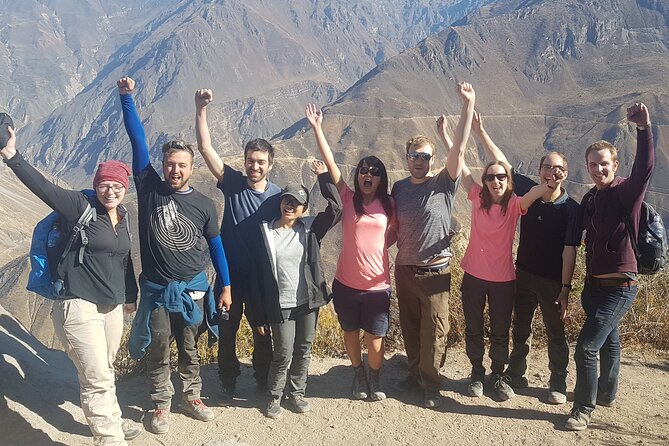
The Colca Canyon is not a quick photo stop. You can see its famous viewpoints in a day, but the most memorable part is the change in scale as you walk down its walls and spend the night below the rim.
This itinerary spreads the trek over three days. That matters because the hardest moments are not only about distance. The trail includes steep descents, sharp climbs, high altitude, heat in the lower canyon, and an early finish on the final morning. With three days, you get time to pause, eat local food, visit small settlements, and enjoy Sangalle instead of arriving there just before dark.
The route also gives you a better sense of how people live in the canyon. Terraces cut into the slopes still support farming, and small communities work with limited water and difficult ground. Your guide explains the plants, animals, canyon geology, and farming methods as you walk.
I would choose this version if you have the time. A shorter trek can work for a tight schedule, but it leaves less room for the nature and village stops that make the canyon more than a strenuous exercise.
More three-day treks in Peru
- Salkantay Trek Challenge – 3 Days / 2 Nights
★ 5.0 · 101 reviews - 3-Day Colca Canyon trek with Professional Guide
★ 5.0 · 40 reviews - Ausangate and Rainbow Mountain Trek – 3 Days / 2 Nights
★ 5.0 · 35 reviews
A 3:15 a.m. departure from Arequipa
Your first morning starts early, with hotel pickup in Arequipa between 3:15 and 3:30 a.m. The drive to the Colca Valley takes about three hours, so you will want warm clothing and a way to sleep in the vehicle.
The guide uses the drive to explain Arequipa, the meaning of local place names, and the Colca Valley and Canyon. This is a useful start because the journey is not just a transfer. As the sun comes up, the Andes appear around you, and the route begins to feel less like a city excursion and more like a mountain trip.
Transport is shared tourist mobility, even though the activity itself is private. That distinction matters. Your walking group and guide are reserved for your party, but the road journey and return transport are not described as private. If exclusive vehicle service is important to you, ask before paying.
Yanque breakfast and the terraces of the Colca Valley
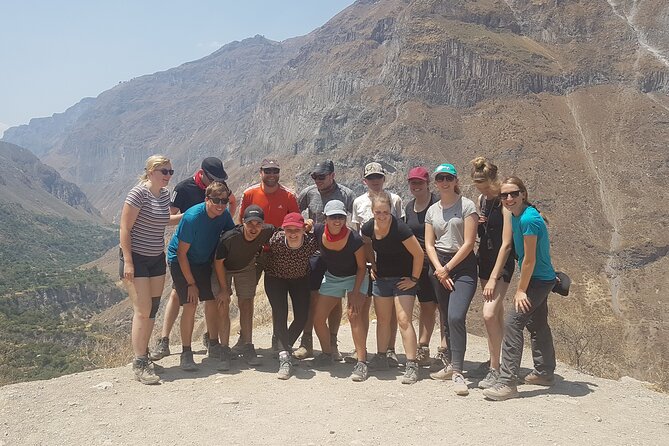
The first stop is Yanque, a traditional town that held major importance during the colonial period. Around 6:30 a.m., you eat a breakfast prepared by a local family.
This meal is more than a convenient stop. It sets the tone for the trip, which uses local homes and local food rather than treating the canyon as a string of viewpoints. The exact menu can vary, but the experience is built around regional cooking and ingredients from the valley.
After breakfast, you continue through the Colca Valley, sometimes described here as the Valley of Fire. Your guide points out pre-Inca agricultural terraces built by successive cultures to create usable farmland on difficult slopes. Look closely at the terraces. From a distance they can appear like simple lines on the hills, but on foot you can better see how much work went into shaping the mountainside.
You also follow the Colca River, which has cut into the valley over time. The combination of river, terraces, and the Chila mountain range gives the morning a strong sense of place. Bring your camera, but do not spend the entire stop behind it. The guide’s explanation of farming and local products is one of the more useful parts of the route.
Cruz del Condor and the scale of the canyon
Around 8 a.m., you reach Cruz del Condor, the canyon’s best-known condor viewpoint. You have about 40 minutes here to look over the canyon and watch for Andean condors rising on the air currents.
The viewpoint has cultural weight as well as visual appeal. Local communities have long regarded the condor as a sacred figure, and the bird remains one of the defining symbols of the region. The species is described as endangered, so the correct approach is simple: keep your distance, follow local instructions, and do not treat the birds as a staged show.
The view can be dramatic, but conditions and wildlife sightings vary. You may see a condor clearly, or you may spend the time looking into the canyon without a close flight. That uncertainty is part of any wildlife stop, and a good guide will help you understand what you are seeing rather than promise a performance.
This is also the last easy look at the canyon from above before the walking begins. Take care of practical needs here. Fill your water, adjust your boots, check your pack, and apply sunscreen before the descent.
More Trekking Tours in Peru
- From Arequipa: Sillar Route Trek
★ 4.2 · 461 reviews - From Cusco: 7 Lakes Ausangate Trek with Breakfast and Lunch
★ 4.8 · 360 reviews - From Arequipa: 2-Day Colca Canyon Trekking Tour
★ 4.8 · 243 reviews - Cusco: Full-Day Rainbow Mountain & Red Valley Trekking Tour
★ 4.5 · 121 reviews
Five hours down to Pallca and the Colca River
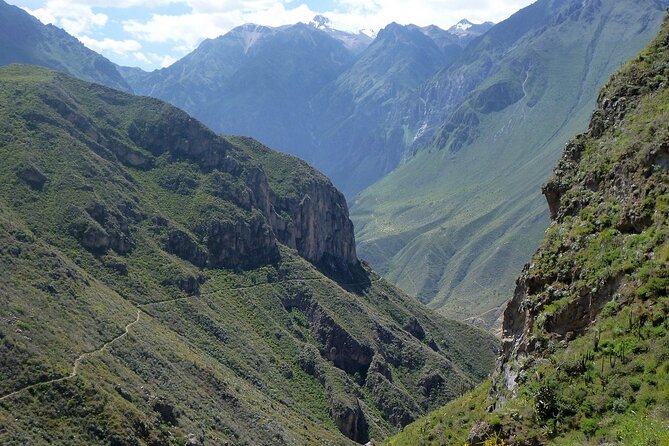
The first major hike takes about five hours, with a drop of approximately 1,200 meters. The trail winds down toward the Colca River and the settlement of Pallca.
A descent of this length can be harder on your knees than an uphill walk is on your lungs. Trekking poles are specifically recommended, and proper hiking boots are essential. You should also keep water and snacks easy to reach. The tour provides a hike snack, but you should bring your own rehydration supplies as well.
This section is where the tour earns its keep. You are not simply looking at the canyon from a bus window. You move through changing vegetation and viewpoints, stop for local fruit, and see the walls from several angles. The guide can also point out plants and explain their traditional uses. José, known as Pepe, has been especially associated with talks about local plants, animals, and remedies, while guides such as Miguel and Marcello are praised for clear explanations and friendly support.
The day ends at Pallca, where lunch uses local products. The afternoon is free for rest, exploration, or a soak in thermal baths. That open time is valuable after the long descent, though you should not expect a polished spa facility. The appeal is recovery in a small canyon community, with the surrounding walls close at hand.
Accommodation is in a family home with a private bathroom and hot water. That is a welcome comfort, but it is still village lodging. Pack with the expectation of a simple, practical stay, not a full-service hotel.
Day two: bridges, farms, and the route toward Sangalle
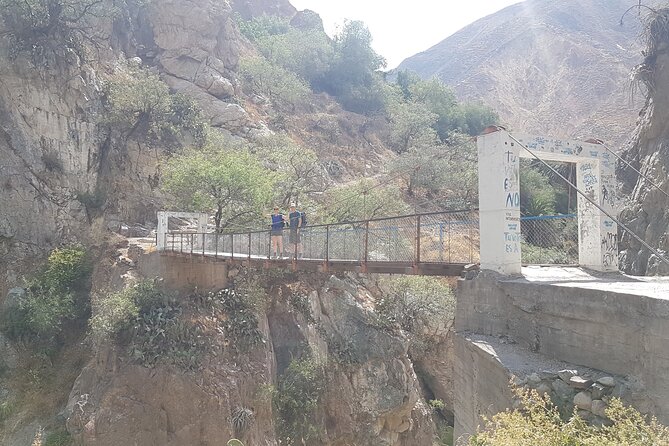
After breakfast, you walk for about five hours toward Sangalle. The route first climbs for roughly two hours to a viewpoint called Apacheta. This is a good reminder that Colca Canyon hiking is not one long downhill stroll. The route rises and falls as it follows the shape of the canyon.
Along the way, you cross hanging bridges and pass small communities. One of the more striking details is the work required to bring water to agricultural fields. Farming here depends on careful use of limited resources, and your guide explains how residents manage that challenge.
The guide also covers the canyon’s plants, animals, and geological form. This is where having a dedicated guide makes a real difference. You can walk the trail without one, but you will miss much of the connection between the terraces, water channels, vegetation, and settlements.
The route later descends through the Amphitheater, an archaeological site linked to farming between about 1200 and 1500 B.C. After a rest and time to rehydrate, the trail continues by a zigzag path toward the oasis. The changes in direction help manage the steep ground, but they do not remove the effort. Pace yourself and do not use the first climb as a race.
Sangalle Oasis at 2,100 meters
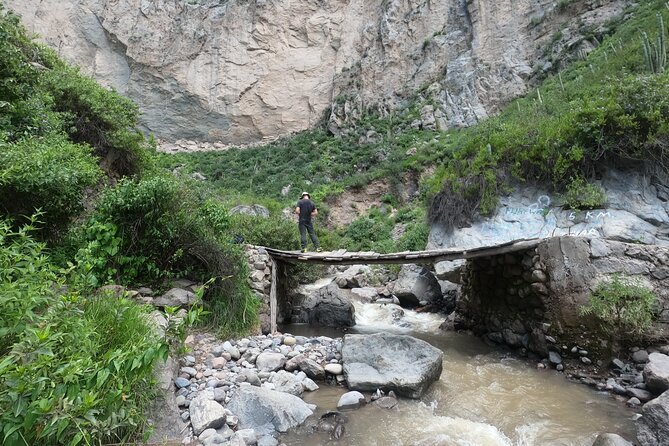
You are expected to reach Sangalle around 1 p.m., which is one of the best features of the three-day schedule. You arrive early enough to use the afternoon rather than stumbling in near sunset.
Sangalle is known as an oasis inside the canyon, at about 2,100 meters. The natural pool is the obvious reward. Bring swimwear, which is listed among the required items, and use the time to cool down and let your legs recover.
You can also walk among fruit trees, rest, talk with your group, or have a Colca sour. The setting is warm, green, and markedly different from the dry upper canyon, but do not expect a large resort complex. The appeal is the contrast between palms, water, steep rock walls, and basic accommodation.
Lunch is included, as is dinner later in the evening. At 7 p.m., the guide gives a briefing about the next morning’s climb. Pay close attention. The final ascent begins at 4 a.m., and the briefing is your chance to ask about pace, rest stops, mule arrangements, and what to carry.
A mule is available to carry the group’s backpacks on the final day, and you can also rent a mule to help with the climb. Clarify the price and arrangement before the ascent. The listed inclusion refers to one optional mule for the group, so do not assume unlimited personal mule service is built into the $400 price.
The 4 a.m. climb out of the canyon
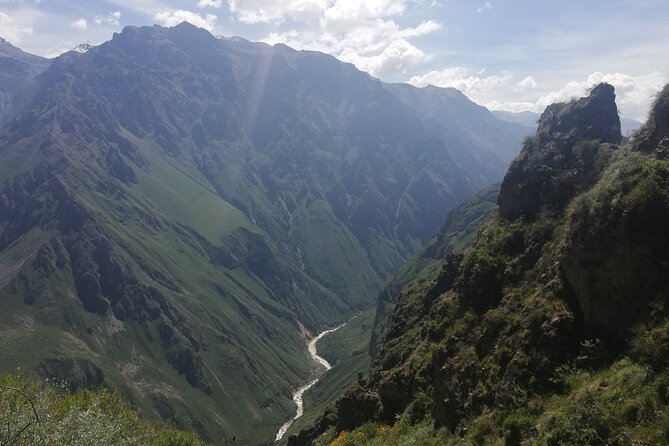
The last day begins in darkness. You walk about five kilometers uphill for roughly three hours, using a steady mountaineer’s rhythm rather than rushing the first section.
The ascent is the toughest physical test of the trip. It is not just the length. You are climbing from the oasis to the canyon rim before breakfast, after two days of walking. A headlamp or flashlight with extra batteries is required, and trekking sticks will help on the uneven uphill path.
As daylight arrives, you can look back and see how far you have climbed. The changing light gives the canyon a different character from the previous day, when you were descending through it. After reaching the top, you continue to Cabanaconde for time to rest and eat breakfast.
The tour information calls the climb approximately three hours, but your pace, fitness, and trail conditions will affect the timing. This is why moderate physical condition is the minimum requirement. You do not need to be an elite hiker, but you should be comfortable with long uphill and downhill walks at altitude.
Cabanaconde, Chivay, and the return across high Peru
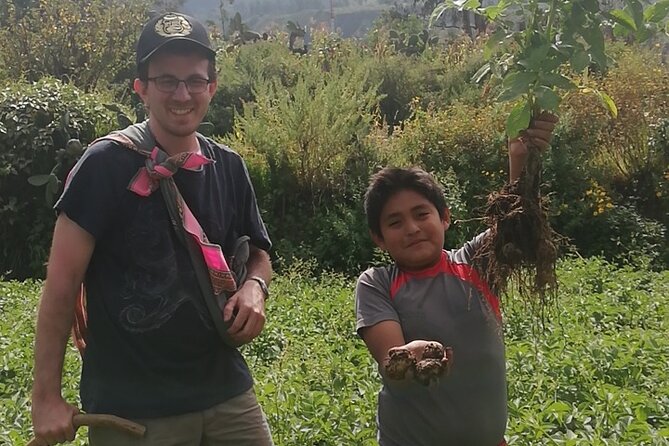
After the ascent and breakfast in Cabanaconde, you board tourist transport toward Chivay. A stop in a Colca Valley town includes a colonial church and time to buy local goods.
Chivay, reached around 1 p.m., is the main food stop of the return journey. You have a chance to eat traditional Arequipeña dishes and sample regional cooking after the exertion of the trek. Three lunches, two dinners, and three breakfasts are included, but you should still carry extra cash for water, snacks, and personal purchases.
From Chivay, the route climbs toward Abra Patapampa at about 4,910 meters. This is the highest point of the expedition, far above the canyon floor. You can see parts of the volcanic range, including Misti, Chachani, Sabancaya, Walka Walka, and Ampato.
The high point can affect people differently. Even if you felt fine in the canyon, take the stop slowly, keep warm, and avoid unnecessary exertion. The area also has cultural importance connected with Ampato and the Inca princess Juanita, who was sacrificed there.
The final stop is the Salinas y Aguada Blanca National Reserve, known here for its volcanoes, rivers, lagoons, and South American camelids. You may see vicuñas and stop for photos while learning about their behavior. Keep your distance and follow instructions. The reserve is not just a scenic backdrop; respecting the animals and the protected area helps preserve the experience for the next group.
The return to Arequipa is scheduled for around 5 p.m. That makes this a long final day, but it also gives you a full route back through the highlands rather than ending immediately after the climb.
What the $400 price includes
At $400 per person, this is not the cheapest way to see Colca Canyon. It is also not a standard large coach tour. The price includes two nights of accommodation, an official hiking guide in English and Spanish, entrance tickets, shared tourist transport, meals, a hike snack, medical oxygen, and a first-aid kit.
The private format is the main value. Your group can move at its own pace, ask questions, and spend more time on a plant, village, or viewpoint than a large group might allow. The group size is limited to two through eight people, and everything except the tourist mobility is private.
The service also supports family lodging and local meal preparation. If you value direct contact with residents and a quieter route, that gives the price more meaning than simply counting hours and meals.
Tips are not included, and accident travel insurance is not included either. Set aside money for both. Oxygen and first-aid supplies are carried for the group, but they do not replace insurance or sensible preparation.
Vegetarian and vegan meals can be arranged, along with other dietary needs. Confirm those requests before departure rather than waiting until the first breakfast.
Packing for the heat, cold, and early starts
You need a 40-liter backpack, hiking boots, trekking sticks, sunscreen, sunglasses, and a hat. For the rainy season, add a jacket and poncho. Mosquito repellent and swimwear are also listed.
Bring a flashlight and spare batteries for the pre-dawn ascent. Carry water and rehydration drinks, plus extra money for purchases and emergencies. The canyon can shift from cool morning air to strong sun, so layers work better than one heavy garment.
The simple rule is to pack for three conditions: cold highland mornings, hot lower-canyon walking, and possible rain. Keep valuable items and personal medication with you. A mule can carry some of the load, but you should still be prepared to manage your own essentials.
This activity is not recommended for babies. It suits adults and older children with a moderate fitness level who are ready for steep trails, early starts, and basic lodging.
Guide quality and the private-tour difference
The guides connected with this operation include José, often called Pepe, Miguel, Marcello, and Jarley. Their strongest role is not merely leading the way. They explain local plants, wildlife, history, geography, traditions, and everyday life in the canyon.
José is particularly associated with a warm, attentive style and information about plants and animals. Miguel is described as careful with timing and explanations, while Marcello is noted for friendly commentary throughout the route. Jarley has led private trips and is associated with adapting walks to the group’s needs.
You cannot assume a particular guide unless the company confirms one, so ask at booking. That is especially important if you need English guidance or have a preferred pace.
The private arrangement also lets you speak openly about your energy level. Tell the guide early if the descent is troubling your knees or if you are struggling at altitude. This is a demanding route, and good pacing matters more than proving a point.
Should you book this Colca Canyon trek?
Book it if you want the canyon as a place where people live, farm, cook, and care for animals, not just a viewpoint beside a road. The three-day schedule gives you more breathing room than a two-day route, and the Sangalle afternoon is a real payoff.
Choose something shorter if you have limited time, dislike very early starts, or do not feel ready for a 1,200-meter descent followed by a pre-dawn climb. The $400 price makes the most sense for a small private group that values local meals, dedicated guiding, included transport and tickets, and a slower route.
You can cancel for a full refund up to 24 hours before the local start time. Cancellations within 24 hours and late changes are not refunded.
FAQ
How long is the Colca Canyon tour?
The experience lasts approximately three days, beginning with an early pickup in Arequipa and ending with an estimated return around 5 p.m. on the third day.
How difficult is the hiking?
You need a moderate level of physical fitness. The route includes a 5-hour descent of about 1,200 meters, roughly 5 hours of walking on day two, and a 3-hour, 5-kilometer ascent beginning at 4 a.m. on the final day.
Is the tour private?
Yes. Only your group participates in the activity, with a minimum of two and maximum of eight participants. Tourist transport is shared, while the rest of the activity is private.
Is accommodation included?
Yes. Two nights of accommodation in a family home are included, with a private bathroom and hot water.
Are meals included?
Yes. The package includes three breakfasts, three lunches, and two dinners. Vegetarian, vegan, and other meal preferences can be arranged.
Can I use a mule during the trek?
One optional mule is available to carry the group’s backpacks on the final day, and you can rent a mule for the climb to the canyon rim. Confirm the arrangement and any extra cost before the hike.
Latest treks added in Peru
- Small Group: 4-Day Inca Trail Trek to Machu Picchu★ 5.0 · 33 reviews
- Salkantay Trek: 5 Days to Machu Picchu★ 5.0 · 33 reviews
- 5 Day – Salkantay trek to Machu Picchu – Group Service★ 4.5 · 27 reviews
- Humantay Lake Full-Day Adventure: Scenic Trek and Stunning Views★ 4.5 · 39 reviews
- Inca Trail Trek to Machu Picchu – 2 Days (Small Group or Private)★ 5.0 · 31 reviews
- Salkantay 5-Day Trek To Machu Picchu★ 5.0 · 39 reviews
- 6 day Rainbow Mountain x Ausangate Trek – FlashpackerConnect★ 5.0 · 30 reviews
- Ausangate and Rainbow Mountain Trek – 3 Days / 2 Nights★ 5.0 · 35 reviews
Arequipa Trekking Tours, compared.
4 hours Tour: Route of Sillar with Trek in Culebrillas
Read our review →
2 Day Trek Including Transfer to Puno / Colca Canyon
Read our review →
Browse the lists this tour appears in