
REVIEW · AREQUIPA
2 Day 1 Night Trek / Colca Canyon
The big draw here is the Colca Canyon descent, a long, demanding walk through small villages, old terraces, fruit trees, and huge Andean views. You begin at Condor’s Cross, then drop from about 3,300 meters to Sangalle at 1,900 meters, where a warm pool awaits. Before sunrise, you climb back out.
I like the simple logistics: hotel pickup and tourist transport take the stress out of reaching the canyon, and meals are supplied during the trek. I also like the small maximum group of 12, which gives your guide a better chance to help on the steep sections. The catch is clear: this is not an easy sightseeing trip. The three-hour uphill return begins around 5:00 am, and the basic lodge, early start, and long bus rides will test your stamina.
Key points to know before booking
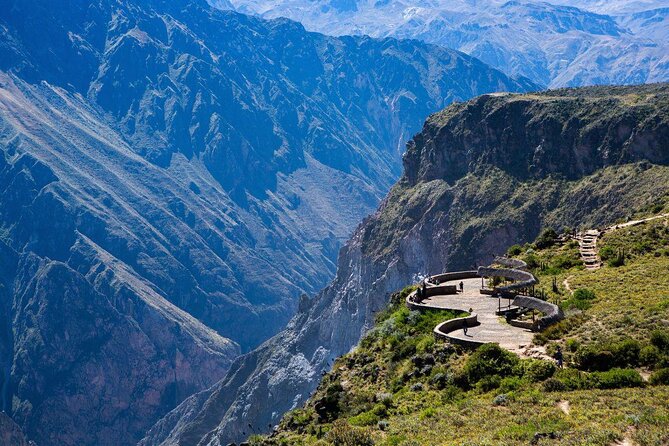
- A true downhill and uphill canyon trek: Day one drops roughly 1,200 meters, while day two climbs about 1,500 meters over around three hours.
- Condor’s Cross comes early: You reach the famous viewpoint after leaving Arequipa around 3:00 to 3:30 am.
- Sangalle brings a warm pool: The swimming pool at Cielo Azul Lodge is a welcome reward after the descent.
- The overnight stay is basic: Expect simple bungalows, a basic dinner, and a setting built for recovery rather than comfort.
- Meals and transport are covered: Two breakfasts, one lunch, one dinner, transfers, and private tourist transport are included.
- Budget for extra fees: The Colca Canyon entrance, hot springs, and final lunch in Chivay are not included.
Why this two-day Colca Canyon trip is worth considering
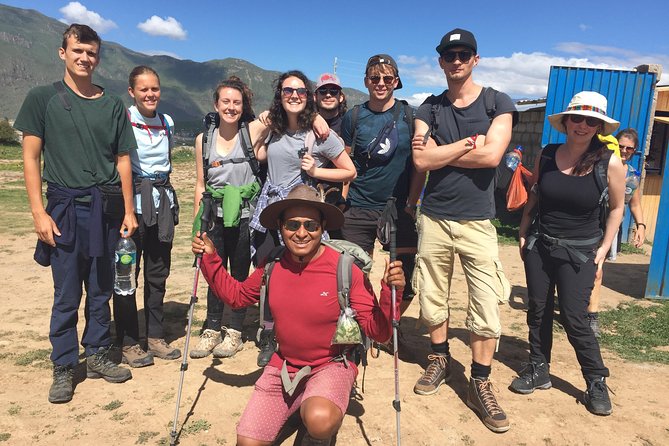
Colca Canyon is not a quick viewpoint stop. You spend real time inside it, walking between villages and seeing how the canyon changes as you lose altitude. The route passes San Juan de Chuccho, Cosñirhua, Malata, and Sangalle, so the experience has more substance than a bus tour to Condor’s Cross.
The scale is the main reward. The Andean Condor can reach a wingspan of more than three meters, and Condor’s Cross is one of the best-known places in South America to watch these birds. Sightings are never guaranteed, and morning cloud can cover the viewpoint, but the canyon itself remains impressive even when the condors stay out of sight.
I like the fact that the tour handles the awkward pieces. You do not need to rent a car, find a transfer to Cabanaconde, arrange a lodge, or work out how to return to Arequipa. The group travels in private tourist transport, with hotel or hostel pickup in Arequipa and a return near Santa Catalina Monastery.
The cost is $124 per person. That can be fair if you value the transport, guide, meals, overnight accommodation, and a compact two-day plan. Still, one price-focused review says the same type of trip may be available for about half that amount if arranged in Arequipa. I would compare local agencies before booking, especially if your priority is the lowest possible price.
More evening departures in Peru
- From Cusco: 5-Night Trip with Salkantay Trek & Machu Picchu
★ 4.7 · 6 reviews - PARACAS|| Sunset trekking in the Paracas National Reserve
★ 3.3 · 3 reviews - Arequipa: Colca Canyon Trekking 2 days and 1 night + food
★ 4.8 · 3 reviews
Leaving Arequipa before dawn for Chivay
Pickup begins between 3:00 and 3:30 am. That is an early start, but it is needed because the drive to Cabanaconde takes about six hours, with stops along the way. If you sleep lightly, bring a small travel pillow, water, and a warm layer for the bus.
The first stop is Chivay, reached at about 7:30 am. You have breakfast in or near the Plaza de Armas, where traditional houses and colorful surroundings give you a quick introduction to the Colca area. The stop lasts about 30 minutes, so this is breakfast and orientation, not a full town visit.
The included food is useful here. You do not need to prepare a packed breakfast before leaving Arequipa. Still, breakfast quality can vary. One poor experience described the first breakfast as very small, so carrying an extra snack is sensible, particularly before a full day of downhill walking.
Condor’s Cross and the start of the descent
From Chivay, the bus continues to Condor’s Cross. This is the classic lookout, with broad views into the canyon and a chance to see Andean Condors riding the air currents. The planned stop is about 30 minutes.
Give yourself realistic expectations. The viewpoint may be covered by cloud, and condors are wild animals, not scheduled performers. One strong experience had condors appear along the descent even though the main lookout was obscured, which is a good reason to keep watching the sky after you leave the viewpoint.
After Condor’s Cross, the bus drives about 20 minutes to the trailhead. The hike begins at roughly 3,300 meters. You then walk downhill for about three hours toward the canyon floor, reaching around 2,100 meters before continuing toward Sangalle.
Downhill sounds easy until you spend several hours on a steep trail. Your knees and feet take much of the strain, and the sun can become intense as you lose altitude. Take water, sunscreen, a hat, and sturdy walking shoes. The route is demanding enough that a moderate level of fitness is required.
San Juan de Chuccho, village trails, and Sangalle
San Juan de Chuccho is the lunch stop. It has vegetation and fruit trees, a welcome change from the dry upper canyon. After eating, you have time to rest before continuing to Cosñirhua and Malata.
This middle section is one of the more appealing parts of the trip because you are moving through lived-in places rather than only looking at scenery from a bus window. The villages and pre-Inca terraces help you understand how people have used the canyon for farming and settlement.
The final approach to Sangalle takes you farther into the canyon. At about 1,900 meters, the climate is warmer than at the rim, and the swimming pool at Cielo Azul Lodge is the day’s best feature. After roughly 11 hours from the morning departure, reaching the pool gives you a place to cool down and loosen tired legs.
The lodge is basic. That is not a flaw if you treat it as a simple mountain stop, but it may disappoint you if you expect polished accommodation. Dinner is included, though one account noted bugs around the meal. Bring a sleep sheet, as one experienced visitor specifically recommended, along with a small towel and only the essentials you need overnight.
More two-day treks in Peru
- From Arequipa: 2-Day Colca Canyon Trekking Tour
★ 4.8 · 243 reviews - 2 Day Trek Including Transfer to Puno / Colca Canyon
★ 4.5 · 38 reviews - From Arequipa Trek : 2-Days of Hiking in the Colca Canyon
★ 4.5 · 35 reviews - Inca Trail Trek to Machu Picchu – 2 Days (Small Group or Private)
★ 5.0 · 31 reviews
The 5:00 am climb back to Cabanaconde
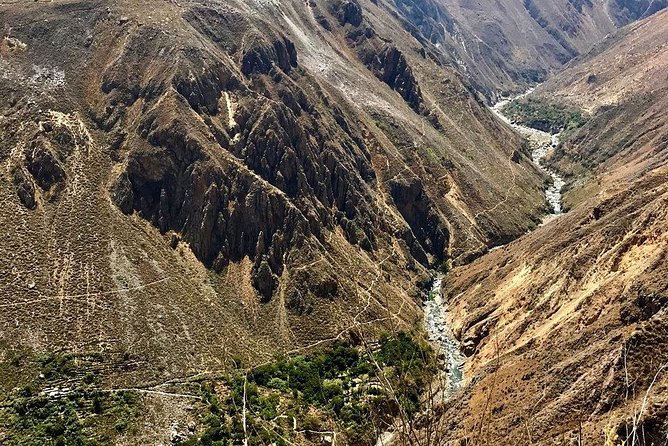
The second day begins around 5:00 am, often in darkness, with torches helping you find the trail. The climb takes about three hours and gains roughly 1,500 meters. Sunrise during the ascent can produce excellent views, but the timing means you will be walking hard before breakfast.
This is the most important booking decision. The first day is around 18 kilometers of mostly downhill walking, while the second day is shorter but much steeper. One account described the return as about five kilometers of near-continuous climbing. Do not assume the downhill day makes this an easy trek. The uphill return is the real test.
Local mule rides may be offered along the route for about 60 soles, according to one account. This service is provided by local operators and is not part of the tour. Safety standards are not regulated by the tour company, and a poor experience involved foot placement and stirrup adjustments that felt unsafe. I would not treat a mule as a casual backup plan. If you think you may need help climbing out, discuss your options with the guide before the trek begins.
Once you reach Cabanaconde, breakfast is served. The meal gives you time to recover before the drive to Chivay. You may see pre-Inca terraces, archaeological remains, colonial towns, and wide views during this part of the journey.
Chacapi hot springs and the ride back to Arequipa
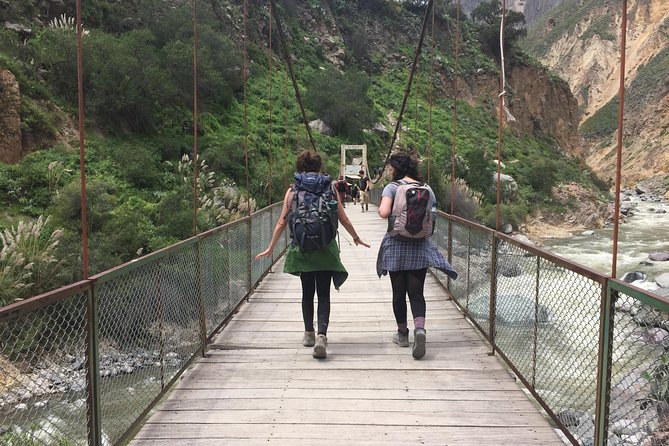
Around midday, the group reaches the Chacapi hot springs near Chivay. Entry is optional and costs extra. The pools are described as ranging from about 30 to 60 degrees Celsius, so you can choose a warmer or cooler pool rather than sitting in one temperature.
The supplied cost information is inconsistent: one section lists the hot springs at PEN70 per person, while the day-by-day details state 15 soles. Confirm the current price before you go and carry small local currency. The stop lasts about an hour, and after the early climb, soaking your legs can be appealing.
A final local lunch in Chivay is also optional and not included. The stated buffet price is PEN30 per person. Since lunch comes after breakfast and the hot springs, you may want to decide based on appetite, budget, and how much time remains on the return journey.
The ride back to Arequipa crosses high country, descending from about 4,830 meters to the city at roughly 2,325 meters. The route passes through Salinas y Aguada Blanca National Reserve and Pampa Cañahuas. A short stop is planned there to see volcanoes and South American camelids, including llamas, alpacas, vicuñas, and guanacos.
The scheduled stop is only about 10 to 15 minutes, but you may continue seeing camelids and volcanoes from the bus for more than an hour. Arrival in Arequipa is expected around 5:30 pm, with drop-off near Calle Santa Catalina and the Santa Catalina Monastery.
What the $124 price really covers
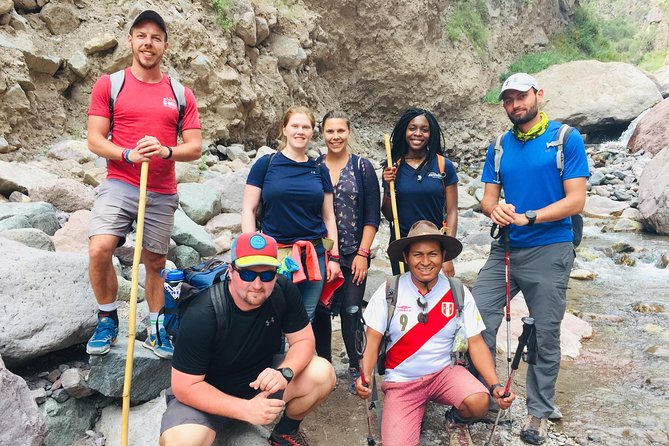
The price includes more than a basic bus transfer. You get:
- Hotel or hostel pickup in Arequipa
- Private tourist transport
- English or Spanish guiding
- Two breakfasts
- One lunch
- One dinner
- One night at Cielo Azul Lodge
- Return transport to central Arequipa
That package has real value if you want one booking to cover the main arrangements. The guide can also help when the trail becomes difficult. One highly positive experience singled out Eveline for being kind, capable, and helpful without hovering over the group. That balance matters on a route where you need both safety support and time to walk at your own pace.
The price does not cover the Colca Canyon entrance fee, listed as PEN70 per person, nor the hot springs and final Chivay lunch. Keep these charges in your budget. Since the local booking price may be lower, compare what each cheaper option includes before deciding. A bargain that leaves out transport, food, or the lodge may not be a true saving.
Who should book this trek
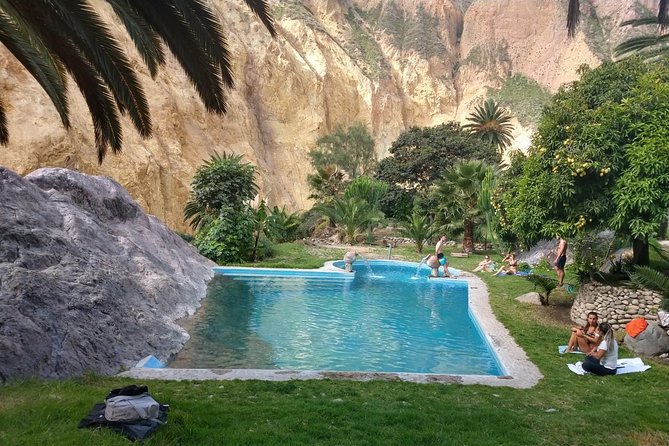
I would choose this experience if you want to get inside Colca Canyon rather than only view it from the rim. It suits you if you can handle long walking days, steep downhill trails, a three-hour uphill climb, an early start, and simple lodging.
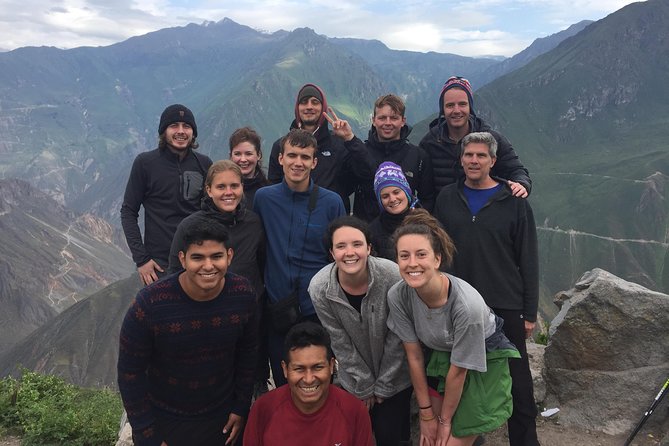
It is also a good fit if you prefer a small organized group and want transport arranged from Arequipa. A maximum of 12 people is manageable, and guiding is available in English and Spanish.
I would hesitate if you have limited walking fitness, knee trouble, or little tolerance for early mornings and basic accommodation. Service animals are allowed, but the physical demands remain significant. The tour requires good weather, and poor conditions can lead to a changed date or full refund, while ordinary cancellations are non-refundable.
Should you book the Colca Canyon overnight trek?
Book it if the walk into the canyon is your main goal and you are ready for the climb out. The condors, villages, terraces, Sangalle pool, and sunrise trail create a fuller experience than a simple day trip.
Before paying, compare the $124 rate with Arequipa agencies, confirm the current hot springs fee, and ask exactly what breakfast and lodge arrangements include. Pack water, snacks, sunscreen, warm layers, a sleep sheet, and proper shoes. If you prepare for a strenuous trek rather than a relaxed excursion, this can be a memorable and practical way to see Colca Canyon.
FAQ
What time does the tour start?
Pickup begins between 3:00 and 3:30 am in Arequipa.
How long is the trek on the first day?
The first day includes about three hours of downhill walking from roughly 3,300 meters to about 2,100 meters, followed by further walking toward Sangalle.
How difficult is the second day?
The second day begins around 5:00 am and includes about three hours of uphill trekking to Cabanaconde. The climb gains roughly 1,500 meters and requires moderate physical fitness.
Is accommodation included?
Yes. You spend the night in bungalows at Cielo Azul Lodge in Sangalle, where a swimming pool is available. The accommodation is basic.
Are meals included?
Yes. The price includes two breakfasts, one lunch, and one dinner. The final lunch in Chivay is not included.
Are the Colca Canyon and hot springs entrance fees included?
No. The Colca Canyon entrance fee is listed as PEN70 per person. The hot springs fee is also extra, though the supplied details give different prices, so confirm the current amount before visiting.
Can I join the tour with an English-speaking guide?
Yes. Guiding is available in English and Spanish.
Latest treks added in Peru
- Small Group: 4-Day Inca Trail Trek to Machu Picchu★ 5.0 · 33 reviews
- Salkantay Trek: 5 Days to Machu Picchu★ 5.0 · 33 reviews
- 5 Day – Salkantay trek to Machu Picchu – Group Service★ 4.5 · 27 reviews
- Humantay Lake Full-Day Adventure: Scenic Trek and Stunning Views★ 4.5 · 39 reviews
- Inca Trail Trek to Machu Picchu – 2 Days (Small Group or Private)★ 5.0 · 31 reviews
- Salkantay 5-Day Trek To Machu Picchu★ 5.0 · 39 reviews
- Ausangate and Rainbow Mountain Trek – 3 Days / 2 Nights★ 5.0 · 35 reviews
- 6 day Rainbow Mountain x Ausangate Trek – FlashpackerConnect★ 5.0 · 30 reviews
Arequipa Trekking Tours, compared.
4 hours Tour: Route of Sillar with Trek in Culebrillas
Read our review →
Private 3 Day Colca Canyon Trekking tour (superior Service)
Read our review →
2 Day Trek Including Transfer to Puno / Colca Canyon
Read our review →
Browse the lists this tour appears in