
REVIEW · AREQUIPA
2 Day Trek Including Transfer to Puno / Colca Canyon
Colca Canyon reveals itself best on foot. This trip takes you from the condor viewpoint down through high desert, village terraces, and fruit-growing settlements to Sangalle’s warm pools, then sends you onward to Puno instead of backtracking to Arequipa. I like the clever route and the small maximum group of 12, which gives your guide more room to help on the steep sections.
I also like that luggage transport and the long transfer to Puno are handled for you. The main catch is the serious uphill climb on day two, which begins around 5:00 am and rises roughly 950 to 1,200 meters. Add the $179 price, the 70-sol Colca entrance fee, and basic lodging, and this is best for fit hikers who value convenience more than comfort.
Key points before you book
- Condor’s Cross comes early: You reach the famous viewpoint after breakfast in Chivay, with a chance to see Andean condors riding the canyon air.
- The hike is mostly downhill first: Day one drops from about 3,300 meters to 2,100 meters, then continues to Sangalle at about 1,900 meters.
- Sangalle is the reward: A warm swimming pool and a simple bungalow make the oasis a welcome stop after several hours on the trail.
- Day two is the hard part: You climb by torchlight for about three hours to Cabanaconde, often with sunrise views along the way.
- The route ends in Puno: After Chivay and the Pampa Cañahuas reserve, you arrive in central Puno around 6:30 pm.
- Budget for extras: The Colca Canyon entrance costs PEN 70, Chacapi hot springs cost PEN 15, and the final lunch in Chivay costs PEN 30 if you choose the buffet.
A 3:00 am start from Arequipa
Your day begins between 3:00 and 3:30 am with pickup at your hotel or hostel in Arequipa. The first ride heads directly toward Chivay and Cabanaconde, taking about six hours in total with stops.
That early start is not a minor detail. You spend much of the morning in a vehicle before hiking, so keep your expectations clear: this is a full transport-and-trek day, not a relaxed walk from town. Pack a small day bag with water, warm layers, sun protection, and only what you need on the trail. Your main luggage can be transported, which saves you from hauling everything into the canyon.
The small-group limit of 12 is useful here. A group this size can move more easily through the morning stops, and your guide has a better chance of keeping an eye on everyone during the steep descent and climb. The tour does require moderate physical fitness, and that description is fair.
More two-day treks in Peru
- From Arequipa: 2-Day Colca Canyon Trekking Tour
★ 4.8 · 243 reviews - 2 Day 1 Night Trek / Colca Canyon
★ 4.5 · 92 reviews - From Arequipa Trek : 2-Days of Hiking in the Colca Canyon
★ 4.5 · 35 reviews
Chivay breakfast and the road to Condor’s Cross
You reach Chivay at about 7:30 am for breakfast. The town is known for traditional houses and colorful surroundings, and the stop gives you a chance to eat before the main sightseeing and hiking begin.
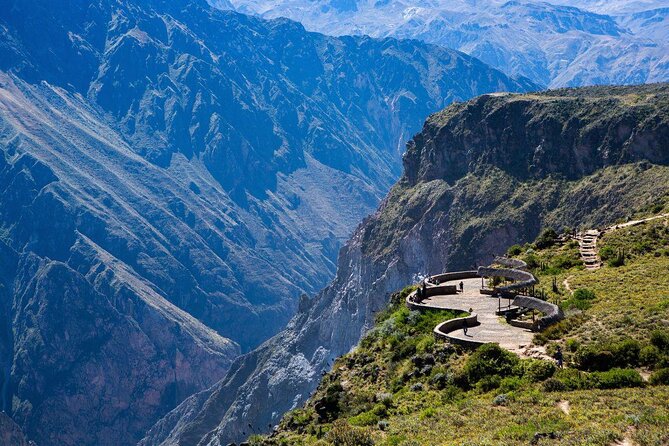
After Chivay, the road continues to Condor’s Cross, one of the best-known viewpoints in the Colca area. The stop lasts about 30 minutes. The Andean condor can weigh up to 12 kilograms and reach a wingspan of more than three meters, so a sighting here can be dramatic even if it lasts only a few seconds.
The viewpoint is also your first clear look into the canyon. You may see condors, but wildlife is never guaranteed at a precise moment. The stop still matters because it sets the scale of the day. From above, the canyon looks immense. Later, you will walk down into it.
You then ride about 20 minutes farther to the trailhead. That short bus ride marks the change from sightseeing to hiking.
The three-hour descent into Colca Canyon
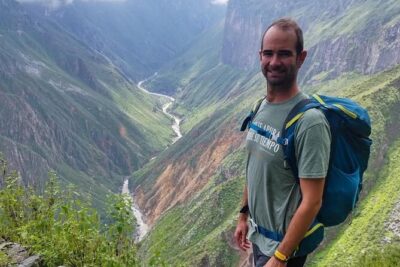
The first major hike drops from roughly 3,300 meters to 2,100 meters over about three hours. Downhill sounds easy until you are walking on a steep, uneven trail under strong sun. Your knees and feet may feel this section more than your lungs.
The route leads toward San Juan de Chuccho, a small settlement with vegetation, fruit trees, and a welcome change from the dry upper canyon. Lunch is served there, and the stop gives you time to rest before the next part of the walk.
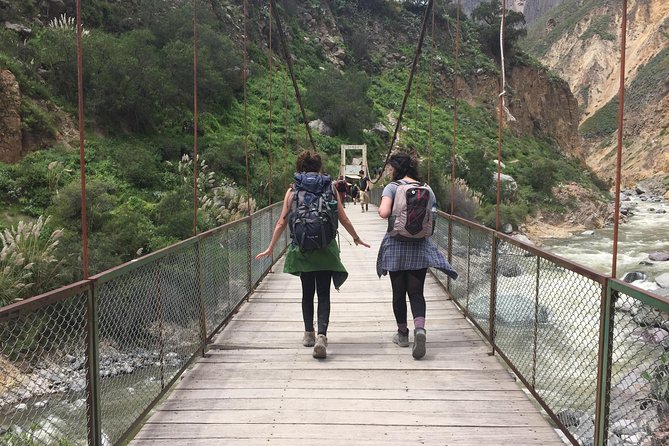
This is one of the most appealing features of the trip. You are not only looking at Colca Canyon from a roadside viewpoint. You pass through small communities and see how the lower canyon supports plant life at a much warmer elevation. The shift from high, dry terrain to greener village surroundings gives the trek its character.
The included food is practical rather than a reason to book the tour on its own. Lunch has been described as home-cooked and tasty, with fresh natural juices, while the overall meals are basic. I would bring a few snacks in case you need extra energy between scheduled stops.
Cosñirhua, Malata, and the final walk to Sangalle
From San Juan de Chuccho, the trail continues toward Cosñirhua and Malata. These small settlements break up the walk and show the human side of the canyon. You keep moving through the lower part of the route before heading into the deepest section toward Sangalle.
The arrival at Sangalle comes at about 5:00 pm, after roughly 11 hours of transport, stops, and hiking. At an elevation of about 1,900 meters, Sangalle is much warmer than the high country above it. That change explains the oasis feel and the presence of swimming pools.
The warm pool is the clear reward at the end of day one. After a long descent and several more hours on foot, soaking your legs can make the basic accommodation easier to accept. The bungalows provide shelter and a place to sleep, but you should not expect polished hotel facilities. One account describes the lodge as comfortable and beautiful in its setting but limited to the basics, with no hot water.
Dinner is included, and you spend the night at a lodge in Sangalle. The accommodation is functional, not luxurious. If you need private comforts, reliable hot water, or a quiet resort-style evening, this is not the right trip. If you see the bungalow as a clean place to sleep after a demanding hike, it fits the route.
More Trekking Tours in Peru
- From Arequipa: Sillar Route Trek
★ 4.2 · 461 reviews - From Cusco: 7 Lakes Ausangate Trek with Breakfast and Lunch
★ 4.8 · 360 reviews - Cusco: Full-Day Rainbow Mountain & Red Valley Trekking Tour
★ 4.5 · 121 reviews - Salkantay Trek Challenge – 3 Days / 2 Nights
★ 5.0 · 101 reviews
The 5:00 am climb to Cabanaconde
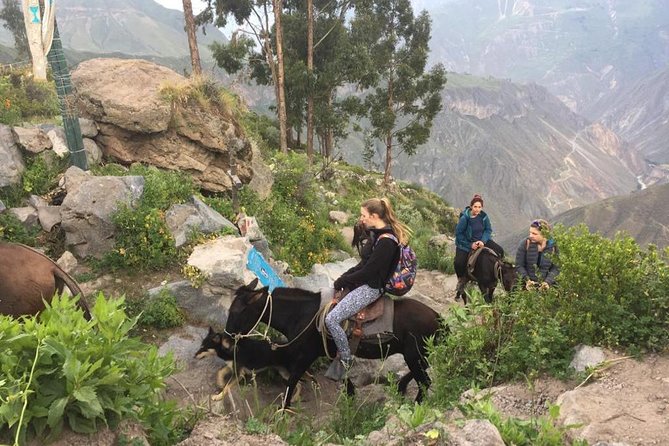
Day two begins around 5:00 am, using torch lights for the first part of the ascent. You climb for about three hours toward Cabanaconde, gaining close to a kilometer of elevation. Some descriptions place the total climb at roughly 950 meters, while the route details refer to an increase of about 1,200 altitude meters. Either way, this is a hard morning.
The early start has one real advantage: sunrise can appear as you climb. Views across the canyon may change from dark silhouettes to lit terraces and ridges as the morning develops. That can be the most memorable visual part of the trek, but you need to earn it.
Do not overpack. The path is steep, and carrying a heavy backpack makes the climb harder than it needs to be. Let the luggage service do its job and keep your own pack light. Wear shoes with good grip, since the route includes sustained uphill walking rather than a gentle stroll.
Once in Cabanaconde, you have breakfast and continue by road toward Chivay. This is a good point to take stock. If your legs are tired, the rest of the day still includes hot springs, a long bus transfer, and arrival in Puno in the evening.
Chacapi hot springs near Chivay
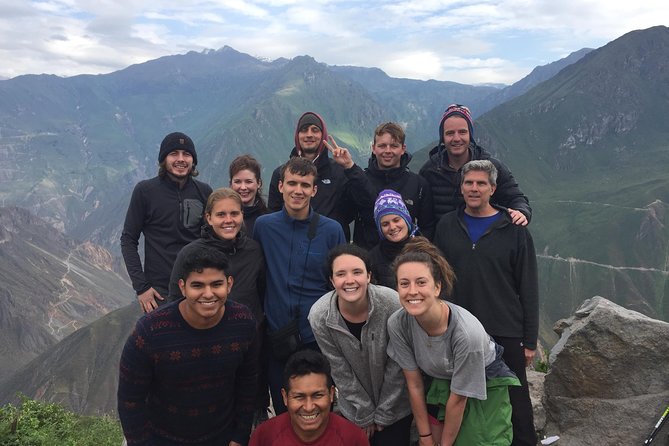
Around noon, you reach the Chivay area and have the option of visiting Chacapi hot springs. Entry costs PEN 15 and is not included. The pools range from about 30°C to 60°C, so you can choose a warmer or cooler pool depending on how your legs feel.
The hot springs are a sensible add-on after the morning climb. They are not essential to the canyon trek, but they give you a chance to rest before the final transfer. Bring the extra cash and a swimsuit if you plan to enter.
A typical local lunch in Chivay is also available, but it costs extra. The stated buffet price is PEN 30. This is the last lunch of the trip, so you should plan for it rather than assume all meals are covered. The included food consists of dinner, lunch, and two breakfasts, but the final Chivay meal is specifically excluded.
Pampa Cañahuas and the long ride to Puno
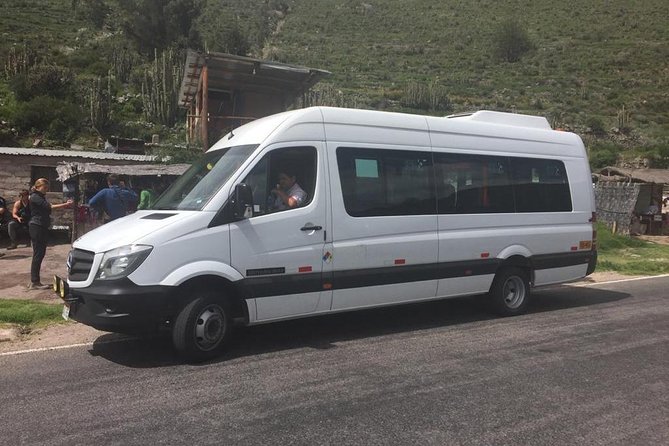
The afternoon transfer to Puno is one of the trip’s biggest practical advantages. Instead of returning to Arequipa and arranging another bus yourself, you continue across the high country and arrive in Puno around 6:30 pm.
The route climbs as high as about 4,830 meters before descending toward Puno at approximately 2,325 meters. That altitude change is a reminder to take the day slowly, drink water, and keep warm layers close. You may be tired after the hike, and much of the afternoon is spent sitting on the bus.
The road passes through Pampa Cañahuas in the Salinas y Aguada Blanca National Reserve. The stop at Pampa Cañahuas lasts about 15 minutes, although you can see volcanoes and South American camelids for more than an hour along the drive. Llamas, alpacas, vicuñas, and guanacos live in this high-altitude region.
This final ride adds real value if Puno is your next destination. It saves you a separate travel day and links two of southern Peru’s major stops. The tradeoff is that day two becomes long: an early climb, breakfast, road travel, hot springs if selected, and several more hours on the bus.
What the $179 price really covers
At $179 per person, the trip is priced as a package of services rather than as a simple hike. You receive hotel or hostel pickup in Arequipa, transport to the Colca area, the guided trek, one night of lodging, listed meals, luggage transport, and the transfer from Chivay to Puno.
The Puno connection is the strongest value point. If you already plan to visit Puno, combining the canyon trek with the transfer removes the need to arrange a separate journey. The small-group format also adds practical value on a route where timing, transport, and trail direction can otherwise become a hassle.
Still, compare prices before paying. One person on the trip found that local bookings in Arequipa cost less than half the online price. That difference may depend on the date, exchange rate, booking channel, or current local offers, so I would ask a local office for its same-date price before committing online. Check exactly what is included, especially the Puno transfer and accommodation.
You also need to add PEN 70 for the Colca Canyon entrance, PEN 15 for Chacapi if you go, and PEN 30 for the final Chivay buffet if you choose it. Those costs are modest, but they push the real total above the advertised price.
Basic lodging, meals, and what to pack
The overnight stay is in a simple bungalow at Sangalle. Hot water may not be available, and facilities are basic. The warm pool is the comfort here, not the room.
Food is included in part, but the quality can vary. Expect filling, straightforward meals rather than restaurant dining. Fresh juices and a home-cooked lunch can be pleasant highlights, while breakfast and dinner are best viewed as fuel for the route.
For this trek, I would pack:
- A light daypack
- Water and small snacks
- A torch or headlamp for the pre-dawn climb
- Strong walking shoes
- Sun protection
- Warm layers for the high road sections
- Swimwear for Sangalle and Chacapi
- Extra cash for entrance fees and lunch
You do not need to carry a large backpack if the luggage service works as planned. That matters most on the climb to Cabanaconde.
Who should book this two-day route
I would choose this trip if you want Colca Canyon on foot and need to reach Puno afterward. It suits an active visitor who accepts early mornings, basic lodging, a long bus day, and a steep climb in exchange for seeing the canyon from several elevations.
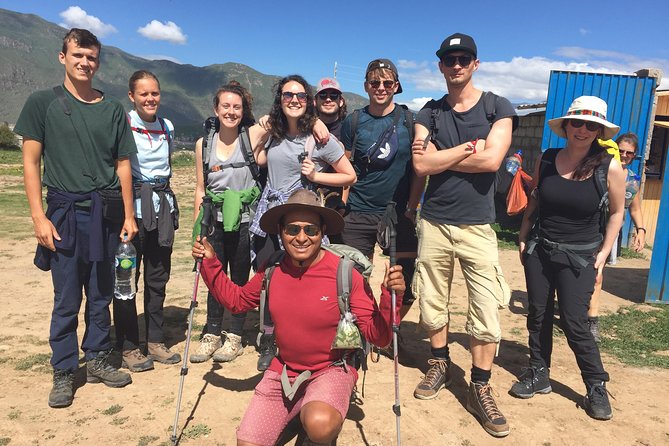
It is also a good fit if you prefer a small group. Twelve people is still enough for company, but not so many that the trek becomes a crowd. The guide can give more direct help with pacing and route concerns than on a large coach excursion.
I would not choose it if you want a gentle sightseeing program or a comfortable overnight stay. The first day is long, and the second day’s uphill section is demanding. Anyone uncertain about fitness should take the physical requirement seriously rather than relying on the warm pool to rescue tired legs.
The cancellation terms are strict: the experience is non-refundable and cannot be changed after booking. Poor weather is the exception, since the operator may offer another date or a full refund if conditions force cancellation. Check your plans carefully before paying.
Should you book it?
Book this trek if the combination of hiking, condors, Sangalle, and a direct Puno transfer fits your Peru route. The scenery and route planning are the strongest points, and the luggage handling removes a real burden.
Before booking, compare the $179 price with a local Arequipa office, then add the PEN 70 canyon fee and other optional costs. If the price still works and you are ready for a torch-lit climb, this is an efficient, memorable way to connect Arequipa’s canyon country with Puno. If comfort and an easy pace matter more, choose a shorter Colca outing instead.
FAQ
How early does the tour start?
Pickup begins around 3:00 am, with departures from Arequipa between 3:00 and 3:30 am.
How long is the tour?
The experience lasts about two days, including the trek, overnight stay, and transfer to Puno.
How many people can join the group?
The maximum group size is 12 people.
How difficult is the hike?
You need a moderate level of physical fitness. Day one includes about three hours of downhill hiking, while day two includes about three hours of uphill hiking from Sangalle to Cabanaconde.
Where do I sleep?
You spend one night in bungalows at Sangalle. The accommodation is basic, and hot water may not be available.
Is the Colca Canyon entrance included?
No. The entrance fee is PEN 70 per person.
Are the Chacapi hot springs included?
No. The hot springs are optional and cost PEN 15 per person.
Where does the tour finish?
The transfer ends in Puno at about 6:30 pm, with drop-off at a hotel or hostel in the city center.
Latest treks added in Peru
- Small Group: 4-Day Inca Trail Trek to Machu Picchu★ 5.0 · 33 reviews
- Salkantay Trek: 5 Days to Machu Picchu★ 5.0 · 33 reviews
- 5 Day – Salkantay trek to Machu Picchu – Group Service★ 4.5 · 27 reviews
- Humantay Lake Full-Day Adventure: Scenic Trek and Stunning Views★ 4.5 · 39 reviews
- Inca Trail Trek to Machu Picchu – 2 Days (Small Group or Private)★ 5.0 · 31 reviews
- Salkantay 5-Day Trek To Machu Picchu★ 5.0 · 39 reviews
- 6 day Rainbow Mountain x Ausangate Trek – FlashpackerConnect★ 5.0 · 30 reviews
- Ausangate and Rainbow Mountain Trek – 3 Days / 2 Nights★ 5.0 · 35 reviews
Arequipa Trekking Tours, compared.
4 hours Tour: Route of Sillar with Trek in Culebrillas
Read our review →
Private 3 Day Colca Canyon Trekking tour (superior Service)
Read our review →
Browse the lists this tour appears in