
REVIEW · AREQUIPA
From Arequipa: Sillar Route Trek
The most interesting part of this half-day outing is not a grand ruin, but the pale volcanic stone that gives Arequipa its character. At Añashuayco, you see ashlar being cut from an active quarry, then walk through Culebrillas Canyon to find petroglyphs made by the Wari culture more than a thousand years ago.
I like the working-stonecraft angle, which connects Arequipa’s white colonial buildings with the people who still cut the material by hand. I also like the short canyon walk, where the scenery feels more natural and less arranged for photographs. Guides such as Mike, Jose, Alexandra, and Julia have been praised for clear English and useful local advice.
The main drawback is time. Four hours is enough for an introduction, but busy stops can make the quarry feel rushed, and the viewpoint may seem unnecessary if you have already visited Arequipa’s city overlooks. The canyon also requires some walking on uneven ground.
Key points to know before you go
- See ashlar at its source: Añashuayco is an active quarry, not simply a finished monument.
- Try basic stone cutting: A stonemason may explain the work and let you attempt to cut a block.
- Walk into Culebrillas Canyon: The 20 to 25 minute walk leads to tall walls, petroglyphs, and apachetas.
- Expect a small extra fee: Transportation and a guide are included, but entrance charges total 18 soles.
- Choose your timing carefully: The morning tour begins around 9:15 AM, while the 2 PM departure can offer warm evening light.
- Pack for dust and sun: Closed shoes, sunscreen, a hat, and insect repellent will make the outing easier.
Why Arequipa’s white stone matters
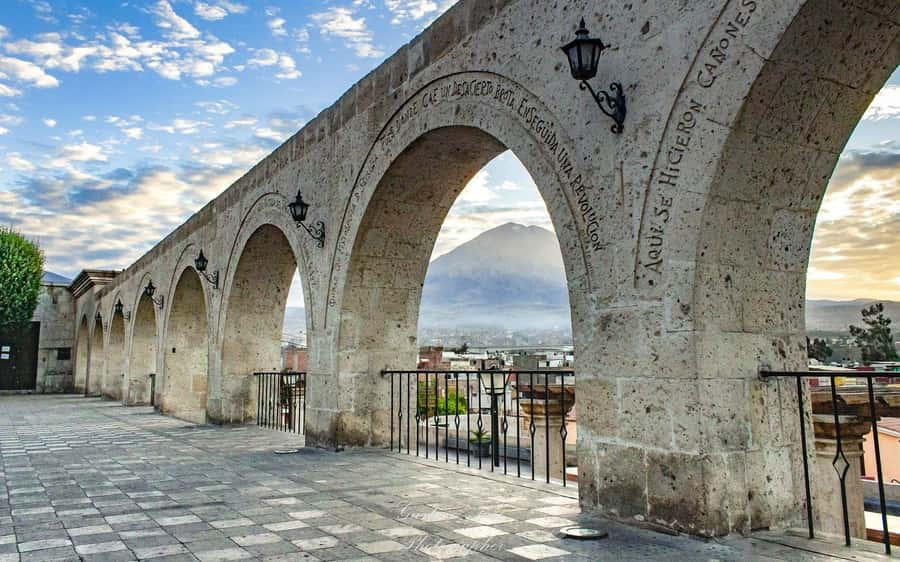
Arequipa is famous for its pale buildings, but the Sillar Route shows where that identity begins. Sillar, often called ashlar in English, is a light volcanic stone formed from ignimbrite. It came from volcanic deposits around the city and became a practical building material for churches, houses, courtyards, and carved facades.
This tour gives you a useful link between the city center and the dry country outside it. After seeing white stone used in Arequipa’s architecture, you travel to the quarries and see the walls left behind by extraction. The setting is dusty and industrial in places, not polished or theatrical. That is part of its value.
The tour is run by Arequipa Explorer y Actividades Turísticas and costs about $12 per person, with 18 soles payable separately for entrance fees. That is a low price for four hours of transportation, guiding, and several stops. You should still carry small bills in Peruvian soles. Cash is needed for the admission charges and purchases, and there is no cash machine during the outing.
More Trekking Tours in Peru
- From Cusco: 7 Lakes Ausangate Trek with Breakfast and Lunch
★ 4.8 · 360 reviews - From Arequipa: 2-Day Colca Canyon Trekking Tour
★ 4.8 · 243 reviews - Cusco: Full-Day Rainbow Mountain & Red Valley Trekking Tour
★ 4.5 · 121 reviews
Leaving Arequipa for Añashuayco Quarry
The meeting point is the operator’s office at C. Álvarez Thomas 115, near the coordinates provided for the main office. Your name should be on the list, and staff give basic instructions before departure. The morning departure is scheduled for about 9:15 AM, with a second option at 2 PM.
The drive to the quarry takes roughly 45 minutes, though the full road schedule can vary. You travel by van or small tour bus. One useful point to keep in mind is that vehicles may not have air conditioning, and groups can be fairly large, with one group reported at around 25 people. Traffic on the return to Arequipa can also slow the afternoon tour.
The guide normally explains the area during the drive and at the stops. English and Spanish are offered, though the balance can depend on the group. Guides including Mike, Jose Jose, Roni, Alexandra, and Julia have led departures, and English-speaking visitors have been accommodated when needed.
Añashuayco, where the stone is still cut
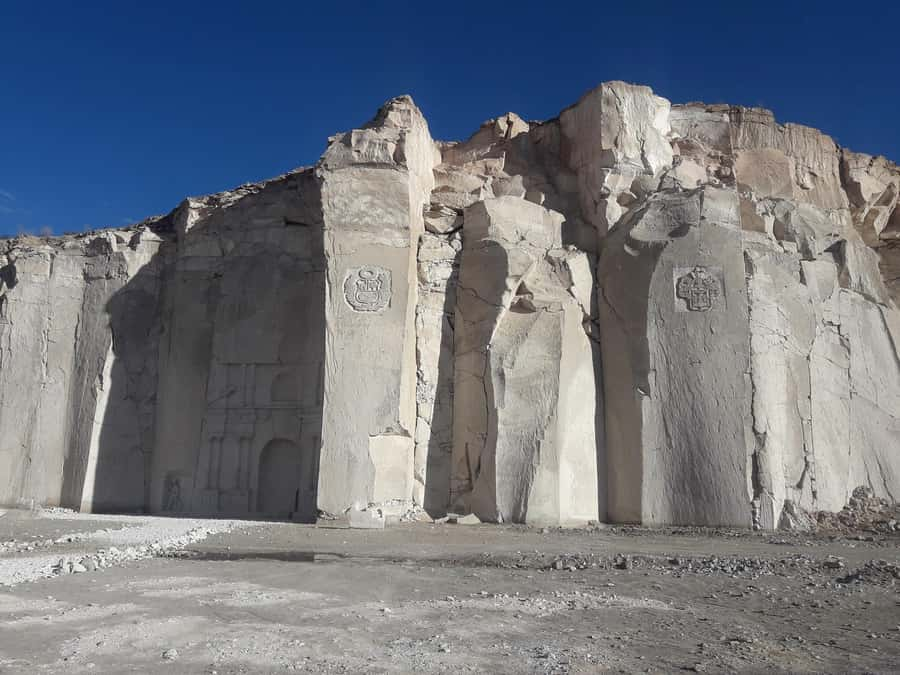
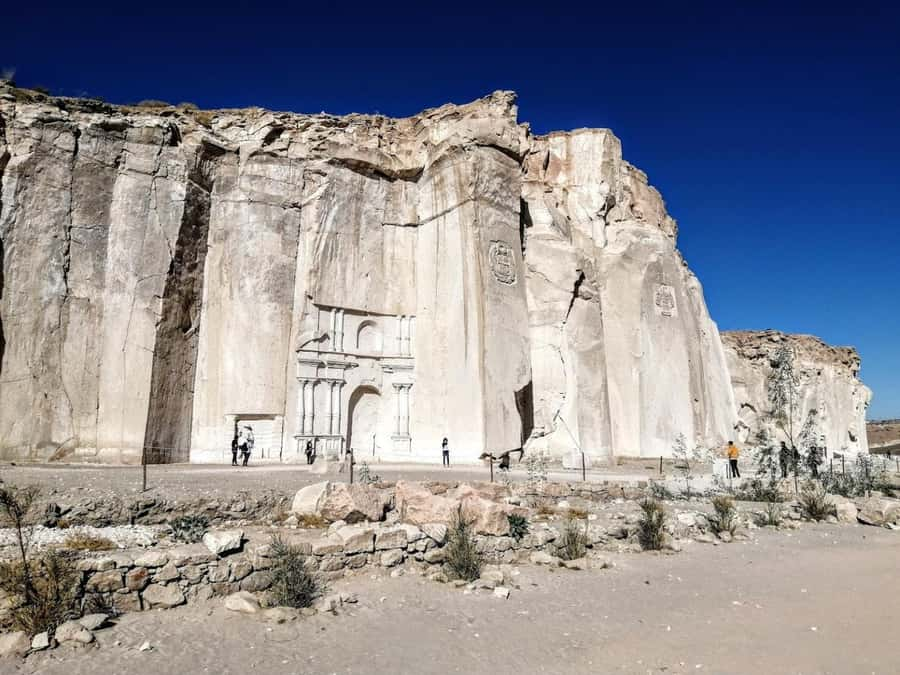
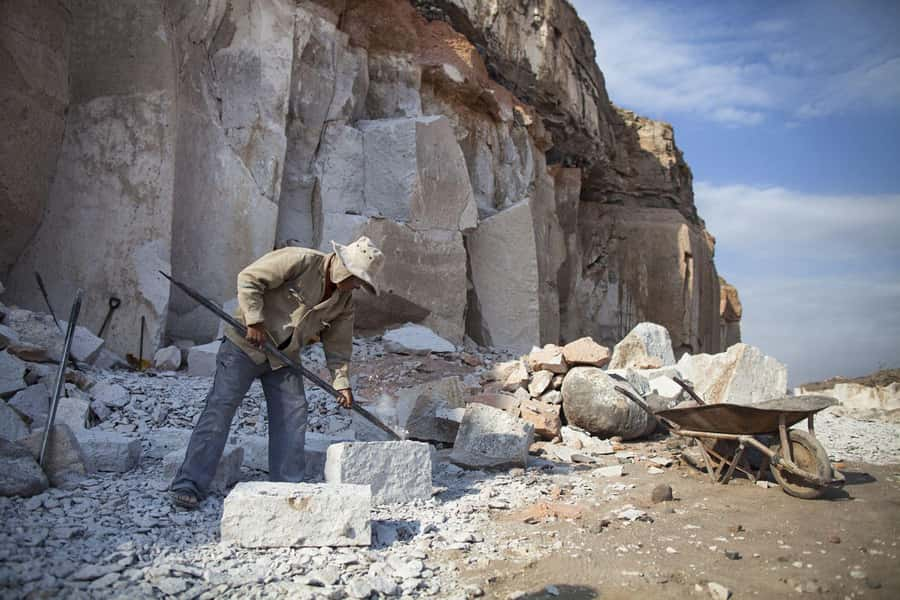
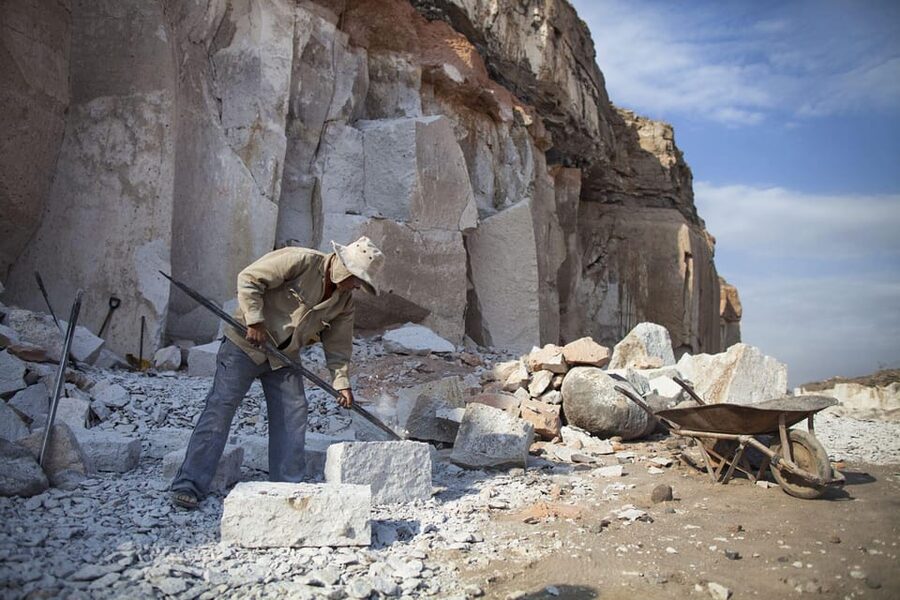
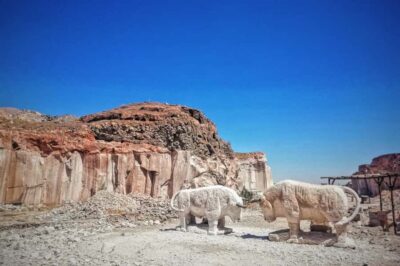
The quarry is the heart of the excursion. Añashuayco remains in operation, and stonemasons work with the pale volcanic rock. The quarry walls rise in rough, layered cliffs, shaped by years of extraction. You can see how the stone is removed and prepared rather than only seeing it in a finished church wall.
A guide explains how ashlar was formed, how it has been used, and why it became so important to Arequipa. If you have just spent time around the city’s historic center, this explanation makes the buildings easier to understand. The stone is not an abstract architectural detail anymore. It becomes a local trade and a daily task.
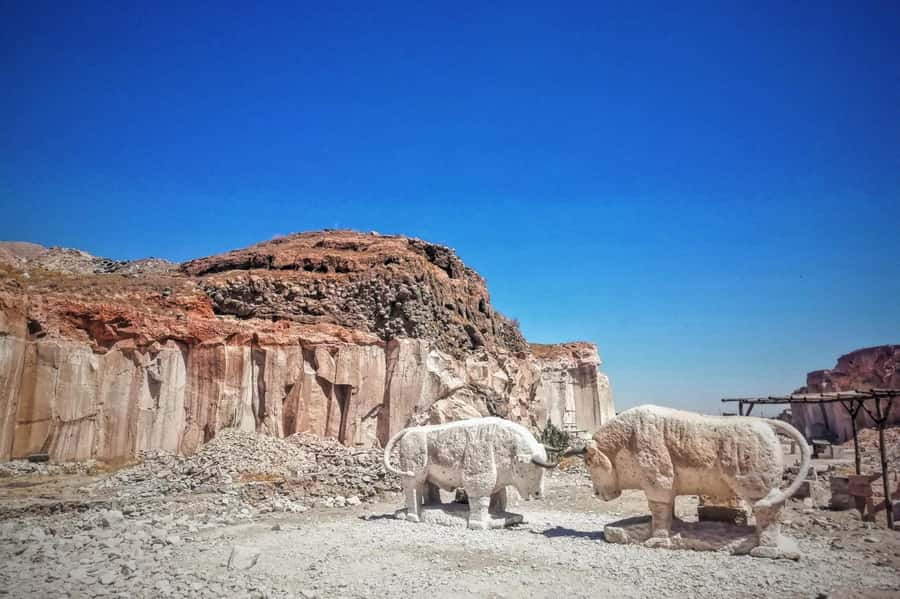
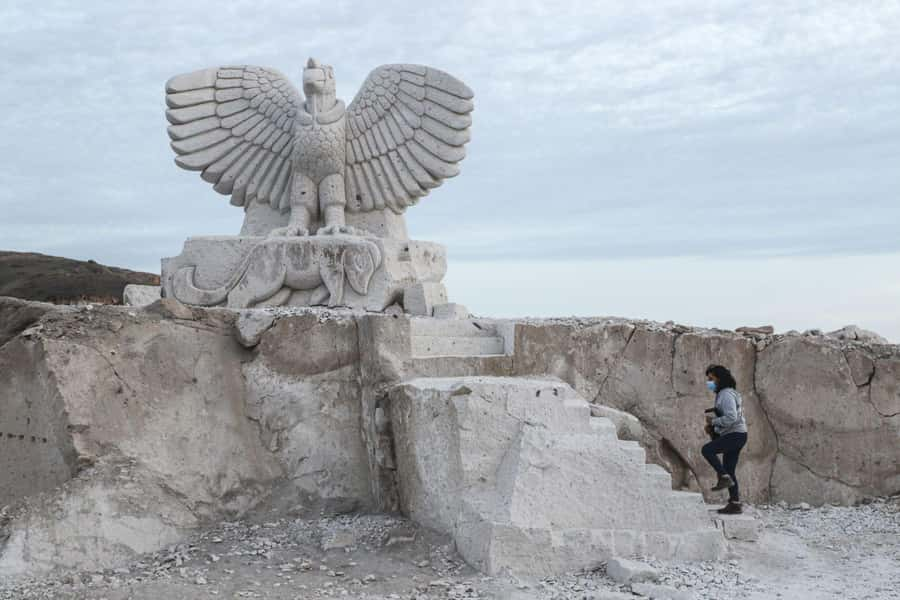
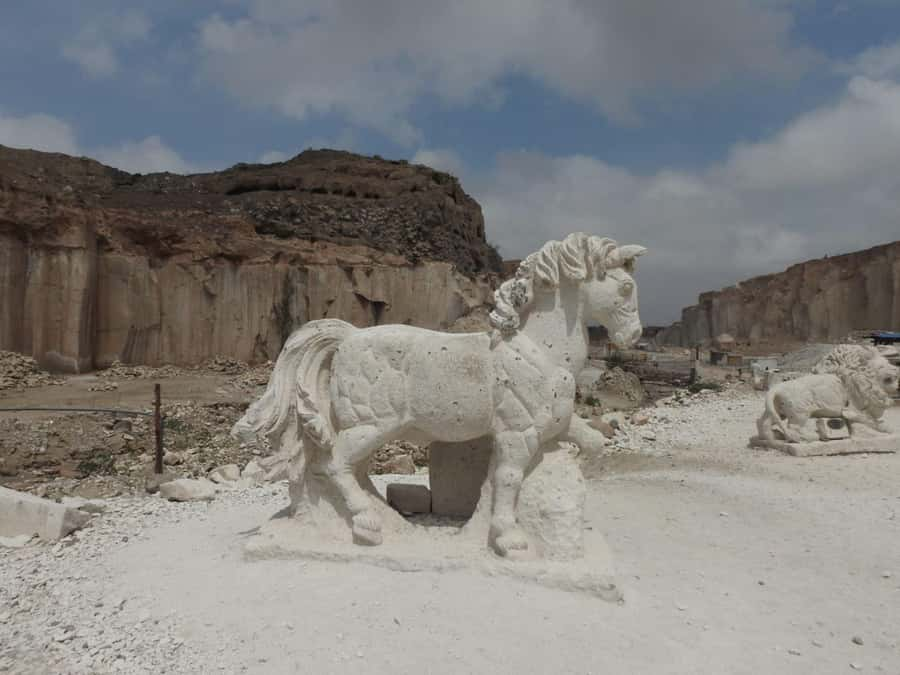
One of the quarry’s main photo stops is a large carving of the Church of the Company of Jesus. Local stonemasons created it as a display of their craft. The carving is modern, so do not expect an archaeological monument. Some people enjoy the oversized church facade and the other stone figures, while others find the display more like a photo stop than a historic site.
You may also visit one of the stonemasons. The worker can explain the daily process and demonstrate how a block is shaped. In some departures, you get the chance to try cutting the stone yourself. This hands-on moment is brief, but it adds something that a lecture cannot. You feel how much effort goes into a material that looks soft and simple from a distance.
Plan on about 45 minutes here. That sounds generous, but the group may spread out among the carvings, the quarry walls, and the demonstration. If several people are taking photographs, your own time can shrink. Stay aware of the guide’s meeting instructions and take your main photos early.
Culebrillas Canyon and its old markings
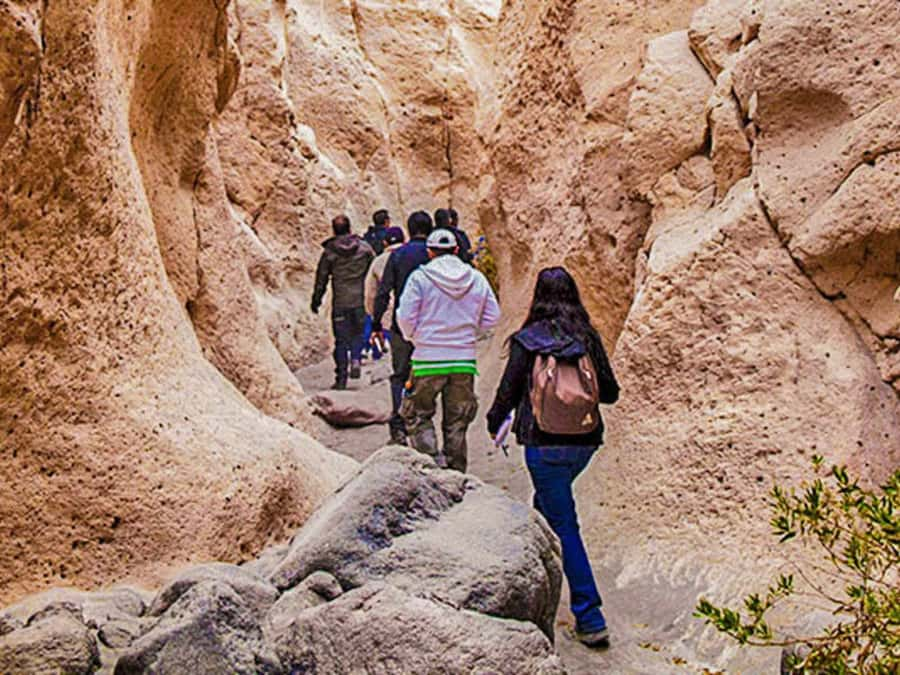
From Añashuayco, the vehicle continues for about 20 to 30 minutes to Quebrada de Culebrillas. This is the part I find most rewarding for scenery. Water carved the narrow canyon, leaving walls that begin around 15 to 20 meters high and rise as you walk farther inside.
The walk usually takes about 20 to 25 minutes. It is not described as a strenuous hike, but the ground is uneven and the canyon is not suited to anyone who has trouble walking on rough surfaces. Wear closed shoes with a firm sole. Sandals and smooth city shoes are poor choices here.
The canyon changes the mood of the tour. The quarry is open, bright, and shaped by human work. Culebrillas feels enclosed and quieter, with the stone walls narrowing around you. You get a better sense of the region’s dry volcanic terrain without needing a long trek outside Arequipa.
Near the end of the walk are petroglyphs attributed to the Wari culture and dated to more than a thousand years ago. They are an important reason to pay attention during the walk. The markings are not a huge museum-style display, so listen carefully to the guide and look closely.
You may also see apachetas, small piles or formations of stones placed one on top of another. They are associated with gratitude toward nature and good luck. Their meaning gives the stop a cultural element beyond scenery, but you should treat them respectfully and avoid rearranging them for a photograph.
This canyon can get crowded when several groups arrive at once. One useful tactic is to follow the guide’s timing closely and keep moving at a comfortable pace rather than stopping at every bend. Some guides adjust the order of the route to reach the canyon before larger groups. When that happens, the narrow walk can feel much more peaceful.
Another trail to compare in Peru:
- Salkantay Trek Challenge – 3 Days / 2 Nights
★ 5.0 · 101 reviews - From Cusco: Rainbow Mountain Trek
★ 4.5 · 98 reviews - 2 Day 1 Night Trek / Colca Canyon
★ 4.5 · 92 reviews - Choquequirao Trek 4 days and 3 nights
★ 5.0 · 81 reviews
The volcano and Andenerías viewpoint
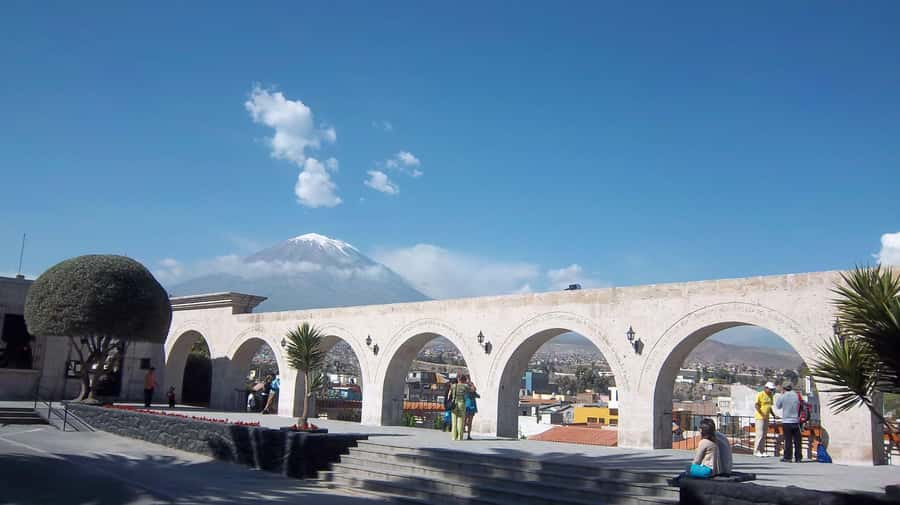
The route includes a viewpoint where you can see volcanoes and the Chilina Valley, with views of the surrounding agricultural terraces, or andenerías. Depending on the season and day’s plan, the exact viewpoint may change. Some departures use a traditional lookout, while others include Mirador de los Volcanes.
This is a short stop, often around 25 minutes, and it works best as a quick orientation point. You get a wider view after spending time among quarry walls and inside the canyon. The guide may also explain the names of the volcanoes and point out features around Arequipa.
For some people, this will be the least essential stop. Arequipa has several city viewpoints, and you may already have visited one before taking the tour. Still, the volcano view gives the quarry and canyon a wider setting, especially if you have not yet seen the dry terrain beyond the city.
The afternoon departure has a special advantage here and at the quarry. Late light can turn the pale stone warm and bring out the canyon’s texture. The tradeoff is a potentially slower return through city traffic, so do not schedule a tight connection after the 2 PM tour.
Timing, transport, and the real value
The advertised experience lasts four hours. A typical morning begins around 9:15 AM and returns you near central Arequipa around 1:30 PM, with some schedules listing arrival closer to 1 PM. The stated route includes the quarry, canyon, viewpoint, and the return drive. Exact stop order may change to reduce crowding.
At $12, the outing is strong value if you want to see places outside the city without arranging a private vehicle. You are paying mainly for transport and a guide, not a long hike or a full-day excursion. Add the 18 soles in entrance charges, and the total remains modest for an organized half-day.
The low price also explains the compromises. You may share a bus with a sizable group, spend some time waiting while people take photos, and receive a fairly brisk introduction at each stop. This is not a private cultural tour with long conversations at every site.
Guiding quality matters a great deal here. The best guides make the stone, volcanoes, food, local customs, and old markings connect. Several guides have been praised for clear English, including Mike, Jose, Alexandra, and Julia. Guides have also helped with practical matters, such as changing large bills or suggesting restaurants in Arequipa.
The experience can be bilingual, with explanations in English and Spanish. If you are the only English speaker in the group, let the guide know early. A good guide can make sure you are included, but you may need to listen carefully when the presentation alternates between languages.
What to pack for the four hours
Bring sunscreen, a hat, water, and insect repellent. The recommendation for repellent is worth taking seriously, especially around the canyon. Wear closed shoes, since the walk includes uneven ground and loose surfaces.
Carry 18 soles in cash for the entrance charges, preferably in smaller notes. If you want to buy something, small bills are also useful. Do not rely on a card or an ATM during the outing.
A phone or camera is enough for most photographs. The quarry’s pale walls, carved figures, canyon entrance, and volcano viewpoint all offer different subjects. At the same time, do not let the photo stops use all your time. The canyon walk and the petroglyphs deserve attention, not just a quick snapshot.
If you are sensitive to heat, consider the morning departure. If you prefer softer light and do not mind possible traffic, the 2 PM tour can be attractive. The afternoon schedule has produced particularly good sunset color on the rocks, though sunset timing varies by season.
Who will enjoy this outing most
I would choose this tour if you have a spare half-day in Arequipa and want more than city streets and church interiors. It suits people interested in architecture, local craft, geology, short walks, and unusual cultural sites.
It is also a good first activity after arriving in Arequipa, since the route stays fairly close to the city and does not require a full day on the road. The drive is not especially demanding, and the canyon walk is short.
I would be more cautious if you dislike organized group transport, modern photo installations, or stops with limited time. The large church carving and stone animals may feel touristy to you. The quarry is working and interesting, but it is not a preserved archaeological complex.
People with walking problems should think carefully before booking. The Culebrillas section is short, but the ground is uneven, and at least one portion of the route requires walking inside the canyon. Ask the operator about current conditions if you need a smoother route.
Should you book the Sillar Route Trek?
Yes, if you want an inexpensive, practical half-day outside Arequipa with a mix of working craft, dry-country scenery, and ancient markings. The strongest parts are the quarry explanation, the chance to see stone cutting, and the Culebrillas Canyon walk.
Book it with realistic expectations. You are joining shared transport, paying a small entrance fee separately, and moving through several stops on a fixed schedule. If you protect your canyon time, bring proper shoes and cash, and choose the afternoon for warmer light, this is a worthwhile addition to an Arequipa visit.
FAQ
How long does the Sillar Route tour last?
The activity lasts about four hours. The morning departure begins around 9:15 AM and returns to Arequipa around early afternoon. A 2 PM departure is also available.
What places does the tour visit?
The route includes Añashuayco Quarry, Quebrada de Culebrillas, and a volcano and Andenerías viewpoint. The exact order may change depending on the day and season.
Is transportation included?
Yes. Transportation between the meeting point, the quarry, the canyon, the viewpoint, and Arequipa is included.
Are entrance fees included?
No. Entrance charges total 18 soles and are paid separately.
What languages are available?
The tour offers live guiding in English and Spanish.
Where does the tour meet?
The meeting point is the main office at C. Álvarez Thomas 115 in Arequipa. Your name should be listed there before departure.
Do I need to walk?
Yes. The Culebrillas Canyon portion includes a walk of about 20 to 25 minutes on uneven ground. Closed shoes are recommended.
What should I bring?
Bring sunscreen, insect repellent, a hat, water, small cash in Peruvian soles, and sturdy closed shoes.
Latest treks added in Peru
- Small Group: 4-Day Inca Trail Trek to Machu Picchu★ 5.0 · 33 reviews
- Salkantay Trek: 5 Days to Machu Picchu★ 5.0 · 33 reviews
- 5 Day – Salkantay trek to Machu Picchu – Group Service★ 4.5 · 27 reviews
- Humantay Lake Full-Day Adventure: Scenic Trek and Stunning Views★ 4.5 · 39 reviews
- Inca Trail Trek to Machu Picchu – 2 Days (Small Group or Private)★ 5.0 · 31 reviews
- Salkantay 5-Day Trek To Machu Picchu★ 5.0 · 39 reviews
- 6 day Rainbow Mountain x Ausangate Trek – FlashpackerConnect★ 5.0 · 30 reviews
- Ausangate and Rainbow Mountain Trek – 3 Days / 2 Nights★ 5.0 · 35 reviews
Arequipa Trekking Tours, compared.
4 hours Tour: Route of Sillar with Trek in Culebrillas
Read our review →
Private 3 Day Colca Canyon Trekking tour (superior Service)
Read our review →
2 Day Trek Including Transfer to Puno / Colca Canyon
Read our review →
Browse the lists this tour appears in