REVIEW · SAPA
Muong Hoa Valley Trek & Homestay Experience – 4D3N
Muong Hoa Valley is best seen on foot, and this four-day route gives you time to move beyond Sapa’s town center. You’ll pass through five ethnic villages, follow paths beside rice terraces and the Muong Hoa River, and spend time with Hmong, Giay, and Red Dao communities.
I like the small maximum group of 15 and the fact that the operator is a local Hmong team. I also like the steady cultural focus: house building, rice work, marriage customs, clothing traditions, and village life are part of the route, not an afterthought.
The main consideration is the physical effort. You need moderate fitness, and summer heat can be much tougher in the valley than in Sapa Town. One June trek had temperatures around 31 to 32 degrees in the valley, even though Sapa was about 23 degrees.
Key points to know before booking
- Five villages in four days: The route links Y Linh Ho, Ta Van, Giang Ta Chai, Ban Ho, and Nam Toong.
- Three ethnic cultures: Your guide introduces Hmong, Giay, and Red Dao customs and daily work.
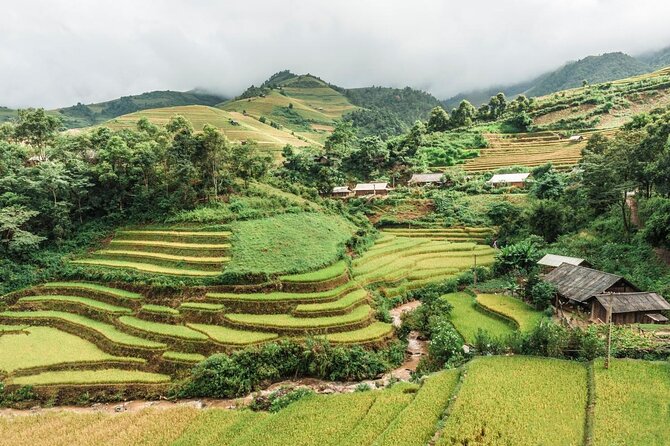
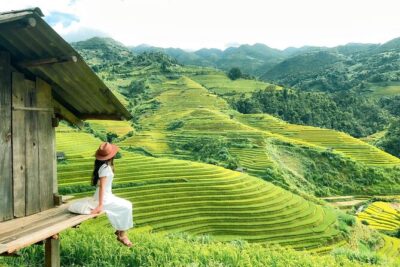
- A real walking route: Rice terraces, waterfalls, mountain paths, and the Muong Hoa River provide the main scenery.
- Local homestay experience: Accommodation is arranged in a village homestay, with meals included throughout the trek.
- Small-group format: The group limit is 15 people, with a local guide leading the walk.
- Weather matters: Rain can affect the route, and wet-season heat may make valley walking demanding.
What the four-day Muong Hoa route is really about
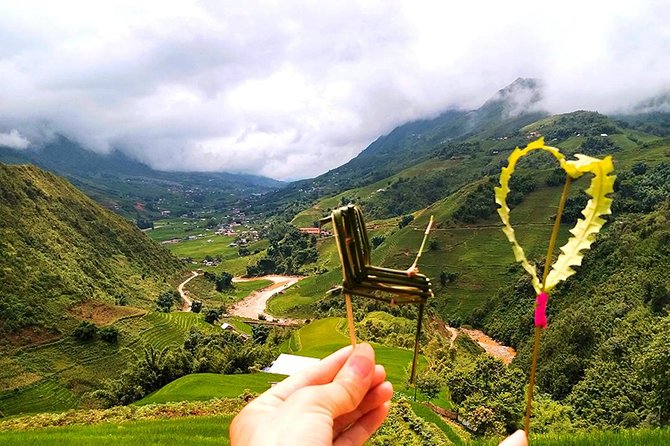
This is not a quick photo stop at a rice terrace. The value comes from staying in the valley long enough to connect several villages and see how different communities live close to one another.
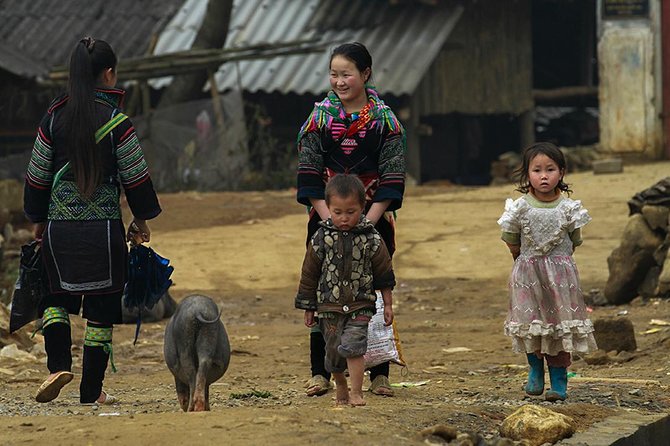
The route introduces you to Hmong, Giay, and Red Dao communities. Those names matter because each group has its own customs, clothing, work patterns, and village traditions. Your guide explains subjects such as Hmong marriage practices, rice cultivation, house construction, and everyday work.
The operator is a small local Hmong team in Sapa. That gives the tour a more personal feel than a large coach excursion, although your exact guide should be confirmed when you book. A response from the operator was signed by Sinh, so Sinh may be a useful contact for arranging questions or group bookings, but the supplied information does not confirm that Sinh leads every departure.
You should think of this as an active cultural walking trip rather than a sightseeing package. The walking is the framework. The views are the reward, and the village conversations and explanations give those views meaning.
More Homestay Treks in Sapa
- Number one top rated ethical cultural trekking and homestay by ETHOS
★ 5.0 · 456 reviews - Sa Pa: 2-Day Trekking Trip with Ethnic Minority Homestay
★ 4.7 · 145 reviews - Sapa : 2-Day Trek & Heartwarming Homestay with an Ethnic Family
★ 5.0 · 143 reviews
Day 1: Y Linh Ho and the rice terraces near Ta Van
The tour begins at 9 am. Your guide meets you at your Sapa hotel or at the town’s main church, then takes you about 2 kilometers down toward the Cat Cat road before the walking route continues toward Y Linh Ho.
Y Linh Ho is a strong opening because it puts you among the valley’s famous rice terraces early in the trip. You’ll have wide views toward the Hoang Lien mountain range and see why Muong Hoa is one of northern Vietnam’s best-known walking areas.
The route then continues toward Ta Van Village. This section is about the contrast between scale and daily life. The terraces stretch across the slopes, but the route is also meant to show how the fields are worked and how villages fit into the mountain setting.
Ta Van is associated with the Giay community, and the village gives your guide a useful place to explain local customs and routines. Instead of simply taking a picture and moving on, you have time to ask questions about homes, farming, and village life.
The first day is also a useful test of your pace. The tour begins in the morning, but valley walking can feel hot, especially during the wet season. Bring the included bottle of water, and take additional drinking water if you usually need more during a full day outdoors. Extra drinks at the homestay are not included.
Day 2: Waterfalls and Red Dao culture at Giang Ta Chai
After breakfast, the route turns uphill toward Giang Ta Chai and its waterfalls. This is a change from the first day’s terrace walking. You’ll work through mountain paths and gain height before entering an area connected with the Red Dao people.
Giang Ta Chai is a good place for the cultural side of the tour to become more detailed. The guide explains Red Dao customs and beliefs, giving you a better sense of the differences between the groups you encounter in the valley.
The waterfall adds a clear natural focus to the day, but the climb is the part to take seriously. The tour description calls for moderate physical fitness, and that phrase is worth reading plainly. You do not need to be an athlete, but four days of walking, hills, heat, and possibly wet ground will be tiring.
The wet season can bring tricky conditions. One June outing had dry walking weather, but the trek took place in hot valley temperatures. A different day could be damp, slippery, or cooler. The experience requires good weather, and poor conditions can lead to a changed date or a full refund under the stated policy.
Day 3: Ban Ho and the walk to Nam Toong
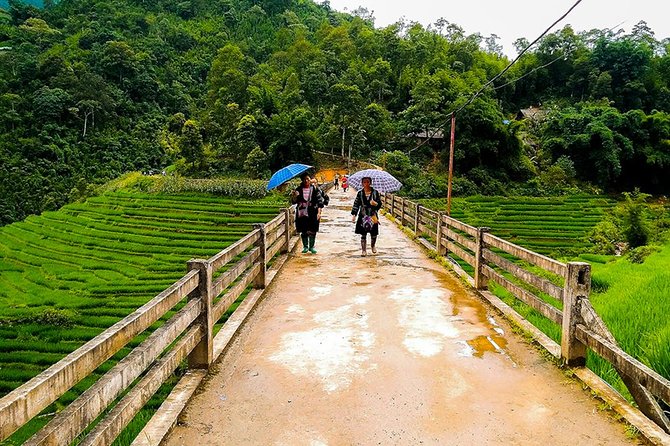
Day 3 centers on Ban Ho, followed by a walk of about 3 kilometers to Nam Toong. After breakfast in Ban Ho, you continue into the Red Dao area and spend more time learning about the community that lives there.
This day is valuable because it slows the trip down. You are not trying to squeeze every viewpoint into a single morning. The shorter village connection gives your guide room to explain Red Dao life in more detail and lets you notice the differences between villages visited earlier.
The tour information highlights Red Dao culture, but it does not promise a staged performance or a formal demonstration. That is a positive point if you want a walking experience based on ordinary village settings rather than a show arranged for visitors.
Ban Ho also gives the four-day route a different feel from the higher terrace areas. The valley and river become more important, and the walking is tied more closely to village connections. You should still expect uneven paths and a full day outside, even if this section feels less exposed than the mountain views around Y Linh Ho and Ta Van.
More Homestay Treks in Vietnam
- Sapa Valley Trek and Homestay – 3D2N
★ 5.0 · 105 reviews - From Sapa: 2 Days 1 Night Trek Over Night At Homestay
★ 5.0 · 68 reviews - 2 days authentic trekking tour in Sapa ( Homestay – Less touristy )
★ 5.0 · 68 reviews - 3-Day Trek in Amazing Muong Hoa Valley & ethnic Homestay
★ 5.0 · 49 reviews
Day 4: Following the Muong Hoa River back to Ban Ho
The final day begins with breakfast in Ban Ho. You then walk from Thanh Phu back to Ban Ho by a different route, following the Muong Hoa River.
This is described as an easy but scenic way to finish. That makes sense after three days of walking. Rather than ending with another demanding climb, the route lets you wind down beside the river and take in the valley at a slower pace.
A different return route is useful because it keeps the last morning from simply repeating earlier ground. The river also gives you a final view of the valley from below, after you have already seen the terraces and villages from higher paths.
Once the village section ends, transport returns you to Sapa. The stated meeting point is Sapa Church, and the activity ends back at the meeting point. Confirm the exact transfer arrangements with the operator before departure, since the itinerary includes transport back to Sapa while the meeting information describes the end as the original meeting point.
The homestay and included meals
A homestay is included, along with three breakfasts, four lunches, and three dinners. Meals are a major part of the value here because the tour keeps you in the villages rather than sending you back to Sapa every night.
The supplied details list accommodation as one homestay night, even though the product is described as a 4-day, 3-night experience. That is an important point to clarify before paying. Ask the operator exactly how many nights are included, where each night is spent, and whether any night is in another type of accommodation.
The same practical question applies to meals. The inclusion list provides three dinners, four lunches, and three breakfasts, which suggests meals are covered across the walking days. Extra drinks, including bottled water and beer at the homestay, cost extra.
You should also expect a simple village stay rather than hotel-style service. The information confirms a homestay but does not specify room type, bedding, bathroom arrangements, or whether rooms are private or shared. If those details affect your choice, ask before booking.
How much value you get for $190
At $190 per person, the price covers a four-day guided route, village entry fees, meals, a homestay, a bottle of water, and transport back to Sapa. That is a useful package for you if you want the walking and cultural arrangements handled together.
The price is harder to judge if you are mainly seeking short scenic walks. In that case, a shorter Sapa excursion may be enough. You are paying here for time in the valley, several days of meals, overnight village accommodation, a local guide, and transport at the end.
The group limit of 15 helps protect the experience from becoming a large procession. It is not a private trek, and 15 people can still feel like a sizable group on a narrow path, but it is more manageable than a mass departure.
There is also a discount for larger bookings. If you are arranging the trip for a group, ask for the current rate rather than assuming everyone pays the listed $190.
What to pack for the walking conditions
The tour requires moderate fitness, but the more useful question is whether you are ready for changing mountain conditions.
Bring sturdy walking shoes, clothes that dry reasonably fast, sun protection, and a light waterproof layer. The supplied information does not list a gear sheet, so do not assume specialist equipment is provided.
Plan around heat as well as rain. The June experience shows that Sapa’s town temperature may not tell you what the valley will feel like. At 31 to 32 degrees, a route that looks manageable on paper can become draining.
Carry money for extra drinks and personal purchases. Tips are not included, and neither is personal travel insurance. The tour includes one large bottle of water per person, but you may want more for a full day in warm weather.
Who will enjoy this trek most
This tour suits you if you want a slower look at Sapa and are happy to trade hotel comfort for village time. It works especially well for people who want scenery, cultural explanation, and several days of walking in one booking.
It is a good match for:
- You want to visit five villages instead of one or two roadside stops.
- You enjoy learning about Hmong, Giay, and Red Dao customs.
- You prefer a local guide and a group capped at 15.
- You can manage hills, uneven paths, heat, and four days of activity.
- You value included meals and transport more than a luxury stay.
It may not suit you if you want a relaxed hotel break, guaranteed dry weather, or a route with little uphill walking. It is also not the right pick if you need detailed accommodation standards confirmed in advance and are unwilling to clarify the one-night homestay wording.
Booking, timing, and cancellation details
You can start from your hotel in Sapa Town or meet at Sapa Church at 9 am. Pickup is offered, and confirmation is provided at booking. The meeting point is near public transport.
Free cancellation is available up to 24 hours before the start time for a full refund. Within 24 hours, cancellations and changes are not accepted for a refund. The tour can also be moved or refunded if poor weather prevents departure or if the minimum number of participants is not reached.
The experience is often booked well ahead, with an average booking lead time of 97 days. That is useful to know if your Vietnam itinerary is fixed, though the exact availability can change.
Should you book the Muong Hoa Valley trek?
Book it if you want Sapa to be more than a quick mountain viewpoint. The route gives you four days of terraces, waterfalls, river paths, and village visits, with a local Hmong team guiding the cultural side of the trip.
Before booking, confirm the homestay nights, room arrangements, and exact return transport. If you are comfortable with basic accommodation and moderate walking, the combination of five villages, included meals, and a small group makes $190 a reasonable price.
Skip it if you want a short, easy outing or prefer full control over your accommodation. For an active visitor who wants time with the valley rather than a rushed photo stop, this is the stronger choice.
FAQ
Where does the Muong Hoa Valley trek start?
The tour starts at 9 am from your hotel in Sapa Town or at Sapa Church, located on P. Hàm Rồng in Sapa.
How long does the tour last?
The experience lasts approximately four days and is described as a 4-day, 3-night tour.
Which villages does the route visit?
The route includes Y Linh Ho, Ta Van, Giang Ta Chai, Ban Ho, and Nam Toong.
Which ethnic communities are included in the cultural visits?
The tour introduces you to Hmong, Giay, and Red Dao communities and covers their customs, traditions, work, and village life.
What is included in the price?
The price includes village entry fees, a local guide, homestay accommodation, three dinners, four lunches, three breakfasts, one large bottle of water per person, and transport back to Sapa after the village route ends.
Can I cancel for a full refund?
Yes. You can cancel at least 24 hours before the experience starts for a full refund. Cancellations or changes made within 24 hours are not refunded.
More Rice Terrace Treks in Vietnam
- Daily Tour: Sapa Trekking in Muong Hoa valley, Bamboo forest
★ 5.0 · 121 reviews - 1-Day Sapa Long Trek – Rice Field Terrace, Ethnic Culture
★ 4.9 · 62 reviews - Sapa: Muong Hoa Mountain Views and Villages Trek with Lunch
★ 4.3 · 28 reviews - Sapa: Muong Hoa Valley View & Villages Trek with Local Guide
★ 5.0 · 25 reviews
More Rice Terrace Treks in Sapa
- Sa Pa: Muong Hoa Valley Trek and Local Ethnic Villages
★ 4.6 · 864 reviews - Explore Sapa by TrekkingAdventures, Mountain,Rice fields
★ 4.9 · 229 reviews - Sa Pa: 6-Hours Muong Hoa Valley Trek with Local Ethnic guide
★ 4.5 · 178 reviews - Sapa Muong Hoa Valley & Ta Van Eco Village Scenic Tour (No Trek)
★ 5.0 · 144 reviews
Latest treks added in Sapa
- Soob Sapa Trekking Tour★ 4.3 · 3 reviews
- Sapa: Y Linh Ho – Lao Chai, and Ta Van Trekking Day Tour★ 5.0 · 25 reviews
- Sapa Trekking Private Tour With Ethnic Female Tour Guide★ 4.9 · 24 reviews
- Sapa Trekking – Waterfalls And H’mong Villages★ 5.0 · 2 reviews
- Sapa: Ta Phin Village Trek with Lunch and Bathing Experience★ 4.7 · 13 reviews
- Sapa Trekking Guide Francophone 2 days – 1 night★ 5.0 · 2 reviews
- Sapa: Trekking Through Terraced Rice Fields & Valley 1 Day★ 4.8 · 4 reviews
- Sapa small groupe activities: 1 Day trek – Meet the locals★ 4.7 · 3 reviews
Rice Terrace Treks, compared.
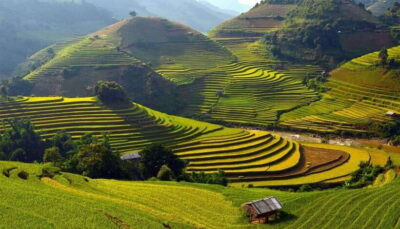
Muong Hoa Valley Trek and Local Ethnic Villages
Read our review →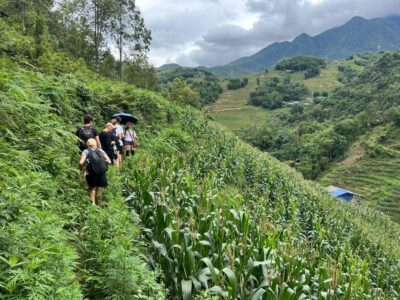
Explore Sapa by TrekkingAdventures, Mountain,Rice fields
Read our review →
Selogriyo Temple and Trekking Java Rice Terraces, hidden waterfall -Nature Java
Read our review →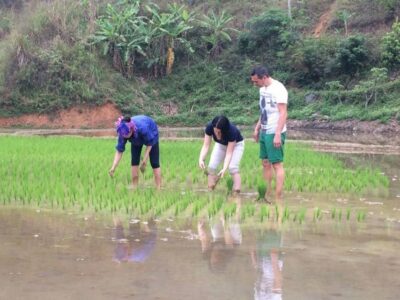
6-Hours Muong Hoa Valley Trek with Local Ethnic guide
Read our review →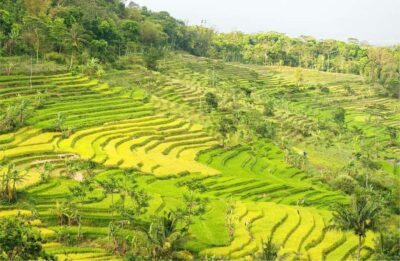
Sapa Muong Hoa Valley & Ta Van Eco Village Scenic Tour (No Trek)
Read our review →
Daily Tour: Sapa Trekking in Muong Hoa valley, Bamboo forest
Read our review →