
REVIEW · SAPA
Sapa: Muong Hoa Valley View & Villages Trek with Local Guide
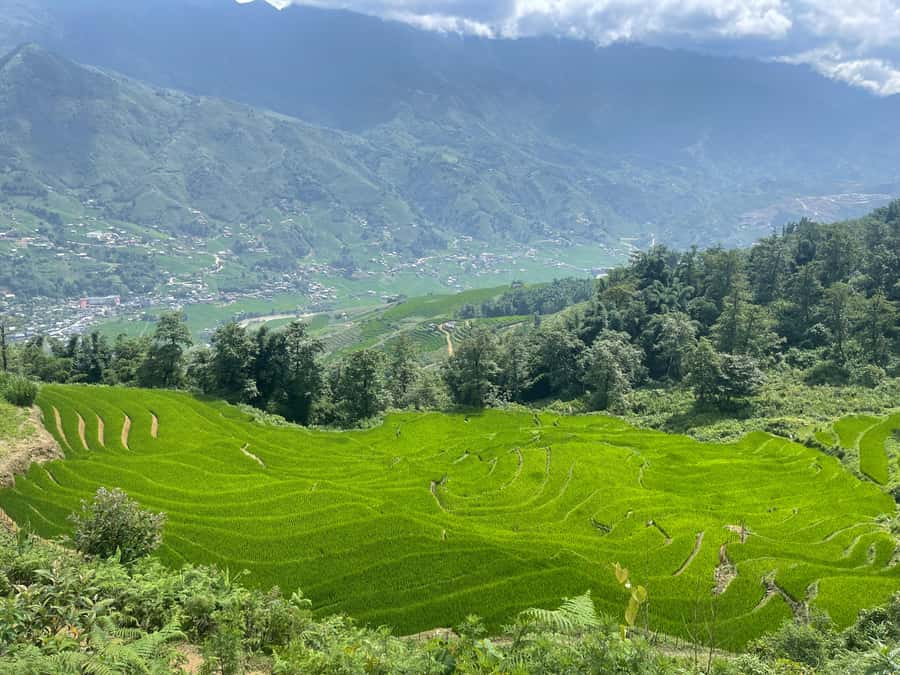
The best part of this Sapa trek is the way it leaves town quickly and puts you among Muong Hoa Valley’s rice terraces and Black Hmong villages. After a 2.5-kilometer uphill walk, you get wide views of Fansipan and Sapa before following mountain paths toward Hang Da, Hau Thao, and Muong Hoa.
I like the personal feel of the tour, especially the chance to eat lunch at a small family-run restaurant rather than a large tourist stop. I also like the guide-led cultural context. Su is singled out for his clear English, patience, local stories, and ability to adjust the pace when rain makes the trail harder.
The main caution is the distance. This is a 14 to 16-kilometer trek, with steep sections, slippery ground, and several hours of walking after lunch. It is not a gentle village stroll, particularly in wet weather.
Key points to know before booking
- The trek reaches Hang Da, Hau Thao, and Muong Hoa, with daily life and farming activity along the way.
- The first 2.5 kilometers climb uphill, leading to views of Sapa town and Fansipan.
- Lunch is served at a local family restaurant, adding a useful pause to a demanding day.
- Guide Su is a major strength, offering clear English, local stories, and steady support on difficult paths.
- Wet weather changes the experience, making trails muddy and slippery, so good shoes matter.
- The $19 price is strong value, since it covers the guide, lunch, village entrance fees, a water bottle, and transport back to Sapa.
From Sapa church to the mountain viewpoint
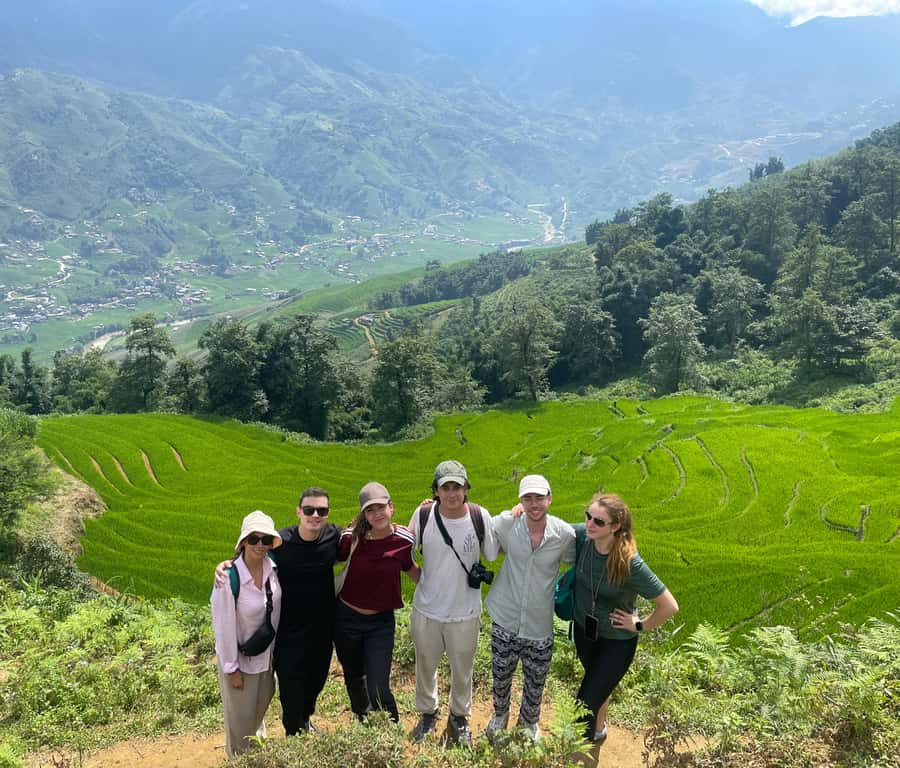
You meet your guide in front of Sapa’s main church. The guide contacts you before the tour, so leave a WhatsApp number when booking and watch for the message confirming the meeting details.
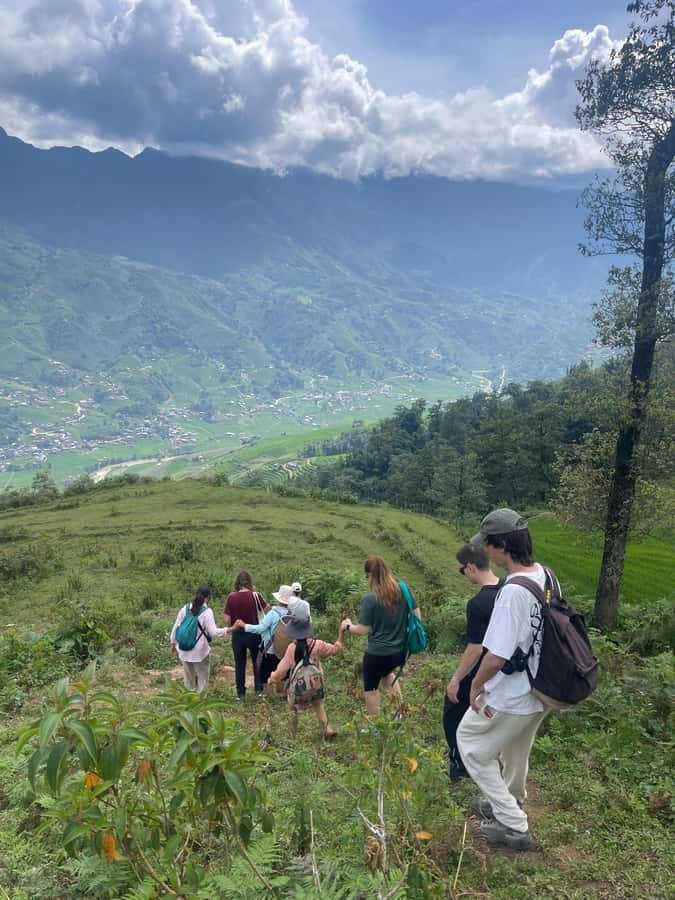
The walk begins with about 2.5 kilometers uphill on a small trail. This is the first real test of the day, but it also brings the first major reward. From the higher viewpoint, you can look back toward Sapa town and across to Fansipan, the highest mountain in Indochina.
I like this opening because it gives you a clear sense of the area. Sapa is not simply a mountain resort with pretty scenery around the edges. Town sits above a network of valleys, farms, and minority villages, and the early climb helps you understand how those places fit together.
The viewpoint is also where you start seeing the scale of Muong Hoa Valley. The rice terraces cut across the slopes in broad, layered bands. Their appearance changes with the farming season. At the right time of year, you may see local people planting or harvesting rice, though the tour cannot guarantee a particular stage of farm work.
Bring your camera, but do not let it turn the walk into a series of quick stops. The guide’s explanations about the valley, local customs, and Black Hmong life are part of what gives the view meaning.
More Rice Terrace Treks in Sapa
- Sa Pa: Muong Hoa Valley Trek and Local Ethnic Villages
★ 4.6 · 864 reviews - Explore Sapa by TrekkingAdventures, Mountain,Rice fields
★ 4.9 · 229 reviews - Sa Pa: 6-Hours Muong Hoa Valley Trek with Local Ethnic guide
★ 4.5 · 178 reviews
Muong Hoa Valley and its working terraces
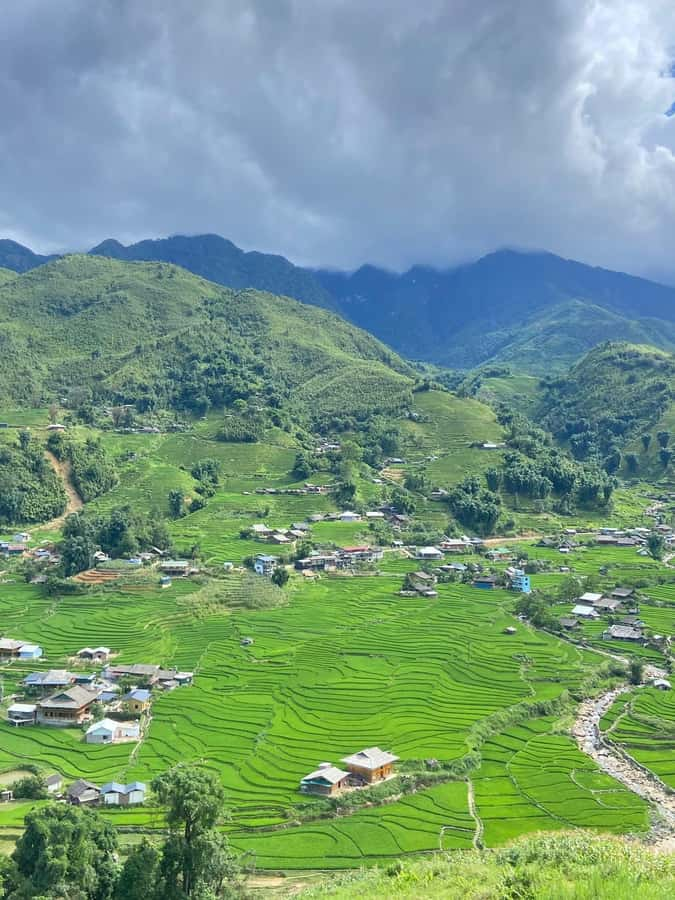
Muong Hoa Valley is the visual center of the trek. You walk above and alongside the terraces, with the valley and its river below. The setting is impressive, but it is also a working place, not a decorated park.
That distinction matters. The terraces are the result of regular farming, careful water use, and hard physical work. If your visit lines up with planting or harvest time, you might see people working in the fields. These moments give you a better sense of local life than a quick photo stop ever could.
The route is also a good fit if you want more than a viewpoint tour. You are walking through the area rather than simply being driven to a lookout. That means a stronger connection to the villages and fields, but it also means more effort and less predictability underfoot.
Some sections are small trails on the mountainside. In dry weather, they may be manageable for anyone with reasonable stamina. After rain, the same paths can become muddy and slick. One useful bit of advice is to wear shoes that can handle mud and have a firm grip. Comfortable city sneakers may not be enough.
Hang Da, where the trail becomes more local
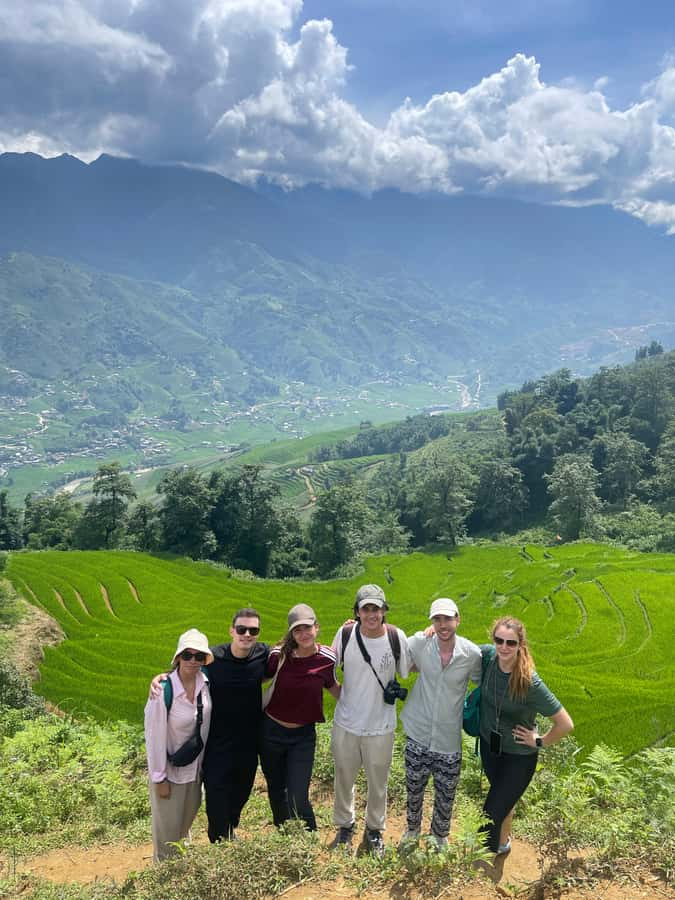
The route continues downhill toward Hang Da, a Black Hmong village. This section brings you closer to homes, animals, and ordinary village activity. You may see buffalo, cows, and pigs along the way.
That detail sounds small, but it helps keep the visit grounded. You are not moving from one staged attraction to another. You are passing through a place where animals, farms, paths, and houses are part of everyday life.
Your guide is especially useful here. Su is praised for explaining local traditions and answering questions in good English. A strong guide can help you notice how the village works without turning every moment into a lecture.
You should also keep your expectations sensible. This is a rural walk, not a museum visit with labeled displays. The experience depends on the guide’s explanations, the season, weather, and what is happening in the village on the day you go.
The route may feel quiet and open, but it is not necessarily private. Sapa’s village paths are part of a busy tourism area, and local people may approach visitors to sell handmade goods. Be polite, but you are not required to buy anything.
A family lunch after the hardest early walking
Lunch takes place at a small restaurant run by a local family. It is included in the $19 price, along with village entrance fees and a 500-milliliter bottle of water.
This is a welcome break because the morning includes a climb and a long stretch through the valley. The meal also keeps the tour connected to local families rather than shifting you back into a large commercial setting.
The supplied water is useful, but 500 milliliters is not much for a full day on foot. Bring extra water if possible, along with snacks. The instructions ask you to avoid plastic bottles and littering, so plan to carry your rubbish and use a reusable bottle where you can.
Lunch is not presented as a fine dining stop, and that is the right way to approach it. You are paying for a simple local meal during a walking tour. It is practical, filling, and part of the village experience.
This pause also gives you time to judge your energy for the afternoon. The walk is not over after lunch. You still have roughly two to three hours of trekking before the tour finishes, depending on the route and conditions.
More Rice Terrace Treks in Vietnam
- Sapa Muong Hoa Valley & Ta Van Eco Village Scenic Tour (No Trek)
★ 5.0 · 144 reviews - Daily Tour: Sapa Trekking in Muong Hoa valley, Bamboo forest
★ 5.0 · 121 reviews - 1-Day Sapa Long Trek – Rice Field Terrace, Ethnic Culture
★ 4.9 · 62 reviews - 3-Day Trek in Amazing Muong Hoa Valley & ethnic Homestay
★ 5.0 · 49 reviews
Hau Thao and Muong Hoa village life
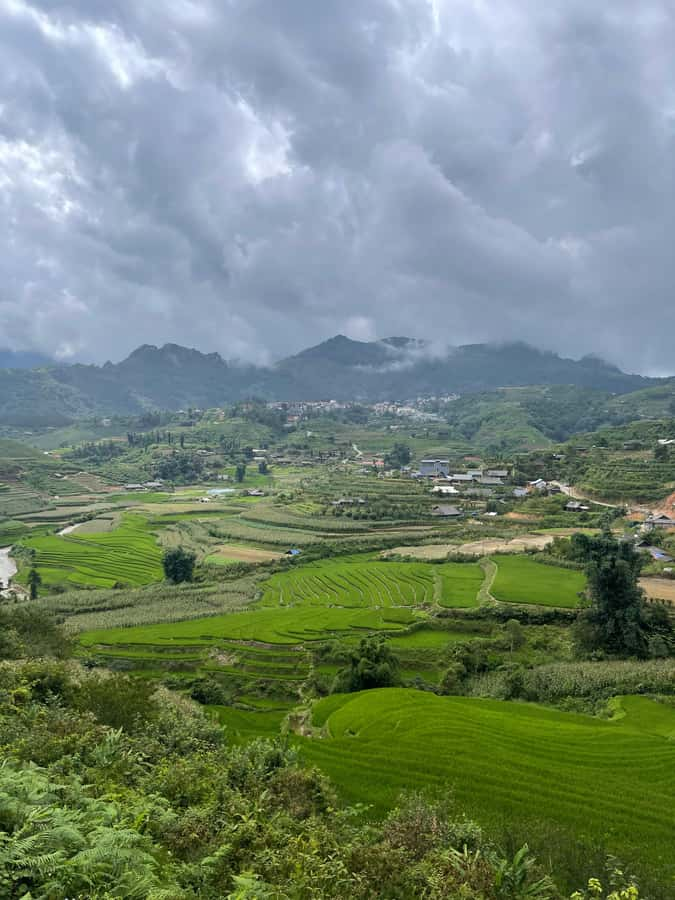
After lunch, the group follows a smaller road toward Hau Thao, another Black Hmong village, and then continues to Muong Hoa village. This part of the route focuses less on one dramatic viewpoint and more on how people live.
You may see homes, animals, farms, and people moving through the day’s work. When planting or harvest is underway, the fields can provide a direct look at the rhythm of rural life in northern Vietnam.
I like this section because it gives the tour a purpose beyond scenery. The mountain views draw you to Sapa, but the villages explain why the valley matters. Your guide can add context about Black Hmong traditions and local communities, helping you avoid seeing the area as a backdrop for photographs.
At the same time, you should respect the fact that these are people’s homes and workplaces. Follow the guide’s lead, ask before photographing people, and avoid disturbing animals or farm work. The tour specifically asks visitors not to litter, smoke, or disturb wildlife.
You may encounter children or adults selling goods along the route. This can be uncomfortable, particularly when children are involved. Do not feel pressured to hand out money. A polite refusal is better than encouraging children to spend long hours seeking payments from visitors.
The guide makes a real difference
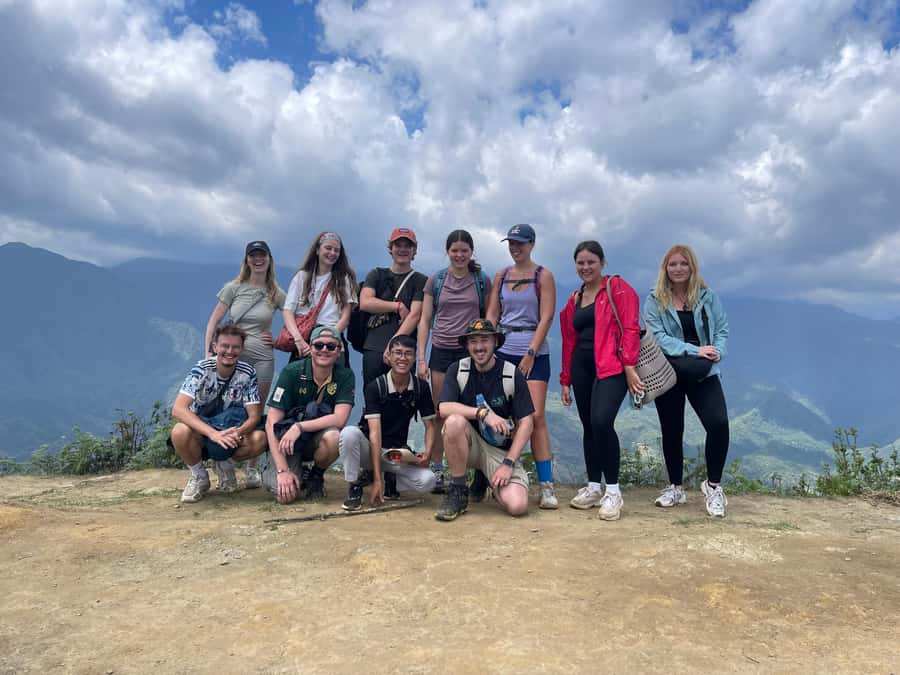
Guide Su receives the strongest praise connected with this experience. He is described as friendly, attentive, patient, and clear in English. More important, he is said to adjust the pace to the group and the weather.
That matters on a trek with changing surfaces and a long distance. A guide who simply marches ahead can make a difficult route feel much harder. Su’s reported habit of helping people through slippery sections and checking on the group is a meaningful advantage.
He also adds stories about Black Hmong culture, local traditions, and daily life in Sapa. You can ask questions as you go, which makes the cultural side more useful than a fixed speech delivered at one stop.
The experience provider is ASu Sa Pa Trekking Tour, and the listed languages are English and Vietnamese. The tour is presented as a guided experience, not a private custom expedition, so the level of individual attention can depend on the group size. Still, the guide’s ability to adapt is one of the strongest reasons to choose this walk.
How difficult is the 14 to 16 kilometer route?
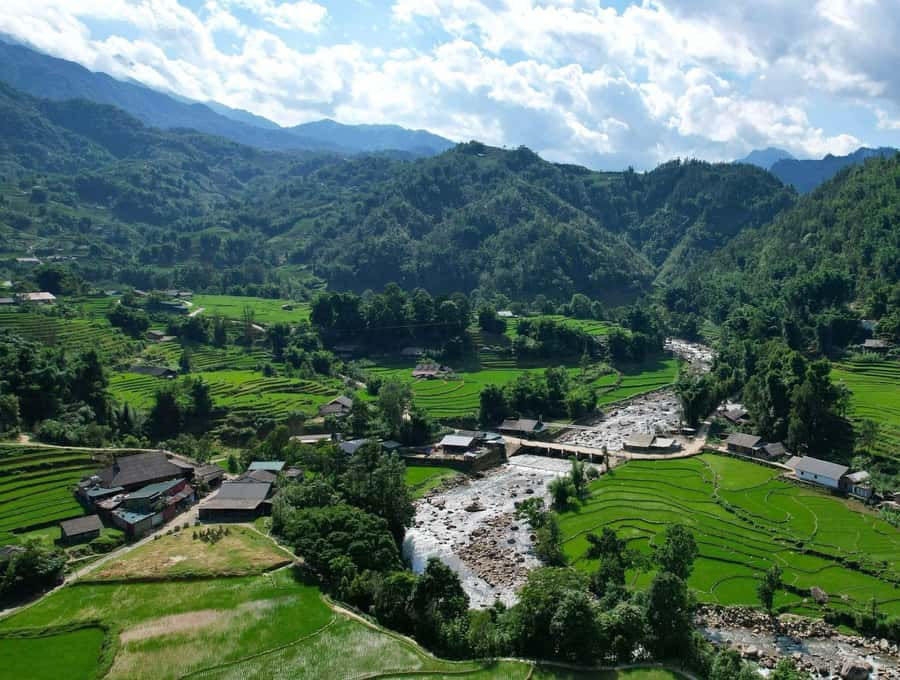
The distance is the key practical issue. The route description gives both 12 to 14 kilometers and 14 to 16 kilometers, while the more detailed instructions call it 14 to 16 kilometers. I would plan for the longer figure.
The trek includes:
- A 2.5-kilometer uphill start
- Mountain paths and village roads
- Downhill sections toward Hang Da
- More walking after lunch through Hau Thao and Muong Hoa
- Slippery or muddy ground after rain
- A finish at about 3:30 PM
You do not need to be an athlete, but you should be comfortable walking for most of a day. Good balance helps as much as stamina when the ground is wet.
This tour is not suitable for pregnant people, anyone with back problems or mobility impairments, or anyone dealing with a cold or altitude sickness. It is also not recommended for people afraid of heights. Those restrictions are worth taking seriously because mountain paths can feel exposed in places, and the day offers no easy shortcut once you are far along the route.
Wear broken-in walking shoes, not new footwear. Add a hat, sunscreen, snacks, and extra water. Weather can change, so pack with both sun and rain in mind.
Is $19 good value in Sapa?
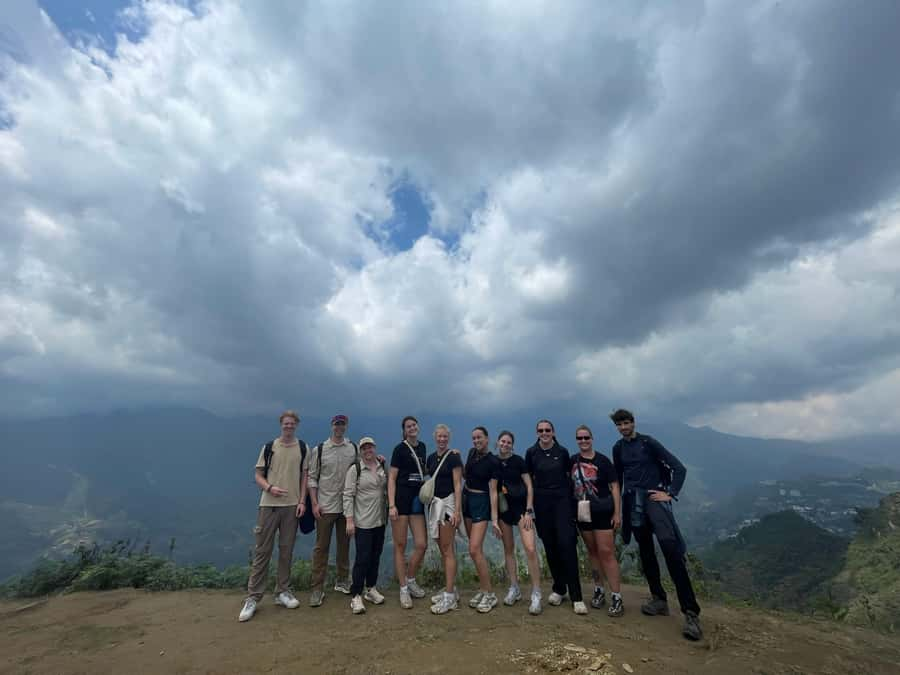
At $19 per person, this is a very good-value day if you want a proper walk rather than a short photo outing. The price includes an English-speaking guide, lunch at a local family restaurant, village entrance fees, transport back to Sapa after the village route, and a 500-milliliter water bottle.
You are also paying for route knowledge and support. On a dry day, the paths may be straightforward in places. In wet weather, having someone who knows the route and can help the group move safely is more important.
The low price does not mean the day is effortless or highly polished. You should expect a rural trek, basic lunch arrangements, changing weather, and muddy paths rather than hotel-style comfort.
The value is strongest for independent-minded visitors who want local scenery and village contact without arranging transport, a guide, and meals separately. If you only want a short walk near town, this is more distance and exertion than you need.
Small details that make the day smoother
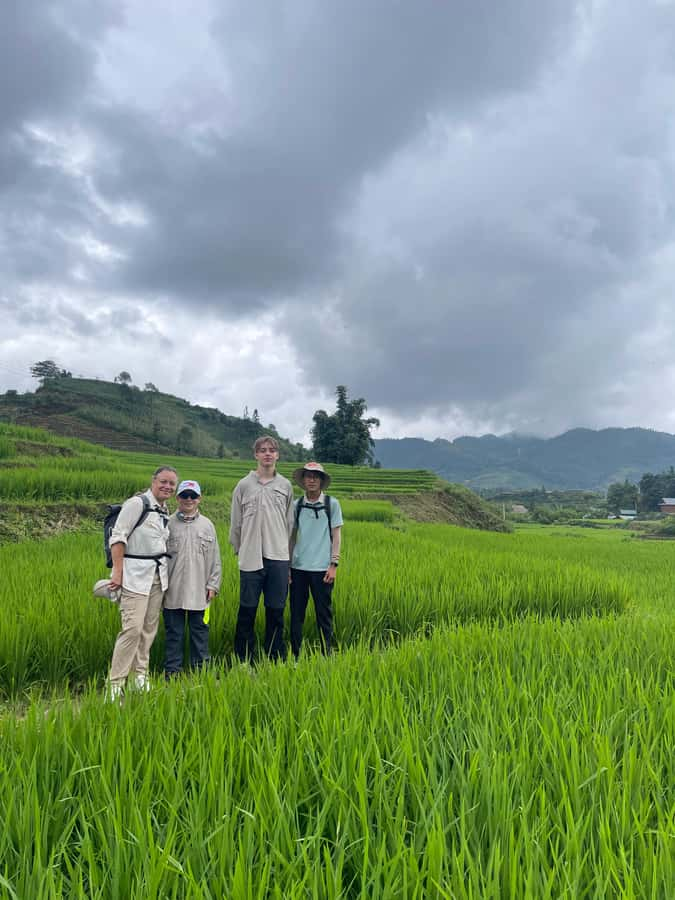
Leave your WhatsApp number when booking. The guide uses it to confirm the meeting details and send updates before the walk.
Meet at Sapa’s main church, where the guide will contact you before the start. The activity ends back at the meeting point in Sapa, at approximately 3:30 PM.
Bring a camera, but also bring practical items:
- Firm, comfortable shoes with grip
- A hat and sunscreen
- Snacks
- Extra water
- Clothes suited to changing weather
Smoking and littering are not allowed. The instructions also prohibit plastic bottles, so a reusable water container is the sensible choice, even though one 500-milliliter bottle is included.
The tour can be canceled up to 24 hours ahead for a full refund, and you can reserve now and pay later. Those policies help if your Sapa plans are still shifting.
Who should book this Sapa trek?
Book it if you want a full day on foot, broad views of Fansipan and Muong Hoa Valley, and a chance to see Black Hmong villages in a more direct way. It suits people who enjoy walking, asking questions, and accepting a little mud in exchange for better access to the countryside.
It is especially useful for first-time visitors to Sapa who want a guide to explain what they are seeing. Su’s clear English, patience, and care are strong reasons to consider this particular outing.
Think twice if you have limited mobility, back trouble, low stamina, a fear of heights, or a strong dislike of wet trails. A short Sapa viewpoint visit would be a better match.
For most fit walkers, I would book this tour. The route is long, but the combination of terraces, village paths, local food, and thoughtful guiding gives you more than a quick scenic stop. Just treat the 14 to 16 kilometers as real hiking, bring proper shoes, and be ready for the weather to have the final word.
FAQ
Where does the trek start?
You meet the guide in front of Sapa’s main church. The guide will message you before the tour to confirm the meeting details.
How long is the trek?
The detailed information describes the trek as 14 to 16 kilometers. An earlier route description gives 12 to 14 kilometers, so you should prepare for the longer distance.
What time does the tour finish?
The tour ends at approximately 3:30 PM and finishes back at the meeting point in Sapa.
Which villages does the route visit?
The route passes through Hang Da, Hau Thao, and Muong Hoa, all associated with the Black Hmong community.
Is lunch included?
Yes. Lunch is provided at a small restaurant run by a local family.
Is the trek difficult?
The trek can be challenging because it includes a 2.5-kilometer uphill section, long walking distances, and slippery paths in wet weather.
What should I bring?
Bring comfortable walking shoes, a hat, camera, snacks, sunscreen, and extra water. Prepare for changing weather conditions.
Who should not take this tour?
The trek is not suitable for pregnant women, people with back problems or mobility impairments, people afraid of heights, or anyone with a cold or altitude sickness.
More Rice Terrace Treks in Sa Pa
- Muong Hoa Valley Trek & Homestay Experience – 4D3N
★ 5.0 · 42 reviews - Sapa: Muong Hoa Mountain Views and Villages Trek with Lunch
★ 4.3 · 28 reviews - From Sapa: Muong Hoa Valley View & Village Trek 1-Day
★ 5.0 · 21 reviews - SAPA: 1-DAY TREKKING TOUR WITH LOCALS, LUNCH & RICE FIELDS
★ 4.7 · 18 reviews
Latest treks added in Sa Pa
- Soob Sapa Trekking Tour★ 4.3 · 3 reviews
- Sapa: Y Linh Ho – Lao Chai, and Ta Van Trekking Day Tour★ 5.0 · 25 reviews
- Sapa Trekking Private Tour With Ethnic Female Tour Guide★ 4.9 · 24 reviews
- Sapa Trekking – Waterfalls And H’mong Villages★ 5.0 · 2 reviews
- Sapa: Ta Phin Village Trek with Lunch and Bathing Experience★ 4.7 · 13 reviews
- Sapa Trekking Guide Francophone 2 days – 1 night★ 5.0 · 2 reviews
- Sapa: Trekking Through Terraced Rice Fields & Valley 1 Day★ 4.8 · 4 reviews
- Sapa small groupe activities: 1 Day trek – Meet the locals★ 4.7 · 3 reviews
Rice Terrace Treks, compared.
Muong Hoa Valley Trek and Local Ethnic Villages
Read our review →
Explore Sapa by TrekkingAdventures, Mountain,Rice fields
Read our review →
Selogriyo Temple and Trekking Java Rice Terraces, hidden waterfall -Nature Java
Read our review →
6-Hours Muong Hoa Valley Trek with Local Ethnic guide
Read our review →
Sapa Muong Hoa Valley & Ta Van Eco Village Scenic Tour (No Trek)
Read our review →
Daily Tour: Sapa Trekking in Muong Hoa valley, Bamboo forest
Read our review →
Rice Terrace, Holy Water Temple & Waterfalls Trek Tour
Read our review →Browse the lists this tour appears in