
REVIEW · KATHMANDU
Mardi Himal Trek
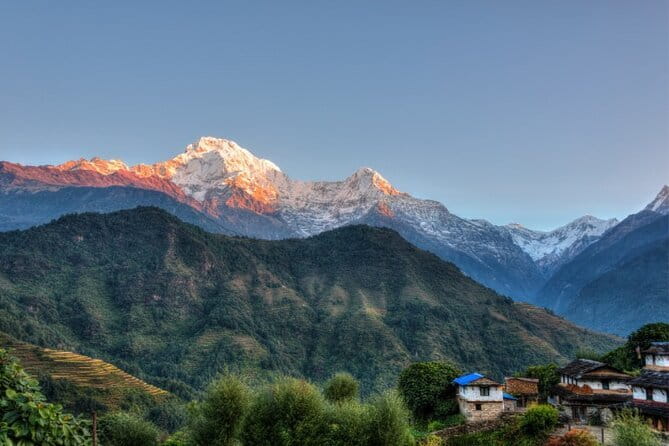
Mardi Himal is a fine choice if you want big Himalayan views without a crowded classic route. The trail slips through rhododendron forest, terraced farms, small settlements, and narrow mountain paths before reaching the open heights below Mardi Peak and Machapuchhre.
I like two things here: the quick change from forest to high mountain terrain, and the private guide service from pickup through drop-off. Guides such as Bashu Dev Bagale have been singled out for friendly, helpful care, including steady conversation on the trail.
The main catch is that the advertised details are not perfectly tidy. The trip is listed from Kathmandu, while trek arrangements in the supplied information refer to pickup and drop-off in Pokhara. The itinerary also gives few day-by-day details, so you should confirm transport, overnight stops, and exactly what the $1,080 price covers before paying.
Key points to know before you book
- Forest turns into high mountain country: The trail climbs through dense rhododendron forest and reaches open terrain at about 3,310 meters.
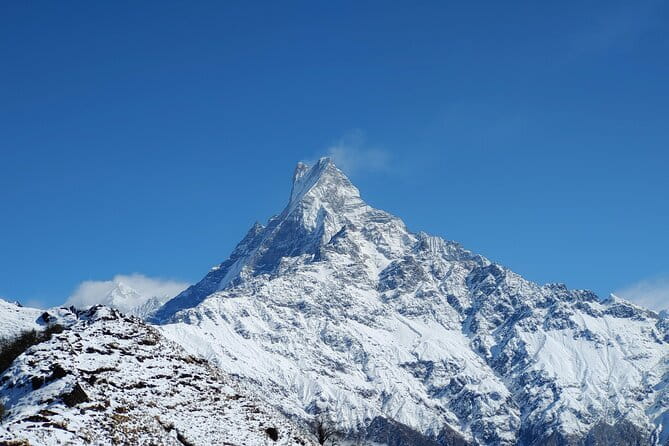
- Mardi View Point is the big payoff: The highest scenic point is described as a demanding but rewarding part of the trek, with views toward Mardi Himal, Machapuchhre, Hiunchuli, and Annapurna South.
- Private guiding keeps the trip personal: Only your group participates, and pickup is offered.
- Three meals are included during the trek: Breakfast, lunch, and dinner are listed, while bottled mineral water and snacks cost extra.
- Moderate fitness is required: This is a real mountain trek, not a sightseeing walk, and the package requires good weather.
- Check the operational details: The listed start time is 7:15 am, but the location and transport information deserve confirmation before booking.
Why Mardi Himal feels different from the main Annapurna routes
I like Mardi Himal because it gives you a compact taste of Nepal’s mountain country without asking you to commit to a long circuit. The route is described as a newer, less-used option in the Annapurna region, so the appeal is not only the views. It is the feeling of moving through quieter corners, where the trail passes local settlements, farms, rivers, and traditional village life.
The route begins in a more settled, cultivated setting. You pass terraced fields and local communities before the path works upward into forest. This change matters. Instead of seeing the mountains all at once, you earn them gradually, with the forest acting as a curtain that opens only after several hours or stages of climbing.
The path itself is not presented as a broad road or polished walkway. You should expect small, twisting paths, sometimes described as labyrinthine, through dense rhododendron woodland. That gives the walk a more remote feel, but it also means you need to pay attention to footing and stay with your guide.
At about 3,310 meters, the character of the trek changes sharply. Trees thin out, and the route reaches open high country with rugged slopes and wide mountain views. This transition is one of the strongest reasons to choose Mardi Himal. In a single trek, you get forest shade, village scenery, river crossings or river views, and exposed mountain terrain.
More Mardi Himal Treks in Kathmandu
- Mardi Himal Trek
★ 5.0 · 41 reviews - Mardi Himal Trek Nepal
★ 5.0 · 29 reviews - Mardi Himal Trek – 8 Days | Hidden Gem of the Annapurnas
★ 5.0 · 19 reviews
The early stages: farms, rivers, and village life
The first part of the experience is less about dramatic summits and more about seeing how people live in the foothills. Terraced farms break up the slopes, while small settlements offer a look at local routines and traditional culture.
I find this part valuable because it gives the mountain scenery context. The Himalayas are not an empty postcard. Families farm steep ground, settlements follow the contours of the hills, and sparkling rivers cut through the valleys. The trek lets you see those details at walking pace rather than through a vehicle window.
You should also expect the guide to play an important role here. The private format means the pace and conversation are centered on your group. The strongest praise for this service focuses on guides staying involved from pickup to drop-off, helping with practical needs, and keeping the atmosphere friendly.
The information does not provide a detailed list of villages or exact walking hours for each day. I would not book this expecting a fixed, fully itemized schedule unless the operator sends one to you directly. Ask for the overnight locations, daily distances, elevation gain, and transport plan before departure.
Rhododendron forest and the climb to 3,310 meters
The rhododendron forest is one of the route’s special features. The trail winds under thick woodland, creating a cool and enclosed section before the views open. Depending on the season, the forest may be especially attractive when rhododendrons flower, but the supplied details do not promise a particular bloom period.
This section can feel peaceful, but it is still a climb. A moderate fitness level is required, and the altitude becomes more important as you move higher. You should walk steadily, take breaks when needed, and avoid treating the first days as a race.
The forest also makes the route feel more secluded than many better-known Himalayan walks. You may find the narrow paths more interesting than a wide, busy trail, though they can be less comfortable for anyone who prefers easy walking surfaces.
At 3,310 meters, the forest gives way to a rougher mountain setting. This is a clear turning point. The visual reward is large, but so is the need for sensible pacing. If you have little hiking experience, ask how the itinerary handles acclimatization and how long you remain at each elevation.
Mardi View Point and the mountain panorama
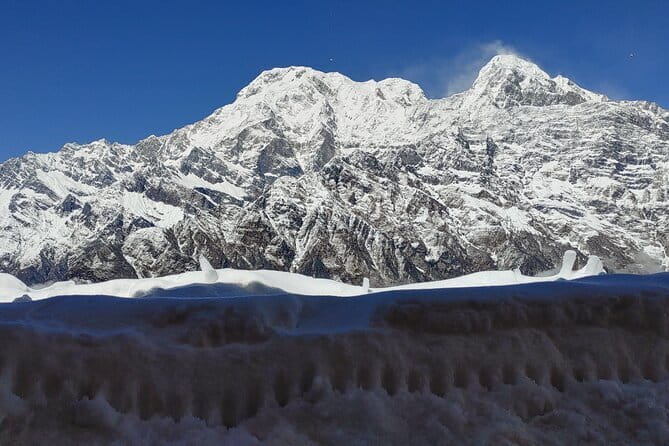
The high point of the trek is the Mardi View Point and the approach toward Mardi Himal Base Camp. The route reaches the foothills of Mardi Peak, with Machapuchhre rising nearby. The mountain views also include Hiunchuli and Annapurna South.
This is where the effort pays off. The open setting lets you see the difference between the lower forested hills and the sharper high peaks. The route is not only about reaching a named base camp. It is about the changing scale of the country around you, from farm terraces below to snow and rock above.
The summit-day or high-point section is likely to be the most demanding part of the trek, based on the altitude and terrain described. The supplied information does not give a precise elevation for the view point or base camp, so ask the operator for that figure. You should also confirm whether the itinerary reaches Mardi Himal Base Camp itself or a particular view point below it.
That distinction matters. Different trekking companies sometimes use similar names for high points, view points, and base camp routes. A clear map and a day-by-day plan will help you know exactly what you are paying to see.
The views are the strongest part of the package, but mountain weather can change plans. The operator states that poor weather may lead to a different date or a full refund. That is useful protection, although the general cancellation rule is strict: if you cancel or request a change for another reason, the payment is not refunded.
Another trail to compare in Kathmandu:
- Everest Base Camp Trek – 14 Days
★ 5.0 · 1,499 reviews - Everest Base Camp Trek
★ 5.0 · 842 reviews - Everest Base Camp Trekking
★ 5.0 · 485 reviews - Annapurna Circuit Trek with Tilicho Lake
★ 5.0 · 368 reviews
What the private format adds
This is a private tour, so only your own group participates. That gives you more control than a large group departure. You can ask questions, walk at a manageable pace, and spend more time talking with the guide about local culture, food, farms, and the route.
The guide service receives the clearest praise in the supplied feedback. The names listed include Bashu Dev Bagale, and the strongest comments describe guides as friendly, helpful, and present from the pickup point to the final drop-off. One account also points to regular conversation during the trek, which can make long walking days feel more social and less tiring.
I would still ask for the name of your assigned guide before departure. One guide’s performance does not guarantee the exact same person or service on every date. Confirm who will meet you, where the pickup occurs, and how the return transfer works.
The private format may not be the cheapest way to trek if you are traveling alone. It makes better financial sense for a couple, family, or small group that values flexibility and personal attention. For a family, the moderate fitness requirement should be taken seriously, especially if younger members are joining.
Meals, water, and what you should budget for
The package lists breakfast, lunch, and dinner during the trek. The information describes these as three meals each day, or B/L/D. That is useful because food costs can add up on a mountain route, and having meals included simplifies the daily routine.
The package does not include bottled water. Tap water is included if you choose it, while mineral water must be purchased. I would budget for bottled water or ask the operator about the available tap-water arrangements before leaving. The listing also excludes snacks, so carry extra money for anything between meals.
The food is presented as unlimited in the supplied details, but there is no menu or promise of particular dishes. Expect the meals to support a full day of walking rather than provide restaurant-style choice. If you have dietary restrictions, ask for confirmation before booking.
One odd detail is the inclusion of snorkeling equipment. Snorkeling does not fit the described mountain trek, so I would treat this as an apparent package error and ask the operator to clarify. Do not assume it has any practical value on this route.
Is $1,080 good value for 10 days?
At $1,080 per person, this is not a budget walk. The value depends on what is included beyond the listed meals and private transport. The package offers a private group, pickup, a guide-led trek, transportation, and three meals during the trekking portion. Those benefits can be worthwhile if you prefer a managed trip and do not want to arrange each segment yourself.
The price is harder to judge because the supplied details do not clearly explain accommodation, permits, porter service, internal flights or long-distance transfers, or the exact number of included trekking days. I would ask for a full cost sheet before paying. A low headline price can become less attractive if important items are added later.
For two or more people traveling together, the private arrangement may offer fair value. You are paying for a quieter route and personal service, not just a bed and a trail. For a solo hiker, compare the cost with other Mardi Himal packages and check whether accommodation, permits, and transfers are covered.
The 4.8 rating from six submitted evaluations suggests a strong overall response, but the sample is small. I would give special weight to the repeated praise for guide care and organization, while also noting one clear concern about sticking to the stated itinerary. That is a useful warning: ask for the schedule in writing and speak up if the route changes.
Transport, timing, and the Kathmandu or Pokhara question
The listed start time is 7:15 am, so you should be ready early. Pickup is offered, and private transportation is included, which removes some of the usual stress at the beginning and end of a trek.
There is a practical inconsistency you should settle before booking. The experience location is shown as Kathmandu, yet the supplied trip details describe pickup at Pokhara and return to Pokhara. That may reflect a wider Nepal package, an administrative listing location, or a specific departure arrangement. Do not assume the price includes transport between Kathmandu and Pokhara.
Ask these questions directly:
- Is pickup in Kathmandu, Pokhara, or both?
- Where does the trek officially begin?
- Is the return drop-off in Pokhara?
- Are transfers between major cities included?
- What time should you be ready on the first morning?
These are not minor details. A transfer between Kathmandu and Pokhara can affect both your budget and the number of days you need in Nepal.
Who should choose this trek?
I would recommend Mardi Himal to you if you want a shorter Himalayan trek with strong mountain views, a private guide, and a quieter route than the best-known Annapurna trails. It also suits people who enjoy cultural contact, village scenery, and changing terrain rather than a single type of mountain walk.
You should be comfortable with sustained uphill walking and rough mountain paths. The operator asks for moderate physical fitness, and the high section reaches about 3,310 meters before continuing toward the Mardi base area. If altitude or steep walking is a concern, ask for the exact daily schedule and elevation profile.
This trip may not suit you if you want a luxury itinerary, a fully itemized schedule at the time of booking, or complete flexibility to cancel. It is also not ideal if you expect all drinks and snacks to be covered or if you prefer a large social group.
Service animals are allowed, and the experience is listed near public transportation, but the route itself remains a serious mountain trek. Those points do not remove the need to check fitness, transport, and trail conditions with the operator.
Should you book the Mardi Himal Trek?
I would book this trek for the forest-to-high-mountain contrast, the private guide service, and the chance to reach a quieter part of the Annapurna region. The view toward Mardi Peak, Machapuchhre, Hiunchuli, and Annapurna South is the main prize, while the farms, rivers, and settlements make the walk feel connected to everyday Nepal.
Before paying $1,080, I would get the full day-by-day itinerary, confirm Kathmandu versus Pokhara pickup, and ask what accommodation, permits, transfers, and porter services are included. I would also clarify the strange snorkeling-equipment entry and the exact meaning of the three included trekking meals.
If those details check out, this is a strong match for a moderately fit hiker who values personal guiding and a less-used route. If the operator cannot explain the schedule and inclusions clearly, compare other packages first.
FAQ
How long does the Mardi Himal Trek take?
The trek lasts approximately 10 days.
What is the price per person?
The listed price is $1,080 per person.
What time does the experience start?
The listed start time is 7:15 am.
Are meals included?
Yes. Breakfast, lunch, and dinner are listed as included during the trekking portion.
Is bottled water included?
No. Tap water is included if you choose it, but bottled mineral water must be purchased. Snacks are also not included.
What happens if bad weather cancels the trek?
The experience requires good weather. If poor weather causes cancellation, you are offered a different date or a full refund. Personal cancellations or requested amendments are non-refundable.
Latest treks added in Kathmandu
- Private Manaslu Circuit Trek at Himalayas★ 5.0 · 3 reviews
- Ghorepani Poonhill Trek★ 5.0 · 5 reviews
- Ghorepani Poon Hill Trek★ 5.0 · 16 reviews
- Upper Mustang Trekking★ 3.0 · 2 reviews
- Amazing 1 Day Trekking Experience in Kathmandu Nepal★ 5.0 · 24 reviews
- Upper Mustang Trekking★ 5.0 · 2 reviews
- Upper Mustang Trekking★ 5.0 · 4 reviews
- Upper Mustang Trek★ 5.0 · 5 reviews
Mardi Himal Treks, compared.
Mardi Himal Trek – 8 Days | Hidden Gem of the Annapurnas
Read our review →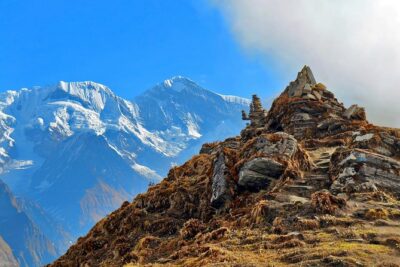
Browse the lists this tour appears in