
REVIEW · NEPAL
Mardi Himal Trek -5 Day Short Trek From Pokhara
Mardi Himal gives you a close look at the Annapurna region without the larger crowds found on Nepal’s best-known routes. You walk from Pokhara’s Lakeside area through rhododendron forest, high grasslands, and Gurung villages, then reach viewpoints facing Machhapuchhre, the distinctive Fishtail mountain.
I like the direct mountain access and the chance to see village life rather than just pass through a string of lodges. I also like that the package includes a guide, permit, accommodation, transport, and all listed meals. The main caution is the demanding schedule: the route reaches about 3,532 meters, and some days are described as lasting up to 12 hours.
Key things to know before booking
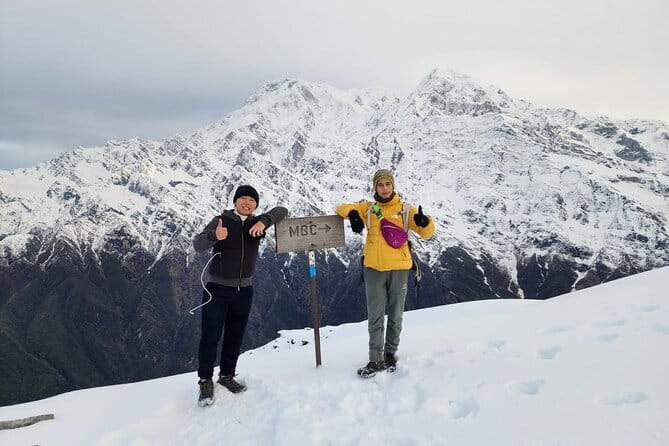
- Mardi Base Camp reaches 5,553 meters, with views toward Annapurna I, Annapurna South, Hiunchuli, Baraha Shikhar, Machhapuchhre, and Lamjung Himal.
- The route begins and ends in the Annapurna foothills, moving from Pokhara’s Lakeside area toward Low Camp, High Camp, and Siding.
- High Camp is the scenic payoff, with open grasslands replacing the forest and broad views of the snowy peaks.
- The descent can be hard on your legs, especially where steep stone steps are involved.
- Private groups are limited to 10 people, making it easier to walk at your group’s pace and ask for help.
- The $499 price includes the main trekking costs, but personal expenses, insurance, and any extra gear are separate.
Why Mardi Himal makes a good short trek
The Mardi Himal route is a compact mountain walk with a strong change of scenery. You start near Pokhara, where cafés, hotels, and shops line Lakeside Road, then move into forest, open hillside, alpine pasture, and high mountain viewpoints.
That variety is the route’s real strength. You are not simply walking uphill toward one lookout. The trail gives you several kinds of Nepal in five days: forest birds and rhododendrons, small settlements, traditional Gurung life, and wide views of the Annapurna range.
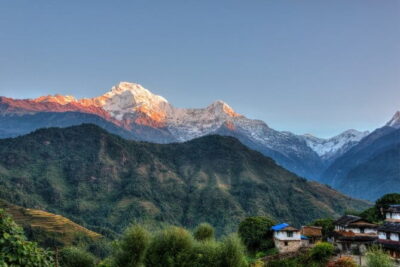
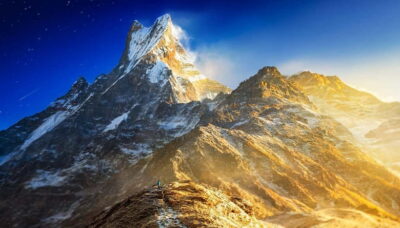
The mountain profile is especially impressive. Machhapuchhre, also called Fishtail, rises to 6,997 meters and is one of the most recognizable peaks in the region. From higher on the route, you may also see Annapurna I at 8,091 meters, Annapurna South at 7,219 meters, Hiunchuli at 6,441 meters, Gangapurna at 7,454 meters, Baraha Shikhar at 7,647 meters, and Lamjung Himal at 6,983 meters.
The route is private rather than a public group departure. Your booking can include up to 10 people, so you have a more personal setup than on a large bus-and-walking tour. That matters on a demanding route, since your guide can keep a closer eye on pace, weather, and how everyone is handling the altitude.
More Mardi Himal Treks in Nepal
- Pokhara: 4-Day Mardi Himal Trek
★ 4.9 · 59 reviews - Private Mardi Himal Trek
★ 5.0 · 42 reviews - Mardi Himal Trek
★ 5.0 · 41 reviews
Day 1: Start at Pokhara Lakeside
The meeting point is on Lakeside Road in Pokhara, with a scheduled start at 7:45 a.m. Private transportation is included, but the supplied plan gives few details about the exact drive or walking arrangements on this first day.
Treat this morning as your final preparation point. Keep water, a light layer, rain protection, sun protection, and any medicines in your day bag. You can leave extra luggage at a hotel in Pokhara or Kathmandu, and the operator says it will handle storage until you return.
Pokhara is a useful place to arrange trekking gear. Required equipment can be bought or rented in either Pokhara or Kathmandu, with help from your guide. That is handy if you arrive without poles, warm layers, or other mountain clothing.
The lack of detail for Day 1 is worth clarifying before you pay. Ask where you sleep that night, where the trek officially begins, and how the final return to Pokhara is arranged. The listed plan ends at Siding on Day 5, so the onward transport should be confirmed in advance.
Day 2: Forest trails and the long climb to Low Camp
The route heads into the Annapurna region and continues to Low Camp at about 2,970 meters. This is the major approach day, and the schedule describes it as lasting up to 12 hours.
You can expect the forest to be one of the most appealing parts of the climb. Rhododendron trees line sections of the route, and the trail passes through changing vegetation as it gains height. The walk also introduces you to the quieter side of the region, with hills, mountain views, and small settlements rather than city traffic.
This day demands steady pacing. A long uphill walk can feel manageable early on, then become tiring after several hours. I would keep your pack light, eat the included meals even if your appetite changes, and tell your guide early if you develop a headache, nausea, unusual fatigue, or trouble sleeping.
Accommodation on the trek and dinner are included, along with breakfast and lunch. The package lists four breakfasts, five lunches, and four dinners, so the meal count broadly covers the five-day schedule, though the exact meal timing should be confirmed with the operator.
Day 3: Leaving the trees for High Camp
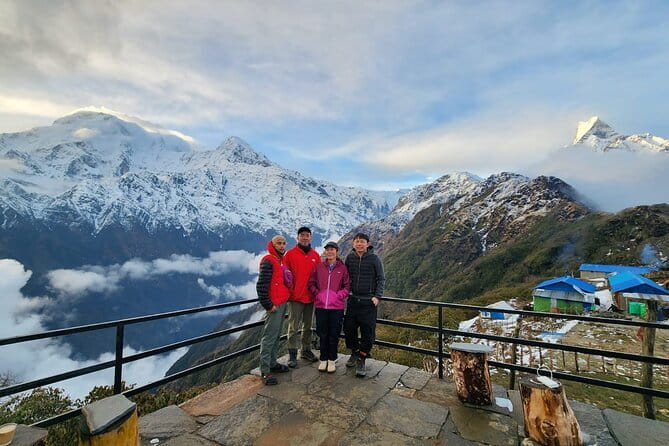
On the way to High Camp, the forest begins to thin. Open fields and grasslands replace much of the woodland, giving you a clearer view of the Annapurna mountains.
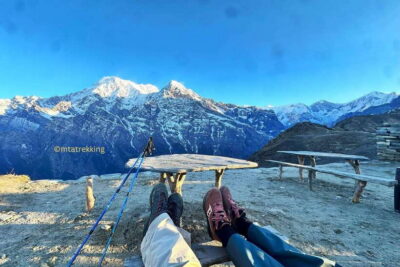
High Camp is the scenic center of the trek. The higher you walk, the less enclosed the route feels. Instead of looking through trees toward distant peaks, you begin to see the full mountain wall more openly. Machhapuchhre is a major feature, with the Annapurna range filling out the wider view.
The plan again describes the day as up to 12 hours, even though it also calls the walk shorter than the previous day. That wording suggests a demanding but more manageable day, yet you should ask the operator how much actual walking time is expected under normal conditions.
You sleep at High Camp. This is an important altitude step, since the tour reaches approximately 3,532 meters. Altitude problems can affect fit people as well as less active walkers. The operator requires travel insurance covering medical expenses and emergency repatriation, and proof must be shown to the tour leader on the first day.
The guides have basic first-aid training and know the closest medical facilities. That is useful, but it does not replace proper insurance or a sensible approach to altitude. Speak with your doctor before departure if you have any health concerns.
More five-day treks in Nepal
- Annapurna base camp trek 5 Days
★ 5.0 · 252 reviews - Kathmandu to Annapurna Base Camp (ABC) 5-Day Trek
★ 5.0 · 102 reviews - Kathmandu/Pokhara: 5-Day Annapurna Base Camp (ABC) Trek
★ 4.9 · 72 reviews - Pokhara: 5 Day Annapurna Base Camp Trek & Natural Hot Spring
★ 4.9 · 44 reviews
Day 4: Mardi Base Camp and the best mountain views
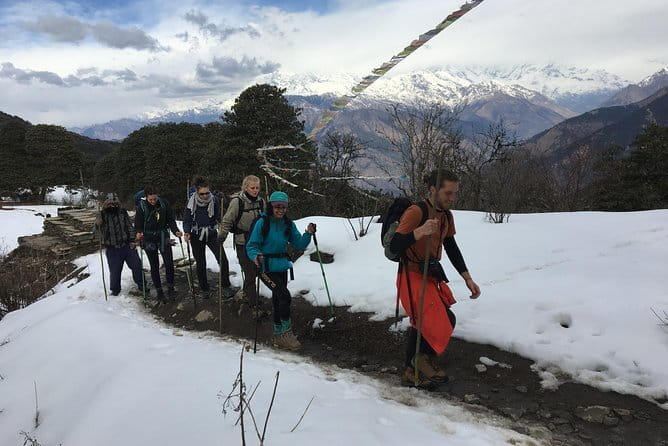
Day 4 begins early, with an uphill walk from High Camp toward Mardi Base Camp. This is the day built around the mountain panorama.
From the higher viewpoint, you may see Mardi Himal, Annapurna I, Annapurna South, Hiunchuli, Baraha Shikhar, Machhapuchhre, and Lamjung Himal. Weather controls how much of this you actually see. On a clear morning, the view can be the strongest part of the entire route. Clouds can also move in quickly, so the early start makes practical sense.
You have a choice between continuing to Mardi Base Camp or stopping at the upper viewpoint. The upper viewpoint still offers strong mountain scenery and may suit you better if the final uphill section feels too hard. This flexibility is one of the better features of a private guided trip. You can discuss the choice with your guide rather than treating the route as a race.
After time at the top, you return to High Camp for the night, with the option of continuing toward Badal Danda or Low Camp. Because the plan gives both options, ask before departure where your group is expected to sleep and how the choice affects the next day.
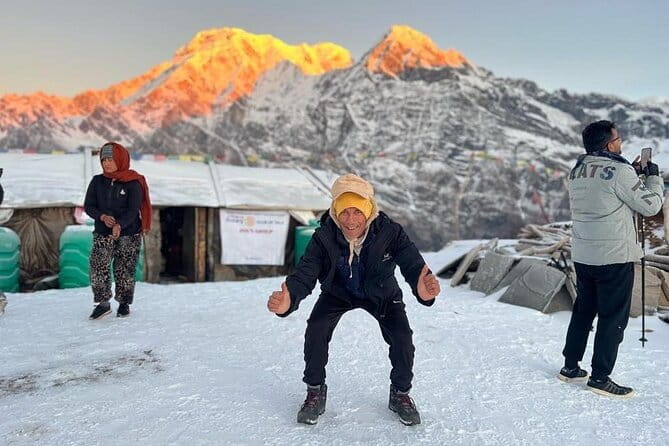
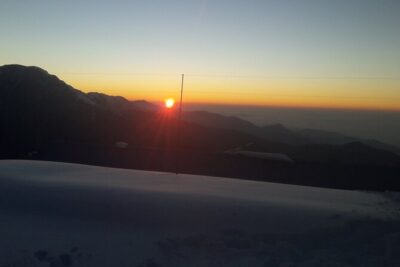
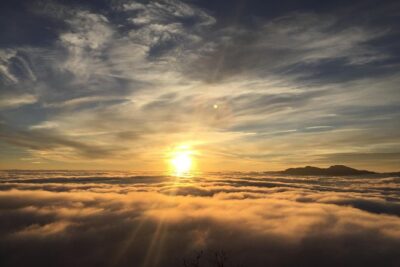
This is also the best morning for sunrise photography. The tour highlights sunrise and sunset views, but visibility is never guaranteed in mountain weather. Bring warm clothing for waiting outside, even if the afternoon feels mild.
Day 5: Descending to Gurung village life at Siding
The route drops toward Siding, a traditional village associated with the Gurung community. The walk is mostly downhill, and the changing scenery gives you a different view of the hills than the climb up.
Siding is valuable because it is not just a stopping point on a map. It offers a look at local settlement patterns, daily routines, and traditions among ethnic Gurung residents. The tour also highlights Gurung and Magar culture, so this section adds a human element to a trip otherwise centered on peaks and altitude.
Downhill walking is not automatically easy. One of the route’s practical drawbacks is the steep stone-step descent reported on a longer version of this trek. A five-day plan compresses the walking, and your knees and thighs may feel the strain more than they did on the climb.
The supplied schedule says you stay overnight at Siding, but it does not clearly state the final transfer back to Pokhara. That is the single most important logistical question to ask before booking. Confirm whether transportation from Siding to Pokhara is included in the quoted price and when you will arrive.
What the $499 price covers
At $499 per person, the package includes private transportation, a tour guide, trekking permits, accommodation during the trek, four breakfasts, five lunches, and four dinners. For a private five-day trek, that is a reasonable bundle if the transportation covers the full route and the accommodation is acceptable to you.
The price also removes several tasks that can be awkward to arrange alone. You do not need to organize a guide, permit, lodging, and meal stops separately. The guide can also help arrange required equipment rental or purchases in Pokhara or Kathmandu.
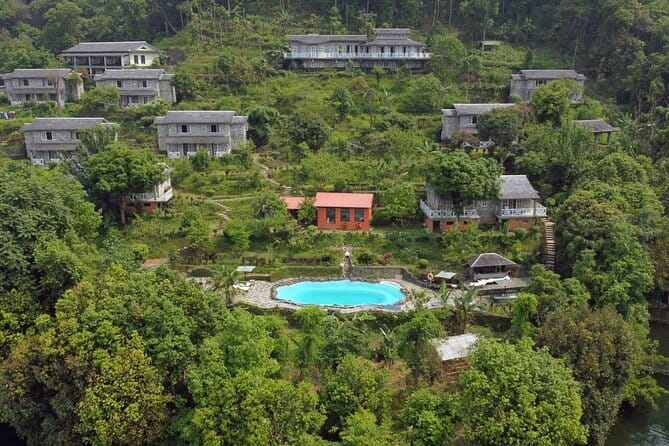
Personal expenses are excluded. Plan for your own drinks, snacks, tips, gear, insurance, and any other purchases. The listing does not give a detailed gear list or accommodation standard, so ask about room arrangements, blankets, bathrooms, and what you should carry each day.
Group discounts are offered, though the exact discount is not stated. Since the activity is private and accepts up to 10 people per booking, a small group may find the per-person value attractive. Solo walkers should compare the cost with a larger group departure, but they should also weigh the extra privacy and direct support.
Guides and the human side of the trek
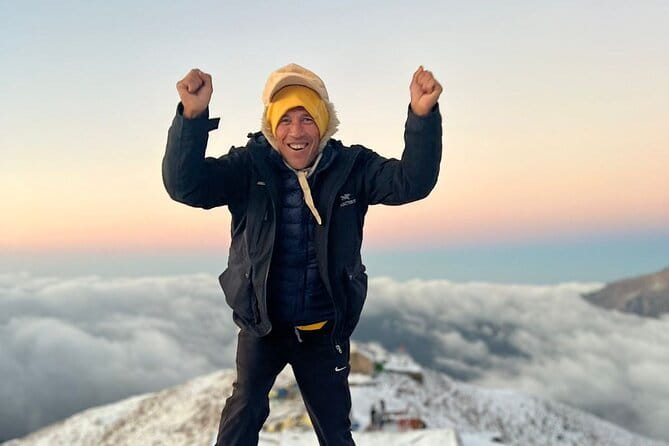
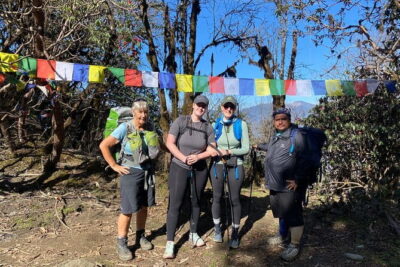
The operator assigns a guide to the private group, and several guide names connected with past departures include Raj, Sim, Varat, Subas, and Ashok. Their roles go beyond leading the path. A good guide can help you adjust your pace, arrange gear, watch for altitude symptoms, and handle small problems such as leeches during wet conditions.
Sim was specifically associated with helping a first-time trekker adjust to mountain life and dealing with leeches. Raj was praised for keeping a first serious trek manageable and supportive. Ashok and porter Roshan were described as warm and helpful on a monsoon departure.
You cannot assume which guide you will receive, so ask when booking. If you have never trekked at altitude, tell the operator clearly. It may help them match you with a guide suited to your pace and needs.
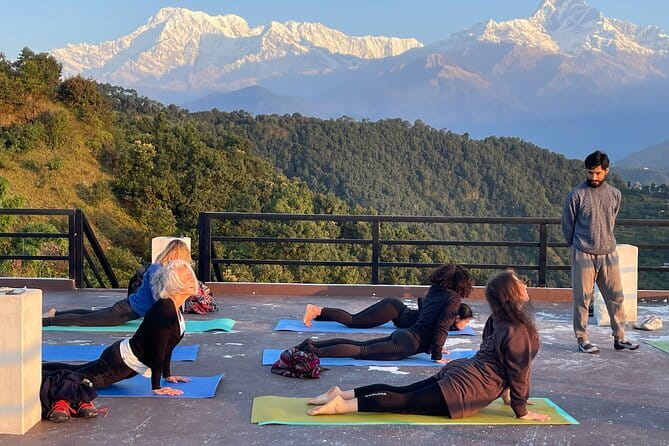
The route can also be paired with yoga arrangements through this operator, but that is not part of the stated five-day package. Do not assume yoga sessions are included unless you arrange them separately.
Weather, altitude, and what to pack
The highest stated point is about 3,532 meters, with extreme weather changes possible. You may experience cold, wind, rain, sun, or poor visibility within the same day.
Pack for changeable conditions:
- Warm layers and a waterproof outer layer
- Strong walking shoes or boots
- Sun protection and a hat
- Water bottles and personal snacks
- Personal medicines and basic toiletries
- A small daypack
- A headlamp and spare batteries
- Trekking poles if you find steep descents hard
These gear suggestions are practical rather than a formal operator-issued list. Confirm the required equipment before departure, especially if you plan to rent items in Pokhara or Kathmandu.
The minimum age is listed as five, and most people can participate, but the route is still physically demanding. The age rule does not mean the trek suits every young child. Consider walking ability, altitude response, and the length of the daily schedule.
Should you book the Mardi Himal short trek?
Book it if you want a private Annapurna trek with major mountain views, a guide, included meals, and a route that reaches high viewpoints in only five days. It suits active visitors who want more than a day hike but do not have time for a longer Nepal itinerary.
Think twice if you dislike long walking days, steep stone steps, uncertain weather, or basic mountain accommodation. The schedule is tight, and the altitude deserves respect. I would also confirm the Siding-to-Pokhara transfer, the exact overnight plan on Days 3 and 4, and the full gear list before committing.
For a first serious trek, the route can work well with a supportive guide and sensible pacing. If you have flexibility, ask if a six-day version is available. Adding a day may make the descent easier and leave more time to enjoy the villages and mountain views instead of simply covering ground.
FAQ
Where does the Mardi Himal Trek begin?
The meeting point is on Lakeside Road in Pokhara, Nepal. The scheduled start time is 7:45 a.m.
How long is the trek?
The listed duration is approximately five days.
How high does the trek go?
The activity information warns of walking at approximately 3,532 meters, or 11,588 feet, above sea level. Mardi Himal itself is listed at 5,553 meters.
What mountains can I see?
Possible views include Mardi Himal, Machhapuchhre, Annapurna I, Annapurna South, Hiunchuli, Baraha Shikhar, Gangapurna, and Lamjung Himal.
Is transportation included?
Private transportation is included. Since the published schedule ends at Siding, confirm with the operator whether the return transfer from Siding to Pokhara is included.
Are meals included?
Yes. The package includes four breakfasts, five lunches, and four dinners.
Is accommodation included?
Yes. Accommodation during the trek is included. The itinerary lists overnight stays at High Camp and Siding, but it does not give detailed room or facility information.
Do I need travel insurance?
Yes. Insurance covering medical expenses and emergency repatriation is required, and proof must be shown to the tour leader on the first day.
Can I cancel for a full refund?
You can receive a full refund if you cancel at least 24 hours before the experience start time. Cancellations or changes made within 24 hours are not accepted for a refund.
Latest treks added in Nepal
- Private Manaslu Circuit Trek at Himalayas★ 5.0 · 3 reviews
- Ghorepani Poonhill Trek★ 5.0 · 5 reviews
- Ghorepani Poon Hill Trek★ 5.0 · 16 reviews
- Upper Mustang Trekking★ 3.0 · 2 reviews
- Amazing 1 Day Trekking Experience in Kathmandu Nepal★ 5.0 · 24 reviews
- Upper Mustang Trekking★ 5.0 · 2 reviews
- Upper Mustang Trek★ 5.0 · 5 reviews
- Upper Mustang Trekking★ 5.0 · 4 reviews
Mardi Himal Treks, compared.
Mardi Himal Trek – 8 Days | Hidden Gem of the Annapurnas
Read our review →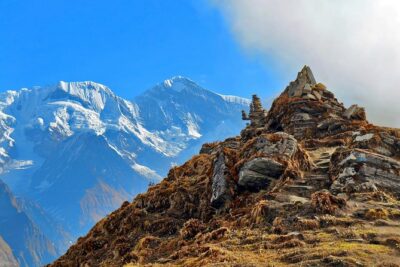
Browse the lists this tour appears in