
REVIEW · KATHMANDU
Luxury Everest Base Camp Trek -11 Days
The clever part of this 11-day Everest Base Camp trek comes at the end: after walking to Gorakshep, you return to Kathmandu by shared helicopter instead of retracing the trail. That gives you mountain views from both trail level and the air, while cutting out several hard walking days.
I like the two planned acclimatization days, one in Namche Bazaar and one in Dingboche. I also like the practical support: upgraded teahouses, a guide and porter service, airport transfers, permits, meals on trek, and rescue arrangements are built into the price.
The trade-off is clear. This is still a demanding high-altitude trek, not a gentle luxury holiday. You reach 5,545 meters at Kalapatthar, and the return helicopter depends on suitable weather, so you need travel insurance, patience, and a reasonable level of fitness.
Key points before you book
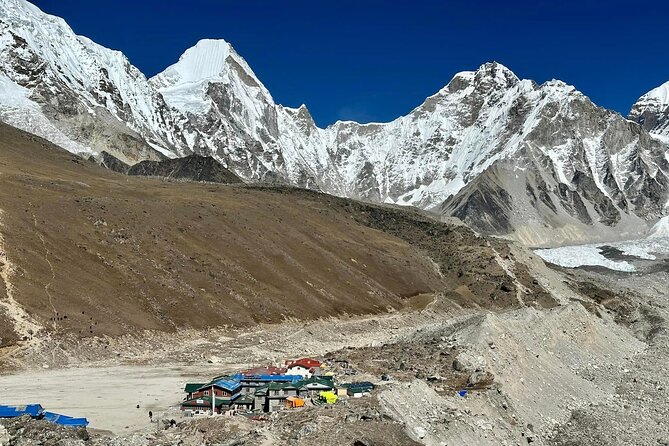
- A helicopter return from Gorakshep: You walk up through the Khumbu Valley and fly back toward Kathmandu, saving the long descent.
- Two acclimatization days: Time in Namche Bazaar and Dingboche helps you adjust before the highest sections.
- Upgraded teahouse accommodation: You share twin rooms, with modern amenities compared with basic trekking lodges.
- Experienced local support: Prakash is identified as a guide, while company leader Bhagwat Simkhada handles arrangements and communication.
- Kalapatthar at 5,545 meters: This is the high point of the trip and one of the best places on the route for Everest views.
- A private trip for your group: Only your own party takes part, with one porter assigned for every two clients.
Why the helicopter return changes the trek
Most Everest Base Camp routes require you to walk back down the same valley after reaching the goal. Here, the return from Gorakshep is planned by shared helicopter. That is the main reason this trip can fit the Everest experience into 11 days while still allowing time for altitude adjustment.
You should understand the wording carefully. The helicopter fare is included, but the flight is shared, and mountain flying depends on weather. If poor conditions cause delays or a change in plans, extra mountain costs are not included. Travel and rescue insurance is also your responsibility.
The flight adds more than speed. From the trail, you see the valley in sections, one ridge at a time. From the air, you can gain a wider view of the Himalayan ranges and the route you have just walked. You also avoid the physical strain of descending several thousand meters on foot.
This makes the plan appealing if you want the classic Everest Base Camp route but have limited time, dislike the idea of a long return walk, or want to reduce the wear on your knees. It does not remove the hard part. You still need to climb slowly, sleep at altitude, and reach Base Camp and Kalapatthar on foot.
More Everest Base Camp Treks in Kathmandu
- Everest Base Camp Trek – 14 Days
★ 5.0 · 1,499 reviews - Everest Base Camp Trek
★ 5.0 · 842 reviews - Everest Base Camp Trekking
★ 5.0 · 485 reviews
Kathmandu arrival and the first night
Your trip begins with pickup at Tribhuvan International Airport. A company representative transfers you to a hotel by private vehicle, giving you a simple start after an international flight.
Two nights in a five-star Kathmandu hotel with breakfast are included. That is useful for sorting gear, meeting the guide, and recovering before the early mountain flight. The schedule begins at about 6:00 am, so do not treat the first evening as a late-night city break.
The final night includes a farewell dinner at an authentic Nepalese restaurant with a cultural performance. It is a pleasant way to close the trip, though all meals in Kathmandu beyond the included breakfasts are your own expense.
Day 2: Kathmandu to Lukla and the first walk
The mountain section starts with a flight from Kathmandu to Lukla, which sits at about 2,860 meters. The information also notes Kathmandu to Lukla or Ramechhap to Lukla flights, so your exact departure airport may depend on operating arrangements.
From Lukla, you begin walking toward Phakding. The first day on foot is useful because it gives you a gradual introduction to the trail rather than pushing directly into a long, high climb.
Lukla flights can be affected by mountain weather. Build flexibility into your wider Nepal plans, especially if you have an international flight immediately after the trek. The package covers the scheduled flight, but extra nights caused by delay are not included.
Day 3: Phakding to Namche Bazaar
The route from Phakding to Namche Bazaar takes you farther into the Khumbu Valley and brings the first major climb of the trip. Namche sits at about 3,440 meters and is the best-known settlement on this part of the route.
Namche is not just a place to sleep. It is the first point where altitude becomes a serious part of the trip, and it is also the center of local trekking life in the itinerary. You will have time to settle into the rhythm of walking, eating, resting, and watching your body for signs of altitude trouble.
The package includes an acclimatization day next, which is important. A rushed schedule might save time on paper, but it would make the higher sections less sensible.
More Trekking Tours in Kathmandu
- Annapurna Circuit Trek with Tilicho Lake
★ 5.0 · 368 reviews - Everest Base Camp Trekking – 13 Day
★ 5.0 · 365 reviews - Everest Base Camp Trek
★ 5.0 · 350 reviews - Everest Base Camp Trek -14 Days
★ 5.0 · 321 reviews
Day 4: Acclimatization around Namche
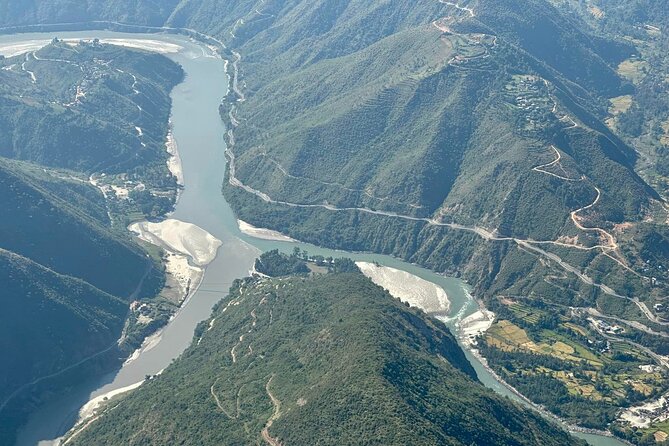
You spend the day at roughly 3,880 meters, with time to adjust before continuing upward. The plan includes an opportunity to visit Hotel Everest View, which gives this rest day a worthwhile purpose rather than making it a day of complete inactivity.
The smart approach is to walk gently, follow your guide’s pace, and avoid treating the acclimatization day as a test of strength. You are preparing for Dingboche, Lobuche, Gorakshep, and Kalapatthar, not trying to prove anything in Namche.
This is one of the strongest parts of the schedule. The trek gains height quickly over several days, so a planned pause gives you a better chance of enjoying the route instead of merely enduring it.
Day 5: Hotel Everest View to Tengboche
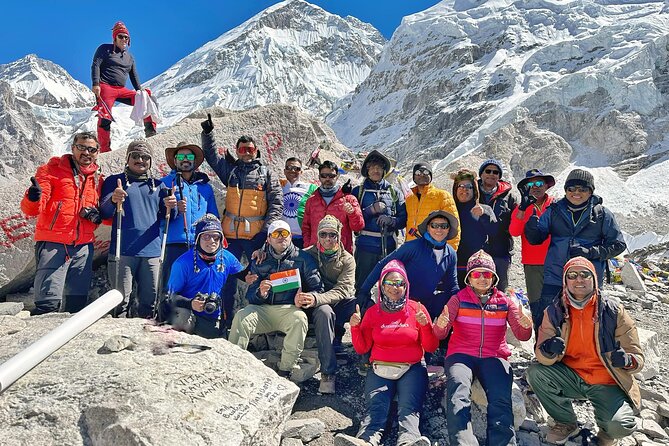
You leave Hotel Everest View for Tengboche, a walk of about four to five hours. Tengboche sits at approximately 3,820 meters, making it a notable stop before the trail moves higher into the valley.
The day is moderate by the standards of this trek, but you are already at serious altitude. The key benefit is the gradual rise. You continue forward without making the sharp jump that can cause problems on high mountain routes.
Tengboche is also a memorable setting in the schedule because it gives you a pause between the busier Namche area and the more severe high-altitude stages. The route is not a sightseeing circuit with long stops at every point, so much of the pleasure comes from the changing views as you walk.
Day 6: Diboche to Dingboche
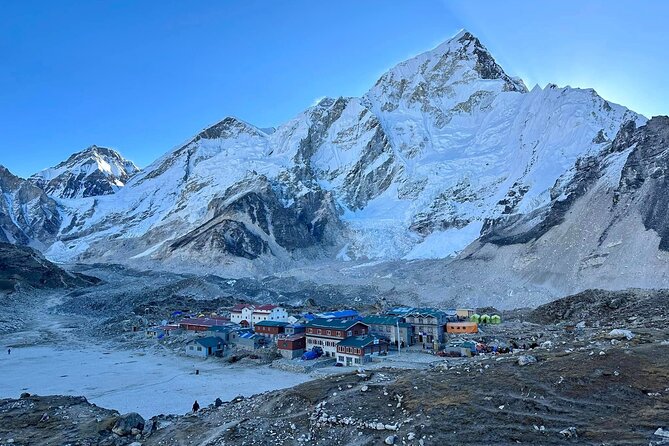
The walk from Diboche to Dingboche takes about five to six hours and reaches approximately 4,360 meters. At this point, the air is thinner, the nights are more demanding, and the daily walking distance matters more than it did near Lukla.
Dingboche is a key base for the second acclimatization day. You are not simply stopping because the route needs a hotel. You are pausing because the body needs time to adjust before the trail climbs toward Lobuche and Gorakshep.
The upgraded teahouses make a difference here. They do not turn the mountains into a resort, and you should still expect basic trekking conditions, but the upgraded accommodation provides more comfort than the most modest lodge options. Rooms are shared on a twin basis.
Day 7: The second Dingboche acclimatization day
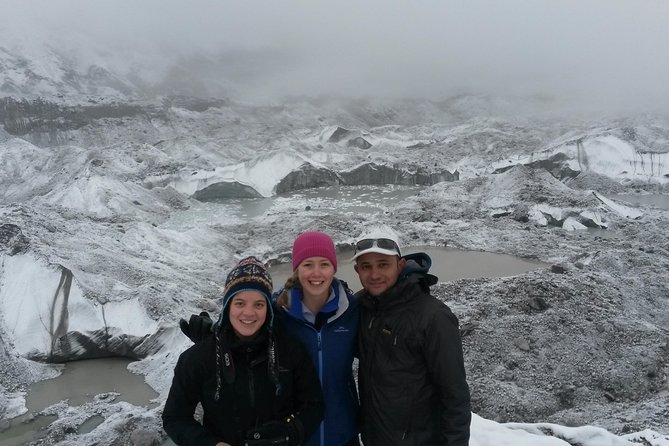
A full acclimatization day in Dingboche is one of the practical reasons this route works. You stay at about 4,360 meters and take a break from moving higher.
The schedule allows for a short hike or local exploration, but the supplied details do not specify a fixed route. Think of this as a controlled effort day. You want to move enough to stay loose, then rest enough to be ready for the high trail ahead.
At this stage, tell your guide promptly about headaches, nausea, unusual tiredness, or breathing trouble. The trip includes first-aid supplies and rescue arrangements, but those benefits matter only when problems are reported early. You should not try to hide symptoms to keep the schedule intact.
Day 8: Dingboche to Lobuche
The route to Lobuche takes roughly five to six hours. The terrain becomes more exposed and rocky, and the weather can feel harsher than it did lower in the valley.
This is a moderate hike in description only. At more than 4,900 meters, even a steady trail can feel hard. You will notice that walking speed is less important than a regular pace and frequent short rests.
Lobuche is a staging point for the biggest walking day. The night here is part of the high-altitude challenge, so the upgraded teahouse arrangement is especially useful. Still, do not expect city-hotel comfort. Luxury on an Everest trek means improved lodge conditions and support, not spa facilities.
Day 9: Lobuche to Gorakshep and Everest Base Camp
The walk from Lobuche to Gorakshep and onward to Everest Base Camp takes about six to seven hours. This is strenuous terrain, with rocky sections, glacial moraines, and steady climbing.
Gorakshep is the base for the final approach. From there, you continue toward Everest Base Camp, the symbolic goal of the trek. The route can feel more demanding than the distances suggest because of the altitude and uneven ground.
Base Camp is not a quick roadside photo stop. You reach it after days of gradual climbing, and the final section asks for patience. The setting is defined by glacial terrain and huge surrounding peaks, with conditions that can change quickly.
After returning to Gorakshep, the plan calls for a shared helicopter to Kathmandu. Confirm the practical timing with the operator before departure, since the air transfer is weather-sensitive. The included cost covers the helicopter fare, but a delay can create expenses for accommodation, meals, or other services.
Day 10: Kalapatthar and the highest point
The Kalapatthar hike reaches 5,545 meters, or 18,192 feet. This is the highest point named in the route and one of the major reasons to choose this trek rather than stopping at Base Camp.
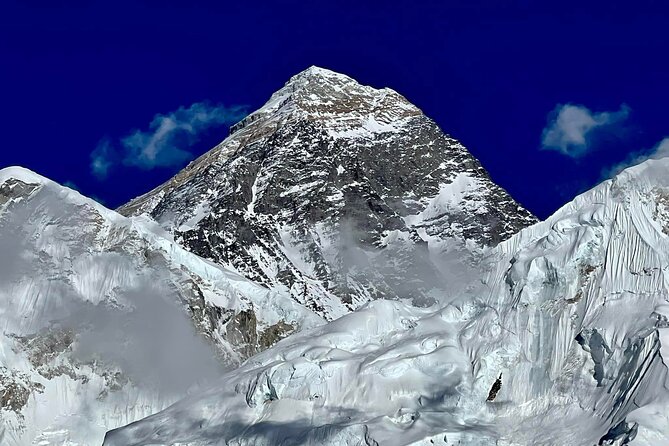
Kalapatthar is known for broad views of Everest and the surrounding Himalayan peaks. Base Camp gives you the achievement of reaching the famous destination, while Kalapatthar provides the high viewpoint that many people consider the visual highlight.
This is also the day that best shows the demanding side of the experience. At 5,545 meters, a short distance can take real effort. You need warm clothing, a slow pace, and close attention to how you feel. The program describes the helicopter return from Gorakshep to Kathmandu, so the exact order of the Kalapatthar walk and flight should be confirmed with the guide.
What the $4,500 price really covers
The price is $4,500 per person. That is a high cost, but it includes several expensive and useful pieces: two nights in a five-star Kathmandu hotel, the Lukla flight, upgraded teahouses, trekking meals, permits and Khumbu Valley fees, a guide, porter support, a duffle bag, transfers, and a shared helicopter from Gorakshep to Kathmandu.
The guide and porter ratio is also clear: one porter for two clients. That keeps your personal load more manageable without implying that every person gets an individual porter.
I see the price as strongest for people who value time, organization, and the helicopter return. If you want the least expensive way to reach Base Camp, this is not the right product. If you want a private group, upgraded lodging, local support, and less walking on the return, the package has a more reasonable case.
You still need to budget for a Nepal visa, international flights, insurance, tips, personal drinks, laundry, phone calls, battery charging, hot showers, bottled or boiled water, and extra nights caused by delays. Meals in Kathmandu, apart from the included breakfasts, are also not covered.
Guides, support, and the human side
The company names Prakash as a guide connected with the trek, and Bhagwat Simkhada as the company leader. The supplied feedback gives particular emphasis to Prakash’s guiding and to Bhagwat’s careful planning, personal communication, and long-term involvement in trips.
That matters on a high-altitude trek. You want a guide who watches pace and health, not just someone who points out the path. You also want an operator who can help when flight times, mountain weather, or accommodation plans shift.
The trip is private, so only your own group participates. That gives you more control over pace and conversation than a large group departure, though the trek itself follows a well-used route and will not feel isolated.
Who should choose this Everest trek?
This trip suits you if you want the full Everest Base Camp experience but do not want to walk back down the entire valley. It also fits families who can manage a demanding mountain schedule, small private groups, and people who prefer upgraded teahouses over the most basic lodge options.
You should have moderate physical fitness and be ready for five to seven-hour walking days. The key challenge is altitude, not just distance. A gym routine alone does not prepare you for 5,545 meters, so take the acclimatization days seriously.
I would not choose this plan if you need a fixed, weather-proof schedule or if you dislike uncertainty around mountain flights. I would also avoid booking it without travel and rescue insurance, since those costs are specifically excluded.
Cancellation is free if you cancel at least 24 hours before the scheduled start time. Changes or cancellations inside that window are not accepted for a refund.
Should you book the 11-day luxury Everest Base Camp trek?
Book it if the helicopter return is a major priority and you want a supported, private trek with upgraded teahouses and two acclimatization days. The inclusion of Kalapatthar, the Base Camp walk, meals in the mountains, permits, porter support, and airport transfers gives the $4,500 price real substance.
Think twice if you are looking for a cheap trek, a soft adventure, or a rigid timetable. This is still a serious high-altitude journey, and weather can affect flights and costs.
My practical advice is to ask the operator three things before paying: how the Kathmandu or Ramechhap to Lukla flight will be handled, exactly when the helicopter is expected to fly, and what backup plan applies if weather stops the aircraft. If those answers suit your plans, this is a well-supported way to see Everest from the trail and from the sky.
FAQ
Where does the trek begin?
The activity begins with pickup at Tribhuvan International Airport in Kathmandu, Nepal.
How long is the experience?
The trek lasts approximately 11 days.
What time does the activity start?
The stated start time is 6:00 am.
Is airport pickup included?
Yes. Airport pickup and transfer to the hotel by private vehicle are included.
Is this a private tour?
Yes. Only your own group participates in the activity.
What level of fitness is required?
You should have a moderate level of physical fitness. The trek includes several five to seven-hour walking days and reaches 5,545 meters at Kalapatthar.
Is the Lukla flight included?
Yes. The package includes a Kathmandu to Lukla or Ramechhap to Lukla flight ticket.
Is the helicopter return included?
Yes. A shared helicopter fare from Gorakshep to Kathmandu is included.
Are meals included?
Breakfast, lunch, and dinner are included during the trek. Two Kathmandu hotel nights include breakfast, while other Kathmandu meals are not included.
Is travel insurance included?
No. Travel and rescue insurance are not included, so you need to arrange them separately.
Latest treks added in Kathmandu
- Private Manaslu Circuit Trek at Himalayas★ 5.0 · 3 reviews
- Ghorepani Poonhill Trek★ 5.0 · 5 reviews
- Ghorepani Poon Hill Trek★ 5.0 · 16 reviews
- Upper Mustang Trekking★ 3.0 · 2 reviews
- Amazing 1 Day Trekking Experience in Kathmandu Nepal★ 5.0 · 24 reviews
- Upper Mustang Trekking★ 5.0 · 2 reviews
- Upper Mustang Trek★ 5.0 · 5 reviews
- Upper Mustang Trekking★ 5.0 · 4 reviews
Everest Base Camp Treks, compared.






Browse the lists this tour appears in