
REVIEW · KATHMANDU
Gokyo Valley Trek
Gokyo Valley gives you one of the finest high mountain viewpoints in Nepal without following the busier Everest Base Camp route. From Gokyo Ri at 5,483 meters, you can see Everest, Lhotse, Makalu, Cho Oyu, and Gyachung Kang above the huge Ngozumpa Glacier. The view is the main event, but the walk through Sherpa villages and Buddhist country gives the trek its human side.
I like the way this trip builds in a full acclimatization day at Namche Bazaar, then two nights at Gokyo before the early climb to Gokyo Ri. I also like the practical setup: domestic flights, permits, meals, a guide, porters, sleeping bag, down jacket, and airport transfers are covered. The main concern is altitude. This is a serious mountain trek, not a casual walking holiday, and bad weather can disrupt flights to Lukla.
Key reasons to consider the Gokyo Valley Trek
- Gokyo Ri at 5,483 meters: A demanding climb with a wide view of some of the world’s highest peaks.
- Ngozumpa Glacier: You walk toward Nepal’s largest glacier and see its immense ice-covered basin from Gokyo Ri.
- Two nights in Gokyo: This allows time for acclimatization and short walks around the lakes.
- Sherpa villages and monasteries: The route passes through Namche, Phortse, Machhermo, Khumjung, and other mountain communities.
- Strong guide and porter support: Guides named in recent trips include Nimesh, Ramesh, Aamod, Milan, Bishnu, and Ngima, with porters assigned to carry shared loads.
- Useful all-in-one planning: The $1,514.67 price includes flights from Kathmandu to Lukla and back, lodging, meals on the trail, permits, transfers, and staff.
What the Gokyo route gives you that Everest Base Camp does not
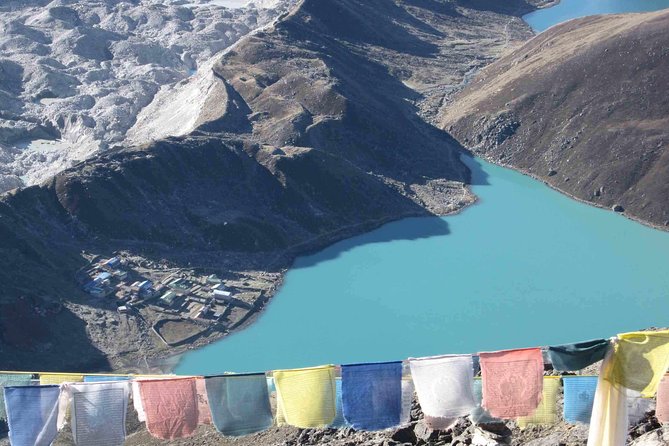
The Gokyo Valley route is a fine choice if your goal is mountain scenery rather than standing at Everest Base Camp. You still walk through the Khumbu region and see Everest, but the high point is a ridge above the turquoise Gokyo Lakes, with the Ngozumpa Glacier spreading below.
From Gokyo Ri, the view takes in Everest, Lhotse, Nuptse, Makalu, Cho Oyu, and Gyachung Kang. The enormous ice ridge between Cho Oyu and Gyachung Kang adds another striking feature to the panorama. You get a wide, open view instead of a single destination sign and a crowded trail.
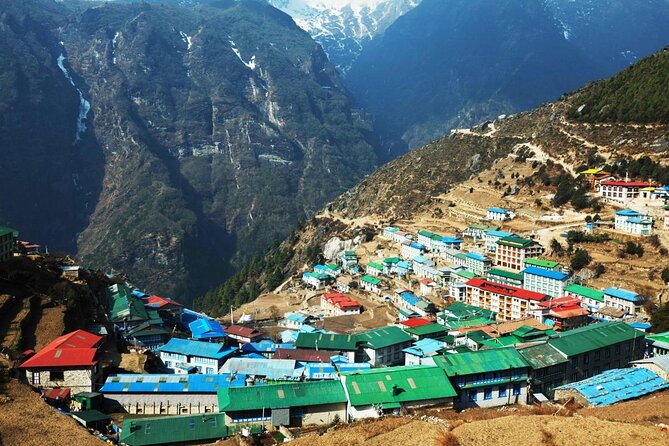
The route also offers a closer look at Sherpa life. You stay in local guesthouses, cross suspension bridges hung with prayer flags, pass Buddhist sites, and walk through villages that support life at high altitude. Namche Bazaar has bakeries, restaurants, shops, money exchange services, internet cafes, and many lodges. Farther up, the settlements become smaller and simpler.
More Everest Base Camp Treks in Kathmandu
- Everest Base Camp Trek – 14 Days
★ 5.0 · 1,499 reviews - Everest Base Camp Trek
★ 5.0 · 842 reviews - Everest Base Camp Trekking
★ 5.0 · 485 reviews
Kathmandu begins with temples and practical preparation
Your trip starts with an airport pickup at Tribhuvan International Airport. An Ace the Himalaya representative waits outside the terminal with a sign, then takes you to your hotel in a private tourist vehicle.
A pre-trek meeting takes place on the first or second day. Bring your passport, three passport-size photos, and a readable copy of your travel insurance policy. You will also meet the trek leader, settle any remaining balance, and sign the trip forms. This meeting matters because the trek reaches high altitude and your guide needs to know that your paperwork and insurance are in order.
The second day combines three major Kathmandu sights. At Pashupatinath Temple, you can view the pagoda-style Hindu temple from the eastern bank of the Bagmati River, since entry into the main temple is limited to Hindus. The riverbank also gives you a clear look at the religious activity around the site.
Boudhanath Stupa brings a different atmosphere. The large Buddhist site has Buddha’s eyes facing the four cardinal directions, while pilgrims walk around the stupa and turn prayer wheels. At Bhaktapur Durbar Square, you see the five-storied Nyatapola Temple, the Palace of 55 Windows, Batsala Temple, Bhairavnath Temple, Dattatraya Temple, and Pujari Muth.
This sightseeing day is useful rather than decorative. It gives you cultural context before the mountain walk, but it also means the schedule begins at a quick pace. You are not simply arriving in Kathmandu and resting for several days.
Lukla to Phakding: the trail starts beside the Dudh Kosi
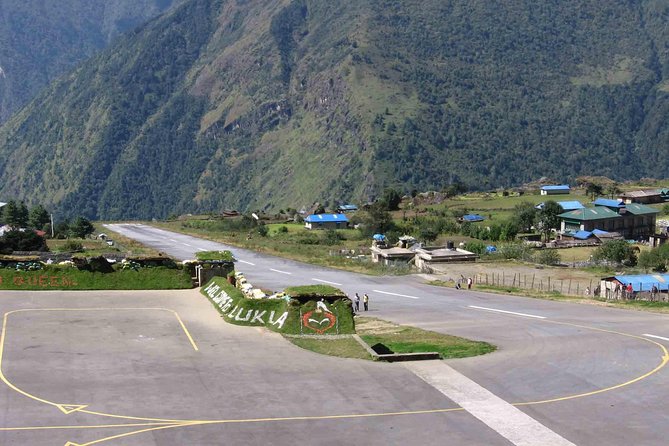
The morning flight from Kathmandu to Lukla takes about 35 minutes. Tenzing and Hillary Airport sits at roughly 2,804 meters, so you begin the trek already above the elevation of many mountain towns.
After landing, your guide introduces the porters while the team sorts and loads the equipment. The first walk descends toward the Dudh Kosi River and joins the main trail toward Namche Bazaar. You pass Ghat, a small village at about 2,550 meters, before reaching Phakding.
This opening stage is relatively gentle. It lets you get used to the trail, bridges, lodges, and rhythm of walking with a pack or day bag. The published schedule displays unusually long stop times for several trekking days, so treat the itinerary as a day-by-day plan rather than a promise of exact walking hours.
The flight is one of the practical uncertainties. Weather can affect the Lukla route, and the cancellation terms specifically allow a different date or a full refund if poor weather forces the activity to be canceled. Keep some flexibility around your international flight if possible.
Namche Bazaar provides the first real altitude test
From Phakding, you follow the Dudh Kosi and cross several suspension bridges decorated with prayer flags. The route enters Sagarmatha National Park before climbing more sharply toward Namche Bazaar, known as the gateway to Everest.
Namche is the largest town on the route. You find lodges, restaurants, bakeries, shops, money exchange services, internet cafes, and hotels. It is the last place on this itinerary with such a broad range of services, so it is a good point to check your supplies and make sure your clothing and equipment are working well.
The next day is set aside for acclimatization. You take a short walk to a museum covering Sherpa customs, then hike toward Syangboche Airport and the Everest View Hotel area. From there, the Khumbu peaks come into view, with sunrise and sunset offering especially fine light.
I consider this rest day one of the strongest parts of the plan. It reduces the temptation to rush upward, and it gives you a chance to judge how your body responds before the route becomes more remote. You still walk, but the day is shorter and more manageable than a full trekking stage.
More Trekking Tours in Kathmandu
- Annapurna Circuit Trek with Tilicho Lake
★ 5.0 · 368 reviews - Everest Base Camp Trekking – 13 Day
★ 5.0 · 365 reviews - Everest Base Camp Trek
★ 5.0 · 350 reviews - Everest Base Camp Trek -14 Days
★ 5.0 · 321 reviews
Phortse and Machhermo bring quieter mountain scenery
Leaving Namche, the path climbs through rhododendron, juniper, and conifer forest. In spring, the forest can add color and shelter to the walk. You pass yak grazing areas and summer settlements, with views toward Khumbi La and Tawache.
Phortse offers a quieter setting than Namche. The route here feels more like a mountain journey than a town-to-town transfer. The trail gains height steadily, and you should expect the combination of thinner air and repeated climbs to slow your pace.
The next stage reaches Machhermo. You climb a ridge with views down toward Kengtega and up toward Cho Oyu, then descend to a river before climbing again toward the terminal moraine of the Ngozumpa Glacier. Machhermo is reached around midday according to the planned schedule, giving you time to settle in and conserve energy.
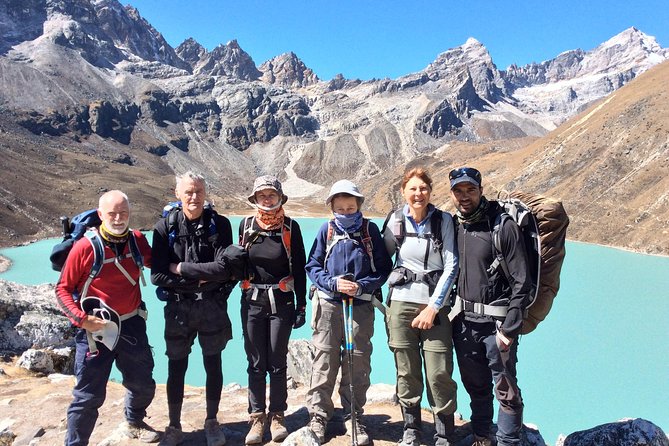
At this point, the trek becomes more demanding. The scenery grows bigger, but the air grows thinner. Your guide’s role becomes especially important here. Guides such as Nimesh, Ramesh Karki, Aamod Nepal, Milan, Bishnu, and Ngima have been specifically praised for encouragement, care, flexibility, and handling route changes. That kind of support matters when a steep trail feels harder than its distance suggests.
Two nights at Gokyo make the high point possible
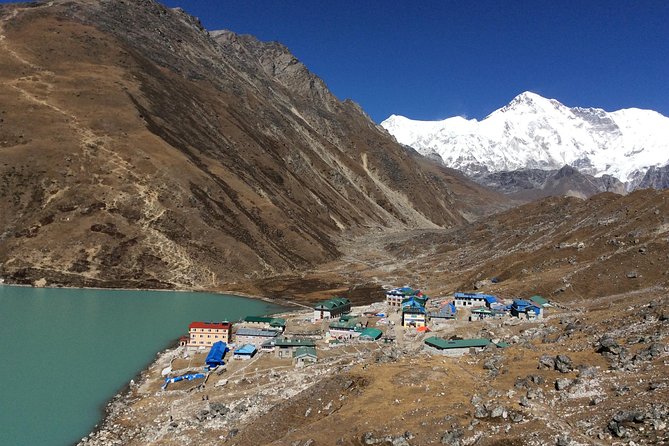
The walk to Gokyo is one of the key stages. At around 4,790 meters, Gokyo becomes your base for two nights. The settlement sits beside the Gokyo Lakes, with the Ngozumpa Glacier nearby and high peaks surrounding the valley.
The extra night is not wasted time. You need it to adjust before climbing Gokyo Ri, and you can take short walks around the lakes without carrying your full trekking load. At this altitude, even a modest walk can feel tiring, so the slower schedule is a practical advantage.
Gokyo is also the point where the route feels most remote. Lodging is in guesthouses, with twin-share or dormitory rooms depending on the accommodation. Comfort is basic, and hot drinks, alcoholic drinks, and other personal purchases cost extra. Bring realistic expectations: you are paying for access to a high mountain route, not resort service.
The early morning climb to Gokyo Ri is steep. At the summit, the reward is a broad view of Gokyo Valley, the Ngozumpa Glacier, and the Khumbu peaks. Everest, Lhotse, Nuptse, Makalu, Cho Oyu, and Gyachung Kang can all appear in the panorama when conditions are clear.
The summit stage is short in clock time but tough in effort. The stated visit duration is only about 30 minutes, yet reaching the top requires a steep ascent at 5,483 meters. Move slowly, follow your guide’s pace, and remember that turning around is wiser than forcing the climb if you feel unwell.
The return through Dole and Khumjung feels different
After Gokyo Ri, the trek descends to Dole. Going downhill is easier on your breathing, but it can be tiring on your knees, especially after the summit climb. Trekking poles and well-broken-in boots are useful personal equipment, though personal trekking gear is not included.
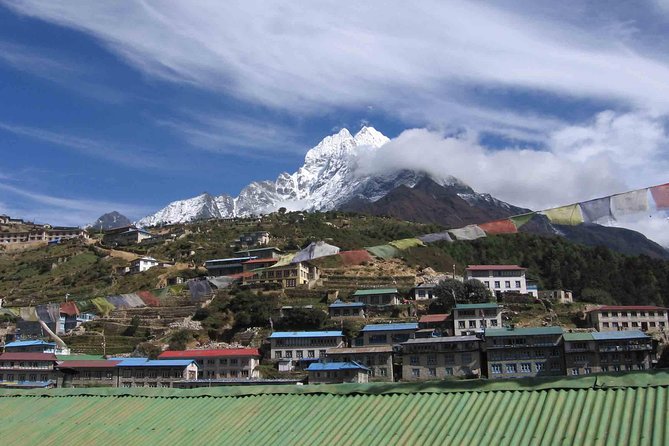
The route then returns toward Namche through Khumjung, a typical Sherpa village. The mountains gradually recede as you lose altitude, and the return walk gives you a different view of places that felt more difficult on the way up.
From Namche, you continue back to Lukla. The final days are not just a transfer to the airport. You have time in Lukla to reflect on the trek and explore the town before flying back to Kathmandu.
The Kathmandu return flight provides another chance to see the peaks from above. Back in the capital, the extra day is free for rest or optional activities such as a Chitwan jungle safari, rafting, a Kathmandu Valley shopping tour, a scenic Everest flight, or mountain biking. A farewell dinner in a traditional Nepalese restaurant with cultural performances is included in the final evening plan.
What the $1,514.67 price covers
The price is strong for a 15-day guided Himalayan trek because several expensive and complicated pieces are included:
- Airport transfers in Kathmandu
- Four nights in a three-star Kathmandu hotel
- Ten nights in trail guesthouses
- Kathmandu to Lukla and Lukla to Kathmandu airfare
- A licensed English-speaking guide
- One porter for every two clients
- Trekking permits
- Breakfast for 14 days
- Ten lunches and 11 dinners
- Kathmandu sightseeing and entrance fees
- A down jacket and sleeping bag for the trek
- A duffel or kit bag and sun hat
- Government taxes and service charges
You still need to budget for lunch and dinner in Kathmandu, drinks, international flights, the Nepal entry visa, personal gear, travel insurance, and tips. Tipping is expected for the trekking staff and driver, so include it in your real trip budget rather than treating the advertised price as the final cost.
The required insurance should cover emergency high-altitude rescue and evacuation. This is not a minor formality. The route reaches 5,483 meters, and the practical risk is not only injury but also altitude illness and weather-related delay.
The group limit is 15 people. That is small enough for a personal feel but large enough that the pace may not suit everyone. The guide’s flexibility becomes important, and recent trips have included route changes after flight delays, landslides, or changing conditions.
Who should book this trek
I would choose this trek if you want a high mountain viewpoint, glacier scenery, Sherpa villages, and organized support without arranging every permit, lodge, flight, and porter yourself. It suits people with moderate physical fitness who can handle repeated uphill walking and a steep summit day at altitude.
You should think twice if you dislike basic lodging, shared rooms, early starts, uncertain mountain flights, or being away from road access for several days. The trip is also not the right choice if you expect a relaxed sightseeing holiday with only occasional walks.
The strongest praise has focused on the staff. Guides and porters have been singled out for kindness, encouragement, flexibility, and careful support. Names connected with particularly positive experiences include Nimesh, Ramesh, Aamod, Milan, Bishnu, Ngima, Gopal, Bishal, Lochan, and Bal Krishna. Staff quality can vary by departure, so ask who is assigned to your group before you leave.
You can cancel for a full refund up to six full days before the start time. Cancellation two to six days before departure brings a 50 percent refund, while cancellation less than two days before departure is nonrefundable. Since weather can affect Lukla flights, read the provider’s weather policy carefully before booking.
Should you book the Gokyo Valley Trek?
Book it if Gokyo Ri and the Ngozumpa Glacier appeal to you more than the standard Everest Base Camp goal. The two-night stay at Gokyo and the acclimatization day in Namche give this itinerary a sensible shape, while the guide, porter, permits, meals, lodging, and domestic flights simplify a complicated trip.
I would not book it casually. You need proper insurance, suitable gear, patience with weather delays, and enough fitness for a steep climb above 5,000 meters. If you accept those demands, the combination of Sherpa villages, Buddhist sites, glacier views, and the Gokyo Ri panorama makes this a high-value route in the Everest region.
FAQ
How long does the Gokyo Valley Trek last?
The planned trip lasts 15 days, including Kathmandu sightseeing, the trek from Lukla to Gokyo and back, flights, and a spare day in Kathmandu.
What is the highest point on the trek?
The highest point is Gokyo Ri, at 5,483 meters.
Is airport pickup included?
Yes. Airport transfers in Kathmandu are included at the start and end of the trip.
Are flights to Lukla included?
Yes. The price includes airfare from Kathmandu to Lukla and the return flight from Lukla to Kathmandu.
What meals are included?
Breakfast is included for 14 days, along with 10 lunches and 11 dinners. Lunch and dinner in Kathmandu are not included. Drinks are also extra.
What fitness level is required?
The activity states that you should have a moderate physical fitness level. You should also be prepared for high-altitude walking, including the steep climb to Gokyo Ri at 5,483 meters.
Latest treks added in Kathmandu
- Private Manaslu Circuit Trek at Himalayas★ 5.0 · 3 reviews
- Ghorepani Poonhill Trek★ 5.0 · 5 reviews
- Ghorepani Poon Hill Trek★ 5.0 · 16 reviews
- Upper Mustang Trekking★ 3.0 · 2 reviews
- Amazing 1 Day Trekking Experience in Kathmandu Nepal★ 5.0 · 24 reviews
- Upper Mustang Trekking★ 5.0 · 2 reviews
- Upper Mustang Trek★ 5.0 · 5 reviews
- Upper Mustang Trekking★ 5.0 · 4 reviews
Everest Base Camp Treks, compared.






Browse the lists this tour appears in