
REVIEW · KATHMANDU
Gokyo to Everest Base Camp Trek
The best thing about this trek is its route: you reach Everest Base Camp by first visiting the quieter Gokyo Lakes and crossing the high Cho La Pass at about 5,300 meters. That gives you a wider Himalayan experience than the standard approach, with Gokyo Ri, Ngozumpa Glacier, Sherpa villages, monasteries, and Everest from several angles.
I like the strong support package, especially the licensed guide, porter for every two people, Lukla flights, permits, meals, filtered trail water, sleeping bag, and down jacket. I also like the built-in acclimatization day at Namche and two nights around Gokyo, which give your body a better chance to adjust before the hardest stages.
The catch is that this is not a gentle walking holiday. Cho La, Everest Base Camp, and Kala Patthar all demand stamina at extreme altitude. Weather can also disrupt Lukla flights or force changes, so you need good insurance, patience, and a willingness to follow your guide’s safety calls.
The route in six memorable stages
- Lukla flight at 2,804 meters: Your mountain journey begins with a short scenic flight from Kathmandu, followed by a walk to Phakding.
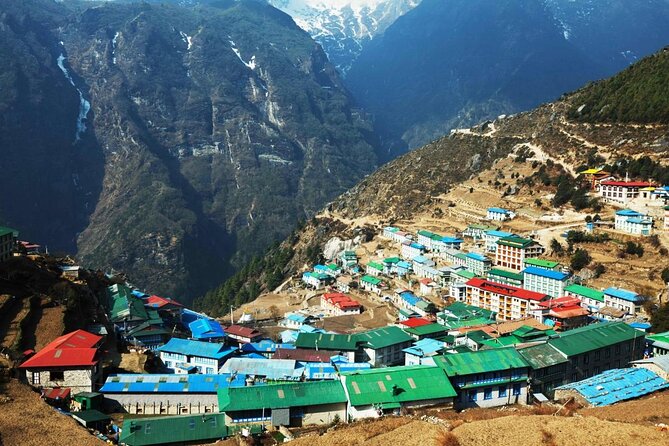
- Namche acclimatization: Two nights in the Sherpa trading town help you adjust before higher trails.
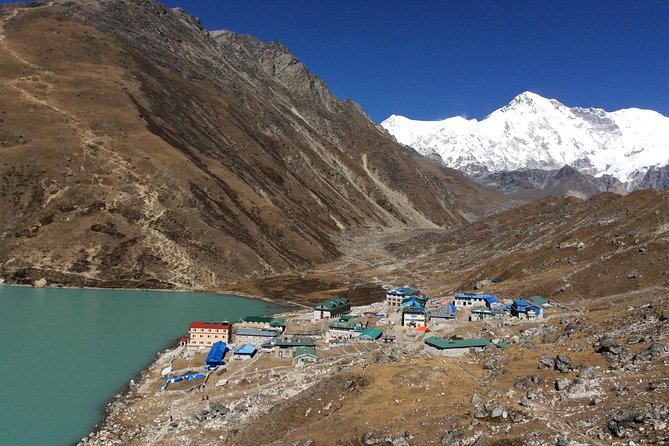
- Gokyo Lakes and Gokyo Ri: You reach 4,790 meters, then climb Gokyo Ri at 5,483 meters for broad views toward Cho Oyu, Everest, and Makalu.
- Cho La Pass at about 5,300 meters: An early start gets you onto the pass before the usual midday weather turns rough.
- Everest Base Camp and Kala Patthar: Two major goals arrive back to back, with Kala Patthar offering the most direct mountain panorama.
- Small-group logistics: The maximum group size is 15, with one porter assigned for every two clients and a licensed English-speaking guide.
Why choose the Gokyo to Everest Base Camp route
Most people who picture an Everest trek imagine the trail from Lukla to Namche, Tengboche, and Base Camp. This trip takes a more demanding circuit. You first head northwest toward Gokyo, then cross Cho La before joining the Base Camp route near Lobuche.
That extra arc is the reason to book it. Gokyo gives you turquoise mountain lakes, glacier views, and a quieter side of the Khumbu region, while the later section delivers the famous Everest landmarks. You do not simply walk to Base Camp and turn around. You experience two major valleys and a high pass between them.
The route also gives you several ways to see the great peaks. From Gokyo Ri, you can look toward Cho Oyu, Everest, and Makalu. From Kala Patthar, you get the classic close view of Everest and the surrounding peaks. The scenery changes often enough to keep the long days interesting.
The price is $2,200 per person. That is a substantial fare, but it covers the costly and important pieces: Kathmandu airport transfers, Kathmandu hotel nights, Kathmandu to Lukla and return airfare, permits, guides, porters, mountain lodging, most meals, filtered drinking water, a duffel bag, sun hat, sleeping bag, and down jacket.
You still pay for international flights, Nepal’s entry visa, Kathmandu lunches and dinners, drinks, personal gear, insurance, and tips. The biggest missing item is high-altitude rescue and evacuation insurance, which you must arrange yourself. Do not treat that as optional.
More Everest Base Camp Treks in Kathmandu
- Everest Base Camp Trek – 14 Days
★ 5.0 · 1,499 reviews - Everest Base Camp Trek
★ 5.0 · 842 reviews - Everest Base Camp Trekking
★ 5.0 · 485 reviews
Kathmandu to Phakding: a fast change of worlds
The first day is simple. An airport representative meets you at Tribhuvan International Airport and transfers you to your starting hotel. This matters after a long international flight, since you do not need to figure out a taxi or hotel transfer on arrival.
Day two begins early with the approximately 35-minute flight to Lukla. At 2,804 meters, Lukla is already high enough to make the change from city life feel immediate. After a guide briefing, you walk toward Phakding.
The itinerary gives this day a long time window, up to 16 hours, but that does not mean you walk nonstop for 16 hours. Mountain schedules often include slack for transport, preparation, and changing conditions. Ask your guide for the expected walking time and keep your first day easy.
The Lukla flight is also one of the trip’s practical weak points. Weather can affect mountain air service, and the cancellation policy specifically allows a new date or full refund if the activity is canceled for poor weather. Build flexibility into your wider Nepal plans if possible.
Namche Bazaar and the value of a rest day
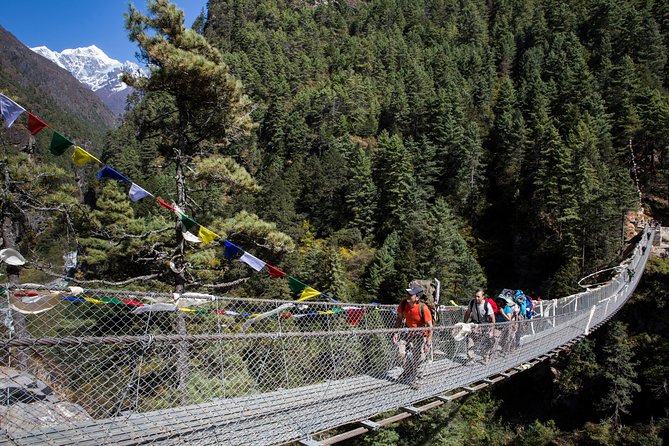
From Phakding, you follow the Dudh Koshi River and cross suspension bridges decorated with prayer flags. The trail enters Sagarmatha National Park before climbing toward Namche Bazaar.
Namche is more than a stopping point. It is the main town of the Khumbu region and your first useful chance to slow down, organize gear, and adjust to thinner air. The itinerary includes an acclimatization day here rather than pushing higher immediately.
The short outing reaches a museum focused on Sherpa customs. That adds meaning to the walk: you are not only waiting for your body to adapt, you are learning about the people whose communities support life in the Everest region.
I consider this rest day one of the package’s best choices. High altitude punishes rushed schedules. A short acclimatization walk is far more useful than treating the day as a complete lie-in, though you should still keep the pace comfortable and tell your guide about headaches, nausea, or unusual fatigue.
Phortse and Machhermo: the quieter approach to Gokyo
After Namche, the trail climbs through rhododendron forest toward Phortse. As you gain height, juniper and conifers replace some of the lower forest. The route passes through yak-grazing country and gives you a less direct approach to the main Everest trail.
Phortse is a useful contrast to Namche. It is smaller and feels more connected to mountain life. You should expect basic accommodation and a steady focus on the next day’s walking, not a town with many comforts.
The following stage reaches Machhermo. You climb a ridge with views down toward Kengtega and up toward Cho Oyu, then descend to a river before climbing again toward the terminal moraine of the Ngozumpa Glacier.
That repeated up and down is typical of Himalayan trekking. A destination’s altitude does not tell the whole story. Even a day that looks short on a map can feel tough when the path keeps changing direction.
More Trekking Tours in Kathmandu
- Annapurna Circuit Trek with Tilicho Lake
★ 5.0 · 368 reviews - Everest Base Camp Trekking – 13 Day
★ 5.0 · 365 reviews - Everest Base Camp Trek
★ 5.0 · 350 reviews - Everest Base Camp Trek -14 Days
★ 5.0 · 321 reviews
Two nights at Gokyo and the Gokyo Ri climb
Gokyo sits at about 4,790 meters and is one of the trip’s main rewards. You stay for two nights, giving you time to see the lakes and make the climb to Gokyo Ri without packing up immediately.
The early climb to Gokyo Ri reaches 5,483 meters. It is steep, and the thin air makes every step count. The payoff is a broad view across the Gokyo Valley, with major peaks including Cho Oyu, Everest, and Makalu.
This is where the route earns its name. The Gokyo section adds a quieter, more spacious mountain experience before the famous Base Camp trail gets busier. You also see the source area of the Dudh Koshi and the Ngozumpa Glacier, giving the trek a stronger sense of geography than a simple out-and-back route.
Do not underestimate the climb because it is an acclimatization outing. Gokyo Ri is higher than many Alpine summits and comes after several demanding days. Keep your pack light, use the provided water system, and let your guide set the pace.
Thangnak to Cho La: the hardest crossing
From Gokyo, you walk toward Thangnak, a settlement at the foot of Cho La. Accommodation there is very basic, with dormitory-style rooms because of the area’s remoteness.
This is one of the clearest trade-offs in the trip. You gain a route away from the standard crowds, but you give up comfort. A sleeping bag is included, and you should use it with warm personal layers and a good headlamp.
Cho La day begins very early, around 4:00 or 5:00 in the morning. The aim is to reach the pass between about 9:00 and 10:00, before the usual later weather becomes a bigger problem. The pass rises to roughly 5,300 meters.
The climb is demanding, and conditions can include snow, wind, or poor visibility. Recent departures have required guides to adjust timing and route decisions during heavy snow and storm conditions. That is exactly when a good guide earns their keep. Nima, Raj Kumar, Ganesh, Lakpa Sherpa, Ramesh, and others have guided past groups, with flexibility and a safety-first approach repeatedly important during difficult weather.
Do not see an early start as a nuisance. It is a sensible mountain decision. Your guide may delay, reroute, or stop the crossing if conditions are unsafe. You need to accept that the pass is a goal, not a promise made at the expense of safety.
Lobuche and the long walk to Everest Base Camp
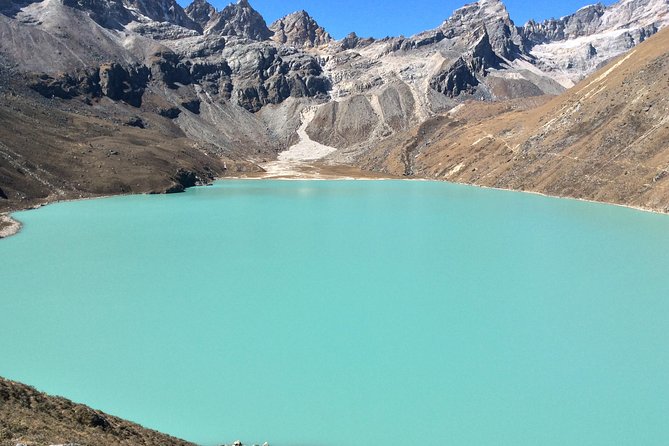
After Cho La, the trail reaches Lobuche on a shorter, easier day of about four hours. That recovery stage matters because the next day is one of the trek’s biggest efforts.
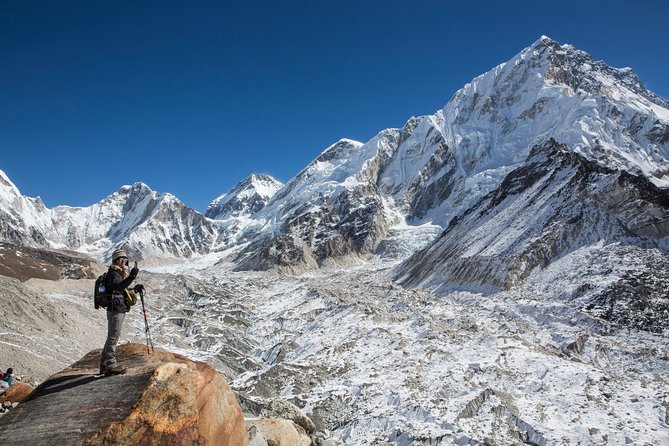
The walk from Lobuche to Everest Base Camp follows the Khumbu Glacier and climbs to about 5,365 meters. It is a big day on foot, made harder by altitude and uneven ground. You are not climbing Everest, but you are walking at an elevation that demands respect.
Base Camp itself is a seasonal mountaineering site, especially active during the spring climbing period. The appeal is not a comfortable attraction with facilities. It is the feeling of reaching the working end of the route, beside the glacier, after days of walking through high mountain country.
Keep your expectations realistic. Mount Everest is not always best seen from Base Camp because the surrounding terrain can block the full profile. That is why the next morning at Kala Patthar matters so much.
Kala Patthar: the view that justifies the effort
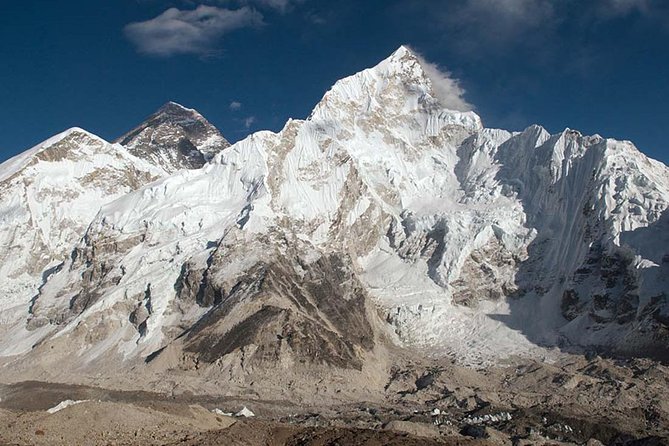
The climb to Kala Patthar is described as one of the most difficult but rewarding days. The summit reaches about 5,555 meters, higher than Everest Base Camp, and the ascent is steep.
The reward is the direct mountain view. From Kala Patthar, you get the classic panorama toward Everest and the surrounding peaks. For many people, this is the clearest visual moment of the entire circuit.
You need to pace this morning carefully. At this altitude, a short climb can take much longer than expected. Warm clothing, water, snacks, and a steady pace matter more than speed. Your guide will be watching the group, but you still need to speak up if you feel unwell.
Returning through Tengboche and Lukla
After Base Camp and Kala Patthar, the route descends through Pangboche and Tengboche before returning to Namche. The descent is physically easier in terms of breathing, but tired knees can make long downhill sections surprisingly hard.
Tengboche is especially meaningful because the route includes Buddhist monasteries in the high Everest region. The setting links the scenery to the spiritual life of the Sherpa communities, rather than reducing the trek to a series of mountain viewpoints.
From Namche, you continue to Lukla for the final trekking day. The afternoon is free, giving you room to rest and reflect on the circuit. A final night in Lukla also provides a buffer before the return flight, though weather can still affect the schedule.
The next day brings the scenic flight back to Kathmandu. An airport transfer takes you to your hotel, and the final day includes a drop-off at Tribhuvan International Airport.
What the $2,200 package does well
The package has good value if you want a supported trek rather than arranging each part yourself. The guide, porter support, permits, domestic flights, meals, and equipment loan remove many of the major planning jobs.
A porter for every two clients is particularly useful on a route with this much altitude gain. You still need a daypack with essentials, but you do not have to carry every item for 17 days.
Food coverage is also broad. Breakfast is included for all 16 listed breakfast services, with 14 lunches and 14 dinners included during the trek. Seasonal fruit is provided, and water is filtered on the trail with a Katadyn Pocket Water Filter.
The limits are clear. Drinks are extra, including alcoholic, hot, and cold drinks. Kathmandu lunches and dinners are also not included. Tips for guides, porters, and drivers are expected, so add that to your trip budget.
Who should book this trek
You should consider this trip if you have good general fitness, can handle long walking days, and want both Gokyo and Everest Base Camp. It suits someone who values scenery and route variety more than comfortable lodging.
It is also a good fit if you want organized support but do not want a private luxury experience. The maximum group size is 15, so group dynamics matter. The company’s past guide teams have included names such as Raj Kumar, Nima, Ganesh, Ramesh, Lakpa Sherpa, and porters including Biroj and Sonam, but your assigned staff will depend on the departure.
You should think twice if you dislike basic dormitory lodging, early starts, uncertain flight schedules, or plans that may change with snow and weather. You also need insurance covering emergency high-altitude rescue and evacuation.
The cancellation terms are strict close to departure. Cancel at least six full days before the start time for a full refund, two to six days ahead for a 50 percent refund, and less than two days ahead for no refund. Poor-weather cancellation is handled with a different date or full refund.
Should you book the Gokyo to Everest Base Camp Trek?
Book it if you want the fuller Everest experience and are ready for the Cho La crossing. Gokyo Lakes and Gokyo Ri add the quieter, more scenic half of the trip, while Base Camp and Kala Patthar provide the famous milestones.
Choose a simpler Everest route instead if you want fewer high passes and less demanding logistics. For this circuit, the price is reasonable because it covers flights, staff, permits, food, water, lodging, and key equipment. Just arrive prepared, insure yourself properly, and let safety guide the schedule.
FAQ
How long is the Gokyo to Everest Base Camp Trek?
The trip lasts approximately 17 days, including airport transfers, Kathmandu hotel stays, the Lukla flights, the trek, and the return to Kathmandu.
What altitude does Cho La Pass reach?
Cho La Pass reaches approximately 5,300 meters. The itinerary schedules an early start, around 4:00 or 5:00 in the morning, to reach the pass before later weather conditions become more difficult.
Is Gokyo Ri included?
Yes. The itinerary includes a climb to Gokyo Ri at about 5,483 meters, with views toward the Gokyo Valley, Cho Oyu, Everest, and Makalu.
What accommodation is included?
The package includes a twin-share or double room in a three-star Kathmandu hotel for two nights and guesthouse accommodation during the trek. Thangnak accommodation is very basic and dormitory-based because of its remote location.
Are flights from Kathmandu to Lukla included?
Yes. The Kathmandu to Lukla and return airfare is included, along with airport transfers in Kathmandu.
What is not included in the price?
International airfare, Nepal’s entry visa, travel insurance, Kathmandu lunches and dinners, alcoholic and other drinks, personal trekking equipment, and tips are not included. Travel insurance must cover emergency high-altitude rescue and evacuation.
Latest treks added in Kathmandu
- Private Manaslu Circuit Trek at Himalayas★ 5.0 · 3 reviews
- Ghorepani Poonhill Trek★ 5.0 · 5 reviews
- Ghorepani Poon Hill Trek★ 5.0 · 16 reviews
- Upper Mustang Trekking★ 3.0 · 2 reviews
- Amazing 1 Day Trekking Experience in Kathmandu Nepal★ 5.0 · 24 reviews
- Upper Mustang Trekking★ 5.0 · 2 reviews
- Upper Mustang Trek★ 5.0 · 5 reviews
- Upper Mustang Trekking★ 5.0 · 4 reviews
Everest Base Camp Treks, compared.






Browse the lists this tour appears in