
REVIEW · KATHMANDU
Gokyo-Ranjo Pass Trek On 16 Days (Cheapest Trip On Nepal)
The best part of this 16-day trek is the change of pace after Namche. You leave the busy Everest route, pass through Khumjung and Dole, then reach the quieter Gokyo Valley, where Gokyo Ri and Renjo La offer huge Himalayan views. I like the gradual ascent and the built-in acclimatization day at Machhermo. I also like that the price covers meals, permits, porters, transfers, and a half-day Kathmandu tour.
The main consideration is altitude. You reach Gokyo Ri at a listed 5,483 meters and cross Renjo La at 5,340 meters, so this is not a casual walk. Strong fitness and proper insurance are essential, and poor weather can disrupt the Lukla flights.
Key points at a glance
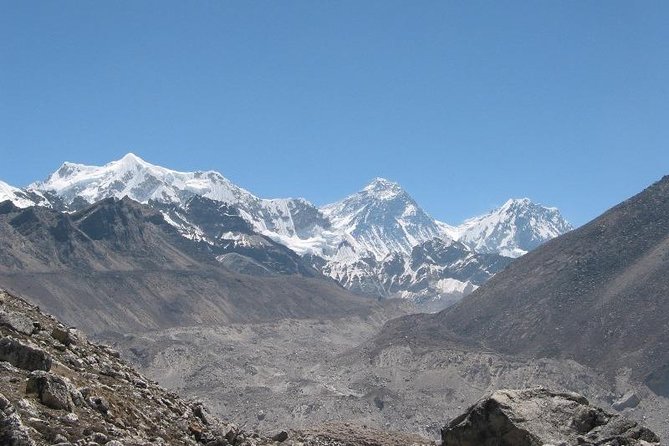
- A quieter route into the Everest region: After Namche, you turn toward Khumjung, Dole, Machhermo, and Gokyo instead of staying on the main Everest Base Camp trail.
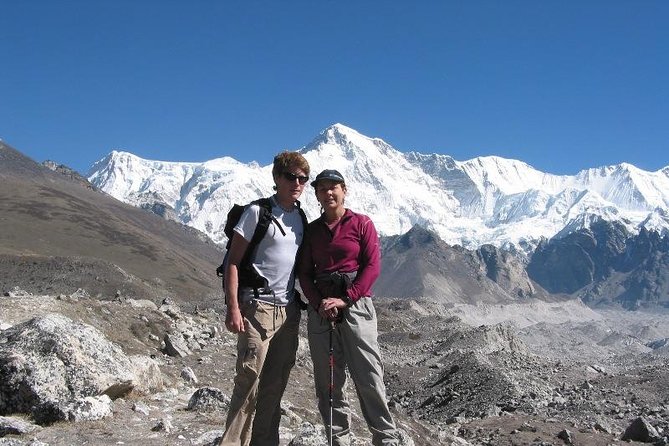
- Two major high points: Gokyo Ri and Renjo La Pass provide the trek’s biggest mountain views, with demanding climbs to reach them.
- Useful acclimatization plan: You spend a rest and hiking day at Machhermo before continuing to Gokyo.
- A well-covered package: The $2,100 cost includes meals, permits, local staff, porters, transfers, hotels, and several rented items.
- Sherpa support throughout: A Sherpa guide, support staff, porters, a first aid kit, and a duffle bag are included.
- A weather buffer at the end: Day 15 is free and also reserved as an emergency day for the Lukla to Kathmandu flight.
Why the Gokyo and Renjo La route is worth your time
This trek gives you a different slice of the Khumbu than the standard Everest Base Camp route. You still begin with the famous flight to Lukla and follow the Dudh Kosi, the Milk River, but you turn toward the Gokyo Valley after reaching the Sherpa center of Namche Bazaar.
That change matters. The route remains demanding, but it has a quieter feel than the main Everest trail. You pass through Khumjung, Dole, and Machhermo before reaching the turquoise lakes and broad mountain views around Gokyo. The final crossing of Renjo La then takes you north and back toward Namche.
I like the shape of the journey. You do not rush straight into the highest villages. Instead, the plan gives you time to gain height in stages, with an overnight stay in Khumjung, a slower acclimatization period around Machhermo, and a separate day for Gokyo Ri.
The route is still not easy. You walk for up to six hours on several days, sleep at high altitude, and cross a pass above 5,000 meters. The itinerary calls for a strong level of physical fitness, and you should take that wording seriously.
More Everest Base Camp Treks in Kathmandu
- Everest Base Camp Trek – 14 Days
★ 5.0 · 1,499 reviews - Everest Base Camp Trek
★ 5.0 · 842 reviews - Everest Base Camp Trekking
★ 5.0 · 485 reviews
Days 1 and 2: Kathmandu preparation before the mountains
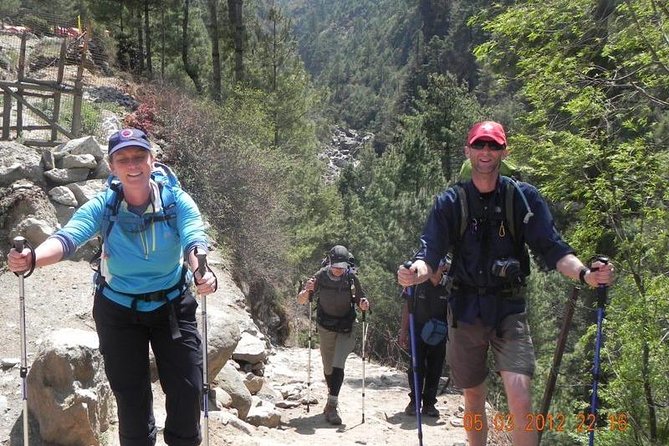
Your first day begins with arrival at Tribhuvan International Airport in Kathmandu. A private vehicle takes you to your hotel, followed by a briefing. The plan includes three or four nights in a three-star hotel on a twin-sharing bed-and-breakfast basis, depending on how the city nights are arranged.
Day 2 is for preparation, packing, and a half-day visit to Kathmandu’s World Heritage sites. A guide and private transport are included for that city tour. It is a useful addition because you can see some of Kathmandu before the trek rather than treating the capital as only a place to sleep.
The timing can feel tight if your international arrival is late or delayed, so keep your first day simple. You need to be ready for an early start on the mountain flight day. The listed meeting point is Tribhuvan Airport, with a 5:00 a.m. start time.
Day 3: Lukla to Phakding and the first walking hours
The flight to Lukla is one of the memorable parts of any Khumbu trek. From Lukla, you walk to Phakding at 2,610 meters, with about three hours of trekking scheduled.
This is a sensible opening day. You begin walking at a lower elevation than Lukla’s 2,840 meters and avoid a long first push. The route follows the Dudh Kosi, giving you an early sense of the river valleys and mountain villages ahead.
The big practical issue is the flight. Lukla weather can affect departures, which is why the itinerary keeps Day 15 open as an emergency day for the return to Kathmandu. You should also carry the insurance documents you need for evacuation and flight disruption questions, since personal high-risk medical insurance is not included.
Day 4: The climb to Namche Bazaar
The trek to Namche reaches 3,440 meters and takes about five hours. Namche is the main Sherpa trading and service center in this part of the Khumbu, so it is an important stop for both logistics and acclimatization.
You will likely notice the walking becoming more serious here. The route gains height, and the combination of uphill paths and thinner air can slow you down. Keep your pace steady rather than trying to match the guide’s fastest walking speed.
Namche is also where the route begins to separate from the more familiar Everest Base Camp pattern. You get a short visit to the Everest View Hotel area and then continue toward Khumjung, instead of following the main route farther east.
More Trekking Tours in Kathmandu
- Annapurna Circuit Trek with Tilicho Lake
★ 5.0 · 368 reviews - Everest Base Camp Trekking – 13 Day
★ 5.0 · 365 reviews - Everest Base Camp Trek
★ 5.0 · 350 reviews - Everest Base Camp Trek -14 Days
★ 5.0 · 321 reviews
Day 5: Khumjung and the Sherpa village experience
The walk to Khumjung takes about three hours and reaches 3,840 meters. That shorter day is useful after Namche because it lets you gain altitude without adding a very long walking schedule.
Khumjung is a traditional Sherpa village, and the overnight stay gives the route a stronger village character than a simple lodge-to-lodge march. The plan also includes a visit toward the Everest View Hotel area, so you get mountain scenery before settling into the Khumjung night.
I like this stop because it breaks up the ascent. The drawback is that the short walking time does not mean the day is effortless. At nearly 3,900 meters, even a few hours can feel slow if you have not adjusted well.
Days 6 and 7: Dole and Machhermo at rising altitude
Day 6 takes you to Dole at 4,200 meters, with about five hours of walking. This is where you enter the Gokyo Valley route more clearly, and the trail generally feels less crowded than the main Everest corridor.
Day 7 continues to Machhermo at 4,470 meters, with roughly four hours on foot. The shorter schedule is helpful, but the altitude is now the main issue. You may find the air noticeably thinner, and every uphill section can require more rest than expected.
The plan allows gradual progress, which is one of its strongest features. You are not expected to jump from Namche directly to Gokyo. The nights at Dole and Machhermo give your body more time to adjust.
Day 8: Acclimatization around Machhermo
Day 8 is a rest and hiking day at 4,470 meters. That does not mean lying in bed all day. Short walks around the hills help you stay active while giving your body time to adapt before the higher parts of the route.
This is one of the most important days in the program. A planned acclimatization day can make the next stages more manageable, though it cannot remove the risk of altitude sickness. Tell your guide promptly if you develop serious headache, nausea, unusual weakness, confusion, or breathing trouble.
The itinerary includes an experienced Sherpa guide, support Sherpa staff, and a first aid kit. Those are useful safeguards, but they do not replace your own medical insurance. The package does not include personal high-risk insurance or emergency evacuation coverage.
Day 9: Gokyo and the mountain lakes
The walk to Gokyo takes about four hours and reaches 4,790 meters. This is the emotional center of the route for many people, since the village sits beside the famous Gokyo lakes and opens the way to the high viewpoint above.
The approach is not simply a final walk into a village. By now, you have spent several nights above 4,000 meters, so the altitude can make this short day feel longer. Keep your water intake and pace under control, and do not treat the four-hour estimate as a race.
The package includes tea, coffee, hot chocolate, and treated drinking water. Bottled water, boiled water, soft drinks, beer, and other personal drinks cost extra, so bring enough cash for these choices and for other expenses along the trail.
Day 10: Gokyo Ri and the biggest viewpoint
Day 10 is set aside for Gokyo Ri. The itinerary lists the summit at 5,483 meters, while the trip description gives a figure of 5,360 meters. Either way, this is a high-altitude climb and should be treated as a serious mountain day.
The reward is a wide view over some of the world’s highest peaks and the Gokyo Valley below. This is one of the trek’s strongest reasons to choose the route. You get a major viewpoint without making Everest Base Camp the central target.
The ascent will test your legs and your breathing. The exact walking duration is not provided, so ask the operator how long your group normally spends on the climb and what happens if weather or altitude prevents a summit attempt.
Day 11: Crossing Renjo La Pass to Lungden
The Renjo La crossing is the hardest scheduled day. You climb to 5,340 meters and continue to Lungden at 4,400 meters, with about six hours of walking listed.
This pass is the route’s second major prize. From the high point, you get another broad Himalayan panorama, but you also need to focus on footing, pace, and changing conditions. The pass is not a quick scenic stop. It is a serious crossing at an altitude higher than most Alpine summits.
The descent to Lungden gives you relief from the high point, but six hours at these elevations can be tiring. Your guide’s role matters here. Pema and Kami are the guide names connected with this operation, though you should confirm who will lead your departure before booking.
Days 12 and 13: Returning through Namche to Lukla
Day 12 takes you back to Namche in about five hours, descending to 3,440 meters. After Renjo La, the lower altitude should feel welcome, although the long descent can be hard on knees and ankles.
Day 13 continues to Lukla at 2,840 meters and takes about six hours. This is a full final walking day, not a relaxed stroll before your flight. Keep some energy in reserve and make sure your luggage is ready for the next morning.
The package provides the required number of porters, support staff, and a trek duffle bag for each person. You still need to pack carefully and keep essential items with you rather than relying entirely on the porter load.
Days 14 to 16: Kathmandu, a buffer day, and departure
On Day 14, you fly from Lukla to Kathmandu and have an evening celebration meal. The farewell dinner is included, along with airport and hotel transfers by private vehicle.
Day 15 is a free day in Kathmandu and also acts as a backup for the Lukla flight. This is a smart part of the schedule. Lukla flights can be sensitive to weather, and a free day gives the operator some room to move you if the original flight cannot operate.
Day 16 includes transfer to the airport for your onward flight, with an optional extension available. International departure taxes and major meals in Kathmandu are not included, so budget for those separately.
What the $2,100 price really covers
At $2,100 per person, this is not a bare-bones lodge trek. The price covers three or four nights in a three-star Kathmandu hotel, twin-sharing bed and breakfast, private airport and hotel transfers, all trekking meals, permits, conservation and national park fees, government taxes, a Sherpa guide, porters, support staff, and local staff insurance.
It also includes hot drinks, treated drinking water, a duffle bag, a first aid kit, and a half-day Kathmandu heritage tour. A sleeping bag and down jacket are available on a rental basis, which can save you from buying bulky high-altitude equipment for one trip.
The price does not cover international flights, personal medical and evacuation insurance, personal gear, Kathmandu meals beyond the stated arrangements, bottled or boiled water, alcohol, laundry, phone calls, toiletries, or tips. Add these costs before deciding that the listed price is your full trip budget.
The value is strongest if you want a supported private trek and would otherwise have to arrange permits, transport, porters, meals, and mountain equipment yourself. It is less attractive if you already have local contacts, camping gear, and experience organizing high-altitude routes independently.
Who should book this trek
I would recommend it to someone who wants the Everest region but prefers Gokyo and Renjo La to a standard out-and-back route. It suits people who enjoy long mountain days, can handle basic lodge accommodation, and want Sherpa support without joining a large shared group.
The private format is useful because only your group participates. You can ask for a slower pace, discuss symptoms early, and manage rest stops more easily than in a large group, though the exact flexibility should be confirmed with the company.
I would not choose this as a first mountain holiday if you have little walking experience or no plan for altitude. The route reaches more than 5,000 meters twice, and the long days at high elevation demand preparation.
Before departure, confirm the exact Gokyo Ri altitude used by the guide, the identity of your lead guide, the room arrangement, the rental condition of the sleeping bag and down jacket, and the plan if the Lukla flight is delayed.
Should you book the Gokyo and Renjo La trek?
Book it if you want a challenging private trek with a strong route design, a quieter Gokyo approach, two major high viewpoints, and a package that handles most of the complicated local arrangements.
Think twice if you need a low-cost trip with few extra expenses or if high altitude worries you. The $2,100 price is reasonable for the amount included, but insurance, gear, drinks, tips, personal costs, and possible flight changes still need attention.
The strongest reasons to choose it are the gradual climb through Khumjung, Dole, and Machhermo, the acclimatization day, the Gokyo Ri and Renjo La combination, and the practical support from guides, porters, and Sherpa staff. With solid fitness and proper insurance, this is a demanding but well-balanced way to see the Khumbu beyond the busiest Everest route.
FAQ
How long is the Gokyo and Renjo La trek?
The program lasts 16 days, including arrival, preparation, trekking, Kathmandu time, a free or emergency flight day, and departure.
Where does the trek begin?
The trip begins in Kathmandu, with pickup from Tribhuvan International Airport. The listed start time is 5:00 a.m.
Is this a private trek?
Yes. Only your group participates in this private tour or activity.
What level of fitness do I need?
You should have a strong level of physical fitness. The route includes walking days of up to six hours and reaches Gokyo Ri and Renjo La above 5,000 meters.
Are meals included?
Breakfast, lunch, and dinner are included during the trek. Major meals in Kathmandu are not included. Bottled water, boiled water, soft drinks, beer, and similar drinks cost extra.
Is accommodation included?
Three or four nights in a three-star Kathmandu hotel on a twin-sharing bed-and-breakfast basis are included. Trekking accommodation and its exact room arrangement should be confirmed with the provider.
What happens if the Lukla flight is delayed?
Day 15 is kept as a free day and emergency day for the Lukla to Kathmandu flight. Weather-related flight changes should still be discussed with the provider before departure.
Is travel insurance included?
Insurance for local team members is included, but your own high-risk medical insurance is not. Your policy must cover emergency evacuation costs.
Latest treks added in Kathmandu
- Private Manaslu Circuit Trek at Himalayas★ 5.0 · 3 reviews
- Ghorepani Poonhill Trek★ 5.0 · 5 reviews
- Ghorepani Poon Hill Trek★ 5.0 · 16 reviews
- Upper Mustang Trekking★ 3.0 · 2 reviews
- Amazing 1 Day Trekking Experience in Kathmandu Nepal★ 5.0 · 24 reviews
- Upper Mustang Trekking★ 5.0 · 2 reviews
- Upper Mustang Trek★ 5.0 · 5 reviews
- Upper Mustang Trekking★ 5.0 · 4 reviews
Everest Base Camp Treks, compared.






Browse the lists this tour appears in