
REVIEW · KATHMANDU
Gokyo Lakes And Renjola Pass Trek – 12 Days
The real prize here is the route over Renjo La Pass, a 5,345-meter crossing that takes you beyond the usual Gokyo Valley return. I like the combination of six high-altitude lakes and Gokyo Ri, where you can see Everest, Lhotse, Makalu, and Cho Oyu in one wide sweep. I also like the quieter return through Thame rather than simply retracing your steps.
The main caution is the altitude. Gokyo Ri reaches 5,357 meters, and Renjo La is only slightly lower, so this is not a casual mountain walk. The 12-day schedule gives you more time than a rushed version, but you still need good fitness, patience, and flexibility for weather and mountain conditions.
Key points about the Gokyo Lakes and Renjo La route
- Five-thousand-meter crossings: Renjo La reaches 5,345 meters, while Gokyo Ri rises to 5,357 meters.
- Six Gokyo Lakes: The route passes a chain of high-altitude lakes before reaching Gokyo.
- Four giant peaks in one view: From Gokyo Ri, you can see Everest, Lhotse, Makalu, and Cho Oyu.
- A quieter return route: After Renjo La, the trek continues through Thame and Namche Bazaar to Lukla.
- Small-group format: The maximum group size is 15 people.
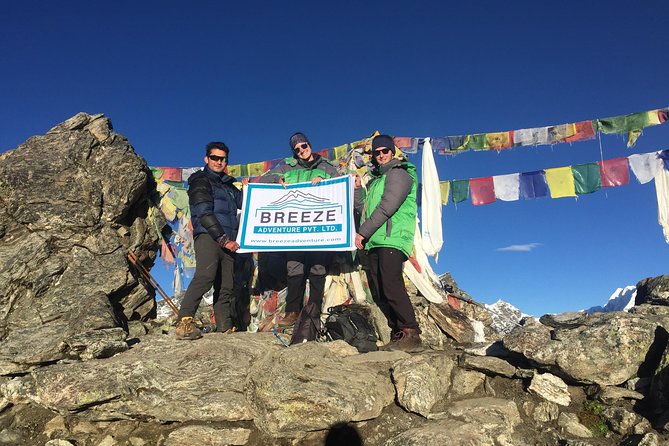
- Flexible local support: Breeze Adventure has adjusted the route for a customer who needed to complete the trek in six days, though the advertised plan is 12 days.
Why this trek is different from the standard Everest route
Many Everest region treks focus on the main trail toward Everest Base Camp. This one takes a different line through the Gokyo Valley, then crosses Renjo La before looping back through Thame and Namche Bazaar.
That shape matters. You are not simply walking up one valley and returning by the same path. The route gives you high lakes, a major viewpoint, a mountain pass, and a return through a different part of the Khumbu region. I like that sense of progress. Each major section has its own character.
The trek begins at Lukla Airport and works toward the Gokyo Lakes. From there, you climb Gokyo Ri, continue toward Renjo La, and descend through Thame and Namche Bazaar before reaching Lukla again. The experience is built around big mountain views, but the changing route is just as important.
At $1,800.62 per person, this is a serious trip rather than a low-cost day tour. The value depends on what you want from Nepal. If you want a high-altitude route with a small group and a less common pass crossing, the price may make sense. If your main goal is simply to see Everest, you can find shorter or less demanding options.
More Everest Base Camp Treks in Kathmandu
- Everest Base Camp Trek – 14 Days
★ 5.0 · 1,499 reviews - Everest Base Camp Trek
★ 5.0 · 842 reviews - Everest Base Camp Trekking
★ 5.0 · 485 reviews
Lukla to the Gokyo Valley
Lukla is the practical starting point for this trek. From here, you begin moving into the Khumbu region on foot. The route then heads toward the Gokyo Lakes, with the valley becoming the central focus of the first major part of the journey.
The six lakes are a strong reason to choose this route. They give the trek a clear visual theme, with each stage leading toward another high-altitude body of water and broader mountain views. The scenery is not just a backdrop for reaching a pass. The lakes are destinations in their own right.
You should expect the walking to feel demanding as altitude increases. The information provided describes the activity as requiring a moderate fitness level, but that phrase should not make you underestimate it. A trek that reaches above 5,300 meters asks much more of your body than a typical day hike.
I would treat the 12-day duration as a useful feature, not a sign that the route is easy. A longer plan can give you more time to move through the region without forcing every day into a race. One person completed a version of the route in six days after changing the plan with the company, but that is an exception and not a sensible target for most people.
Six lakes and the approach to Gokyo
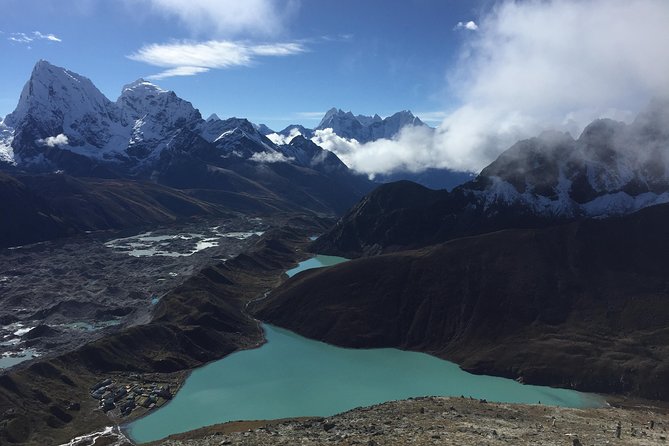
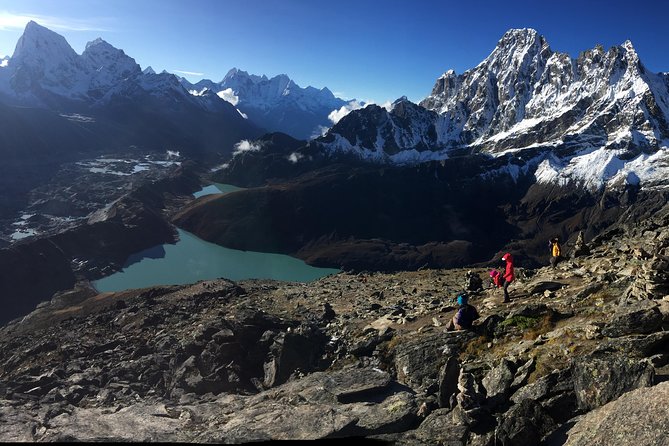
The Gokyo Lakes section is where the trek earns much of its appeal. You pass all six lakes while making your way toward Gokyo and the nearby viewpoints. The combination of clear water, high mountain terrain, and the presence of the Ngozumpa Glacier gives this section a grand scale.
The glacier lies west of the Gokyo Ri viewpoint. That location helps explain why the views from the area are so broad. You are not looking at a single peak from one narrow valley. You are positioned among several major mountains and a huge field of ice.
Gokyo itself is important as a base for the climb to Gokyo Ri. The supplied information does not give exact walking times, lodging details, or a day-by-day schedule, so you should ask Breeze Adventure for the current daily plan before booking. That is especially useful if you want to know how much time is set aside around the lakes and how the itinerary handles altitude.
I like this part of the route for people who want more than a famous mountain name. The lakes create a slower, more scenic rhythm. You get time to pay attention to the valley itself rather than treating it as a corridor to somewhere else.
Gokyo Ri and four 8,000-meter peaks
Gokyo Ri reaches 5,357 meters, making it slightly higher than Renjo La. The climb is one of the major highlights of the trip because it offers a panoramic view of four peaks higher than 8,000 meters: Mount Everest, Lhotse, Makalu, and Cho Oyu.
That is a remarkable collection of mountains from one viewpoint. Everest gets the attention, but the other three peaks make the view more complete. Lhotse sits close to Everest, Makalu adds another dramatic high point, and Cho Oyu gives the scene a wider Himalayan frame.
You should not think of Gokyo Ri as a simple sightseeing stop. At this height, the climb itself is a major physical test. The altitude can affect your breathing and pace, so you will need to move steadily and follow the guide’s instructions.
This is one place where a good guide matters. Sarki Sherpa is specifically named in the available feedback as a guide who provided important support on the Gokyo Lakes trek. The company also describes its team as experienced and energetic. You should confirm who will lead your departure, since guide assignments can change.
The best reason to choose Gokyo Ri is not just the number of peaks. It is the feeling of seeing the Khumbu region open up around you after days of walking. If your idea of a great trek includes one memorable viewpoint rather than a long list of stops, this climb delivers the central moment.
More Trekking Tours in Kathmandu
- Annapurna Circuit Trek with Tilicho Lake
★ 5.0 · 368 reviews - Everest Base Camp Trekking – 13 Day
★ 5.0 · 365 reviews - Everest Base Camp Trek
★ 5.0 · 350 reviews - Everest Base Camp Trek -14 Days
★ 5.0 · 321 reviews
Crossing Renjo La at 5,345 meters
The next major challenge is an early start for Renjo La. The pass reaches 5,345 meters, or about 17,536 feet. It is a high crossing, and the early departure is part of the practical plan for tackling it.
From Renjo La, you get another view of the Ngozumpa Glacier and the surrounding major peaks. The pass is not only a high point on the map. It changes the direction of the trek and takes you away from the route used by many visitors who return down the Gokyo Valley.
I like Renjo La because it gives the trek a real sense of achievement. Gokyo Ri is the great viewpoint, while the pass is the great crossing. Together they make the journey feel more varied than a straightforward out-and-back walk.
The drawback is clear: this is the hardest part for many people. You need a moderate fitness level at minimum, and you should be honest with yourself about how you handle steep, high-altitude walking. The company states that good weather is required. If conditions are poor, the activity may be moved to another date or canceled with a full refund.
Ask about the current pass conditions and the day’s walking plan before departure. The information available does not specify the exact route surface, walking hours, or elevation schedule, so those details should come from the operator.
Descending through Thame and Namche Bazaar
After Renjo La, the route descends through Thame and Namche Bazaar before returning to Lukla. This gives you a different way back and prevents the trek from feeling repetitive.
Thame is an important part of the route because it sits on the western side of the Khumbu area, away from the main Everest corridor. The supplied details do not provide a full description of the village, so I would not book this trip expecting a specific cultural program or named sightseeing stop there. Its value here is mainly as part of the return route.
Namche Bazaar brings you back to one of the best-known points in the region. Since the itinerary includes Namche on the way to Lukla, you get a sense of the contrast between the quieter pass route and the more familiar trekking hub.
The descent may sound easier than the climb, but long downhill days can still be tiring. Your knees and feet take a different kind of strain, particularly after the pass. Good footwear and sensible pacing matter, even though the operator only formally lists moderate fitness as a requirement.
Group size, guides, and flexibility
The group limit is 15 people. That is small enough to avoid the feel of a large procession, while still allowing the company to operate a shared departure. You should ask how many people are expected on your specific date, since the maximum is not the same as the usual group size.
The guide can make a major difference on a trek like this. The available information names Sarki Sherpa and gives him special thanks for helping with the Gokyo Lakes trek. It also highlights the guide and Sherpa team as a strong part of the experience.
One useful sign is the company’s willingness to change plans. A customer with limited time completed a version of the 12-day route in six days after discussing the change with the team. That shows flexibility, but I would not read it as proof that the shortened schedule suits everyone.
Your own route should be planned around safety, weather, and altitude rather than speed. If you need a shorter trip, ask directly what will be removed, how long each walking day becomes, and what support remains in place.
Is $1,800.62 good value?
The price is $1,800.62 per person. The supplied details do not state exactly what is included, such as accommodation, meals, permits, ground transport, or porter support, so you should request a written list before paying.
The price can be reasonable for a 12-day guided trek reaching two points above 5,300 meters, especially if local staff, route planning, and practical support are included. You are paying for access to the Gokyo Lakes and Renjo La, not simply transport from one sightseeing stop to another.
The value is weaker if you only want a quick Everest view or if you are uncomfortable with a demanding pass crossing. In that case, the route’s main attractions are also its main costs in time, effort, and preparation.
The maximum group size of 15 helps the package feel more personal than a large organized tour. The pickup option and mobile ticket also make the start easier, with the meeting point at Breeze Adventure Pvt. Ltd on Thamel Marg in Kathmandu. The activity ends back at that meeting point.
What to confirm before you book
The booking confirmation is provided at the time of reservation, and free cancellation is available up to 24 hours before the experience starts. Inside that 24-hour window, changes are not accepted and the amount paid is not refunded.
Because the trip depends on good weather, ask how the company handles delays and replacement dates. A weather cancellation comes with the choice of a different date or a full refund according to the stated policy.
I would also confirm:
- The exact day-by-day walking schedule
- The name of your guide, including whether Sarki Sherpa is available
- What the $1,800.62 price includes
- The expected group size for your date
- How the company handles altitude concerns
- The current plan for the Renjo La crossing
These questions are not needless paperwork. They tell you how carefully the company is preparing your particular departure.
Who should choose this trek?
I would recommend this experience to you if you want a high-altitude Nepal trek with two major objectives: the Gokyo Ri viewpoint and Renjo La Pass. It suits people who prefer a loop route with changing scenery and who are willing to trade comfort and ease for a stronger mountain challenge.
It may also suit you if you value local guidance and a flexible operator. The support from guide Sarki Sherpa and the company’s willingness to adjust a route are useful signs for anyone who wants personal help rather than a rigid group schedule.
I would be cautious if you have limited trekking experience, poor fitness, or little tolerance for altitude. The phrase moderate physical fitness should be taken seriously, and the figures tell the story: 5,345 meters at Renjo La and 5,357 meters at Gokyo Ri.
Should you book the Gokyo Lakes and Renjo La Trek?
Book it if you want a demanding but focused route through the Khumbu region, with six lakes, a superb mountain viewpoint, and a less common pass crossing. The strongest reasons are the four-peak view from Gokyo Ri, the route back through Thame and Namche, and the small-group format.
Before committing, get the inclusions and daily schedule in writing. If you are fit, flexible, and ready for serious altitude, this offers more variety than a simple Gokyo Valley return. If you mainly want an easy introduction to the Everest region, choose a lower and shorter trek instead.
FAQ
How long is the Gokyo Lakes and Renjo La Pass Trek?
The advertised duration is approximately 12 days.
Where does the trek begin?
The trek begins at Lukla Airport after meeting at Breeze Adventure Pvt. Ltd in Thamel, Kathmandu.
Where does the activity end?
The activity ends back at the meeting point at Breeze Adventure Pvt. Ltd in Kathmandu.
How high is Renjo La Pass?
Renjo La Pass reaches 5,345 meters, or about 17,536 feet.
How high is Gokyo Ri?
Gokyo Ri reaches 5,357 meters, or about 17,575 feet.
Which mountains can you see from Gokyo Ri?
From Gokyo Ri, you can see Mount Everest, Lhotse, Makalu, and Cho Oyu.
How many people can join the tour?
The maximum group size is 15 people.
What happens if bad weather cancels the trek?
If poor weather causes a cancellation, you can choose a different date or receive a full refund. You can also cancel up to 24 hours before the start time for a full refund.
Latest treks added in Kathmandu
- Private Manaslu Circuit Trek at Himalayas★ 5.0 · 3 reviews
- Ghorepani Poonhill Trek★ 5.0 · 5 reviews
- Ghorepani Poon Hill Trek★ 5.0 · 16 reviews
- Upper Mustang Trekking★ 3.0 · 2 reviews
- Amazing 1 Day Trekking Experience in Kathmandu Nepal★ 5.0 · 24 reviews
- Upper Mustang Trekking★ 5.0 · 2 reviews
- Upper Mustang Trekking★ 5.0 · 4 reviews
- Upper Mustang Trek★ 5.0 · 5 reviews
Everest Base Camp Treks, compared.






Browse the lists this tour appears in