
REVIEW · KATHMANDU
Gokyo Lake trek(gokyori trek, Chola pass trek, Renjola pass trek)
Gokyo is the prize here: a quiet Sherpa settlement beside turquoise Dudhpokhari, surrounded by high peaks and a chain of 19 freshwater lakes. I like the route for its clear mountain views of Everest’s Tibetan side and for the chance to see a quieter part of the Khumbu instead of following only the busiest Base Camp path.
I also like the mix of nature and culture, from pine, oak, and rhododendron forests to Sherpa villages and the Sherpa Museum. The main concern is altitude: Gokyo Ri reaches 5,357 meters, and Chola or Renjo La adds a serious physical challenge. You need strong fitness and enough patience for a long mountain journey.
Key points at a glance
- Gokyo’s turquoise lake valley: Reach Dudhpokhari and the linked chain of 19 freshwater lakes at the foot of Gokyo Ri.
- Several high-altitude options: Combine Gokyo with Chola Pass, Renjo La, Everest Base Camp, or some mixture of these routes.
- A private 18-day trip: Your group travels alone, with airport and hotel pickup and a local guide.
- Gokyo Ri at 5,357 meters: Climb for broad views of Everest and other major Khumbu peaks.
- A Sherpa cultural experience: Visit traditional villages and the Sherpa Museum along the way.
- A careful look at the price: The $1,290 fee includes lodging, national park fees, guiding, and transfers, but not breakfast, lunch, dinner, or drinks.
Why Gokyo Lake is worth choosing over the standard Everest route
The usual Everest trip aims straight for Base Camp. Gokyo gives you a different reward: water, open valley views, and a more peaceful setting around a small Sherpa settlement. The lakes are the star, especially Dudhpokhari, whose turquoise water sits beneath Gokyo Ri.
The route follows the traditional Everest corridor as far as Mong La Pass, at 3,610 meters, then turns toward the Gokyo Valley. That change matters. You still get the famous Khumbu peaks, but you are not simply retracing the standard Base Camp route.
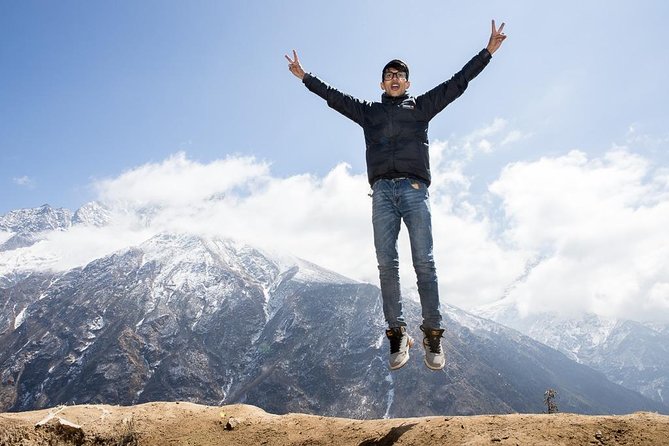
From Gokyo Ri, at 5,357 meters, you can look across the high country toward Everest, including its Tibetan side. The view is one of the main reasons to accept the hard walking and thin air. You also see four eight-thousand-meter peaks in the wider Khumbu region, although exact visibility depends on weather.
I like this route for another reason: it gives you a strong sense of place. The lakes, mountain passes, forests, high-altitude animals, and Sherpa villages are not separate attractions checked off a list. They form the character of the trip.
More Everest Base Camp Treks in Kathmandu
- Everest Base Camp Trek – 14 Days
★ 5.0 · 1,499 reviews - Everest Base Camp Trek
★ 5.0 · 842 reviews - Everest Base Camp Trekking
★ 5.0 · 485 reviews
What an 18-day plan can include
The advertised duration is about 18 days, but the supplied information does not provide a day-by-day schedule. That is important because the name covers several related routes: Gokyo Lake, Gokyo Ri, Chola Pass, and Renjo La Pass. Ask the operator to confirm exactly which passes and side trips are included before you pay.
The journey begins in Kathmandu, with pickup offered from Tribhuvan Airport. You then follow the established Everest trekking route toward Mong La. The trek is private, so only your own group takes part. That can make a real difference when you need to adjust the pace, discuss a pass crossing, or manage a tiring day.
At Mong La, the route branches toward Gokyo. The high valley becomes the main focus, with the lakes and Gokyo Ri ahead. If your plan includes Chola Pass, you may also link Gokyo with Everest Base Camp. If it includes Renjo La, you add another high pass and a different view into the Khumbu.
Do not assume that every version includes all three destinations. The product title lists Gokyo Ri, Chola Pass, and Renjo La Pass, while the description also says Gokyo can be visited before or after Everest Base Camp. Get the exact route in writing, including the pass names, overnight stops, and any return by helicopter.
Reaching Gokyo and Dudhpokhari
Gokyo is described as a tranquil hamlet on the shore of Dudhpokhari. That setting is the emotional center of the trek. You are not arriving at a single viewpoint and immediately leaving. You are spending time in a high valley shaped by lakes, peaks, and Sherpa life.
The valley contains 19 freshwater lakes connected with one another. The visible water and open surroundings give Gokyo a different mood from a route focused mainly on villages and a single famous base camp.
The setting is also practical. At this elevation, the air is thin and the conditions can be demanding. You should treat time around Gokyo as a high-altitude section, not a casual lakeside holiday. The package states that strong physical fitness is required, and that warning deserves attention.
I would ask the company how many nights you spend in Gokyo and how the schedule handles acclimatization. The supplied material confirms the destination and the altitude, but not the number of rest days. That detail can affect how comfortable and manageable the trek feels.
The Gokyo Ri climb at 5,357 meters
Gokyo Ri is the main physical highlight. At 5,357 meters, it is a high climb even for a fit trekker. The reward is a broad view of Everest and the surrounding Khumbu peaks, including the Tibetan side of Everest.
You should not think of Gokyo Ri as an easy photo stop. Strong fitness is listed as a requirement, and altitude can make every uphill section feel harder. Your guide is there to help manage the route, but no guide can remove the effects of thin air.
The climb is especially valuable if you want views rather than only a destination label. From the high point, you see the valley, the lakes, and the great peaks in one sweep. The description also identifies four eight-thousanders in the region, giving you plenty to look for when the sky is clear.
Weather will always affect the experience. The route promises access to the viewpoint, not perfect visibility. Keep that in mind when comparing the trek with a lower, more predictable sightseeing trip.
More Trekking Tours in Kathmandu
- Annapurna Circuit Trek with Tilicho Lake
★ 5.0 · 368 reviews - Everest Base Camp Trekking – 13 Day
★ 5.0 · 365 reviews - Everest Base Camp Trek
★ 5.0 · 350 reviews - Everest Base Camp Trek -14 Days
★ 5.0 · 321 reviews
Chola Pass and Renjo La: choose your challenge
Chola Pass is presented as one of the possible additions to the Gokyo route and a link toward Everest Base Camp. It is a demanding option. The available feedback describes Chola as challenging but rewarding, and one trekker preferred the Gokyo and Chola experience to the standard Everest Base Camp trip.
That is useful guidance if you want a trek with more variety. Chola changes the trip from a single-valley visit into a crossing between high mountain areas. It also raises the physical demands, so you should confirm the planned crossing conditions and your own readiness with the operator.
Renjo La is another high pass connected with Gokyo. The information places Gokyo Ri adjacent to Renjo La and near the junction of Chola Pass, but it does not provide the pass elevation or a precise crossing schedule. Ask which pass is included in your booking rather than treating the three names as a guaranteed full circuit.
The best choice depends on what you want. Gokyo alone gives you the lake valley and Gokyo Ri. Adding Chola brings a harder connection toward Base Camp. Adding Renjo La gives the trip another high pass. A full combination may be the most ambitious option, but you should confirm the exact route, overnight plan, and return arrangements.
Everest Base Camp and helicopter return
Gokyo can be combined with Everest Base Camp before or after the lake valley. Everest Base Camp sits at 5,364 meters, almost the same altitude as Gokyo Ri. This combination gives you both the classic Everest destination and the lakes that make Gokyo distinct.
One organized version of the trip included Gokyo, Chola Pass, Everest Base Camp, and a helicopter return. That option can save time on the way back and add a memorable flight, but do not assume it is part of the $1,290 package. The listed inclusions mention pickup, lodging, national park fees, and a local guide, not a helicopter.
If a helicopter return interests you, ask for the extra cost and the conditions attached to it. The supplied information confirms that such a plan has been organized before, but it does not say that every departure includes it.
Forests, wildlife, and Sherpa culture
The route passes through the Sagarmatha National Park, a UNESCO World Heritage Site and one of the world’s highest protected areas. The lower and middle sections include pine, oak, and rhododendron forests. Alpine birds and animals live in these forests and the higher country.
That variety helps break up the long walk. You are not looking at snow peaks every minute. Forest paths, village life, lakes, and high passes each give the journey a different feel.
The Sherpa villages are another major part of the trip. The supplied details point to traditional settlements, local rites, rituals, and the Sherpa Museum. These stops give you a way to understand the people who have shaped the Khumbu, rather than treating the region as scenery alone.
You can also hike to the Everest View Hotel at 3,880 meters. It is described as the world’s highest-altitude hotel and offers a close view of Everest. This is a useful stop if your schedule includes it, but the package does not clearly state that the hike is guaranteed. Confirm whether it is part of your route or an optional addition.
What the $1,290 price really covers
At $1,290 per person, the package has solid value if you want a private, organized trek. Accommodation, national park fees, a local guide, and hotel or airport pickup and drop-off are included. You are paying for route support and trip organization over about 18 days, not just for a short guided walk.
The private format is useful for a high-altitude route. Only your group participates, so you are not tied to a large group’s pace. That can be helpful when the route includes Gokyo Ri, Chola, or Renjo La.
The price does not include breakfast, lunch, dinner, food, or drinks. Alcohol is available to buy, but it is also excluded. This is the biggest cost point to plan for. The headline price is not the final amount you will spend.
Before booking, ask for a full estimate of expected meal and drink costs, plus any transport or pass-related expenses not covered. Also confirm exactly what accommodation means on each part of the route. The listing says it is included, but it does not name the properties or room arrangements.
The people and service style
Nepal Trekking Routes Pvt. Ltd. operates the trip. Shailesh Pokharel, identified as the company’s CEO, handled airport welcomes and direct communication for some bookings. Bishnu Magar is named as a guide connected with another multi-week trek.
That does not mean either person will automatically lead your departure. Ask who your assigned guide will be, how much high-altitude experience that guide has, and how the company handles changes on the trail.
The service style appears personal and flexible. The company has organized individual plans, answered questions, and supported both two-week and three-week journeys. A private trip is a good fit if you value direct contact and do not want to be one person in a large group.
Still, personal service is not a substitute for clear paperwork. Get the route, included meals, accommodation, guide name, pass crossings, and return transport confirmed before you arrive.
Practical details before you commit
The trek starts in Kathmandu, with Tribhuvan Airport listed as the meeting point. Pickup is offered, and hotel pickup and drop-off are included. The activity is confirmed at booking, which is useful for a long trip with several moving parts.
You need strong physical fitness. That is especially important if your version includes Gokyo Ri, Chola Pass, Renjo La, and Everest Base Camp. The highest points are above 5,300 meters, and the route is not suitable for someone looking for an easy sightseeing holiday.
Service animals are allowed, and the starting point is near public transportation. Those details may matter to some people, although most of the trek itself takes place in remote mountain areas.
Free cancellation is available if you cancel at least 24 hours before the experience start time. Cancellations made later, or changes made within that 24-hour window, are not accepted for a refund. The times are based on local time.
The booking information also includes a warning about missing the activity because of late arrival or non-arrival of a cruise ship. That situation does not fit most people flying into Kathmandu, but the practical point is simple: build in arrival time and do not count on a last-minute connection.
Who should book this trek
I would recommend this trip to you if you want Everest views but prefer a route with lakes, Sherpa villages, and more than one possible high-altitude objective. It suits fit trekkers who want a private schedule and direct support from a Nepal-based operator.
It is also a strong choice if you have already considered Everest Base Camp and want something less standard. Gokyo’s turquoise lakes and Gokyo Ri offer a different centerpiece, while Chola or Renjo La can add a serious mountain crossing.
I would be cautious if you dislike long walking days, high passes, thin air, or uncertain weather. The price also needs careful budgeting because all main meals and drinks are extra.
Should you book the Gokyo Lake trek?
Book it if the lakes, Gokyo Ri, Sherpa culture, and a private 18-day plan appeal to you more than a simple Base Camp itinerary. The combination of scenery and high mountain challenge gives this route a strong sense of purpose, and the included guide, lodging, park fees, and transfers make $1,290 a reasonable starting price.
Before booking, ask one decisive question: exactly which route am I getting? Confirm Gokyo Ri, Chola Pass, Renjo La, Everest Base Camp, helicopter return, meal costs, and accommodation one by one. If the answers match your fitness and budget, this is a compelling way to see the Khumbu beyond the usual Everest route.
FAQ
Where does the Gokyo Lake trek start?
The experience starts at Tribhuvan Airport in Kathmandu, Nepal. Hotel or airport pickup and drop-off are included.
How long does the trek last?
The advertised duration is approximately 18 days.
Is the trip private?
Yes. Only your group participates in the activity.
What is included in the price?
Accommodation, national park fees, a local guide, and hotel or airport pickup and drop-off are included.
Are meals included?
No. Breakfast, lunch, dinner, food, and drinks are not included. Alcoholic drinks can be purchased separately.
How high is Gokyo Ri?
Gokyo Ri reaches 5,357 meters.
Can the trek include Everest Base Camp?
Yes. Gokyo Lake can be visited before or after Everest Base Camp, which is listed at 5,364 meters. Confirm the exact route included in your booking.
Are Chola Pass and Renjo La included?
The experience is associated with Gokyo Ri, Chola Pass, and Renjo La Pass, but the supplied details do not confirm that every booking includes all three. Ask the operator to confirm your precise itinerary.
What is the cancellation policy?
You can receive a full refund if you cancel at least 24 hours before the experience start time. Cancellations or changes made less than 24 hours before the start are not accepted for a refund.
Latest treks added in Kathmandu
- Private Manaslu Circuit Trek at Himalayas★ 5.0 · 3 reviews
- Ghorepani Poonhill Trek★ 5.0 · 5 reviews
- Ghorepani Poon Hill Trek★ 5.0 · 16 reviews
- Upper Mustang Trekking★ 3.0 · 2 reviews
- Amazing 1 Day Trekking Experience in Kathmandu Nepal★ 5.0 · 24 reviews
- Upper Mustang Trekking★ 5.0 · 2 reviews
- Upper Mustang Trek★ 5.0 · 5 reviews
- Upper Mustang Trekking★ 5.0 · 4 reviews
Everest Base Camp Treks, compared.






Browse the lists this tour appears in