
REVIEW · NEPAL
From Kathmandu Budget: 15 Day Everest Base Camp Trek
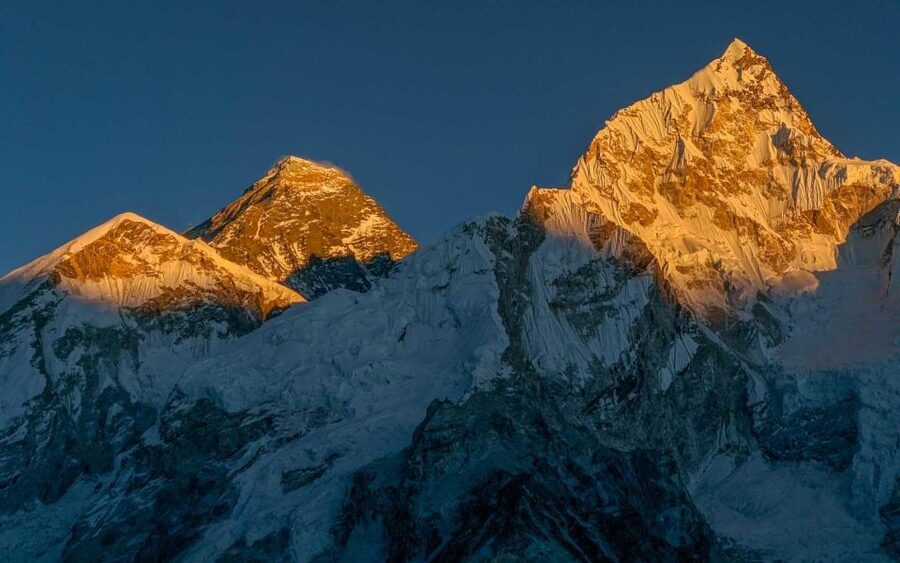
Everest Base Camp is only part of the prize here. The sunrise climb to Kala Patthar at 5,545 meters gives you the clearest views of Everest, Lhotse, and Nuptse, while the trail itself passes through Sherpa villages, monasteries, forests, and high mountain valleys.
I like the private group format, since your guide can adjust the pace and rest days to your condition. I also like the practical route from Kathmandu by road, which avoids the cost and uncertainty of a flight to Lukla, though it adds long jeep and bus rides at both ends.
The main drawback is the transport. The first and last road journeys take about 10 hours, and the route includes shared jeeps or buses. You should also note that food, drinks, travel insurance, and emergency rescue are not included in the $796 price.
Key points to know before booking
- Kala Patthar is the visual high point: At 5,545 meters, this rocky summit offers broad views of Everest, Lhotse, Nuptse, and nearby peaks.
- The road-based start saves money: You travel from Kathmandu to Salleri by jeep or bus instead of flying directly to Lukla.
- The private format allows flexibility: Guides can slow the pace or adjust the plan around your health and energy.
- Accommodation is in guesthouses: Lodging is included, but meals and drinks are purchased separately.
- The trek reaches 5,365 meters: Everest Base Camp is a serious high-altitude goal, not a casual day walk.
- Guide support is part of the package: English, Nepali, and Hindi are available, with trekking poles and a first-aid kit supplied.
What the $796 price really covers
At $796 per person, this is a budget-minded way to reach Everest Base Camp and Kala Patthar. The price includes Kathmandu pickup and drop-off, shared road transport between Kathmandu, Salleri, and Lukla, a private trek, a trekking permit, official documents, guesthouse accommodation, and a guide.
Your guide’s food, lodging, personal expenses, and insurance are also covered. That matters because guide costs can add up on a long Himalayan trip. A trekking pole and first-aid kit are supplied as well.
The price does not include your own food or drinks. Those are available for purchase during the trek, so you should budget beyond the headline cost. Travel insurance is also your responsibility, and it must cover emergency rescue. At this altitude, that is not a minor extra.
The road-based route is the biggest reason this trip can be offered at a lower price than many itineraries that include flights between Kathmandu and Lukla. You trade speed for savings. A 10-hour road journey is tiring, but it also gives you a longer look at rural Nepal before the high trail begins.
More Everest Base Camp Treks in Nepal
- Everest Base Camp Trek – 14 Days
★ 5.0 · 1,499 reviews - Everest Base Camp Trek
★ 5.0 · 842 reviews - Everest Base Camp Trekking
★ 5.0 · 485 reviews
Days 1 and 2: Kathmandu to Salleri and Surkhe
The trip starts with an early pickup in Kathmandu, followed by a road journey to Salleri. The stated drive is about 266.9 kilometers and 10 hours, ending at roughly 2,600 meters.
This is a long first day. You should think of it as a transfer day rather than part of the walking adventure. A shared jeep or bus keeps the price down, but shared transport can be less comfortable and less predictable than a private vehicle.
On Day 2, you continue by jeep from Salleri to Tham Danda, then walk to Surkhe. The combined jeep ride and trek take about seven to nine hours. This arrangement lets you reach the main trekking corridor without starting with a full walk from the roadhead.
Surkhe is an early taste of the trail villages. You will already be moving through mountain terrain, but the more dramatic altitude changes come later. Keep your first two days steady. Saving energy early is smart, especially since the trip has several demanding days ahead.
Days 3 and 4: Surkhe, Phakding, and Namche Bazaar
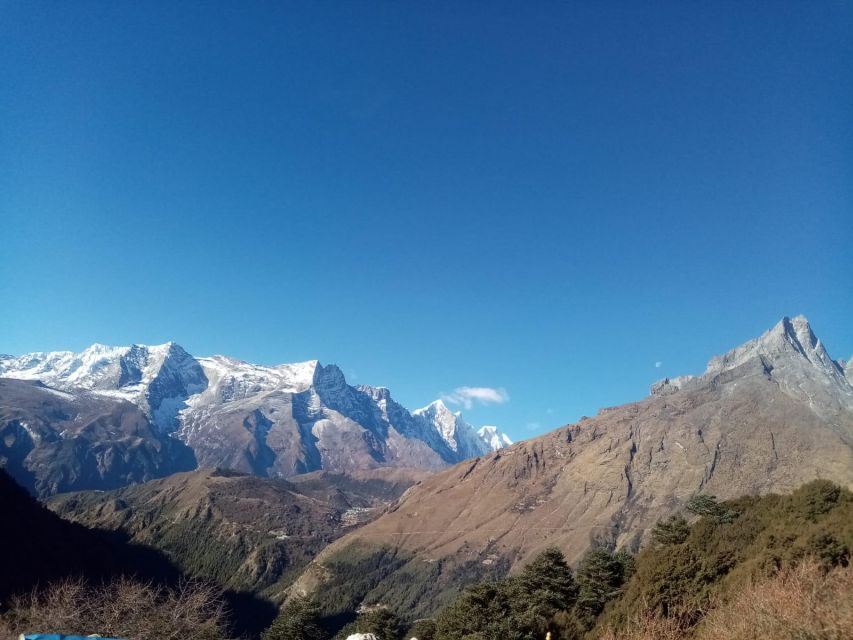
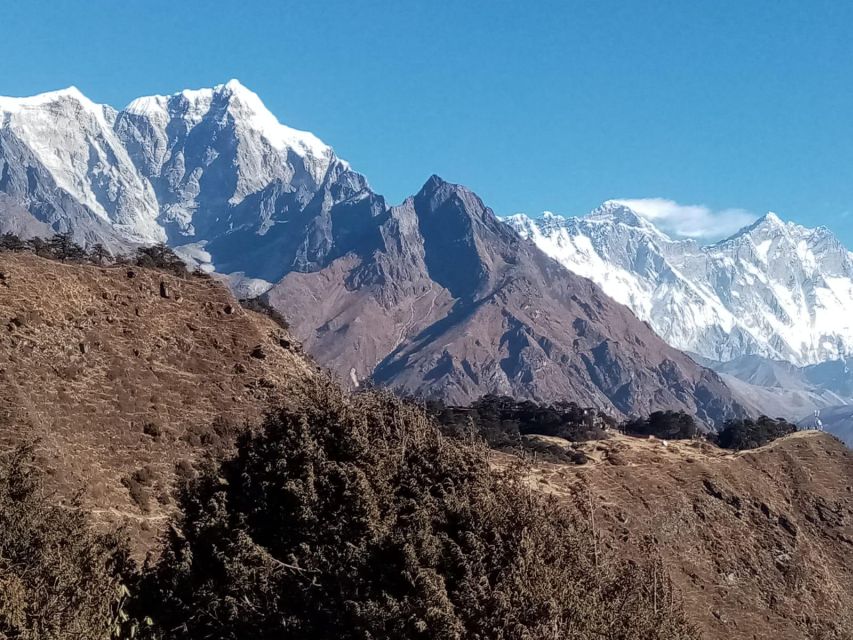
The walk from Surkhe to Phakding takes about six to seven hours. The route moves through the lower Khumbu area, where suspension bridges, village paths, and wooded sections begin to define the journey.
Phakding is an important overnight stop because it breaks up the approach to Namche Bazaar. It also gives your body more time to adjust before the trail rises higher. The route is not simply a straight climb, so you will encounter a mix of uphill and downhill walking.
Day 4 takes you from Phakding to Namche Bazaar in about six to seven hours. Namche sits at 3,440 meters and serves as the main hub of the Khumbu region. It is one of the most useful stops on the route, not only for its setting but also because it marks a clear change in altitude and mountain life.
The path to Namche includes suspension bridges and rugged trail sections. The bridges are part of the experience, but they can also make the day feel more demanding if you are tired or uneasy with heights. Your guide should help set a sensible pace, and the private format gives you more room to stop when needed.
Days 5 and 6: Tengboche Monastery and Dingboche
From Namche, you walk to Tengboche in about five hours. At 3,860 meters, Tengboche is known for its monastery and broad mountain views. Prayer flags, Buddhist religious sites, and the quiet setting give this part of the trek a different feel from the lower villages.
The monastery stop is not just a photo break. It offers a look at the spiritual life of the Sherpa communities that support life in the Khumbu. You should allow yourself time to notice the details rather than rushing through the day to reach the next bed.
Day 6 takes you to Dingboche, at 4,350 meters, in about five to six hours. This is where altitude becomes a much larger part of the trip. The air is thinner, the walking pace naturally slows, and ordinary slopes can feel surprisingly hard.
Dingboche is a key staging point before the higher section. Your guide can help you judge your condition, but you remain responsible for speaking up about headaches, nausea, unusual tiredness, or other symptoms. The schedule includes an acclimatization day here for good reason.
More Trekking Tours in Nepal
- Annapurna Circuit Trek with Tilicho Lake
★ 5.0 · 368 reviews - Everest Base Camp Trekking – 13 Day
★ 5.0 · 365 reviews - Everest Base Camp Trek
★ 5.0 · 350 reviews - Everest Base Camp Trek -14 Days
★ 5.0 · 321 reviews
Day 7: A needed rest day in Dingboche
The acclimatization day in Dingboche is not wasted time. It gives your body a chance to adjust before you climb toward Lobuche, Gorak Shep, and Base Camp.
You are not required to treat the day as complete inactivity. The exact plan is not specified, so your guide may set a manageable outing or suggest rest based on your condition. The important point is to avoid using the day to prove how strong you are.
This is also a good time to organize warm clothing, water, snacks, and personal items. Guesthouse accommodation is included, but food and drinks are not, so keep track of what you need to buy along the way.
Days 8 and 9: Lobuche and Everest Base Camp
From Dingboche, you walk to Lobuche in about five hours. The settlement sits at roughly 4,910 meters, and the high-altitude character of the route becomes unmistakable.
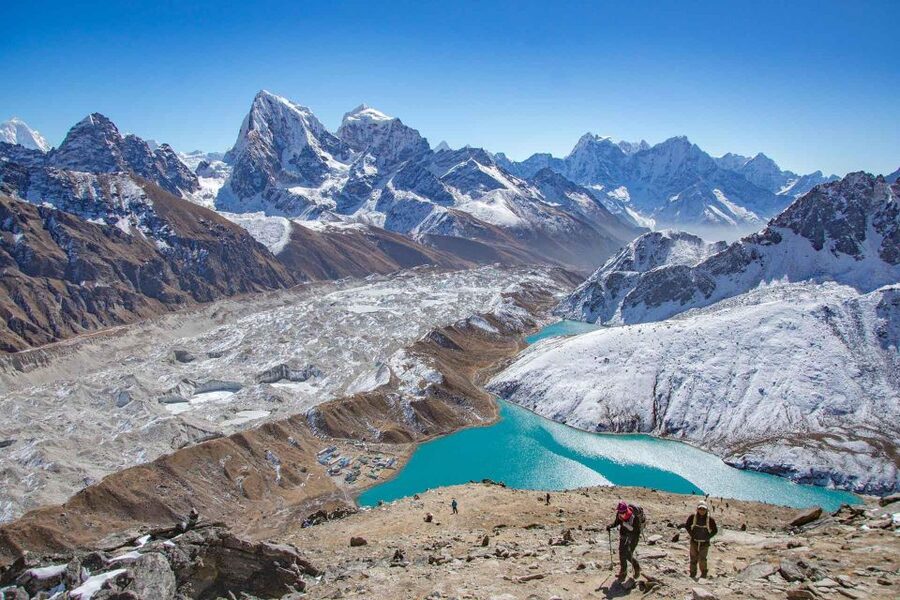
Day 9 is the major push: Lobuche to Everest Base Camp, then back to Gorak Shep. The full day takes about eight hours, with Base Camp at 5,365 meters and Gorak Shep at about 5,180 meters.
Everest Base Camp is the symbolic finish line for expeditions heading toward the world’s highest mountain. Reaching it gives you a close connection to the famous climbing route, though the mountain views are not always as open from Base Camp as they are from Kala Patthar. The surrounding peaks and the sense of being deep in the Himalayas are the real rewards.
The return to Gorak Shep makes this a long and tiring day. You should not expect a relaxed stroll or much spare energy at the end. Good boots, warm layers, and a steady pace matter more here than speed.
Day 10: Kala Patthar, then down to Pheriche
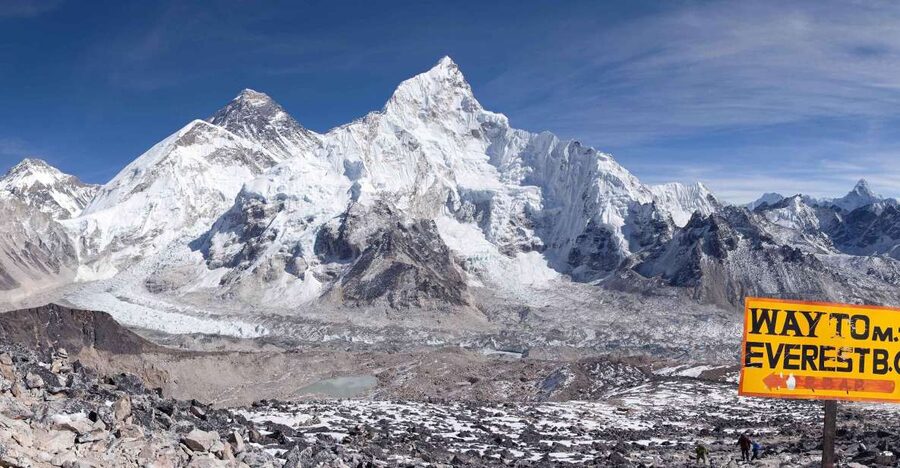
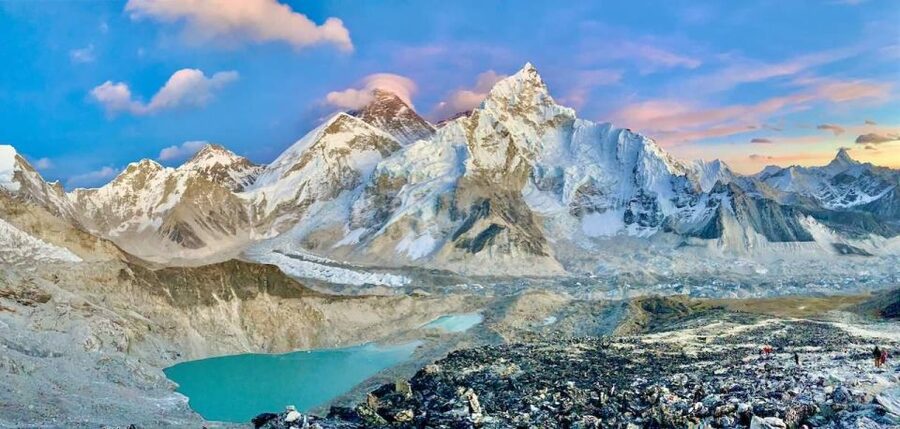
The Kala Patthar hike is scheduled for Day 10 and takes about seven hours, followed by a trek to Pheriche at 4,120 meters. At 5,545 meters, Kala Patthar is higher than Everest Base Camp and is the trip’s best viewpoint.
This is where you can see Everest, Lhotse, and Nuptse in a broad mountain panorama. Sunrise or sunset is especially appealing, but the exact view depends on weather and timing. Mountain weather can change quickly, even during the recommended trekking months.
The climb is steep and exposed by comparison with the lower trail. At this altitude, each step can feel slow. The good news is that the route then loses height toward Pheriche, which should make the latter part of the day easier on your breathing, though the distance still demands care.
Pheriche is a useful lower stop after the high point. Descending is not automatically easy, since tired legs and rough trail can create their own problems. Keep your pace controlled.
Days 11 to 13: Panboche, Namche, and Lukla
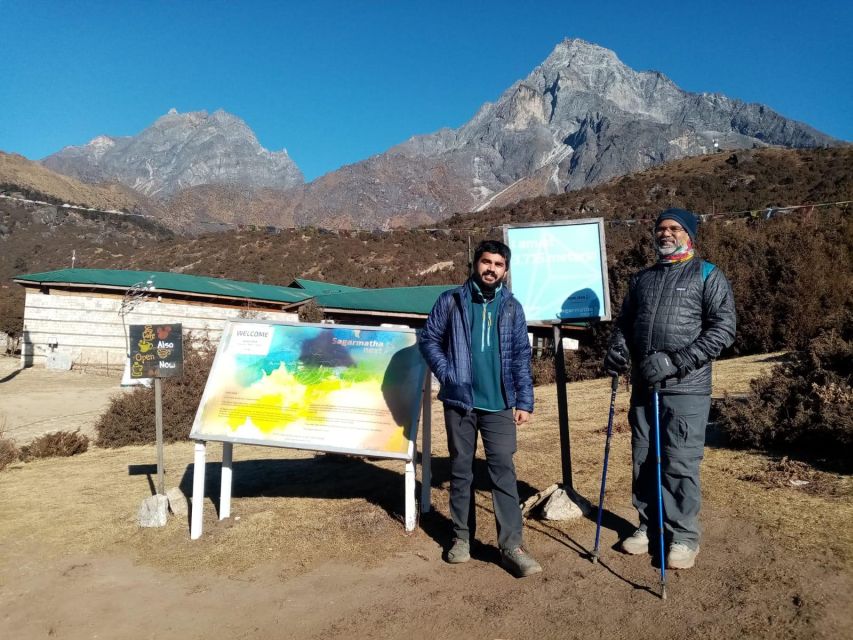
Day 11 takes you from Pheriche to Panboche in about five to six hours. Panboche sits at roughly 3,985 meters, and the lower altitude should feel welcome after Base Camp and Kala Patthar.
The route then continues to Namche on Day 12, a seven-hour walk. Returning to Namche lets you spend another night in the region’s main hub before the final walking day. The return journey gives you a different view of familiar trail sections, since you are now descending and carrying the satisfaction of having reached the high point.
Day 13 runs from Namche to Lukla in about five to six hours. Lukla sits at approximately 2,860 meters and is widely associated with Everest trekking because of its airport and its role as a common trail gateway.
This itinerary does not use a flight from Lukla. Instead, you spend the next day traveling by shared jeep to Salleri. That is a major logistical difference from many Everest Base Camp plans. You avoid a flight, but you add another long road transfer.
Days 14 and 15: The long return to Kathmandu
Day 14 takes you from Lukla to Salleri by shared jeep in about seven to eight hours. After almost two weeks of walking, this road day may feel slow, but it completes the route without relying on air transport.
Day 15 continues from Salleri to Kathmandu by shared jeep or bus. The journey takes about 10 hours. The trek ends when you return to Kathmandu.
This final stretch is the clearest compromise in the itinerary. If you value a lower price and do not mind long road journeys, it works well. If your priority is getting back to Kathmandu quickly after the high-altitude trek, you should compare this route with a plan that includes flights.
Guides, flexibility, and the private format
You receive a trekking guide who speaks English, Nepali, or Hindi. The strongest part of the guide arrangement is flexibility. Milan, one guide associated with this experience, is described as checking in often, answering questions in detail, and adjusting the pace around health and energy. Krisna is also associated with a careful approach and adapting the route to group needs.
You should still confirm your guide’s name and language before departure. The available information does not promise a particular guide for every booking.
A private group can be especially useful on a high-altitude trek. You are not locked into the pace of a large group, and you can discuss a slower day or additional rest with your guide. That does not remove the physical demands, but it can make the experience more manageable.
Accommodation is in guesthouses. The specific properties are not named, so comfort and facilities may vary along the route. The emphasis here is practical shelter rather than hotel-style luxury.
Best seasons, packing, and safety
The best months are March to May and September to November, when weather is usually more stable and mountain views are often clearer. The trek is offered throughout the year, but winter and monsoon conditions can affect temperature, visibility, and trail comfort.
Bring warm clothing, hiking shoes, hiking pants, and travel insurance. You also need your passport, a copy of it, and a passport-sized photo. A trekking pole is supplied, which is useful on uneven descents and rocky sections.
Food and drinks are available for purchase, but they are not included. Plan your personal budget accordingly. The package includes a first-aid kit with the guide, but emergency rescue is not covered, so your insurance should include high-altitude trekking and rescue costs.
This trip is not suitable for pregnant women or wheelchair users. Pets are not allowed. Free cancellation is available up to 24 hours before the start, and you can reserve now and pay later, which helps if you are still finalizing your Nepal plans.
Should you book this Everest trek?
Book it if you want the full Everest Base Camp and Kala Patthar route at a relatively low price, prefer a private group, and can accept long shared road journeys. The guide flexibility is a real advantage, especially if you want your pace adjusted around your health rather than dictated by a large group schedule.
Think twice if you want a short transfer from Kathmandu, hotel-level accommodation, or a package that includes meals and rescue insurance. You must also be ready for high altitude, cold conditions, and long walking days.
For a fit trekker who values mountain views, Sherpa villages, Tengboche Monastery, and a direct encounter with the Everest region, this is a practical choice. The best reason to choose it is not luxury. It is the chance to reach both Base Camp and Kala Patthar with guide support while keeping the overall cost under control.
FAQ
How long is the Everest Base Camp and Kala Patthar trek?
The trek lasts 15 days, including road transfers between Kathmandu, Salleri, and Lukla.
What is the highest point on the itinerary?
Kala Patthar is the highest point at 5,545 meters. Everest Base Camp is listed at about 5,365 meters.
Does the trip include transportation from Kathmandu?
Yes. Kathmandu pickup and drop-off are included, along with shared bus or jeep transfers. The route includes road travel to Salleri, Lukla to Salleri, and Salleri back to Kathmandu.
Are flights between Kathmandu and Lukla included?
No flights are listed. The itinerary uses shared jeeps or buses between Kathmandu, Salleri, and Lukla.
Is accommodation included?
Yes. Guesthouse accommodation during the trek is included.
Are meals and drinks included?
No. You purchase your own food and drinks during the trek.
What languages can the guide speak?
Guides are available in English, Nepali, and Hindi.
What should I bring?
Bring warm clothing, hiking shoes, hiking pants, travel insurance, your passport or a copy, and a passport-sized photo. A trekking pole is provided.
Latest treks added in Nepal
- Private Manaslu Circuit Trek at Himalayas★ 5.0 · 3 reviews
- Ghorepani Poonhill Trek★ 5.0 · 5 reviews
- Ghorepani Poon Hill Trek★ 5.0 · 16 reviews
- Upper Mustang Trekking★ 3.0 · 2 reviews
- Amazing 1 Day Trekking Experience in Kathmandu Nepal★ 5.0 · 24 reviews
- Upper Mustang Trekking★ 5.0 · 2 reviews
- Upper Mustang Trek★ 5.0 · 5 reviews
- Upper Mustang Trekking★ 5.0 · 4 reviews
Everest Base Camp Treks, compared.






Browse the lists this tour appears in