
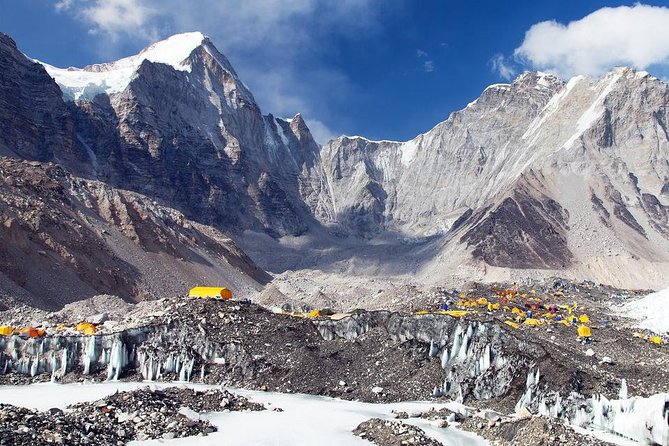
REVIEW · KATHMANDU
Everest Three Pass Trek 18 Days
The big appeal here is the route itself: you are not simply walking to Everest Base Camp and turning around. You cross three high passes, visit Gokyo, and see the Khumbu from a tougher, less direct angle. Kongma La reaches 5,535 meters, Cho La 5,420 meters, and Renjo La 5,360 meters.
I like the mix of Everest Base Camp and Gokyo, plus the personal guide support associated with Raj and Dilli. I also like that the trek is private, so your group does not have to match another party’s pace. The main caution is simple: this is a very demanding high-altitude route, and the supplied information gives two different durations, 18 days in the title and approximately 21 days in the detailed overview.
Key points to know before booking
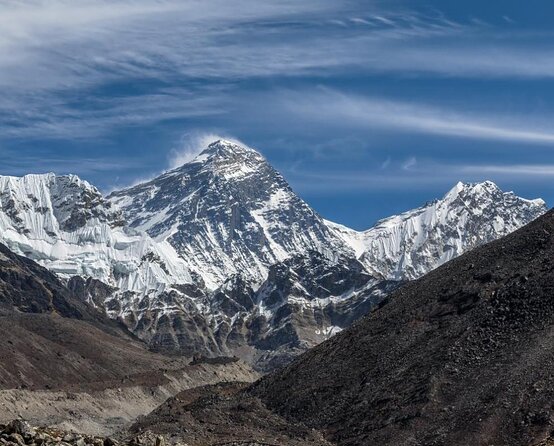
- Three major passes: Kongma La, Cho La, and Renjo La make this far harder than a standard Everest Base Camp route.
- Two famous destinations: The route combines Everest Base Camp with the Gokyo area rather than choosing one or the other.
- Private group format: Only your party takes part, with private transportation included.
- High starting time: The meeting time is 6:00 am, so plan for an early beginning.
- Meals included: Breakfast, lunch, dinner, tea or coffee, and snacks are covered.
- Strong guide emphasis: Raj and Dilli are the named guides praised for route knowledge, help on difficult sections, and a friendly manner.
Three passes, two valleys, one demanding trek
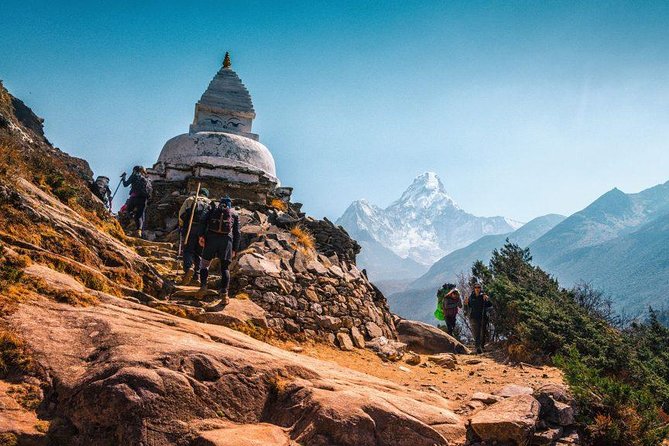
The Everest Three Pass Trek is designed for you if a direct walk to Base Camp feels too ordinary. The route links the main Khumbu trekking corridor with the high valleys around Gokyo, then crosses three passes that require much more effort than the usual Everest route.
You begin in Kathmandu and head toward Lukla by scenic flight, according to the supplied route description. From Lukla, the trail climbs toward Namche Bazaar before reaching the higher valleys and pass crossings. The route can be done clockwise or anticlockwise, though the exact direction for your departure is not specified.
That missing detail matters. Direction affects how the climbs feel, how quickly you gain height, and which pass arrives first. Before paying, ask the operator for the confirmed direction, daily walking plan, sleeping places, and altitude schedule.
You should also note the duration mismatch. The product title says 18 days, while the overview says the trek duration is 21 days. Treat 18 days as the advertised trip length only until Nepal Himalayan Hiker confirms the final plan in writing.
More Everest Base Camp Treks in Kathmandu
- Everest Base Camp Trek – 14 Days
★ 5.0 · 1,499 reviews - Everest Base Camp Trek
★ 5.0 · 842 reviews - Everest Base Camp Trekking
★ 5.0 · 485 reviews
Kathmandu to Lukla, the dramatic start
The journey starts in Kathmandu with a stated meeting time of 6:00 am. Pickup is offered, and private transportation is included, though the supplied information does not explain exactly where pickup occurs or whether the Kathmandu to Lukla flight is included in the price.
Lukla is the practical gateway for the Khumbu. From there, the route heads uphill toward Namche Bazaar. The flight is described as scenic, but you should confirm the flight cost, baggage rules, and arrangements directly with the operator because these details are not listed among the inclusions.
This early start is useful for a mountain itinerary, but it can be tiring. Ask what time you must be ready, where you will meet the guide, and what happens if transport or flight arrangements change.
Namche Bazaar and the first serious climb
Namche Bazaar is described as one of the busiest places on the route. It is a useful turning point because the trek leaves the lower forests and begins to feel more like a high mountain journey.
The approach passes through rhododendron forest, villages, and alpine woodland. These changing settings give you more than mountain views. You see how the trail shifts from greener lower country to colder, more exposed ground as you rise.
The route description does not provide a day-by-day plan or a stated acclimatization schedule. That is one of the most important things to clarify. At this altitude, a sensible schedule is not a luxury. Ask how many nights are planned around Namche and how the operator responds if you need a slower pace.
The private format helps here. Your group can receive direct attention from the guide rather than being folded into a large party. Still, private does not mean easy. You need a moderate level of physical fitness at minimum, and the three passes demand considerably more than an ordinary sightseeing walk.
Everest Base Camp brings the famous goal
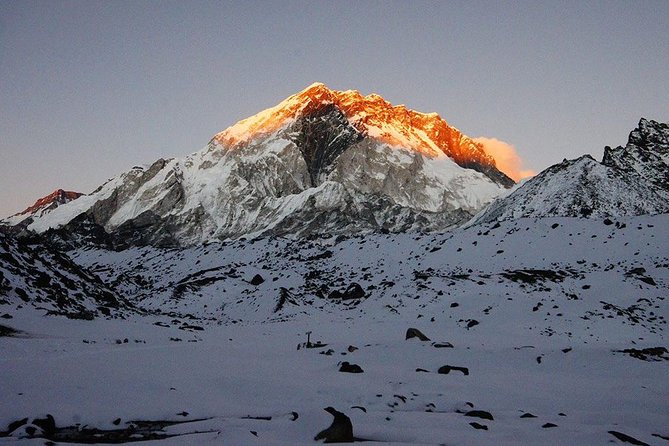
Everest Base Camp is one of the two major draws of this trek. Reaching it gives the trip a familiar goal, but the Three Pass route makes you work harder to get there than a straightforward Base Camp itinerary would.
The supplied information does not specify the exact approach to Base Camp or the number of nights nearby. That means you should not assume the route follows the standard schedule used by every trekking company. Ask which side of the circuit reaches Base Camp and whether the pass crossings come before or after it.
The value of combining Base Camp with the three passes is variety. You are not retracing one busy corridor for the whole trip. You get famous Everest scenery, high valleys, icy sections, villages, forests, and more remote-feeling trail days.
The drawback is fatigue. A hard pass crossing followed by another long walking day can change how much you enjoy Base Camp. The guide’s judgment becomes especially important if weather, tired legs, or altitude affect the plan.
More Trekking Tours in Kathmandu
- Annapurna Circuit Trek with Tilicho Lake
★ 5.0 · 368 reviews - Everest Base Camp Trekking – 13 Day
★ 5.0 · 365 reviews - Everest Base Camp Trek
★ 5.0 · 350 reviews - Everest Base Camp Trek -14 Days
★ 5.0 · 321 reviews
Gokyo adds a different side of the Khumbu
Gokyo is the second major destination and one of the best reasons to choose this circuit. The route description places Gokyo alongside Everest Base Camp, giving you two distinct goals rather than a single out-and-back route.
The trip passes through icy valleys and alpine areas on the way. Gokyo is therefore not just an extra name on the itinerary. It forms part of a route that feels more varied and more demanding than the usual Base Camp walk.
The exact Gokyo schedule is not supplied, so you should ask how long you stay there and which pass is linked to that section. The direction of travel can change the experience considerably. A clockwise and anticlockwise circuit may present the same places in a different order, with different hard days grouped together.
I would also ask what happens if a pass cannot be crossed. The available information confirms that the trek can follow either direction, but it does not state the backup route or weather policy. A clear answer will help you judge how flexible the company is.
Kongma La, Cho La, and Renjo La
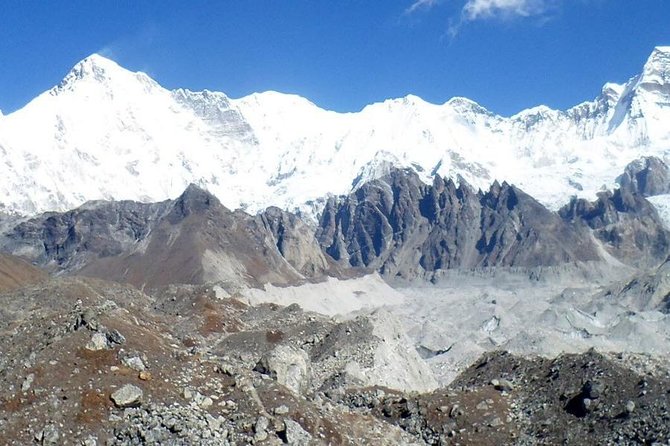
The three passes are the heart of the experience. Kongma La is the highest at 5,535 meters, followed by Cho La at 5,420 meters and Renjo La at 5,360 meters. Those numbers are not decorative. At these heights, each climb can feel slow and serious.
Kongma La is listed as the highest crossing. Cho La is also above 5,400 meters, while Renjo La is slightly lower but still an extreme altitude for most people. The route description calls the trek challenging and adventurous, and that is a fair warning.
You should expect the pass days to be the most physically demanding part of the journey. The supplied details refer to icy valleys, alpine forests, and mountain ranges, but do not give trail conditions, technical equipment requirements, or seasonal dates. Ask whether the pass crossings require traction equipment or special clothing before departure.
You also need to understand that a guide cannot remove the physical difficulty. The two strongest personal details connected with the guiding team are useful here. Dilli is specifically credited with helping a tired walker through the EBC and Cho La sections, while Raj is praised for knowing the area well, watching group needs, and keeping the mood light.
Those qualities matter on a hard route. Still, you should choose this trek because you are ready for the effort, not because you expect a guide to carry you through it.
What the private format really gives you
Only your group participates in this activity. That can be a major advantage on a route with three high passes. You can discuss pace, rest, and the order of the route with your own guide rather than waiting for a large group.
A private trek also makes the named guide more important. Raj and Dilli are the guides directly associated with the positive comments provided, and Pasang is also thanked in the personal note. The information does not guarantee which guide you will receive, so request the guide’s name before departure if that matters to you.
The route is operated by Nepal Himalayan Hiker, a company described as working in Himalayan trekking and expeditions since 2010. You should still ask practical questions about permits, accommodation, porters, insurance, and emergency arrangements. Those items are not clearly listed in the supplied inclusions.
Private does not mean luxurious. The price covers several basic travel needs, but it does not promise a private vehicle for every trail section, upgraded lodging, or extra services. Get the full written package before you compare it with other three-pass treks.
Meals and the real value of the $2,256 price
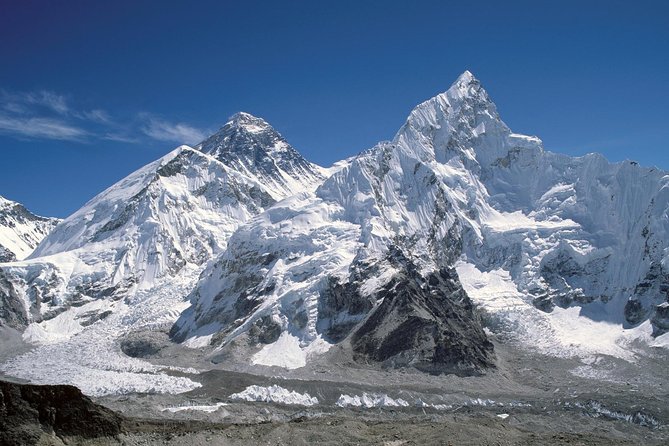
The advertised price is $2,256.42 per person. That is a substantial sum, but an 18 to 21-day Himalayan trek can provide reasonable value when the package includes the core daily meals, transportation, guide support, and taxes.
Breakfast, lunch, dinner, snacks, and simple coffee or tea are included. Lunch is described as available according to your preference, and the tea options include black tea or milk tea. That gives you useful daily coverage, especially on a long walking route.
Private transportation and all fees and taxes are also included. These inclusions reduce the number of small costs you must handle during the trip. The value depends heavily on what else is covered, however.
Alcoholic drinks, soda, and bottled water are not included. An air-conditioned vehicle is also listed as not included, though air conditioning is not a particularly important feature on the mountain trail itself. More important questions are whether flights, lodging, permits, porter service, equipment, and insurance are included.
Do not compare the price with another company until those points match. A cheaper trek may leave out more daily costs. A more expensive one may include services this package does not. Ask for a full cost sheet in plain language.
Who should book this route
You should consider this trek if you want Everest Base Camp but also want Gokyo and the three major passes. It suits someone who enjoys a hard physical challenge, changing scenery, and a route that is less direct than the standard Base Camp walk.
A moderate fitness level is stated as necessary, but I would treat that as the minimum, not the full picture. The route reaches more than 5,300 meters and includes several demanding crossings. You should be comfortable with long mountain walking and prepared for a route that may feel strenuous even when the scenery is extraordinary.
This is not the best choice if you want a relaxed holiday, a simple introduction to Nepal, or a fixed low-altitude walking trip. The early start, high passes, unclear final duration, and lack of detailed daily schedule all require careful preparation.
The trip may suit you especially well if you value direct guide attention. Raj is described as attentive and good company, while Dilli is credited with giving practical help on a difficult section. Those are encouraging signs, but confirm guide availability and the final plan before booking.
Booking details worth checking first
Confirmation is provided at the time of booking, and free cancellation is available if you cancel at least 24 hours before the experience starts. Cancellation inside that window is not refundable, and changes made inside the same period are not accepted. Cut-off times follow local time.
The operator may cancel if the minimum number of people is not met. In that case, you are offered another date or experience, or a full refund.
The activity is near public transportation, and pickup is offered. The starting time is 6:00 am. Since this is a private activity, only your own group takes part.
Before booking, I would ask these questions:
- Is the final duration 18 days or 21 days?
- Is the Kathmandu to Lukla flight included?
- Which direction will the circuit follow?
- What lodging and permits are included?
- Are porters provided?
- What is the backup plan if a pass is closed?
- Which guide will lead the trek?
- What should you bring for icy or high-pass conditions?
These questions do not spoil the adventure. They help you understand what you are buying.
Should you book the Everest Three Pass Trek?
Book it if you want a serious Khumbu challenge that combines Everest Base Camp, Gokyo, and three high passes in one private trip. The route offers far more variety than a straightforward Base Camp walk, and the reported guide support from Raj and Dilli is a real positive.
Hold off until the company clears up the 18-day versus 21-day duration and confirms what the price includes. You should also be comfortable with high-altitude exertion and uncertain trail conditions. For a fit, prepared trekker who wants the hard route rather than the easy headline, this has the ingredients of a memorable Nepal journey.
FAQ
How long is the Everest Three Pass Trek?
The tour title states 18 days, while the detailed route information describes the trek as approximately 21 days. Confirm the final duration with Nepal Himalayan Hiker before booking.
Where does the trek begin?
The trek begins with a scenic flight from Kathmandu to Lukla, then continues on foot toward Namche Bazaar.
Which three passes does the route cross?
The route crosses Kongma La at 5,535 meters, Cho La at 5,420 meters, and Renjo La at 5,360 meters.
Does the trek visit Everest Base Camp and Gokyo?
Yes. The route is designed to include both Everest Base Camp and Gokyo.
Is this a private tour?
Yes. Only your group participates in the activity.
What meals are included?
Breakfast, lunch, dinner, snacks, and simple coffee or tea are included.
Can I cancel for a full refund?
Yes, if you cancel at least 24 hours before the experience start time. Cancellations made less than 24 hours before the start are not refunded.
Latest treks added in Kathmandu
- Private Manaslu Circuit Trek at Himalayas★ 5.0 · 3 reviews
- Ghorepani Poonhill Trek★ 5.0 · 5 reviews
- Ghorepani Poon Hill Trek★ 5.0 · 16 reviews
- Upper Mustang Trekking★ 3.0 · 2 reviews
- Amazing 1 Day Trekking Experience in Kathmandu Nepal★ 5.0 · 24 reviews
- Upper Mustang Trekking★ 5.0 · 2 reviews
- Upper Mustang Trek★ 5.0 · 5 reviews
- Upper Mustang Trekking★ 5.0 · 4 reviews
Everest Base Camp Treks, compared.






Browse the lists this tour appears in