
REVIEW · KATHMANDU
Everest Three High Passes Trek – 20 Days
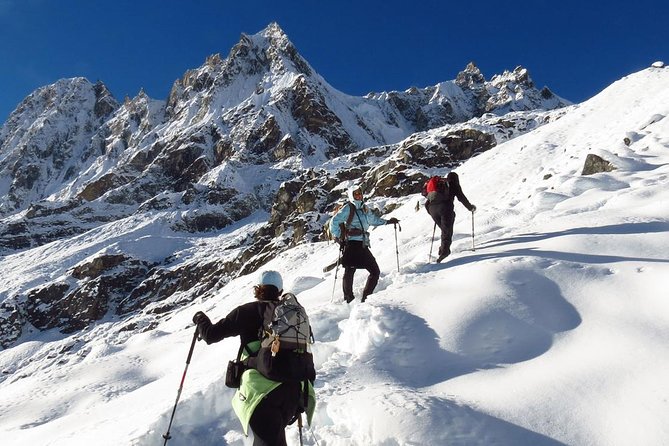
The Everest Three High Passes Trek gives you the full Khumbu experience in one hard, rewarding circuit: three passes above 5,300 meters, Everest Base Camp, Kala Patthar, and the blue lakes of Gokyo. This is not a gentle walk to a famous viewpoint. It is a serious mountain trek with steep climbs, rough descents, cold nights, and long days.
I like the route’s variety. You move from pine and rhododendron forests to glacial valleys, Sherpa villages, Buddhist monasteries, and high mountain passes. I also like the careful acclimatization stops at Namche and Dingboche, plus a full day around Gokyo. The drawback is simple: this trek demands strong fitness, and bad weather can delay Lukla flights or add unexpected costs.
Key points to know before booking
- Three major passes: Kongma La at 5,535 meters, Cho La at 5,420 meters, and Renjo La at 5,360 meters.
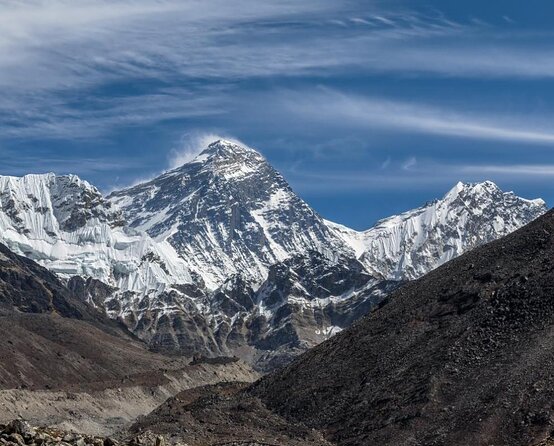
- Everest Base Camp and Kala Patthar: You visit Base Camp and climb Kala Patthar, listed at 5,545 meters, for a close view of Everest.
- Private group format: Only your own group takes part, with a guide and one porter for every two clients.
- Proper acclimatization: Rest and short-hike days are scheduled at Namche Bazaar and Dingboche.
- Gokyo Lakes and Gokyo Ri: You get a full day to see several lakes, climb Gokyo Ri, and reach Scoundrel’s Viewpoint.
- Price includes the main trek framework: Flights, permits, tea-house lodging, meals during the trek, a guide, porter, airport transfers, and rescue arrangements are included.
What the $2,700 price really covers
At $2,700 per person, this is not a cheap mountain holiday, but the package includes many of the expenses that can quickly add up in Nepal. You get airport pickup, two nights in a three-star Kathmandu hotel with breakfast, domestic flights connected with Lukla, tea-house lodging during the trek, and all breakfasts, lunches, and dinners while trekking.
The price also covers the Trekkers’ Information Management System registration, Khumbu Valley permits, necessary paperwork, a guide, and one porter for every two people. A duffle bag is provided for the trek and returned afterward. You also receive a company T-shirt, which is a small extra rather than a reason to book.
The value depends on how much help you want. If you arranged every flight, permit, transfer, porter, and lodge yourself, you might spend less, but you would also carry more responsibility. Here, the operator handles the moving parts and provides travel and rescue arrangements. That matters on a route where weather can affect flights and where a missed connection can disrupt several days.
You still need a budget beyond the headline price. International flights, your Nepal visa, travel and rescue insurance, meals in Kathmandu, drinks, phone calls, laundry, battery charging, hot showers, bottled or boiled water, and tips are not included. Extra nights caused by early returns, delayed flights, or an extended stay in the mountains are also your responsibility.
The word rescue deserves careful attention. Arrangements are included, but your own travel and rescue insurance is not. Do not treat the package as a replacement for a policy that covers high-altitude trekking, evacuation, delays, and medical treatment.
More Everest Base Camp Treks in Kathmandu
- Everest Base Camp Trek – 14 Days
★ 5.0 · 1,499 reviews - Everest Base Camp Trek
★ 5.0 · 842 reviews - Everest Base Camp Trekking
★ 5.0 · 485 reviews
Days 1 to 4: Kathmandu, Lukla, Phakding, and Namche
Your trip begins at Tribhuvan International Airport in Kathmandu, where a representative transfers you to the hotel. The first evening is used for meeting the trek team and preparing for the route. Two Kathmandu hotel nights with breakfast are included, although meals in the capital are generally your own expense.
Day two brings the short flight to Lukla. The flight takes less than 30 minutes and offers views of mountains, forests, and river valleys. From Lukla, you walk for about three to four hours to Phakding. It is a sensible opening day because your body begins adjusting to the altitude without an immediate high pass.
The following day follows the Dudh Koshi River toward Namche Bazaar. Pine, fir, and rhododendron trees line the route, and Monjo marks the entrance to Sagarmatha National Park. This is your first real taste of the region’s mountain scale, though the trail is still relatively welcoming compared with what comes later.
Namche is not just a place to sleep. It is the main trading and service center in the Everest region, and day four is reserved for acclimatization. You can hike to the Everest View Hotel, visit Sagarmatha National Park facilities, and explore Khumjung Village, including its monastery and Hillary School.
The visitor center near the park headquarters adds useful context about Sherpa culture, early Everest expeditions, and local plants and animals. I like this pause because it gives you a better sense of the people and places around you before the route becomes more remote.
The schedule also shows why you should not rush high-altitude trekking. A rest day is not wasted time. It gives your body a chance to adjust before the trail climbs higher.
Days 5 to 8: Tengboche, Pangboche, Dingboche, and Chhukung
From Namche, the trail descends toward Phunki Thanga before climbing to Tengboche. The village is home to the largest monastery in the Everest region, with wide views toward Everest, Ama Dablam, Thamserku, Nuptse, and Lhotse.
Arriving in the afternoon may give you a chance to witness a Buddhist ceremony, though the schedule and timing of religious activity can vary. The monastery is one of the cultural highlights of the route, not just another overnight stop.
Day six brings a downhill stretch through birch, conifer, and rhododendron forest. You cross the Imja River, pass Debuche and Pangboche, and continue into the Imja Valley. Pangboche Monastery and the upper village trails offer a more open view of the peaks before the route climbs toward Dingboche.
Dingboche is surrounded by stone-walled fields where barley, buckwheat, and potatoes are protected from cold wind and grazing animals. It is also another important acclimatization stop. The day hike to Nagarjun Hill gives you views toward Makalu, Lhotse, Cholatse, Tawache, and Ama Dablam.
From Dingboche, the route continues to Bibre and Chhukung. This section feels more rugged, with glacial streams, yak-herder areas, moraine, and high peaks directly ahead. After lunch, you climb Chhukung Ri, where some easy scrambling near the summit adds a bit of hands-on mountain work.
Chhukung Ri is a useful preview of the terrain ahead. You get excellent views of Ama Dablam and Amphu Labcha, but you also get a clear warning that the next stage is no ordinary valley walk.
Days 9 to 11: Kongma La, Everest Base Camp, and Kala Patthar
Day nine is one of the hardest days of the trek. You set out early for Kongma La, the highest of the three passes at 5,535 meters. The route can follow a hill northwest of Chhukung over the Nuptse Glacier moraines, or it can return toward Bibre before climbing above the Niyang Khola.
At the pass, cairns and Buddhist prayer flags mark the high point. The descent is the part to respect. You cross moraine and continue toward the Khumbu Glacier before reaching Lobuche. Loose ground, steep sections, and altitude can make this day slow and tiring.
Day ten follows the lateral moraine of the Khumbu Glacier toward Gorakshep. You see Pumori, Mahalangur, Lingtren, Khumbutse, Nuptse, and the north ridge of Everest. After reaching Gorakshep, you continue to Everest Base Camp across rocky ground, moraines, and streams.
Base Camp is a major goal, but keep your expectations practical. You are seeing the starting point for Everest expeditions, not a permanent village or a museum. The setting around Nuptse, Khumbutse, and Pumori is the real reward, and the approach across the glacier terrain gives the visit its sense of effort.
You return to Gorakshep for the night, then rise early on day eleven for Kala Patthar. The climb starts in darkness and cold so you can catch the first light on Everest. Wind can be sharp, and temperatures vary by season, so warm layers, gloves, and a headlamp are important.
At 5,545 meters, Kala Patthar is described as the highest point on this route. The view brings Everest, Lingtren, Khumbutse, Changtse, and Nuptse close together. After the summit, you descend to Lobuche for the night. This morning is physically demanding, but for many people it provides the clearest mountain view of the entire trip.
More Trekking Tours in Kathmandu
- Annapurna Circuit Trek with Tilicho Lake
★ 5.0 · 368 reviews - Everest Base Camp Trekking – 13 Day
★ 5.0 · 365 reviews - Everest Base Camp Trek
★ 5.0 · 350 reviews - Everest Base Camp Trek -14 Days
★ 5.0 · 321 reviews
Days 12 to 14: Cho La and the Gokyo Valley
From Lobuche, you leave the Everest Base Camp route and head toward Dzongla. The trail runs beside the Khumbu Glacier, then climbs toward Chola Tsho and smaller lakes before crossing the Cho La Khola on a bridge.
Cho La is the second major pass, at 5,420 meters. The climb is steep and rough, with boulders that require scrambling. Near the top, the trail curves around a crevasse, so this section can feel more technical than the height alone suggests.
Prayer flags and cairns mark the pass. From the top, you get broad views of Ama Dablam, Cholatse, and other high peaks. The descent to Thangnak is long but described as less difficult than the climb up.
After resting at Thangnak Kharka, you cross toward the Gokyo Valley and the Ngozumpa Glacier, identified as the longest glacier in Nepal. The route reaches the second and third Gokyo Lakes, with Gokyo Village beside the third lake.
Gokyo is one of the best reasons to choose the Three High Passes route instead of a simple Everest Base Camp trek. The setting changes from the Khumbu Glacier and Everest route to a chain of lakes, glacier views, and a quieter valley. You still face hard walking, but the scenery has a different mood.
Days 15 to 17: Gokyo Ri, Renjo La, Thame, and Namche
Day fifteen is devoted to the Gokyo area. You climb Gokyo Ri and visit the fourth lake, located about three kilometers north of Gokyo Village. The route can continue to the fifth lake and Scoundrel’s Viewpoint.
From there, you can see Cho Oyu, Gyachung Kang, Everest, Lhotse, Nuptse, Makalu, and the Ngozumpa Glacier. This is a full day, not a quick photo stop, so pace yourself and remember that altitude makes every climb slower.
The next day is another early start and another high pass. The trail follows Dudh Pokhari for a while before reaching Renjo La at 5,360 meters. Views include the Himalayan and Rolwaling ranges, Everest, Gokyo Village, and the third Gokyo Lake below.
The descent follows stone steps and loose scree toward Angladumba Tsho Lake. The route continues to Marulung, where you spend the night. After the intensity of the three passes, the long descent can feel welcome, though loose rock still calls for steady footing.
Day seventeen follows an old trading route used by Tibetan traders. You cross the Bhote Koshi River, pass Taranga, cross two bridges, and reach Thame. The village is known for its hilltop gompa, then the trail gradually drops toward Namche Bazaar.
This western section gives the trek a strong sense of movement. You are not simply retracing the Everest Base Camp route. You are completing a circuit through old trade paths, remote villages, glaciers, and three separate high crossings.
Days 18 to 20: Returning to Lukla and Kathmandu
The route from Namche to Lukla follows the Dudh Koshi and its tributaries. You cross bridges, walk through pine and rhododendron forest, pass Sherpa villages, and see prayer stones and flags along the way.
The trail is less severe than the high passes, but your legs will be tired. Day eighteen is a time to walk steadily, enjoy the lower altitude, and look back on the route you have completed.
Flights to Kathmandu are normally scheduled in the morning for safety reasons. Once back in the capital, you have time to rest or shop for souvenirs. The final evening includes a farewell dinner at an authentic Nepalese restaurant with cultural performance.
On day twenty, an airport transfer is arranged about three hours before your scheduled flight. The plan is tidy, but remember that Lukla flights are weather-sensitive. The itinerary includes the flights, but delays can still create extra nights and costs, so keep your schedule and insurance flexible.
Guides, porters, and the level of support
This is a private activity, so only your group takes part. That can make the pace and daily rhythm more personal than a large group departure. The package includes an experienced guide and one porter for every two clients.
The names connected with past trips include Ang Dawa Sherpa and Ang Pemba, while Dawa and Gombu are also associated with planning and arrangements. Your exact guide should be confirmed before departure, since the available information does not promise one particular person for every booking.
The support received the strongest praise in the supplied comments. Specific help included airport transfers, hotel arrangements, local flights, private car arrangements, and even recovering a backpack lost by an airline. That does not remove the need to pack carefully, but it suggests that practical trip handling is a major strength of this operator.
You should still carry your own day pack with water, warm layers, sun protection, documents, medication, and essentials. The porter arrangement reduces your load, but it does not mean you can treat the route like a guided city walk.
Who should book this trek?
Book it if you want the most complete high-altitude circuit in the Everest region and you are prepared for demanding days above 5,000 meters. The route suits people who value mountain scenery, Buddhist culture, Sherpa villages, glaciers, and a sense of real physical achievement.
It is not the right choice if you want a relaxed introduction to Nepal, dislike basic tea-house accommodation, or have limited time for weather delays. The three passes, early starts, rough descents, and cold conditions require strong fitness and a sensible attitude toward changing plans.
The full package is especially useful if you want one company handling flights, permits, guides, porters, lodging, meals, airport transfers, and farewell arrangements. Ask about your assigned guide, flight routing through Kathmandu or Ramechhap, insurance requirements, and likely extra costs before paying.
FAQ
How long does the Everest Three High Passes Trek take?
The trek lasts approximately 20 days, including arrival and departure days in Kathmandu, the Lukla flights, acclimatization days, and the return to Kathmandu.
Which three passes are included?
The route crosses Kongma La at 5,535 meters, Cho La at 5,420 meters, and Renjo La at 5,360 meters.
Does the trek visit Everest Base Camp?
Yes. You walk from Gorakshep to Everest Base Camp on day ten, then return to Gorakshep for the night.
Is Kala Patthar included?
Yes. You climb Kala Patthar early on day eleven. Its listed height is 5,545 meters.
Are flights between Kathmandu and Lukla included?
Yes. The package includes Kathmandu to Lukla and the return flight, with Kathmandu or Ramechhap used for the Lukla connection as arranged.
Are meals and accommodation included during the trek?
Breakfast, lunch, and dinner are included during the trek. Tea-house or lodge accommodation is also included. Meals in Kathmandu are not included.
What level of fitness is required?
A strong physical fitness level is required. The route includes steep climbs, rough descents, glacier and moraine terrain, early starts, and three passes above 5,300 meters.
Should you book it?
I would book this trek if the three passes matter as much to you as Everest Base Camp. You get a broader, more demanding route, with Gokyo Lakes, Gokyo Ri, old trading trails, and major Sherpa villages added to the classic Everest sights.
I would choose a shorter Everest route instead if your priority is comfort, a lighter workload, or a fixed schedule. For a fit hiker who accepts basic mountain conditions and keeps extra time for flight delays, this $2,700 package offers a practical way to tackle one of Nepal’s most demanding treks with the main logistics already arranged.
Latest treks added in Kathmandu
- Private Manaslu Circuit Trek at Himalayas★ 5.0 · 3 reviews
- Ghorepani Poonhill Trek★ 5.0 · 5 reviews
- Ghorepani Poon Hill Trek★ 5.0 · 16 reviews
- Upper Mustang Trekking★ 3.0 · 2 reviews
- Amazing 1 Day Trekking Experience in Kathmandu Nepal★ 5.0 · 24 reviews
- Upper Mustang Trekking★ 5.0 · 2 reviews
- Upper Mustang Trek★ 5.0 · 5 reviews
- Upper Mustang Trekking★ 5.0 · 4 reviews
Everest Base Camp Treks, compared.






Browse the lists this tour appears in