
REVIEW · KATHMANDU
Everest Chola Pass Trek-17 Days
The great appeal here is the route itself. Instead of following the standard Everest Base Camp path both ways, you loop through Gokyo Valley and Cho La Pass, adding turquoise mountain lakes, a high pass, and broad views of Everest, Lhotse, Makalu, and Cho Oyu. You finish at Everest Base Camp and Kala Patthar, where the world’s highest peak takes center stage.
I like the sensible acclimatization stop in Namche and the small-group, private format, which lets your pace and support feel more personal. I also like that the $2,100 price covers flights, meals, tea-house lodging, permits, a guide, a porter, and airport transfers. The catch is simple: this is a serious high-altitude trek, not a gentle sightseeing walk, and weather can disrupt mountain flights or add unplanned costs.
Key points to know before booking
- Gokyo Ri at 5,360 meters: A major viewpoint with sights of Everest, Makalu, Cho Oyu, and the surrounding peaks.
- Cho La Pass at 5,368 meters: The route’s hardest and most weather-sensitive crossing, linking Gokyo with the Everest Base Camp trail.
- Everest Base Camp and Kala Patthar: Two different highlights, with Base Camp offering mountaineering history and Kala Patthar delivering the close mountain views.
- Private support: Only your group participates, with one porter shared by two clients and an experienced guide.
- Tea-house trekking: Lodging is on a twin-sharing basis, with breakfast, lunch, and dinner included during the mountain portion.
- Flexible flight routing: The plan may use Kathmandu or Ramechhap for the Lukla flight, depending on the operating arrangement.
Why this route is more interesting than the standard Everest walk
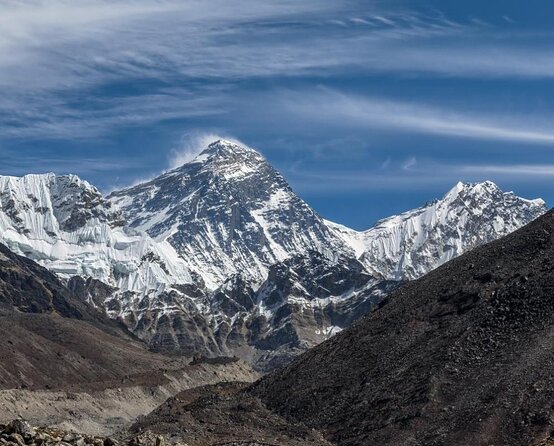
The classic Everest Base Camp route is famous, but the out-and-back pattern can feel repetitive. This 17-day plan adds the Gokyo Valley before joining the main Everest corridor, giving you a fuller picture of the Khumbu region.
You begin beside the Dudh Koshi River, pass through pine, oak, and rhododendron forests, and enter Sagarmatha National Park at Monjo. After Namche, you leave the better-known Base Camp route and head toward Dhole, Machhermo, and Gokyo.
That detour is the heart of the trip. Gokyo’s lakes and Gokyo Ri bring a different mood from the rocky trail to Base Camp. Then Cho La Pass supplies the physical challenge before you reconnect with the route through Dzongla and Lobuche.
The route is not designed for speed. It gives you time to adjust to altitude, with an acclimatization day in Namche and a full excursion around Gokyo. Even so, you should arrive in Nepal with strong fitness and respect for the altitude.
More Everest Base Camp Treks in Kathmandu
- Everest Base Camp Trek – 14 Days
★ 5.0 · 1,499 reviews - Everest Base Camp Trek
★ 5.0 · 842 reviews - Everest Base Camp Trekking
★ 5.0 · 485 reviews
Days 1 to 4: Kathmandu, Lukla, Phakding, and Namche
Your arrival day is straightforward. A representative from Himalayan Adventure Treks and Tours meets you at Tribhuvan International Airport and takes you to your Kathmandu hotel. You have a night there, with breakfast included, before the mountain portion begins.
The next morning starts early, with the meeting time listed as 6:00 am. The flight to Lukla takes less than 40 minutes and gives you striking views of mountains, forests, and river valleys. The flight is short, but it is an important part of the schedule because mountain weather can affect departures and returns.
From Lukla, you walk for roughly three to four hours to Phakding. This opening hike is useful because it lets your body begin adjusting before the trail climbs higher. You follow the river and pass through wooded country, with the first suspension bridges and mountain settlements setting the tone for the days ahead.
Day 3 brings a longer walk to Namche Bazaar. You follow the Dudh Koshi, cross forested sections, and enter Sagarmatha National Park at Monjo. The park entry point gives the trek a clear sense of occasion, but the day also demands patience as the route gains height toward Namche.
Namche is the Khumbu’s main trading and service center. It is not a quiet village stop, but it is an important place to rest, check supplies, and adjust to the altitude.
Day 4 is reserved for acclimatization. You hike toward the Hotel Everest View, where you can see a wide sweep of the Khumbu peaks. The walk also gives you a chance to observe local homes and daily life rather than spending the entire day inside the lodge.
That rest day matters. You are not simply losing a day from the schedule. You are giving your body time to respond before the itinerary takes you above 4,000 meters.
Days 5 to 8: Dhole, Machhermo, and the Gokyo lakes
From Namche, the trail turns toward Dhole. The mountains begin to feel closer, and the surroundings become more open as you leave the lower forest behind. Dhole is a modest overnight stop, so think of it as a practical place to rest, not a destination packed with activities.
The next section climbs to Machhermo at about 4,470 meters. The route passes through increasingly rocky terrain, with views of peaks and glaciated areas. At this altitude, the scenery is dramatic, but your walking pace should be conservative.
Machhermo is also where you will feel the cold and thin air more clearly. The itinerary allows time to walk around the village, but your main task is to eat, drink, rest, and monitor how you feel.
Day 7 takes you to Gokyo Lake. The trail is rocky and climbs steadily, so this is not a quick stroll to a viewpoint. When you arrive, the clear water and mountain reflections provide one of the most memorable visual changes on the route.
Gokyo is a major reason to choose this itinerary. The lakeside setting gives you a different view of the Everest region, and the overnight stop lets you enjoy it without rushing straight through.
Day 8 is devoted to Gokyo Ri, which rises to about 5,360 meters. The ascent is demanding, but from the top you can see Everest, Makalu, Cho Oyu, and many other peaks. The plan also allows time around Gokyo before another night by the lakes.
I like this arrangement because the viewpoint is treated as a central part of the trek rather than a hurried side trip. Still, the height is substantial. Your guide will be important here, particularly if cold, fatigue, or changing weather slows the group.
Days 9 to 11: Thagnag and the Cho La crossing
From Gokyo, you walk to Thagnag across snowfields and high mountain terrain. The route is more exposed in feel than the earlier forest sections, and the scenery is impressive but physically demanding.
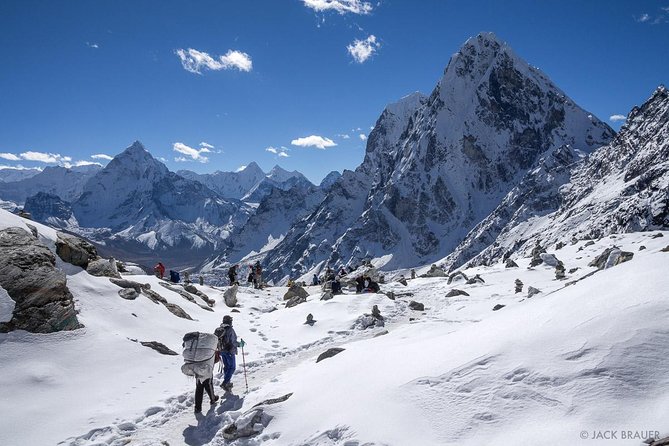
Day 10 is the key test: Cho La Pass at 5,368 meters. You climb from Thagnag, cross the pass, and descend to Dzongla. This is the point where a scenic trek becomes a genuine high-altitude undertaking.
From the pass, you can see Everest, Ama Dablam, Cho Oyu, Lhotse, Nuptse, Makalu, Cholatse, Tawache, and Gyachung Kang, among other peaks. The reward is not only the view. Cho La links two major valleys and keeps you away from the more repetitive out-and-back pattern.
The drawback is equally clear. Conditions at a high pass can change, and the route is strenuous. The trip includes travel and rescue arrangements, but your personal travel and rescue insurance is not included. You should arrange that before arrival.
After descending to Dzongla, Day 11 continues toward Lobuche and the Khumbu Glacier. The views of Tawache and Cholatse are especially prominent, while Lobuche brings colder conditions and a stronger sense of altitude.
This section can be tiring even for a fit walker. The itinerary’s fixed sequence means you cannot treat Cho La as an optional half-day outing. You should be comfortable with long uphill sections, rough trails, cold, and basic accommodation.
More Trekking Tours in Kathmandu
- Annapurna Circuit Trek with Tilicho Lake
★ 5.0 · 368 reviews - Everest Base Camp Trekking – 13 Day
★ 5.0 · 365 reviews - Everest Base Camp Trek
★ 5.0 · 350 reviews - Everest Base Camp Trek -14 Days
★ 5.0 · 321 reviews
Days 12 to 14: Everest Base Camp, Kala Patthar, and Pangboche
From Lobuche, you continue to Gorakshep and then visit Everest Base Camp. The trail is rocky and the air is thin, but reaching Base Camp is a major milestone.
Base Camp itself is not the best place for a clear view of Everest’s summit. Its importance comes from standing at the staging point used by climbers attempting the mountain. You also get a close sense of the Khumbu Glacier and the severe setting faced by expeditions.
You return to Gorakshep for the night. The next day begins with the climb to Kala Patthar, the viewpoint that supplies the close-up mountain panorama many people hope for on an Everest trek.
From Kala Patthar, the plan highlights Everest, Ama Dablam, and Pumori, along with glaciers and surrounding peaks. This is usually the day when the scale of the Himalayas becomes easiest to grasp. Afterward, you continue toward Pangboche, a small village where you can explore the surroundings.
The schedule here is demanding. Reaching Kala Patthar and then continuing down toward Pangboche makes for a long day, especially after the previous push to Base Camp. The lower elevation afterward should feel welcome, but you still need to manage your energy carefully.
Day 14 returns you to Namche Bazaar. The descent is easier on your breathing, though your knees may notice the long downhill sections. Namche is also where you may find Wi-Fi and reconnect with family or friends.
That connectivity is useful, but do not count on a fast, constant connection throughout the trek. Personal expenses such as phone use, battery charging, hot showers, bottled or boiled water, and laundry are not included.
Days 15 to 17: Lukla, Kathmandu, and the final evening
The walk from Namche to Lukla follows a sandy trail and includes a strenuous final stretch. By now, the scenery may feel familiar, but the return brings a satisfying change: you are walking with the knowledge that the high pass, Base Camp, and Kala Patthar are behind you.
You have time in Lukla to look around the bazaar and buy local items. The itinerary also allows a celebratory drink, though bar bills and personal purchases come at your own cost. An overnight stay in Lukla is important because it gives you some protection if weather delays the flight.
The return flight to Kathmandu is short and scenic. The plan may route the flight through Lukla and Kathmandu or through Ramechhap, so confirm the exact arrangement before departure. Once back in Kathmandu, you have free time for shopping or sightseeing.
The final evening includes dinner at a Nepalese restaurant with cultural performance. It is a pleasant way to end a trip that has involved early mornings, cold nights, simple tea houses, and a great deal of walking.
On Day 17, the company representative takes you to the airport about three hours before your scheduled flight. The tour ends at the airport, not with another hotel night.
What the $2,100 price really covers
At $2,100 per person, the package offers solid value if you want organized support. It includes airport pickup and transfers, two nights in a three-star Kathmandu hotel with breakfast, domestic flights, trekking permits and fees, tea-house lodging, mountain meals, a guide, and a porter shared by two clients.
You also receive a duffle bag for the trek, a company T-shirt, first-aid supplies, travel and rescue arrangements, and the farewell dinner. For a complicated Himalayan route with a high pass, those inclusions remove much of the planning work.
The price does not cover international flights, a Nepal visa, insurance, tips, personal purchases, drinks, phone calls, laundry, battery charging, hot showers, or extra porters. It also does not cover additional nights or meals caused by early returns, delayed flights, bad weather, or other changes.
That last point deserves attention. Mountain flights are weather-dependent, and a delay can create costs outside the advertised amount. Build extra money and schedule flexibility into your plans.
Guides, porters, and the feel of the support
This is a private activity, so only your group participates. That arrangement can be valuable on a route with several difficult days because your guide can focus on your group rather than a large mixed party.
Ang Pemba is a guide associated with the Everest Base Camp and Cho La route. Company founder Bhagwat has also handled airport transfers and broader trip support, including paperwork and practical help. One past itinerary included a guide assigned to one person, though you should confirm the exact guide and staff setup when booking.
The porter arrangement is one porter for every two clients. Pack carefully and keep essential items in your day bag, including anything you need during the day. The company provides a duffle bag, but your own personal packing still matters.
The support is practical rather than luxurious. You sleep in twin-sharing tea houses, and mountain accommodation can become crowded during busy periods. One account specifically noted that room quality can suffer when many people are in the mountains, so bring realistic expectations.
Food, fitness, and high-altitude preparation
Breakfast, lunch, and dinner are included during the trek, with 16 breakfasts, 14 lunches, and 15 dinners listed in the package details. Vegetarian food is available if you request it when booking, and you should also state any other dietary needs at that time.
The tour calls for strong physical fitness. That is justified by the route’s altitude and by the combination of Gokyo Ri, Cho La Pass, Base Camp, and Kala Patthar.
You do not need to be a mountaineer, but you should be ready for repeated uphill walking, rough trails, cold conditions, and long days. Train for endurance and sustained climbs before arriving. The itinerary includes acclimatization, but no schedule can remove the effects of altitude.
Take symptoms seriously and communicate clearly with your guide. The presence of first-aid supplies and travel and rescue arrangements is helpful, but insurance remains your responsibility.
Who should book this trek?
I would choose this route if you want more than the standard Base Camp walk and have the fitness for a high pass. It suits someone who values mountain scenery, local villages, a quieter alternate route, and the satisfaction of linking Gokyo with the Everest corridor.
It is also a good fit if you prefer having transport, permits, lodging, meals, guide support, and airport transfers arranged in one package. The private format is useful for couples, friends, or solo clients who want direct support.
I would hesitate if you need predictable flight times, private rooms, luxury hotels, or a relaxed walking schedule. I would also think twice if you are not prepared for cold, altitude, basic tea-house accommodation, and possible extra costs from weather delays.
The cancellation terms are friendly: you can receive a full refund if you cancel at least 24 hours before the scheduled start. Changes or cancellations within 24 hours are not accepted for a refund.
Should you book it?
Book this trek if the idea of Gokyo lakes, a 5,368-meter pass, Everest Base Camp, and Kala Patthar in one loop sounds worth the effort. The route gives you more variety than the standard Everest trail and includes the main logistical pieces at a fair price.
Before paying, confirm the flight route, guide assignment, insurance requirements, expected group arrangement, and the backup plan for weather delays. If you do that and arrive fit, this is a powerful 17-day introduction to the Everest region, with real challenges and very real rewards.
FAQ
Where does the trek begin and end?
The experience begins at Tribhuvan International Airport in Kathmandu and ends back at the same meeting point after the return journey.
How long is the Everest Cho La Pass Trek?
The itinerary lasts approximately 17 days, including time in Kathmandu, domestic flights, the mountain trek, and the return to Kathmandu.
Is airport pickup included?
Yes. Airport pickup and private vehicle transfers to the hotel are included. A company representative also takes you to the airport for your departure.
Are flights to Lukla included?
Yes. The package includes the Kathmandu to Lukla flight and the return flight arrangement. The details also refer to Kathmandu or Ramechhap routing, so confirm the exact departure airport before the trip.
What meals are included?
Breakfast is included during the Kathmandu hotel stay, and breakfast, lunch, and dinner are included during the trek. Meals in Kathmandu outside the included breakfasts are not covered.
Is a guide and porter provided?
Yes. An experienced guide and porter are provided, with one porter shared by two clients. The activity is private, so only your group participates.
Is travel insurance included?
No. Travel and rescue arrangements are included, but travel and rescue insurance is not. You must arrange your own insurance before the trek.
Latest treks added in Kathmandu
- Private Manaslu Circuit Trek at Himalayas★ 5.0 · 3 reviews
- Ghorepani Poonhill Trek★ 5.0 · 5 reviews
- Ghorepani Poon Hill Trek★ 5.0 · 16 reviews
- Upper Mustang Trekking★ 3.0 · 2 reviews
- Amazing 1 Day Trekking Experience in Kathmandu Nepal★ 5.0 · 24 reviews
- Upper Mustang Trekking★ 5.0 · 2 reviews
- Upper Mustang Trek★ 5.0 · 5 reviews
- Upper Mustang Trekking★ 5.0 · 4 reviews
Everest Base Camp Treks, compared.






Browse the lists this tour appears in