
REVIEW · KATHMANDU
Everest Basecamp Trek: 14 days
The great prize here is not just reaching Everest Base Camp. It is the slow approach through suspension bridges, Buddhist prayer flags, high mountain villages, and Sherpa country, followed by sunrise from Kala Patthar. The route gives you both the famous destination and the quieter days needed to reach it safely.
I like the practical setup: round-trip flights between Kathmandu and Lukla and porters for every two clients are included. I also like the two acclimatization stops, one in Namche Bazaar and another near Dingboche, because rushing upward is a poor way to handle altitude.
The catch is the price excludes bottled or boiled water, drinks, travel insurance, emergency evacuation cover, tips, and lunch and dinner in Kathmandu. Flights to Lukla can also depend on conditions and may operate from Kathmandu or Manthali, so you need patience and a flexible attitude.
Key points to know before booking
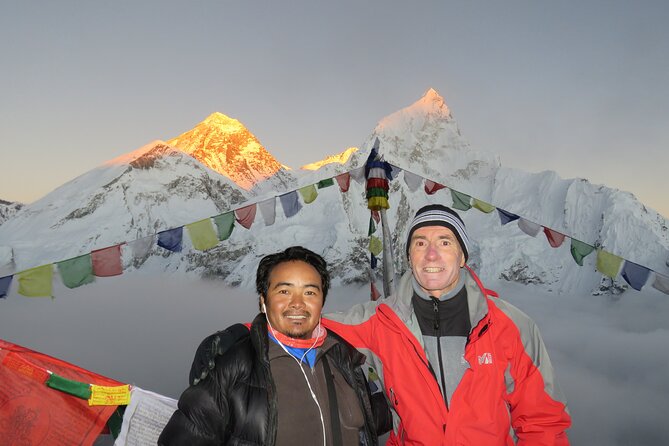
- Kala Patthar is the main viewpoint: The pre-sunrise climb gives you the closest listed view of Mount Everest.
- Two acclimatization days are built in: You spend time in Namche Bazaar and take a short Nangkartshang Peak outing near Dingboche.
- Lukla flights are included: The package covers airfare between Kathmandu and Lukla, along with airport transfers.
- Porters carry shared luggage: One porter is provided for every two clients, while you walk with your daypack.
- The trek uses simple guesthouses: You receive twin-sharing accommodation for 11 nights in the Everest region.
- It is a private activity: Only your own group takes part, rather than joining a large public departure.
What the $1,650 price really covers
At $1,650 per person, this trek is priced as a bundled package rather than a bare guiding service. You receive two nights in a tourist-standard Kathmandu hotel with breakfast, 11 nights in twin-sharing guesthouses, permits, round-trip Lukla airfare, private ground transport, airport transfers, a guide, porters, and most meals during the trek.
The meal plan includes 14 breakfasts, 11 lunches, and 11 dinners. That removes much of the daily planning once you are in the Khumbu region. Kathmandu is different: lunch and dinner there are your responsibility, as are drinks throughout the trip.
The price also includes an experienced, first-aid-trained, government-licensed, English-speaking trekking guide. No individual guide name is supplied, so you should ask who will lead your departure before booking if that matters to you.
The porter arrangement is useful, but pay attention to what it means. One porter serves every two clients, so you should pack carefully and keep valuables, warm layers, medication, and water with you. A porter is not a substitute for carrying a useful daypack.
The package does not include travel insurance or high-altitude emergency evacuation coverage. This is not a minor footnote on a high mountain trek. You should arrange suitable insurance before setting out and confirm that it covers the altitude reached on this route.
Tips for trekking staff and the driver are also separate. Since the package involves a guide, porters, a driver, and airport support, build gratuities into your budget rather than treating the advertised price as your final cost.
More Everest Base Camp Treks in Kathmandu
- Everest Base Camp Trek – 14 Days
★ 5.0 · 1,499 reviews - Everest Base Camp Trek
★ 5.0 · 842 reviews - Everest Base Camp Trekking
★ 5.0 · 485 reviews
Kathmandu arrival and a first look at Thamel
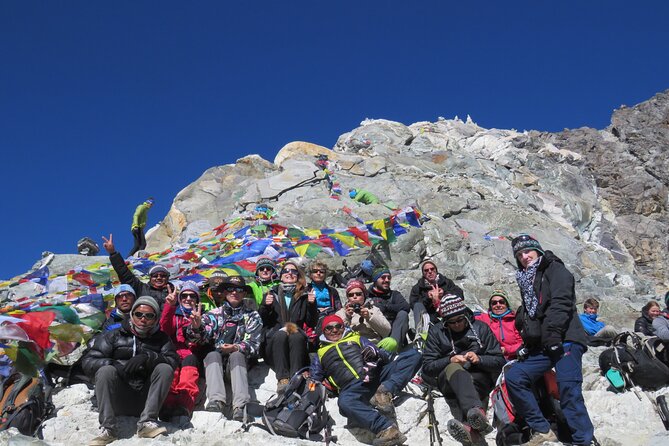
Your trip begins at Tribhuvan International Airport, where the Iconic Holiday team meets you with a sign showing your name and the company name. A private vehicle then takes you to your Kathmandu hotel.
The first day includes time in Thamel, the city’s main visitor district. You can use these four hours for last-minute trekking purchases, food, or a calm start before the mountain days begin. Thamel has restaurants, hotels, travel offices, shops, discos, and nightclubs, so it is convenient, though not especially quiet.
That convenience matters. You may need to handle small practical tasks before flying to Lukla, such as checking your gear or buying anything you forgot. The schedule gives you a little breathing room instead of sending you straight from the airport to the trail.
The package provides breakfast at the Kathmandu hotel, but lunch and dinner are not included here. Your airport transfer on arrival and your later hotel transfer are covered by the tour.
Flying to Lukla and entering the Khumbu
Day two starts with the flight to Lukla. The flight is listed as taking about 30 minutes, followed by time at Lukla Airport. This short journey is an important part of the experience because the route leaves the Kathmandu Valley quickly and places you in the Everest trekking region.
The exact departure airport can depend on the flight situation. Your flight may leave from Kathmandu or from Manthali. That detail can affect your morning plans, so confirm the operating airport and transfer timing before departure.
Lukla Airport is a busy gateway during trekking season. The airport is surrounded by steep mountain country, and the setting makes the arrival feel like a clear break from city travel. You should expect the flight to be one of the parts of the trip most affected by conditions, so a rigid onward schedule is unwise.
The supplied itinerary then moves toward Namche Bazaar, with the route described from Phakding through uphill paths and suspension bridges. The walking becomes more demanding here. You cross bridges, pass small settlements, and follow the Dudh Kosi valley toward the commercial center of the Khumbu.
Namche Bazaar gives you time to adjust
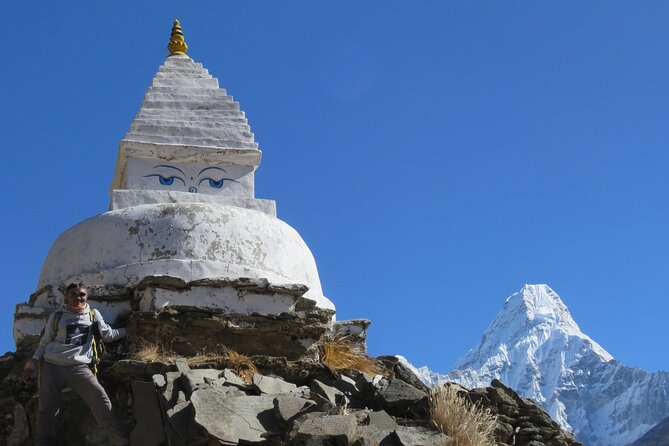
Namche Bazaar is more than an overnight stop. It is the first major place on the route where the schedule slows down for altitude adjustment. The village has hotels, restaurants, and tea houses, giving you more services than you will find in the smaller settlements ahead.
You spend a rest day here, with a morning hike toward Syangboche. The purpose is not simply sightseeing. The extra movement at a lower altitude, followed by a return to Namche, helps your body adapt before the trail climbs higher.
I consider this one of the better design choices in the trip. A 14-day Everest Base Camp route has limited time, yet this plan does not treat every day as a race. You should still take altitude symptoms seriously and tell your guide if you feel unwell. The itinerary includes acclimatization time, but it cannot guarantee that every person will adjust well.
The walk from the lower Khumbu to Namche is described as tough, with uphill sections and repeated bridges. You need moderate physical fitness, and the challenge comes from the combination of walking hours, uneven trails, and increasing altitude rather than from one single technical obstacle.
More Trekking Tours in Kathmandu
- Annapurna Circuit Trek with Tilicho Lake
★ 5.0 · 368 reviews - Everest Base Camp Trekking – 13 Day
★ 5.0 · 365 reviews - Everest Base Camp Trek
★ 5.0 · 350 reviews - Everest Base Camp Trek -14 Days
★ 5.0 · 321 reviews
Tengboche brings monasteries and mountain views
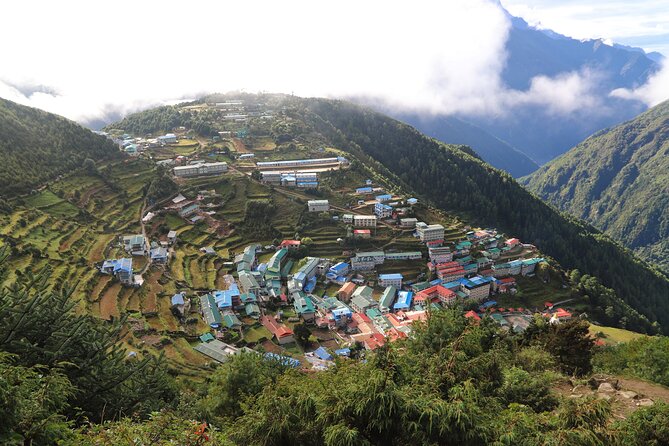
After Namche, the trail descends toward the Dudh Kosi Valley before climbing again toward Phungi Thanka and Tengboche. This pattern of losing height and then climbing back can feel inefficient, but it is part of the route and gives the day a varied rhythm.
Tengboche is known here for its monastery, Tengboche Gompa. You have time to explore the monastery in the morning before continuing toward Pangboche and the Imja River. Prayer flags and the monastery setting add a cultural side to the trek that a simple mountain walk would miss.
The walking day is listed at about six hours. That is a serious day on foot, especially as the route continues upward. You should keep your pace steady and avoid treating the first hour as a race.
The Sherpa cultural element is most useful when it remains connected to the places you pass through. This itinerary takes you through working villages and a significant monastery rather than keeping you in isolated scenic stops. The cultural experience is present in the route itself, though the supplied details do not promise a formal monastery lecture or a dedicated village workshop.
Dingboche and Nangkartshang Peak
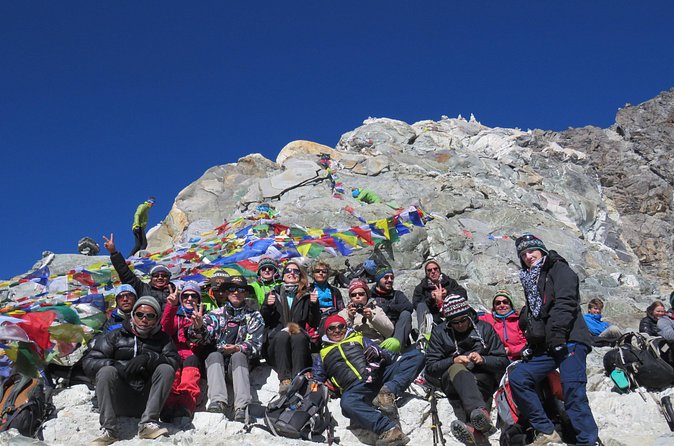
After Tengboche, you continue through Pangboche and onward toward Dingboche. The program then allows another rest and acclimatization day, with a short climb toward Nangkartshang Peak.
This is a sensible pause before the trail reaches the colder, higher section near Lobuche and Gorak Shep. The listed Nangkartshang outing is only about one hour, so do not expect a full mountain summit day. Its value is the chance to gain some height, look across the surrounding peaks, and return to Dingboche without giving up a full night of recovery.
The route past Dingboche becomes more exposed, with bare fields and a gradual climb toward Dughla. From there, the trail follows the glacial route and continues toward Lobuche. The scenery changes as vegetation thins and the path takes on a more severe high-altitude character.
This is where the trip’s physical demands become more obvious. You need to be comfortable walking for several hours while carrying your own daypack. The itinerary calls for moderate fitness, but the altitude makes even modest inclines feel harder than they would at home.
Everest Base Camp is the day you came for
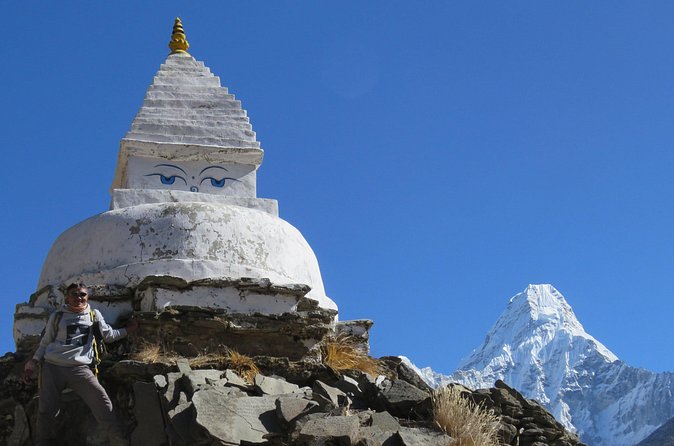
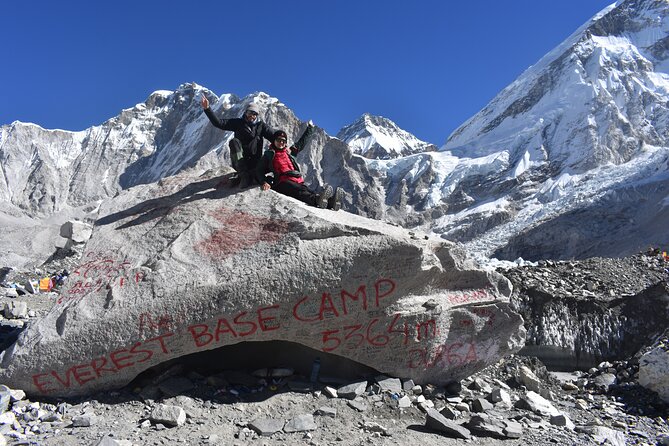
From Lobuche, the route climbs along the Khumbu Glacier toward Gorak Shep and Everest Base Camp. The description places the base camp walk at about two hours from the preceding stop, though the full day involves more than that short estimate when you include the approach and return.
Gorak Shep has an important place in the route because it was once used as the base camp for Mount Everest. From there, the trail continues toward the present Everest Base Camp area along glacial terrain.
Do not expect a comfortable sightseeing stop. This is a high, demanding part of the trek, and conditions can be stark. The reward is standing at the base camp area and seeing the Khumbu Glacier and surrounding peaks at close range.
The exact views can change with weather and season. The achievement is still substantial, but the base camp itself is not the best listed viewpoint for Everest. That comes the next morning from Kala Patthar.
Kala Patthar offers the strongest mountain payoff
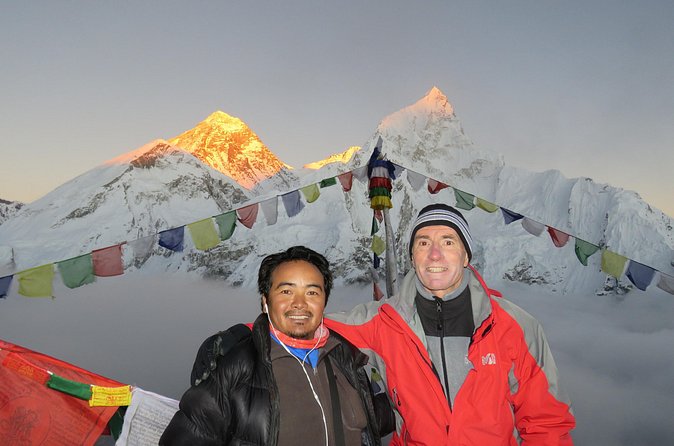
The Kala Patthar hike begins before sunrise. You climb from Gorak Shep to the famous viewpoint, where the early light reaches the mountain panorama. The walk is listed at about two hours, but the altitude makes this short distance demanding.
For many people, this is the visual high point of the itinerary. Kala Patthar is described as the closest viewpoint to Mount Everest on the route, and the pre-sunrise timing gives you the best chance of seeing the peaks in changing light.
You need warm layers, a headlamp if your guide advises one, and enough water for the climb. Those specific gear details are not included in the package description, so ask the operator what it supplies and what you must bring.
After Kala Patthar, the route turns downhill. The descent is not a free pass. Tired legs, loose ground, and the accumulated effort of the previous days can make the return just as demanding as the climb.
The long return through Namche and Lukla
Once the high point is complete, you retrace much of the route toward Namche Bazaar. The program passes again through Pangboche and Tengboche, then crosses suspension bridges and follows the Dudh Kosi through forested sections and smaller settlements.
The return has a different feel from the ascent. You know the route, but the downhill walking can be hard on your knees. The itinerary gives you time to reach Namche before continuing toward Lukla, rather than trying to compress the entire descent into a rushed finish.
The final mountain morning takes you to Lukla for the flight back to Kathmandu. Again, the aerial views can be memorable, but the flight is subject to operating conditions. The company provides the transfer from the Kathmandu airport to your hotel after landing.
You then have time in Kathmandu before your departure day. Your final airport transfer is scheduled according to your flight time, and the trip ends with the airport drop-off.
Comfort, group size, and daily rhythm
This is a private activity, so only your group participates. That gives you more control than a large group departure, though the supplied details do not say how many people will be in your private group. Ask before booking if group size is important to you.
Accommodation during the trek is twin-sharing in tourist-standard guesthouses. That means you should choose this trip for access to a bed and a practical base, not for private rooms or resort comfort. The mountain setting and simple lodging are part of the bargain.
Breakfast is included every day, along with 11 lunches and 11 dinners during the trek. Drinks are not included, including bottled and boiled water. Water costs can add up over 11 trekking nights, so ask how water is obtained and budget for it.
The route is not presented as a technical mountaineering expedition. It is a guided trek for people with moderate fitness, but it remains a serious high-altitude walk. Your guide is first-aid trained and licensed, yet you remain responsible for honest communication about your health and for arranging insurance.
The tour has a five-star rating from four submitted reviews. That is encouraging, but it is a small sample, so I would use the rating as one part of your decision rather than as proof that every departure will be identical.
Should you book this Everest Base Camp trek?
Book it if you want a fixed 14-day plan with flights, permits, guides, porters, meals, airport transfers, and acclimatization days arranged in advance. The strongest reasons are the two altitude-adjustment stops, the private format, and the inclusion of Kala Patthar rather than only a visit to base camp.
You should pause if you dislike basic guesthouses, shared rooms, long uphill walks, uncertain mountain flights, or extra costs for water, insurance, tips, and Kathmandu meals. Ask about the exact guide, departure airport, luggage allowance, emergency procedures, and current flight arrangements before paying.
For a first Everest Base Camp trek, this is a practical package with a clear route and useful support. It offers good value if you want the major Khumbu highlights without arranging each permit, flight, porter, and overnight stop yourself.
FAQ
How long is the Everest Base Camp trek?
The trip lasts approximately 14 days, including arrival and departure arrangements in Kathmandu, the flight to Lukla, the trek to Everest Base Camp, the Kala Patthar hike, and the return to Kathmandu.
Is airfare between Kathmandu and Lukla included?
Yes. The package includes round-trip airfare between Kathmandu and Lukla. Depending on the flight situation, the departure may be from Kathmandu Airport or Manthali Airport.
What accommodation is provided?
You receive tourist-standard hotel accommodation for two nights in Kathmandu, including breakfast. During the trek, the package provides twin-sharing guesthouse accommodation for 11 nights in the Everest region.
Are meals included?
Breakfast is included for all 14 days. The package also includes 11 lunches and 11 dinners during the trek. Lunch and dinner in Kathmandu are not included, and drinks, including bottled and boiled water, are extra.
Is a guide and porter included?
Yes. The package includes a government-licensed, English-speaking trekking guide with first-aid training. Porters are provided at a ratio of one porter for every two clients.
What fitness level is required?
The tour states that you should have a moderate physical fitness level. The route includes uphill trails, suspension bridges, long walking days, high altitude, and the early climb to Kala Patthar, so you should be prepared for sustained walking.
Latest treks added in Kathmandu
- Private Manaslu Circuit Trek at Himalayas★ 5.0 · 3 reviews
- Ghorepani Poonhill Trek★ 5.0 · 5 reviews
- Ghorepani Poon Hill Trek★ 5.0 · 16 reviews
- Upper Mustang Trekking★ 5.0 · 2 reviews
- Upper Mustang Trekking★ 3.0 · 2 reviews
- Amazing 1 Day Trekking Experience in Kathmandu Nepal★ 5.0 · 24 reviews
- Upper Mustang Trek★ 5.0 · 5 reviews
- Upper Mustang Trekking★ 5.0 · 4 reviews
Everest Base Camp Treks, compared.






Browse the lists this tour appears in