
REVIEW · KATHMANDU
Everest Base Camp Yoga Trek – 15 Days
The unusual strength of this Everest Base Camp yoga trek is its rhythm. You do not simply walk hard for two weeks and hope your body keeps up. Each day begins with yoga, breathing, and a moment to focus before you follow the trail through the Khumbu. That small pause can matter when the air gets thin and the path turns steep.
I like the mix of mountain walking and spiritual practice, along with the two built-in acclimatization days at Namche Bazaar and Dingboche. I also like the cultural start in Kathmandu, with visits to Swayambhunath and Boudhanath before the trek begins. The drawback is plain: this is a serious high-altitude hike, not a gentle wellness holiday. Cold, fatigue, basic mountain accommodation, flight delays, and altitude sickness are all part of the picture.
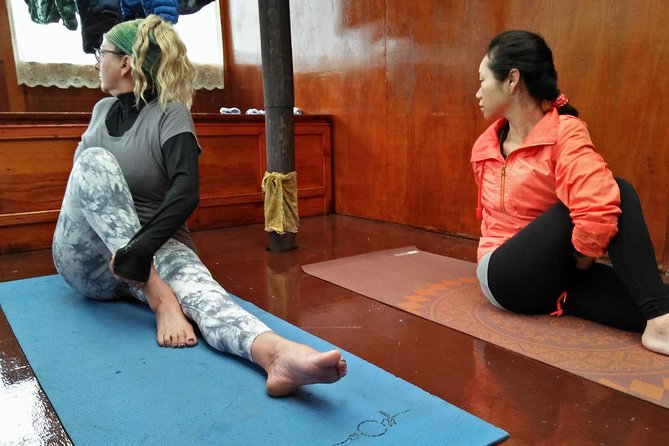
- Yoga every morning: A yoga instructor travels with the group and leads daily practice.
- Classic Everest route: Walk from Lukla through Phakding, Namche, Tengboche, Dingboche, Lobuche, Gorakshep, and Everest Base Camp.
- Two acclimatization days: Rest and short hikes are planned at Namche and Dingboche.
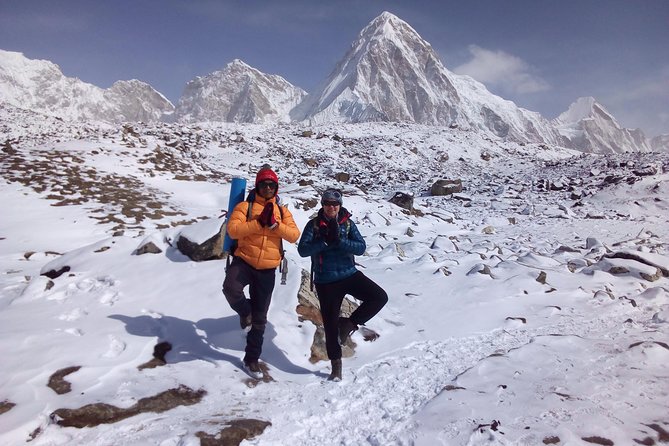
- Best mountain viewpoints: Kala Patthar brings close views of Everest, Pumori, Lhotse, Nuptse, Changtse, and the Khumbu Glacier.
- Small group size: The maximum is eight people, which should make pacing and support easier.
- Strong guide support: Named team members connected with yoga departures include guide Nirmal, yogi Anil, and guide Ram, though your exact crew may vary.
What the Yoga Adds to an Everest Trek
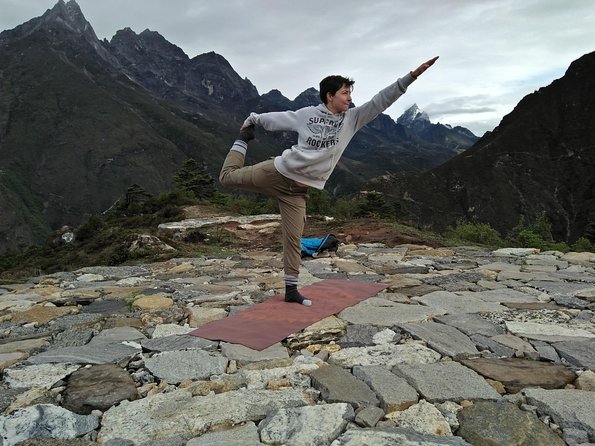
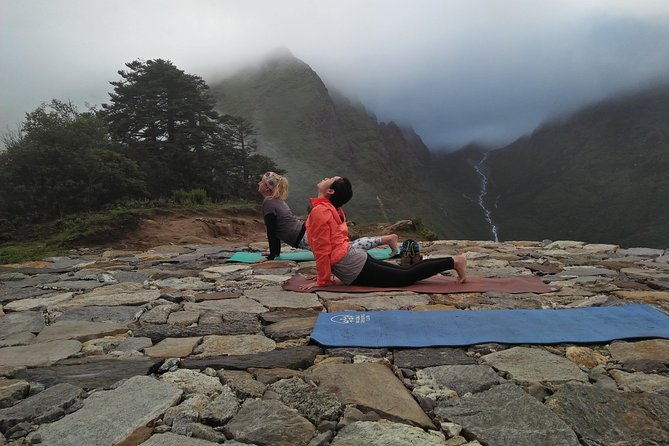
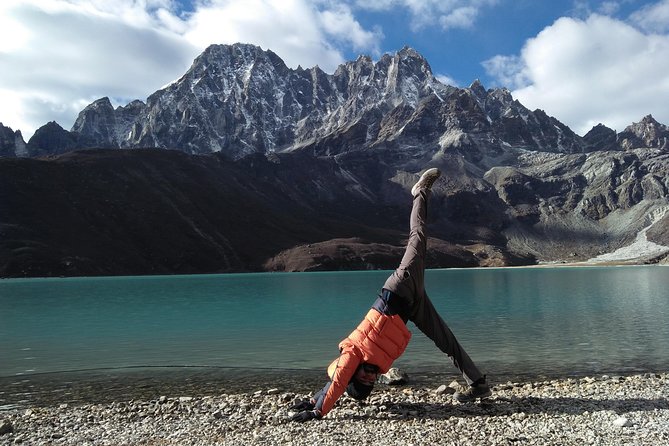
Yoga cannot remove the physical demands of walking at altitude. What it can do is give your day a calm beginning and help you pay attention to your breathing, posture, and energy before setting off.
The practice is described as centering the mind and body in the mountain setting. That makes sense here. You may spend several hours walking over stone paths, suspension bridges, and uneven ground, then sleep at a much higher elevation than the night before. A short, guided routine may help you start more carefully instead of racing out with the group.
Do not expect a resort-style yoga retreat. The trek moves through remote mountain villages, and the schedule depends on weather, trail conditions, and the group’s health. The yoga is best understood as a daily discipline added to a demanding trek, not as the main event.
The human side of the trip is another strong point. Guides named in accounts of this company’s yoga trek include Nirmal, described as attentive to group pace and mood, and Anil, who served as the yogi. Ram has also guided a yoga departure. Names and staffing can change, but the useful question to ask before booking is who will lead your yoga sessions and who will make the safety decisions on the trail.
Days 1 and 2: Kathmandu Before the Mountains
Your first day begins with airport reception in Kathmandu. A company representative meets you at Tribhuvan International Airport, helps with the arrival process, and takes you to your hotel. Dinner and the night in Kathmandu are included.
The second day gives you a proper introduction to the city. At Swayambhunath, often called the Monkey Temple, you see a Buddhist stupa linked with both Buddhist and Hindu traditions, along with broad views across Kathmandu. Boudhanath offers a different mood. Its large white stupa is a center of Tibetan Buddhist life, and you can walk around it with pilgrims, local residents, and visitors while hearing Buddhist mantras.
The itinerary also includes a Hindu shrine, although the supplied description cuts off before naming it. This Kathmandu day is valuable because it gives the trek cultural context. The Khumbu is not just a high mountain route. It is a home for Sherpa communities, monasteries, prayer wheels, chortens, and long-standing Buddhist customs.
You should also use this time to check your clothing and organize your bag. The next morning begins early, and a forgotten layer or poorly packed day bag becomes much more annoying after you leave the city.
More Everest Base Camp Treks in Kathmandu
- Everest Base Camp Trek – 14 Days
★ 5.0 · 1,499 reviews - Everest Base Camp Trek
★ 5.0 · 842 reviews - Everest Base Camp Trekking
★ 5.0 · 485 reviews
Days 3 and 4: Lukla, Phakding, and Namche Bazaar
The flight from Kathmandu to Lukla is one of the trip’s defining moments. From the small aircraft, you see terraced hills, rivers, settlements, valleys, and distant mountain peaks. Lukla’s Tenzing-Hillary Airport is the gateway to the Everest region, and the short runway adds a dose of nerves to the start.
After meeting the mountain team, you walk toward Phakding. The first day on foot is a useful adjustment from city life to mountain travel. The trail follows traditional routes through local communities, with the Dudh Koshi River nearby.
The next day is much harder. You follow the river toward Namche Bazaar, crossing suspension bridges and passing through Benkar, Monjo, and Jorsale. Monjo marks the entrance to Sagarmatha National Park. Near Larja Dobhan, you cross a high bridge over the meeting point of the Dudh Koshi and Bhote Koshi rivers before climbing toward Namche.
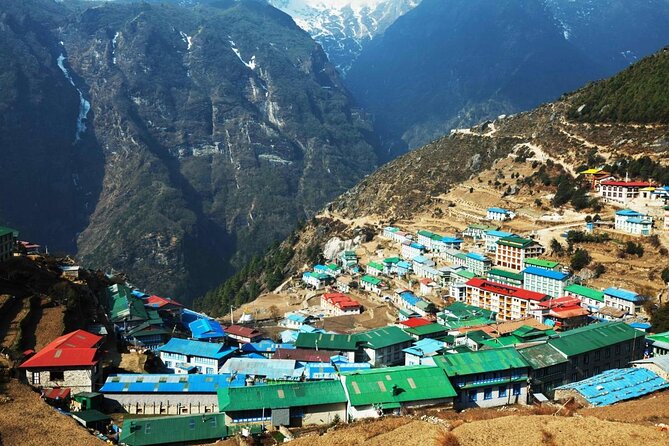
This is not a flat approach. The climb into Namche can feel long, especially because it comes soon after the Lukla flight. You see Kongde Ri, Thamserku, and sacred Khumbila Peak along the way, with forests and waterfalls adding variety to the trail.
Namche is more than a place to sleep. It is a lively Sherpa trading town with shops, food, a Saturday market, and the Sherpa Cultural Museum. The museum covers mountaineering, local culture, Himalayan geography, and regional plants and animals.
Day 5: Acclimatization in Namche Bazaar
A rest day at Namche is one of the itinerary’s smartest features. Rest does not mean lying in bed all day. The plan calls for a short hike to a higher point, helping your body adjust before you continue upward.
The Everest View Hotel is mentioned as a possible destination, although the full description is incomplete. From the Namche area, you may also see impressive mountain views and learn more about Sherpa life at the museum.
The important point is pacing. You are already gaining altitude, and a spare day gives the guide room to watch how everyone is responding. Headache, nausea, unusual tiredness, and poor coordination should be taken seriously. Tell your guide early if you feel unwell. A beautiful itinerary is never more important than a safe descent.
Days 6 and 7: Tengboche and the Move to Dingboche
Leaving Namche, you climb briefly before following a more level trail toward Kenjoma and Sanasa. Forest covers much of this stretch, and you may get views of Everest along the way. The path then drops toward the Dudh Koshi and rises again through Phunke Tenga.
From there, the climb to Tengboche is steep. Tengboche is known for its monastery and its mountain setting, with views toward Everest, Ama Dablam, Lhotse, and Nuptse. Sunrise and sunset here can be especially memorable, but the exact experience depends on cloud and weather.
The route then descends through Deboche before crossing the Imja River toward Pangboche. The area shifts as you gain height. Dense forest gives way to scrub juniper and tundra, with sightings of musk deer, monal, and blue sheep listed as possibilities. An old stupa in upper Pangboche makes a worthwhile stop.
Dingboche is an important staging point. The walking is still demanding, but the scenery opens up and the vegetation becomes thinner. This is also where many people begin to feel the altitude more clearly.
More Trekking Tours in Kathmandu
- Annapurna Circuit Trek with Tilicho Lake
★ 5.0 · 368 reviews - Everest Base Camp Trekking – 13 Day
★ 5.0 · 365 reviews - Everest Base Camp Trek
★ 5.0 · 350 reviews - Everest Base Camp Trek -14 Days
★ 5.0 · 321 reviews
Day 8: A Second Acclimatization Day at Dingboche
The second acclimatization day is well placed before the route climbs toward Lobuche and Gorakshep. A suggested hike leads toward Nangkartshang Gompa, where you can see religious paintings, Thangka art, and a Yeti scalp and hand listed among the local features.
Other options include walking through the Imja River valley, looking toward Island Peak, or climbing the hill behind Dingboche for views of several six-thousand-meter peaks. These are not throwaway activities. Walking higher and sleeping lower is a common approach to helping the body adjust.
You should treat this day as active recovery, not a contest. The yoga session may feel especially useful here, but keep your effort controlled. At this height, a slow walk can be enough.
Days 9 and 10: Lobuche, Gorakshep, and Everest Base Camp
From Dingboche, the trail rises gradually through grazing areas and open mountain country. You pass chortens, Mani walls, stupas, and views of Taboche Peak and Ama Dablam.
Near Dughla, the route reaches a solemn memorial area known as Chukpo Lari. The monuments honor climbers and mountaineers who died in the Himalaya. This is one of the most reflective points on the trek, and it gives the Base Camp journey a human dimension beyond photographs and summit statistics.
The walk continues to Lobuche, then toward Gorakshep over rough ground near the Khumbu Glacier. You pass the Italian research center and sections with ice formations and possible crevasses. The route is rocky and tiring, so sturdy footwear and a patient pace matter.
The Base Camp day begins from Lobuche and reaches Gorakshep for lunch and an overnight stay. From there, you continue toward Everest Base Camp. The views center on the Khumbu Glacier and surrounding peaks, but the path itself can be uneven and crowded at times.
Keep your expectations realistic. Everest Base Camp is a major destination, but it is not a summit and does not automatically provide the classic close-up view of Everest that many people picture. The following morning at Kala Patthar is planned for that wider mountain panorama.
Day 11: Kala Patthar Sunrise
The pre-dawn climb to Kala Patthar is one of the strongest parts of the route. From this brown hill above Gorakshep, you can see Everest, Pumori, Lhotse, Nuptse, Changtse, and the Khumbu Glacier.
The early start is hard. It is cold, dark, and you are already tired from the previous day. Still, the timing allows you to watch the first light reach the high peaks. Photographers will want spare batteries and easy access to their camera, though no equipment is supplied.
After Kala Patthar, the route returns toward lower ground. That descent is welcome, but do not underestimate it. Knees and ankles can be sore, and loose rock makes careful footing important.
Days 12 and 13: Returning Through the Khumbu
The return route passes through Periche and heads back toward Namche. Much of the walking is downhill, following the Dudh Koshi through forests, waterfalls, bridges, villages, monasteries, and prayer wheels.
The trail remains busy with porters, local residents, trekkers, and yaks carrying supplies. Give way when needed, especially on narrow sections and bridges. Mountain courtesy is practical safety.
The final mountain day drops steeply from Namche to the river confluence, then continues through Monjo, where you leave Sagarmatha National Park. Benkar, Phakding, Ghat, Nurning, and Chheplung appear along the route before the final walk toward the Lukla area.
The descent may feel easier because you are losing altitude, but it still takes work. A walking pole, careful pacing, and dry socks can make a real difference.
Days 14 and 15: Lukla Flight and Departure
The flight back to Kathmandu is scheduled early because weather can disrupt flights in the Lukla region. The flight takes about 35 minutes and gives you another look at the rivers, hills, valleys, and Himalayan peaks.
Once in Kathmandu, you return to the hotel for rest. Dinner, lunch, breakfast, and the overnight stay are included according to the supplied meal plan. You can spend your last evening walking around Thamel or shopping for souvenirs.
On the final day, the company transfers you to Tribhuvan International Airport at least three hours before departure. The experience ends with airport assistance, but you should still keep your important documents and valuables with you.
What the $1,699 Price Covers
At $1,699 per person, the package offers good value if you want a managed trek rather than arranging each part yourself. It includes accommodation, airport transfers, national park fees, taxes, a local guide, and meals listed as 15 breakfasts, 12 lunches, and 12 dinners.
The price also includes coffee or tea and the booking platform’s brokerage fee. Alcoholic drinks and other drinks are extra, so budget for those separately.
The main value is coordination. You are not only paying for a bed and a trail permit. You are paying for airport reception, Kathmandu sightseeing, the Lukla flights within the itinerary, route planning, guide support, acclimatization days, and a yoga instructor who remains with the group.
Ask for current details before paying, especially the exact hotel and tea-house standards, porter arrangements, flight baggage rules, and what happens if weather delays a Lukla flight. The supplied information does not spell out every one of those details.
Who Should Book This Trek
This trip suits an adult with moderate physical fitness who wants Everest Base Camp with a reflective daily routine. The minimum age is 18, and the group is limited to eight people, a useful size for a demanding route.
It is also a good fit for solo participants who want company and support. The company has handled solo women, vegan diets, and groups of different sizes in past departures, but you should state your dietary and personal needs before arrival.
You should think twice if you want a relaxed yoga retreat, private rooms, or a low-altitude holiday. This is a strenuous trek with cold conditions, basic accommodation, long walking days, and real altitude concerns. January can be especially cold, although proper gear made it manageable for one past yoga departure.
Free cancellation is available up to 24 hours before the start time. Inside that window, the payment is not refunded, and late changes are not accepted.
Should You Book the Everest Base Camp Yoga Trek?
Book it if you want the classic Everest Base Camp route with a guide, planned acclimatization, cultural time in Kathmandu, and yoga that helps shape the day. The strongest reasons are the small group limit, the careful two-day acclimatization plan, and the steady support associated with guides such as Nirmal, Anil, Ram, and other Trekking Planner staff.
Do not book it simply because the word yoga makes the trek sound easy. You still face steep climbs, thin air, cold mornings, rough trails, and uncertain Lukla flight conditions. If you prepare your fitness, pack seriously, and accept the mountain’s pace, this offers a thoughtful way to reach Base Camp without treating the Himalaya as a race.
FAQ
How long is the Everest Base Camp Yoga Trek?
The experience lasts approximately 15 days, including Kathmandu sightseeing, the trek from Lukla to Everest Base Camp, the return to Lukla, and departure from Kathmandu.
What is the price?
The listed price is $1,699 per person.
Is yoga included every day?
The program is designed to begin each day with yoga led by an instructor who travels with the group for the trek.
What is the maximum group size?
The group can include a maximum of eight people.
What meals are included?
The package includes 15 breakfasts, 12 lunches, and 12 dinners, along with coffee or tea. Alcoholic drinks and other drinks are not included.
Is airport pickup provided?
Yes. Pickup is offered, and a representative meets you at Tribhuvan International Airport in Kathmandu. Departure transfer assistance is also provided.
What fitness level is required?
You should have a moderate physical fitness level. The trek includes steep climbs, high altitude, uneven trails, and long walking days.
What is the cancellation policy?
You can receive a full refund if you cancel at least 24 hours before the experience start time. Cancellations or changes made within 24 hours are not accepted for a refund.
Latest treks added in Kathmandu
- Private Manaslu Circuit Trek at Himalayas★ 5.0 · 3 reviews
- Ghorepani Poonhill Trek★ 5.0 · 5 reviews
- Ghorepani Poon Hill Trek★ 5.0 · 16 reviews
- Upper Mustang Trekking★ 5.0 · 2 reviews
- Upper Mustang Trekking★ 3.0 · 2 reviews
- Amazing 1 Day Trekking Experience in Kathmandu Nepal★ 5.0 · 24 reviews
- Upper Mustang Trek★ 5.0 · 5 reviews
- Upper Mustang Trekking★ 5.0 · 4 reviews
Everest Base Camp Treks, compared.






Browse the lists this tour appears in