
REVIEW · KATHMANDU
Everest Base camp Trekking
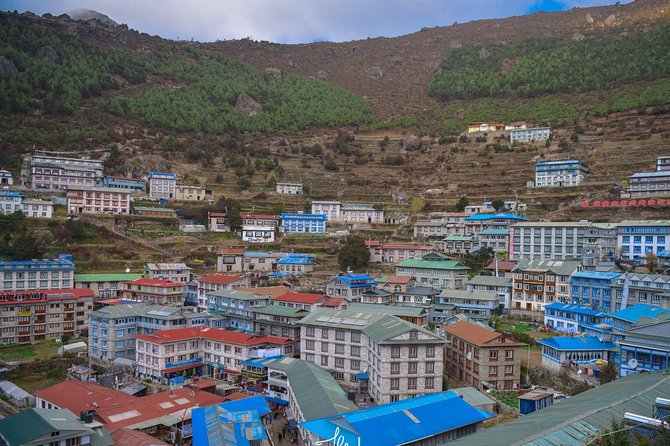
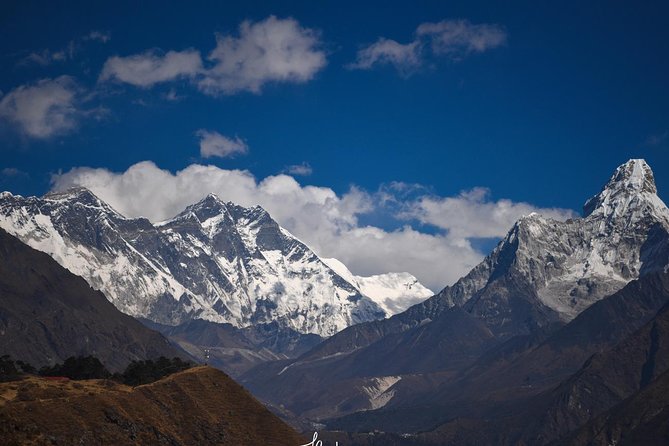
Everest Base Camp is the big draw, but the best part of this trek is the journey through the Khumbu. You walk past Sherpa villages, Buddhist monasteries, white rivers, glaciers, and huge Himalayan peaks, with time to adjust to the altitude instead of rushing uphill.
I like the two built-in acclimatization days, one in Namche Bazaar and one in Dingboche. I also like the small group size, capped at 10, and the practical support from Nepal Horizon Treks, including a licensed guide, airport pickup, tea-house lodging, a sleeping bag, and a down jacket.
The main caution is simple: this is a serious high-altitude trek, not a sightseeing walk. Meals, drinks, insurance, visa fees, and staff tips are extra, and the published plan does not show the full final portion of the 14-day schedule, so ask for the complete day-by-day program before paying.
Key points to know before booking
- Lukla to Base Camp on foot: The route begins with a flight from Kathmandu to Lukla, followed by a steady trek through Phakding, Namche Bazaar, Tengboche, Dingboche, Lobuche, and Gorak Shep.
- Two acclimatization days: Rest days in Namche Bazaar and Dingboche give your body time to adjust before the trail reaches its highest section.
- Tea-house accommodation: Ten nights are included in mountain tea houses on a bed-and-breakfast basis, with basic but useful shelter along the route.
- Small organized group: The maximum group size is 10 people, and a government-licensed guide is included.
- Sherpa culture and Sagarmatha National Park: The route combines mountain scenery with villages, monasteries, rare plants, animals, and birds.
- Insurance is mandatory: Your policy must cover medical expenses and emergency evacuation, and proof is required on the first day.
Why this Everest trek is more than a mountain photo
The route to Everest Base Camp works because it gives you several kinds of travel in one trip. You begin in Kathmandu, where the trip includes airport pickup and a welcome dinner with a Nepali cultural show. Then the city gives way to Lukla, farm terraces, Sherpa settlements, Buddhist sites, high mountain valleys, and eventually the rocky world below Everest.
You are not simply driven to a viewpoint and handed a camera. The mountain becomes part of your day for nearly two weeks. You walk for several hours, sleep in local tea houses, eat at your own expense, and watch the villages become smaller and the air become thinner.
That gradual change is one of the best reasons to choose this route. You get time to notice the people and places along the trail rather than treating Everest as a single stop at the end.
The operator also keeps the group small. A maximum of 10 people is a useful limit on a demanding trail. It should make communication easier and reduce the feeling of being in a large procession, though you should still ask how many people are booked for your departure.
More Everest Base Camp Treks in Kathmandu
- Everest Base Camp Trek – 14 Days
★ 5.0 · 1,499 reviews - Everest Base Camp Trek
★ 5.0 · 842 reviews - Everest Base Camp Trekking
★ 5.0 · 485 reviews
Kathmandu arrival, airport pickup, and preparation
Day one begins at Tribhuvan International Airport in Kathmandu. A representative from Nepal Horizon Treks and Expedition is scheduled to meet you and take you to your hotel.
The day is not only a transfer day. You are also expected to meet the management and trek leaders for a trip discussion. Use that meeting to confirm the walking schedule, what the guide carries, what you carry, meal arrangements, and the plan if your route needs to change.
The included welcome dinner adds a pleasant introduction to Nepal. It takes place in a typical Nepali restaurant with cultural shows, which gives you an early taste of the country before the trail begins.
I would use Kathmandu to check every item that matters at altitude. Confirm that your sleeping bag and down jacket are ready, ask about the size and warmth of the equipment, and make sure your insurance proof is available. The company specifically requires insurance covering medical expenses and emergency evacuation.
Day two: Kathmandu to Lukla, then Phakding
The trek starts with a flight from Kathmandu to Lukla, followed by an approximately 8-kilometer walk to Phakding. The walking time is listed as three to four hours.
Phakding is the first night on the trail and the first chance to settle into the tea-house rhythm. The day is relatively short compared with later sections, which matters because the route is preparing you for higher ground rather than trying to prove anything on day one.
The flight is an important part of the schedule because Lukla is the trailhead for this version of the trek. Flight arrangements are included in the advertised itinerary, but you should confirm the exact flight details with the operator before departure.
Day three: Phakding to Namche Bazaar
The walk from Phakding to Namche Bazaar covers about 11 kilometers and takes five to six hours. This is where the trek begins to feel like a real high-altitude journey.
Namche Bazaar is the best-known trading center on the route and an important stop for both Sherpa communities and trekkers. You can expect the day to involve a longer walk and a noticeable gain in elevation, so do not treat arrival in Namche as the end of the challenge.
The reward is the town itself and the chance to pause before going higher. Namche gives you a place to rest, organize your belongings, and prepare for the acclimatization day that follows.
More Trekking Tours in Kathmandu
- Annapurna Circuit Trek with Tilicho Lake
★ 5.0 · 368 reviews - Everest Base Camp Trekking – 13 Day
★ 5.0 · 365 reviews - Everest Base Camp Trek
★ 5.0 · 350 reviews - Everest Base Camp Trek -14 Days
★ 5.0 · 321 reviews
Day four: acclimatization in Namche Bazaar
The schedule allows a full acclimatization day in Namche Bazaar at roughly 3,440 meters. This is not wasted time. It is one of the most important parts of a safe itinerary.
You should use the day to follow your guide’s advice, walk only as instructed, drink enough fluids, and pay attention to how your body feels. The point is to spend time at altitude without adding another long transfer day.
I especially like this pause because it prevents the itinerary from becoming a race. A trek that includes rest days is generally more thoughtful than one that simply stacks long walking days from Lukla to Base Camp.
Day five: Namche Bazaar to Tengboche
The next section runs about 10 kilometers from Namche Bazaar to Tengboche, with five to six hours of walking. The route takes you into a quieter part of the Khumbu, where mountain views and Sherpa culture continue to share the stage.
Tengboche is known for its Buddhist monastery, and the stop gives the trek a strong cultural center. You are not only walking through a series of mountain settlements. You are also moving through a region where Buddhist practice remains part of daily life.
This is one of the most memorable parts of the route for many people because the scenery and the monastery setting work together. Still, the altitude is rising, so you should keep your pace steady and avoid turning the walk into a personal speed contest.
Day six: Tengboche to Dingboche
The itinerary lists roughly 9 kilometers from Tengboche to Dingboche, taking five to six hours. Dingboche sits at about 4,360 meters, so the elevation is now a serious factor.
The scenery changes as the route moves farther into the high valleys. You can expect more exposed ground and fewer signs of lowland farming, with Himalayan peaks, glaciers, and broad mountain views becoming the main visual focus.
Dingboche is not just another overnight stop. It is where the schedule slows down again, giving you a second acclimatization day before the highest section of the trek.
Day seven: a second acclimatization day in Dingboche
A rest day at Dingboche is particularly valuable because the next days take you close to 5,000 meters and beyond. You need time to adjust before walking to Lobuche and Gorak Shep.
The itinerary does not spell out a separate side walk or viewpoint for this day, so do not assume one is included. Ask your guide what the day will involve. The key benefit is time at altitude, not filling every hour with another strenuous outing.
This is also a good point to check your gear. Cold conditions, basic tea-house rooms, and long walking days place real demands on clothing and sleeping equipment. The supplied sleeping bag and down jacket are helpful, but you should confirm what personal layers and accessories you must bring.
Day eight: Dingboche to Lobuche
The walk to Lobuche is about 7 kilometers and takes five to six hours. By now, the distance is shorter, but the altitude makes the day demanding.
Lobuche sits at approximately 4,940 meters. You will be close to the high point of the route, and your guide’s judgment matters more than your usual walking pace. A steady rhythm, sensible rest breaks, and honest communication are more useful than trying to stay with the fastest person in the group.
This section also carries a more solemn feeling as you approach the Everest region’s highest settlements and memorial areas. The supplied description emphasizes glaciers, peaks, and Himalayan scenery, but it is wise to expect a stark environment rather than green countryside.
Day nine: Lobuche to Gorak Shep and Everest Base Camp
Day nine is the key day of the trek. You walk from Lobuche to Gorak Shep, listed at approximately 5,170 meters, and continue to Everest Base Camp.
The schedule allows five to six hours for the 7-kilometer section to Gorak Shep and the Base Camp visit, though the supplied program is cut off before giving the complete detail. Ask the company how much time is planned at Base Camp, where you sleep that night, and what the following day involves.
Reaching Base Camp is a major physical and emotional milestone. You do not need to be a mountaineer to appreciate it, but you do need to respect the altitude. At this height, even a short walk can feel much harder than its distance suggests.
The route is about the experience of arriving on foot, not about climbing Everest itself. You will see the famous mountain environment, glaciers, and the trail used by expeditions, but this tour does not promise an ascent of the summit.
The missing final schedule matters
The overall experience is advertised as approximately 14 days, but the provided itinerary stops during the Base Camp section. That is the biggest planning gap in the information supplied.
A complete program should clearly show the return route, the nights after Base Camp, the return to Lukla, the flight back to Kathmandu, and the final hotel or airport arrangements. Do not assume these details. Ask for them in writing before booking.
This is not a small technical point. Flights in and out of the mountain region, extra nights, and delays can affect both your budget and your onward travel. The operator does offer pickup and drop-off, but you should confirm exactly which airport transfers and nights are covered.
Tea houses, food, and what the price really covers
The price is $1,340 per person. For that amount, you receive airport pickup and drop-off, 10 nights of tea-house accommodation on a bed-and-breakfast basis during the mountain trek, national park fees, local taxes, a licensed guide, and the guide’s food, lodging, salary, insurance, and equipment.
A sleeping bag and down jacket are also supplied on rent. That is useful if you do not want to buy bulky high-altitude gear for one trek.
Meals and drinks are not included. This makes the headline price look attractive, but your real budget will be higher once you add food, drinks, insurance, visa fees, tips, and any personal purchases. The package is best viewed as a guided trekking framework, not a fully all-inclusive holiday.
There is also a $250 per group surcharge if you want a guide who speaks a language other than English. The standard guide arrangement is therefore English-speaking unless you make a different request.
The tea-house setup is practical rather than luxurious. You get shelter and breakfast, but you should not expect hotel standards in the mountains. For this kind of trek, the value lies in having the route, guide, permits, and basic accommodation arranged for you.
Guide support and the human side of the trip
The strongest praise connected with this company centers on personal attention from the management and guides. Dipendra, often called Dip, is identified as the managing director and is described as helping with planning, transfers, hotels, trekking arrangements, and problems that arose during or after trips.
Several guide names appear in the company’s past trekking experiences, including Raju, DB, and Kumar. Yambo is identified as a porter on one trip. These names do not mean one of them will necessarily lead your departure, so ask who your actual guide will be before you travel.
That question matters. A good high-altitude guide does more than point out the trail. You need someone who can judge pace, notice signs of altitude trouble, explain the day ahead, and communicate clearly when plans change.
The group limit of 10 is helpful, and the guide’s food, accommodation, salary, insurance, and equipment are covered. Tips are not included, so plan for that separate cost and ask the company about its normal tipping practice.
Who should book this trek
This trip suits you if you want the classic Everest Base Camp route with the main logistics arranged. It is a good fit for someone who values a local guide, tea-house lodging, Sherpa villages, Buddhist sites, and a small organized group rather than traveling completely independently.
You should have a moderate level of physical fitness. The itinerary includes several five to six-hour walking days, and the altitude becomes the central challenge after Tengboche.
The minimum age is 10, but age alone says little about readiness. A younger trekker must still be able to manage long walking days, cold conditions, basic lodging, and high altitude. Families should discuss the route and insurance requirements directly with the operator.
This is less suitable if you want a luxury holiday, a fixed low final cost, or a short sightseeing trip. It is also not the right choice if you are unwilling to arrange medical evacuation insurance or if you prefer a fully private itinerary with every detail already spelled out.
Booking details, timing, and cancellation
The experience is listed for groups of no more than 10, with confirmation provided at booking. You must send your Nepal arrival flight details so the airport pickup can be arranged.
The listed operating dates run from October 3, 2024, to June 5, 2026. The stated meeting availability is Monday through Sunday from 4:00 AM to 9:15 AM, which fits the early starts often associated with mountain transport, but confirm your own meeting time.
Free cancellation is available if you cancel at least 24 hours before the experience start time. Cancellations made less than 24 hours in advance are not refunded, and changes in that final 24-hour period are not accepted.
Should you book the Everest Base Camp trek?
I would consider booking this trek if you want a traditional, guided Everest Base Camp route and appreciate having the difficult pieces arranged in advance. The two acclimatization days, small group limit, local guide support, tea-house lodging, and equipment rental make the package practical for someone who does not want to manage every permit and transfer alone.
Before committing, ask for the complete 14-day itinerary, the name and experience of your assigned guide, the exact inclusions on the return journey, and a realistic estimate for meals, drinks, tips, and other costs. If those answers are clear, the $1,340 price can represent solid value for a supported trek through the Khumbu.
If the missing final days remain unclear, wait. Everest Base Camp is too demanding a trip for vague arrangements.
FAQ
How long is the Everest Base Camp trek?
The experience lasts approximately 14 days.
What is the price per person?
The listed price is $1,340 per person.
What accommodation is included?
Ten nights of accommodation in mountain tea houses are included on a bed-and-breakfast basis during the trekking period.
Are meals and drinks included?
No. Meals and drinks are not included in the advertised price.
Is travel insurance required?
Yes. You must have travel insurance covering medical expenses and emergency evacuation, and you must show proof to the tour leader on the first day.
How large is the trekking group?
The group can include a maximum of 10 people.
What is the minimum age?
The minimum age to participate is 10 years.
Latest treks added in Kathmandu
- Private Manaslu Circuit Trek at Himalayas★ 5.0 · 3 reviews
- Ghorepani Poonhill Trek★ 5.0 · 5 reviews
- Ghorepani Poon Hill Trek★ 5.0 · 16 reviews
- Upper Mustang Trekking★ 3.0 · 2 reviews
- Amazing 1 Day Trekking Experience in Kathmandu Nepal★ 5.0 · 24 reviews
- Upper Mustang Trekking★ 5.0 · 2 reviews
- Upper Mustang Trek★ 5.0 · 5 reviews
- Upper Mustang Trekking★ 5.0 · 4 reviews
Everest Base Camp Treks, compared.






Browse the lists this tour appears in