
REVIEW · KATHMANDU
Everest Base Camp Trekking
Everest Base Camp is not a walk in the park. It is a high-altitude trek with long uphill days, thin air, basic lodging, and weather that can disrupt flights. This private 12-day trip takes care of the awkward parts, from permits and airport transfers to teahouse bookings and porter support, so you can focus on putting one foot in front of the other.
I like the private format, since your guide can adjust the pace and give you more direct support than a large group usually allows. I also like that the price includes most meals, permits, a licensed guide, porters, a duffel bag if requested, and teahouse lodging. The main drawback is simple: this is a demanding trek, and the early flight from Kathmandu, altitude, cold, and basic mountain facilities are not small details.
Key points at a glance
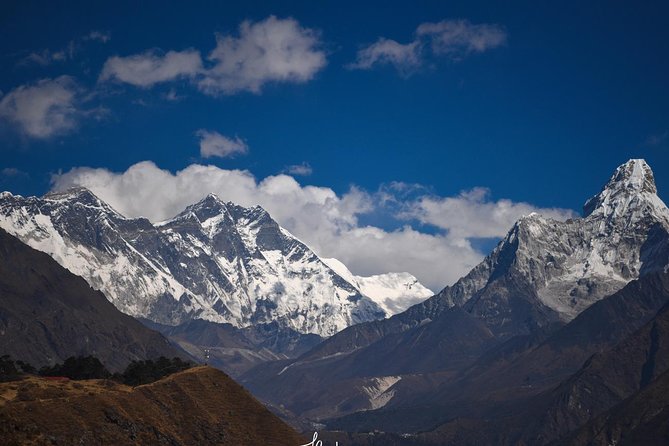
- Kala Patthar adds the classic Everest view: You visit Base Camp, then climb Kala Patthar for a better outlook toward Everest and the surrounding peaks.
- Namche gets a full acclimatization day: This rest day is an important part of handling the altitude safely.
- Porter support is included: One porter is provided for every two trekkers, with food, lodging, salary, equipment, insurance, clothing, and medicine covered.
- The trip uses teahouses: You sleep in local lodges rather than tents, with breakfast, lunch, and dinner chosen from the menu.
- Private does not mean easy: The route includes several six-hour days and reaches Gorakshep at about 5,164 meters, with Kala Patthar higher still.
- The company is praised for problem-solving: Puru, the owner, has helped with planning, flight changes, and emergencies, while guides including Sitaram, Shiva, Ram, and Suresh have been singled out for patient care.
What the 12-day Everest trek is really like
This route follows the classic approach from Lukla through Sagarmatha National Park. You pass through Sherpa settlements, cross high mountain valleys, visit Tengboche Gompa, and walk beneath some of the world’s best-known peaks.
The goal is not simply to reach a sign at Base Camp. The route works because it builds altitude in stages, includes a rest day at Namche Bazaar, and gives you time to adjust before the highest section. Even so, you should arrive with hiking experience and a reasonable level of fitness. The tour itself describes the trek as best suited to fit people who already hike.
The listed price is $1,998 per person. That is a substantial sum, but it covers many costs that can quickly add up on an independent trek: domestic flights, permits, park fees, guide and porter services, meals during the trek, accommodation, transfers, taxes, and staff insurance. You still pay for drinks, showers, snacks, charging, gear, tips, insurance, and personal expenses.
More Everest Base Camp Treks in Kathmandu
- Everest Base Camp Trek – 14 Days
★ 5.0 · 1,499 reviews - Everest Base Camp Trek
★ 5.0 · 842 reviews - Everest Base Camp Trekking
★ 5.0 · 485 reviews
Kathmandu to Lukla, then Phakding
The day begins early, with a listed start time of 1:15 am from Thamel. That sounds extreme, but the Lukla flight is the key link in the route, and early mountain flights are part of the normal rhythm of this trek.
The flight from Kathmandu to Lukla takes about 25 minutes. It is followed by a three to four-hour walk to Phakding, where you spend the night in a teahouse. This first walking day is not the hardest, but it is a useful introduction to the trail.
You will already be carrying a day pack, while the porters handle the main load. Pack thoughtfully, since the recommended weight for your packed trek bag is no more than 15 kilograms. A waterproof cover and a plastic liner are sensible because weather and trail conditions can change quickly.
Phakding is a practical first stop rather than a grand destination. Its value is that it lets you begin walking soon after the flight without pushing all the way to Namche on day one.
Namche Bazaar and the first acclimatization day
The route from Phakding to Namche Bazaar takes about three to four hours according to the schedule, with the full day listed at around seven hours. Expect this to feel more demanding than the previous day as the trail climbs and the altitude begins to matter.
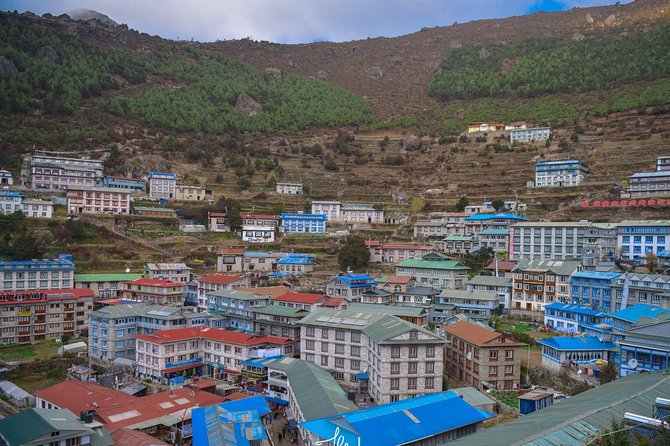
Namche Bazaar is one of the most important stops on the route. It is a major Sherpa trading center and the place where the trip pauses to help your body adjust. The next day is set aside for acclimatization, with about two hours of activity.
That shorter day is not wasted time. It gives you a chance to walk locally, look around Namche, and return to the lodge without spending another full day climbing. The schedule makes room for altitude adjustment before the route rises toward Tengboche and Dingboche.
I like this part of the plan because it treats altitude as a serious issue rather than something you can simply push through. Your guide has training in wilderness first aid and altitude sickness, and the group carries basic medical supplies. You should still have your own travel insurance with emergency evacuation coverage for trekking above 5,500 meters.
Tengboche Gompa and Deboche
From Namche, you walk toward Tengboche and then stay in Deboche. The listed walking time is four to five hours, with about six hours allocated for the day.
Tengboche Gompa is one of the cultural highlights of the route. You are not just crossing a mountain trail. You are passing through a region shaped by Sherpa Buddhist traditions, monasteries, prayer practices, and village life connected to the high valleys.
The itinerary names Tengboche Gompa as the stop, but the overnight stay is in Deboche. That distinction matters when you are picturing the day. You visit or pass through the monastery area, then continue to the lodge for the night.
This stretch is also where the scenery begins to feel more dramatic. The route is not described minute by minute, so you should expect a mix of forested sections, open views, and steady climbs rather than a single nonstop mountain panorama.
More Trekking Tours in Kathmandu
- Annapurna Circuit Trek with Tilicho Lake
★ 5.0 · 368 reviews - Everest Base Camp Trekking – 13 Day
★ 5.0 · 365 reviews - Everest Base Camp Trek
★ 5.0 · 350 reviews - Everest Base Camp Trek -14 Days
★ 5.0 · 321 reviews
Dingboche and the long approach to Lobuche
The walk from Deboche to Dingboche takes about five to six hours. Dingboche is an important staging point because the route is now moving into higher, more exposed country.
The next section heads toward Duglha, followed by Lobuche at about 4,940 meters. The supplied schedule has a numbering inconsistency, calling this Day 6 in one place and Day 09 in another. The actual sequence is clear: you travel from Dingboche to Duglha, continue to Lobuche, and spend the night before heading to Gorakshep.
This is one of the parts where fitness and patience matter most. You are not racing from one attraction to the next. You are walking for several hours, gaining altitude, and managing your energy for the Base Camp day ahead.
Teahouse accommodation keeps the logistics simple, but it also means you should set realistic expectations. The package covers lodging, but hot water, showers, drinks, charging, and other extras cost more. Bring a warm sleeping setup suitable for the conditions and keep your personal kit compact.
Lobuche to Everest Base Camp and Gorakshep
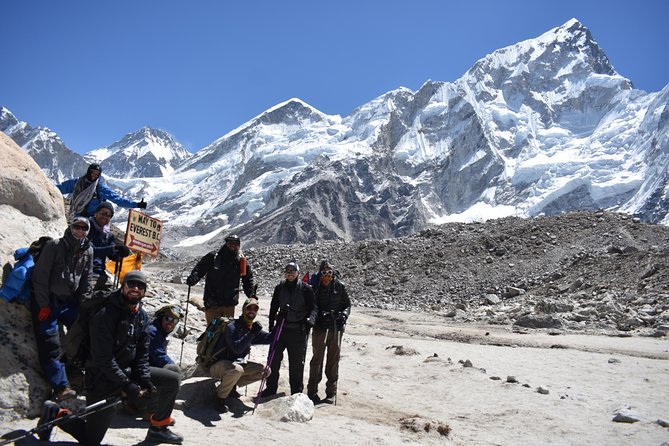
From Lobuche, you continue to Gorakshep, then walk to Everest Base Camp and return to Gorakshep in the evening. The day is listed at about six hours, although the actual experience can feel longer because of the altitude and the out-and-back route.
Gorakshep sits at roughly 5,164 meters, making this one of the toughest overnight stops. The path to Base Camp is the emotional high point for many people, but it is not necessarily the best place for a wide Everest view. Base Camp is a major mountaineering site, while Kala Patthar is usually the stronger viewpoint on this itinerary.
The schedule gives you time to reach Base Camp and return rather than staying there overnight. That is a sensible arrangement. You get the landmark, then return to the teahouse at Gorakshep instead of camping at an even higher point.
This is also the day when a good guide matters most. Guides named in the company’s feedback include Sitaram Lamacchne, Suresh Adhikary, Shiva, and Ram. Their reported strengths include staying attentive, helping solo participants, and keeping calm when weather or health problems complicate plans.
Kala Patthar and the return to Pheriche
The next day begins with a walk to Kala Patthar, followed by a descent to Pheriche. The total walking time is about six to seven hours.
Kala Patthar is the viewpoint you should care about if your main goal is seeing Everest in a broad mountain setting. The climb is short compared with the whole trek, but the altitude makes it strenuous. You need to start with enough energy and move at a pace you can sustain.
After Kala Patthar, the route turns downhill toward Pheriche. Descending does not make the day effortless, especially after the Base Camp outing, but it does give your body a break from gaining altitude.
This is one reason the private format has real value. If you are moving well, you can keep a steady pace. If you are struggling, your guide can pay attention to your condition rather than treating the group like a marching line.
Pheriche, Tengboche, Monjo, and Lukla
The return route moves from Pheriche to Tengboche in about five to six hours. You then continue to Monjo, also about five to six hours, before the final four to five-hour walk back to Lukla.
The return is not just a reverse version of the approach. Your legs are tired, but the altitude gradually drops. You may notice that breathing becomes easier even as the trail still demands effort.
Tengboche gives you another chance to appreciate the monastery area and the Sherpa setting. Monjo is a practical overnight point before Lukla, and the final walking day gives you time to reach the airport town without forcing an unnecessarily long push.
You spend the final night in a teahouse in Lukla before flying back to Kathmandu. The itinerary ends with the return flight, and airport, hotel, and airport transfers by private vehicle are included around the trip.
The guide and porter setup
This is a private activity, so only your group participates. That is useful for couples, friends, and solo trekkers who want direct contact with one guide and a flexible pace.
The service includes a government license holder with wilderness first aid and altitude sickness training. One porter is assigned for every two trekkers. The company covers the porter’s food, accommodation, salary, equipment, accidental insurance, clothing, and medicine.
That arrangement changes the practical feel of the trek. You can keep your day pack manageable while the porter carries the main bag. Still, do not treat the 15-kilogram limit as a target. Every extra item becomes harder to carry, handle, or dry.
The company also provides a duffel bag if you request one before booking and remind the staff during the pre-trip meeting. It supplies a T-shirt for men, a pashmina shawl for women, and trekking certificates. These are pleasant extras, but the real value lies in the staff support and included logistics.
What the $1,998 price covers
The package includes:
- Kathmandu airport and hotel transfers by private vehicle
- Domestic flights between Kathmandu and Lukla
- Teahouse lodging during the trek
- Breakfast, lunch, and dinner during the walking days
- National park fees and the TIMS card
- Government taxes and office service charges
- A licensed guide and one porter for two trekkers
- Group first aid supplies
- Pre-departure information and trip documents
The phrase breakfast, lunch, and dinner from the menu is worth noting. You are not limited to a fixed meal plan, but drinks and hot water are not included.
You pay separately for alcoholic drinks, hot and cold beverages, showers, laundry, phone calls, snacks, battery charging, tips, personal gear, Nepal’s entry visa, international flights, and services in Kathmandu. Travel insurance is also your responsibility.
At this price, I see the trip as good value for someone who wants a private supported trek rather than a bargain independent route. It is less attractive if you already have strong local contacts, your own porter plan, and experience arranging high-altitude logistics.
What to pack and what not to forget
The required packing list is long but sensible. You need waterproof hiking shoes with good grip, spare laces, camp shoes, track pants, shirts, a fleece, a warm down or Gore-Tex jacket, thermal layers, wool socks, gloves, a hat, sun protection, lip balm, underwear, shorts, and at least one walking stick.
The most important packing advice is to keep the load down. Use a 60 to 70-liter backpack with comfortable shoulder straps, a frame, and a rain cover. Line it with plastic to protect clothing and sleeping items.
You should not assume that every comfort is included just because meals and lodging are covered. Personal trekking gear is excluded, as are hot showers and hot water. Battery charging also costs extra, so bring the power equipment you need and plan for limited access.
Safety, weather, and flexibility
The experience is designed to be organized, but mountain travel never becomes fully predictable. Flights to and from Lukla can be affected by weather, and the company has been praised for helping with rebooking and changing plans when flights or health issues caused trouble.
That support is one of the strongest reasons to book with an established local operator. Puru, the owner, has been described as accessible before departure and available through messaging. Some clients had planning calls before the trip, and the staff helped arrange practical changes when plans shifted.
Still, you need the right attitude. Free cancellation applies when you cancel at least 24 hours before the local start time, but late changes are not accepted under the stated policy. Once you are in the mountains, flexibility is part of the experience even if the exact policy does not cover every possible disruption.
Who should book this trek
I would recommend this trip to you if you have hiking experience, moderate fitness, and a strong desire to see Everest without arranging every permit, lodge, flight, and porter yourself.
It suits solo trekkers especially well because the activity is private and includes a guide. The company has also supported solo participants and helped people rebook hotels and flights when an early finish or cancellation changed the plan.
I would not choose it for a first-ever hiking holiday, a relaxed sightseeing trip, or anyone uncomfortable with basic teahouse lodging and long mountain days. You also need to be comfortable paying extra for drinks, showers, charging, gear, insurance, and tips.
Should you book the Everest Base Camp trek?
Book it if you want a private, supported route with a clear acclimatization day, local guides, porters, teahouse stays, and the main sights from Lukla to Base Camp and Kala Patthar.
The best reason to choose it is not the souvenir shirt or certificate. It is the combination of practical support and personal attention, especially when flights, altitude, or health problems interrupt the plan. Guides such as Sitaram, Shiva, Ram, and Suresh have been praised for care and steady handling of difficult moments.
Before paying, confirm the flight arrangements, the exact guide assigned to your group, the duffel bag request, what happens if weather delays the Lukla flight, and the expected room setup at the teahouses. If you are fit, prepared, and ready for cold, altitude, and long days, this is a sensible way to reach Everest Base Camp without carrying the full logistical burden yourself.
FAQ
How long does the Everest Base Camp trek take?
The experience lasts approximately 12 days, including flights from Kathmandu to Lukla and back, the trek to Everest Base Camp, the Kala Patthar visit, and the return walk to Lukla.
Where does the trek start?
The meeting point is in Thamel, Kathmandu. The listed start time is 1:15 am.
Is this a private trek?
Yes. Only your group participates in the activity.
Is accommodation included?
Yes. Teahouse or lodge accommodation is included during the trek.
Are meals included?
Breakfast, lunch, and dinner are included during the trek. Drinks, hot water, showers, snacks, and other personal purchases are not included.
Is a guide and porter included?
Yes. The package includes a licensed trekking guide trained in wilderness first aid and altitude sickness. One porter is provided for every two trekkers.
Do I need travel insurance?
Yes. Travel insurance is not included, and the stated requirements say it should include emergency evacuation coverage while trekking above 5,500 meters.
Latest treks added in Kathmandu
- Private Manaslu Circuit Trek at Himalayas★ 5.0 · 3 reviews
- Ghorepani Poonhill Trek★ 5.0 · 5 reviews
- Ghorepani Poon Hill Trek★ 5.0 · 16 reviews
- Upper Mustang Trekking★ 3.0 · 2 reviews
- Amazing 1 Day Trekking Experience in Kathmandu Nepal★ 5.0 · 24 reviews
- Upper Mustang Trekking★ 5.0 · 2 reviews
- Upper Mustang Trek★ 5.0 · 5 reviews
- Upper Mustang Trekking★ 5.0 · 4 reviews
Everest Base Camp Treks, compared.






Browse the lists this tour appears in