
REVIEW · KATHMANDU
Everest Base Camp Trekking 16 Days
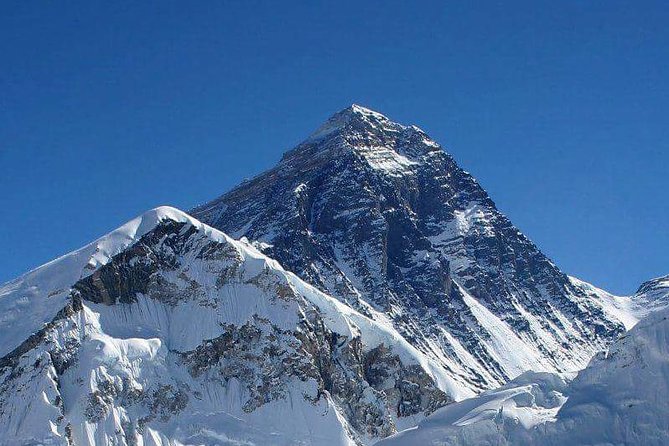
Everest Base Camp is not a quick mountain outing. It is a 16-day journey on foot through Sherpa villages, pine and rhododendron forests, high valleys, glacial moraine, and some of the world’s famous peaks. I like the two planned acclimatization days, one in Namche Bazaar and one in Dingboche, because they give your body a better chance to adjust. I also like the Kathmandu sightseeing at the start, which puts the trek in a wider Nepalese setting rather than dropping you straight onto a trail.
The main consideration is the altitude. The route reaches Everest Base Camp and Kala Patthar in thin, cold air, and the schedule includes long walking days of up to six hours. The listed price is $800 per person, which can be good value for a private trip, but you should confirm exactly what the price covers before paying, especially lodging, meals, permits, porter support, and domestic flights.
Key points to know before booking
- Lukla begins the real adventure: The scenic flight from Kathmandu takes about 40 minutes and lands at Tenzing-Hillary Airport, the gateway to the trek.
- Two acclimatization stops help: You spend a day in Namche Bazaar and another in Dingboche, with optional hikes to Khumjung, Nagarjun Hill, or Chhukung Valley.
- The route includes both Base Camp and Kala Patthar: Base Camp gives you the goal itself, while Kala Patthar provides the stronger close view of Everest.
- You walk through Sherpa country: Namche Bazaar, Khumjung, Pangboche, Tengboche, and Dingboche each offer a different look at life in the Khumbu region.
- The tour is private: Only your group takes part, and airport pickup is offered in Kathmandu.
- Guide quality matters: Shiva, Keshab, and Rajesh are names associated with especially positive guiding experiences on this route, while communication with the company office is worth confirming in advance.
Kathmandu gives you a useful first look at Nepal
Your trip begins with airport pickup at Tribhuvan International Airport. A representative from Vyas Treks & Expedition takes you to your hotel, giving you a soft landing after your flight. The first evening includes a welcome dinner with Nepalese food, a pleasant way to meet the team before the walking begins.
The second day is not filler. You visit Kathmandu Durbar Square, Pashupatinath, Swayambhunath, and Bouddhanath. These sites cover royal Kathmandu, Hindu worship, Buddhist practice, and the city’s traditional religious life. Kathmandu Durbar Square is the historic center, Pashupatinath is one of the country’s most important Hindu temples, Swayambhunath is the hilltop shrine known as the Monkey Temple, and Bouddhanath contains one of the world’s largest stupas.
At midday, your climbing leader checks your equipment and introduces you to the other members of your group. This is when you should ask direct questions. Confirm the walking plan, what happens if a flight is delayed, what support is available at altitude, and which items are supplied or rented.
The city touring is included in the schedule, but admission to the Kathmandu sites is not included in the stated itinerary. Bring some local currency for entry fees and small purchases.
More Everest Base Camp Treks in Kathmandu
- Everest Base Camp Trek – 14 Days
★ 5.0 · 1,499 reviews - Everest Base Camp Trek
★ 5.0 · 842 reviews - Everest Base Camp Trekking
★ 5.0 · 485 reviews
The Lukla flight starts the 16-day trek
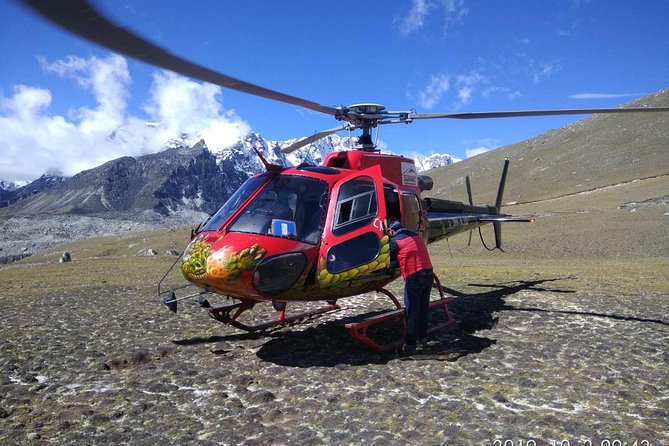
Day three begins with the flight from Kathmandu to Lukla. The journey takes about 40 minutes and offers a quick change from city streets to steep mountain valleys. You land at Tenzing-Hillary Airport at about 9,186 feet, then meet the rest of the crew and organize your bags.
The first walk is fairly gentle by Everest standards. You descend gradually through Cheplung, where you can glimpse Khumbila, a sacred mountain that has never been climbed. From there, the route continues to Phakding.
This first day is useful because it gets you moving without immediately demanding a major climb. Still, do not treat it as a casual stroll. You are already at altitude, and a relaxed pace is better than trying to prove your fitness on day one.
The flight is also one of the least predictable parts of the trip. The schedule depends on mountain weather, and the cancellation policy allows a different date or full refund if the experience is canceled because of poor weather. You should keep extra flexibility in your wider Nepal plans.
Phakding to Namche introduces you to the Khumbu
From Phakding, the trail follows the Dudh Koshi River through pine forest and small villages. You cross suspension bridges, pass through Benkar and Chumoa, and enter Sagarmatha National Park at Monjo.
The approach to Namche Bazaar is the first serious test. After Jorsale, the trail follows the Dudh Koshi and Bhote Koshi rivers before climbing steeply toward the main Sherpa center of the region. If the weather cooperates, you may see Everest and Lhotse before reaching Namche.
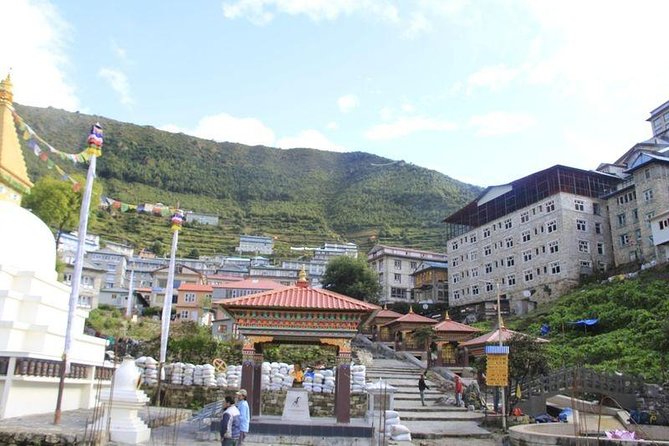
Namche is more than a place to sleep. It has government offices, shops, restaurants, ATMs, internet cafes, and a colorful market. That makes it an important supply and rest point, but it can also feel surprisingly busy compared with the smaller villages farther up.
You spend day five acclimatizing in Namche. The plan allows time to explore the town and take a higher walk toward Sagarmatha National Park for views of Everest, Lhotse, Nuptse, Ama Dablam, Thamserku, and Kongde. Another option is Khumjung, a Sherpa settlement with the Hillary School and a closer look at traditional village life.
I consider this one of the most valuable days in the schedule. You are not simply waiting around. You are gaining height during the day and returning to sleep lower, a sensible rhythm for the route. Use the time to eat, drink, check your clothing, and tell your guide if you have a headache, unusual tiredness, or trouble sleeping.
Tengboche brings forest, peaks, and a working monastery
The trail from Namche drops toward the Dudh Koshi River before climbing through rhododendron forest to Tengboche. The day is a mix of descent and ascent, so the distance is not the only measure of effort.
The views are strong along this section. Everest, Lhotse, Nuptse, Ama Dablam, Thamserku, and Kongde appear from different angles as the trail winds above the river. In spring, the rhododendron forest adds color, though the mountain views remain the main prize.
Tengboche is home to the largest monastery in the region. Visiting Tengboche Gompa gives the walk a cultural center, not just a string of mountain viewpoints. You can pause, take in the setting, and consider how Buddhist practice shapes daily life in the Khumbu.
The accommodation and food at this altitude are practical rather than luxurious. The supplied information does not specify the exact lodges or meal plan, so ask the company for current details. A private trip can feel personal and well supported, but it does not remove the basic limits of high mountain lodging.
More Trekking Tours in Kathmandu
- Annapurna Circuit Trek with Tilicho Lake
★ 5.0 · 368 reviews - Everest Base Camp Trekking – 13 Day
★ 5.0 · 365 reviews - Everest Base Camp Trek
★ 5.0 · 350 reviews - Everest Base Camp Trek -14 Days
★ 5.0 · 321 reviews
Dingboche offers the second important rest day
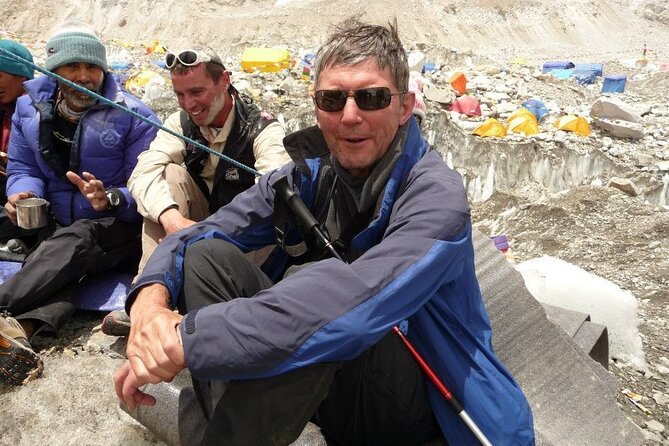
From Tengboche, the trail descends through birch, conifer, and rhododendron forest to Devuche. You cross the Imja River, pass Pangboche, and continue into the Imja Valley. The route then follows the Lobuche River and climbs toward Dingboche.
Pangboche offers a more open mountain setting and a chance to see a quieter Sherpa settlement. The trail eventually reaches fields enclosed by stone walls. Barley, buckwheat, and potatoes grow inside these walls, protected from cold winds and grazing animals.
Dingboche is the second acclimatization stop, and it is well placed. The village sits high enough to help your body adjust, but you still have optional day walks rather than a complete day of inactivity. Nagarjun Hill gives higher views, while Chhukung Valley offers another route with views toward Makalu, Lhotse, Cholatse, Tawache, and Ama Dablam.
This is where the trek starts to feel much more serious. Trees thin out, the air feels colder, and every uphill section takes longer. Keep your pace steady. A guide who watches your condition is valuable here. Past groups have had especially good experiences with guides named Shiva, Keshab, and Rajesh, but you should confirm your assigned guide before departure.
Lobuche leads you beside the Khumbu Glacier
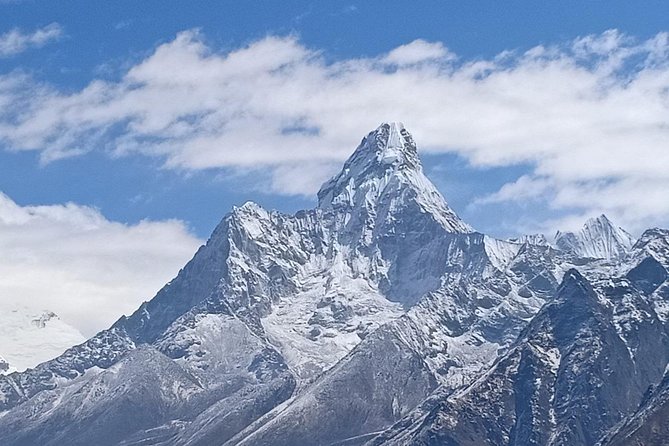
After Dingboche, you climb gradually to Duglha at the end of the Khumbu Glacier’s terminal moraine. The route then rises more steeply toward Chupki Lhara, where stones and prayer flags honor mountaineers who died on Everest missions, including Scott Fischer and Babu Chiri Sherpa.
This section carries a quiet weight. The memorials are not a sightseeing stop in the usual sense. They remind you that the route ahead is demanding and that the mountain has a serious history of loss.
Beyond the memorials, the trail follows the moraine with views toward Khumbutse, Lingtren, Pumori, and Mahalangur Himal. The path becomes easier as you enter the valley leading to Lobuche.
At this point, you are walking on rocky ground with less oxygen and fewer comforts. A six-hour day may feel much longer than a six-hour walk at home. Trekking poles, warm layers, and a small daypack arranged so you can reach your water and jacket quickly all make practical sense.
Everest Base Camp is the goal, but not the best Everest viewpoint
The walk from Lobuche to Gorak Shep and Everest Base Camp is one of the hardest parts of the trip. You pass the former Gorak Shep lake area, then continue across rocky ground, moraine, and streams. The route can be confusing in places, so staying with your lead Sherpa is important.
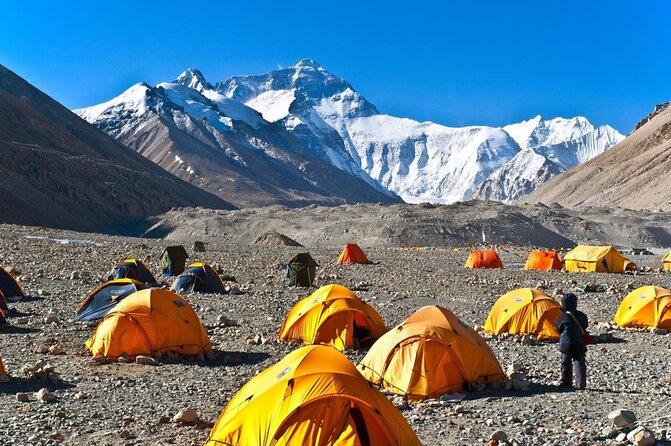
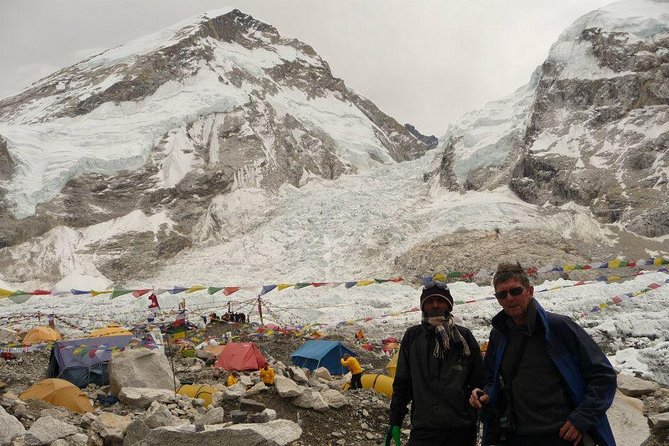
The path reaches Everest Base Camp beside the Khumbu Glacier. In the spring climbing season, bright tents can appear against the gray rock and ice. From Base Camp, you see Nuptse, Khumbutse, and Pumori. You do not get the classic full face of Everest from this point, which is why the next morning at Kala Patthar matters so much.
You return to Gorak Shep for the night. The altitude, cold, and basic conditions make this a demanding overnight stop. Keep your expectations realistic. The reward is not comfort. It is reaching a place that has been the staging ground for major Everest climbs.
Kala Patthar provides the defining mountain view
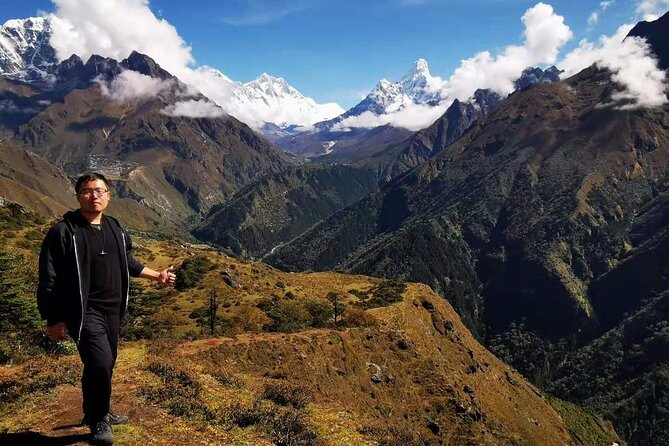
The early start for Kala Patthar is cold and dark. Temperatures can fall to around minus 10 to minus 14 degrees Celsius, with chilly wind adding to the discomfort. You need warm layers, gloves, a hat, and patience while you climb.
As daylight arrives, Lingtren, Khumbutse, and Changtse become clearer. The high point is the view from Kala Patthar, where Everest appears close and formidable among the surrounding peaks. You get a 360-degree mountain panorama and a better photographic position than you have at Base Camp.
This is one of the strongest parts of the itinerary, but it is also the moment when altitude affects people most. The schedule notes that the Base Camp walk may take longer for those completing it on this day, so listen to your guide and do not rush for a photograph.
After Kala Patthar, you descend toward Pheriche. The return is not an afterthought. Going downhill on tired legs over loose, rocky ground can be hard on your knees, and you still have several walking days ahead.
The return route passes through familiar villages
From Pheriche, the trail drops through rhododendron and juniper, crosses a prayer-flag-covered bridge over the Dudh Koshi, and continues through pine forest. You might see colorful pheasants and mountain goats along the way.
The route reaches Sansa, where you can look back toward Ama Dablam, Thamserku, and Nuptse, then continues through forest to Namche Bazaar. Returning through familiar places has its own reward. You notice how much easier the air feels and how different the same trail looks after the high point of the trek.
The next day takes you from Namche to Phakding. You pass open ground, pine forest, prayer stones, prayer flags, and Sherpa villages. The descent is generally easier for breathing, but the trail still includes rocky sections and bridges.
On day fourteen, you walk from Phakding back to Lukla. The trail becomes steeper in places, and tired legs need careful footing. Once in Lukla, you can stretch, rest, and look back at the route from the past two weeks.
What $800 means in practical terms
At $800 per person, this trip may offer good value if the price includes the main trekking arrangements, domestic flights, guides, accommodation, meals, permits, and airport transfers. The supplied details confirm airport pickup, the private format, the Kathmandu sightseeing, and the trek schedule, but they do not spell out every inclusion.
That gap matters. Before booking, ask for a written list covering:
- Kathmandu hotel nights
- Tea-house or lodge accommodation during the trek
- Meals and drinking water
- Lukla flights
- Park and local permits
- Porter service and baggage limits
- Kathmandu sightseeing admission fees
- Insurance and emergency evacuation arrangements
- Equipment rental
- Airport transfers on arrival and departure
Group discounts may improve the value if you are traveling with several people. The private format also gives your group more control than a large fixed group, though the quality of the trip still depends heavily on the assigned guide and the company’s communication.
The company has received very positive comments about its guides and personal assistance. Keshab is described as attentive and helpful, while Shiva is praised for kindness, good company, and teaching about Nepalese life. Another strong account credits Rajesh with making the trek work well. At the same time, there have been complaints about an early trip ending, an unresolved refund, and poor communication during the pandemic lockdown. I would not ignore those mixed signals. Get the payment terms, refund process, and bad-weather plan in writing.
Who should book this Everest trek
This route suits you if you have moderate physical fitness, can walk for five or six hours on consecutive days, and are comfortable with cold, basic accommodation, steep trails, and uncertain mountain weather.
It is a good choice if you want the classic Everest route rather than a short mountain visit. You get Kathmandu’s cultural sites, a scenic flight, Namche Bazaar, Tengboche, Dingboche, Everest Base Camp, and Kala Patthar in one extended trip.
It is less suitable if you need a fixed schedule with no flight risk, dislike long uphill walks, or want hotel comfort throughout. You should also be ready for the fact that reaching Base Camp is not the same as seeing Everest at its best. Kala Patthar supplies the famous close view.
Should you book the 16-day Everest Base Camp trek?
I would consider booking it if the company confirms the inclusions clearly and assigns a guide with strong communication skills. The route is well chosen, the two acclimatization days are sensible, and the combination of Base Camp, Kala Patthar, Sherpa villages, and Kathmandu heritage sites gives you much more than a single mountain viewpoint.
The main decision is not simply the $800 price. It is how much support and certainty that price buys. Ask the direct questions before booking, prepare for altitude, and treat the weather plan as part of the trip rather than an inconvenience. If those answers are clear, this is a practical way to take on Nepal’s most famous trek with a private group.
FAQ
How long does the Everest Base Camp trek take?
The experience lasts approximately 16 days, including Kathmandu sightseeing, flights between Kathmandu and Lukla, the trek to Everest Base Camp and Kala Patthar, the return to Lukla, and departure from Nepal.
How much does the trek cost?
The listed price is $800 per person. Group discounts are available. You should confirm what is included in that amount before booking.
Is airport pickup available?
Yes. Airport pickup is offered, and a representative takes you from Tribhuvan International Airport to your hotel in Kathmandu. Airport transport is also provided for your departure.
Is this a private tour?
Yes. Only your group participates in the tour. The group size is not specified, but it is not presented as a shared public group activity.
What level of fitness is required?
A moderate level of physical fitness is required. Walking days generally last about five or six hours, and the route includes steep climbs, rocky ground, high altitude, and cold conditions.
Does the itinerary include acclimatization days?
Yes. You spend one acclimatization day in Namche Bazaar and another in Dingboche. Optional walks include Khumjung, Nagarjun Hill, and Chhukung Valley.
What happens if bad weather cancels the experience?
If poor weather causes the experience to be canceled, you are offered a different date or a full refund. You can also cancel for a full refund if you cancel at least 24 hours before the scheduled start time.
Latest treks added in Kathmandu
- Private Manaslu Circuit Trek at Himalayas★ 5.0 · 3 reviews
- Ghorepani Poonhill Trek★ 5.0 · 5 reviews
- Ghorepani Poon Hill Trek★ 5.0 · 16 reviews
- Upper Mustang Trekking★ 3.0 · 2 reviews
- Amazing 1 Day Trekking Experience in Kathmandu Nepal★ 5.0 · 24 reviews
- Upper Mustang Trekking★ 5.0 · 2 reviews
- Upper Mustang Trekking★ 5.0 · 4 reviews
- Upper Mustang Trek★ 5.0 · 5 reviews
Everest Base Camp Treks, compared.






Browse the lists this tour appears in