
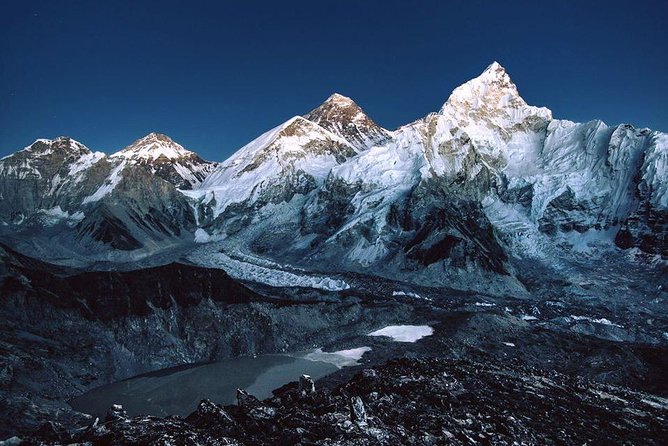
REVIEW · KATHMANDU
Everest Base Camp Trekking – 12 Days
The best part of this 12-day Everest Base Camp trek is that the goal is only one piece of the experience. You walk through Sherpa villages, pass Buddhist prayer wheels and monasteries, and watch the mountains grow larger each day. I especially like the gentle first day to Phakding and the two planned acclimatization days, which give your body time to adjust.
I also like that the price includes the Lukla flights, permits, tea-house lodging, a licensed English-speaking Sherpa guide, and porter support. The main drawback is the tight schedule. High-altitude days are long, and bad weather can delay flights to or from Lukla, so you should keep extra time in Nepal and arrive with good fitness.
Key points to know before booking
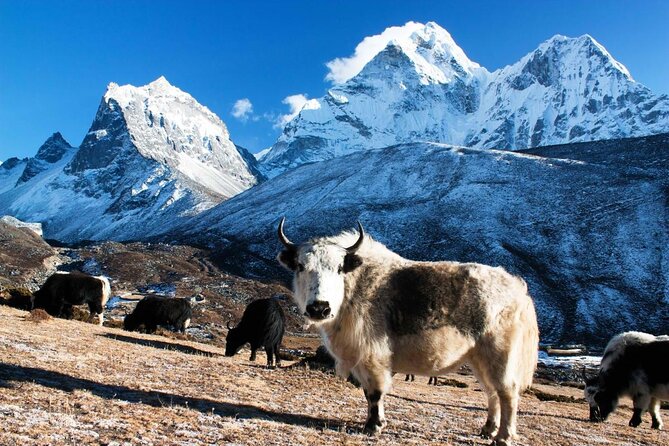
- Reach Everest Base Camp by way of the classic Khumbu route: Walk from Lukla through Namche Bazaar, Tengboche, Dingboche, Lobuche, and Gorak Shep.
- Two acclimatization days are built in: You hike around Khumjung and later choose a hike toward Chhukung Valley or Nagarjun.
- Stay in local tea houses: Eleven nights are included in twin-share rooms, with simple lodging, local food, and family-run hospitality.
- Use a licensed Sherpa guide and porter team: One porter is provided for every two trekkers, while staff costs and insurance are covered.
- Climb Kala Patthar at 5,545 meters: This is one of the highest points on the route and a major highlight for mountain views.
- Plan around Lukla flight delays: Weather can cancel domestic flights, and the tour provider recommends adding one or two spare days.
The route from Kathmandu to the Khumbu
This is a demanding mountain trek, not a sightseeing holiday with a few scenic walks added on. In 12 days, you travel from Kathmandu to Lukla, walk to Everest Base Camp, climb Kala Patthar, and return to Lukla on foot.
That pace works because the route follows a well-established trail and includes acclimatization days. Still, the altitude is serious. The itinerary reaches 5,545 meters at Kala Patthar, and even strong hikers need to walk slowly, drink regularly, and respect the schedule.
The tour starts and ends in Thamel, Kathmandu. Airport pickup is offered, and the package includes the round-trip flight between Kathmandu and Lukla, airport tax, permits, and national park fees. Accommodation in Kathmandu is not included, so you need to arrange your own city hotel before and after the trek.
More Everest Base Camp Treks in Kathmandu
- Everest Base Camp Trek – 14 Days
★ 5.0 · 1,499 reviews - Everest Base Camp Trek
★ 5.0 · 842 reviews - Everest Base Camp Trekking
★ 5.0 · 485 reviews
Day 1: Lukla to Phakding, 8 kilometers
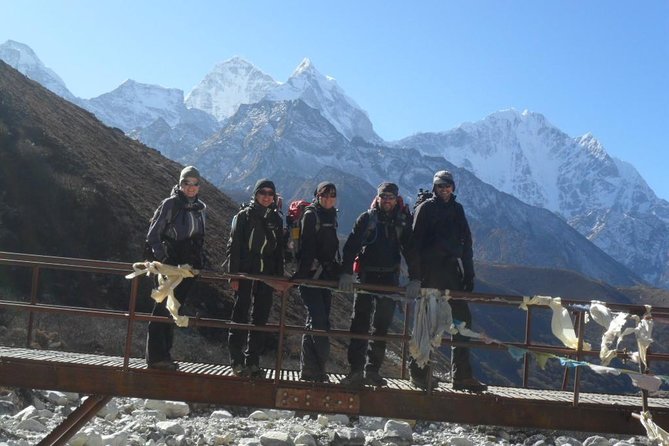
The first morning begins with a flight from Kathmandu to Lukla. The flight takes about 45 minutes, followed by a roughly four-hour walk to Phakding at 2,610 meters.
This is a useful first day because it is relatively gentle. You are already in the mountains, but you do not immediately face a huge climb. The trail introduces you to the Khumbu region, with villages and mountain scenery appearing from the start.
Phakding is a sensible overnight stop. You can get used to the walking rhythm, settle into tea-house life, and begin the slow process of gaining altitude. The main concern is the flight. Mountain weather can cause long waits or cancellations, even when conditions in Kathmandu look fine.
Day 2: The climb to Namche Bazaar
The second day covers about 11 kilometers and takes six to seven hours. You pass through Monjo and Jorsale before reaching Namche Bazaar at 3,441 meters.
This is one of the more demanding days because the trail gains height and includes several uphill sections. Namche is not just a place to sleep. It is the main trading center of the Khumbu and a key stop for adjusting to the thinner air.
I like this part of the route because the change from lower villages to high mountain country becomes clear. You are no longer simply walking toward Everest. You are entering the Sherpa heartland, where Buddhist symbols, mountain lodges, and daily village life shape the journey.
Day 3: Acclimatization around Khumjung
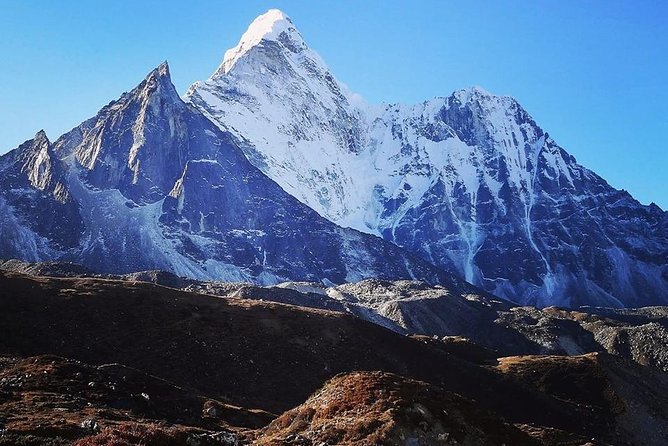
The first acclimatization day includes a three to four-hour hike of about four kilometers around Khumjung, at roughly 3,790 meters.
The purpose is simple: walk high, then return to sleep lower. That pattern helps your body adjust better than spending the day completely still. It also gives you time to enjoy the area instead of racing from one lodge to the next.
Khumjung is known as a Sherpa village, and this is a good point in the trek to notice the local Buddhist customs. You will see mani stones, prayer wheels, stupas, and monasteries. Walk clockwise around these religious objects, keeping them on your right, and do not sit or stand on them.
More Trekking Tours in Kathmandu
- Annapurna Circuit Trek with Tilicho Lake
★ 5.0 · 368 reviews - Everest Base Camp Trekking – 13 Day
★ 5.0 · 365 reviews - Everest Base Camp Trek
★ 5.0 · 350 reviews - Everest Base Camp Trek -14 Days
★ 5.0 · 321 reviews
Day 4: Tengboche and its mountain setting
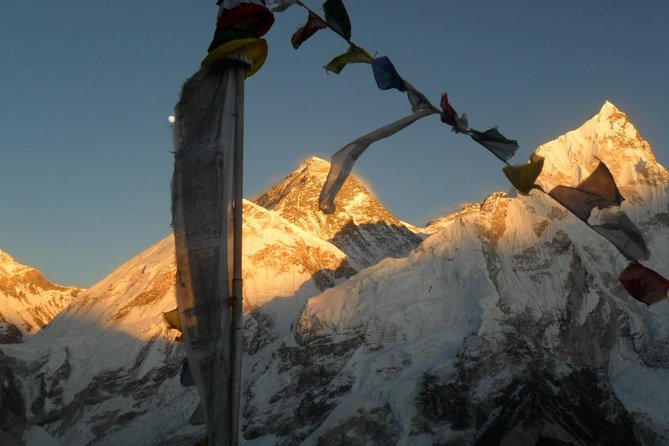
The trail to Tengboche covers about 11 kilometers and takes five to six hours. At 3,864 meters, Tengboche is only slightly higher than Namche, but the day still demands steady effort.
Tengboche is an important stop because of its monastery and its setting among the mountains. The route gives you a close look at the religious side of the Khumbu, not just the famous peaks.
The pace matters here. You may feel strong after the rest day, but altitude can catch up with you later. I would treat this as a measured walking day, not a chance to prove how fast you can go.
Day 5: Dingboche at 4,400 meters
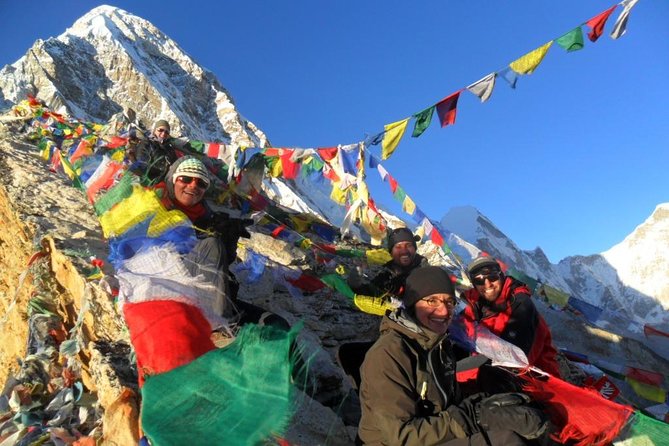
The walk to Dingboche is about 10 kilometers and takes around five hours. The village sits at 4,400 meters, where the thin air becomes much more noticeable.
Dingboche is a practical base for the second acclimatization day. The route is now higher, colder, and more exposed, and the distances can feel longer than they look on paper.
This is also where the value of the guide becomes clearer. A licensed English-speaking Sherpa guide can set a steady pace, monitor how the group is managing, and help coordinate the tea-house stops. Your porter carries the main load, with one porter assigned for every two trekkers, so you normally walk with only a daypack.
Day 6: A second acclimatization hike
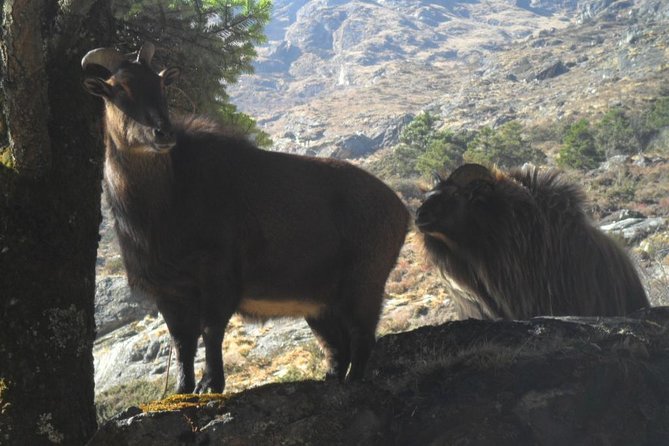
The second acclimatization day offers a three to four-hour hike of roughly four to five kilometers. The suggested choices are Chhukung Valley or Nagarjun, reaching about 4,850 meters.
This is one of the most important days in the program. You are preparing for the higher route to Lobuche, Gorak Shep, and Base Camp, where the air is thinner and recovery is slower.
Do not treat the rest of the day as wasted time. Eat, drink, organize your layers, and rest. The next few days are the physical center of the trek, and saving energy here can make the difference between enjoying the high route and simply enduring it.
Day 7: Lobuche, 4,915 meters
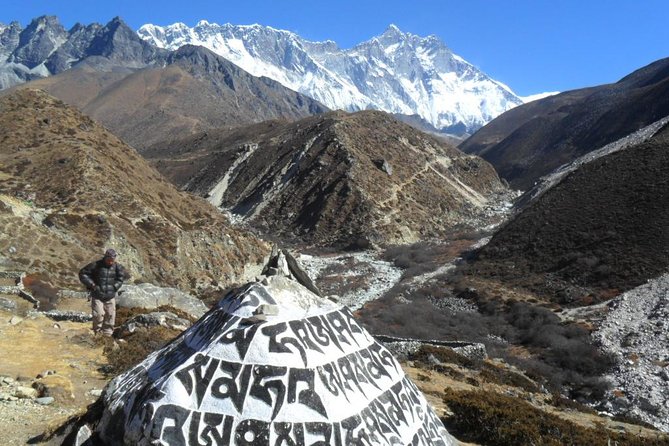
The walk to Lobuche covers about 11 kilometers and takes around six hours. At 4,915 meters, this is a serious altitude day, even though the distance is moderate.
The surrounding mountains now dominate your attention. The route feels more remote, and the simple rhythm of walking, eating, and sleeping becomes especially useful. Your tea-house room will be basic, usually with two narrow beds, but that simplicity is part of the mountain experience.
The accommodation is not luxurious, and you should not expect city-hotel comfort. The benefit is that you stay along the route, eat in the same family-run lodges, and share space with people living and working in the Khumbu.
Day 8: Gorak Shep and Everest Base Camp
Day eight is the big approach to Everest Base Camp. You walk to Gorak Shep at 5,130 meters, then continue on a day hike to Base Camp. The full distance is about 12 kilometers, and the day can take around eight hours.
This is a long day at very high altitude. The trail may feel slow, and every rise can require a pause. You should measure success by maintaining a steady pace, not by finishing quickly.
Gorak Shep is the overnight base for this section. Reaching Everest Base Camp is the obvious target, but the route itself remains the main reward. You pass through high mountain settlements and see the terrain change from village paths to stark, rocky ground.
Conditions at Base Camp can vary, and the site is not a furnished attraction. The value comes from reaching the place used as a staging area for Everest expeditions and understanding the scale of the mountain route with your own legs.
Day 9: Kala Patthar and the long descent
The schedule calls for an ascent to Kala Patthar at 5,545 meters, followed by a descent to Pheriche at 4,371 meters. The day covers about 15 kilometers and takes roughly seven hours.
Kala Patthar is the high point of the trek and one of the best places on this route for mountain views. The climb is short in distance but hard because of the altitude. You will want warm clothing, water, and patience.
The descent to Pheriche is welcome, but it still makes for a long day. Going downhill does not remove the fatigue from the previous days. I would keep your pack light and avoid spending too long at the summit if the guide advises you to move on.
Days 10 and 11: Returning to Lukla
Day 10 takes you back to Namche Bazaar, covering about 18 kilometers in six to seven hours. Day 11 continues to Lukla, covering about 19 kilometers in another six to seven hours.
These are long walking days, but the lower altitude makes breathing easier. The return route also gives you a different view of places you passed earlier. You may notice more detail once you are no longer focused only on reaching Base Camp.
The schedule leaves little spare time. If you develop a blister, feel unwell, or lose a day to weather, the plan can become difficult. This is another reason to follow the guide’s pace and protect your energy from the first day.
Day 12: Flying from Lukla to Kathmandu
The final day is a 45-minute flight from Lukla to Kathmandu. The tour ends back at the Thamel meeting point.
This flight is weather dependent. If it is canceled, you may face a long wait in Lukla and must cover your own food and accommodation during the delay. A helicopter can be arranged in an emergency or at your request, but the stated cost is around $3,500 and is not included.
I strongly recommend keeping one or two extra days at the end of your Nepal trip. Without that buffer, a delayed Lukla flight could affect an international departure or another booked activity.
Tea houses, meals, and daily comfort
The package includes eleven nights in local lodges, using twin-share rooms. Rooms are simple, generally with two narrow beds, and the family-run setting gives you more contact with local life than a standard hotel would.
Three meals a day are included during the trek. Breakfast and dinner are served at the lodge, while lunch is taken at a tea shop along the route. Food is described as freshly cooked and hygienic, with Nepali, Tibetan, Sherpa, and international choices.
Drinks cost extra. Mineral water is available, but plastic disposal is a concern in the region. Boiled water costs a small fee, and bringing chlorine tablets is suggested. I would plan to use boiled or treated water and carry a reusable bottle.
What the $1,900 price covers
At $1,900 per person, the package is not a budget walk, but it includes several expensive and essential pieces. You receive the Lukla airfare, airport tax, national park fee, TIMS permit, required documentation, eleven lodge nights, guide, porter support, staff insurance, a duffle bag, first-aid kit, and government and local taxes.
One porter serves two trekkers. That arrangement keeps the price lower than a private porter for each person, while still reducing the amount you carry.
You must budget separately for personal travel insurance, Nepal entry visa, Kathmandu accommodation, city lunches and dinners, drinks, and tips for the guide, porters, and driver. City meals are estimated at $10 to $14 each in tourist restaurants.
The price offers good practical value if you need a package that handles permits, flights, staff, and route logistics. It is less attractive if you already have trekking equipment, local contacts, and experience arranging mountain transport yourself.
Who should book this trek
You should consider this trip if you have strong physical fitness, want the classic Everest route, and prefer a guided plan with tea-house lodging rather than camping. It also suits people who value local staff and want porter support for the high-altitude days.
The program is particularly useful for first-time Himalayan trekkers because the guide, permits, lodges, and domestic flights are arranged together. A female guide can also be provided. One guide on a previous trip was named Tenzin, and the company specifically offers female trekking guides, which may matter to women hiking together.
You should think twice if you dislike basic rooms, long walking days, uncertain flights, or high-altitude conditions. The trek requires more than ordinary sightseeing fitness, and personal insurance must cover emergency evacuation, medical treatment, injury, lost baggage, and the activities you plan to undertake.
The experience is private, meaning only your own group participates. That can make the walking pace and daily routine more personal, though it does not remove the physical demands or weather risks.
Should you book the 12-day Everest Base Camp trek?
I would book this trek if you want the classic route and appreciate having the major logistics handled for you. The strongest features are the two acclimatization days, the licensed Sherpa guide, included Lukla flights, porter support, and the chance to stay in local tea houses along the route.
I would not choose it if your Nepal schedule has no flexibility. Lukla flights can be delayed, and the 12-day plan leaves little room for lost days. Add spare time, buy suitable insurance, and prepare for basic lodging and high-altitude walking.
For a fit hiker who wants Everest Base Camp without organizing every permit, lodge, flight, and porter separately, this is a practical and well-structured choice. The key is to treat the mountain schedule seriously and let the slow pace do its work.
FAQ
How long is the Everest Base Camp trek?
The trek lasts approximately 12 days, including flights between Kathmandu and Lukla. The walking route includes Phakding, Namche Bazaar, Tengboche, Dingboche, Lobuche, Gorak Shep, Everest Base Camp, Kala Patthar, and the return to Lukla.
What is the highest point on the itinerary?
The highest point is Kala Patthar, at 5,545 meters or 18,192 feet. Everest Base Camp is listed at about 5,130 meters, while Gorak Shep is the overnight stop for that section.
Are flights between Kathmandu and Lukla included?
Yes. Round-trip airfare between Kathmandu and Lukla, including airport tax, is included in the package.
Is accommodation included?
Yes. Eleven nights in local tea houses or lodges are included, using twin-share rooms. Accommodation in Kathmandu is not included.
Are meals included during the trek?
Three meals a day are included during the trek. Breakfast and dinner are served at the lodge, while lunch is eaten at a tea shop along the route. Beverages cost extra.
What kind of guide is provided?
The tour includes an English-speaking, experienced Sherpa guide who is government trained and licensed. A female trekking guide can also be provided.
Is porter support included?
Yes. One porter is provided for every two trekkers. Trek staff salary, insurance, equipment, food, and accommodation are included.
What happens if a Lukla flight is canceled?
The provider will try to place you on the next possible flight. You are responsible for extra food and accommodation during a delay in Lukla, and the provider recommends allowing one or two extra days at the end of your trip.
Latest treks added in Kathmandu
- Private Manaslu Circuit Trek at Himalayas★ 5.0 · 3 reviews
- Ghorepani Poonhill Trek★ 5.0 · 5 reviews
- Ghorepani Poon Hill Trek★ 5.0 · 16 reviews
- Upper Mustang Trekking★ 3.0 · 2 reviews
- Amazing 1 Day Trekking Experience in Kathmandu Nepal★ 5.0 · 24 reviews
- Upper Mustang Trekking★ 5.0 · 2 reviews
- Upper Mustang Trek★ 5.0 · 5 reviews
- Upper Mustang Trekking★ 5.0 · 4 reviews
Everest Base Camp Treks, compared.






Browse the lists this tour appears in