
REVIEW · KATHMANDU
Everest Base Camp Trek with Chopper Return To Kathmandu
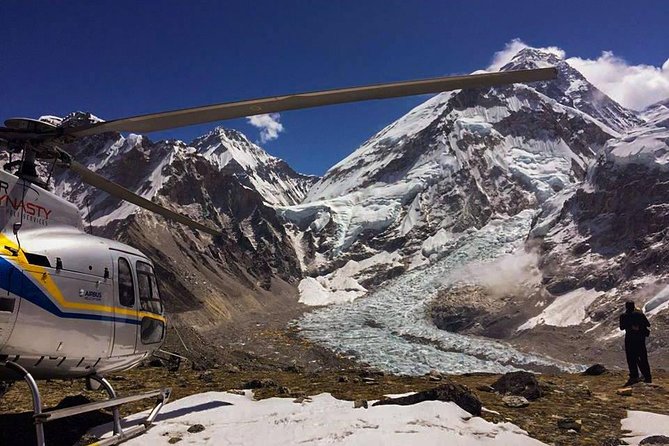
The big appeal here is simple: you walk into the Everest region the traditional way, then avoid the long return trek with a helicopter from Gorak Shep to Kathmandu. In eight days, you reach Base Camp, see the Khumbu Glacier, and climb Kala Patthar at 5,545 meters.
I like the private trekking format, which gives your group a more personal pace, and I like that the price includes meals, permits, a porter shared between two people, sleeping bags, duffel bags, and tea-house lodging. The main drawback is the schedule: it is fast, and the high-altitude days are demanding even though the helicopter saves several return days.
Key points before you book
- Lukla to Base Camp on foot: Follow the Dudh Koshi River, cross suspension bridges, and pass through Sherpa villages and mountain forests.
- Two major mountain-view stops: Namche Bazaar gives you an acclimatization day, while Kala Patthar offers a 360-degree Himalayan panorama.
- Private trekking with shared helicopter return: Your trek is private, but the helicopter arrangement is described as shared.
- Full board in the mountains: Breakfast, lunch, and dinner are provided during the trek, with tea-house accommodation on a twin-sharing basis.
- Practical support included: Airport pickup and drop-off, domestic flights, permits, porter service, sleeping bag, and duffel bag are covered.
- Weather matters: The helicopter requires suitable conditions, and the operator may reschedule or refund the trip if poor weather cancels it.
Why the helicopter return changes the Everest Base Camp trek
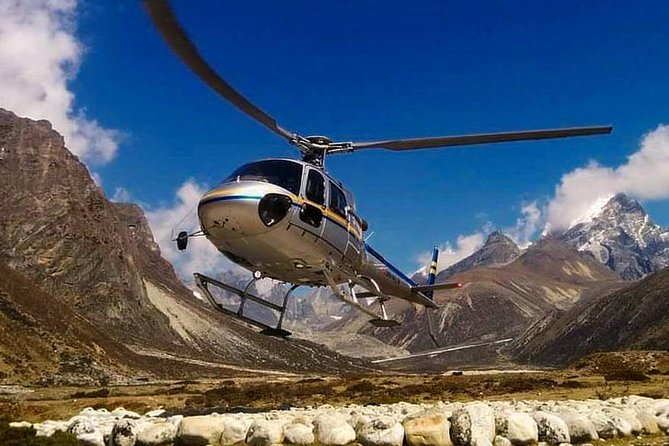
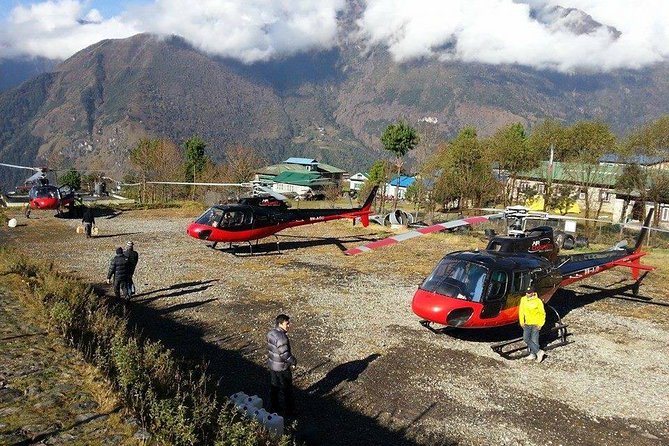
A standard Everest Base Camp route usually requires you to walk back to Lukla after reaching Base Camp. This experience removes that return trek. After an early hike to Kala Patthar on the final morning, you return to Gorak Shep for breakfast and take a helicopter to Kathmandu.
That is a major saving in time and effort. It also lets you spend more of your limited Nepal trip on the approach to Everest rather than retracing the same trail. If you have only eight days, this format makes the route possible in a compact schedule.
The tradeoff is that the trek moves quickly. You are not getting a leisurely high-altitude journey with extra rest days. The schedule includes long walking days, with several listed at six or seven hours. The itinerary does include an acclimatization day at Namche Bazaar, but you should still be comfortable with sustained walking and a moderate level of physical fitness.
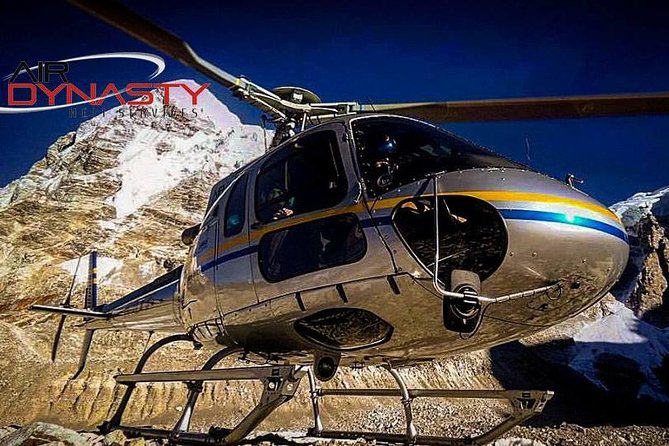
The helicopter itself is a useful finish, not just a flashy extra. From high in the Khumbu, you trade a week of walking for an aerial view of the mountain range before returning to Kathmandu. Since the description refers to a shared helicopter but a private trek, confirm how the flight is organized for your date and group.
More Everest Base Camp Treks in Kathmandu
- Everest Base Camp Trek – 14 Days
★ 5.0 · 1,499 reviews - Everest Base Camp Trek
★ 5.0 · 842 reviews - Everest Base Camp Trekking
★ 5.0 · 485 reviews
Day 1: Lukla to Phakding beside the Dudh Koshi
The day starts early, with a 6:15 am start and a vehicle transfer to the domestic airport. The drive from Thamel takes about 20 minutes. After the flight to Lukla, you have breakfast and begin walking toward Phakding.
This first trek is relatively short, at about three to four hours. The route follows the Dudh Koshi River, giving you an immediate sense of the region’s steep valleys and moving water. Phakding is a gentle introduction to the trail, rather than a punishing first day.
The domestic flight to Lukla is included, along with departure taxes. Airport pickup and drop-off in Kathmandu are also covered, which removes a few early-trip details from your hands. Still, the morning begins early, so keep your daypack ready and avoid treating this as a slow start.
Day 2: Phakding to Namche Bazaar in six hours
The walk to Namche Bazaar takes about six hours and passes through pine and rhododendron forest. You will also cross suspension bridges and follow the Dudh Koshi valley toward the main Sherpa trading center of the Khumbu.
This is the day when the trek begins to feel serious. Namche is higher and more built up than Phakding, and the route demands steady effort. The reward is the first inspiring glimpse of Everest near the Nuptse and Lhotse ridge.
The stop listed as Irish Pub appears to be a meeting or location label rather than a separate sightseeing attraction. The real point of the day is reaching Namche, where you will spend the night and prepare for the altitude ahead.
Day 3: Namche Bazaar and the essential acclimatization day
You stay in Namche for exploration and acclimatization, making this one of the most important days in the schedule. The planned outing includes a hike toward Syangboche Airport, described as one of the highest airports in the world, and a possible walk to Hotel Everest View.
From Hotel Everest View, you can see Everest, Tawache, Lhotse, and Ama Dablam when conditions are clear. The day also includes the Everest Photo Gallery and Sherpa Culture Museum in the late afternoon.
I like this stop because it gives you more than mountain scenery. Namche is a place to learn about the Sherpa culture and the history of Himalayan expeditions before heading deeper into the valley. It also breaks up the long ascent, although one acclimatization day may feel brief for some people.
More Trekking Tours in Kathmandu
- Annapurna Circuit Trek with Tilicho Lake
★ 5.0 · 368 reviews - Everest Base Camp Trekking – 13 Day
★ 5.0 · 365 reviews - Everest Base Camp Trek
★ 5.0 · 350 reviews - Everest Base Camp Trek -14 Days
★ 5.0 · 321 reviews
Day 4: Namche to Tengboche and its famous monastery
The trail from Namche to Tengboche takes about five hours, though the day is listed at roughly six hours. Tengboche is home to the largest monastery in the Khumbu region and is one of the cultural highlights of the route.
The monastery gives the trek a strong sense of place. You are not simply walking between mountain lodges. You are moving through a region shaped by Sherpa Buddhist traditions, prayer walls, monasteries, and seasonal festivals.
Tengboche is also associated with Mani Rimdu, a major festival held in October. The itinerary does not promise that the festival will coincide with your visit, so treat it as useful cultural context rather than a guaranteed event.
Day 5: Tengboche to Dingboche across the Imja Khola
The route to Dingboche takes about six hours, with the day listed at seven hours. You cross the Imja Khola on a suspension bridge and pass long stretches of mani walls, the stone walls carved with Buddhist prayers.
The views become more dramatic as you move into the higher valley. Dingboche is an important stop before the route rises toward Lobuche and Gorak Shep. The listed Dingboche View Point gives you a chance to look back across the surrounding peaks.
This is a substantial day, and the combination of distance, rising elevation, and rough trail can make the hours feel longer than they appear on paper. The included full-board meals matter here because you do not need to arrange lunch or dinner separately at each stop.
Day 6: Dingboche to Lobuche via Thokla Pass
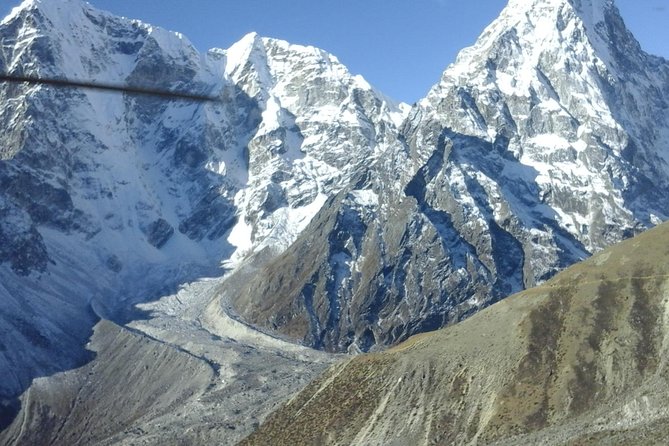
The day begins with a gentle climb out of Dingboche, followed by a contouring trail through yak grazing areas and alpine vegetation. You continue to Dughla, then face a short but steep climb to Thokla Pass at 4,830 meters.
The memorials at the top of the pass are among the most solemn parts of the route. Covered with prayer flags, they honor mountaineers who died on Everest expeditions. This is a quiet place, and it gives the trek a human dimension that mountain viewpoints alone cannot provide.
The mountains named along the way include Tawoche, Cholatse, and Ama Dablam. The day lasts about six hours, but the steep section and altitude make it one of the harder stages. Lobuche is not just another overnight stop. It is your launch point for the final push to Gorak Shep and Base Camp.
Day 7: Lobuche to Gorak Shep and Everest Base Camp
The walk from Lobuche to Gorak Shep takes about six hours. Near Gorak Shep, you can see the Khumbu Glacier, a huge tongue of ice descending from the slopes of Everest.
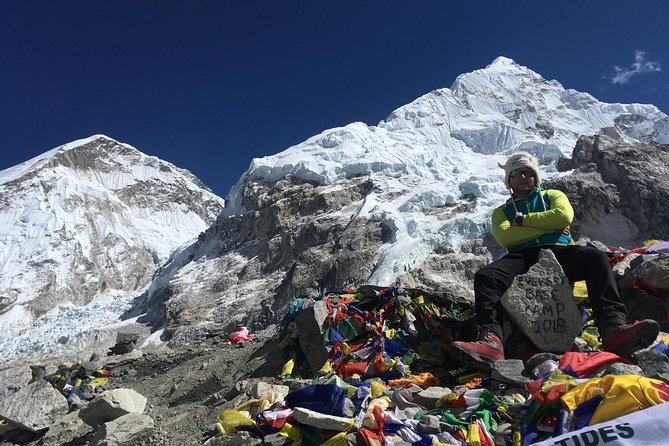
After lunch at Gorak Shep, you hike onward to Everest Base Camp. You are scheduled to spend about 20 to 25 minutes at Base Camp because the conditions are windy and cold. That short stay is worth understanding before you book. This is a focused visit for the location and the surrounding views, not a long rest beside the camp.
The approach is one of the emotional high points of the trip. You have moved from forest to bare high-altitude terrain, passed memorials, and reached the glacier country around Everest. The final stretch can feel demanding, so the short Base Camp stop is practical rather than disappointing.
Day 8: Kala Patthar, then the flight back to Kathmandu
The final morning begins early with a hike to Kala Patthar, followed by breakfast at Gorak Shep and the helicopter flight to Kathmandu. Kala Patthar means black rock, and the viewpoint sits at 5,545 meters among prayer flags.
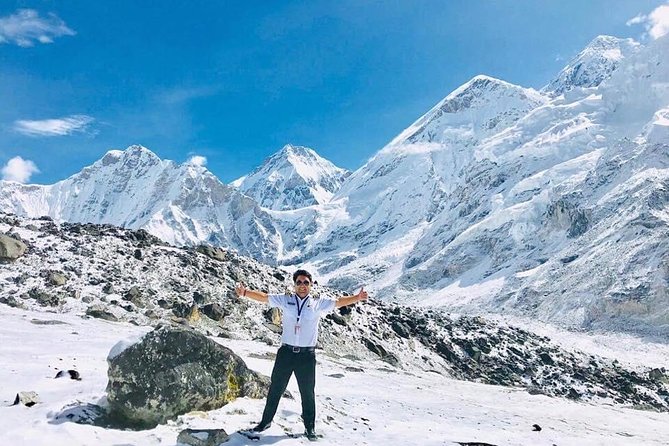
This is the best viewpoint in the schedule for a broad Himalayan panorama. The listed sights include Pumori, Lobuche West, Nuptse, Lhotse, and Everest. An early start is valuable because the viewpoint is the main visual payoff of the trek, and the day leaves little room for delay before the helicopter.
The flight from Gorak Shep to Kathmandu is the experience’s defining convenience. Instead of spending several days walking back to Lukla, you return by air. Weather can affect the flight, so the schedule should be treated as weather dependent rather than fixed to the minute.
What the $2,600 price covers
At $2,600 per person, this is not a low-cost tea-house trek. It is also not simply a walking tour with a helicopter added at the end. The price includes several costly and useful parts:
- Kathmandu airport pickup and drop-off in an air-conditioned vehicle
- Domestic flight from Kathmandu to Lukla
- Helicopter return from Gorak Shep to Kathmandu
- English-speaking guide
- Permits and required paperwork
- Breakfast, lunch, and dinner during the trek
- Tea-house lodging in twin-sharing rooms
- One porter shared between two people
- Staff wages, food, accommodation, equipment, and air tickets
- Sleeping bag and duffel bag for use during the trek
The helicopter is the biggest reason the price is higher than a basic round-trip walking route. Porter support, domestic air travel, meals, permits, and staff costs add real value too. For a first Everest trek, having those details arranged can make the price easier to justify.
You still need to budget for Nepal visa fees, Kathmandu meals and lodging, drinks, bottled or boiled water, laundry, phone calls, bar expenses, and entrance fees for Kathmandu sightseeing. Extra nights caused by early arrival or late departure are also excluded.
The meal count is listed as eight breakfasts, eight lunches, and seven dinners. Since this is an eight-day program, ask the operator to confirm exactly which meals are included on arrival and departure days.
Lodging, gear, and daily comfort
You stay in the best available tea houses on a twin-sharing basis. That tells you what kind of trip this is: practical mountain lodging rather than a luxury hotel journey. Kathmandu accommodation is not included, although one previous arrangement handled separately through the company involved a five-star hotel request, including Yak and Yeti. Do not assume that hotel is part of this $2,600 package.
The sleeping bag and duffel bag are supplied for use during the trek. That is helpful if you are flying into Nepal with limited trekking gear, but the description does not list clothing, footwear, or personal mountain equipment. You should confirm what you need to bring directly with the operator.
The porter arrangement is one porter for two trekkers. Pack with that in mind. You will still need a daypack with the items you need while walking, and you should clarify luggage limits before departure.
Who this eight-day trek suits best
This trip suits you if you want Everest Base Camp but do not have time for a full return trek. It is also a good match if you like the idea of walking through the Khumbu, rather than simply flying over it, but want to finish with an aerial return.
You should have a moderate level of physical fitness. The route includes days of five to seven hours, a steep section at Thokla Pass, a high viewpoint at 5,545 meters, and a windy Base Camp visit. The schedule is not designed around a slow pace or multiple spare days.
It may not suit you if your priority is comfort, a relaxed itinerary, or a long stay at Base Camp. The private trekking format is helpful, but private does not mean easy. You still face the same altitude and trail conditions as anyone walking the route.
Booking details worth checking
The experience has a 6:15 am start and offers pickup. Confirmation is normally provided at booking, but bookings made within 12 hours of departure are subject to availability.
The activity is described as private, meaning only your group participates in the trekking activity. At the same time, the helicopter is described as shared, so ask for the exact flight setup, luggage rules, and weather procedure before paying.
The operator requires a minimum number of travelers and can cancel if that number is not met. Poor weather can also cancel the helicopter or the experience. In either case, you are offered another date or a full refund. Standard cancellation is free up to 24 hours before the start time. Changes or cancellations inside that window are not accepted or refunded.
Should you book it?
Book this trek if you want the core Everest Base Camp experience in a compressed eight-day format, and if the helicopter return is worth the higher price to you. The route still gives you the important walking stages: Lukla, Namche, Tengboche, Dingboche, Lobuche, Gorak Shep, Base Camp, and Kala Patthar.
I would choose it for a short Nepal visit, especially if you value organized logistics and do not want to retrace the trail on foot. Before booking, confirm the helicopter arrangement, meal schedule, luggage allowance, and weather backup. If you want a slower ascent or more time at altitude, choose a longer trek instead.
FAQ
How long is the Everest Base Camp trek with helicopter return?
The experience lasts approximately eight days. You trek from Lukla to Everest Base Camp, hike Kala Patthar on the final morning, and then fly by helicopter to Kathmandu.
Is airport pickup included?
Yes. Domestic airport pickup and drop-off in an air-conditioned vehicle are included. The listed start time is 6:15 am, and the drive from Thamel to the airport takes about 20 minutes.
Is the flight from Kathmandu to Lukla included?
Yes. The domestic flight from Kathmandu to Lukla and the departure taxes are included.
Is the helicopter flight back to Kathmandu included?
Yes. The helicopter return from the Gorak Shep area to Kathmandu is included. The arrangement is described as a shared helicopter, so confirm the exact flight details with the operator.
What meals are included?
Full-board trekking meals are included: breakfast, lunch, and dinner. The package lists eight breakfasts, eight lunches, and seven dinners.
What accommodation is provided?
You stay in the best available tea houses during the trek, sharing a twin room. Accommodation and meals in Kathmandu are not included.
What happens if bad weather cancels the trip?
If poor weather cancels the experience, you are offered a different date or a full refund. The same choice applies if the minimum number of participants is not met.
Latest treks added in Kathmandu
- Private Manaslu Circuit Trek at Himalayas★ 5.0 · 3 reviews
- Ghorepani Poonhill Trek★ 5.0 · 5 reviews
- Ghorepani Poon Hill Trek★ 5.0 · 16 reviews
- Upper Mustang Trekking★ 3.0 · 2 reviews
- Amazing 1 Day Trekking Experience in Kathmandu Nepal★ 5.0 · 24 reviews
- Upper Mustang Trekking★ 5.0 · 2 reviews
- Upper Mustang Trek★ 5.0 · 5 reviews
- Upper Mustang Trekking★ 5.0 · 4 reviews
Everest Base Camp Treks, compared.






Browse the lists this tour appears in