
REVIEW · KATHMANDU
Everest Base Camp Trek from Salleri (Overland)
The appeal here is simple: you reach Everest Base Camp by road first, then on foot, instead of starting with a flight to Lukla. The route from Salleri gives you river valleys, forests, hillside paths, and quieter early trekking days before joining the classic Everest route near Phakding.
I like the gradual approach and the small-group setup, with a private trip for up to 15 people. I also like that meals, teahouse lodging, porters, ground transport, a medical kit, and a licensed English-speaking leader are included. The main drawback is the long 8 to 9-hour drive from Kathmandu to Salleri, followed by several demanding days at high altitude.
Key points to know before booking
- Overland start from Kathmandu: Drive 8 to 9 hours to Salleri instead of flying to Lukla at the beginning.
- Classic Everest highlights: Reach Namche Bazaar, Tengboche, Dingboche, Lobuche, Everest Base Camp, and Kala Patthar.
- Two acclimatization stops: Spend a rest day around Namche and hike toward Nagarjun Hill from Dingboche.
- Return by Lukla flight: After trekking back to Lukla, fly to Kathmandu in about 35 minutes.
- Strong package coverage: Teahouse lodging, three daily trekking meals, porter support, staff costs, permits and taxes are included.
- High-altitude commitment: Kala Patthar reaches 5,545 meters, so you need moderate fitness and a sensible attitude toward altitude.
Why the Salleri route makes sense
The usual Everest Base Camp plan begins with a flight from Kathmandu to Lukla. This version turns that order around. You travel overland to Salleri, at about 2,309 meters, then walk through the lower Solu region before joining the main Khumbu route at Phakding.
That change matters. You avoid the initial Lukla flight, which some people prefer for personal comfort, weather concerns, or simply because they want more time on the ground. You also get an extra section of Nepal that many short Everest itineraries skip.
The price is $1,500 per group, for as many as 15 people. That can be good value if you fill the group, since airport transfers, Kathmandu lodging with breakfast, meals on the trail, teahouses, porter service, staff expenses, and the return flight from Lukla are covered. For a small private group, the per-person value depends on how the group price is divided.
The price does not cover international flights, Nepal’s visa fee, travel and rescue insurance, meals in Kathmandu, bottled or boiled water, Wi-Fi, laundry, showers, battery charging, extra porters, tips, or extra nights caused by schedule changes. Those costs are easy to overlook in the excitement of booking. I would budget for them before deciding.
More Everest Base Camp Treks in Kathmandu
- Everest Base Camp Trek – 14 Days
★ 5.0 · 1,499 reviews - Everest Base Camp Trek
★ 5.0 · 842 reviews - Everest Base Camp Trekking
★ 5.0 · 485 reviews
Days 1 and 2: Kathmandu to Salleri by road
Your first day is for arrival at Tribhuvan International Airport. A private vehicle takes you to your booked hotel, and the package includes three-star accommodation with breakfast in Kathmandu. Lunch and dinner in the city are not included, so you can choose your own meals and spending level.
Day 2 is the first real test of patience. The drive to Salleri takes about 8 to 9 hours in a private vehicle. This is not a quick transfer, but it gives the trip its overland character. You trade a short flight for a full day on the road, with changing hillsides and river country along the way.
Salleri is at 2,309 meters, so the trip does not begin at sea level. You sleep there before walking, which makes the next morning less abrupt than flying directly to a high mountain airstrip. Still, the road day may feel tiring, especially after an international flight and a first day in Kathmandu.
Days 3 to 5: Quiet trails from Salleri to Phakding
The trek begins with Salleri to Nunthala, a 5 to 6-hour walk. At 2,190 meters, Nunthala is not higher than Salleri, which gives you a relatively gentle first trekking day. The route is valued for its lower-altitude setting, with forest, hillside paths, and river scenery rather than immediate high-mountain drama.
Day 4 takes you from Nunthala to Puiyan, at about 2,300 meters, in 6 to 7 hours. The distance and time make this a proper walking day. You should expect a mix of climbs and descents, not a flat approach. This is one reason the route suits people who want the journey itself, not only the base camp photograph.
On Day 5, you walk from Puiyan to Phakding, at 2,652 meters, for around 6 to 7 hours. Phakding is where this route joins the better-known Everest Base Camp approach. By now, you have spent several days gaining height on foot instead of arriving by air and immediately starting the standard route.
These first three trekking days are the special part of the Salleri option. They are also the least convenient part. If you want the fastest possible route to Everest Base Camp, the extra road travel and walking days may feel like too much. If you want a fuller approach through the lower region, they are the reason to choose this trip.
Days 6 and 7: Namche Bazaar and a needed pause
From Phakding, you walk to Namche Bazaar in about 6 to 7 hours. Namche sits at 3,440 meters and is one of the major turning points of the trek. The route becomes more demanding here, and the village marks your shift into the higher Khumbu.
Day 7 is set aside for a hike around Namche. It is not a wasted day. A planned acclimatization stop gives your body time to adjust before the route climbs higher. You also get a break from packing and moving every morning.
The schedule does not specify the exact viewpoint or route for this hike, so ask your leader what the day will involve. The important point is that you walk at altitude and return to Namche for the night rather than pushing straight onward.
The support team matters more from this point. The package provides one porter for every two trekkers, along with staff insurance, food, accommodation, equipment, and salaries. A porter carries shared or personal loads, but you still need a daypack with essentials such as water, warm layers, and personal items.
More Trekking Tours in Kathmandu
- Annapurna Circuit Trek with Tilicho Lake
★ 5.0 · 368 reviews - Everest Base Camp Trekking – 13 Day
★ 5.0 · 365 reviews - Everest Base Camp Trek
★ 5.0 · 350 reviews - Everest Base Camp Trek -14 Days
★ 5.0 · 321 reviews
Days 8 to 10: Tengboche, Dingboche, and altitude work
Day 8 leads to Tengboche, at 3,880 meters, in about 4 to 5 hours. This is a shorter walking day than the previous two, which is useful as the air gets thinner. Tengboche is one of the best-known stops on the route and gives the trek a strong cultural and mountain setting.
From Tengboche, you continue to Dingboche on Day 9. The walk takes 6 to 7 hours, and the village sits at 4,410 meters. At this height, a normal walking pace can feel slow. That is not a failure. It is exactly when you should keep the effort controlled and tell your leader if you feel unwell.
Day 10 is another acclimatization day, with a 4 to 5-hour hike toward Nagarjun Hill, reaching about 5,080 meters. This is a serious altitude outing, not a casual stroll. You return to Dingboche at 4,410 meters afterward, giving your body a chance to recover before the next high section.
The itinerary includes a medical kit carried by the trek leader. That is useful support, but it is not a substitute for travel and rescue insurance. Insurance is specifically excluded, and I would treat it as essential for a high-altitude trek.
Days 11 to 13: Lobuche, Base Camp, and Kala Patthar
Day 11 takes you from Dingboche to Lobuche, at 4,930 meters, in 4 to 5 hours. The relatively short walking time can be misleading because of the elevation. You may find the route physically harder than a longer walk at home.
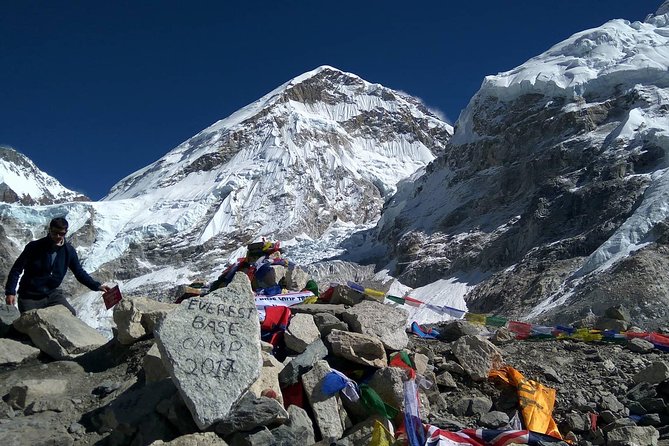
Day 12 is the major goal: Lobuche to Everest Base Camp at 5,364 meters, then back to Gorak Shep at 5,180 meters. The full day takes about 7 to 8 hours. Since you return to Gorak Shep rather than staying at Base Camp, this is a long out-and-back day with little room for rushing.
Everest Base Camp is the emotional high point for many people, but it is worth keeping expectations practical. This itinerary gets you to the base camp area, not to the summit of Everest. The value is in reaching a famous mountaineering base after days of walking, while seeing the upper Khumbu close up.
Day 13 begins early with a climb to Kala Patthar, at 5,545 meters. You then trek back to Pheriche, at 4,200 meters, for a total of about 7 to 8 hours. Kala Patthar is the highest point on the trip and is included for a reason: it gives you the high mountain viewpoint that Base Camp itself may not provide.
This is likely the hardest portion of the program. You need warm clothing, careful pacing, and a willingness to turn around if your body is not coping. The itinerary is fixed, but your safety should come before reaching every listed point.
Days 14 to 16: Return to Lukla and flight to Kathmandu
Day 14 takes you from Pheriche back to Namche, a 6 to 7-hour trek. You lose altitude, but the return is not effortless. Descending and then climbing over trail sections can tire your legs after the Base Camp days.
On Day 15, you walk from Namche to Lukla in about 6 to 7 hours. Lukla sits at 2,860 meters. This is your final trekking day, and it completes the overland-to-high-altitude-to-air route.
Day 16 brings a 35-minute flight from Lukla to Kathmandu. The flight is short, but mountain aviation depends on conditions. The trip is described as operating in all weather, with appropriate clothing required, but the program does not promise a weather-proof flight schedule. Keep this in mind if you have an international connection immediately afterward.
Day 17 is departure from Tribhuvan International Airport. If you arrive early, leave late, return early, or need an extra night for any reason, that added Kathmandu accommodation is not included.
Guides, porters, and the human side of the trek
The trip includes an experienced, English-speaking, government-licensed trek leader. That is important on a route where pacing, rest days, and altitude decisions affect the whole group.
The company is associated with guides and staff named Rupak, Binod, and Ballaram. If a particular person matters to you, ask before booking who will lead your departure. The strongest personal praise connected with this operator centers on friendly treatment, practical help, and a warm relationship between the group and its local team.
That human side can make a long trek much better. A guide who pays attention to your pace and mood is more valuable than a polished speech at the start. The private format also means only your own group participates, although the group can be as large as 15.
What the $1,500 package covers well
For the right group size, the package includes a lot:
- Private airport transfers and ground transport
- Three-star Kathmandu accommodation with breakfast
- Teahouse accommodation during the trek
- Breakfast, lunch, and dinner during the trekking days
- A farewell dinner
- The Lukla to Kathmandu domestic flight
- One porter for every two trekkers
- Trek leader, staff wages, insurance, food, accommodation, and equipment
- Medical kit and government and local taxes
The meal inclusion is useful because remote trekking costs can add up quickly. Teahouse lodging also keeps the trip rooted in the standard mountain travel system rather than turning it into a hotel-to-hotel expedition.
You should still carry money for drinks, water, charging, Wi-Fi, laundry, showers, and tips. Personal expenses are excluded, and the package does not cover rescue insurance. Read the inclusions as a strong base, not as an all-expenses-paid holiday.
Who should book this Everest Base Camp trek?
I would choose this trip if you want to avoid flying into Lukla at the beginning and you like the idea of earning the high country gradually. It suits people with moderate fitness who can handle repeated 5 to 8-hour walking days, a long road transfer, and elevations above 5,000 meters.
It is less suitable if you want a short, easy route, dislike long vehicle journeys, or need a tightly timed return to an international flight. Children aged 10 and under are not recommended for the activity.
The private format is useful for friends, couples, families with older children, and small clubs. A larger group may lower the per-person cost, but it can also mean more variation in walking speed. Ask how the leader manages different paces before you commit.
Should you book the Salleri Everest Base Camp Trek?
Book it if the overland start is part of the appeal, not merely a substitute for a flight. You get a fuller approach, a private group, strong logistical coverage, two acclimatization periods, Base Camp, and Kala Patthar.
Skip it if you want the quickest possible arrival in the Everest region or if the $1,500 price does not leave room for insurance, water, tips, visas, and possible extra nights. Before paying, confirm your guide, porter arrangement, hotel details, likely group size, and what happens if weather affects the Lukla flight.
For an active trekker who wants more than the standard Lukla-to-Base-Camp outline, this is a practical and fairly well-covered way to reach Everest Base Camp from Salleri.
FAQ
How long is the Salleri Everest Base Camp Trek?
The scheduled trip lasts approximately 17 days, including arrival in Kathmandu, the trek, the return flight from Lukla, and final departure.
Does the trip fly from Kathmandu to Lukla at the beginning?
No. You travel by private vehicle from Kathmandu to Salleri on Day 2, then begin trekking. You fly from Lukla to Kathmandu on Day 16.
What is the highest point on the itinerary?
Kala Patthar is the highest listed point, at approximately 5,545 meters. Everest Base Camp is listed at 5,364 meters.
Are meals included during the trek?
Yes. Breakfast, lunch, and dinner are included during the trek. Lunch and dinner in Kathmandu are not included.
Is porter service included?
Yes. The package provides one porter for every two trekkers. Extra porters are not included.
Can I cancel for a full refund?
You can receive a full refund if you cancel at least 24 hours before the experience start time. Cancellations or changes made less than 24 hours before the start time are not accepted for a refund.
Latest treks added in Kathmandu
- Private Manaslu Circuit Trek at Himalayas★ 5.0 · 3 reviews
- Ghorepani Poonhill Trek★ 5.0 · 5 reviews
- Ghorepani Poon Hill Trek★ 5.0 · 16 reviews
- Upper Mustang Trekking★ 3.0 · 2 reviews
- Amazing 1 Day Trekking Experience in Kathmandu Nepal★ 5.0 · 24 reviews
- Upper Mustang Trekking★ 5.0 · 2 reviews
- Upper Mustang Trek★ 5.0 · 5 reviews
- Upper Mustang Trekking★ 5.0 · 4 reviews
Everest Base Camp Treks, compared.






Browse the lists this tour appears in