
REVIEW · KATHMANDU
Everest Base Camp Trek from Kathmandu 12 Days
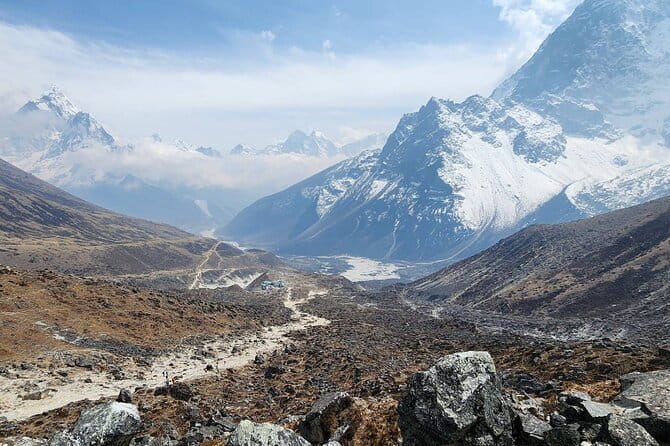
Everest Base Camp is the main event here, but the approach is just as memorable. You’ll cross suspension bridges above the Dudh Koshi River, pass Sherpa villages, visit Buddhist monasteries, and walk beneath Everest, Lhotse, Nuptse, and other huge peaks. The route reaches Everest Base Camp and Kala Patthar, the two great rewards of the trek.
I like the private format, since only your own group takes part. I also like the practical inclusions: Kathmandu to Lukla flights, permits, guide, guesthouse stays, and hotel transfers are covered in the $1,350 price. Guides named Milan, Bikram, Bishnu, and Sagar have earned praise for organization, kindness, safety awareness, and steady encouragement.
The catch is the pace. This is a serious high-altitude trek with several long walking days, basic accommodation, and little room for a casual approach to fitness. The return trip comes quickly after Base Camp, so you should be ready for effort rather than a soft adventure holiday.
Key points to know before booking
- Everest Base Camp and Kala Patthar are both included: You reach Base Camp on Day 8, then climb Kala Patthar early the next morning for one of the finest views on the route.
- The private format matters: Only your group participates, which gives you more direct contact with your guide and avoids being tied to a large party.
- Acclimatization is built into the route: You spend extra days in Namche Bazaar and Dingboche, with short hikes or local exploring rather than simply sitting still.
- The $1,350 price covers major trek costs: Flights, permits, TIMS card, guide, accommodation, hotel transfers, and a first aid kit are included.
- Sherpa culture is part of the experience: Namche, Tengboche, Dingboche, Pangboche, and other villages provide more than scenery, with monasteries and local mountain life along the way.
- Expect basic comfort: You stay in guesthouses, and personal expenses are not included.
Why this 12-day route works
The route follows the classic approach to Everest Base Camp, beginning with a short flight from Kathmandu to Lukla. From there, you walk through the Khumbu region, gaining height in stages instead of rushing straight into the upper valley.
That pacing matters. The plan includes a rest and acclimatization day in Namche and another in Dingboche. You are still active on those days, with options such as a hike toward Thame, a visit to Khunde, or time exploring Namche. In Dingboche, you can visit nearby villages and take in the mountain views before the harder walking begins.
This is not a luxury trek. Guesthouse accommodation gives you a bed and a base for each night, but personal expenses are extra. The package includes a first aid kit with the guide, yet you should still bring any medicines and personal supplies you normally need.
The experience is a private activity, so your group sets the social tone. That can be a real advantage on a demanding trail. A strong guide can adjust the rhythm, watch how you are coping, and explain the villages, monasteries, wildlife, and mountain setting as you go.
More Everest Base Camp Treks in Kathmandu
- Everest Base Camp Trek – 14 Days
★ 5.0 · 1,499 reviews - Everest Base Camp Trek
★ 5.0 · 842 reviews - Everest Base Camp Trekking
★ 5.0 · 485 reviews
Day 1: Lukla to Phakding begins gently
You are picked up and taken to Kathmandu’s domestic terminal for the scheduled morning flight to Lukla. The flight is listed at about one hour, and Lukla is the trailhead for this trek.
After meeting your guide, you start walking toward Phakding. The hike takes about four hours, but the first day is intentionally short compared with what follows. That is useful because it gives your body a chance to begin adjusting before the route climbs higher.
Phakding is not the big scenic prize of the trek, but it serves an important purpose. You are already on foot in the Khumbu, yet you have not been asked to spend your first day on a punishing climb. Treat this as a setup day, not a day to prove anything.
Day 2: Namche Bazaar and the first major climb
The walk to Namche Bazaar takes about six hours. The trail follows the Dudh Koshi River through pine forest and across several suspension bridges. These bridges are part of the visual character of the route, though anyone uneasy with height should expect them to feel like a real part of the adventure.
Namche is one of the most important settlements in the Khumbu. It is a good place to see how mountain communities support trekking routes, with local shops, guesthouses, and a busy trail junction. The climb to Namche is a clear step up from the easier first day, so keep your pace controlled.
You will want to arrive with enough energy for the next morning. The point is not to race into town. It is to reach Namche in shape to use the acclimatization day properly.
Day 3: Acclimatization around Namche
This is a rest day in the schedule, but the plan encourages you to stay active. You may take a day hike toward Thame, visit Khunde, or explore Namche Bazaar itself. The exact choice depends on your group, your guide, and how you are feeling.
I like this approach better than treating acclimatization as a full day of inactivity. A short walk gives you a chance to see more of the area while helping you adjust to the increasing altitude. You also get time to speak with your guide about the days ahead.
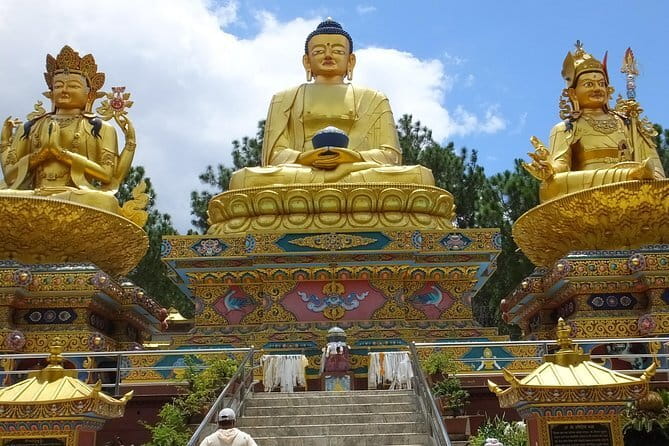
Namche Stupa is one of the listed stops, and the area offers a useful pause between the lower forested trail and the more exposed high country. Enjoy the village, but remember that the trek becomes more demanding from here.
More Trekking Tours in Kathmandu
- Annapurna Circuit Trek with Tilicho Lake
★ 5.0 · 368 reviews - Everest Base Camp Trekking – 13 Day
★ 5.0 · 365 reviews - Everest Base Camp Trek
★ 5.0 · 350 reviews - Everest Base Camp Trek -14 Days
★ 5.0 · 321 reviews
Day 4: Tengboche and its famous monastery
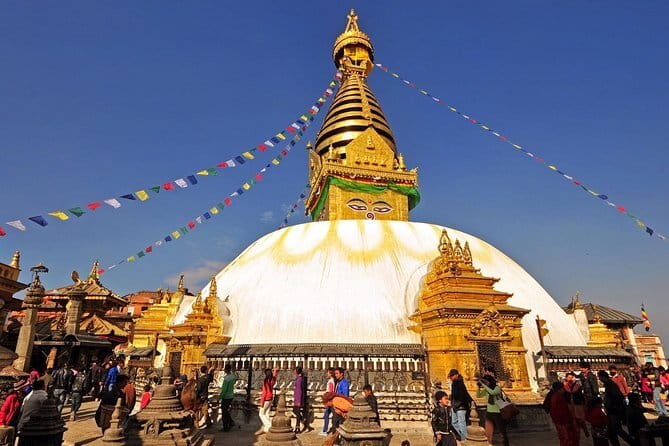
The route to Tengboche takes about six hours. It is described as dusty and winding, with some climbs and descents but not a constant series of hard ascents. That makes this a good day for taking photographs, especially as the mountain views open up.
Tengboche is best known for its Buddhist monastery and its broad setting beneath the high peaks. The monastery gives the walk a strong cultural side, not just a mountain backdrop. Take time to notice the prayer traditions and the role of Buddhism in daily life in the Khumbu.
The trail can feel rough underfoot, and dust may be part of the day. Good walking shoes and a willingness to move at a steady pace will help more than trying to hurry.
Day 5: Dingboche through Pangboche and Shomare
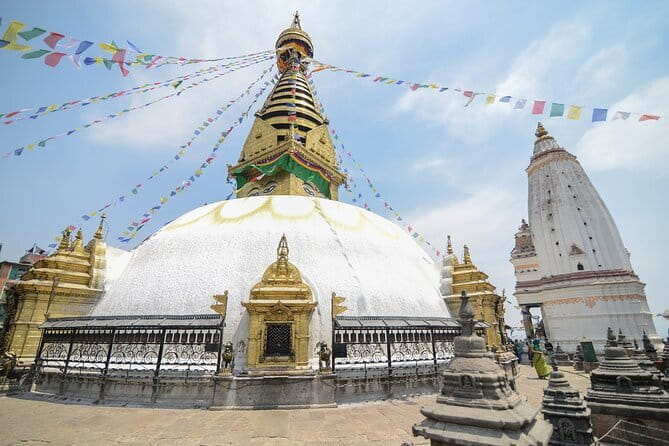
The walk from Tengboche to Dingboche takes about seven hours, making it one of the longer days. You begin with a visit to the region’s oldest Buddhist monastery, then continue through alpine woods toward Upper Pangboche.
Pangboche is a substantial Sherpa settlement, and the route continues past Shomare before reaching Dingboche. This stretch gives you a closer look at the villages that support life at high altitude. The scenery changes as the trees thin and the route feels more exposed.
Dingboche is an important overnight stop because it places you near the upper part of the trek without sending you directly to the highest camps. You should expect the altitude to affect your pace. Short steps and regular rests are sensible here.
Day 6: A second useful pause in Dingboche
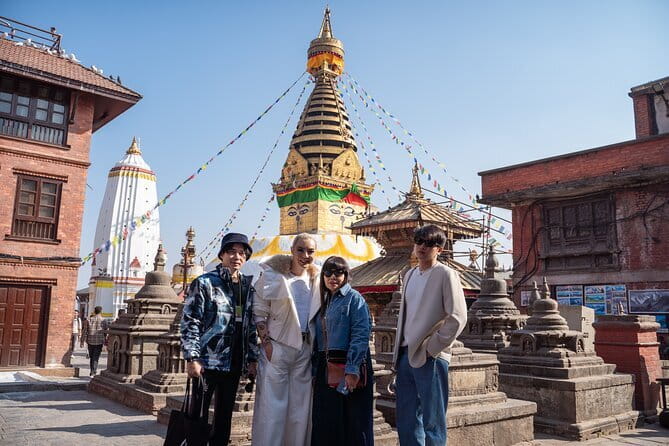
The schedule gives you another acclimatization day in Dingboche. You may explore the village and surrounding area, take in the mountain views, and rest before the final push toward Lobuche, Gorakshep, and Base Camp.
This day is valuable because the next stages are not simply longer versions of the earlier walking. The route becomes more rugged, and the air is thinner. A slower day now can help you enjoy the higher section rather than merely endure it.
Your guide’s role becomes especially important at this point. The company’s guides, including Bikram and Bishnu, have been praised for support, planning, and attention to safety. You should still pay close attention to your own condition and speak up early if you feel unwell.
Day 7: Dingboche to Lobuche over rough ground
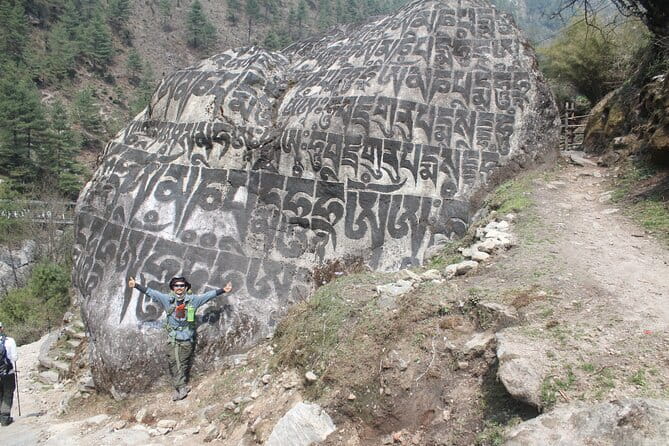
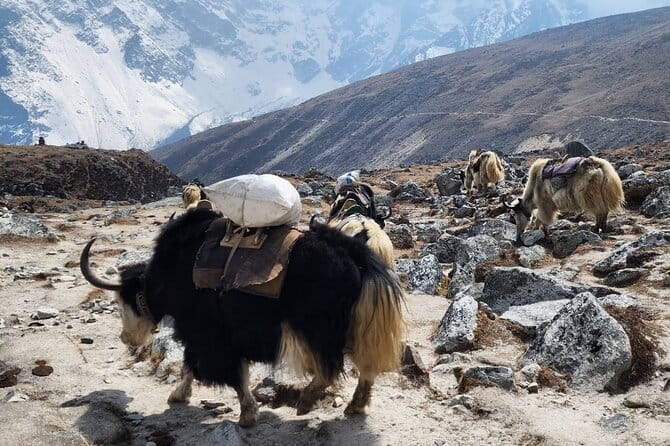
The walk to Lobuche takes about seven hours. The route climbs through the Khumbu Khola valley toward Duglha, and the valley narrows as you approach Dusa. Expect large boulders, rough trail, and mountain yaks moving along the route.
This is a day when the mountain setting feels more severe. The trees have largely given way to a high, rocky world, and each climb can take more effort than you expect. The trail is not a simple walk through a scenic village district.
Lobuche is a practical overnight stop before Gorakshep. Try to conserve energy, eat what you can, and prepare for an early start the next morning. The reward is close, but the altitude makes every hour count.
Day 8: Gorakshep and Everest Base Camp
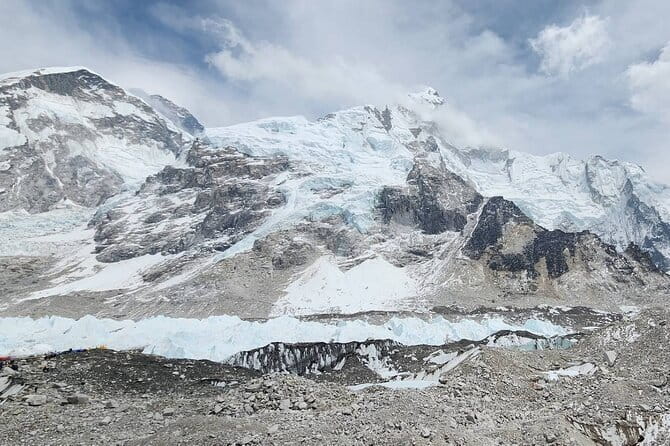
The walk to Gorakshep takes about three hours. The trail follows the side of the Khumbu Glacier and passes the pyramid signpost before climbing toward Thangma Riju. From there, you can take in broad views of Everest and the surrounding peaks.
After reaching Gorakshep, you continue to Everest Base Camp. The Base Camp section takes about two hours, and the return to Gorakshep takes another two hours. It is a long and emotional day, even though the individual walking times may look manageable on paper.
Base Camp is the stated destination, but the view is not the same as the famous photographs taken from the summit route. The main satisfaction comes from standing at the foot of the Everest climbing area, surrounded by the Khumbu Glacier and the high mountains. You then return to Gorakshep for the night.
The route includes the advertised views of Everest, Lhotse, Nuptse, Makalu, and other snow-covered peaks. Conditions and cloud can affect what you see, so keep your expectations tied to the mountain rather than to a perfect postcard.
Day 9: Kala Patthar, then down to Pheriche
You make an early start for Kala Patthar. This timing is chosen for the dramatic mountain views, and the viewpoint is widely treated as one of the finest places on the trek to see Everest and the surrounding peaks.
The climb takes about three hours. At this altitude, it can feel much harder than a similar climb at home. The early start also means cold conditions are possible, so pack clothing that works before sunrise.
After Kala Patthar, you descend to Gorakshep, rest, and continue toward Pheriche. The descent takes about four hours after the return from the viewpoint. Pheriche gives you a lower overnight stop and begins the long return toward Namche and Lukla.
This is an especially full day. You get the viewpoint many people consider the visual high point, but you also need to walk downhill afterward. Strong legs and careful footwork matter here.
Days 10 and 11: Returning through Namche and Lukla
Day 10 follows the route back through the terminal moraines at Duglha and along the Khumbu Khola valley. You pass Pheriche and other Sherpa villages before returning to Namche Bazaar, with about six hours of walking.
The return gives you a different view of familiar ground. You may notice details that were easy to miss while heading upward, and the lower altitude should gradually make walking easier. Namche also gives you another chance to rest in a substantial settlement before the final push to Lukla.
On Day 11, you descend steeply toward Phakding. The trail can feel awkward after many days of effort, especially on rocky ground. The route becomes more level and more natural as you move lower, but do not assume the downhill section is effortless.
From Phakding, you continue to Lukla through pine and rhododendron forests. The day is split into about three hours to Phakding and another three hours to Lukla. You spend the final night there before the flight back to Kathmandu.
Day 12: Flight back to Kathmandu
The morning flight from Lukla to Kathmandu is listed at about 35 minutes. After landing at Tribhuvan International Airport, you are transferred toward Thamel, with the day shown as about five hours in total.
The final day is more than a simple airport transfer. It closes a demanding mountain journey and gives you a chance to shift from high-altitude walking back to city life. Hotel pickup and drop-off are included, which makes the beginning and end of the trip easier to manage.
What the $1,350 price really covers
At $1,350 per person, the value depends on how much independent planning you want to avoid. The price includes the round-trip Kathmandu to Lukla flight, trekking permit, TIMS card, English-speaking guide, guesthouse accommodation, hotel transfers, and a first aid kit carried by the guide.
Those are substantial costs and arrangements on a trek where transport and permits are not minor details. The private format also means you are not simply joining an anonymous large group.
Personal expenses are not included. You should budget separately for anything you buy along the way and for costs not named in the package. Group discounts are offered, but the exact saving is not specified, so ask for the current rate before booking.
The strongest value is organization. Sagar has been praised for arranging the trek, while guides such as Milan, Bikram, and Bishnu have been singled out for care, motivation, and practical support. Names may vary by departure, so confirm who will lead your group.
Who should book this trek
You should consider this trek if you want the classic Everest Base Camp route with both Base Camp and Kala Patthar, and if you prefer a private group over a large shared departure. It suits people who value a guide’s local experience and want flights, permits, accommodation, and transfers arranged together.
You need a strong level of physical fitness. The schedule includes days of six or seven hours, rough ground, steep descents, suspension bridges, and high-altitude walking. A casual holiday mindset will not serve you well here.
The trek also suits you if cultural contact matters as much as mountain views. Tengboche monastery, Sherpa villages, Namche Bazaar, Pangboche, and Dingboche give the route a human side that continues between the big viewpoints.
At booking, you must provide passport details and a photo, which can be a selfie, so the trekking permit can be issued. Confirmation is provided at the time of booking. You can cancel for a full refund if you do so at least three full days before the start time. Changes or cancellations inside that window are not accepted for a refund.
Should you book the Everest Base Camp Trek from Kathmandu?
I would book this trek if you want a tightly organized, private 12-day route and you are ready for real physical work. The package covers the costly basics, the acclimatization days are sensibly placed, and the guide team has a strong record for kindness, organization, and safety-minded support.
I would look elsewhere if you want more time in the Khumbu, higher comfort, or a slower return after Base Camp. This schedule is efficient rather than leisurely.
For the right person, the appeal is clear: fly into Lukla, walk through Sherpa country, reach Everest Base Camp, climb Kala Patthar, and return with the major logistics already handled. Bring fitness, patience, and realistic expectations about guesthouse comfort, and the $1,350 price can make good sense.
FAQ
How long is the Everest Base Camp trek from Kathmandu?
The experience lasts approximately 12 days, including flights between Kathmandu and Lukla, the trek to Everest Base Camp, the return walk, and the flight back to Kathmandu.
Is the trek private?
Yes. This is a private activity, and only your group participates.
What is included in the price?
The price includes hotel pickup and drop-off, round-trip Kathmandu to Lukla flights, trekking permits, the TIMS card, an English-speaking trekking guide, guesthouse accommodation, and a first aid kit carried by the guide.
Are personal expenses included?
No. Personal expenses are not included in the tour price.
Do I need to provide passport information?
Yes. Passport details and a photo are required to issue the trekking permit. A selfie can be used as the photo.
How far in advance can I cancel for a full refund?
You must cancel at least three full days before the experience start time for a full refund. Cancellations or changes made less than three full days before the start are not accepted for a refund.
Latest treks added in Kathmandu
- Private Manaslu Circuit Trek at Himalayas★ 5.0 · 3 reviews
- Ghorepani Poonhill Trek★ 5.0 · 5 reviews
- Ghorepani Poon Hill Trek★ 5.0 · 16 reviews
- Upper Mustang Trekking★ 3.0 · 2 reviews
- Amazing 1 Day Trekking Experience in Kathmandu Nepal★ 5.0 · 24 reviews
- Upper Mustang Trekking★ 5.0 · 2 reviews
- Upper Mustang Trek★ 5.0 · 5 reviews
- Upper Mustang Trekking★ 5.0 · 4 reviews
Everest Base Camp Treks, compared.






Browse the lists this tour appears in