
REVIEW · KATHMANDU
Everest Base Camp Trek and Kathmandu Tour: 15 Days
The great prize here is not just Everest Base Camp. It is the whole climb through Sherpa country, from the first mountain flight into Lukla to the high, rough trail beneath Everest, Lhotse, Ama Dablam, and the Khumbu Glacier. You also get Kathmandu’s temples and courtyards before the trek begins. Kala Patthar at 5,644 meters gives you the finest mountain view on the route.
I like the practical package: flights, permits, a licensed guide, porter support, most meals, airport transfers, and three Kathmandu hotel nights are covered. I also like the cultural balance, with Swayambhunath, Patan, Pashupatinath, and Boudhanath before you enter the mountains. The main concern is the altitude and the tight schedule. The itinerary needs careful clarification, especially around the Base Camp and Kala Patthar days, and you must bring suitable trekking gear yourself.
Key points to know before booking
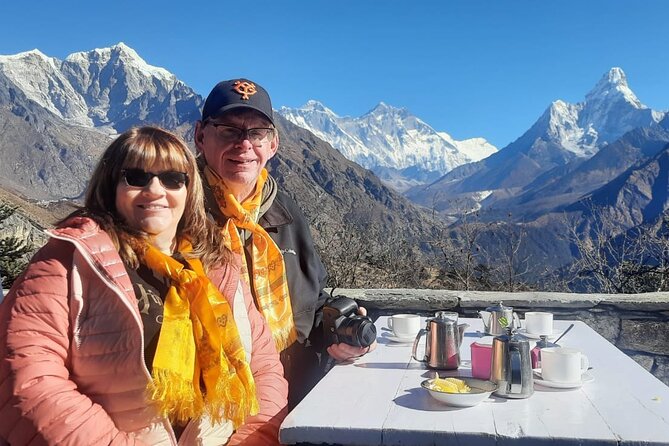
- Lukla flight included: The mountain flight from Kathmandu or Ramechhap is part of the package, along with the return flight.
- Altitude builds steadily: The route climbs from Lukla to Namche, Tengboche, Dingboche, Lobuche, Gorak Shep, and Kala Patthar.
- Kathmandu culture comes first: You visit four major religious and historic sites before trekking.
- Porter support is included: One porter is assigned for every two people, so you carry only a day pack.
- Meals are mostly covered: The package includes 13 breakfasts, 11 lunches, and 11 dinners, but drinks beyond one cup of tea daily cost extra.
- Small group format: The maximum group size is 15, useful for a mountain trip where timing and communication matter.
The real value of a 15-day Everest trip
At $1,799 per person, this is not a bare-bones trek. The price includes the Lukla flights, Everest National Park permit, licensed trekking guide, porter service, three nights of Kathmandu accommodation with breakfast, airport transfers, a Kathmandu sightseeing day, and most meals during the trek.
That bundle matters in Nepal. Flights to Lukla are a major part of the cost, and arranging permits, guides, porters, hotels, and transfers separately takes time and coordination. Having airport pickup and a representative meet you after landing also makes the first day easier, especially if you arrive tired after a long international flight.
The value depends on what you expect from accommodation and equipment. The supplied details do not state the standard of the mountain lodges, room arrangements, or whether hot showers and charging are included. Trekking equipment is not included, and neither are travel insurance, Nepal’s visa, Kathmandu entrance fees, alcoholic drinks, or most beverages.
You should budget an additional $20 per person for the stated Kathmandu UNESCO site entrance fees. You will also need your own trekking clothing and equipment, plus money for drinks and other personal costs. Ask for a full packing list before paying.
More Everest Base Camp Treks in Kathmandu
- Everest Base Camp Trek – 14 Days
★ 5.0 · 1,499 reviews - Everest Base Camp Trek
★ 5.0 · 842 reviews - Everest Base Camp Trekking
★ 5.0 · 485 reviews
Kathmandu gives you a useful cultural start
Day 1 is simple: airport pickup, hotel check-in, and rest. That quiet beginning is sensible because the following day is full of sightseeing, and the trek itself starts early with a flight to Lukla.
Day 2 covers four major sites in Kathmandu Valley. At Swayambhunath, commonly called the Monkey Temple, you get a hilltop introduction to Nepal’s Buddhist and Hindu traditions. The visit is listed at about an hour, so expect a focused stop rather than a long study of every shrine.
Patan Durbar Square follows. Patan is known for fine arts, and its temples and monuments give you a strong sense of the valley’s craftsmanship. The entrance fee is not included, so keep cash ready for the Kathmandu sightseeing day.
At Pashupatinath Temple, the focus shifts to Hindu worship and the Bagmati River. The open cremation ceremonies can feel intense and very public to visitors from elsewhere. Approach the riverbank quietly and follow your guide’s instructions about where to stand and when photography is appropriate.
The final stop is Boudhanath Stupa, described as Nepal’s biggest Buddhist temple and one of the world’s largest stupas. Its scale and religious importance make it a fitting close to the day. Four sites in one day offer good coverage, but the pace will be brisk.
Lukla begins the mountain portion
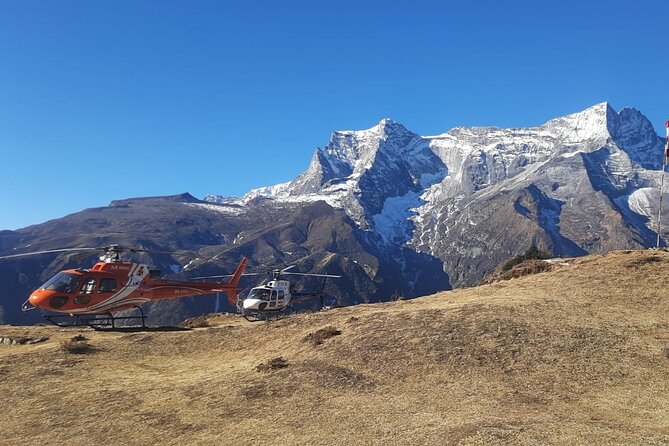
Day 3 starts with the flight from Kathmandu or Ramechhap to Lukla, followed by the trek toward Manju. The flight is a major feature of the experience, not a minor transfer. It puts you quickly into the Khumbu region and gives the trip its famous mountain-airport beginning.
The schedule lists about 30 minutes for the flight portion, but the timing of mountain flights can change. The details state that flights may use either Kathmandu or Ramechhap Airport, so ask before departure which airport you will use and how the road transfer, if needed, is handled.
From Lukla, you begin walking rather than jumping straight into the highest sections. The first overnight stop is Manju. That early stage lets you get used to the trail and the daily rhythm before Namche and the higher villages.
Namche Bazaar is the key acclimatization stop
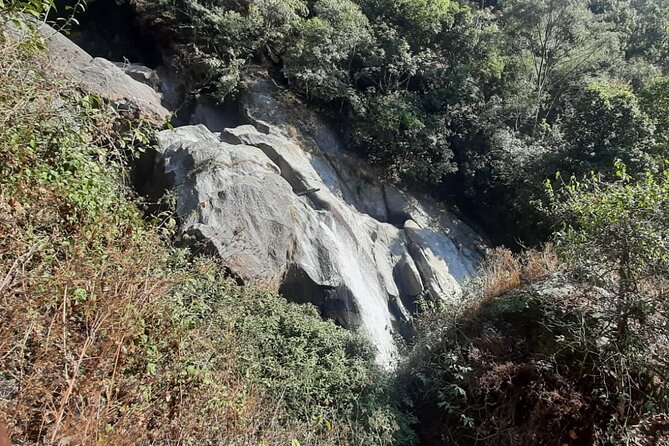
On Day 4, you walk from Manju toward Namche Bazaar through forests of rhododendron, magnolia, and fir. Bridges and rising trails make this more than a simple village transfer. You begin to see the character of the Everest region through its vegetation, footpaths, and mountain settlements.
Namche sits in a large bowl-shaped area and is one of the route’s main hubs. Day 5 is set aside for acclimatization, with about two hours of listed activity. That rest day is essential, not wasted time. You need your body to adjust before the trail reaches Dingboche, Lobuche, and Gorak Shep.
The description mentions an Everest View Point and Hotel Everest View as highlights of the wider trip. Confirm whether the planned acclimatization walk specifically includes both, since the day-by-day details do not spell out every stop. This is one of the useful questions to ask before departure.
I like the fact that the program does not rush straight from Lukla to the high camps. Still, two days around Namche do not remove the need to walk slowly, drink enough water, and tell your guide promptly if you feel unwell.
More Trekking Tours in Kathmandu
- Annapurna Circuit Trek with Tilicho Lake
★ 5.0 · 368 reviews - Everest Base Camp Trekking – 13 Day
★ 5.0 · 365 reviews - Everest Base Camp Trek
★ 5.0 · 350 reviews - Everest Base Camp Trek -14 Days
★ 5.0 · 321 reviews
Tengboche brings monasteries and mountain views
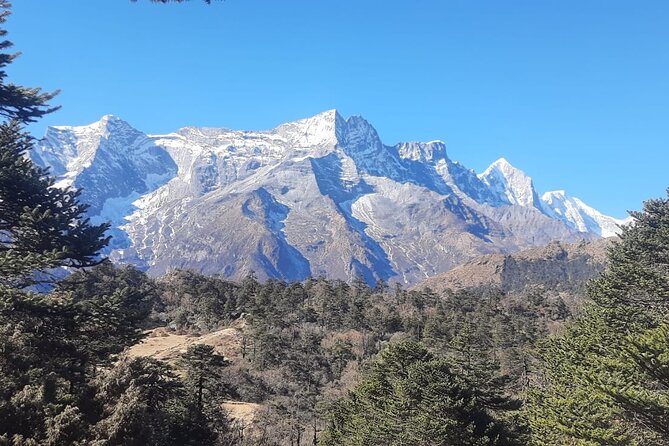
Day 6 leads toward Tengboche, with about six hours on the trail. The route begins easily near Phunki and then climbs toward the village. Tengboche Monastery is described as the largest monastery in the Everest region, making this both a mountain day and a cultural stop.
The views here include Everest, Lhotse, and Ama Dablam. The trail also passes through birch and rhododendron woodland. This is one of the most varied parts of the trek, with forest, open mountain views, and a major Buddhist site in the same day.
Six hours of walking can feel long, even before the altitude becomes severe. You will want sturdy shoes, layers that can be adjusted quickly, and a day pack with water, snacks, rain protection, and warm clothing.
Dingboche, Lobuche, and the thin-air test
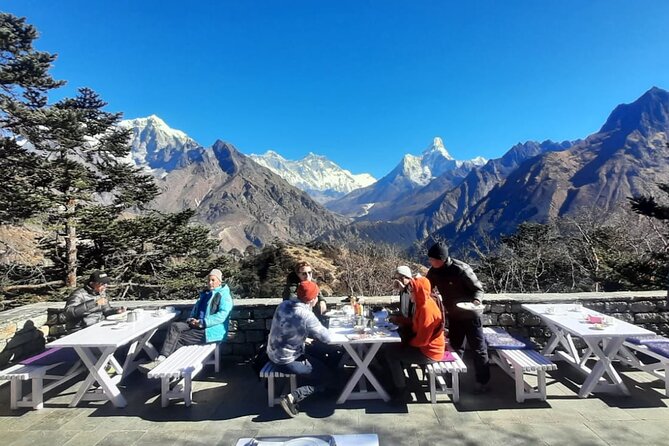
Day 7 continues to Dingboche. The trail descends through birch and rhododendron before opening to views of Everest, Lhotse, and Ama Dablam. The route description lists about five hours, but the altitude makes distance feel different here. A modest walking day can still leave you tired.
Day 8 reaches Lobuche after a harder section. The route passes Dungla and climbs a steep hill, where memorial stupas honor climbers and high-altitude workers who did not return. This is a quiet and serious part of the walk. It adds human meaning to what might otherwise feel like a scenic mountain route.
The description notes that the trek becomes more challenging from this point. Take that literally. You are now close to the high part of the route, and the combination of cold, rough ground, steep sections, and reduced oxygen can slow you down.
The guide’s role matters greatly here. One account specifically names Rajan as an experienced mountain guide and praises the support of a kind, strong porter. The package promises a government-licensed guide, but you should confirm your guide’s name and experience before setting out.
Gorak Shep and Everest Base Camp
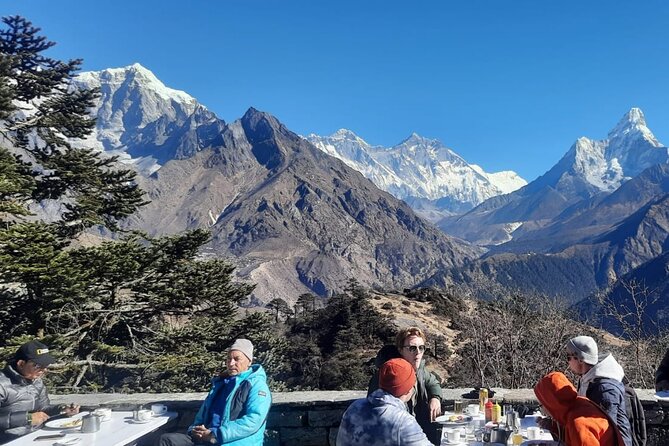
Day 9 is listed as the approach to Gorak Shep, with a roughly five-hour trek over rough, glacier-related ground. The route includes both ascents and descents, and the final approach is not a smooth path. You should expect uneven footing and a slower pace.
The itinerary also describes reaching Everest Base Camp during this part of the route. Day 10 then lists Everest Base Camp as the stop while describing the climb toward Kala Patthar. Day 11 again mentions a morning hike to Kala Patthar for sunrise before descending toward Pheriche.
This wording needs clarification. The usual sequence may involve Gorak Shep, Everest Base Camp, Kala Patthar, and then the descent, but the supplied schedule repeats or shifts these high-altitude activities across three days. Ask the operator exactly where you sleep on Days 9, 10, and 11, and whether Kala Patthar is climbed once or twice.
That question matters because Gorak Shep and Kala Patthar are among the hardest parts of the trip. You need to know how much time is allowed for rest, what happens if weather blocks a high walk, and how the group handles altitude problems.
The reward is substantial. The route gives you views toward Lingtren, Khumbutse, and Changtse, as well as the Khumbu Glacier and Khumbu Icefall. Base Camp itself is a major goal, but the mountain view from Kala Patthar is often the more visually satisfying moment.
The return route is still a full trek
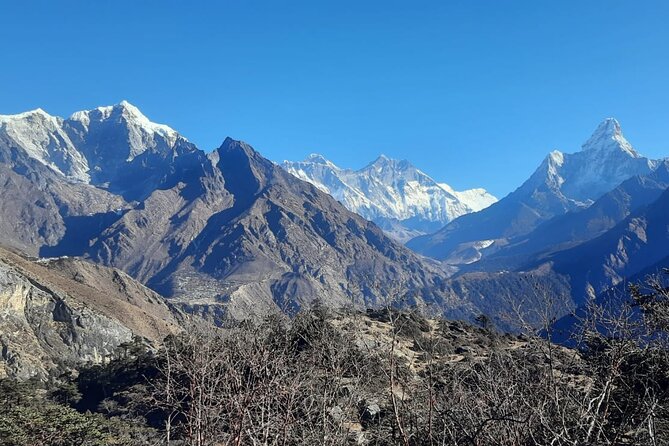
After the high point, Day 11 or the following descent leads toward Pheriche. The schedule includes a morning Kala Patthar walk for sunrise, with the sun appearing behind the Everest massif and lighting the peaks. Sunrise requires an early start, so confirm the timing and whether your body has recovered enough after the Base Camp approach.
Day 12 returns toward Namche, losing nearly 2,000 feet in altitude. You cross the Dudh Koshi River and descend through rhododendron country. Going downhill is easier on your breathing, but it can be hard on knees and ankles. Trekking poles can be useful, though the package does not include trekking equipment.
Day 13 continues to Lukla across suspension bridges and rocky paths before reaching a surfaced section. The warmer air will be welcome, and reaching Lukla marks the end of the mountain walking. Still, four hours of descent is not a free afternoon. Keep your boots on and your day pack organized.
Day 14 calls for an early flight back to Kathmandu, followed by hotel transfer and free time. The schedule also mentions a farewell dinner. The return flight is weather dependent, just like the outbound flight, so avoid booking an important international connection immediately after the planned arrival without a safety margin.
Day 15 is the airport departure day. The instructions recommend reaching the airport at least three hours before your scheduled flight. Airport drop-off is included, which is useful after a long trek and an early start.
What the package includes, and what it leaves to you
Included services cover the basic framework of a supported trek:
- Airport arrival and departure transfers
- Three Kathmandu hotel nights with breakfast
- Kathmandu UNESCO site tour
- Everest National Park permit
- Return flight from Kathmandu or Ramechhap to Lukla
- Government-licensed trekking guide
- One porter for every two people
- 13 breakfasts
- 11 lunches
- 11 dinners
The meal count suggests that most trekking meals are covered, but the wording does not list the exact dining locations or menus. Drinks are limited to one cup of tea per day, with other beverages excluded. Alcohol is also extra.
Travel insurance is not included, and it is especially important for a high-altitude trek with flights that depend on weather. The supplied terms also say the experience is non-refundable and cannot be changed for any reason. If bad weather cancels the trip, you are offered another date or a full refund. If the minimum group size is not reached, you are offered another date or experience, or a full refund.
The group maximum is 15 people. That is small enough for a guide to keep track of the group, though walking speeds may vary. Ask how the operator handles a participant who needs to stop, descend, or change plans.
Who should book this trek
This trip suits you if you want the classic Everest route with the main planning handled for you. It is a strong fit if you value a licensed guide, porter support, included flights, and a Kathmandu sightseeing day rather than arranging each piece yourself.
You should have moderate physical fitness. That phrase understates the importance of preparation, since the route reaches 5,644 meters at Kala Patthar and includes long days on rough ground. Begin training with regular walking and uphill work well before arrival, then ask the operator for exact daily distances, lodge standards, and the packing list.
This is not the right choice if you want a flexible schedule with lots of spare days. The 15-day format is efficient, but weather and altitude can disrupt mountain plans. It also may not suit you if you expect equipment rental, premium accommodation, private rooms, or all drinks to be included.
Should you book it?
I would consider booking this trek if you want a well-supported Everest Base Camp route at a clear package price and you are comfortable confirming a few details first. The best features are the included Lukla flights, guide and porter support, Kathmandu’s four major sites, and the acclimatization stop at Namche.
Before paying, get written answers about the Day 9 to Day 11 sequence, the exact Kala Patthar plan, hotel and lodge standards, flight arrangements from Ramechhap if used, and the equipment you must bring. If those points are clear and you accept the strict cancellation terms, $1,799 offers useful value for a demanding Himalayan trip.
FAQ
How long is the Everest Base Camp and Kathmandu tour?
The tour lasts 15 days, including Kathmandu sightseeing, the trek from Lukla to the Everest region, the return trek to Lukla, and the flight back to Kathmandu.
What is the tour price?
The listed price is $1,799 per person.
Are flights to Lukla included?
Yes. The package includes a flight from Kathmandu or Ramechhap Airport to Lukla and the return flight.
What meals are included?
The package includes 13 breakfasts, 11 lunches, and 11 dinners. Drinks and beverages are not included beyond one cup of tea per day.
Is a guide included?
Yes. The tour includes a government-licensed trekking guide. One account connected with the company specifically names a mountain guide called Rajan.
Is porter service included?
Yes. One porter is provided for every two people to carry baggage.
Are Kathmandu entrance fees included?
No. Kathmandu UNESCO site entrance fees are excluded. The stated additional cost is $20 per person.
Do I need to bring trekking equipment?
Yes. You are required to bring your own trekking equipment. Travel insurance, Nepal’s visa, and alcoholic drinks are also excluded.
What is the maximum group size?
The maximum group size is 15 people.
What happens if poor weather cancels the trip?
If poor weather causes cancellation, you are offered a different date or a full refund. The tour also requires a minimum number of participants, and a cancellation for that reason brings the same choice of another date or experience, or a full refund.
Latest treks added in Kathmandu
- Ghorepani Poonhill Trek★ 5.0 · 5 reviews
- Ghorepani Poon Hill Trek★ 5.0 · 16 reviews
- Private Manaslu Circuit Trek at Himalayas★ 5.0 · 3 reviews
- Upper Mustang Trekking★ 3.0 · 2 reviews
- Amazing 1 Day Trekking Experience in Kathmandu Nepal★ 5.0 · 24 reviews
- Upper Mustang Trekking★ 5.0 · 2 reviews
- Upper Mustang Trek★ 5.0 · 5 reviews
- Upper Mustang Trekking★ 5.0 · 4 reviews
Everest Base Camp Treks, compared.






Browse the lists this tour appears in