
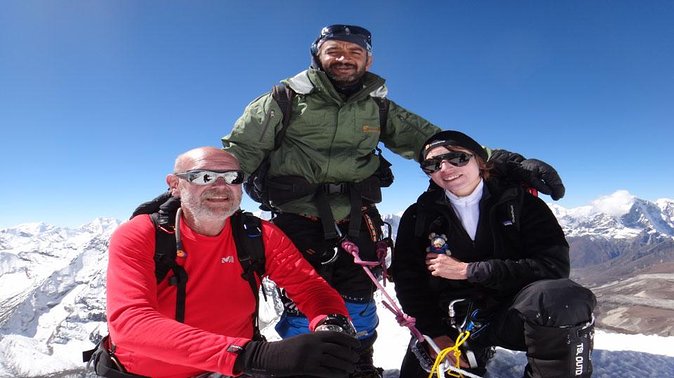
REVIEW · KATHMANDU
Everest Base Camp Trek
The finest part of this trek is the steady change in scenery, from Kathmandu streets and the short, thrilling flight to Lukla, then pine and rhododendron forests, high mountain villages, glaciers, and the rocky approach to Everest Base Camp. You do not simply arrive at the foot of Everest. You walk into the Khumbu one day at a time.
I like the two acclimatization days, one in Namche Bazaar and another in Dingboche. I also like the practical support: an English-speaking guide, one porter for every two trekkers, airport and flight transfers, and a private group rather than a large mixed party.
The main caution is the package detail. The price is listed as $1,800 per person, but accommodation and national park permits are excluded, while the meal section appears contradictory. Confirm exactly what you will pay for lodging, food, permits, hot showers, Wi-Fi, battery charging, and tips before booking.
Key points about this Everest Base Camp trek
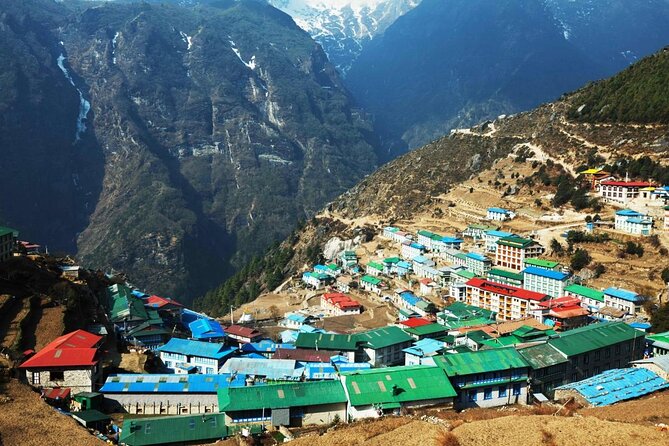
- Lukla flight included: The route begins with an approximately 30-minute flight from Kathmandu to Lukla and ends with the return flight.
- Two useful acclimatization stops: You spend a full day around Namche Bazaar and another in Dingboche, including a climb toward Nagarjun Hill.
- Classic Khumbu route: The itinerary passes through Phakding, Namche, Tengboche, Dingboche, Lobuche, Gorakshep, and Everest Base Camp.
- Guides and porter support: An English-speaking trekking guide is included, along with one porter for every two trekkers.
- Private activity: Only your own group takes part, which may make pacing and communication easier.
- Important cost check: Accommodation, national park permit fees, personal gear, drinks, hot showers, charging, Wi-Fi, and tips are not included, and meals need clarification.
What the 13-day route is really like
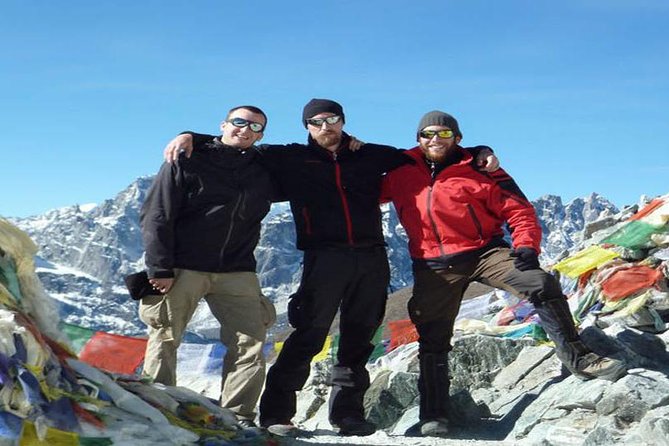
This is a classic Everest Base Camp itinerary with a sensible uphill rhythm. You begin gently, gain height in stages, take rest days before the highest sections, reach Base Camp and Kala Patthar, then return by the same broad route.
The schedule is described as approximately 13 days. Mountain flights can be affected by weather, so keep some flexibility around your international flights. The package includes the flights between Kathmandu and Lukla, plus shared vehicle transport, but it does not promise a helicopter return. Several past arrangements connected with the company used helicopter returns or different routes, so do not assume those extras are part of this standard plan.
More Everest Base Camp Treks in Kathmandu
- Everest Base Camp Trek – 14 Days
★ 5.0 · 1,499 reviews - Everest Base Camp Trek
★ 5.0 · 842 reviews - Everest Base Camp Trekking
★ 5.0 · 485 reviews
Day 1: Thamel and Kathmandu Durbar Square
Your arrival day begins with pickup by a representative of Adventure White Mountain and transfer to a hotel in Thamel. If you still have energy after your flight, Thamel gives you an easy first look at Kathmandu, with shops, restaurants, and small refreshments close at hand.
Kathmandu Durbar Square is offered as an optional outing with help arranging the visit. The stated visit time is about two hours, but the admission ticket is not included. This is a useful first-day choice if you want some culture before heading into the mountains, but do not force it if jet lag has caught up with you.
Ask at arrival which hotel is included, since the cost information specifically says accommodation during the trip is excluded. That point matters from the first night onward.
Day 2: The short flight to Lukla and the walk to Phakding
The group heads to Tribhuvan Domestic Airport early, with a listed start time of 7:15 a.m. The flight to Lukla takes about 30 minutes. It is short, but the views of hills, greenery, lakes, and mountain country make it an important part of the experience.
After landing, the trek begins. The first walk leads to Phakding, giving your legs a manageable introduction before the harder climbs. Your guide is expected to brief you on the trek, and porter support begins here.
The Lukla flight is one of the trip’s practical pressure points. Weather can interrupt mountain air service, so you should avoid scheduling an important international connection immediately after the return flight. The cancellation terms also recognize that poor weather can force a new date or a full refund.
Day 3: Monjo, Sagarmatha National Park, and Namche Bazaar
The trail follows the Dudh Koshi River toward Monjo, passing through rhododendron and pine forest. Monjo marks the entrance to Sagarmatha National Park, so this is where the trek begins to feel less like a simple mountain walk and more like a protected high-altitude route.
From Monjo, the trail continues toward Namche Bazaar. The day brings a stronger climb, and Namche is the first major high settlement on the route. You have time to look around and see local life before the next day’s rest.
Namche is not just a place to sleep. Its position makes it a useful pause for your body, and its streets give you a chance to adjust to the slower pace of the Khumbu. The itinerary promises an overnight stay here, but accommodation is listed separately as an extra cost.
More Trekking Tours in Kathmandu
- Annapurna Circuit Trek with Tilicho Lake
★ 5.0 · 368 reviews - Everest Base Camp Trekking – 13 Day
★ 5.0 · 365 reviews - Everest Base Camp Trek
★ 5.0 · 350 reviews - Everest Base Camp Trek -14 Days
★ 5.0 · 321 reviews
Day 4: Namche acclimatization
This is a rest day in the schedule, but not a day of doing nothing. You explore Namche and visit Sagarmatha National Park while giving your body more time to adjust to altitude.
That pause is one of the strongest features of the itinerary. The trek reaches higher ground gradually rather than racing from Lukla toward Base Camp. Your guide should help set the pace, but you still need to speak up if you develop a headache, unusual tiredness, or other altitude concerns.
The description focuses on culture and local exploration, but it does not give a fixed sightseeing program. Ask what your group will actually visit and how long you will walk.
Day 5: The climb to Tengboche
The route rises above the Dudh Koshi River and heads toward Tengboche. You pass through forest and may see danfe, Nepal’s national bird, before descending to Phunki Tenga for lunch and then climbing again toward Tengboche.
This is a demanding day because the trail loses height and then gains it again. That up-and-down pattern can feel harder than a steady climb, particularly after Namche. The reward is Tengboche, set among hills and forest with wide mountain views.
Tengboche is also known for its monastery, though the supplied schedule does not promise a formal monastery visit. Treat the stop as a chance to explore and ask your guide what access and timing will be available during your visit.
Day 6: Forest, white peaks, and Dingboche
The walk to Dingboche passes through more rhododendron forest, then into colder, higher country with views of white peaks. The changing vegetation tells you that the route is gaining altitude in earnest.
Dingboche is a key stop because you spend two nights here. The simple lodges and colder air are part of the high mountain experience, but comfort becomes more basic as the route rises. Since lodging is not included in the stated price, ask what standard of room is planned and how payment will work.
Day 7: Nagarjun Hill and a second acclimatization day
The second acclimatization day includes time in Dingboche and a climb toward Nagarjun Hill before returning to the hotel. This short uphill outing is useful because it lets you gain height during the day and sleep again at Dingboche.
That pattern gives your body time to adjust before Lobuche and the Everest Base Camp section. It also breaks up what would otherwise be a long series of uphill walking days.
Do not treat the acclimatization hike as optional sightseeing only. It is part of the trek’s safety plan. The group should keep a measured pace, and you should not be embarrassed to turn back if you feel unwell.
Day 8: Toward Lobuche and the Khumbu Glacier
The itinerary names the next destination as Douglas, but the route description then refers to Lobuche, the expected stop for the night. From Dingboche, you move toward the Khumbu Glacier with views of Tawache and Cholatse.
Lobuche is described as very cold because of its geography. This is where warm layers, gloves, a hat, and a proper jacket matter. Personal clothing and equipment are not supplied, so you must bring them yourself.
The distance and altitude make this a serious day, even if the walking itself is not technically climbing. You are now close to the high point of the trip, and the cold can make evenings feel long. Check whether sleeping bags or other equipment are available for hire, since the package only says personal equipment is excluded.
Day 9: Everest Base Camp and Gorakshep
This is the central day of the trek. You walk toward Everest Base Camp, the working ground used by mountaineering teams preparing for Everest. The route leads onward to Gorakshep, where you spend the night.
The approach is not a paved viewpoint or a quick roadside stop. You reach Base Camp on foot after several days of gradual ascent, which is why the arrival carries real weight. The scenery includes the Khumbu Glacier and high peaks, but the ground can be rough and the air thin.
The itinerary says you reach Base Camp around midday and then continue to Gorakshep. That makes for a full day at altitude. Keep your expectations realistic: the famous summit of Everest may not appear in the way you imagine from every point on the trail, and Base Camp itself is a rocky high-mountain site rather than a polished attraction.
Day 10: Kala Patthar and the return to Pheriche
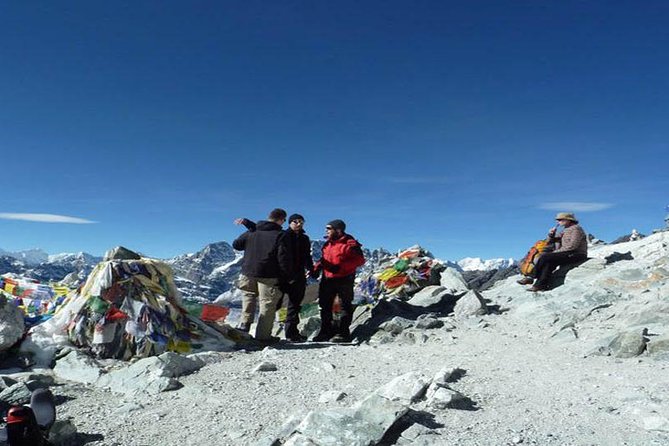
You rise early for Kala Patthar, the immediate goal for the morning. The high point offers the mountain setting many people picture when they dream of this trek, with peaks surrounding you in every direction.
After the morning climb, you descend toward Pheriche. This is a wise use of the itinerary because descending after the highest section gives your body a break from the thin air. It is still a tiring day, with an early start followed by several hours of walking.
Kala Patthar is not Everest Base Camp, but the two stops serve different purposes. Base Camp is the destination tied to the expedition route. Kala Patthar is the high viewpoint described in the schedule. Having both gives the trek a fuller finish than visiting Base Camp alone.
Day 11: Back through Tengboche to Namche
The return route brings you through Tengboche again, with time to explore for a couple of hours before continuing to Namche Bazaar. The lower altitude usually makes the walking feel easier, though your legs may still be tired after the long high sections.
This second look at Tengboche can be pleasant because you are no longer pushing toward Base Camp. You can pay more attention to the forest, mountain views, and village setting instead of counting the hours to the next lodge.
The night in Namche also gives you a comfortable reset before the final walk to Lukla. As before, the exact lodging cost is not included in the stated $1,800 price.
Day 12: The long return to Lukla
The route to Lukla covers a longer distance, but the lower altitude and changing views help. Lukla Bazaar is the final stop, and you have time to buy a souvenir before staying overnight.
This is a useful detail for anyone who wants a small gift from the Khumbu rather than shopping only in Kathmandu. Keep purchases modest, since porter arrangements and baggage limits still matter even though the itinerary does not specify a personal baggage allowance.
Your guide and porter remain important on this day. The walk may feel easier than the climb up, but tired feet and loose trail conditions can still slow the group.
Day 13: Flight back to Kathmandu and farewell dinner
The return flight from Lukla to Kathmandu takes about 35 minutes according to the schedule. Once back in the city, you have time to roam before the company offers a farewell dinner to mark the end of the trek.
The dinner is a nice closing touch, but your bigger concern should be the flight connection. Mountain weather can change quickly, and one delayed flight can affect the rest of your travel plans. Build in spare time after the trek rather than booking a same-day international departure.
What the $1,800 price covers, and what it does not
At $1,800 per person, the package can offer fair value if the listed transport, guide, porter, and meals are all provided as intended. The price includes two-way flights between Kathmandu and Lukla, shared vehicle transport, an English-speaking professional trekking guide, and one porter for every two trekkers.
The meal section lists 11 lunches, 11 dinners, and 12 breakfasts. Yet the exclusions also say all food and drinks are not included, and the package description uses conflicting wording about breakfast, lunch, and dinner. Get a written answer before paying.
The following are specifically excluded:
- Accommodation during the trek
- Sagarmatha National Park permit fees
- Personal clothing and trekking equipment
- Drinks
- Hot showers
- Battery charging
- Wi-Fi
- Tips for the guide and porter
This changes the real budget. You should compare the final price only after adding lodging, permits, food if necessary, and personal gear. The low headline price may work well for a prepared trekker, but it is not an all-in total.
Guides, porters, and the private-group advantage
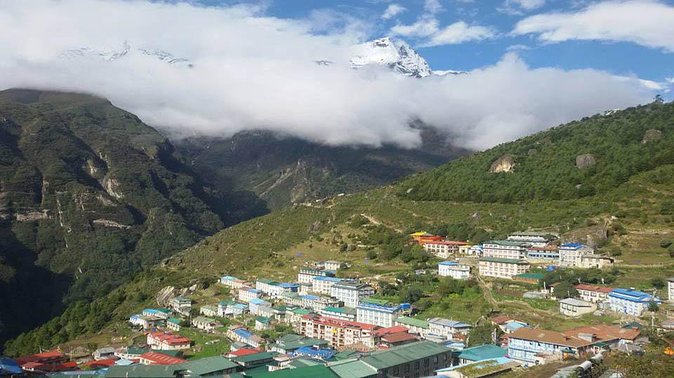
The package includes one professional English-speaking guide and one porter for every two trekkers. That ratio is practical: you carry a lighter load, while the guide can focus on pacing, route decisions, and altitude concerns.
Past customers connected with the company have specifically praised guides named Dilli and Shambhu, along with strong support from owner Dipak Sapkota and organizer Rishi. Those names are useful when you contact the company, but the package does not guarantee a particular guide. Ask who will lead your departure and how many people will be in your private group.
The private format is another plus. You are not placed in a large public group, so your walking speed and communication may be easier to manage. Still, private does not mean effortless. You need moderate physical fitness, and the route includes long days, cold conditions, high altitude, and unpredictable weather.
The company also presents its work as eco-friendly. The supplied information does not explain its specific environmental practices, so ask how waste, porter loads, and local accommodation are handled if that matters to you.
Who should book this trek
I would point this trip toward someone who wants the classic Everest Base Camp route with organized support rather than an independent trek. It suits a person with moderate fitness who is ready to walk for many days, sleep in basic mountain accommodation, and accept changes caused by weather.
It is also a good fit if you value a private group, airport pickup, a named point of contact in Kathmandu, and help with Lukla connections. Families and groups can benefit from the private format, but every member still needs to manage the physical demands.
I would be cautious if you want a luxury trip, a fixed hotel standard, or a fully transparent all-inclusive price. I would also hesitate if your schedule has no spare days around the Lukla flights.
Free cancellation is available up to 24 hours before the start time. Inside that window, the payment is not refunded. If poor weather cancels the activity, the company offers another date or a full refund. The same applies if the minimum number of participants is not met.
Should you book Adventure White Mountain for Everest Base Camp?
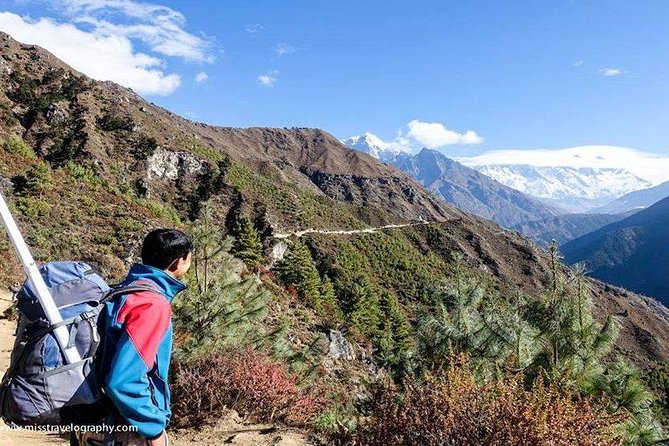
Book it if you want a well-supported classic route, appreciate a private group, and are willing to confirm the financial details before departure. The route itself is thoughtfully paced, with acclimatization stops at Namche and Dingboche, and the guide and porter arrangement gives you useful support.
Before booking, ask four direct questions: Is accommodation included despite the exclusion note? Are the listed breakfasts, lunches, and dinners included? Are national park permits covered? Who is the assigned guide, and is the return by fixed-wing aircraft or something else?
If those answers are clear and the extra costs fit your budget, the trek offers a strong path to Everest Base Camp. If the answers remain vague, compare another operator before committing. The mountains deserve your attention, not a last-minute argument over lodge bills.
FAQ
How long is the Everest Base Camp trek?
The scheduled duration is approximately 13 days, including arrival and return days in Kathmandu.
Are flights between Kathmandu and Lukla included?
Yes. The package includes the flight from Kathmandu to Lukla and the return flight to Kathmandu, along with shared vehicle transport. Flight times may change because of weather.
Is accommodation included in the $1,800 price?
The package information says accommodation during the trip is not included. Confirm the planned lodging and extra cost before booking.
Are meals included?
The inclusions list 11 lunches, 11 dinners, and 12 breakfasts, but the exclusions also say food and drinks are not included. Ask the operator to clarify exactly which meals the price covers.
What level of fitness is required?
A moderate level of physical fitness is required. The trek includes long walking days, high altitude, cold conditions, and two acclimatization days.
What is the cancellation policy?
You can receive a full refund if you cancel at least 24 hours before the experience begins. Cancellations or changes within 24 hours are not refunded. If poor weather or insufficient participation cancels the trek, you are offered a different date or a full refund.
Latest treks added in Kathmandu
- Private Manaslu Circuit Trek at Himalayas★ 5.0 · 3 reviews
- Ghorepani Poonhill Trek★ 5.0 · 5 reviews
- Ghorepani Poon Hill Trek★ 5.0 · 16 reviews
- Upper Mustang Trekking★ 3.0 · 2 reviews
- Amazing 1 Day Trekking Experience in Kathmandu Nepal★ 5.0 · 24 reviews
- Upper Mustang Trekking★ 5.0 · 2 reviews
- Upper Mustang Trek★ 5.0 · 5 reviews
- Upper Mustang Trekking★ 5.0 · 4 reviews
Everest Base Camp Treks, compared.






Browse the lists this tour appears in