
REVIEW · KATHMANDU
Everest Base camp trek
Everest Base Camp is not a quick mountain outing. It is a demanding, beautiful walk through Sherpa villages, Buddhist country, high valleys, and thin air, ending at Everest Base Camp and Kala Patthar at 5,545 meters. You fly from Kathmandu to Lukla, then spend nearly two weeks on foot.
I like the careful acclimatization plan, with rest days in Namche and Dingboche. I also like the human side of the route: Sherpa villages, Tengboche Monastery, the mountain museum in Namche, and guide Nir Kumar Karki, whose steady encouragement and practical help are specifically noted. The main concern is coordination before the trek, as the booking arrangement may involve more than one company.
Key points to know before booking
- Kala Patthar is the high point: The route reaches 5,545 meters for broad views of Everest, Lhotse, Ama Dablam, Tawoche, and Kangtega.
- The trip takes 15 days: Two days are set aside for acclimatization, which is essential at this altitude.
- You fly to Lukla: The scenic flight gets you quickly into the Khumbu region, but it also makes the trip dependent on flight operations.
- Your stay is simple: Teahouse accommodation, breakfast, lunch, and dinner are included during trekking days.
- You travel privately: Only your own group takes part, with an English-speaking trekking guide.
- The package covers the basics: Permits, entry fees, listed transport, two Kathmandu hotel nights, and the trek meals are included.
From Kathmandu to Lukla, the fast change of scene
Your trip begins with airport pickup in Kathmandu and transfer to a hotel. A guide briefing follows, covering the trek program and necessary formalities. If your arrival time allows, you can spend the rest of the day near historic or rural areas of Kathmandu.
The next morning starts early, at about 6:30 a.m., from Hotel Moonlight on Paknajol Marg. The flight to Lukla is one of the defining parts of this trek. In a short time, you leave Kathmandu behind and arrive at Lukla at about 2,845 meters, already high enough for altitude to matter.
From Lukla, you walk to Phakding, at approximately 2,610 meters. This first trekking day is relatively short compared with what comes later, giving you a useful introduction to the path, villages, river valleys, and mountain air. You will need to resist the urge to race ahead. The route is more enjoyable when you settle into a slow rhythm from the beginning.
The flight is described as scenic, but it is also a practical consideration. Since the trek starts and ends with flights to Lukla, the air connection is an important part of the schedule. The program includes the listed transport, but the information does not promise a backup day for delays, so keep your wider Nepal plans flexible.
More Everest Base Camp Treks in Kathmandu
- Everest Base Camp Trek – 14 Days
★ 5.0 · 1,499 reviews - Everest Base Camp Trek
★ 5.0 · 842 reviews - Everest Base Camp Trekking
★ 5.0 · 485 reviews
Namche Bazaar gives you your first real mountain pause
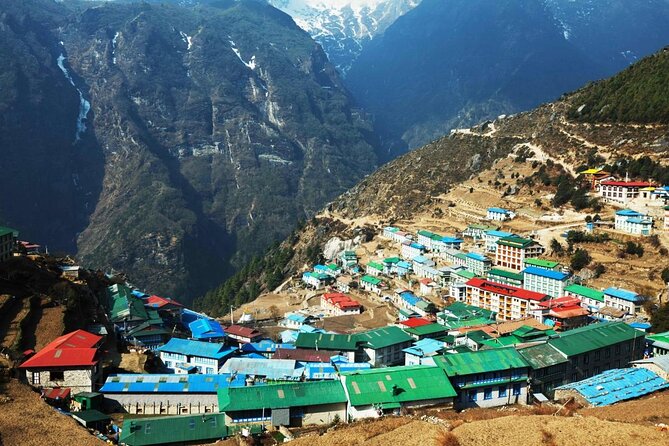
Day three takes you from Phakding to Namche at about 3,465 meters. This is one of the tougher early sections because you gain considerable height. Namche is the main trading center of the Khumbu region and an important place to slow down, rest, and let your body adjust.
The following day is reserved for acclimatization in Namche. That is one of the strongest features of this schedule. You are not simply pushed upward every day. The pause gives you time to explore the town, visit the mountain museum, read, take photographs, and enjoy the natural setting without packing your bag for a long move.
You may also use this day to pay attention to how you feel at altitude. The tour is designed for people with a moderate level of physical fitness, but no fitness level removes the need for patience. High-altitude walking can feel very different from a normal hike, especially when the path rises and falls repeatedly.
Namche is also where the cultural side of the trip becomes more visible. You will be walking through Sherpa communities rather than passing through an empty wilderness. The route gives you a chance to see village life, local buildings, Buddhist practice, and the way mountain settlements support trekking in the Khumbu.
Tengboche brings mountain views and a monastery stop
From Namche, you continue to Tengboche at roughly 3,860 meters. This section is known for its views of major peaks, including Ama Dablam. The scenery becomes more dramatic as the route moves farther into the high valleys, but you should still keep your pace controlled.
Tengboche Monastery is a major cultural stop on the trip. It gives the walk more meaning than a simple peak-viewing expedition. You are not just counting kilometers toward Base Camp. You are passing through a living religious and cultural region, with time to notice the monastery and the communities around it.
The next stage takes you to Dingboche at approximately 4,345 meters. The air will feel thinner here, and the walking day may seem harder even if the distance does not look extreme on paper. This is where the itinerary’s second acclimatization day earns its place.
Dingboche is the right place to slow down
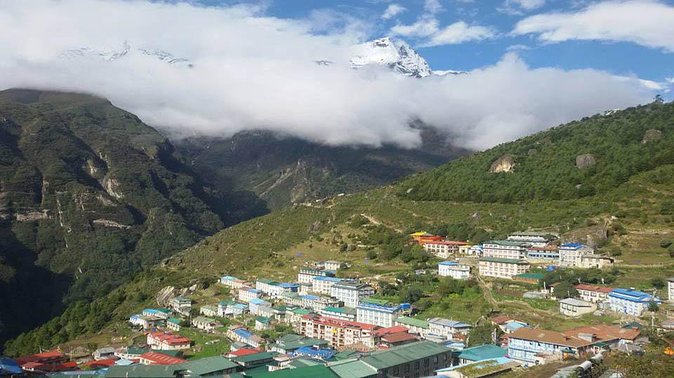
Day seven is a rest day in Dingboche. The plan allows time for acclimatization, reading, photography, and simply sitting in a quiet mountain setting. You should treat this as part of the trek, not as a spare day that could be removed.
At 4,345 meters, your body needs time to adjust before the route moves toward Lobuche and Gorakshep. The schedule’s gradual rise is a real advantage for anyone concerned about altitude. You will still need to walk carefully, drink regularly, and tell your guide if you feel unwell, but the itinerary does not force a daily climb without breaks.
Dingboche also sits near several striking peaks and high valleys. The attraction here is less about a single sight and more about the changing scale of the country around you. Villages become smaller, the air becomes colder, and the mountains take up more of your view.
More Trekking Tours in Kathmandu
- Annapurna Circuit Trek with Tilicho Lake
★ 5.0 · 368 reviews - Everest Base Camp Trekking – 13 Day
★ 5.0 · 365 reviews - Everest Base Camp Trek
★ 5.0 · 350 reviews - Everest Base Camp Trek -14 Days
★ 5.0 · 321 reviews
Lobuche and Gorakshep bring the trek into high-altitude territory
On day eight, you walk from Dingboche to Lobuche at around 4,930 meters. This is a serious altitude gain, and the walking conditions can feel demanding even for fit people. You are now entering the part of the route where steady effort matters more than speed.
The following day takes you from Lobuche to Everest Base Camp at about 5,360 meters. You then return to Gorakshep, at roughly 5,200 meters, for the night. This is the central goal of the trip, but it is not a polished viewpoint or a city-style attraction. Base Camp is meaningful because of where it sits in the Everest climbing route and because of the effort required to reach it.
You will need to be ready for a long day. The elevation is high, the terrain is demanding, and the return to Gorakshep comes after you have already reached the main objective. Your guide’s role matters greatly here. Nir Kumar Karki is identified as the trek leader, and the available account of his work highlights his encouragement, help on the trail, and explanations of the Himalayan environment and Sherpa way of life.
The group size is private, so you are not placed with a large mixed party. That can make the pace and daily decisions more personal. It also means you should be clear about your own abilities before booking, since this is still a demanding trek rather than a guided sightseeing walk.
Kala Patthar is the visual high point
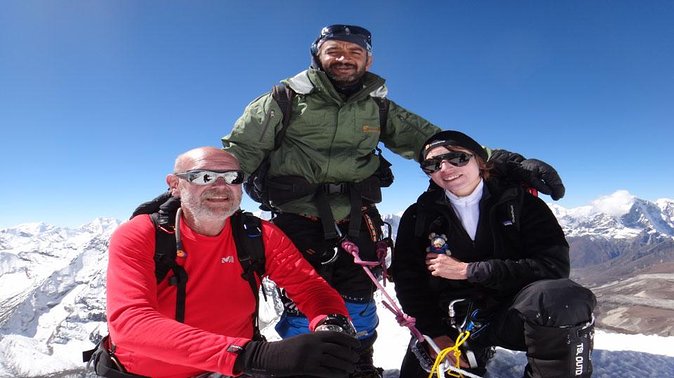
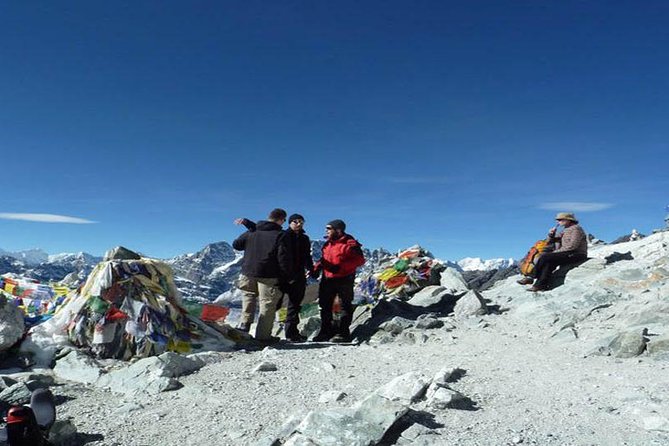
Day ten begins with the hike from Gorakshep to Kala Patthar, at approximately 5,545 meters. This is the highest point on the route and the place for some of the strongest mountain views. From here, you can look toward Everest, Lhotse, Ama Dablam, Tawoche, Kangtega, and other snow-covered peaks.
The tour description places special weight on the views from Kala Patthar, and that makes sense. Everest Base Camp is the symbolic destination, but Kala Patthar is the better point for taking in the surrounding peaks. You should expect the climb to be strenuous because you are gaining the maximum altitude of the trip soon after spending the night at Gorakshep.
After Kala Patthar, you descend to Pheriche at about 4,240 meters. The drop in altitude should feel welcome, though the day remains a long one. The change from the high camp area to Pheriche is a reminder that this trek is carefully structured around both achievement and recovery.
The return route is not just a repeat
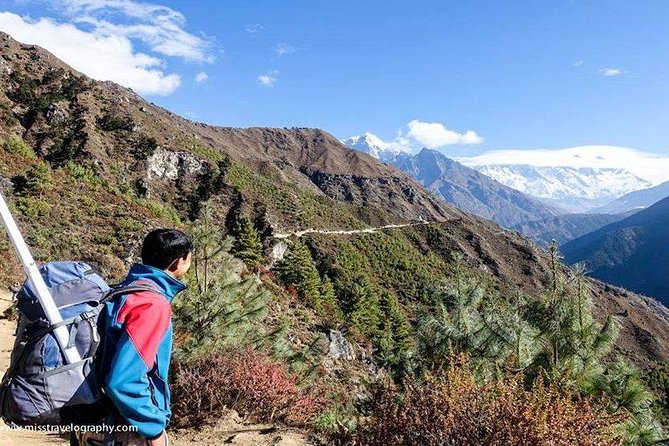
From Pheriche, you walk back to Tengboche, then continue to Namche. The return path gives you another chance to notice villages, forests, valleys, and peaks you may have hurried past on the way up. With more oxygen at lower elevations, many people find the walking easier, though tired legs can still make these days feel substantial.
The route from Namche to Phakding and then Phakding to Lukla completes the walking portion. These final days are valuable because they bring you gradually back into lower elevations rather than dropping you straight from the high valleys to Kathmandu.
You finish with the flight from Lukla to Kathmandu and transfer to the hotel. The package includes two nights of Kathmandu hotel accommodation on a bed-and-breakfast basis, but not lunch or dinner in Kathmandu. Alcoholic drinks are also excluded, though they are available to buy.
What the $1,400 price covers
At $1,400 per person, this is not simply a guide fee. The price includes teahouse accommodation during the trek, trekking permits and entry fees, breakfast, lunch, and dinner on trekking days, an English-speaking guide, listed transport, and two Kathmandu hotel nights with breakfast.
That bundle gives the trip solid value if you want one company to handle the main practical pieces. Food and accommodation are included during the walking days, which makes budgeting easier. You should still allow extra money for drinks, alcohol, Kathmandu meals, and personal purchases.
The two Kathmandu nights are useful because they give the trip a clear beginning and ending. You are not expected to arrive and immediately start trekking, and you have a hotel base when you return from Lukla.
One point deserves attention before you pay. Coordination between the companies involved has reportedly been less smooth before the Lukla meeting, with the trek itself handled by Nepal Trek Ways and the booking arranged through Bikat Adventures. Once in Lukla, the trek was described as smooth under Nir Kumar Karki, with good porter support. I would confirm the exact operating company, airport pickup, hotel details, guide contact, and flight arrangements in writing before departure.
Food, lodging, and daily comfort
Teahouse accommodation is a practical choice for this route. You should expect simple rooms and basic mountain lodging rather than hotel comforts. The value is in staying along the route and eating at the teahouses, not in luxury.
Breakfast, lunch, and dinner are included during trekking days. Vegetarian food is available, but you need to request it when booking. Kathmandu meals are your responsibility, as are alcoholic drinks and anything else not specifically listed.
The tour asks for moderate physical fitness. That is a sensible description, though the altitude makes the trek demanding even for someone who exercises regularly. You should be comfortable with repeated full days of walking, steep sections, and a schedule that reaches 5,545 meters.
The dress guidance says smart casual, but for the trek itself you need practical mountain clothing. The supplied information does not give a full packing list, so confirm clothing and equipment needs with the provider before leaving.
Who should choose this Everest trek
I would recommend this trip to you if you want a structured route to Everest Base Camp, prefer a private group, and value cultural stops as much as mountain views. The itinerary includes Sherpa villages, Namche’s mountain museum, Tengboche Monastery, Khumjung Valley, and time for photography and quiet reading.
It is also a good fit if you want the major permits, meals, transport, guide, and trekking accommodation arranged together. The two acclimatization days make the schedule more thoughtful than a rushed ascent.
I would be more cautious if you have limited walking experience, dislike simple lodging, or need a fixed schedule with no flight uncertainty. The route is high, long, and physically demanding. A private group gives you personal attention, but it does not make the altitude easy.
The guide is a major part of the experience. Nir Kumar Karki’s role is especially important because the available account of the trek emphasizes his motivation, help, friendly manner, and explanations of the Himalayas and Sherpa life. Confirm that he or another clearly identified guide will lead your group before booking.
Should you book this Everest Base Camp trek?
Book it if you want the classic Everest route with a strong mix of mountain scenery, Sherpa culture, acclimatization time, and practical inclusions at a clear price. The best parts are the private format, the two rest days, the visit to Tengboche, and the Kala Patthar climb.
Before committing, confirm the flight arrangements, the company responsible for your trek, the guide’s name, porter support, and what equipment you must bring. If those details are clear, this is a sensible 15-day package for a prepared walker who wants to reach Everest Base Camp without arranging every permit, meal, hotel, and transfer alone.
FAQ
How long is the Everest Base Camp trek?
The experience lasts approximately 15 days, including arrival in Kathmandu, the trek, the Lukla flights, and the return to Kathmandu.
Where does the tour start?
The listed meeting point is Hotel Moonlight on Paknajol Marg in Kathmandu, Nepal. The stated start time is 6:30 a.m.
Where does the activity end?
The activity ends back at the meeting point after the return to Kathmandu.
Is the tour private?
Yes. Only your own group takes part in this private tour and activity.
What is the highest altitude reached?
The maximum altitude is approximately 5,545 meters at Kala Patthar.
Are meals included?
Breakfast, lunch, and dinner are included during trekking days. Lunch and dinner in Kathmandu are not included.
Is accommodation included?
Yes. Teahouse accommodation is included during the trek, along with two nights in a Kathmandu hotel on a bed-and-breakfast plan.
Is a guide provided?
Yes. An English-speaking trekking guide is included. Nir Kumar Karki is identified as the guide associated with the trek.
Can I cancel for a full refund?
Yes, if you cancel at least 24 hours before the experience start time. Cancellations made less than 24 hours in advance are not refundable, and changes inside that period are not accepted.
Latest treks added in Kathmandu
- Private Manaslu Circuit Trek at Himalayas★ 5.0 · 3 reviews
- Ghorepani Poonhill Trek★ 5.0 · 5 reviews
- Ghorepani Poon Hill Trek★ 5.0 · 16 reviews
- Amazing 1 Day Trekking Experience in Kathmandu Nepal★ 5.0 · 24 reviews
- Upper Mustang Trekking★ 5.0 · 2 reviews
- Upper Mustang Trekking★ 3.0 · 2 reviews
- Upper Mustang Trek★ 5.0 · 5 reviews
- Upper Mustang Trekking★ 5.0 · 4 reviews
Everest Base Camp Treks, compared.






Browse the lists this tour appears in