
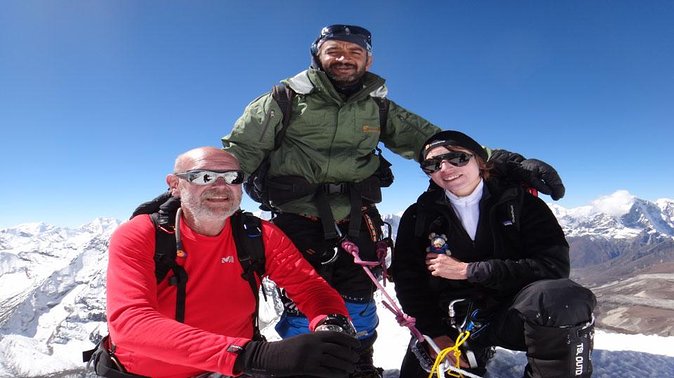
REVIEW · KATHMANDU
Everest Base Camp Trek
Everest Base Camp is reached the hard way: on foot, over 17 days, with the trail climbing from Kathmandu to more than 5,500 meters at Kala Patthar. You pass through Sherpa villages, cross suspension bridges, visit Tengboche Monastery, and finally reach the base camp used by climbers attempting the world’s highest mountain.
I like the careful acclimatization schedule, with extra nights in Namche and Pheriche rather than a reckless rush uphill. I also like that the price includes guides, porters, permits, domestic flights, transport, and trekking meals, which removes many of the usual mountain-trip surprises.
The main consideration is the altitude. This is not a casual walk, even though one past participant described the trek as manageable with good support. Long days, cold nights, thin air, basic rooms, and weather delays are all part of the deal. You need moderate fitness, patience, and good insurance.
Key points to know before booking
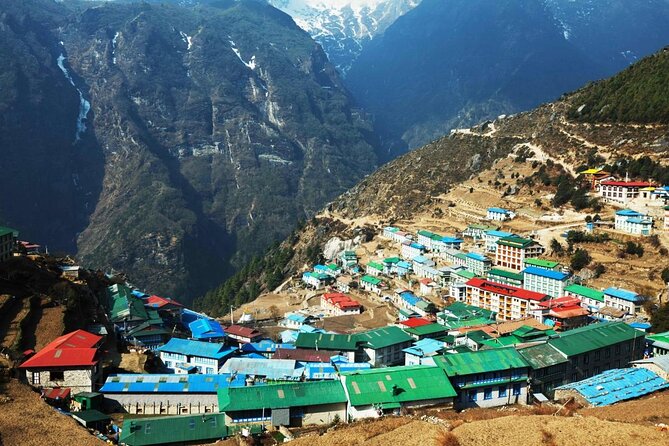
- Five nights above 4,000 meters: Pheriche, Lobuche, Gorak Shep, and Kala Patthar make altitude the central challenge.
- Two useful acclimatization days: Namche and Pheriche give your body time to adjust before the highest sections.
- Guide support from Vision Tamang and Biru: Both names receive especially warm praise for patience, care, and keeping mixed-ability groups together.
- A full Base Camp and Kala Patthar combination: You reach Everest Base Camp, then climb to 5,545 meters for the best high-point views.
- Porters, permits, meals, and flights are included: That makes the $2,051.48 price easier to assess, though personal expenses and insurance remain yours.
- A private trip for your group: You do not join a large public departure, but the itinerary still requires a minimum number of participants.
Kathmandu prepares you for the mountains
Your first day begins with airport pickup in Kathmandu and a transfer to your hotel. The listed arrival stop is Tribhuvan Park, but the useful part of the day is practical: check in, shower, eat dinner, and sleep before the trek begins.
Kathmandu is noisy, dusty, colorful, and full of small distractions. The first evening gives you a short taste of the tourist district before the mountains take over. Do not plan a late night. The next morning brings sightseeing and trek preparation.
Swayambhunath, also called the Monkey Temple, is a strong choice for your first full day. The Buddhist stupa and monastery are said to be more than 2,000 years old, and the hilltop setting gives you views across the Kathmandu Valley. You will also see monkeys around the complex, so keep food tucked away.
The afternoon is for checking gear, finishing your packing, and shopping in Thamel. This is useful rather than decorative planning. You can pick up last-minute trekking supplies in Kathmandu, but the included porter service means you should still pack thoughtfully and keep your personal day bag light.
The tour returns to Kathmandu at the end for Boudhanath Stupa, the huge Buddhist monument and World Heritage site. A final group dinner follows. This gives the trip a sensible cultural frame: Kathmandu at the start, the high trail in the middle, and Kathmandu again after the walk.
More Everest Base Camp Treks in Kathmandu
- Everest Base Camp Trek – 14 Days
★ 5.0 · 1,499 reviews - Everest Base Camp Trek
★ 5.0 · 842 reviews - Everest Base Camp Trekking
★ 5.0 · 485 reviews
Lukla and the first short walk to Phakding
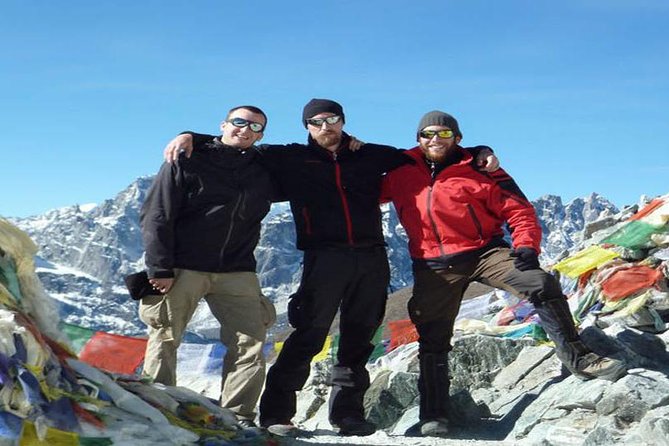
The flight to Lukla takes about 40 minutes, but it is one of the most memorable parts of the trip. The route crosses the Himalayan foothills and brings you to Lukla at about 2,800 meters.
Weather matters here. The schedule allows for a flight to Lukla and a return flight to Manthali, followed by private car transport to Kathmandu. Delays can affect the plan, so you should not arrange a tight international connection immediately after the trek.
Once porters have taken the main luggage, you walk from Lukla to Phakding. The three-hour route follows local villages and a river, with a relatively gentle start. Phakding sits slightly lower than Lukla, at about 2,653 meters, which makes this a sensible first walking day.
The short distance can be deceptive. You are beginning a long series of walking days, and this is the moment to settle into a steady pace. Use the afternoon to organize your sleeping bag, water, layers, and snacks so that the routine becomes automatic.
Namche brings the first real climb
The route continues along the river toward Monjo, at about 2,835 meters. The morning is described as easy, but the climb becomes serious after lunch. You enter Sagarmatha National Park, cross the Dudh Kosi River, pass through Jorsale, and begin the steep ascent to Namche Bazaar.
Namche sits at about 3,440 meters. The first view of Everest appears during a rest stop on the climb, which makes the effort feel worthwhile. The town also has shops and supplies, so it is a useful place to replace anything missing from your pack.
This is often the point where altitude symptoms begin. Headache, tiredness, poor sleep, and shortness of breath can become part of the day. Your guide should know how you are feeling, but you also need to speak up early. The itinerary’s decision to spend a second night here is one of its best features.
The acclimatization walk reaches Khumjung at about 3,780 meters. You see village life and gain mountain views while returning to sleep lower in Namche. This follows the practical mountain rule of walking higher during the day and sleeping lower at night.
Tengboche and the Sherpa heartland
From Namche, the trail continues through villages with repeated views of Everest and Ama Dablam. You pass through Tengboche, the religious center of the Sherpa region, and visit its large monastery.
Tengboche is more than a photo stop. It gives you a chance to connect the mountain route with the Buddhist culture of the communities that live here. Mani stones, monasteries, and prayer traditions become part of the walk instead of background decoration.
You spend the night in Devuche, about 3,750 meters, roughly 20 minutes beyond Tengboche. This is a useful arrangement because you can visit the monastery without ending the day at a higher elevation than necessary.
The next walking day passes through Pangboche, described as the highest year-round settlement in the region, at about 3,800 meters. You cross one of the route’s suspension bridges, walk through forest, and pass many mani stones before the trees begin to thin.
By the time you reach Pheriche at about 4,240 meters, the setting has changed. Forest gives way to alpine meadows, the air feels colder, and wind can be a problem. Warm clothing is not optional here. Bring layers you can add before you stop moving.
More Trekking Tours in Kathmandu
- Annapurna Circuit Trek with Tilicho Lake
★ 5.0 · 368 reviews - Everest Base Camp Trekking – 13 Day
★ 5.0 · 365 reviews - Everest Base Camp Trek
★ 5.0 · 350 reviews - Everest Base Camp Trek -14 Days
★ 5.0 · 321 reviews
Two nights in Pheriche slow the climb
Pheriche receives a second night for acclimatization. This is exactly the kind of pause that makes a high-altitude itinerary more realistic. During the day, you walk higher, then return to sleep at the same lodge.
The schedule gives this day about five hours, so it is not a day of doing nothing. It is a controlled effort designed to prepare you for the higher route. You should treat it as a training day, not as a chance to prove how fast you can climb.
At these elevations, a moderate pace matters more than strength. I would keep your steps short, drink regularly, eat even when your appetite drops, and tell the guide immediately if symptoms worsen. The tour includes first-aid supplies, but your own travel insurance is not included.
Lobuche and the memorial stones
The trail from Pheriche gains about 700 meters before reaching Lobuche at roughly 4,930 meters. The valley gives you a clear sense of progress because you can look back and see how far you have climbed.
Near Chukpilhara, stone monuments honor climbers and Sherpas who died in the mountains. This is a quiet and serious part of the route. It reminds you that Everest is not only a scenic destination or a personal challenge. The mountain has demanded a heavy price from the people who climb it and support expeditions.
Lobuche is a demanding overnight stop because the air is thin and the temperatures can be harsh. Your accommodation is included, but you should expect mountain lodging rather than hotel comfort. Food, tea, and basic rooms are part of the trekking rhythm.
Everest Base Camp from Gorak Shep
The next day is one of the longest and most important. You walk to Gorak Shep at about 5,160 meters, the former base camp used during the early Everest climbing period in the 1950s.
After lunch and a short rest, you continue to the present Everest Base Camp. The route is rocky and tiring, and at this height every step takes more effort. In May, the climbing season is active, so the base camp area may be full of expedition activity.
Reaching Base Camp is a major milestone, but it is worth setting your expectations correctly. The most famous view of Everest itself is often better from Kala Patthar than from Base Camp. At Base Camp, the attraction is the setting, the route, the surrounding peaks, and the sense of arriving at the starting point for serious climbs.
You return to Gorak Shep for the night. The day is listed at about seven hours, but altitude can make it feel longer. Keep your camera accessible, but do not let photography turn the walk into a race.
Kala Patthar gives you the high point
The following morning starts around 5 a.m. with tea before the climb to Kala Patthar. At 5,545 meters, this is the highest point on the trek.
The early start is chosen for mountain views and morning light. From the top, you have time for photos and for looking across Everest and its neighboring peaks, including Ama Dablam, Lhotse, Makalu, and Gyachung Kang. The climb is short compared with the full trek, but altitude makes it strenuous.
After descending to Gorak Shep for lunch, you walk all the way back to Pheriche. This is a nine-hour day, making it one of the toughest sections of the trip. The reward is that the next days go downhill, and many people feel noticeably better as the air thickens.
I would treat Kala Patthar as the physical summit of your experience. Base Camp is the destination on the map, but Kala Patthar is where the mountain views often become the clearest and most satisfying.
The return through Tengboche and Namche
The descent to Tengboche takes about four hours. You regain oxygen with every step, and tired legs often feel less troubled once the altitude drops.
Returning through places you already know gives the second half a different feel. Namche, in particular, becomes a welcome stop rather than an intimidating climb. The following day includes another five-hour walk and a chance to buy the items you decided not to purchase on the way up.
There may even be time for another slice of apple pie in Namche. Small comforts matter after several cold nights and long walks. The return route is not effortless, however. Downhill walking can be hard on knees, and the trail still includes climbs.
The final trekking day takes you from Namche toward Lukla, with a steep descent for roughly an hour and a half before smaller ups and downs continue through Monjo and Phakding. The walk takes about four hours, leaving time to look around Lukla before the flight.
What the $2,051.48 price covers
At $2,051.48 per person, this is not a bare-bones independent trek. The cost includes accommodation during the trek, breakfast, lunch, and dinner on the listed trekking days, along with trekking guides and porters.
It also covers guide and porter food, accommodation, wages, insurance, national park permits, the Pasang Lhamu Municipality fee, the TIMS card, domestic airport taxes, and first-aid supplies. Private Kathmandu transport and the Kathmandu to Manthali road transfer are included as well.
That package gives you real value because permits, staff, flights, and transport can otherwise become a long list of separate costs. You still pay for Kathmandu lunches and dinners, drinks, bottled water, laundry, phone calls, bar bills, personal purchases, tips, and your own insurance.
The price also requires a careful look at the flight wording. The package lists flights to Lukla and return to Manthali, with private car transport between Manthali and Kathmandu. Confirm the exact flight and transfer plan before booking, especially if your international departure is close to the scheduled return.
Who this trek suits best
This experience is a good fit if you want a guided, private Everest route without arranging each permit, porter, meal, and transfer yourself. It also suits mixed-ability groups when the guide team is attentive and patient.
The names Vision Tamang and Biru are especially worth noting. Their support is praised for kindness, patience, professionalism, and helping people with different levels of experience reach Base Camp safely. That matters on a route where one person may be strong on steep climbs while another needs more time at altitude.
You should have moderate physical fitness. You do not need to be a technical climber based on the information provided, but you do need to handle repeated five-hour days, a seven-hour Base Camp day, and a nine-hour Kala Patthar return day.
This is not ideal if you need luxury hotels, fixed flight times, or a short holiday. It is also a poor match if you dislike cold, basic accommodation, shared mountain routines, or the possibility of ending the trek early without a refund.
Cancellation is free up to 24 hours before the start time. Changes or cancellations inside that window are not refunded, and the departure requires a minimum number of participants.
Should you book the Everest Base Camp Trek?
I would book this trek if you want a structured Everest experience with strong practical support and enough time for acclimatization. The two-night pauses in Namche and Pheriche, the inclusion of porters and permits, and the combination of Base Camp with Kala Patthar make the plan sensible.
Before paying, confirm the accommodation standard, the exact flight arrangements through Manthali, the group size, and what happens if weather disrupts the Lukla flights. Buy suitable travel insurance, plan for personal spending, and leave spare time around your international flight.
If you can accept the altitude, the long days, and the basic mountain routine, this route gives you more than a quick photo at Base Camp. It takes you through Sherpa villages, Buddhist sites, memorial stones, river valleys, and high passes of effort, with guides such as Vision Tamang or Biru helping turn a difficult route into a manageable one.
FAQ
How long is the Everest Base Camp trek?
The experience lasts approximately 17 days, including Kathmandu sightseeing, the trek from Lukla to Everest Base Camp, the return to Lukla, and the final Kathmandu visits.
What is the highest point on the itinerary?
Kala Patthar is the highest point, at about 5,545 meters. Everest Base Camp is reached the previous day from Gorak Shep.
Are flights to Lukla included?
Yes. Flights to Lukla are included for clients and the guide. The return is listed as a flight to Manthali, followed by private car transport to Kathmandu.
Are meals included?
Breakfast, lunch, and dinner are included on the listed trekking days. Lunch and dinner in Kathmandu are not included, and personal drinks and other purchases are also extra.
Is the trek private?
Yes. This is described as a private activity for your group. It still requires a minimum number of participants to operate.
What is included for guides and porters?
The package includes trekking guides, porters, their accommodation, food, wages, and insurance. Tips for guides and porters are not included.
Latest treks added in Kathmandu
- Ghorepani Poon Hill Trek★ 5.0 · 16 reviews
- Private Manaslu Circuit Trek at Himalayas★ 5.0 · 3 reviews
- Ghorepani Poonhill Trek★ 5.0 · 5 reviews
- Upper Mustang Trekking★ 3.0 · 2 reviews
- Amazing 1 Day Trekking Experience in Kathmandu Nepal★ 5.0 · 24 reviews
- Upper Mustang Trekking★ 5.0 · 2 reviews
- Upper Mustang Trek★ 5.0 · 5 reviews
- Upper Mustang Trekking★ 5.0 · 4 reviews
Everest Base Camp Treks, compared.






Browse the lists this tour appears in