
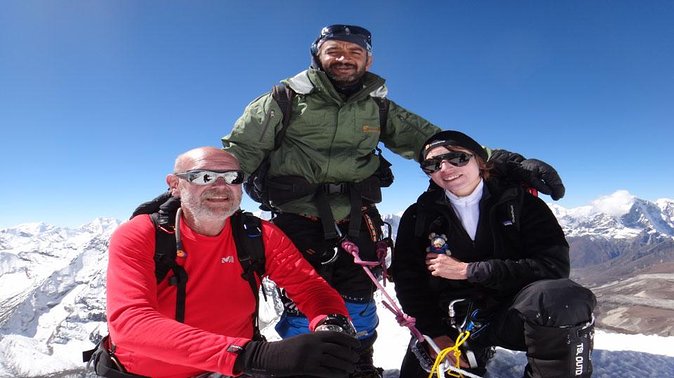
REVIEW · KATHMANDU
Everest Base Camp Trek
The best part of this 14-day Everest Base Camp trek is that Everest is only one piece of the experience. You walk through the Khumbu valley, sleep in Sherpa villages, visit Tengboche and Pangboche monasteries, cross high suspension bridges, and watch the mountains change as you gain altitude.
I like the sensible acclimatization stop in Namche and the extra day in Dingboche. I also like that the price includes the Lukla flights, park fees, meals, guide, porter service, and hotel transfers. The main drawback is the altitude: reaching Everest Base Camp and Kalapathar requires long days above 4,000 meters, and the Lukla flights depend on good weather.
- A classic Khumbu route: Walk from Lukla through Phakding, Namche, Tengboche, Dingboche, Lobuche, and Gorak Shep.
- Two major mountain goals: Reach Everest Base Camp, then climb Kalapathar at 5,550 meters for the clearest stated view of Everest.
- Useful support included: A professional guide, porter service at a ratio of two trekkers to one porter, meals, permits, hotels, and Lukla flights.
- Real acclimatization time: You spend a rest day in Namche and another in Dingboche, with short hikes rather than simply stopping indoors.
- Private trip format: Only your own group participates, with pickup and drop-off arranged in Kathmandu.
- A careful point to check: The written schedule repeats the Namche day and does not clearly describe the Tengboche section on Day 5, so confirm the final route before departure.
Why this Everest trek is more than a photo at Base Camp
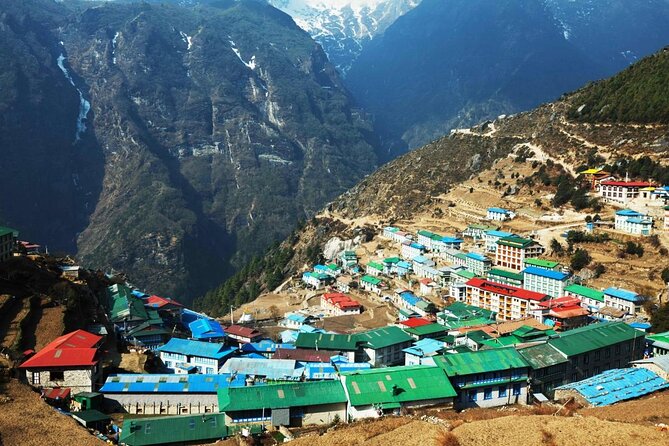
Everest Base Camp is the headline, but I would book this trip for the full walk through the Khumbu. The route moves from green hills and terraced farmland to pine forest, bare rock, glaciers, and snow-covered peaks. Along the way, you see mani walls, prayer stones, monasteries, yaks, porters, and ordinary mountain villages.
The views build gradually. Early in the trek, you see Kusum Kanguru, Thamserku, Nupla, and the Kwangde range. Higher up, Ama Dablam, Lhotse, Nuptse, Pumori, Tawache, Cholatse, and Everest begin to dominate the horizon.
I also value the human side of the trip. Namche Bazaar is not just a stopping point. It is the Sherpa capital and a trading center for the region. Tengboche and Pangboche offer a chance to see how Buddhist practice fits into life in the high Himalaya.
This is a private tour, so you are not placed into a large mixed group. That can make a difference on a demanding route. You can discuss pacing with your guide, and the company has arranged customized schedules for older groups in the past. Guides named in past departures include Shambhu, Hupa Raj, Hupi, and Raj.
What the $1,650 price really covers
At $1,650 per person, the tour offers solid value if you want a managed trek rather than arranging each piece yourself. The package includes 14 nights of accommodation, local taxes, Sagarmatha National Park fees, meals listed in the schedule, a professional guide, hotel pickup and drop-off, private vehicle transport, porter service, and round-trip flights between Kathmandu and Lukla.
The porter arrangement is one porter for every two trekkers. That means you should still carry a daypack with water, warm layers, documents, medication, and anything you need during the day. Your main bag is not simply carried by a private porter for one person.
The package also includes breakfast, lunch, and dinner on the stated trekking days. Drinks are not included, and neither are laundry, battery charging, hot showers, excess luggage charges, or personal purchases. I would budget extra for these items rather than treating the quoted price as literally covering every cost.
The all-inclusive wording is useful, but I would ask for a final written list before paying. The itinerary says 14 days, while the inclusions mention 14 nights, and the schedule has a repeated section around Days 4 and 5. Those details are easy to clarify before departure and worth clarifying.
More Everest Base Camp Treks in Kathmandu
- Everest Base Camp Trek – 14 Days
★ 5.0 · 1,499 reviews - Everest Base Camp Trek
★ 5.0 · 842 reviews - Everest Base Camp Trekking
★ 5.0 · 485 reviews
Day 1: Kathmandu arrival and trek briefing
Your airport pickup begins at Tribhuvan International Airport. A representative takes you to the hotel, where you have time to rest before a pre-trip meeting with your guide.
This meeting matters. Use it to discuss your pace, equipment, altitude concerns, meals, and the next morning’s early start. The listed meeting time is 5:15 a.m., so I would keep your first evening simple.
Day 2: Lukla to Phakding by trail
The 40-minute flight from Kathmandu to Lukla is one of the memorable parts of the trip. You see river valleys and terraced hills from the air before landing at the small mountain airport.
From Lukla, you walk for about three to four hours to Phakding. The trail passes mani stone walls made from carved tablets and painted boulders. You also get views of Nupla, Kusum Kanguru, and the Kwangde range.
This first walking day is relatively short, which is helpful after the early flight. Do not treat it as a warm-up to rush through. It is your first chance to settle into the walking rhythm and notice how your body responds.
Day 3: Phakding to Namche Bazaar
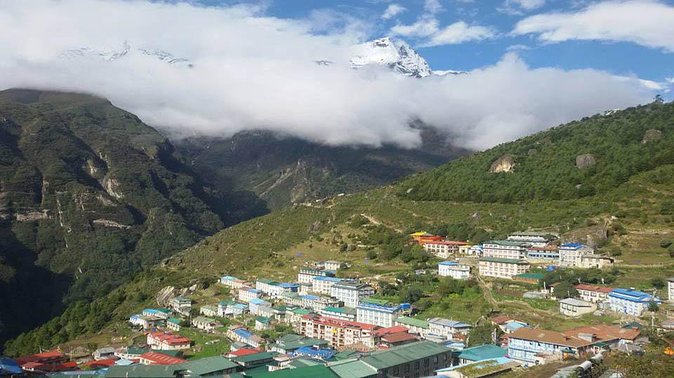
The trail follows the Dudh Koshi valley through Sherpa villages and forest. The walking time is listed at about six hours, with views of Kusum Kanguru, Thamserku, Everest, and Nuptse.
Namche Bazaar is an important turning point. The village is a trading center and a good place to notice the practical side of life in the Khumbu. It is also where the route begins to feel properly high and mountainous.
The approach includes river crossings and steady uphill sections. You should expect this day to feel harder than the distance suggests. Namche sits at roughly 3,440 meters, so a slow pace is not a sign of weakness. It is the right way to walk.
More Trekking Tours in Kathmandu
- Annapurna Circuit Trek with Tilicho Lake
★ 5.0 · 368 reviews - Everest Base Camp Trekking – 13 Day
★ 5.0 · 365 reviews - Everest Base Camp Trek
★ 5.0 · 350 reviews - Everest Base Camp Trek -14 Days
★ 5.0 · 321 reviews
Day 4: Namche acclimatization and Khumjung
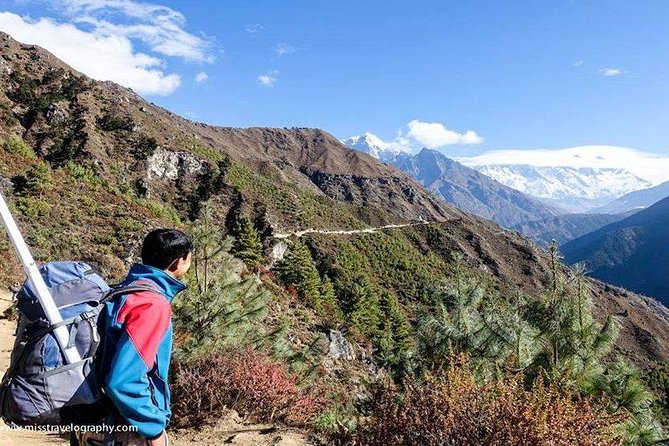
The schedule gives you free time in Namche with a short hike toward Khumjung. This is a good use of a day because altitude adjustment works better when you make a modest walk instead of remaining completely inactive.
You can explore the market and Sherpa village life while looking toward Everest, Ama Dablam, Thamserku, Nuptse, Lhotse, and Kwangde. Khumjung adds cultural interest without asking you to move to a higher sleeping point.
The written itinerary repeats this Namche and Khumjung description on Day 5, even though Day 5 is labeled Tengboche Gompa. Confirm whether Day 5 includes the walk to Tengboche, an additional night in Namche, or a revised schedule.
Day 5: Tengboche and its mountain setting
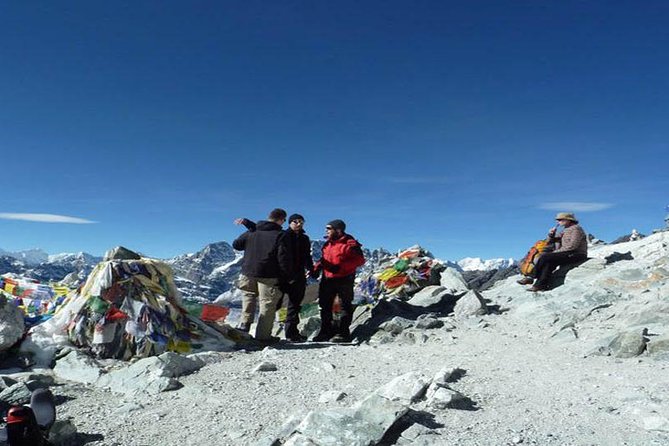
Tengboche is one of the emotional high points of this route. The monastery sits high above the valley, with a broad view toward Everest, Lhotse, Nuptse, and Ama Dablam.
The supplied schedule names Tengboche Gompa but repeats the previous day’s wording, so the exact walking plan is not clear. Ask the operator to confirm the overnight village and walking time. On a normal Khumbu itinerary, Tengboche is a meaningful stop because it combines mountain views with Buddhist culture.
The monastery is not just a scenic building. It gives you a direct connection to the spiritual life of the region, especially when prayer flags, carved stones, and mountain silence replace the shops and traffic of Kathmandu.
Day 6: Tengboche area to Dingboche
The trail continues through rhododendron forest and follows the Imja valley toward Dingboche, known as the summer valley. The route is described as having mostly moderate gradients, but the altitude makes even a mild slope feel serious.
Dingboche is set in a sheltered valley surrounded by snow-covered peaks. Ama Dablam and Lhotse are major sights along the way. Compared with Pheriche, Dingboche is described as sunnier and less exposed to cold valley winds.
I would keep your pace deliberately slow here. The scenery can tempt you to hurry for photographs, but your main task is to arrive feeling well enough for the next two days.
Day 7: Dingboche acclimatization
The second major acclimatization day is spent in Dingboche. A morning walk toward the huts at Chukhung is suggested, along with time near the Imja Khola and a visit to the local monastery.
This is not wasted time. The following days take you into the high Khumbu, where the air is thinner and the walking becomes more demanding. A short uphill walk followed by rest gives you a better chance to adjust than a full day of hard travel.
The monastery is noted for a traditional animal scalp and hand. Details like this are part of what makes the trek more than a mountain workout. You see local beliefs and customs in places where they remain part of daily life.
Day 8: Dingboche to Lobuche
After breakfast, the route climbs toward a yak farm and then follows the trail toward the Khumbu Glacier. Tawache Peak and Cholatse rise on the left, with views of Pumori and smaller peaks near Lobuche.
The day is listed at about five hours. The walking becomes more exposed and rocky, and the glacier gives the area a stark, high-altitude character. Lobuche is a basic overnight stop, not a place to expect comfort or entertainment.
Your guide’s judgment matters here. A good guide watches your pace, appetite, sleep, and general condition, not just the clock. The company has received particularly strong praise for its guides during difficult situations, including emergency support and adjustments for older groups.
Day 9: Lobuche to Everest Base Camp and Gorak Shep
This is the day many people picture when they think of the trek. You first walk to Gorak Shep, passing along the north rim of the Khumbu Glacier with views toward Khumbutse and Pumori.
From Gorak Shep, the route continues over short uphill and downhill sections to Everest Base Camp. The base camp area is spread across a wide zone and can look like a tented settlement during climbing season, with expeditions from different countries preparing for attempts on Everest.
The setting is impressive, but keep expectations sensible. Base Camp is not the best point for a full view of Everest’s summit. The glacier, icefall, surrounding peaks, and expedition activity are the main sights. The next morning’s climb to Kalapathar provides the more direct Everest view.
You return to Gorak Shep for the night. This is a demanding day, and the combination of altitude, cold, and uneven ground can make the return feel longer than the outward walk.
Day 10: Kalapathar and the descent to Pheriche
The climb to Kalapathar takes about two hours from Gorak Shep. The path is rocky and exposed, with wind often part of the experience. At 5,550 meters, this is the highest point on the trek.
From the top, you are meant to see Everest, Khumbutse, Lhotse, Nuptse, Ama Dablam, Cholatse, Tawache, and Pumori. The view is the clearest stated reward of the entire route, but weather can still decide what you actually see.
After returning to Gorak Shep for breakfast, you descend through Lobuche and Dhugla to Pheriche. Downhill walking is easier on the lungs but can be tiring on knees and ankles. Chortens, stupas, yaks, and mountain traffic add interest to the route.
Days 11 and 12: Pangboche, Namche, and Lukla
The route drops to Pangboche, where you can visit one of the region’s oldest monasteries. It is associated with a scalp and bones said to belong to a Yeti, an unusual detail that adds a little local mystery to the cultural stop.
From Pangboche, the path crosses a bridge and passes through pine and juniper forest to Tengboche. It then drops sharply to the Dudh Koshi River before climbing toward Namche Bazaar.
Day 12 continues downhill toward Lukla along the Dudh Koshi. After the high and demanding middle section, this last walking day lets you reflect on the route. The schedule includes a final mountain sunset in Lukla, weather permitting.
Day 13: Lukla flight back to Kathmandu
The return flight to Kathmandu takes about 35 minutes. A guide meets you at the airport and transfers you to the hotel by private vehicle.
Flights to and from Lukla are weather dependent. The terms say that a cancellation caused by poor weather can be moved to another date, but you should still allow flexibility in your wider Nepal plans. The final cultural dinner in Kathmandu is included as a celebration of completing the trek.
Day 14: Airport transfer and departure
The airport team takes you to Tribhuvan International Airport for your onward flight. This makes the final day simple, with no extra sightseeing added to an already demanding schedule.
The minimum age is 18, and a moderate level of fitness is required. Vegetarian meals are available if you request them when booking.
Who should book this trek?
I would recommend this trip to someone who wants a guided, private Everest Base Camp route with most major costs arranged in advance. It suits people who value logistics, porter help, acclimatization days, and a guide who can adjust the pace.
I would be more cautious if you want a relaxed holiday, dislike early starts, or have not prepared for long uphill and downhill walking. The itinerary is not a technical climbing expedition, but high altitude makes it physically serious.
The strongest practical benefit is the support team. Past departures have included guides such as Shambhu, Hupa Raj, Hupi, and Raj, with repeated praise for their patience, communication, family-friendly attitude, and handling of emergencies. Still, ask who will lead your specific departure and request the final day-by-day route in writing.
Final verdict
Book this trek if you want the classic Everest Base Camp route, a private group, included Lukla flights, porter support, monastery visits, and a clear attempt at Kalapathar. The $1,650 price is attractive for the amount included, but confirm the Day 5 schedule, exact accommodation, excluded personal costs, and weather contingency before you commit.
I would choose it for the complete Khumbu experience rather than Base Camp alone. You get Sherpa villages, Buddhist monasteries, glaciers, high passes of scenery, and two useful acclimatization days. Just come prepared for altitude, cold, basic mountain lodging, and a schedule that may need small changes when weather or trail conditions interfere.
FAQ
Where does the Everest Base Camp trek begin?
The trip begins at Tribhuvan International Airport in Kathmandu, Nepal. Airport pickup and transfer to the hotel are included.
How long is the trek?
The experience lasts approximately 14 days. The package lists 14 nights of accommodation.
What time is the meeting?
The listed meeting time is 5:15 a.m. at Tribhuvan International Airport in Kathmandu.
Are flights to Lukla included?
Yes. Round-trip airfare between Kathmandu and Lukla is included in the package.
Is porter service included?
Yes. Porter service is included at a ratio of two trekkers to one porter.
Are meals included?
Breakfast, lunch, and dinner are included according to the stated itinerary. Drinks and personal food purchases are not included.
Is a vegetarian meal possible?
Yes. A vegetarian option is available, but you should request it when booking.
What happens if bad weather cancels a flight?
The trip is subject to favorable weather conditions. If it is canceled because of poor weather, you are offered an alternative date.
Can I cancel for a full refund?
Yes, if you cancel at least six full days before the experience start time. Cancellations two to six full days before departure receive a 50 percent refund, while cancellations less than two full days before the start time are not refunded.
Latest treks added in Kathmandu
- Private Manaslu Circuit Trek at Himalayas★ 5.0 · 3 reviews
- Ghorepani Poonhill Trek★ 5.0 · 5 reviews
- Ghorepani Poon Hill Trek★ 5.0 · 16 reviews
- Upper Mustang Trekking★ 3.0 · 2 reviews
- Amazing 1 Day Trekking Experience in Kathmandu Nepal★ 5.0 · 24 reviews
- Upper Mustang Trekking★ 5.0 · 2 reviews
- Upper Mustang Trek★ 5.0 · 5 reviews
- Upper Mustang Trekking★ 5.0 · 4 reviews
Everest Base Camp Treks, compared.






Browse the lists this tour appears in